As an Amazon Associate we earn from qualifying purchases. Disclosure
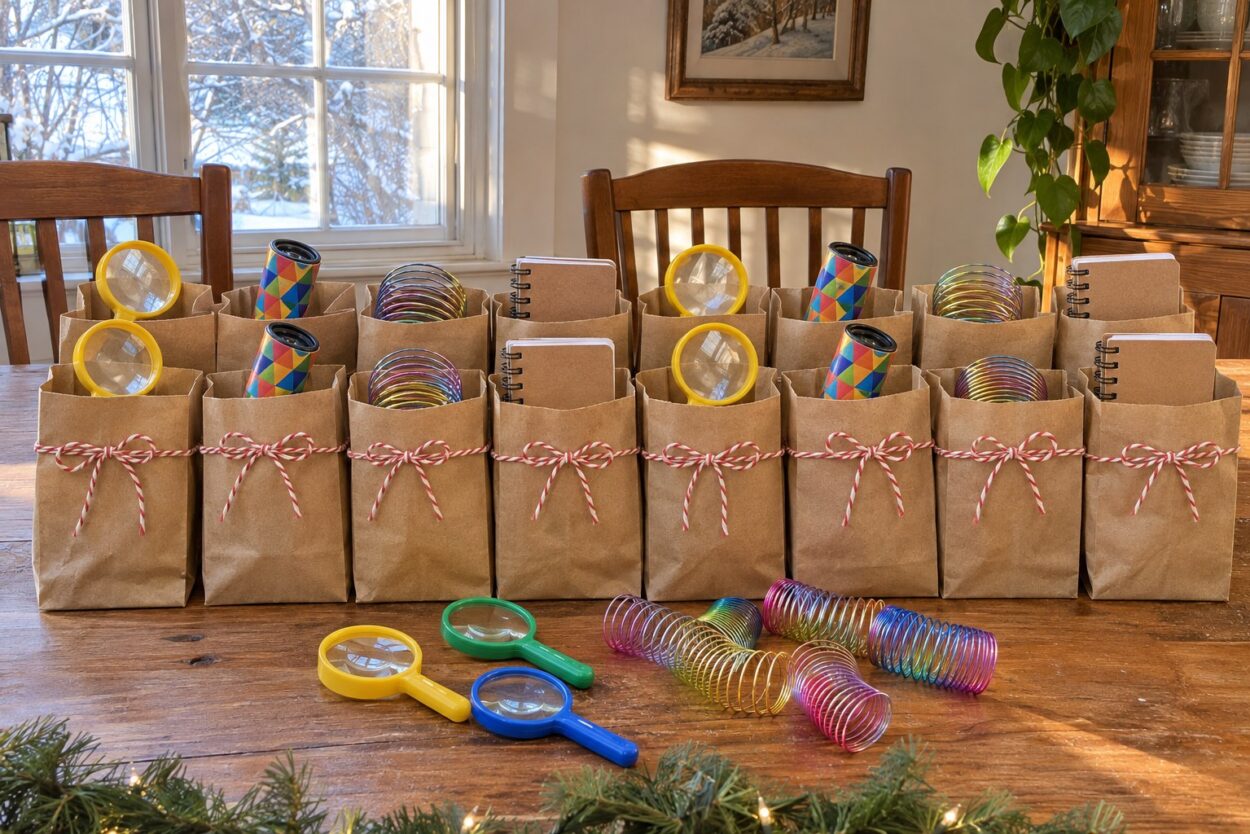
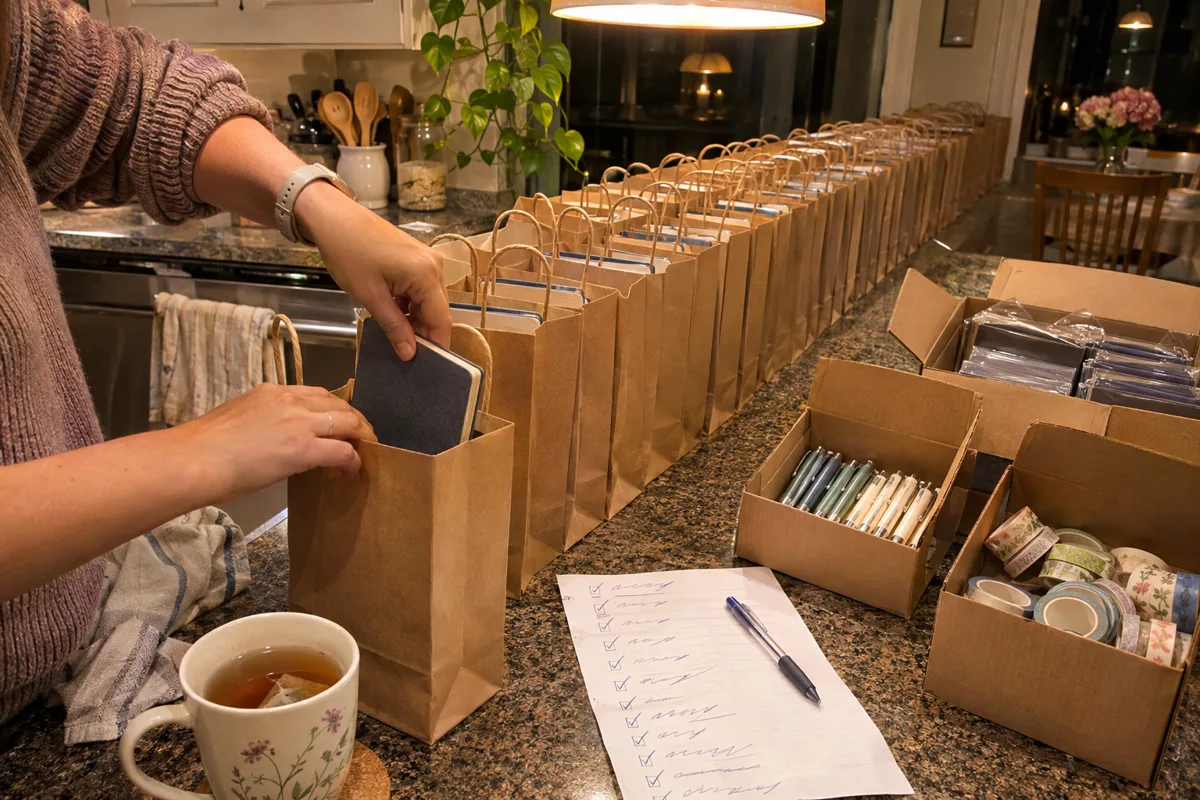
Last December I was the room parent for my son Sami’s second-grade class, which meant buying 24 identical gifts on a deadline. I learned three rules the hard way. Count the whole room, the teacher and the kid who joins in January, because a shortfall of one is the only mistake anyone remembers. The teacher gets a gift of their own too: see our Christmas gifts for teachers. Check the school’s food and allergy rules before anything edible goes in a bag. And pick something that still works after a bus ride at the bottom of a backpack.
This guide covers both ways people shop for students at Christmas. The first half is gifts for a whole class, for teachers and room parents (for the teacher alone, see our stocking stuffers for teachers): nine small science and puzzle gifts sold in packs of 24 to 50. The second half is gifts for one student, sorted by age from 5 to 14: books, games, tools and school-day gear a child will use all year. College students need a different list, so they get their own guide: Christmas gifts for college students.
I trained as a geoscientist, so each pick names the science it shows. For a class set, the best bets are the 24-pack of magnifying glasses, the 24 diffraction glasses and the Silly Putty variety pack. For one student, the TI-30XIIS calculator suits middle school, the illuminated globe suits ages 5 to 9, and Rory’s Story Cubes and the Brain Quest workbook cover reading, writing and math at home.
Quick picks
| Gift | Best for | Science |
|---|---|---|
| 24-pack magnifying glasses | Whole class, ages 5 to 10 | Optics |
| HolidayEyes 24 glasses | Whole class, party day | Diffraction |
| Crayola Silly Putty, 24 count | Whole class, ages 4 and up | Polymers |
| 24 pocket notebooks | Whole class, any age | Scientific method |
| Illuminated world globe | One student, ages 5 to 9 | Earth science |
| Rory’s Story Cubes | One student, ages 6 to 10 | Language |
| Brain Quest Workbook | One student, by grade | Math and reading |
| TI-30XIIS calculator | Middle school | Math |
| Carson Pocket Micro | Ages 8 to 14 | Biology |
What makes a good Christmas gift for a student
A student gift has to survive three places: the classroom, the backpack and the living room floor. Most of what comes home from a school party fails the first one, and what stays in use shares a few traits.
- It does something in the first minute. Kids decide in about that long whether an object is interesting. A magnifier or a spring needs no instructions, and a 40-page manual has already lost.
- It is not food. Many schools restrict nuts, sugar or anything unwrapped from home, and a gift that one child cannot touch is worse than none. Every pick here is non-food.
- It needs no batteries, no screen and no adult. The exceptions are labeled: the globe plugs in, and the calculator and book light are for home and homework.
- It teaches one idea. A spring shows stored energy and a kaleidoscope shows reflection. One idea that a child can say back in a sentence beats ten half-explained ones.
- Every student gets the same one. For a class, buy a single item in a single pack size. Mixed gifts invite comparison, and a bag that looks better than the next one is the end of the party.
If you are shopping for one child who already loves science, our best science gifts for kids and toys for kids who love science go bigger than this guide does. For smaller items, see science stocking stuffers.
Christmas gifts for a whole class
These nine come in packs of 24 to 50, which covers a typical elementary class with a few spares. If your class has more than 24 students, check the pack count in the table below before you order. Counts are from the Amazon listings, checked in November 2026.
| Class gift | In the pack | Note |
|---|---|---|
| HolidayEyes glasses | 24 pairs | 15 frame styles |
| Magnifying glasses | 24 with lanyards | 5X and 15X lenses |
| Kaleidoscopes | 24 | 6 designs |
| Planet bouncy balls | 24 | 8 planet designs |
| Mini coil springs | 50 | Two spare classes |
| Silly Putty | 24 | Includes scented ones |
| Pocket notebooks | 24 | 36 pages each |
| Mini puzzle cubes | 28 | 3×3, about 3 cm |
| Dino egg dig kits | 24 | Magnifier included |
Best class gift overall
1. 24-Pack Magnifying Glasses with Lanyards
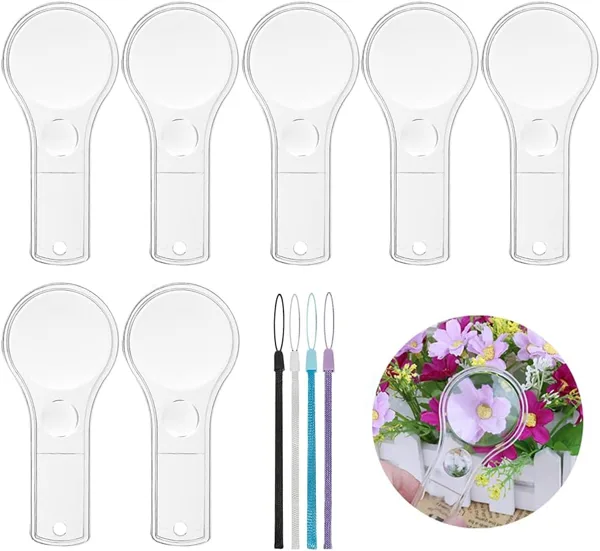
The pack holds 24 plastic magnifiers, each with its own lanyard in black, white, blue or purple. Each magnifier has two lenses: a large round one of about 50 mm at 5X and a small one at 15X. At 11 by 5 cm, it fits a child’s hand and a coat pocket.
A magnifier is a curved piece of transparent plastic that bends light toward a point. Held close to an object, it spreads the image across more of your eye, so details look bigger. The shorter the focal distance, the stronger the lens, which is why the small 15X lens must be held almost touching the object. A scavenger hunt turns the whole pack into a lesson. Give each child a list of five things to find, such as a leaf vein, a woven thread, a sugar crystal and a pencil dot, and ask them to draw one at the 15X lens. Our guide to the scientific method steps shows how that turns into a real observation.
- 24 magnifiers and 24 lanyards
- 5X large lens, 15X small lens
- Cord keeps them on a wrist at recess
Good: works for every age, needs nothing else, and the lanyard stops them from vanishing. Not great: plastic lenses scratch and distort at the edges, so these are for exploring, not for serious microscopy.
Check on Amazon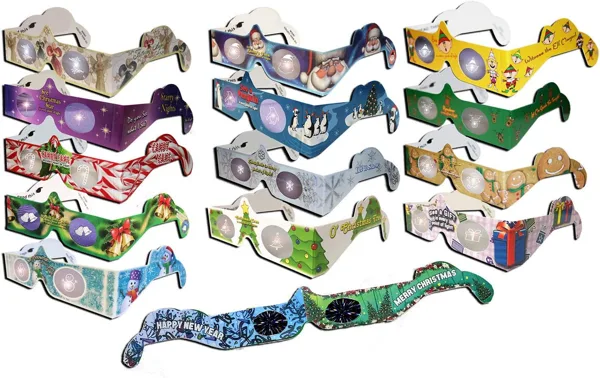
Best for the classroom party
2. HolidayEyes 24-Pair Variety Pack, 15 Styles
These paper-framed glasses turn every point of light into a holiday pattern such as snowflakes. The 24 pairs come in 15 frame styles with Santa, snowmen, reindeer and other Christmas themes. The party-day version of the trick is to dim the classroom lights and look at the string lights on the tree.
The lenses are diffraction gratings: thousands of tiny parallel grooves that split light by wavelength, sending red, green and blue in slightly different directions. White light is a mix of those colors, so each point of light fans out into a rainbow. On these glasses, the grating is patterned so the fan of colors forms a shape. Ask the class why the tree looks different through a window on a cloudy day and under a flashlight. Our light and sound word search has the vocabulary for the follow-up.
- 24 pairs in 15 frame styles
- Paper frames, nothing to charge
- Works on any string of lights
Good: instant effect that the whole room can share, and it is the one pick here that looks like Christmas. Not great: paper frames bend in a backpack, and nobody should look at the sun or a laser through any glasses.
Check on Amazon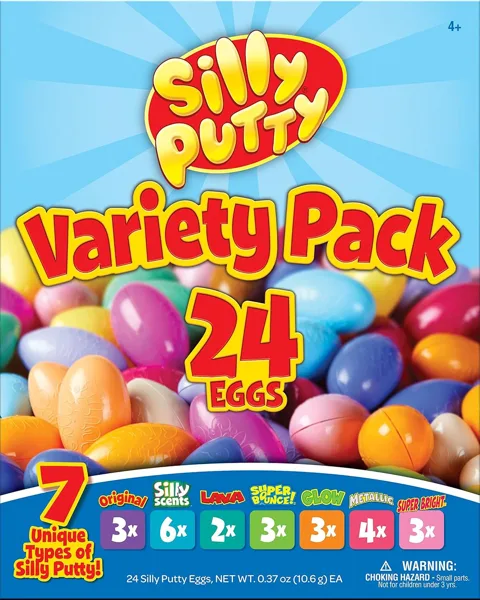
Best for fidgety classrooms
3. Crayola Silly Putty Bulk Variety Pack, 24 Count
The 24-count pack mixes Original (3), Silly Scents (6), Lava (2), Super Bounce (3), Metallic (4) and Super Bright putty, among others. Each one comes in its own egg, so every student gets a wrapped, individual gift. The listing also describes it as a fidget toy.
Silly Putty is a silicone polymer, and it behaves as both a liquid and a solid depending on speed. Pull it slowly and it stretches like taffy. Pull it fast and it snaps. Roll it into a ball and drop it and it bounces. Physicists call that viscoelastic: the long molecules have time to slide past each other when pulled slowly, but not when pulled fast. See Britannica on Silly Putty for the history. An easy experiment for the class: stretch the putty at three speeds and record when it breaks.
- 24 individually packed eggs
- Six types, including scented
- Stretches slowly, snaps fast, bounces
Good: a real material-science demonstration that doubles as a fidget. Not great: putty in hair or on carpet is a nightmare, and the scented versions may not suit scent-free classrooms, so check the school’s policy first.
Check on Amazon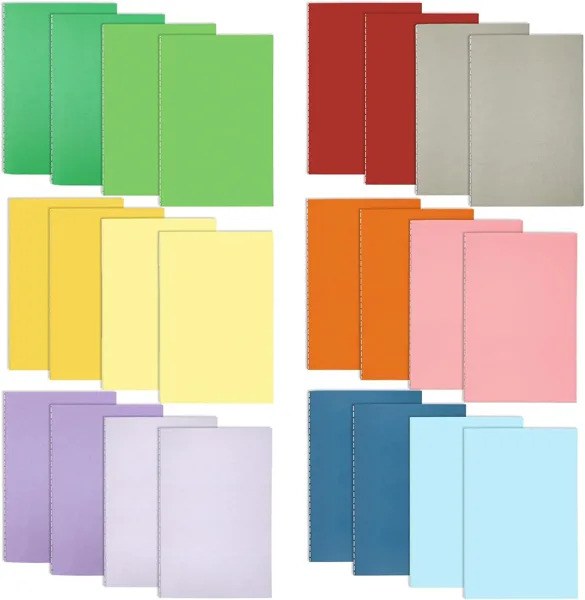
Best for any age
4. 24-Pack Pocket Notebooks, 3.5 x 5 Inches
Each notebook has 18 sheets, or 36 lined pages, with 7 mm line spacing and a plain cover that a child can decorate. The pack has 24 notebooks in 12 cover colors, two of each. At 3.5 by 5 inches, they fit a back pocket.
A field notebook is the oldest tool in science. Darwin, Curie and every geologist I have ever worked with kept one, because a note written at the moment of observation beats a memory written at dinner. Pair this gift with a one-sentence challenge: write down three things you noticed outside today. The format of date, place, observation and question is how professional researchers record data, and it is the first step in the scientific method.
- 24 notebooks, 36 lined pages each
- 12 cover colors, two of each
- Pocket-sized, with room to decorate
Good: goes with every other gift in this section, and children use them. Not great: thin pages suit pencil and ballpoint, but marker will bleed through.
Check on Amazon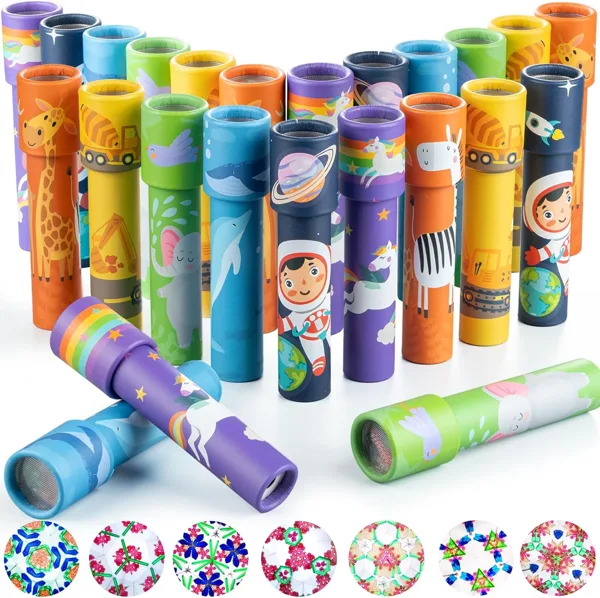
Best for ages 4 to 8
5. 24-Piece Kaleidoscope Set, Six Designs
The set has 24 kaleidoscopes in six cartoon designs, including an elephant, a dolphin, a giraffe and an astronaut. Each measures 1.4 by 1.4 by 5.8 inches, a good size for small hands. Turning the barrel produces a new colored pattern each time.
A kaleidoscope uses mirrors set at an angle. The mirrors reflect a few loose bits of colored material again and again, so a random scatter becomes a symmetrical pattern. The Scottish physicist David Brewster invented the toy in the early 1800s while studying how light polarizes, and it became a craze across Britain within months. See Britannica on the kaleidoscope. Ask the class how many copies of one bead they can count. That is symmetry, and it is part of fourth-grade math standards in most states.
- 24 pieces in six designs
- 1.4 x 1.4 x 5.8 inches each
- Teaches reflection and symmetry
Good: quiet, no mess and the science is built in. Not great: the cartoon designs lean young, so skip this one for fifth grade and up.
Check on Amazon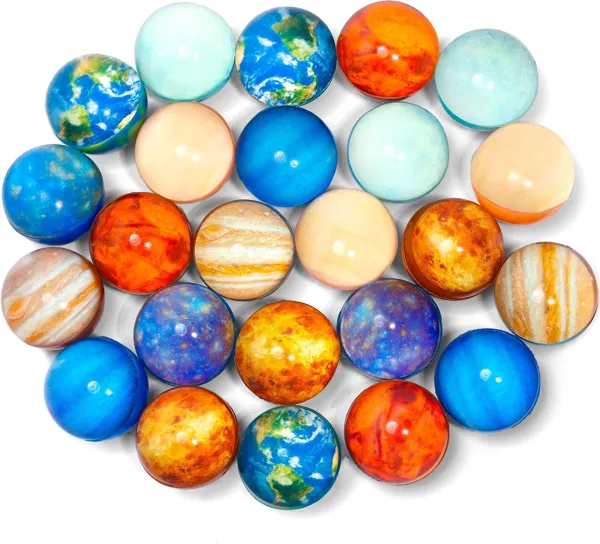
Best for space units
6. Pllieay 24 Solar System Bouncy Balls
The 24 rubber balls are 32 mm across and come in eight designs, one for each planet from Mercury to Neptune. Each student can get a planet, and a class can build a model of the solar system out of them.
A bouncing ball stores energy as it squashes against the floor, then gives most of it back as it springs out. Each bounce loses a little to heat and sound, which is why the height shrinks until the ball stops. Drop a ball from a measured height onto a floor and record the first bounce: the ratio of bounce height to drop height is a number you can compare between the balls. For a model that includes the order and the spacing, see how to make planets for a school project and our planets word search. Elastic energy has more examples in our elastic potential energy guide.
- 24 balls, 32 mm, eight planets
- Each ball bounces and tells a planet
- Drop-height experiment built in
Good: it ties the gift to a curriculum unit. Not great: bouncy balls will be bounced in the hallway, and the listing notes a rubber smell that fades with airing. US rules treat balls smaller than 1.75 inches as a choking hazard for children under 3.
Check on Amazon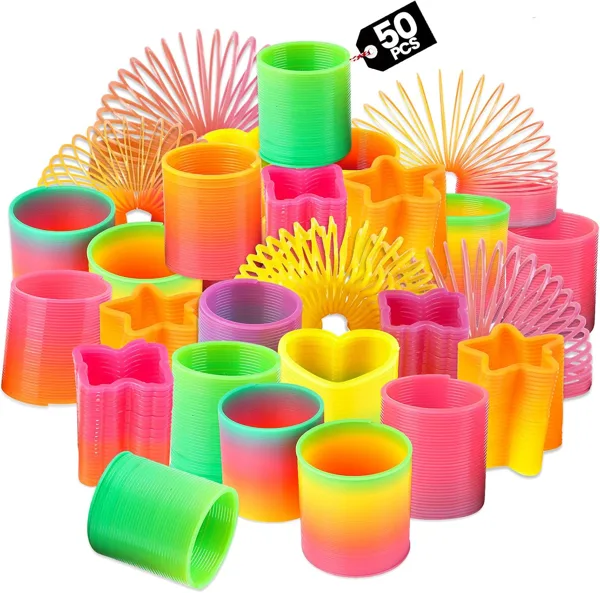
Most pieces in one pack
7. Mini Rainbow Spring Toys, 50-Pack
The pack has 50 plastic coil springs, each 1.5 inches, in more than 10 shapes and neon colors. That is enough for two classes of 24 with two spares, or a class set plus a set for the school nurse’s reward drawer.
A spring stores energy when it is stretched or squashed and returns it when released. Robert Hooke found in 1676 that the force grows in proportion to the stretch, which is why a spring works as a scale. See Britannica on Hooke’s law. The class experiment is to hang a spring from a pencil, hang paper clips from the bottom and measure how far it stretches with each added clip. Plot the points, and the line is straight until the spring is overstretched.
- 50 springs, 1.5 inches each
- More than 10 shapes and colors
- Stretch-and-weigh experiment
Good: the most pieces in one pack, which keeps the cost per student down. Not great: plastic springs tangle, and they will walk down the stairs of every house in the class.
Check on Amazon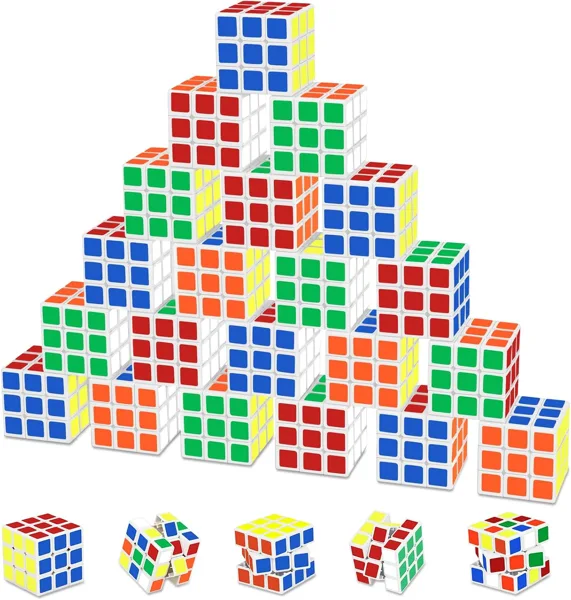
Best for ages 8 and up
8. 28-Pack Mini Puzzle Cubes, 3 x 3
The pack holds 28 mini 3×3 puzzle cubes, each 1.18 inches on a side, made of ABS plastic with colored stickers. Twenty-eight covers the largest elementary classes without needing a second pack.
A 3×3 cube has more than 43 quintillion arrangements, yet every one can be solved in 20 moves or fewer, a result proven by computer in 2010 and published at Cube20. The puzzle is a hands-on way into group theory, the branch of mathematics that studies how moves combine. Students notice quickly that solving one face is easy and solving all six is not, and that is a lesson about systems. Our multiplication chart is a good nearby printable for cube fans who like patterns.
- 28 mini cubes, 1.18 inches
- Standard 3×3, six colors
- Covers a class of 28
Good: the biggest pack here, and one that older students take seriously. Not great: these are unbranded, so for a child who will really practice solving, one Rubik’s Cube beats a bulk pack.
Check on Amazon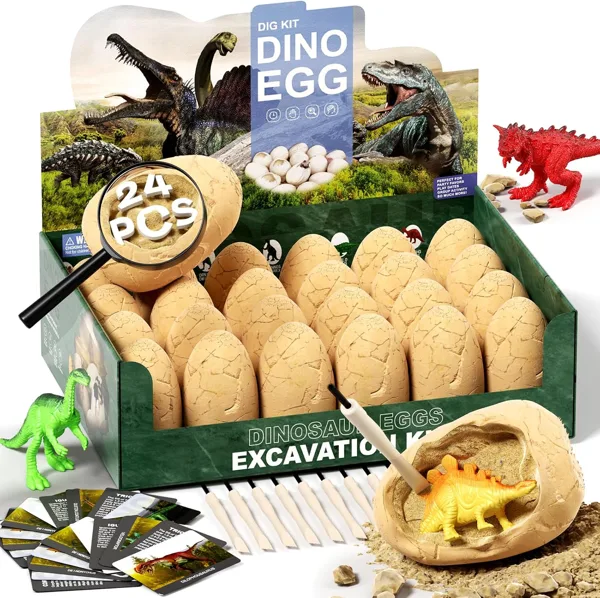
Best for fossil fans
9. 24 Dinosaur Egg Dig Kits with Magnifier
The set has 24 individually wrapped dino eggs, each with a mystery dinosaur inside, plus digging tools, a magnifier and an excavation mat meant to catch the dust. Students chip each egg open to find a toy dinosaur.
The dinosaurs inside are toys, not fossils, and this is the right moment to say so. A fossil forms when minerals replace the material of a bone or shell over millions of years, turning it to stone. The dig teaches the method: work slowly, record what you find and do not break the specimen. If a student wants real fossils after this, point them to our guide to fossils near you or the real trilobites and meteorites in science stocking stuffers.
- 24 wrapped eggs with tools
- Includes a magnifier and mat
- Mystery dinosaur in each egg
Good: students spend 15 quiet minutes on a task. Not great: chipping makes dust and noise, so it is a better take-home gift than an in-class activity.
Check on AmazonFive-minute science for a class party
If you are the one running the party, each class gift above works as an activity with no extra supplies. These take under ten minutes.
- Light show (diffraction glasses). Dim the lights and look at the tree, a phone screen and a flashlight. Ask the class to draw what changes. A hot bulb gives a smooth rainbow, while some lamps give separate lines.
- Find five things (magnifiers). Hand out a list of five textures: a leaf, a coin, a fabric, paper and skin. Students draw the one that surprised them most.
- Stretch test (Silly Putty). Pull the putty at three speeds and record which one makes it snap. The answer is the idea of viscoelasticity, in language a second grader can say.
- Bounce ratio (planet balls). Drop a ball from one meter and mark the first bounce on a wall with tape. Compare Mars with Jupiter and see whether the planet changes anything. It does not, and that is a result too.
- Spring scale (mini springs). Hang a spring from a pencil and add paper clips one at a time. Measure the stretch with a ruler.
Christmas gifts for one student, by age
These fifteen suit one child, whether you are a parent, a grandparent or a teacher with a favorite student. They are sorted by the age the product is built for, and each one is useful on a school day rather than only on Christmas morning.

Ages 5 to 7
Best overall for a young student
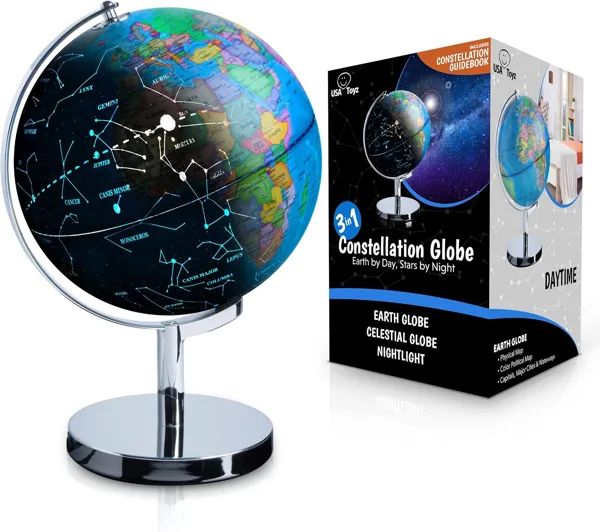
10. USA Toyz Illuminated World Globe
The globe stands 13.5 inches tall and is 9 inches across. When the LED inside is on, the map lights up and 88 constellations appear. It includes an illustrated constellation booklet and a companion app. The stand rotates 360 degrees and resists tipping, and the plug-in light uses a replaceable bulb.
A globe teaches what a flat map cannot: that Earth is a sphere tilted on its axis. The tilt of 23.4 degrees is why we have seasons. Hold a flashlight at one side in a dark room and turn the globe to show day and night, then tilt it and move it around the light to show summer and winter. For older children, our volcano map and plate tectonics word search give them something to look up on the globe.
- 13.5 inches tall, 9 inch diameter
- Lights up, shows 88 constellations
- Plug-in, with app and booklet
Good: it stays on the desk for years and teaches geography without a screen. Not great: it needs an outlet, and the cord limits where it can sit.
Check on Amazon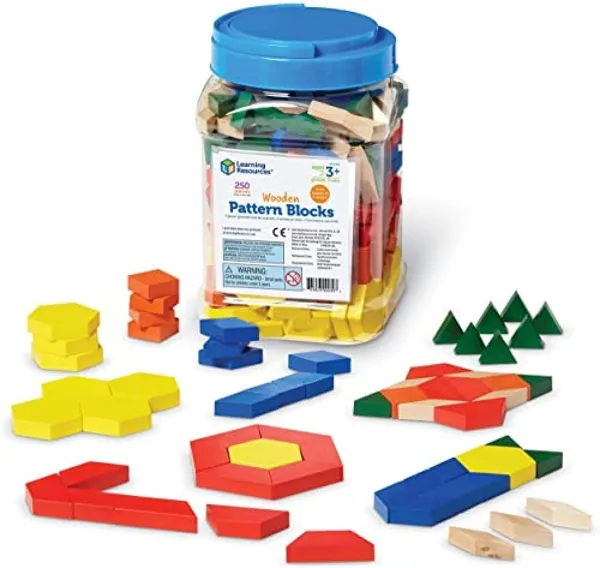
Best for early math
11. Learning Resources Wooden Pattern Blocks
The 250-piece set comes in a bucket and holds 1 cm thick wooden blocks in six shapes and six colors: triangles, squares, rhombuses, trapezoids and hexagons. They are thick enough to stand up and build in three dimensions.
Pattern blocks are used in primary classrooms because they make fractions visible. Two green triangles cover one blue rhombus, and three blue rhombuses cover one yellow hexagon, so a child can see halves, thirds and sixths without a worksheet. Building patterns teaches symmetry and area, and tangram puzzles teach spatial reasoning. A good game for two: one child builds a shape behind a book and describes it, and the other must copy it from the description alone.
- 250 wooden blocks, 1 cm thick
- Six shapes in six colors
- Teaches fractions and symmetry
Good: sturdy, open-ended and useful from kindergarten to fourth grade. Not great: 250 small pieces will scatter, so the bucket needs a home.
Check on Amazon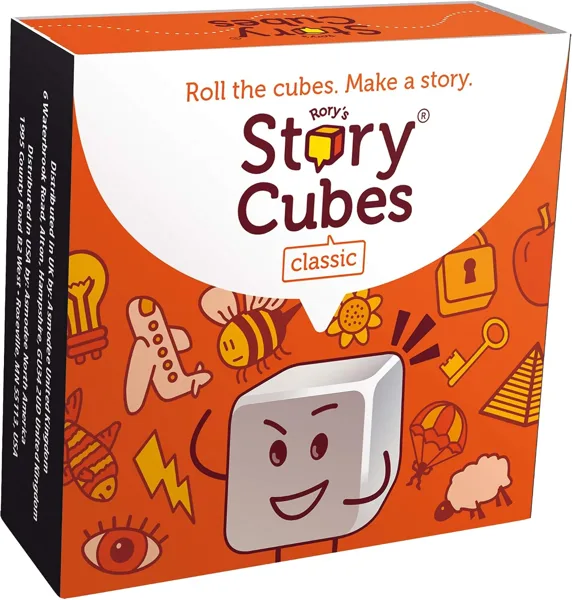
Best for reading and writing
12. Rory’s Story Cubes Classic
The box holds nine dice with six pictures each, 54 images in all, in a magnetic box. Roll all nine and use the images to build a story that starts with “Once upon a time.” The listing counts more than 10 million combinations.
The science here is narrative, and narrative is how children explain cause and effect. A story needs a beginning, a middle and an end, and so does an experiment. Try a science version: roll the cubes and explain how a raindrop gets from the sky to the ocean using at least three of the images. That is the water cycle told in a child’s own words. It also works as a writing warm-up for homework, since writer’s block at age seven looks the same as it does at 37.
- 9 cubes, 54 images
- Magnetic box, fits a bag
- Ages 6 and up
Good: quiet, portable and good for car rides. Not great: a child who dislikes writing needs an adult to start the first story.
Check on Amazon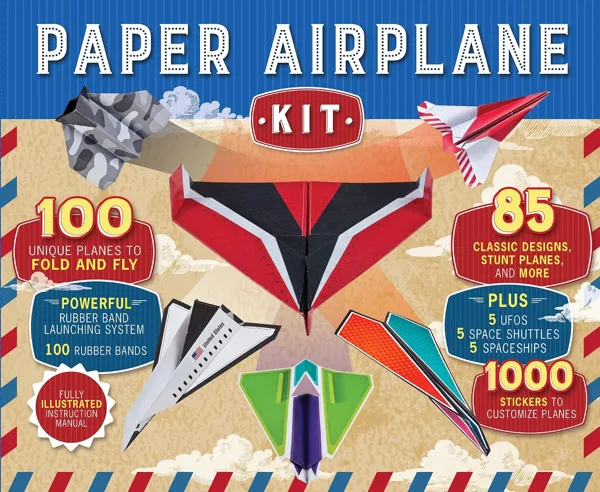
Best for a rainy winter break
13. Paper Airplane Kit: 100 Planes to Fold & Fly
The kit includes 100 paper planes to fold, 1,000 stickers, a launcher and 100 rubber bands. The sheets are printed in color.
Every flying object balances four forces: lift, weight, thrust and drag. NASA Glenn Research Center explains each one on its forces on an airplane page. A paper plane gets thrust from your arm or a rubber band launcher, and lift from its wings. The science project writes itself: fold two designs, throw each one ten times, measure the distances and report the average. That is a controlled experiment, and the hallway is the lab.
- 100 planes, 1,000 stickers
- Launcher and rubber bands included
- Teaches lift, thrust and drag
Good: a single kit keeps a child busy for days, and it is a ready-made science fair project. Not great: a launcher and flying paper are for the hallway, not the living room, and the sheets will be gone by February.
Check on Amazon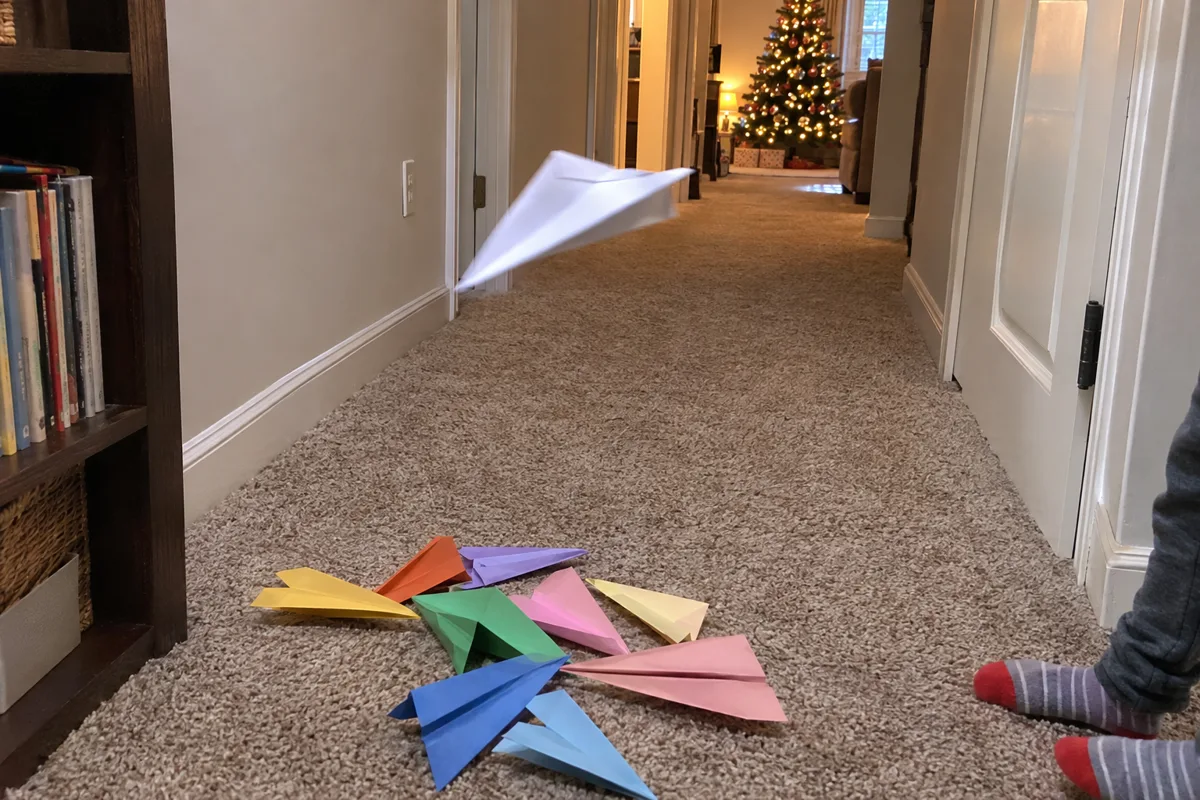
Ages 8 to 10
Best for keeping skills up over winter break
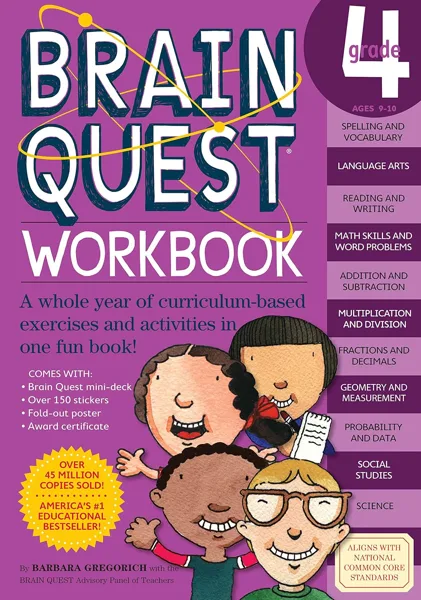
14. Brain Quest Workbook: Grade 4
This Workman workbook is written by Barbara Gregorich and covers the core fourth-grade subjects, including math, reading and writing. Brain Quest makes a workbook for each grade from pre-K through grade 6, and each one is a separate listing, so match the grade your child is in or just finished.
Two weeks away from school is long enough for skills to fade, and a workbook is the lightest fix. Ten minutes a day on one page is the whole plan, and a child who knows the material will finish a page in far less. Pair it with the pocket notebooks from the class section and have your student turn each science page into one question to test at home.
- Grade 4, with other grades sold separately
- Core fourth-grade subjects
- One page a day over winter break
Good: a child can use it alone, and the content is short. Not great: a workbook is the gift children are least likely to ask for, so wrap it with something fun.
Check on Amazon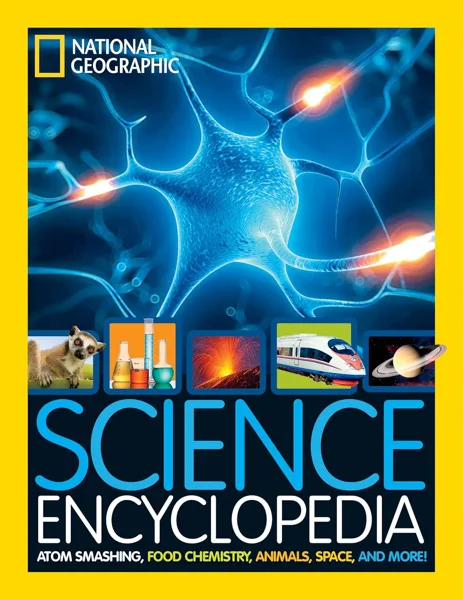
Best science book
15. National Geographic Kids Science Encyclopedia
The book covers atom smashing, food chemistry, animals, space and more, with the photographs National Geographic is known for. It is the kind of reference book that children read out of order, which is the point.
A good science encyclopedia answers the question a child asks at dinner, and then leads to the next one. Pick a topic from a page, such as how a battery works, and try the matching experiment on our site: the potato battery is a good first one. Our interactive periodic table pairs well with the chemistry pages.
- Atoms, food chemistry, animals, space
- National Geographic photographs
- Browse in any order
Good: it stays useful from third grade into middle school. Not great: it is a large book, so it is a home gift, not a backpack one.
Check on Amazon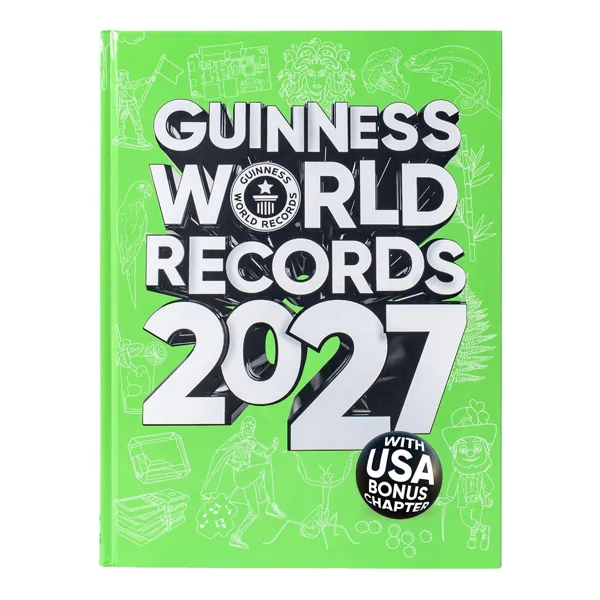
Best for reluctant readers
16. Guinness World Records 2027
The 2027 edition is the current one for this Christmas. Each year’s book collects new records across science, sport, nature and technology, with large photographs and short captions that suit a child who skips long paragraphs.
Records are measurements, and that is why this is a science gift. Every entry has a number, a unit and a standard for how it was measured, which is the same discipline as an experiment. After reading a page, challenge your student to measure something at home: the longest paper chain, the tallest tower of cups, the fastest way across the room. Record the result and the method, then try to beat it, and you have the whole scientific method in one afternoon.
- 2027 edition, current for this Christmas
- Short captions, large photographs
- Good for readers who skip text
Good: children read it voluntarily and argue about it. Not great: it is published each year, so a gift from last year’s edition is out of date.
Check on Amazon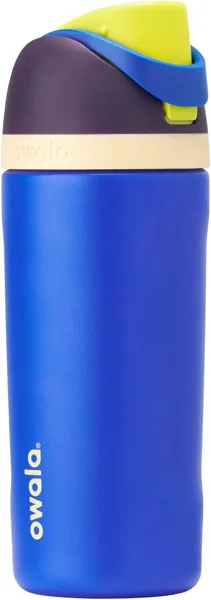
Best for the school day
17. Owala FreeSip Kids Stainless Steel Water Bottle, 16 oz
This 16-ounce bottle has triple-wall insulated stainless steel that keeps drinks cold for up to 24 hours, according to the listing. The lid lets a child sip through a built-in straw or tilt the bottle to swig, and the carry loop locks the lid to stop leaks. The slim shape fits cup holders and backpack pockets. The listing says it is not for hot liquids.
The bottle is a heat-transfer lesson in your child’s lunch bag. Heat moves three ways: conduction through solids, convection through fluids and radiation as light. Insulated walls slow the first two. Run a test: fill the bottle and a plain cup with the same ice water, leave both on a table and check the temperature of each after four hours with a kitchen thermometer.
- 16 oz, stainless steel, triple wall
- Cold up to 24 hours, per the listing
- Straw or tilt-to-sip lid, leakproof when locked
Good: a gift a student uses every day, and a useful one for a child who forgets to drink. Not great: the lid has several parts that need washing, and the bottle is cold drinks only.
Check on Amazon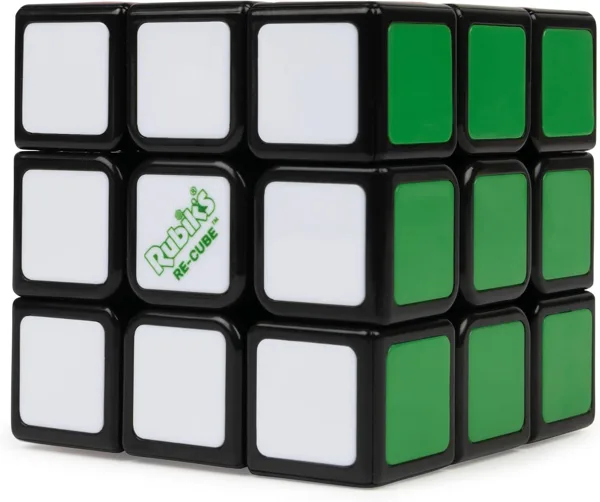
Best puzzle for a student
18. Rubik’s Cube Recube 3×3, 100% Recycled
This is the original 3×3 Rubik’s Cube made from 100% recycled plastic, in unbleached, FSC-certified cardboard packaging. Each of the six faces has nine squares, and the puzzle has more than 43 quintillion combinations and exactly one solution state.
A solved cube is a good demonstration of persistence. The first solve often takes a child a few weeks with a printed or video guide, and later solves go much faster. Any scramble can be solved in 20 moves or fewer, a result reported at Cube20. Most solvers use a memorized method that takes about 100 moves, and learning the method is a lesson in algorithms. If you are buying for a whole class, the 28-pack of mini cubes is the class version.
- Original 3×3 in recycled plastic
- More than 43 quintillion combinations
- Cardboard-only packaging
Good: the branded cube turns smoothly, and learning to solve it is a real accomplishment. Not great: a child who gets stuck needs a guide, so budget a Saturday for the first solve.
Check on AmazonAges 11 to 14
Best for middle school
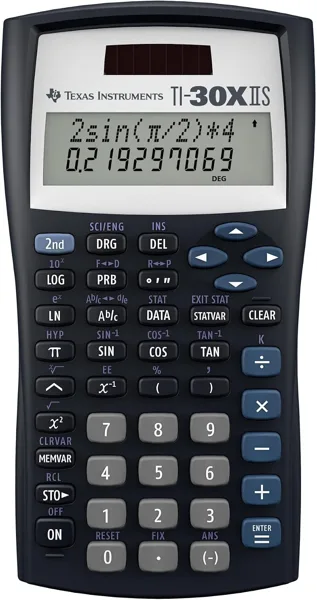
19. Texas Instruments TI-30XIIS Scientific Calculator
The TI-30XIIS has a two-line display that shows the entry and the result at the same time. It handles fractions and conversions, basic scientific and trigonometric functions and statistics, and runs on solar power with a battery backup. It is aimed at high school math and science, and middle schools commonly list a scientific calculator from sixth or seventh grade.
Seeing the entry and the answer together lets a student catch their own typing errors, which is the most common source of a wrong answer. Learn the fraction key first and use it on every homework problem for a week. Our scientific notation calculator, significant figures calculator and standard deviation calculator are good for checking the work.
- Two-line display, entry and result
- Fractions, trigonometry, statistics
- Solar with battery backup
Good: a standard model that most teachers know and most tests allow. Not great: check the school’s supply list first, because some classes require a specific model.
Check on Amazon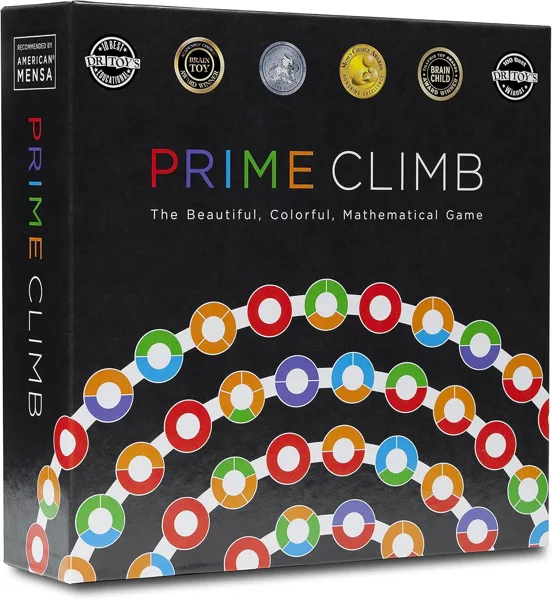
Best math game
20. Math for Love Prime Climb
Prime Climb is a board game for two to four players, ages 10 and up, with a color-coded board that shows the number patterns of multiplication, division and primes. It was designed by a team of mathematicians and educators and is used in schools as well as at home.
Every number on the board has a color code made from its prime factors. A player lands on 12 and sees the colors of 2, 2 and 3 side by side, so multiplication and factors become something visible. Then each turn is a small calculation: which two numbers combine to reach the next number? Our multiplication chart pairs with it for a child who wants to check a product.
- 2 to 4 players, ages 10 and up
- Color-coded number board
- Multiplication, division and primes
Good: a math gift that does not feel like homework. Not great: it needs two or more players, and a first game takes a few rounds to learn.
Check on Amazon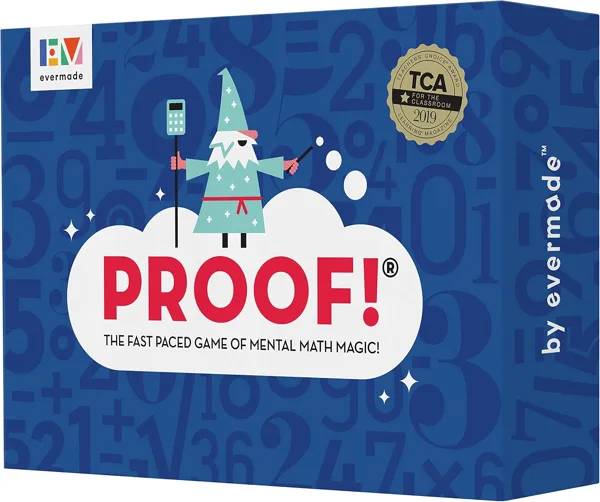
Best for fast mental math
21. Evermade Proof Math Card Game
Proof is a fast mental-math card game for ages 9 to 12, teens and adults. The deck has 100 number cards, and players race to find equations using addition, subtraction, multiplication and division. It won a Teacher’s Choice Gold Award, according to the listing.
Speed matters because fluency matters: a student who recalls 7 x 8 without thinking has working memory left for the harder step in an algebra problem. A race game builds that recall without drills. Our multiplication chart is a way to check which facts a child still needs to practice.
- 100 number cards
- Ages 9 to 12 and up
- Teacher’s Choice Gold Award
Good: quick rounds, and adults can play along. Not great: a child who gets anxious about timed math may find the race stressful.
Check on Amazon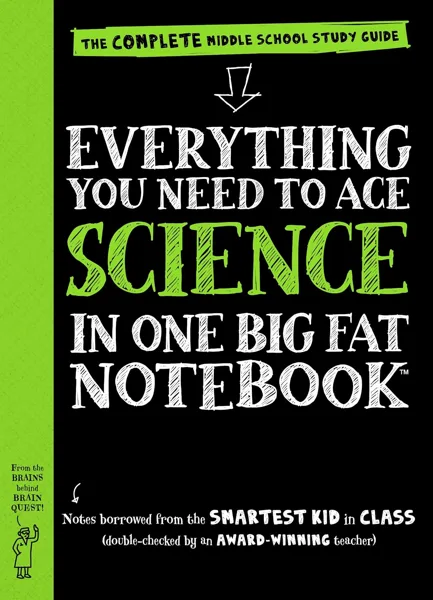
Best study guide
22. Everything You Need to Ace Science in One Big Fat Notebook
This Workman study guide is laid out like a student’s own notebook, with handwritten-style notes, diagrams, color highlights and review questions. The subtitle is “The Complete Middle School Study Guide,” and it covers earth, life and physical science in one book. The series also has math, English and other subjects as separate titles.
Notebook-style layouts work because they look like the notes a good student would take. The page already has the vocabulary highlighted and the diagram drawn, so a child can copy it, quiz themselves and see what a clear page looks like. It makes a good companion to a science textbook: the notebook gives the short version and the textbook gives the detail. Pair it with a pocket notebook for the student’s own corrections.
- Earth, life and physical science
- Notebook layout with diagrams
- Separate titles for other subjects
Good: it makes review quick the night before a test. Not great: it is a study aid, not a first introduction, so a student who has not yet met a topic will need the class lesson first.
Check on Amazon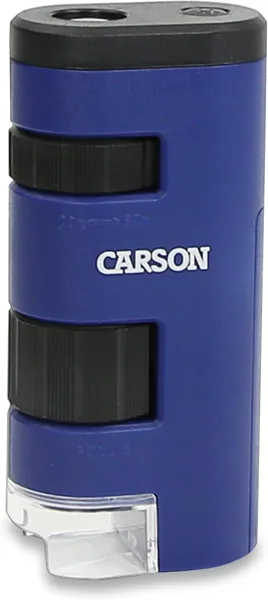
Best for curious students
23. Carson Pocket Micro 20x to 60x LED Pocket Microscope
The Carson Pocket Micro has a zoom lens from 20X to 60X and a built-in LED, in a body small enough for a pocket. The listing calls it a STEM learning tool and describes the light as crucial for clear viewing.
A pocket microscope shows what a magnifier cannot: the weave in a piece of cloth, the crystals in table salt, the veins in a leaf and the scales on an insect wing. At 60X the field of view is small, so the trick is to hold the scope steady against a surface and focus slowly. Have your student draw one specimen in a notebook with a scale in millimeters. For a full compound microscope, see our guide to the best microscope.
- 20X to 60X zoom
- Built-in LED light
- Pocket-sized
Good: a real instrument in toy-sized form. Not great: it magnifies solid objects, not transparent samples on slides, so it is not a replacement for a compound microscope.
Check on Amazon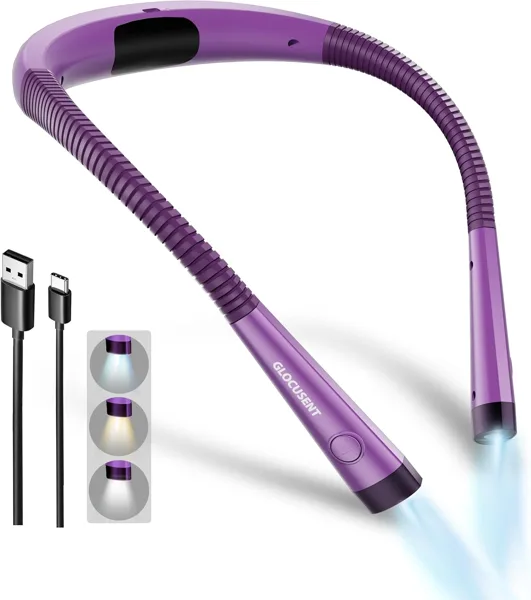
Best for night readers
24. Glocusent Rechargeable Neck Reading Light
The light wraps around the neck with two flexible arms, so a student can read in bed without a lamp or a hand to hold it. It has three color temperatures (yellow at 3000K, warm white at 4000K and cool white), six brightness levels and an 80-hour battery, charged by USB-C. The beam is narrow, at 90 degrees, so it will not wake a sibling in the same room.
The color setting matters more than it sounds. Light at the cool end of the range suppresses the hormone melatonin more than warm light does, and a teenager’s body clock already runs late. A warm setting in the evening is a small help for sleep. Teach the habit: warm light after dinner, the cool white for homework, and the book closed at a set time.
- 3 color temperatures, 6 brightness levels
- Up to 80 hours per charge, USB-C
- Narrow beam, flexible arms
Good: it solves the arguments about the light being on. Not great: a neck light will be worn for reading, not for homework at a desk, where a real desk lamp is better.
Check on AmazonSchool rules and safety
A gift that gets confiscated is worse than no gift. A few checks before you buy:
- Read the school’s gift policy. Many districts cap what a teacher can receive or give, and some ban anything that is not wrapped or not food-free. A short email to the front office takes a minute.
- Match the age label. The listing for each product above gives an age. Small parts, such as bouncy balls, springs and mini cubes, are choking hazards for children under 3, and the US Consumer Product Safety Commission enforces this through small-parts rules.
- Skip scent in shared rooms. Scented putty is the only scented pick here, and it is the first thing to remove from a bag if the class has scent-sensitive students.
- Keep noise and mess in mind. The dig kits and putty are better as take-home gifts than classroom ones.
- Do not look at the sun or a laser through any glasses. The diffraction glasses are for lights at night.
How to put together a class gift
The simplest class gift is two items in one bag: one thing to use and one thing to keep. Here are three combinations that work for most classes.
- Kindergarten to second grade: kaleidoscope and a Silly Putty egg.
- Third to fifth grade: magnifier and a pocket notebook for a field kit.
- Sixth grade and up: a mini puzzle cube and a notebook.
For more ideas that are too big for a class set, our buying guides have gifts for kids at every age, including the best marble runs, science LEGO sets and the best chemistry set for kids.
FAQ
The best class gifts come in packs and do something in the first minute: magnifying glasses, diffraction glasses, Silly Putty, pocket notebooks, kaleidoscopes and mini puzzle cubes. Pick one item, buy one pack and give every student the same thing. Skip food, since many schools restrict it.
Count every student on the roster, add one for the teacher or aide, and add two or three spares for new students and breakage. Most packs here hold 24, so a class of 24 or more needs a second pack. The mini springs come in 50 and the mini cubes in 28.
For ages 5 to 7, an illuminated globe, wooden pattern blocks, Rory’s Story Cubes or a paper airplane kit. For ages 8 to 10, a National Geographic Kids science encyclopedia, Guinness World Records, a Rubik’s Cube or a Brain Quest workbook for their grade.
A TI-30XIIS scientific calculator, the Prime Climb or Proof math games, the Big Fat Notebook science study guide, a pocket microscope or a rechargeable neck reading light. Check the supply list for the calculator model first.
The 50-pack of mini coil springs gives the most pieces in one pack, so it usually works out lowest per student, and one pack covers two classes. Pocket notebooks, magnifying glasses and kaleidoscopes are packs of 24, and the Silly Putty set is a 24-count with six types.
Avoid food, since allergy and nut rules are common, and anything that needs batteries, an adult or a long setup. Skip gifts of different value for different students, scented items in shared rooms, and anything with small parts for children under 3.
They are safe for looking at lights in a dim room, such as a tree or string lights. They offer no eye protection, so children should never look at the sun, an eclipse or a laser through them.
Yes. A science gift shows children that school subjects are things you can do, not only things you study. The best ones, such as magnifiers, springs and notebooks, take no setup and lead to a question the child can test at home or in class.
Sources
- Amazon product listings, pack counts, dimensions and age ratings for every product above, checked November 2026.
- NASA Glenn Research Center, Forces on an airplane.
- Tomas Rokicki, Herbert Kociemba, Morley Davidson and John Dethridge, God’s Number is 20 (2010).
- Encyclopaedia Britannica, Kaleidoscope, Silly Putty and Hooke’s law.
- U.S. Consumer Product Safety Commission, small parts and toy safety rules for children under 3.
- Robert Hooke, De Potentia Restitutiva (1678), on the law of springs.