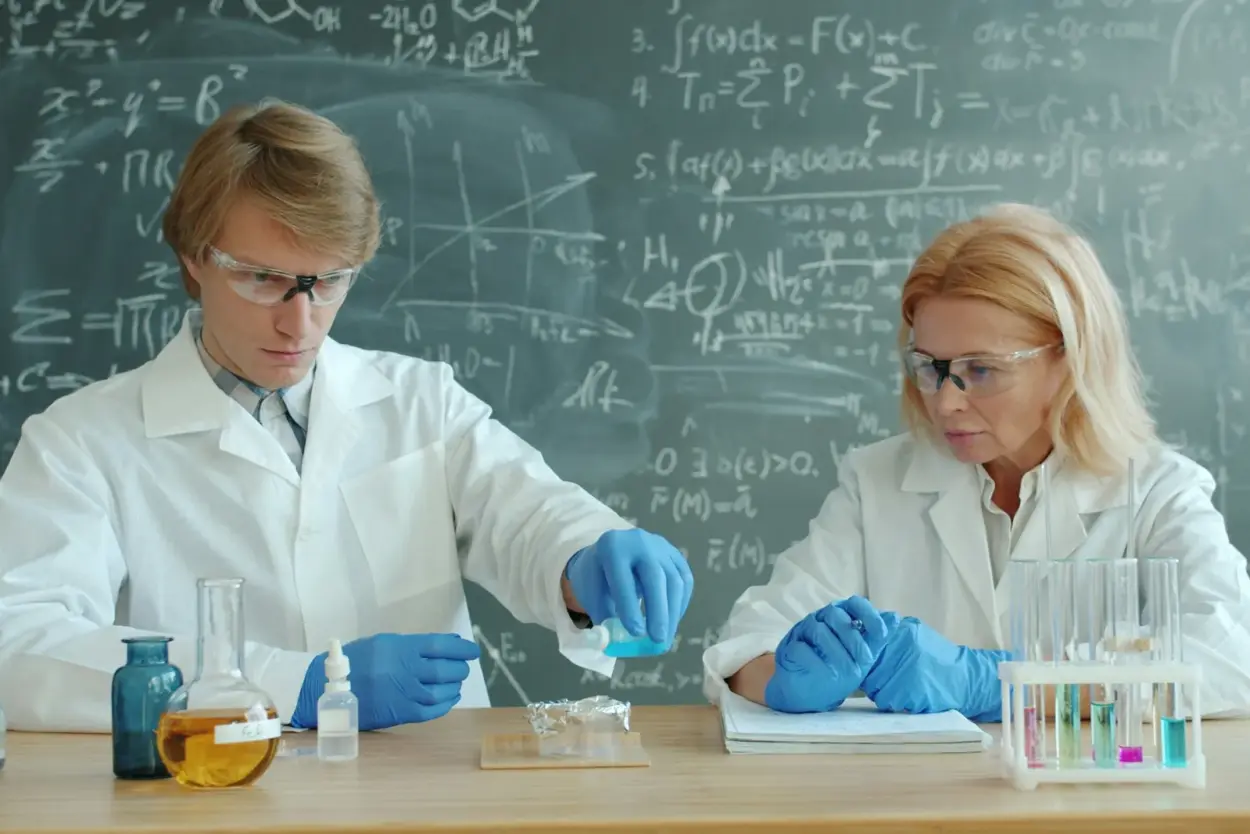
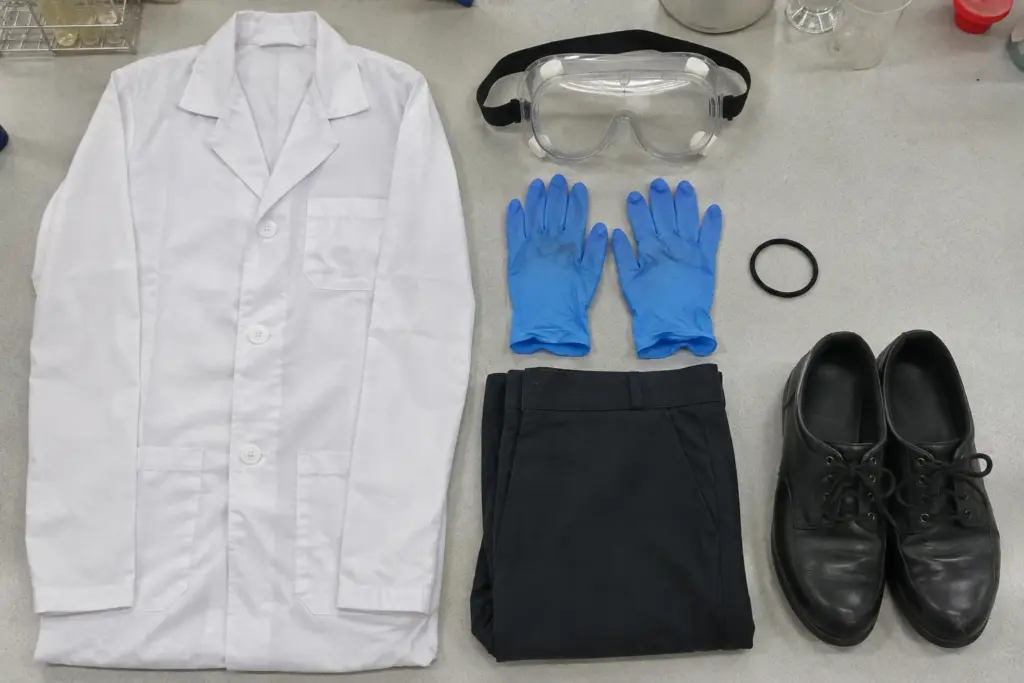
Short answer: Wear long pants, shoes that cover your whole foot, a buttoned lab coat with sleeves to the wrist, splash goggles and gloves chosen for the chemicals in use, and tie back long hair. Leave shorts, sandals, loose sleeves and dangling jewelry at home. This is the minimum most university labs set before they let you start.
Lab attire is built around one idea: a spill, a splash or a flame should meet fabric or plastic, never skin. Shoes and pants are the two items you cannot borrow on the day, so they come first. The sections below cover each garment, the fabric that suits each kind of lab, which gloves to pick and what to do when clothing gets splashed.
This article contains Amazon affiliate links. 33science earns a commission on qualifying purchases. See our affiliate disclosure.
Lab attire checklist, head to toe
Use this table as the packing list for your first lab. The reasons matter because they tell you what to do when your outfit is not on the list.
| Body part | Wear | Why |
|---|---|---|
| Eyes | Splash goggles with indirect vents | Liquids reach your eyes from the side and below; glasses leave those paths open. |
| Hair | Tied back if longer than your shoulders | Hair catches fire, drags through spills and tangles in equipment. |
| Torso and arms | Buttoned lab coat, sleeves to the wrist | The coat takes the splash so your clothes and skin do not. |
| Hands | Gloves matched to the chemical | No single glove material protects against everything. |
| Legs | Long pants or an equivalent | Legs sit at spill height when you work standing at a bench. |
| Feet | Closed, non-porous shoes covering the whole foot | Dropped glass and spilled liquid land on the floor, then on your feet. |
Rules differ by lab. Two universities can ask for different coats or different glove types, and the hazards in your own lab set the real requirement. When your instructor or safety officer says something stricter than this page, follow them.
Pants and shoes
Wear long pants and closed shoes that cover the whole foot. Shorts, short skirts, sandals and open-foot shoes are not allowed in most university labs, and the National Academies guidance on laboratory safety says perforated, open-toe and open-heel shoes, sandals and clogs should not be permitted.
Some labs go further. The University of Texas at Austin asks that no skin show between the shoe and the ankle, and Truman State bans capris, yoga pants, high heels and clogs. Purdue asks that pants and skirts reach the ankle and that clothing with holes stay out of the lab.
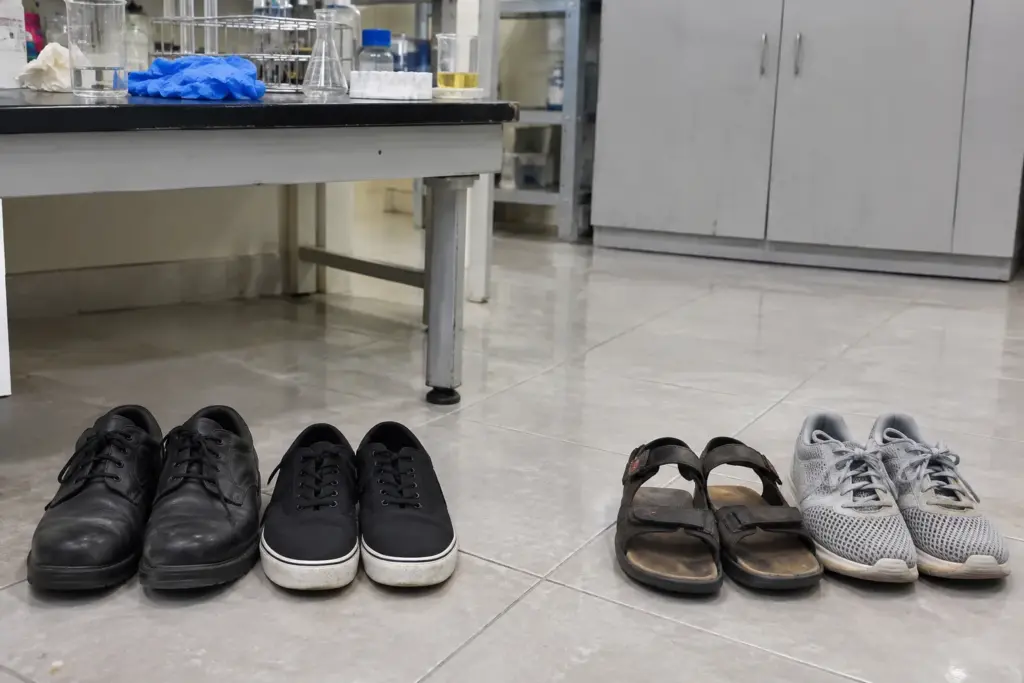
Leather or another non-porous material is the safest choice, because fabric soaks up a spill and holds it against your foot. Mesh sneakers fail the rule through their openings even though the shape looks closed. To test a pair, picture a spill landing on top of the shoe: it should run off, not through.
How to wear a lab coat
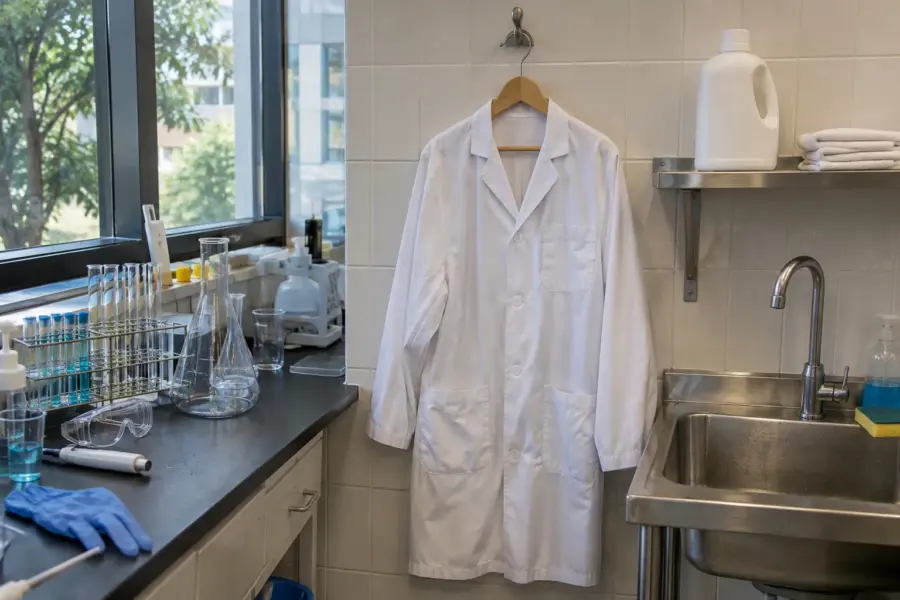
A lab coat is worn buttoned from top to bottom with the sleeves down. The University of Texas at Austin asks that the coat be fully buttoned and that the sleeves cover your skin when you wear gloves, and the University of Wyoming says sleeves stay rolled down.
Some labs issue coats, and others expect you to buy your own. Our guides to the best lab coats for women and the best lab coats for men cover fit, fabric and flame resistance, and how to wash a lab coat covers care.
Fabrics: cotton, polyester and flame-resistant
Cotton is the safest default for clothing and coats in a lab that uses flames or flammable liquids. Synthetics such as polyester and nylon can melt and stick to skin, which makes burns worse; the National Academies guidance calls out this effect directly.
| Fabric | In a fire | Chemicals | Where it fits |
|---|---|---|---|
| 100% cotton | Burns less readily than blends, but still burns | Degrades in acid | Default for teaching and general labs; recommended by the University of Washington |
| Polyester or poly-cotton | Melts and sticks to skin; burns readily on contact with pyrophoric chemicals | Can resist splashes better than cotton | Teaching coats at some universities; Purdue says no flammable synthetic is safe near flammable liquids |
| Flame-resistant (FR) cotton or Nomex | Resists ignition | Not chemical-resistant by default | Pyrophorics outside a glovebox and large volumes of flammable liquids |
Universities disagree here, so treat your lab’s rule as final. MIT recommends a blend with at least 65% polyester for general chemical labs because it resists fluids, while Purdue says no polyester content is safe near flammables. If your lab uses open flames or flammable solvents, choose cotton or FR.
Eye protection: goggles, glasses and contact lenses
Splash goggles are the right eye protection for any work with liquids. NC State says safety glasses do not give adequate protection against a chemical splash, and Purdue requires splash goggles in its teaching labs. Truman allows safety glasses that meet ANSI Z87.1 with a signed acknowledgement that splash protection is lower.
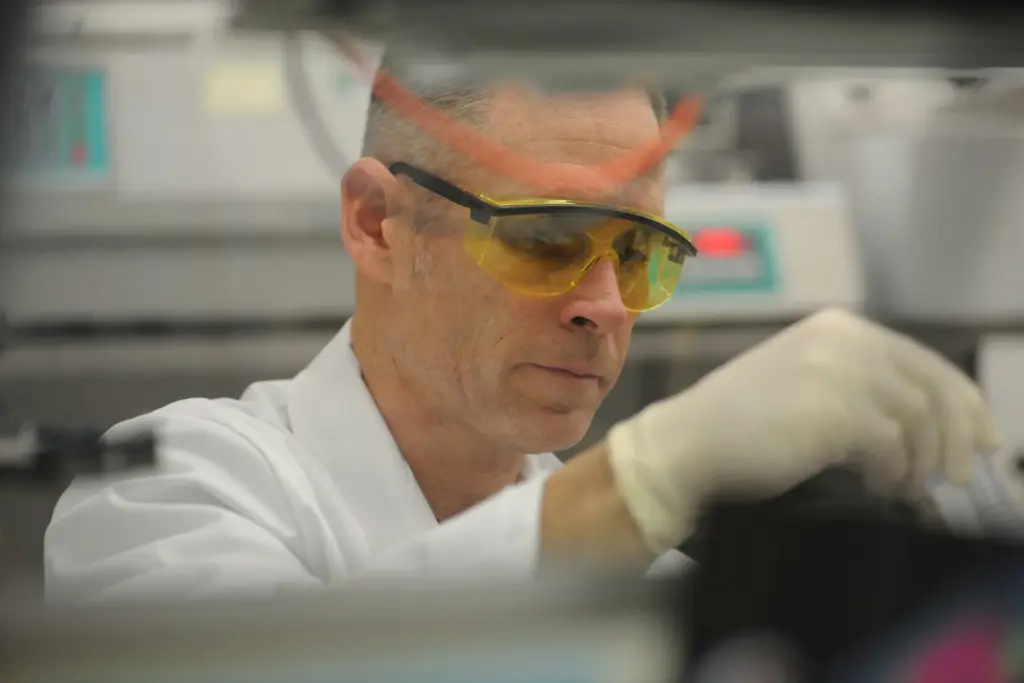
Look for the marking Z87.1+D3 on the goggle. Z87.1 is the ANSI/ISEA eye protection standard, and the D3 rating covers liquid splash and droplets. Indirect vents let air in without letting a splash through. OSHA requires eye protection that meets Z87.1 wherever workers face eye hazards. Our best lab safety goggles guide lists splash-rated picks, and you can search Amazon for D3 goggles to compare more.
Prescription glasses and sunglasses are not safety eyewear. OSHA requires workers who wear prescription lenses to use prescription safety eyewear or protection worn over their glasses, and goggles that fit over glasses solve this for most students.
Gloves: which material for which chemical
No single glove material protects against every chemical. The National Academies guidance says so directly, and the safe move is to read the safety data sheet for the chemical you are handling. Disposable nitrile gloves are the usual minimum for incidental contact and the starting point in most teaching labs.
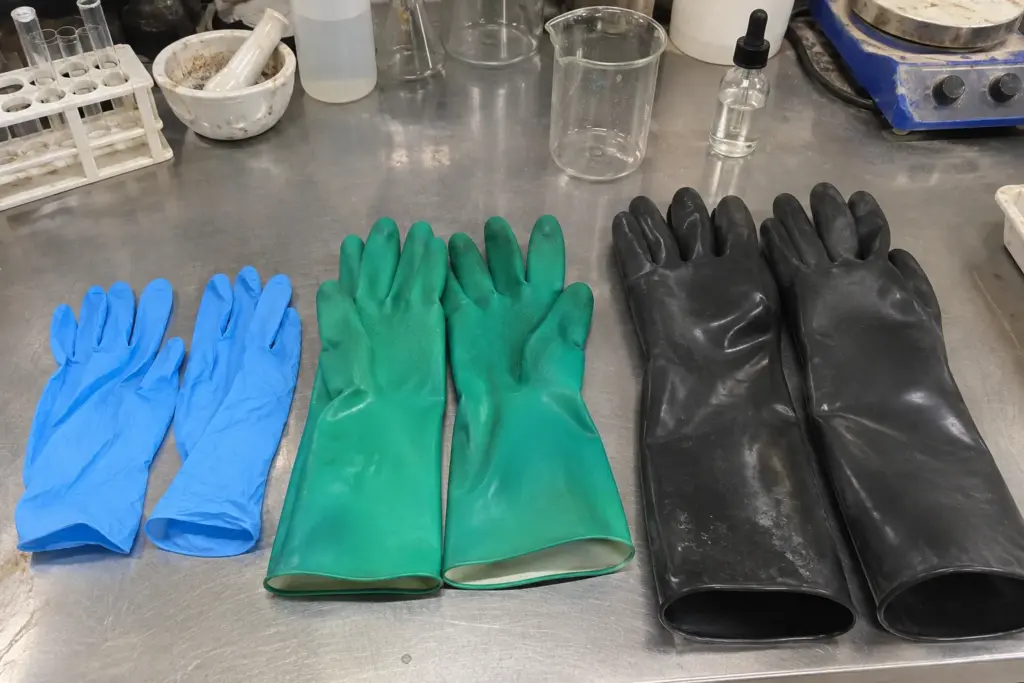
| Glove | Good for | Poor against |
|---|---|---|
| Nitrile (disposable) | General lab use; incidental splashes | Many halogenated solvents |
| Latex | Incidental contact only | Organic solvents; also an allergy risk |
| Neoprene | Acids, bases and alcohols | Halogenated and aromatic hydrocarbons |
| Butyl rubber | Ketones and esters | Gasoline, aliphatic, aromatic and halogenated hydrocarbons |
Disposable gloves are for incidental contact only. Replace them at once when they are splashed, never reuse them and throw them out if they tear or change color. Take gloves off before you touch a doorknob, phone, keyboard or elevator button, and before you leave the lab; UT Austin and UC Berkeley both set this rule. If your lab does not supply them, buy disposable nitrile gloves in your size.
Hair, jewelry and loose clothing
Tie back hair that reaches past your shoulders. Purdue sets the threshold at shoulder length, and the University of Washington gives three reasons to confine it: fire, chemical contact and getting caught in equipment.
Loose clothing, scarves and dangling jewelry follow the same logic. They drag through spills, hang over flames and snag on apparatus. The University of Washington lists jewelry removal as recommended rather than required, because jewelry collects chemicals, touches electrical sources and snags. The University of Oregon goes further: remove all jewelry before working with electricity.
If your lab requires a respirator, facial hair breaks the seal, and MIT tells students with beards to ask their safety office about alternatives. Cleanrooms add hair nets, hoods and beard covers.
What changes by lab type
The baseline above fits teaching chemistry and biology labs. Research labs and specialized spaces add or swap pieces based on the hazard.
| Lab type | What changes |
|---|---|
| Teaching chemistry | Baseline outfit, splash goggles, nitrile gloves. Poly-cotton coats are common. |
| Chemistry research | FR coat for pyrophorics or large flammable volumes; Columbia says it should be NFPA 2112 certified. An apron adds splash protection. |
| Biology (BSL-2) | Fluid-resistant coat, coat stays in the lab, no gloves in public areas. Shoe covers may be required where blood is handled. |
| Physics and electronics | Remove jewelry near electricity. No gloves around rotating tools. |
| Cleanroom | Gowning replaces the lab coat: hair net, hood, mask or beard cover, coverall, boot covers and single-use nitrile gloves, new at each entry. |
If your clothing gets splashed or catches fire
For a large chemical splash, go to the emergency shower, flush for at least 15 minutes and remove contaminated clothing while the water runs. Cornell EHS gives this sequence, and modesty is no reason to delay: workers who undressed in a restroom first suffered second-degree burns in a case UMCES reports.
For a small splash, take off gloves and coat and wash the area for 15 minutes. Hydrofluoric acid and phenol need specific first aid (calcium gluconate and PEG), so follow the safety data sheet and your instructor.
First day checklist for students and visitors
Arrive wearing long pants and closed shoes; those cannot be borrowed. UT Austin requires full-length pants and closed shoes even for non-lab staff and visitors. Coats and goggles are often lent. The University of California, San Diego lends coats to undergraduates and volunteers in their first year, and the University of Wyoming issues free coats to students in research labs. Read your syllabus to see what your course supplies.
A short visit with no hands-on work needs less. NC State says eye protection is the minimum for a visitor who touches nothing, with a coat added if hazards could reach them. For equipment you will meet in the lab, see our list of laboratory equipment.
Frequently asked questions
No. A lab coat does not cover your legs, and most university labs require full-length pants or an equivalent. Columbia prohibits shorts and short skirts, and Cornell says shorts stay out of any lab where corrosives are in use.
Yes, if they are closed and cover your whole foot with solid material. Mesh sneakers and shoes with cut-outs or decorative openings are not allowed. Leather and other non-porous materials are safest.
Many labs allow them under splash goggles. NIOSH and the American Chemical Society permit lenses with approved eye protection, but some universities discourage them. Tell your instructor and remove them if your eyes feel irritated.
Most teaching labs require one, and some make it optional. Wear one whenever you have the choice, since it protects your clothes and skin from splashes.
Only for dry hazards such as flying particles. For liquids and chemical splashes, wear splash goggles marked Z87.1 and D3, because safety glasses leave gaps at the sides and bottom.
Cotton. It burns less readily than polyester and does not melt onto skin. For pyrophoric chemicals or large volumes of flammable liquids, use a flame-resistant coat with cotton clothing underneath.
No. Remove it before you leave, including for lunch and the restroom, so chemicals do not spread to hallways and offices. Do not wash it at home either, because contaminated coats go through an institutional laundry.
No. Gloves depend on the chemical and the task. They are not worn around rotating machinery, and you remove them before touching doors, phones or keyboards.
Long pants, closed shoes and eye protection at minimum. Add a lab coat if hazards could reach you, and ask the host what the lab requires.
Sources
- OSHA. 29 CFR 1910.133, Eye and face protection
- OSHA. 29 CFR 1910.138, Hand protection
- National Academies. Prudent Practices in the Laboratory, chapter 7
- American Chemical Society. Guidelines for Chemical Laboratory Safety in Academic Institutions
- CDC/NIOSH. Contact lens use in the workplace, CIB 59
- NC State Environmental Health and Safety. Laboratory PPE
- UT Austin Environmental Health and Safety. Laboratory attire policy
- MIT Environment, Health and Safety. Lab coat guidance
- MIT Environment, Health and Safety. Personal protective equipment
- Purdue Chemistry. Body cover, safety and lab coats
- UC Berkeley EHS. Glove selection guide
- University of Washington Chemistry. Student lab attire
- Cornell EHS. Chemical exposure first aid
Featured photo by Vitaly Gariev on Unsplash. This page gives general safety information. Your lab’s own rules and your safety officer take priority.