As an Amazon Associate we earn from qualifying purchases. Disclosure.
Science gift finder
Find a science gift they’ll actually use
7 quick questions, about a minute. We pick one gift and two backups that match their age and what they love.
The best science gift for a kid is one rated for their age that matches what they are obsessed with this month. It also has to fit the time you will spend on it. For ages 3 to 4, that is usually a real tool they can carry, like chunky binoculars. For ages 5 to 7, pick something they can build and rebuild, like Snap Circuits or Magna-Tiles. For ages 8 to 12, a real microscope, a crystal kit or a bigger Snap Circuits set lasts longest. For teens, go with a proper chemistry set, an Arduino kit or a telescope they asked for.
The quiz above asks seven questions and picks one gift plus two backups from the 46 on this page. Below is what I have learned from about twenty birthdays and holidays of buying science gifts for my own two kids, and the list of what worked.
Why I care about getting this right
I am a geoscientist. I have drilled ice cores in Antarctica and sat on a volcano in East Africa watching seismometer traces at 3 a.m. You would think that makes me good at buying science gifts for children. For the first few years it did not.
When my daughter Noor turned four, I bought her a chemistry set rated for ages 8 and up because I thought she was advanced. She was. She was also four. She poured every powder into one test tube in the first ten minutes, stained our kitchen table purple and never touched the kit again. My son Sami got a remote-control robot at five that needed an app, a charged tablet and my full attention. It lives in a drawer.
The gifts that worked look nothing like the ones I picked for myself. A pair of rubber binoculars Noor wore around her neck for two years. A box of snap-together circuit parts that has been rebuilt hundreds of times. A bag of geodes that got cracked on the sidewalk with half the street watching. Those taught me the rules I use now, and they are the reason every gift on this page has to pass three tests.
How I choose a science gift (three rules)
1. Use the maker’s age, then go one step up at most
The age on the box is a safety rating first. It tells you about small parts, chemicals and how much reading the instructions need. I never go under it. If your kid finds the gift too easy, the next size up makes a good gift next year.
2. Buy for the obsession they have now
Kids do not want science in general. They want sharks, or volcanoes, or why the Moon follows the car. A rock kit for a kid who loves rocks will get used. A general science kit for the same kid will sit on a shelf while they stare at the gravel in the driveway. If you do not know what they are into this month, ask their parents. Or pick something open-ended, like a pocket microscope, that works on anything.
3. Count the adult hours honestly
Every science gift needs a certain amount of you. A chemistry set needs an adult at the table for every session. A telescope needs an adult outside in the cold for the first five nights. Binoculars need nobody. When I give a gift that needs me, I put a date on the calendar for the first session before the wrapping paper is in the recycling. Gifts without that date are the ones that end up in the closet.
Best science gifts by age
One main pick per age band, plus the runners-up I would buy if the first one does not fit the kid. Every gift here is rated by its maker for the youngest age in its band.
Best science gifts for 3 and 4 year olds
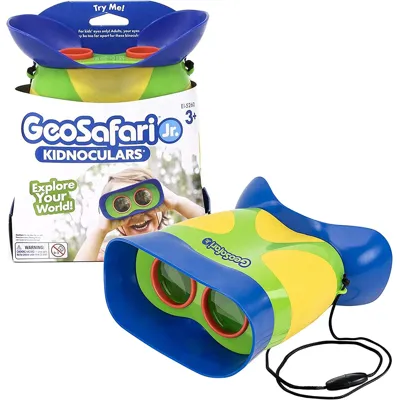
At three, the best science happens on walks. Noor’s Kidnoculars cost about as much as a picture book. She wore them on every outing until she was six, and she stopped only because Sami took them. There is nothing to focus and the eyepieces are huge, so a toddler sees something on the first try. The strap breaks away if it catches on anything.
Best for ages 3 and 4
GeoSafari Jr. Kidnoculars Binoculars for Kids
Chunky 2x binoculars with huge eyepieces and a breakaway strap. Nothing to focus, so a 3-year-old uses them on every walk.
Ages 3 to 6A real tool to keep
Check price on AmazonFor a three-year-old who likes to pour and mix, the Primary Science Deluxe Lab gives them real lab shapes in plastic: test tubes, funnels, droppers and goggles. Nothing gets used up. We filled it with water and food coloring for a year. Then we moved on to baking soda and vinegar, and finally to red cabbage water that changes color with lemon juice.
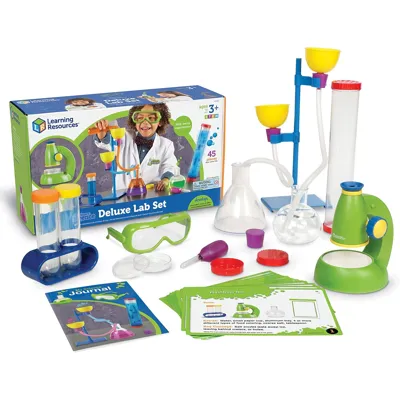
Best first lab set
Learning Resources Primary Science Deluxe Lab Set
Real lab shapes in kid size: test tubes, funnels, droppers and goggles. Nothing gets used up, so it comes out again every rainy weekend.
Ages 3 to 7A project to do together
Check price on AmazonMagna-Tiles are the one gift every parent I know agrees on. They teach shapes, balance and how things fall over, and kids play with them for years. A parent on Reddit wrote that the 32-piece set was the best gift their son got at five and that he played with it until he was ten. Ours are now in their sixth year.
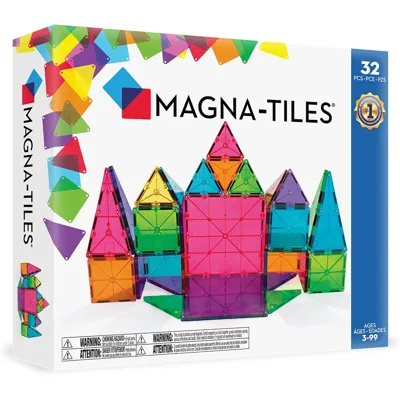
Played with the longest
MAGNA-TILES Classic 32-Piece Magnetic Construction Set
Magnetic tiles that click together into towers, boxes and shapes. Kids play with them from 3 until 10.
Ages 3 to 10Something to build and rebuild
Check price on AmazonAlso good at this age: the Melissa & Doug Solar System Floor Puzzle for learning planet order, and the National Geographic Little Kids First Big Book of Space for bedtime.
Best science gifts for 5 and 6 year olds
Five is the age of building things that do something. Snap Circuits Beginner is where I would start. The pieces snap onto a plastic grid and the picture instructions need no reading. Sami lit his first bulb at five and a half and shouted for me to come see it. It took him four minutes. There are no wires to strip and no soldering, and nothing gets used up.
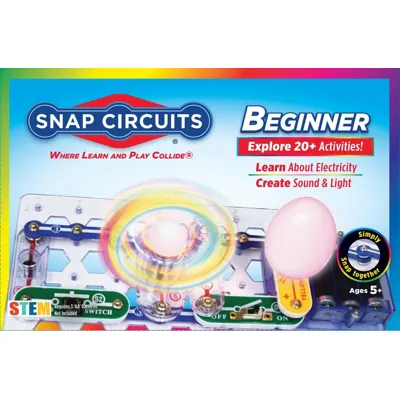
Best for ages 5 and 6
Snap Circuits Beginner SCB-20 STEM Electronics Kit
Parts snap onto a grid with no wires or soldering. A 5-year-old lights a bulb or spins a fan in the first ten minutes.
Ages 5 to 8Something to build and rebuild
Check price on AmazonFor a kid who asks why all day, a robot that plays out their instructions is a strong second choice. Botley 2.0 needs no screen. Kids press arrows on a remote to plan a path, then put Botley down and watch it drive. When it crashes into the sofa, they have found their first bug. They fix the program and try again, which is most of what programming is.
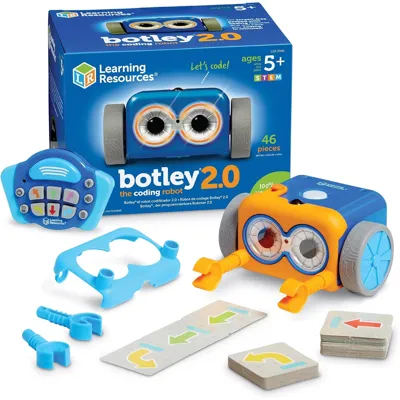
Best screen-free coding gift
Learning Resources Botley 2.0 The Coding Robot
Program a path with a remote, set it down, watch Botley drive it across the living room. Screen-free coding for early readers.
Ages 5 to 8Something to build and rebuild
Check price on AmazonFive and six is also the right age for the Insect Lore Butterfly Garden. Caterpillars come by mail after you send in the voucher, so plan for that in a gift. Sami watched five caterpillars hang upside down, turn into chrysalises and come out as painted lady butterflies about three weeks later. Letting them go in the backyard is the part he still talks about.
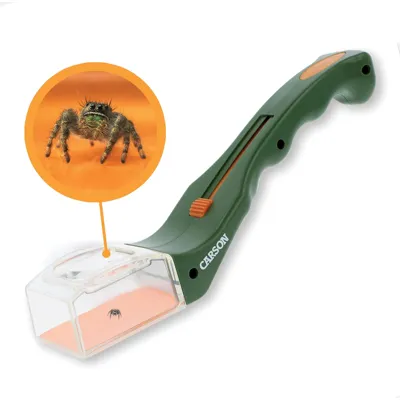
Best for bug lovers
Carson BugView 5X Magnifying Bug Catcher Viewer (HU-10)
Slide the lever, trap the bug, look through the 5x lens, let it go. No touching and no jar on the windowsill.
Ages 6 to 10A real tool to keep
Check price on AmazonBest science gifts for 7 and 8 year olds
Seven and eight is the sweet spot. Kids can read instructions, follow steps and wait a few days for a result. Most of the best gifts on this page open up at eight.
My top pick for this age is Snap Circuits SC-100. It is the same system as the beginner set but with over 100 projects, including a doorbell, a flying fan and an alarm. Noor got it at eight and still pulls it out at eleven when a friend comes over. A parent on r/homeschool said their kid got it at eight and still used it at fifteen. I have not seen a better record for any toy.
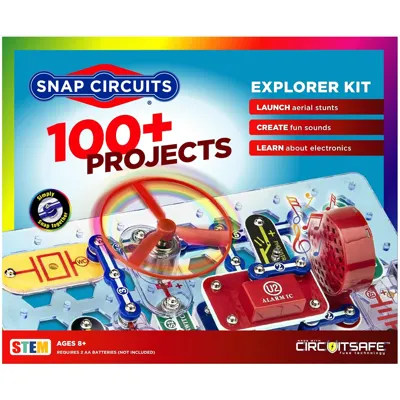
Best for ages 7 and 8
Snap Circuits Explorer SC-100 STEM Electronics Kit, 100+ Projects
The set most parents mention: more than 100 circuits from one box of snap-on parts, rebuilt for years.
Ages 8 to 12Something to build and rebuild
Check price on AmazonFor a rock kid, nothing beats a bag of geodes. We cracked the National Geographic geodes on the sidewalk in front of our house, with goggles on and a hammer. Every kid on the street came over. Two of them had purple crystals inside and one was hollow with nothing at all. The hollow one taught the most, because Noor wanted to know why. I am a geoscientist, so I got to explain how mineral-rich water seeps into a gas bubble in cooling lava and leaves crystals behind over thousands of years. She listened to the whole thing, which has happened maybe twice.
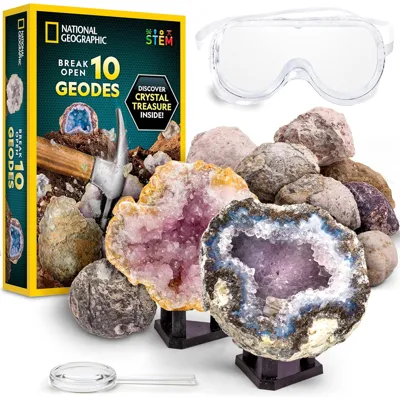
Best for rock lovers
National Geographic Break Open 10 Premium Geodes for Kids Ages 8-12
Ten real geodes to crack open, with goggles and display stands. You supply the hammer and the sidewalk.
Ages 8 to 12A project to do together
Check price on AmazonFor a kid who loves the chemistry side, the National Geographic Mega Crystal Growing Kit grows six crystals over three or four days. Waiting is part of the lesson. Put it on a shelf where they can check it each morning without touching it. Every crystal we have grown at our house survived the growing part. The ones we lost were picked up too early.
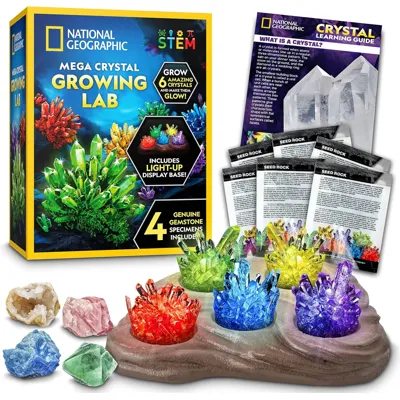
Best slow science
National Geographic Mega Crystal Growing Kit with 6 Crystals
Six crystals grow over three or four days, and four real specimens come in the box for comparison. Patience is part of the lesson.
Ages 8 to 12A project to do together
Check price on AmazonTwo games that get played at our table: Space Escape, a cooperative game where everyone wins or loses together, and ThinkFun Gravity Maze, a one-player marble logic puzzle that Noor brings in the car.
Best science gifts for 9 and 10 year olds
At nine and ten, kids can handle a real instrument, and a real one is worth it. A toy microscope at this age makes everything look blurry and teaches kids that science is boring. A beginner compound microscope with a metal body and glass lenses shows them the cells in an onion skin.
The AmScope M30 kit is the one I recommend most to other parents. It comes with prepared slides and blank ones for their own samples. It also has a brine shrimp hatchery, and the shrimp are why kids keep coming back to it. A homeschool parent told me the trick that keeps a microscope alive after the first week: buy a box of prepared slides and give a few more every holiday. For a closer look at which microscope fits which kid, I compared 41 of them in our microscope finder.
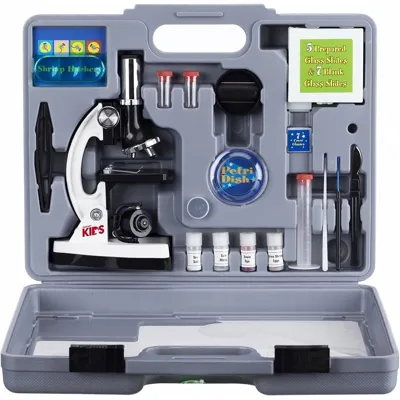
Best for ages 9 and 10
AmScope M30-ABS-KT2-W Beginner Microscope STEM Kit, 120X-1200X
A metal-body microscope with a slide kit and a brine shrimp hatchery. The shrimp are what get kids looking every day.
Ages 8+A real tool to keep
Check price on AmazonFor a builder, the GraviTrax Starter Set is the marble run that teaches physics without saying so. Kids design a track, run a marble, watch it fly off a curve and rebuild it. They are learning about momentum and gravity with every crash. Expansion sets make easy gifts for the next few birthdays.
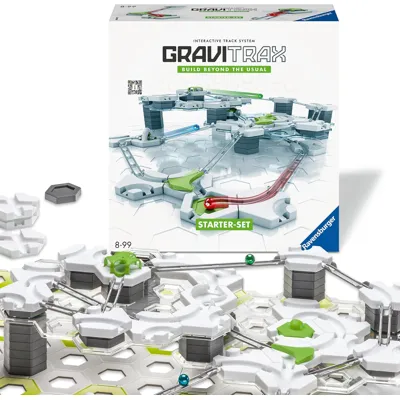
Best for builders
Ravensburger GraviTrax Starter Set - Gravity & Magnetic Marble Run
Marble runs that use gravity, magnets and momentum. Kids build, test, fail and rebuild, which is engineering.
Ages 8+Something to build and rebuild
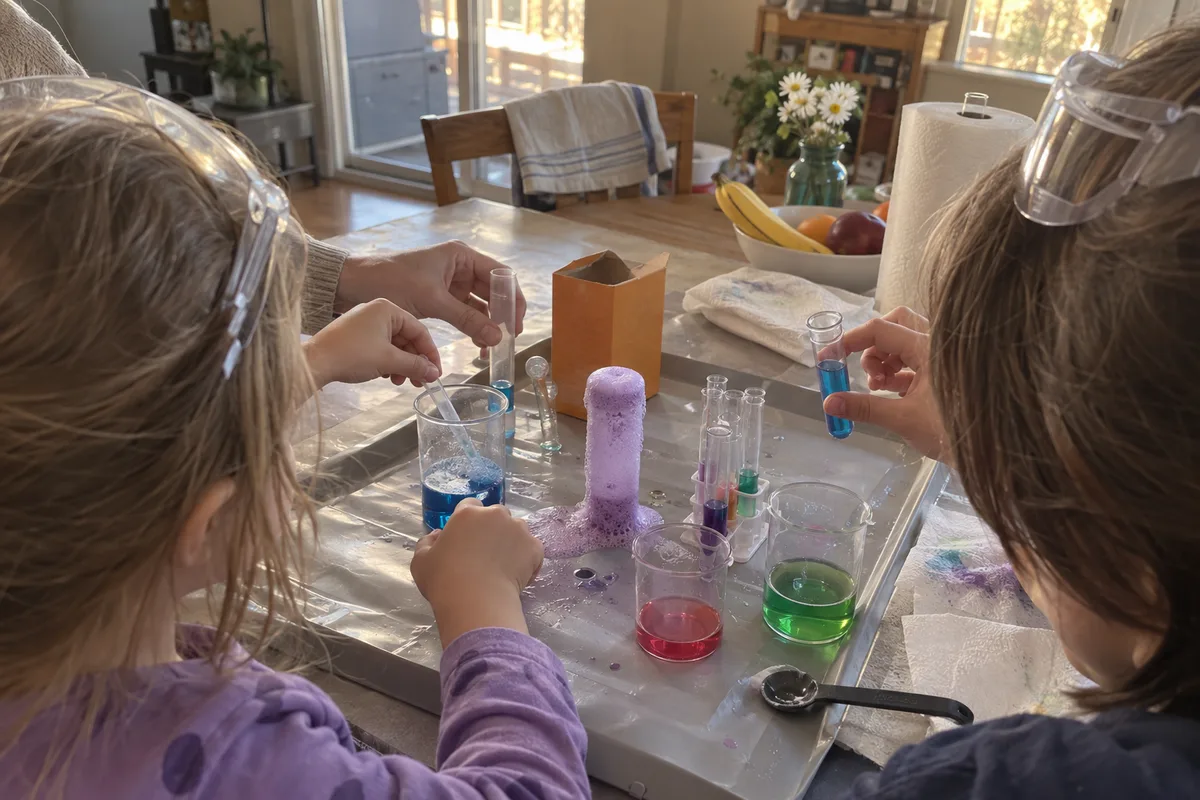
Check price on AmazonAnd if you want real variety in one box, the National Geographic Mega Science Lab has 45 experiments across chemistry, earth science and physics. Plan for powders and cleanup. A tray from the kitchen keeps the mess in one place, as you can see in the photo above.
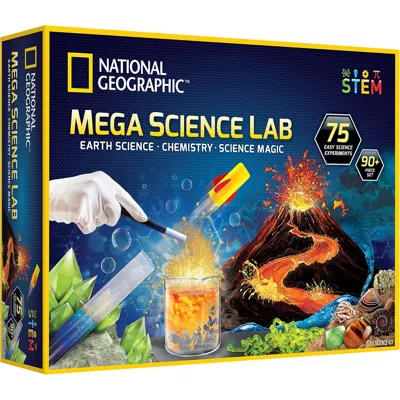
Most experiments in one box
National Geographic Mega Science Lab with 75 Experiments for Kids 8-12
Forty-five experiments across chemistry, earth science and physics in one box. The best value if you want variety, with real cleanup.
Ages 8 to 12A project to do together
Check price on Amazon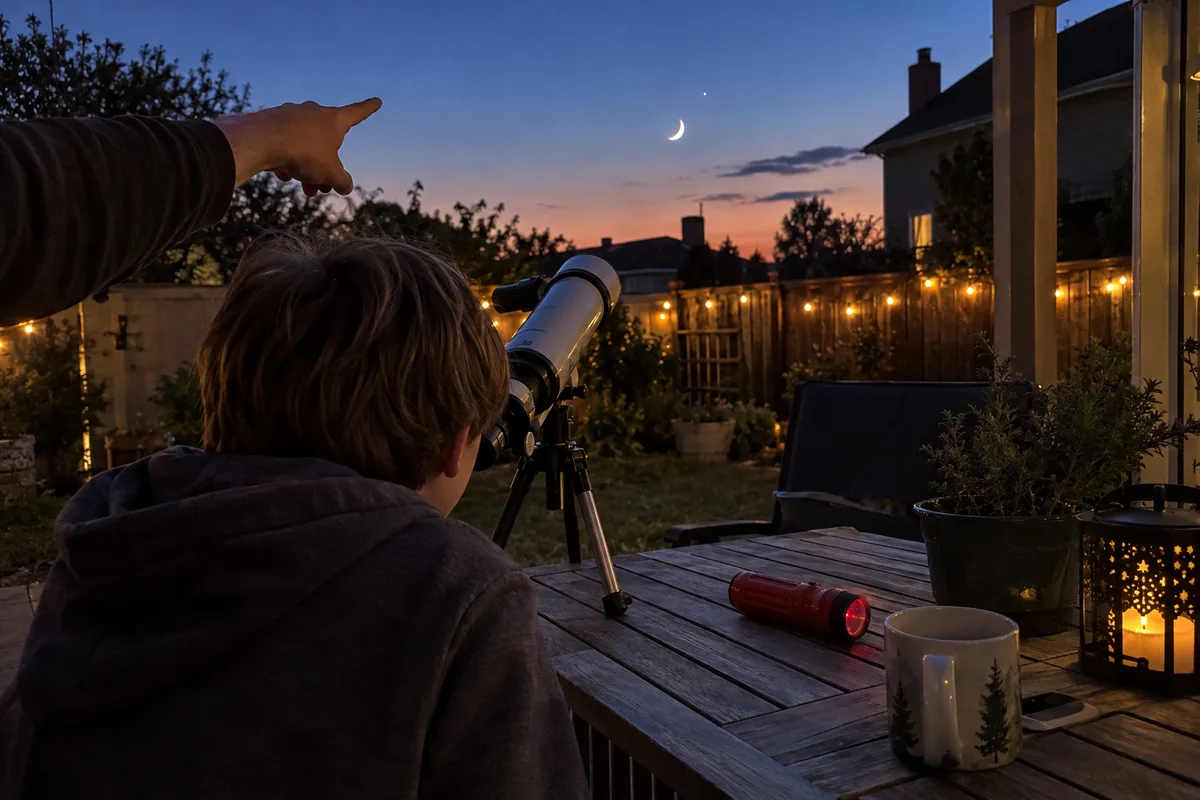
Best science gifts for 11 and 12 year olds
Eleven and twelve is when a telescope starts to make sense, and only for a kid who asked for one. I learned that from the families at astronomy club nights. They bring cheap telescopes with tiny tripods, and the kids cannot find even the Moon in them. A telescope that is hard to aim gets used twice and then stored.
The Celestron FirstScope fixes the aiming problem. It sits on a table and you push the tube where you want to look. There is no tripod to level, no settings and nothing to align. On our first night, Noor found the Moon in under a minute and spent twenty more counting craters along the shadow line. Go outside together the first few nights. Start with the Moon at dusk, then try Jupiter and its moons when they are up.
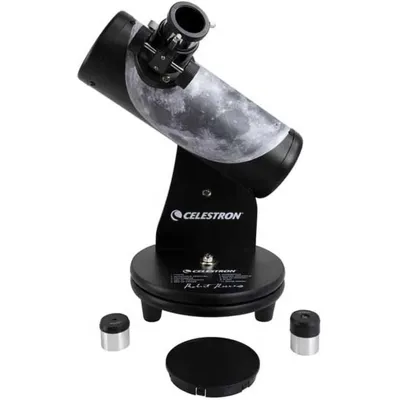
Best for ages 11 and 12
Celestron FirstScope Signature Series Moon Tabletop Dobsonian
A tabletop telescope you point and look through, with no tripod to level and nothing to align. That is why it gets used.
Ages 8+A real tool to keep
Check price on AmazonIf your 11-year-old has grown out of Snap Circuits, the Elegoo UNO Super Starter Kit is the next step. It is an Arduino board with sensors, lights, a small screen and motors, and it comes with a tutorial. In the first week they make lights blink and read a temperature sensor. After that they start building their own ideas. One dad on Reddit said STEM took off for his kid once it became something real on the desk and not only on a screen. That matches what I saw. It does need a computer to load the programs.
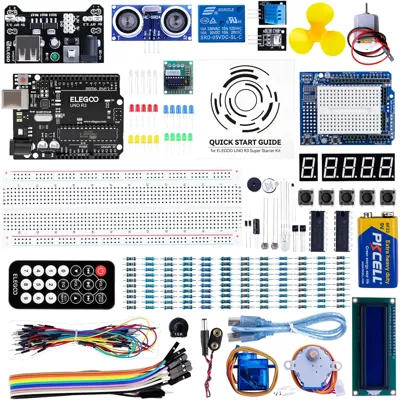
Best first coding kit
ELEGOO UNO R3 Project Super Starter Kit with Tutorial
The standard first Arduino kit: blinking lights and sensors in week one, their own projects after that. Needs a computer.
Ages 8+Something to build and rebuild
Check price on AmazonThe National Geographic Hobby Rock Tumbler is the gift I wish I had at that age. Rough stones go in with grit and come out polished three to four weeks later. It runs in the garage and it is loud. The best part is that it keeps working with whatever rocks the kid finds on vacation, at the beach or in the creek. Our tumbler turned a bag of gravel from a family trip into a jar of polished stones that sits on Noor’s windowsill.
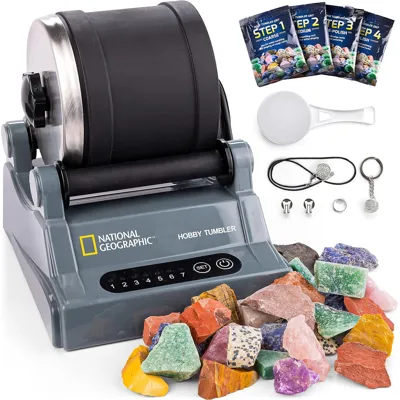
Best for collectors
National Geographic Hobby Rock Tumbler Kit for Kids and Adults Ages 8+
Rough stones go in, polished stones come out a few weeks later. It keeps working with any rocks they find on walks.
Ages 8+A real tool to keep
Check price on AmazonBest science gifts for teens (13 and up)
Teens do not want toys. They want the real thing, in a version they can handle. I bought my niece Leila a Thames & Kosmos chemistry set for her thirteenth birthday. She did every experiment in the manual over the following year and asked for the next set up.
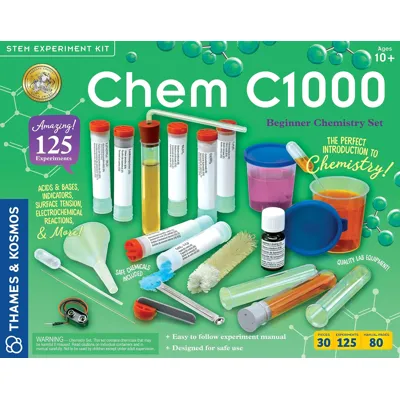
Best chemistry set for teens
Thames & Kosmos Chem C1000 (V 2.0) Beginner Chemistry Set
The first real chemistry set: lab equipment, seven chemicals and 125 experiments with a proper manual. Plan to sit with them.
Ages 10+A project to do together
Check price on AmazonFor a teen who is serious about biology, the Swift SW200DL is a real compound microscope with glass optics and a metal frame. It will last through high school. It comes without slides, so add a box of prepared ones and a pack of blank slides and covers. That is the difference between a microscope that gets used and one that gets dusted.
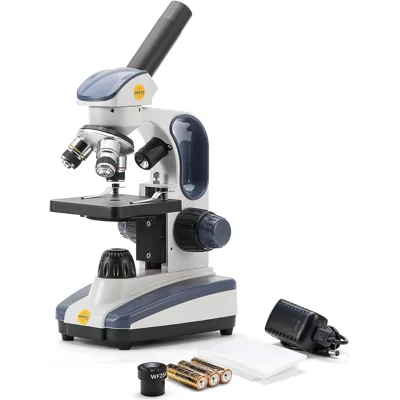
Best microscope for teens
SWIFT SW200DL Compound Microscope 40X-1000X, Dual Light
Glass optics and a metal frame that will last through high school biology. Buy a box of prepared slides with it.
Ages 12+A real tool to keep
Check price on AmazonFor a teen who likes space and building, the LEGO Technic Planet Earth and Moon in Orbit turns into a working model on their desk. Turn the crank and you see why we have seasons. For reading, The Way Things Work Now by David Macaulay is the book I still open myself.
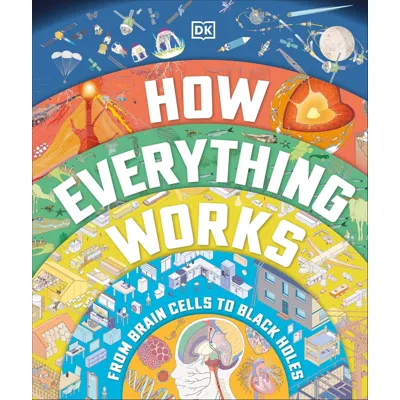
Best science book for 10 and up
DK How Everything Works: From Brain Cells to Black Holes
A 320-page DK book on how things work, from brain cells to black holes, pitched at ages 10 to 14.
Ages 10+A book
Check price on AmazonIf you are shopping for an older teen or an adult who never grew out of it, I have a separate list of science kits for adults.
Best STEM toys that get played with for years
When I look at what is still out in our house after several years, it is never the one-use kits. It is the things you can rebuild. STEM toys that kids return to have three things in common: no parts that run out, results in the first ten minutes and a next step when they get bored.
- Snap Circuits (Beginner, SC-100, Pro SC-500): the same parts keep working across every set, so each one adds to the last.
- Magna-Tiles: from age 3 to about 10, with no rules and no instructions.
- GraviTrax: starter sets plus add-on packs, so each birthday gets a new piece.
- A real microscope: new slides every holiday keep it fresh for years.
- A rock tumbler: every trip gives it new material.
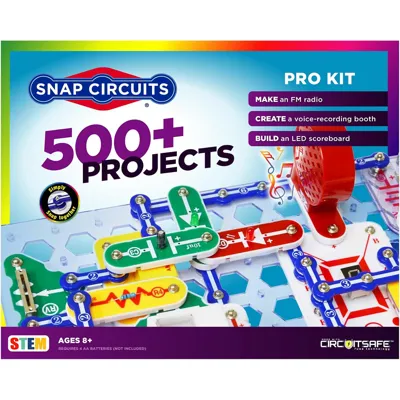
Best upgrade for Snap Circuits fans
Snap Circuits Pro SC-500 STEM Electronics Kit, 500+ Projects
The big set for a kid who outgrew the small one: 500-plus projects including a radio and a voice recorder.
Ages 8+Something to build and rebuild
Check price on Amazon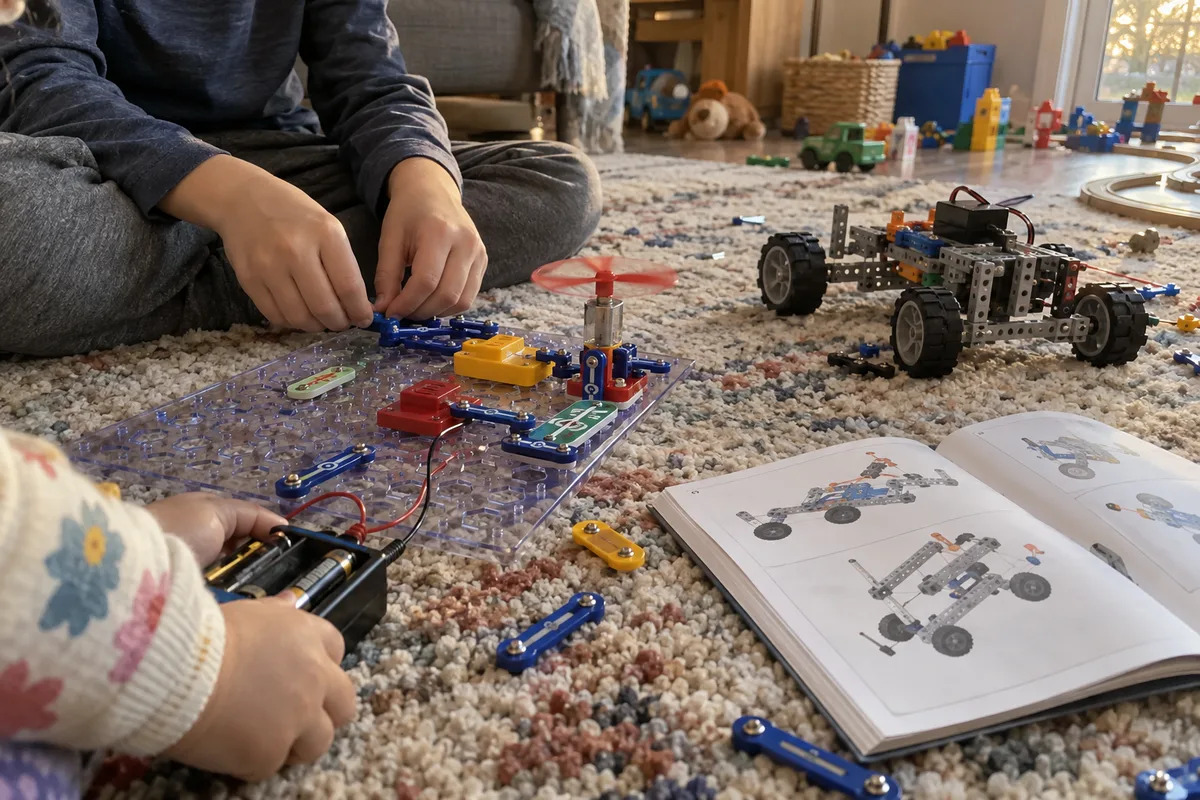
Science gifts that did not work in our house
These are the gifts I would skip, and the reasons.
- Kits rated above the child’s age. The four-year-old with the ages 8+ chemistry set is my own story. The child is not the problem; the instructions, the chemicals and the patience required are.
- Build-once models. A parent on Reddit described them as fun to build but not fun to play with. Kids are proud of the model for a day and then it collects dust. We have a shelf of them.
- Cheap telescopes with high magnification on the box. Magnification is not what matters in a telescope. A wobbly tripod and a tiny lens give you a blurry, shaking Moon. A good pair of binoculars is a better first step.
- Robots that need an app for everything. If the robot needs a charged tablet to do anything at all, a young kid cannot use it without you. Screen-free coding robots work better under eight.
- Subscription boxes for kids who do not finish things. They can be great, but a new box every month for a kid who leaves projects half done means a pile of half-done projects. A single bigger kit is easier.
How to make a science gift a hit
Most of the success of a science gift happens after it is unwrapped. These are the habits that made the difference in our house.
- Put batteries in the box. Snap Circuits, the Botley robot, the pocket microscope and others need batteries that are not included. A gift that cannot run on Christmas morning loses its moment.
- Do the first session together. Even for gifts a kid can run alone, the first time sets the tone. Twenty minutes with you is worth it.
- Give the extras they will run out of. Slides for a microscope, rough rocks for a tumbler, goggles that fit for a chemistry set. A good pair of lab safety goggles is a small add-on that makes a chemistry kit feel real.
- Give it a home. A tray, a shelf, a box with a lid. If the kit lives in a place the kid can reach, it gets used. If it lives in the top of a closet, it does not.
- Ask what they found. The best part of a gift for Noor is showing me what she saw. When I ask, she looks again.
If you only want to shop experiment kits for ages 3 to 10, our science kit finder goes deeper on that one category.
FAQ
A good science gift is rated for the child’s age, matches what they are interested in right now and fits the time an adult can give. For ages 3 to 4, kid binoculars or a reusable lab set work best. For ages 5 to 7, try Snap Circuits Beginner or Magna-Tiles. For ages 8 to 12, a real microscope, a geode kit or Snap Circuits SC-100. For teens, a Thames & Kosmos chemistry set or an Arduino starter kit.
Snap Circuits Beginner is the best STEM toy for most 5 year olds. The pieces snap together with no wires, the picture instructions need no reading and a child lights a bulb within minutes. Magna-Tiles and the Botley 2.0 coding robot are good alternatives for kids who prefer building or robots.
Snap Circuits SC-100 is the best science gift for most 8 year olds because it has over 100 projects and gets rebuilt for years. For a rock lover, a geode kit or crystal growing kit works well. For a kid who loves nature, a beginner compound microscope like the AmScope M30 kit is a good choice.
A real beginner microscope, the GraviTrax marble run or the National Geographic Mega Science Lab are strong gifts at 10. Kids this age are ready for real instruments. A metal-body microscope with glass lenses teaches far more than a toy one, and Thames & Kosmos Chem C1000 is rated from age 10 for kids who want real chemistry.
Teens want real equipment. A Thames & Kosmos chemistry set, an Elegoo Arduino starter kit, a Swift SW200DL compound microscope or a Celestron telescope are all good choices. Ask first, especially for a telescope. These gifts work best when the teen already wants to do the activity.
A telescope is a good gift for a child aged about 8 and older who has asked for one. Pick one that is easy to aim, like a tabletop Dobsonian, and plan to go outside with them the first few nights. For younger kids or kids who are only mildly curious, binoculars are a better first step.
Chemistry sets sold for kids are safe when used at the age on the box with the adult supervision the maker asks for. Sets for young kids mostly use kitchen ingredients like baking soda and vinegar. Sets for 10 and up, like the Thames & Kosmos Chem C1000, include real chemicals and need an adult at the table and goggles.
Most of the best science gifts need no screen at all: Snap Circuits, Magna-Tiles, GraviTrax, microscopes, binoculars, rock tumblers, crystal kits, board games and books. For coding without a screen, the Botley 2.0 robot and the Code & Go Robot Mouse are programmed with buttons.
Some are. Kits that are used up in one afternoon or rated above the child’s age often end up in a closet. Reusable sets like Snap Circuits, real instruments like a microscope and kits matched to a child’s current interest give the most use for the money.