Iceland has won exactly one Nobel Prize. Not “a few,” not “several across the sciences” — one. The plural in “Iceland’s Nobel Prize winners” is a trick the math plays on you, because the country has produced a single laureate in the prize’s entire 125-year history: the novelist Halldór Laxness, who took the 1955 Nobel Prize in Literature.
That sounds like a thin answer until you sit with it. A nation smaller than most American suburbs handed the world a writer good enough to beat the rest of the planet’s living novelists in a given year. The interesting question isn’t “why only one?” It’s “how even one?”
The short answer
| Laureate | Halldór Kiljan Laxness |
| Category | Literature |
| Year | 1955 |
| Citation | “for his vivid epic power which has renewed the great narrative art of Iceland” |
| Born / Died | 1902 (Reykjavík) – 1998 (Reykjavík) |
That’s the whole roster. Iceland has no Nobel winners in Physics, Chemistry, Medicine, Economics, or Peace. One person, one category, one year. If you came here to settle a trivia bet, you can stop reading — but you’d be missing the better story.
Table of contents
- Who was Halldór Laxness?
- The road to 1955: monasteries, Hollywood, and socialism
- The books that won it
- Why a country of 360,000 produces a literature laureate
- The Icelanders who came close
- Visit the laureate: Gljúfrasteinn
- Where to start reading
Who was Halldór Laxness?

Halldór Guðjónsson was born in Reykjavík in 1902 and grew up on a farm called Laxnes just outside the city — close enough that he later took the place as his pen name, swapping the final letter to make Laxness. He published his first novel at 17. By his early twenties he’d left Iceland entirely, and for the next decade he was less an Icelandic farm boy than a restless European intellectual trying on identities the way other people try on coats.
He’s the rare writer whose biography is as strange as his fiction. Most national literary heroes stayed home and wrote about the homeland. Laxness wrote about Iceland obsessively — its sheep farmers, its fishing villages, its medieval bishops — but he did it after wandering through a German monastery, a Los Angeles screenwriting flop, and a full conversion to Soviet communism. The homeland looked different once he’d left and come back.
The road to 1955: monasteries, Hollywood, and socialism
In 1922 Laxness checked himself into a Benedictine monastery in Luxembourg, converted to Catholicism, and seriously considered becoming a monk. He took the name Kiljan, after an Irish martyr, and kept it for the rest of his life. The novel that came out of this phase, The Great Weaver from Kashmir (1927), is a feverish young-man’s book about a Catholic mystic, and it made him famous in Iceland overnight.
Then he went the other direction. In the late 1920s he moved to the United States, landed in California, and tried to break into Hollywood as a screenwriter. It didn’t take. What did take was a political conversion that ran exactly opposite to the Catholic one — he came back from America a committed socialist, radicalized partly by watching the Depression hit and partly by reading Upton Sinclair, whose work he translated. For the next twenty years he was Iceland’s most prominent literary communist, traveled repeatedly to the Soviet Union, and wrote admiringly of Stalin’s Russia in ways he’d later regret in print.
That arc — Catholic mystic to Soviet sympathizer to, eventually, a disillusioned skeptic of both churches — is the engine under his best fiction. He understood true believers because he’d been several kinds of one.
The books that won it
The Nobel committee doesn’t cite specific novels, but everyone knows which book carried Laxness to Stockholm.
Independent People (Sjálfstætt fólk, 1934–35). This is the one. It follows Bjartur of Summerhouses, a sheep farmer so obsessed with owing nothing to anyone that he grinds his own family into the ground rather than accept a scrap of help. It’s a brutal book about the cost of stubborn self-reliance, and it works as both a tragedy and a quiet argument against the romantic myth of the rugged independent man. The American novelist Annie Proulx and many others have called it one of the great novels of the century. If you read one Laxness book, read this.
Salka Valka (1931–32). His breakthrough realist novel, set in a poor fishing village, centered on a fiercely independent young woman. It’s the book where he found the voice — plainspoken, sardonic, rooted in working-class Icelandic life — that defined everything after.
World Light (Heimsljós, 1937–40). A four-part novel about a pauper poet, loosely based on a real Icelandic folk-poet. It’s his most sprawling meditation on beauty, suffering, and what art is even for.
Iceland’s Bell (Íslandsklukkan, 1943–46). A historical novel set in the late 1600s and early 1700s, during Iceland’s grim period under Danish rule. It’s the most overtly nationalist of the major works and a favorite inside Iceland itself.
The Swedish Academy gave him the 1955 prize “for his vivid epic power which has renewed the great narrative art of Iceland” — a careful phrase that points straight back to the medieval sagas. You can read the full Nobel Prize citation and biography on the official record. The committee wasn’t just praising a modern novelist. They were saying he’d picked up a 700-year-old storytelling tradition and made it live again.
Why a country of 360,000 produces a literature laureate
Here’s the part the tourism blogs skip. Iceland’s single Nobel is in Literature, not science, and that’s not an accident. It comes straight out of the one thing Iceland has had in surplus for a thousand years: stories, and people who can read them.
Medieval Iceland produced the sagas — the Íslendingasögur, prose narratives written down in the 1200s and 1300s about the island’s settlement-era families. They’re some of the most sophisticated narrative prose written anywhere in medieval Europe, and crucially, they’re in plain Icelandic, not Latin. The language has changed so little that a modern Icelander can read 800-year-old saga manuscripts with less effort than an English speaker needs for Chaucer. The Árni Magnússon Institute in Reykjavík preserves the medieval manuscripts, and they’re treated as national treasures — when Denmark returned the main saga codices in 1971, crowds met the ship at the harbor.
Stack literacy on top of that. Iceland reached near-universal literacy unusually early, by the late 1700s, driven partly by a Lutheran church that expected people to read scripture at home. A tiny, isolated, story-soaked population that has read fluently for centuries is exactly the kind of place that, every so often, throws off a Halldór Laxness. The famous modern statistic — that Iceland publishes more books per capita than almost any nation on Earth, and that an estimated one in ten Icelanders will publish a book in their lifetime — is the same phenomenon still running.
So the real answer to “how does a nation of 360,000 win a literature Nobel” is that it was never really a nation of 360,000 readers. It was a nation of 360,000 readers standing on a thousand years of writers.
The Icelanders who came close
If exactly one feels suspiciously low, it’s worth knowing the near-misses, because they exist.
In literature, the poet and playwright Gunnar Gunnarsson was nominated for the Nobel multiple times in the 1910s through 1950s and was, for a stretch, more internationally famous than Laxness — he wrote much of his work in Danish and was a genuine contender. There’s a persistent story that in 1955 the prize was nearly split or that Gunnarsson was a finalist; the Academy’s records, which open after 50 years, show Icelandic nominations circulating for years before Laxness finally took it.
Outside literature, Iceland’s scientific community is small but not invisible. Icelandic-descended researchers and Icelandic institutions have contributed to fields like genetics — the country’s unusually complete genealogical records and homogeneous population made it a landmark site for human genetics research in the late 1990s and 2000s. No Nobel has come of it yet. Given the size of the talent pool, one laureate is roughly what probability would predict, not a shortfall.
And per capita, that single prize punches absurdly hard:
| Country | Population (approx.) | Nobel laureates | People per laureate |
|---|---|---|---|
| Iceland | 360,000 | 1 | ~360,000 |
| Sweden | 10.5 million | ~30 | ~350,000 |
| United States | 335 million | 400+ | ~800,000 |
| China | 1.4 billion | ~8 | ~175 million |
One prize for 360,000 people puts Iceland in the same per-capita neighborhood as Nobel-soaked Sweden, and well ahead of the United States. “Only one” stops sounding like a weakness when you do the division.
Visit the laureate: Gljúfrasteinn
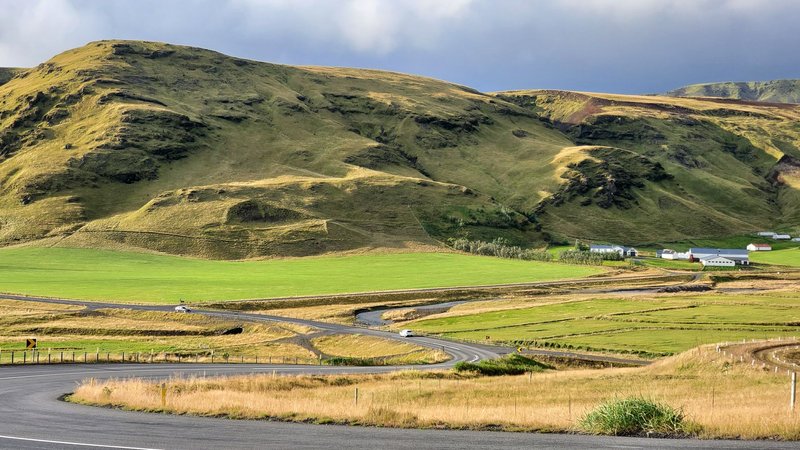
You can walk through Laxness’s actual life. With his Nobel and book royalties, he built a modernist house called Gljúfrasteinn in the Mosfellsdalur valley, about 15 kilometers outside Reykjavík, and lived there from 1945 until his death in 1998. After his widow died, the Icelandic state turned it into a museum — and they kept it exactly as it was.
This is what makes it worth the half-hour drive. Gljúfrasteinn isn’t a recreated period set; it’s the family’s real house, with their furniture, his library, the paintings on the walls, and the cars in the driveway, including his Jaguar. There’s an audio guide narrated partly by his daughter. You stand in the study where Iceland’s Bell and the later novels were written, looking out at the same valley he looked at. It’s open to visitors most of the year — check the official Gljúfrasteinn museum site for current hours, since they shift seasonally.
It pairs naturally with a trip up to nearby Þingvellir or the Mosfellsbær area, so it slots into a day rather than demanding one.
Where to start reading
If this is your first Laxness, the order matters more than people admit, because his range is wide and the wrong entry point can mislead you.
- Start with Independent People. It’s the masterpiece, it’s the most translated, and Bjartur is one of the great characters in 20th-century fiction. The J.A. Thompson English translation is the standard.
- Then Iceland’s Bell if you liked the historical sweep, or *Salka Valka* if you want more of the village-realism register.
- Save World Light for last. It’s the most demanding and the most rewarding once you’re already on his wavelength — not the place to begin.
Skip The Great Weaver from Kashmir unless you’re specifically curious about his early Catholic phase; it’s interesting biographically but it’s not the writer who won the prize.
So: Iceland’s Nobel Prize winners, plural, come down to one man — but he’s a man worth the singular. One laureate, built on a thousand years of saga and near-total literacy, who turned a sheep farmer’s stubbornness into world literature. The plural was always going to disappoint. The story behind the one doesn’t.