A country smaller than West Virginia has produced 21 Nobel laureates in the sciences, the man who found the first microbe, and the guy who wrote the programming language running half the internet. That’s not a coincidence you can wave away with “good universities.” The Dutch Republic built a trading economy on precision — lenses, navigation, banking — and precision has a way of turning into physics.
This is a working list, not a highlight reel of the same eight names every “famous Dutch scientists” article recycles. It runs from a draper who ground his own lenses in 1670s Delft to a virologist who briefed the WHO during COVID, grouped by era and field so you can jump to what you’re after.
Table of Contents
- Golden Age Pioneers
- Nobel-Winning Physicists
- Chemists Who Redrew the Map
- Medicine and Biology
- Women Who Broke the Line First
- Modern Science and Computing
- Why One Small Country Keeps Doing This
Golden Age Pioneers
The 17th century Dutch Republic ran on trade, and trade ran on accurate instruments — clocks for navigation, lenses for cloth inspection, maps that didn’t lie. That demand for precision spilled straight into science.
Antonie van Leeuwenhoek (1632–1723)
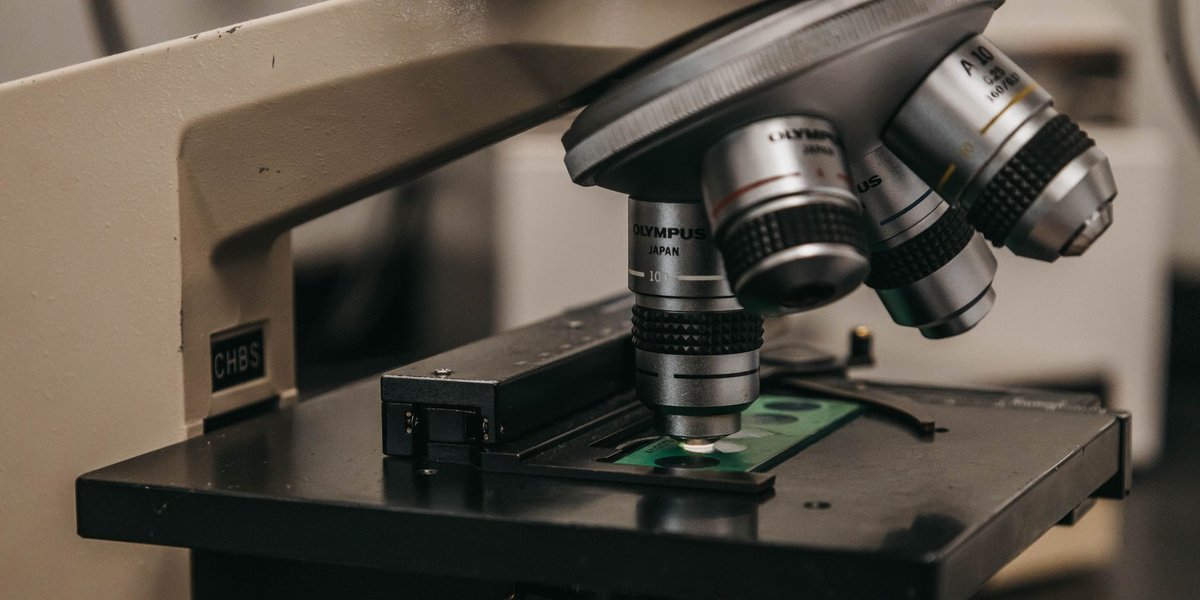
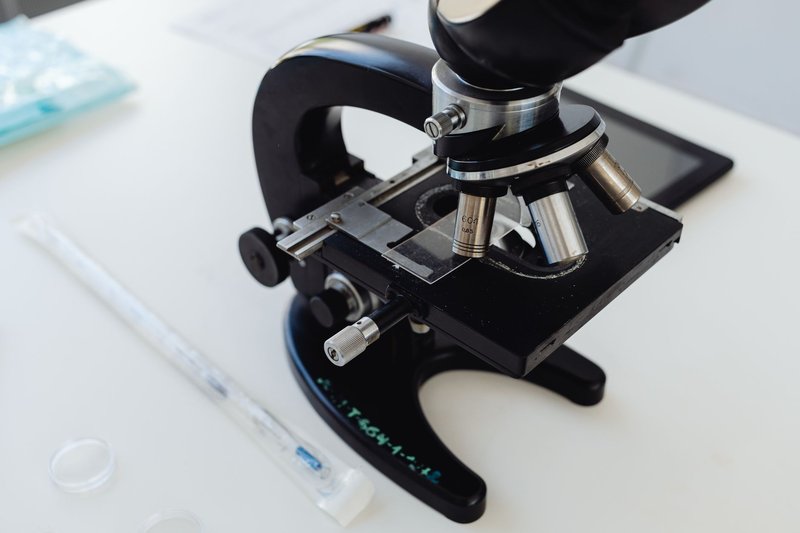
A cloth merchant in Delft who ground his own lenses to inspect fabric thread count, van Leeuwenhoek built microscopes sharper than anything a university lab owned and turned them on pond water instead of linen. In 1676 he described “animalcules” swimming in a rainwater sample — the first person to ever see a living microorganism. He went on to document red blood cells, sperm cells, and bacteria from his own dental plaque, and his letters to the Royal Society made him a fellow despite having no formal scientific training at all.
Christiaan Huygens (1629–1695)
Huygens ground better telescope lenses than anyone in Europe and used one to spot Saturn’s rings for what they actually were, not the “handles” Galileo had guessed at, and to discover its largest moon, Titan, in 1655. He also proposed that light travels as a wave rather than a stream of particles, a theory that lost to Newton’s corpuscles for over a century before turning out to be closer to correct. His pendulum clock design, patented in 1657, was the most accurate timekeeper on Earth for the next 300 years.
Simon Stevin (1548–1620)
Stevin was an engineer first and a mathematician second, which is why his most lasting contribution is boringly practical: he popularized decimal fractions in Europe, replacing the fraction-heavy math that made basic commerce a headache. He also proved that objects of different weights fall at the same rate by dropping lead balls off a church tower in Delft, a demonstration usually credited to Galileo but performed by Stevin around the same time with less fanfare.
Hermann Boerhaave (1668–1738)
Boerhaave taught medicine at Leiden by walking students to actual hospital beds instead of lecturing from ancient texts, a method so unusual for the 1700s that physicians from across Europe, including future royal doctors, traveled to Leiden just to watch him work. He’s the reason bedside clinical teaching is standard practice today, and Leiden’s medical faculty still trades on the reputation he built.
Nobel-Winning Physicists
Between 1901 and 1999, Dutch-born physicists took home seven Nobel Prizes, and the throughline across all of them is a comfort with the very small and the very fast.
Hendrik Lorentz (1853–1928)
Lorentz worked out the mathematical transformations describing how space and time measurements change for objects moving near the speed of light — equations Einstein would later build special relativity on top of almost unchanged. He shared the 1902 Nobel Prize in Physics with his student Pieter Zeeman for explaining how magnetic fields split spectral lines, a discovery that helped prove atoms have internal structure at all.
Pieter Zeeman (1865–1943)
Zeeman found that a strong magnetic field splits a single spectral line into multiple closely spaced lines, an effect that gave physicists their first real tool for measuring magnetic fields in places they couldn’t touch — including the sun and distant stars. The Zeeman effect is still how astronomers estimate magnetic field strength on stellar surfaces today.
Frits Zernike (1888–1966)
Living cells are mostly transparent, which made them nearly invisible under a standard microscope until Zernike figured out how to convert tiny differences in light phase into visible contrast. Phase-contrast microscopy, which won him the 1953 Nobel Prize in Physics, is why biology labs can watch a living, unstained cell divide instead of only examining dead, dyed tissue.
Nicolaas Bloembergen (1920–2017)
Bloembergen’s early work on nuclear magnetic resonance became foundational to the MRI machines hospitals use today, and his later research on how lasers interact with matter earned him a share of the 1981 Nobel Prize in Physics. He did most of that Nobel-winning work at Harvard after emigrating from the Netherlands, one of several scientists on this list whose biggest breakthroughs happened abroad.
Simon van der Meer (1925–2011)
An engineer, not a theorist, van der Meer developed “stochastic cooling,” a technique for compressing scattered particle beams into a tight, usable stream at CERN. Without it, the 1983 discovery of the W and Z bosons — the particles that carry the weak nuclear force — wouldn’t have been possible, and van der Meer shared the 1984 Nobel Prize in Physics for making the experiment work.
Gerardus ‘t Hooft (1946–)
‘t Hooft, working with his advisor Martinus Veltman, proved in the early 1970s that the mathematics underlying the electroweak theory — the framework unifying electromagnetism and the weak nuclear force — was actually consistent and usable for real calculations. That proof turned the Standard Model of particle physics from an elegant guess into a predictive tool, and the pair split the 1999 Nobel Prize in Physics for it.
Chemists Who Redrew the Map
Jacobus van ‘t Hoff (1852–1911)
Van ‘t Hoff received the first Nobel Prize in Chemistry ever awarded, in 1901, for showing that molecules have three-dimensional shapes and that reaction rates and osmotic pressure follow measurable mathematical laws. Before his work, chemistry was mostly a cataloguing science; after it, chemists could predict how a reaction would behave before running it.
Pieter Debye (1884–1966)
Debye figured out how to measure the asymmetry of electric charge inside a molecule — the “dipole moment” now measured in units named after him — and used X-ray diffraction to work out how molecules pack together in solids and gases. He won the 1936 Nobel Prize in Chemistry for it and later led major research labs at Cornell, another Dutch scientist whose career crossed the Atlantic.
Paul Crutzen (1933–2021)
Crutzen showed that nitrogen oxides catalytically destroy stratospheric ozone, research that, combined with work on CFCs, led directly to the 1987 Montreal Protocol banning ozone-depleting chemicals — one of the few global environmental treaties that actually worked. He shared the 1995 Nobel Prize in Chemistry for it, and later popularized the term “Anthropocene” to describe an era shaped by human activity.
Ben Feringa (1951–)
Feringa built the first molecular motor in 1999: a single molecule that spins continuously in one direction when hit with light, small enough that 50,000 of them could line up across a human hair. It sounds like a toy until you realize it’s the working proof that machines can be built atom by atom, which is why Feringa shared the 2016 Nobel Prize in Chemistry for launching the field of molecular nanotechnology.
Medicine and Biology
Christiaan Eijkman (1858–1930)
While running a military hospital lab in colonial Indonesia, Eijkman noticed that chickens fed polished white rice developed the same paralysis symptoms as beriberi patients, and that switching them back to unpolished rice cured it. He’d stumbled onto the existence of vitamins two decades before the term existed, and the 1929 Nobel Prize in Physiology or Medicine recognized a discovery that came from watching sick chickens, not from a hypothesis about nutrients.
Willem Einthoven (1860–1927)
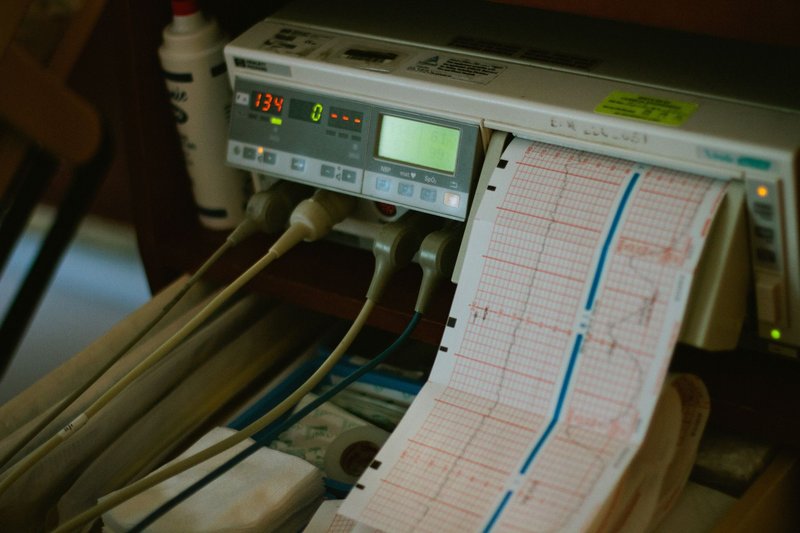
Einthoven built the first practical string galvanometer sensitive enough to record the heart’s electrical activity from the skin’s surface, inventing the electrocardiogram in the process. The ECG traces every cardiologist reads today still use the P, Q, R, S, T wave labeling system Einthoven assigned in his original 1901 paper, and he won the 1924 Nobel Prize in Physiology or Medicine for a device that’s now standard equipment in every emergency room on Earth.
Women Who Broke the Line First
Aletta Jacobs (1854–1929)
Jacobs talked her way into medical school by writing directly to the Dutch prime minister after being repeatedly turned away, becoming the first woman to attend university in the Netherlands and, in 1879, the country’s first female physician. She spent her career running free clinics for working-class women and became a leading voice in the international suffrage movement, proof that “first” in Dutch science often meant fighting the university system just to get in the door.
Ada Prins (1879–1977)
Prins earned her doctorate in chemistry in 1908, the first woman in the Netherlands to do so, then spent decades writing the organic and inorganic chemistry textbooks used to train the next generation of Dutch chemists — most of whom were men, since the field stayed overwhelmingly male for another half-century after her.
Marion Koopmans (1956–)
Koopmans heads the viroscience department at Erasmus MC and has spent her career tracking how viruses jump from animals to humans, work that put her on international advisory panels during the COVID-19 pandemic, including missions coordinated with the World Health Organization investigating the virus’s origins. She’s the rare scientist on this list still actively shaping how the world responds to an outbreak in real time.
Modern Science and Computing
Gerard Kuiper (1905–1973)
Kuiper spent his career arguing that the solar system didn’t end cleanly at Pluto, proposing in 1951 that a disk of icy bodies orbited beyond Neptune. It took until 1992 for astronomers to actually find one of those objects, confirming what’s now called the Kuiper Belt — the region that later cost Pluto its planet status once astronomers realized how many similar bodies shared its neighborhood.
Guido van Rossum (1956–)
Van Rossum wrote Python during a slow week over Christmas 1989 at a Dutch research institute, designing it specifically to be readable by people who weren’t full-time programmers. It’s now the most-used programming language in data science and machine learning, and van Rossum held the informal title “Benevolent Dictator for Life” over its development until stepping back in 2018 — a title the ACM later recognized with a Distinguished Engineer honor for his influence on software design.
Why One Small Country Keeps Doing This
The Netherlands has roughly 18 million people, less than the Los Angeles metro area, yet it out-produces countries ten times its size on the Nobel physics and chemistry tally. Three things show up again and again in these biographies: a trading economy that rewarded precision instruments long before “STEM” was a category, a university system at Leiden and Utrecht that dates to the 1570s and never really stopped funding basic research, and a national habit of sending scientists abroad — Bloembergen, Debye, and Kuiper all did their most famous work at American institutions after training in the Netherlands.
That last point matters more than national pride lists usually admit. Dutch science doesn’t stay in the Netherlands. It gets exported, absorbed into MRI machines and CERN experiments and Python codebases, until the “Dutch” part of the discovery is the least interesting fact about it.
The Roster, Updated
Famous Birthdays gives you eight names and a birthdate. TheFamousPeople gives you sixty-two names and no story. Neither tells you that a beriberi outbreak in a colonial hospital led to the discovery of vitamins, or that a molecule can spin like a motor if you hit it with the right color of light. The names above cover four centuries, from a lens-grinding cloth merchant to a virologist still working today — and the list isn’t finished. Someone born in Rotterdam or Groningen this decade is already working on the discovery that lands on the next version of it.