TL;DR
Virginia’s headline minerals cluster into three belts: the Amelia County pegmatites (amazonite, beryl, tourmaline, rose quartz), the Blue Ridge belt (staurolite “fairy stones,” garnet, unakite), and the industrial kyanite deposits around Willis Mountain and Dillwyn. Of the famous collecting spots, only a handful are actually open to the public today — Fairy Stone State Park (hand-collecting only, no tools) and the George Washington and Jefferson National Forests (surface and shallow hand-dug collecting) are legal. Morefield Mine, the fee-dig site most articles still recommend for amazonite, closed in 2016. Willis Mountain and Crimora are active or former industrial sites on private land — not open to visitors.
Table of Contents
- Why Virginia’s Mineral Map Looks Like Three Different States
- The Amelia County Pegmatite Belt
- The Blue Ridge: Staurolite, Garnet, and Unakite
- The Industrial Belt: Kyanite and Manganese
- Widespread Extras: Pyrite and Mica
- Where You Can Actually Collect, Legally
Why Virginia’s Mineral Map Looks Like Three Different States
Virginia splits into distinct geologic provinces, and each one produces a different mineral suite. The Coastal Plain, east of Richmond, is young sediment — sand, clay, shell fossils — and it’s mostly a mineralogical dead zone. The Piedmont, the rolling belt running from Richmond to the Blue Ridge foothills, is old metamorphic and igneous rock cut through with pegmatite dikes, which is why Amelia County produces more mineral species than anywhere else in the state. The Blue Ridge itself is a slab of ancient metamorphosed rock — schist and gneiss — that’s ideal for growing garnet and staurolite crystals under heat and pressure.
That’s the piece most catalog pages skip: minerals aren’t scattered randomly across Virginia. They show up in predictable belts because the rock that hosts them formed in predictable belts, hundreds of millions of years apart.
The Amelia County Pegmatite Belt
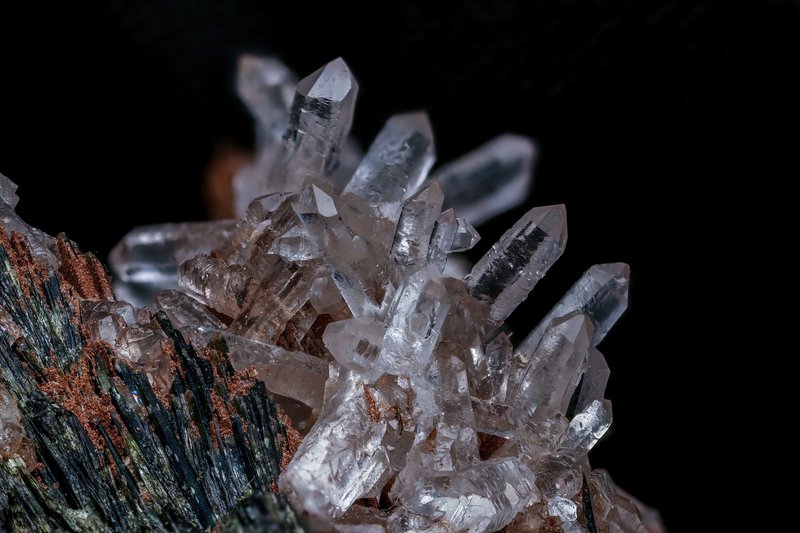
Amelia County, about 40 miles southwest of Richmond, sits on one of the most mineralogically diverse pegmatite fields on the East Coast. Pegmatites are coarse-grained igneous rock that crystallized slowly enough to grow large, well-formed crystals — which is why a single square mile here has produced more than 80 identified mineral species, according to Virginia Energy’s geology division.
Amazonite is the county’s signature find: a blue-green variety of microcline feldspar, opaque to slightly translucent, with a blocky, cleaved crystal habit. It formed here in higher concentrations than almost anywhere else in North America.
Rose quartz and smoky quartz both turn up loose in the pegmatite pockets — rose quartz milky pink and usually massive rather than in sharp crystals, smoky quartz gray-to-black and often forming long hexagonal points.
Beryl shows up in three color varieties depending on trace elements: pale blue-green aquamarine, pink morganite, and colorless goshenite. All three are the same hexagonal mineral, Be₃Al₂Si₆O₁₈, just with different impurities.
Tourmaline (mostly the black iron-rich variety called schorl) forms long striated prisms, sometimes radiating out from a single point like a starburst.
Topaz and apatite are the rarer finds — topaz as small glassy crystals, apatite usually as green to purple hexagonal prisms easy to mistake for beryl until you check the hardness (apatite scratches at 5, beryl at 7.5–8).
The catch: the site that made this belt famous, Morefield Mine — a fee-dig operation where you could pay $10 and spend a day digging your own amazonite — has been closed since 2016. Most rockhounding roundups still list it as an active destination. It isn’t. If you’re planning a trip around it, you’ll be turned away.
The Blue Ridge: Staurolite, Garnet, and Unakite
Head west into the Blue Ridge and the mineral suite shifts to what forms in metamorphic schist under regional heat and pressure.
Staurolite — Virginia’s best-known mineral, thanks to the local nickname “fairy stones” — grows as twinned crystals that cross at roughly 60 or 90 degrees, forming natural X and cross shapes. They’re brown to reddish-brown, opaque, and rate 7 to 7.5 on the Mohs scale, hard enough to survive centuries of erosion intact. Fairy Stone State Park in Patrick County is named for them, and local legend attributes the cross shape to the crystallized tears of fairies who wept on hearing of Christ’s death — a story that’s outlived several generations of actual geologists trying to correct it.
Almandine garnet is common enough in Piedmont and Blue Ridge schist that you’ll find deep red, near-black crystals with the classic dodecahedral (12-sided) form weathering directly out of roadcuts and stream gravel in counties like Nelson and Fauquier.
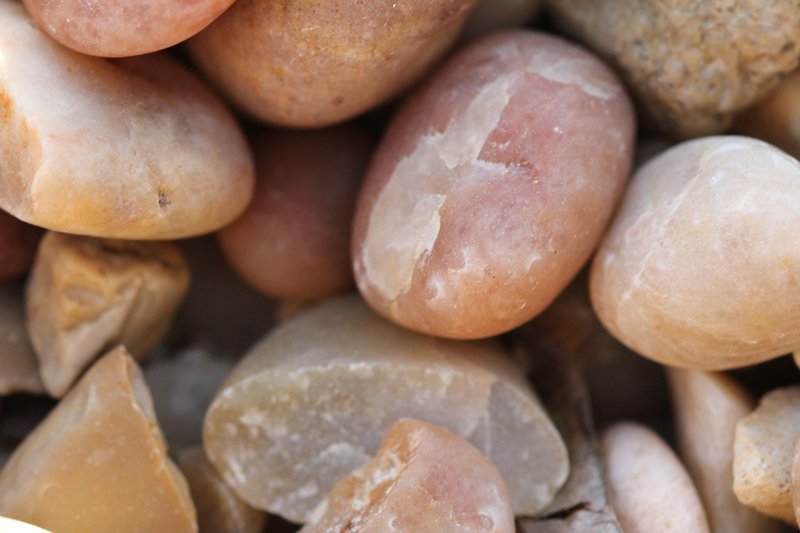
Unakite is technically a rock rather than a single mineral — a mix of pink orthoclase feldspar, green epidote, and quartz — but it’s collected constantly because it’s so visually distinct: mottled pink-and-green, polishes to a marbled finish, and washes down out of the Blue Ridge into stream gravel far from its source rock.
The Industrial Belt: Kyanite and Manganese
Kyanite, a blue-to-gray aluminum silicate that forms bladed, often bent crystals, is Virginia’s most economically significant mineral — and it’s a genuine geologic oddity, because its hardness changes depending on which direction you scratch it (a property called anisotropism). The deposits at Willis Mountain, near Dillwyn in Buckingham County, and at a second site near the same area, are worked by the Kyanite Mining Corporation, which supplies refractory and ceramic industries worldwide.
Despite how often “Virginia state mineral” turns up as a kyanite search suggestion, Virginia doesn’t actually have an official state mineral. The commonwealth designated Nelsonite as its official state rock in 2016 — kyanite has never held any formal title, popular as it is.
Willis Mountain is an active industrial quarry on private company land. There’s no public collecting program, and showing up expecting to pick through the tailings will get you escorted off the property.
Manganite, a manganese oxide, was mined at the Crimora Mine in Augusta County from 1867 until 1958 — at its peak, the largest manganese producer in the United States. The mine is long closed and sits on private land today; it’s a genuinely interesting stop in Virginia mining history, but not a legal or safe collecting destination.
Widespread Extras: Pyrite and Mica
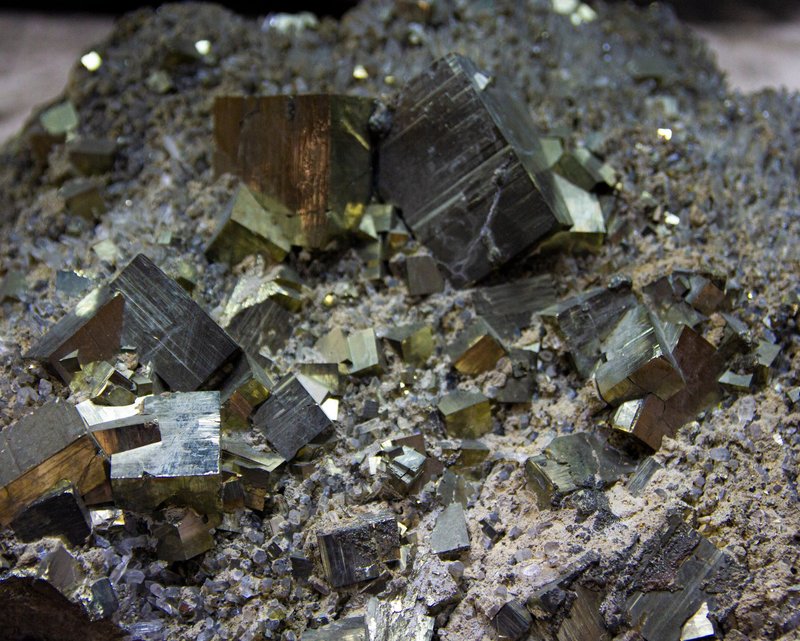
Not every mineral worth knowing needs a famous locality. Pyrite — brassy, cubic, and the reason “fool’s gold” entered the language — turns up in shale and slate outcrops across the Piedmont and valley regions wherever sulfur-rich sediment got buried and metamorphosed. Muscovite mica, silvery and splitting into paper-thin translucent sheets, is so common in Piedmont pegmatites and schist that most Virginia rockhounds find their first flake before they’ve learned to identify anything else.
Where You Can Actually Collect, Legally
This is the part most mineral roundups either skip or bury: access rules aren’t uniform, and they change. Here’s the current state of play.
| Site | County | Status |
|---|---|---|
| Fairy Stone State Park | Patrick | Legal — personal-use hand collecting only, no digging tools, no commercial quantities. A research/collecting permit is required for anything beyond casual personal use. |
| George Washington & Jefferson National Forest | Multiple | Legal — small quantities of common minerals (quartz, mica, garnet) for personal/hobby use, no permit needed. Surface collecting is fine; hand-tool digging is allowed outside Wilderness Areas and stream channels. |
| Amelia County pegmatites / Morefield Mine | Amelia | Closed to the public since 2016. Most of the historic pegmatite mines in the area are on private land without a fee-dig program. |
| Willis Mountain / Kyanite Mining Corp sites | Buckingham | Active private industrial mine — no public access or collecting. |
| Crimora Mine | Augusta | Closed historic site on private property — not open for visits or collecting. |
| Shenandoah National Park & Blue Ridge Parkway | Multiple | Prohibited — all National Park Service units ban rock and mineral collecting. |
| Other Virginia state parks | Statewide | Prohibited by default — Fairy Stone is the named exception, not the rule. |
The pattern is simple even if the specifics vary: national forest land is the most permissive, state parks are restrictive except for one named exception, and the famous industrial sites you’ll see referenced in older articles are either closed or were never public in the first place. The U.S. Forest Service’s mineral collecting guidance and each park’s own rules page are worth checking before you drive out — access status is exactly the kind of thing that changes without every website noticing.
Bring a hand lens, a hardness pick if you want to get serious about identification, and reasonable expectations. Virginia’s mineral belts reward people who know where to look far more than people who show up hoping to get lucky in the wrong county.