As an Amazon Associate we earn from qualifying purchases. Disclosure
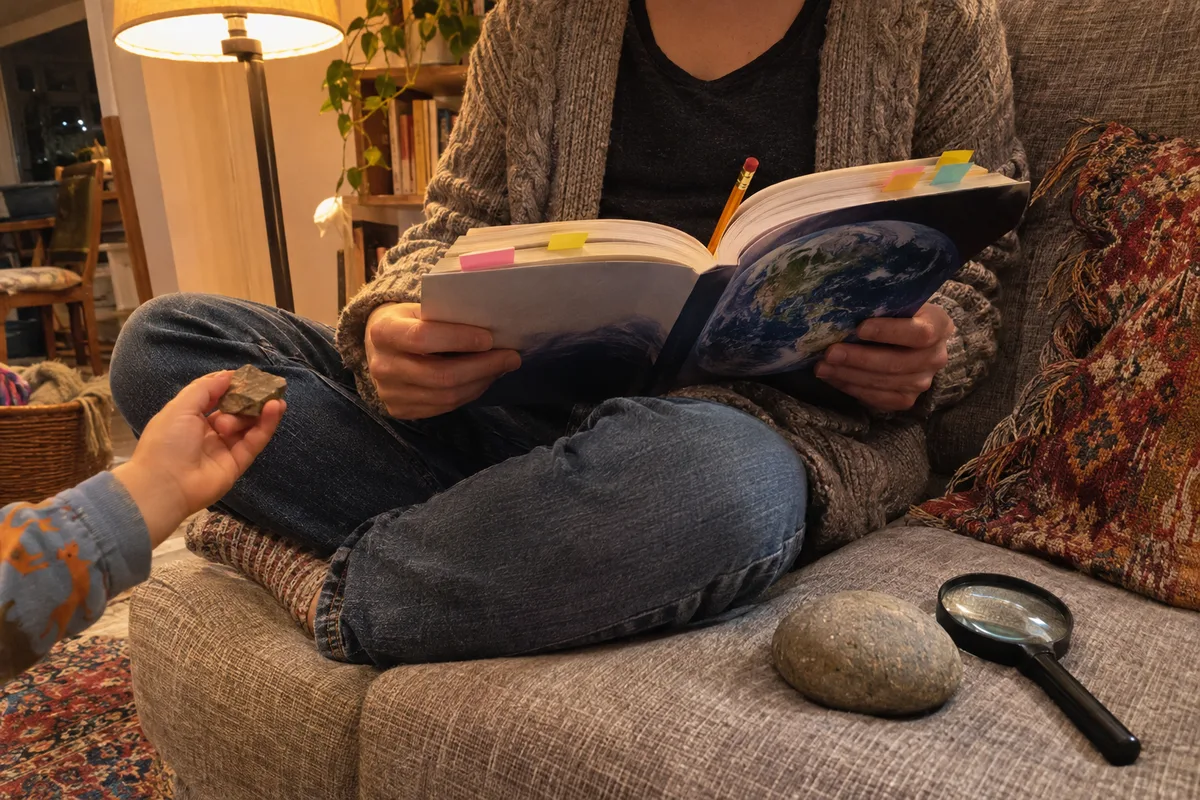
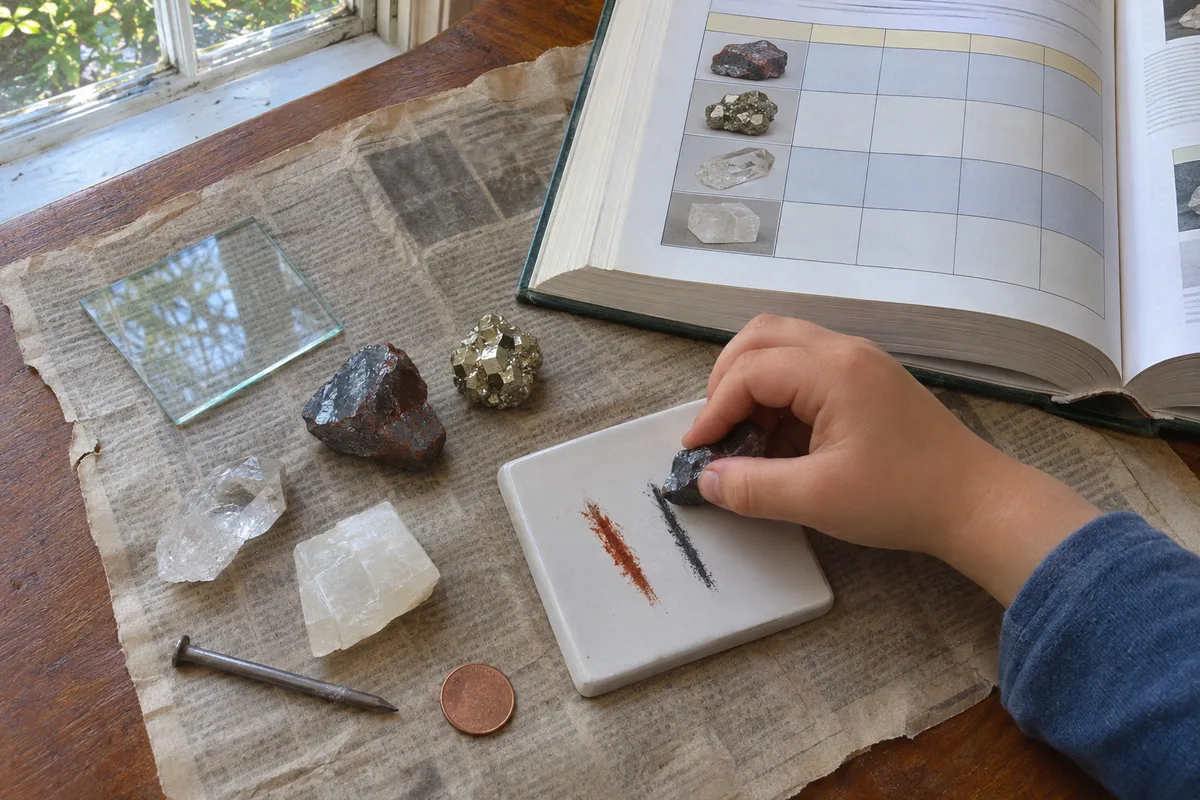
This spring my daughter Noor found a heavy black rock in our driveway gravel and decided it was a meteorite. We scraped it across the back of a white bathroom tile. It left a rusty red-brown line. Most meteorites leave little or no streak. A red-brown streak points to hematite, a common iron oxide. She was disappointed for about a minute, then wanted to know why a black rock leaves a red mark. That question is where geology starts for most people: a rock in your hand and no idea how to read it.
The best geology book for a beginner depends on what you want from it. If you want the big picture told as a story, start with Timefulness by Marcia Bjornerud. To learn the subject properly, the way an introductory course teaches it, get Geology: A Complete Introduction by David Rothery. To put names to the rocks you find, buy the National Geographic Pocket Guide to Rocks and Minerals. And if you ask Reddit, the answer is almost always Annals of the Former World by John McPhee.
I am a geoscientist. I spent my field years on Antarctic ice cores, river systems in the Amazon and volcano monitoring stations in East Africa, and these days most of my geology happens at the kitchen table with two kids and a shoebox of rocks. The picks below cover the four kinds of beginner geology book: popular science, plain-language introductions, college textbooks and rock identification guides. Each is current on Amazon, with the edition to buy and the ones to skip.
Quick picks
| Pick | Best for | Type |
|---|---|---|
| Geology: A Complete Introduction | Best overall for self-study | Introduction |
| Timefulness | Best short first read | Popular science |
| Annals of the Former World | Reddit’s top recommendation | Popular science |
| The Story of Earth | Earth history from the start | Popular science |
| Geology For Dummies | Plainest language | Introduction |
| Earth: Portrait of a Planet | Best intro textbook | Textbook |
| NatGeo Pocket Guide to Rocks and Minerals | Best first ID guide | Field guide |
| Audubon Field Guide to Rocks and Minerals | Most complete ID guide | Field guide |
| Earth: The Definitive Visual Guide | Teens and visual learners | Visual reference |
Which kind of geology book to start with
A friend who had just retired asked me last winter which geology book to read first. I started to answer and stopped, because the honest reply was another question: what do you want to be able to do when you finish it? Beginner geology books split into four groups, and each one answers a different need.
- Popular science tells the story of the Earth: how old it is, how continents move, how the rock record was worked out. You read it like any nonfiction book, in an armchair. It gives you the ideas and the excitement, but not the vocabulary to identify a rock.
- Plain-language introductions teach the subject in order: minerals, then rocks, then plate tectonics, then surface processes and geologic time. They are short courses in book form, and the right choice if you want to understand geology rather than read about it.
- Intro college textbooks cover the same ground as the introductions in three times the depth, with hundreds of diagrams and photos. They are the most complete option and the heaviest, in both senses.
- Identification guides are for naming what you find. They are organized by mineral or rock type, with photos and the properties you can test: hardness, streak, luster, cleavage. They explain very little about how the Earth works.
Most people who stick with geology end up owning one book from at least two of these groups: one to understand the processes and one to name the rocks. If you buy only one, choose by the question you ask most often. “Why does that cliff look like that?” points to an introduction. “What is this rock?” points to an ID guide.
Best popular science geology books for beginners
These need no background at all. Read one before an introduction and the textbook terms later will attach to stories you already know.
Best short first read
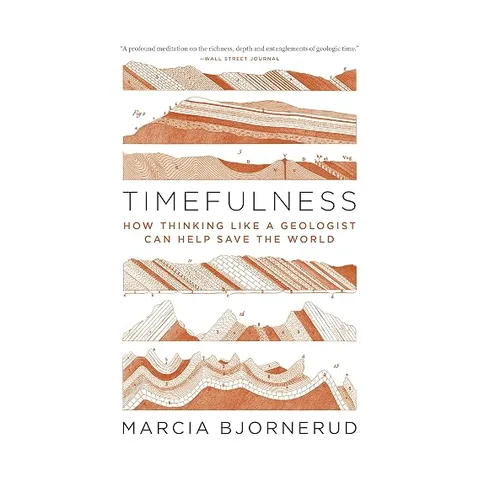
1. Timefulness: How Thinking Like a Geologist Can Help Save the World
Marcia Bjornerud is a structural geologist at Lawrence University in Wisconsin, and this short book is about the one idea that separates geologists from everyone else: a sense of how long things take. She explains how rocks are dated, how fast mountains rise and erode and how slowly the planet’s systems recover from change, then argues that people would make better decisions if they thought on those time scales.
At 224 pages it is the quickest book here to finish, and the one most likely to make a nongeologist want a second.
- Marcia Bjornerud
- Princeton University Press, 2020 paperback, 224 pages
- Covers deep time, radiometric dating, rates of geologic change
Good: short, clear and written by a working field geologist. Not great: the last third turns into an argument about climate and policy, which some readers will want and others will skim.
Check on Amazon
Reddit’s top recommendation
2. Annals of the Former World
John McPhee spent about twenty years traveling Interstate 80 from New Jersey to California with working geologists, and this book collects the five books that came out of it: Basin and Range, In Suspect Terrain, Rising from the Plains, Assembling California and Crossing the Craton. It won the 1999 Pulitzer Prize for General Nonfiction. The phrase “deep time” comes from Basin and Range.
In the Reddit threads we read where beginners ask what to read, it was named more often than any other book. It is also long and dense. If you are unsure, buy Basin and Range on its own first: 240 pages, and the best of the five for a beginner.
- John McPhee
- Farrar, Straus and Giroux paperback, 720 pages
- The geology of the United States along one highway, coast to coast
Good: real geology taught through the people who do it, in some of the best nonfiction prose in English. Not great: readers either love McPhee’s detail or stall in it, and the plate tectonics is as it stood in the 1980s and 1990s.
Check on Amazon
Best for Earth’s history from the start
3. The Story of Earth: The First 4.5 Billion Years, from Stardust to Living Planet
Robert Hazen is a mineralogist at the Carnegie Institution for Science and the scientist behind the idea of mineral evolution: the Earth started with a few hundred minerals and now has more than 5,000, and most of the new ones exist because of water and then life. This book tells the planet’s history in that order, from dust around the young Sun to the oxygen crisis to the continents of today.
It is the best book here for understanding why minerals matter, which makes an identification guide much more interesting afterwards.
- Robert M. Hazen
- Penguin paperback, 2013, 320 pages
- Over 1,300 Amazon ratings
Good: ties minerals, oceans, air and life into one timeline. Not great: it spends more time on the early Earth than on the rocks you can see today.
Check on Amazon
Best tour of famous places
4. Earth: An Intimate History
Richard Fortey was a paleontologist at the Natural History Museum in London. Here he explains plate tectonics by visiting the places that prove it: Vesuvius and the Bay of Naples, the Hawaiian volcanoes, the Alps, the San Andreas Fault, the old rocks of Newfoundland and Scotland. Each chapter is a trip, and the geology comes out of the landscape and the history of the people who studied it.
- Richard Fortey
- Vintage paperback, 480 pages
- Plate tectonics told place by place
Good: the best book here for linking geology to places you might visit. Not great: long and leisurely; readers who want the facts fast will prefer Rothery.
Check on Amazon
Best for fossils and mass extinctions
5. The Ends of the World
Peter Brannen is a science journalist, and this book walks through the five big mass extinctions with the geologists who study each one, at the outcrops where the evidence sits. Each extinction is read from the rocks: the chemistry of the layers, the volcanic deposits, the fossils that disappear at a boundary.
It is the most readable book on this list and the one with the most Amazon ratings among the popular science picks, and it shows how a geologist turns a band of rock into an event.
- Peter Brannen
- Ecco paperback, 2018, 336 pages
- Over 2,100 Amazon ratings
Good: gripping, and good at showing how evidence is read from outcrops. Not great: it covers one theme, so it does not replace an introduction.
Check on AmazonTwo more come up often. Simon Winchester’s The Map That Changed the World is the story of William Smith, who drew the first geological map of a whole country in 1815, and Bill Bryson’s A Short History of Nearly Everything has several good chapters on the age of the Earth and plate tectonics among its other sciences. Both are enjoyable, but they teach less geology per page than the five above.
Best introduction to geology books
An introduction to geology book teaches the subject in the order a first course does, so each chapter builds on the last. If you want to understand rather than be entertained, start here.
Best overall for beginners
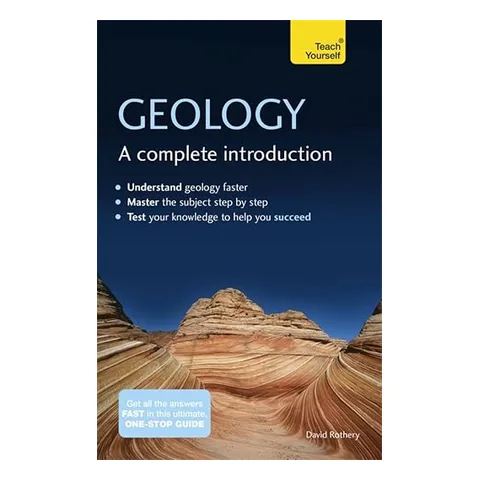
6. Geology: A Complete Introduction
David Rothery is a professor of planetary geosciences at the Open University in the UK, which teaches adults at home, and this book reads like one of its courses. It runs through minerals, igneous, sedimentary and metamorphic rocks, plate tectonics, folds and faults, weathering, geologic time and the history of life, with diagrams and short review questions at the end of each chapter.
It is the book I would hand an adult who wants to learn geology on their own. It assumes no science background, but it does not talk down, and by the end you can follow a first-year textbook without a dictionary.
- David Rothery
- Teach Yourself paperback, 2016, 384 pages
- Review questions in every chapter; nearly 800 Amazon ratings
Good: a complete first course in a paperback you can carry. Not great: mostly black-and-white figures, and a British publisher, so some examples come from the UK.
Check on Amazon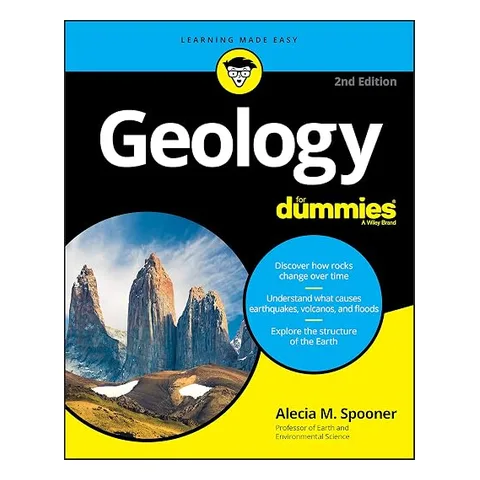
Plainest language
7. Geology For Dummies
Alecia Spooner’s book covers the same topics as Rothery in looser, simpler language: minerals and rocks, plate tectonics, earthquakes and volcanoes, rivers, glaciers and deserts, fossils and the geologic time scale. The second edition (2020) is the current one.
Use it if Rothery feels too much like a course, or for a teenager who needs help with an earth science class. The For Dummies format lets you jump into any chapter without reading the earlier ones.
- Alecia M. Spooner
- 2nd edition, 2020, 400 pages
- Named in 5 Reddit beginner threads
Good: the easiest reading of the introductions. Not great: chapter 1 previews many topics before it explains the basics, so skim it and start at chapter 2.
Check on Amazon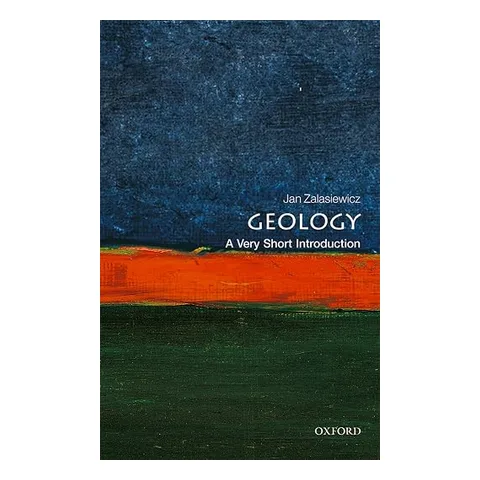
Shortest real introduction
8. Geology: A Very Short Introduction
Jan Zalasiewicz is a geologist at the University of Leicester, best known for leading the group that studied whether the Anthropocene should be a formal unit of geologic time. His Very Short Introduction fits rocks, minerals, geologic time, tectonics, fossils and the planet’s history into 176 small pages.
It is the right size for a commute or a weekend, and a good test of whether you want to go further before you commit to 400 pages.
- Jan Zalasiewicz
- Oxford University Press paperback, 2018, 176 pages
- Pocket size
Good: written by a leading geologist, and short. Not great: dense for its size, with few illustrations.
Check on Amazon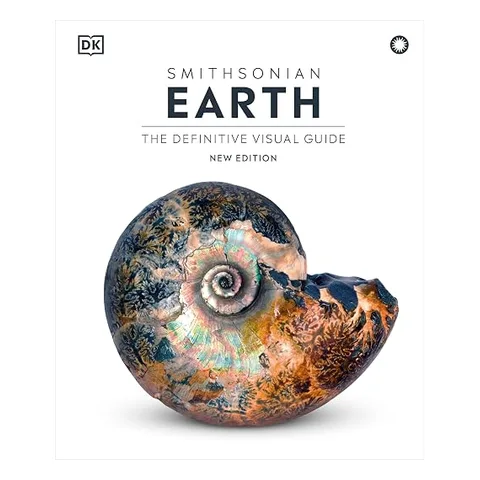
Best for teens and visual learners
9. Earth: The Definitive Visual Guide
DK’s large hardcover explains the planet in pictures: cutaway diagrams of the interior, photographs of landforms and rock types, maps of plates and volcanoes, and sections on oceans and the atmosphere. The third edition came out in 2024.
It suits a reader who learns by looking, and it makes a good gift for a curious teenager. Pair it with an introduction for the explanations it leaves short.
- DK
- 3rd edition, 2024, 528 pages, hardcover
- Full color throughout
Good: the best diagrams and photos of any book here. Not great: heavy, and the text on each spread is brief.
Check on AmazonBest intro geology textbooks
A college textbook is the most complete way to learn geology from a book. New editions cost a lot, and that is the main reason to think twice. For self-study, an edition one or two behind the newest teaches the same physical geology for much less, and geologists on Reddit give that advice in thread after thread. The basics of rocks and plate tectonics do not change between editions.
Best intro textbook
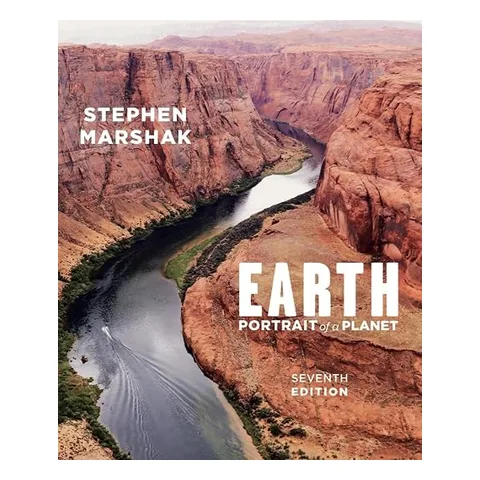
10. Earth: Portrait of a Planet
Stephen Marshak teaches at the University of Illinois, and this is the textbook geologists on Reddit name most often for beginners. It is known for its photographs and diagrams, many drawn so that a process plays out step by step across a page. It covers minerals and rocks, plate tectonics, earthquakes and volcanoes, surface processes, Earth history and resources.
The 7th edition (2022) is current. The 6th edition (2018) has more reviews and is the better buy for self-study. If 1,000 pages is too many, Marshak’s shorter Essentials of Geology covers the core in about 700.
- Stephen Marshak
- W. W. Norton, 7th edition, 2022, about 1,040 pages
- Named in 9 Reddit beginner threads
Good: the clearest diagrams of any intro text. Not great: heavy and expensive new; buy an earlier edition unless a class requires this one.
Check on Amazon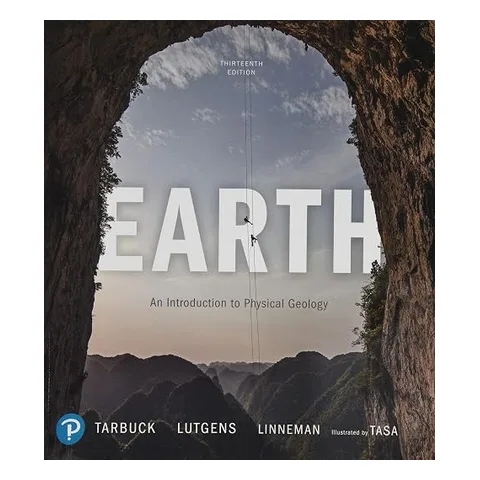
Most common college pick
11. Earth: An Introduction to Physical Geology
Edward Tarbuck and Frederick Lutgens taught at Illinois Central College, and their textbooks, illustrated by Dennis Tasa, have been used in introductory geology courses for decades. This is the standard physical geology volume: minerals, the rock cycle, plate tectonics, weathering, streams, groundwater, glaciers, deserts and coasts, earthquakes and geologic time.
The 13th edition (2019) is the newest. It is plainer in tone than Marshak and organized like a lecture course, which suits readers who like a fixed structure.
- Tarbuck, Lutgens and Tasa
- Pearson, 13th edition, 2019, 784 pages
- Named in 8 Reddit beginner threads
Good: systematic, with clear illustrations and chapter summaries. Not great: reads like a textbook, because it is one; the 12th edition is the cheaper choice for self-study.
Check on AmazonOther intro texts that Reddit geologists name, and that teach the same material, are Grotzinger and Jordan’s Understanding Earth and Plummer’s Physical Geology. Any of them works. Choose the one you can find in an affordable edition.
Best rock and mineral identification books
An ID guide is the book you take outside. Rocks are hard to identify from photos alone, because the same mineral can look different from one sample to the next, so the useful guides also teach the simple tests: hardness, streak, luster, cleavage and how a sample reacts to a drop of vinegar. If you want to learn the rock types first, our guides to igneous and sedimentary rocks and metamorphic rocks are a short start.
Best first ID guide
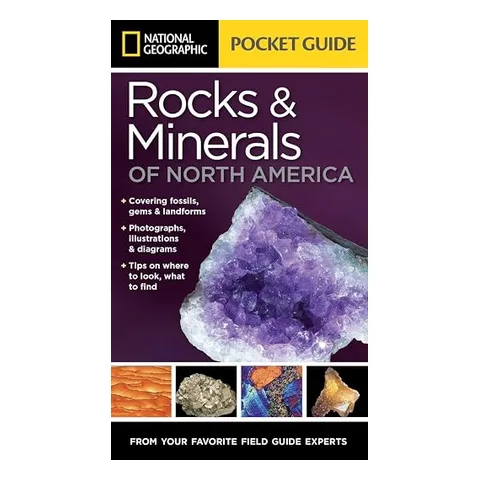
12. National Geographic Pocket Guide to Rocks and Minerals of North America
Sarah Garlick’s guide picks the rocks and minerals a beginner is most likely to find in North America and gives each one a page: a photo, the key properties and where it forms. The introduction explains the identification tests in a few pages, and the book is small enough for a jacket pocket.
It has the most Amazon ratings of any rock and mineral book we checked, and for a first guide it is the right size. A beginner gets more use from the common specimens shown clearly than from hundreds of rare ones.
- Sarah Garlick
- National Geographic, 2014, 184 pages
- About 4 by 7 inches; over 2,400 Amazon ratings
Good: covers the rocks you will actually find, with clear photos. Not great: once you start collecting seriously you will outgrow it.
Check on Amazon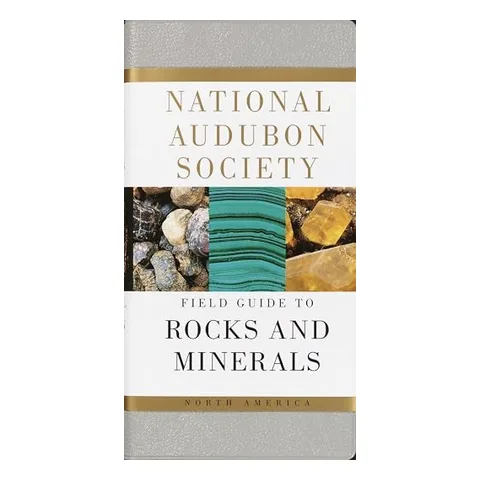
Most complete ID guide
13. National Audubon Society Field Guide to Rocks and Minerals
The Audubon guide has been in print since 1979 and is still the one rockhound forums recommend most. It puts several hundred color photos at the front, grouped by color and appearance, so you can match a sample by eye first and then turn to the text entry to confirm it with hardness, streak and other properties. The back lists collecting localities across North America.
Buy it as a second guide, or as the first one for an adult who already knows they will collect.
- Charles W. Chesterman, revised by Kurt E. Lowe
- Knopf flexibound, 856 pages
- Over 2,300 Amazon ratings
Good: the photo-first layout works for beginners, and the coverage is deep. Not great: the text has not been revised in decades, and some photos show museum-quality specimens rather than field samples.
Check on Amazon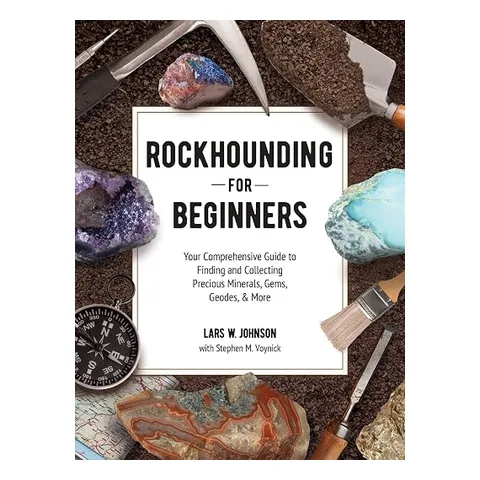
Best for rockhounding
14. Rockhounding for Beginners
Lars Johnson and Stephen Voynick wrote this for people who want to go out and collect: where to look, which tools to carry, how to identify finds, the rules for collecting on public and private land and how to clean and display specimens. It covers geodes, agates, crystals, gold and fossils.
- Lars W. Johnson and Stephen M. Voynick
- Adams Media, 2021, 240 pages
- Over 400 Amazon ratings
Good: the practical side the other guides skip, including collecting rules. Not great: light on the science of how rocks form; pair it with an introduction.
Check on Amazon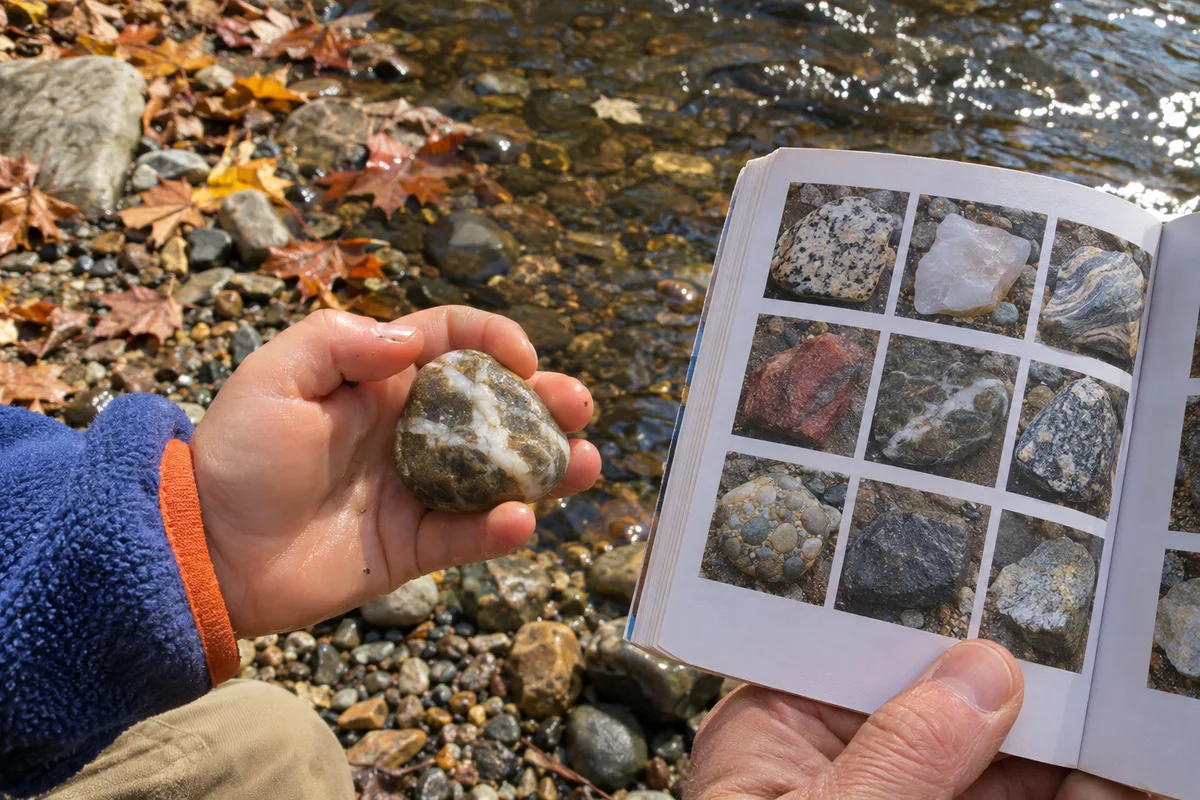
Two older guides still sell well and appear often on Reddit: Simon & Schuster’s Guide to Rocks & Minerals, from the American Museum of Natural History, and the Peterson Field Guide to Rocks and Minerals by Frederick Pough. Both are thorough, but their photos lean toward perfect museum specimens, which are hard to match against a dull piece of gravel.
Best geology books for road trips
Geologists on Reddit give one piece of advice nearly as often as McPhee: get the Roadside Geology book for your state. Each one explains the rocks visible from a state’s highways, route by route, with maps keyed to towns. They are the bridge between reading about geology and seeing it. Our guide to Roadside Geology books by state lists every title with its newest edition.
Best for travel across the US
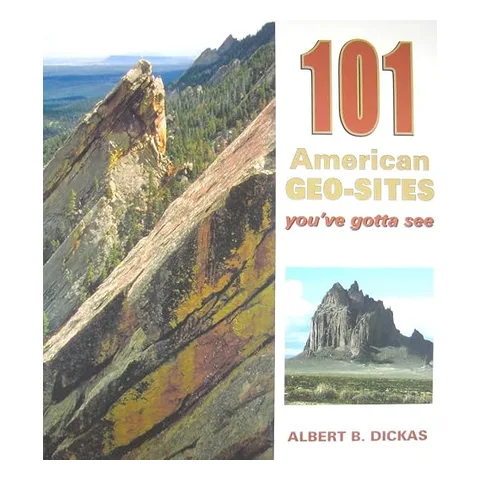
15. 101 American Geo-Sites You’ve Gotta See
Albert Dickas picked about two sites in each state and gave each a short entry with a photo, a diagram and a plain explanation of how the place formed. It is the best book here for planning a trip around geology, and the short entries suit beginners who are not ready for a full state guide.
- Albert B. Dickas
- Mountain Press, 2012 (now sold by the Geological Society of America), 264 pages, full color
- About two sites per state
Good: every state, in short readable entries. Not great: two pages per site leaves no room for detail.
Check on AmazonTools to use with the books
Geology is learned with your hands as much as your eyes. Three inexpensive tools turn any ID guide from a picture book into something you can use.
Best mineral test kit
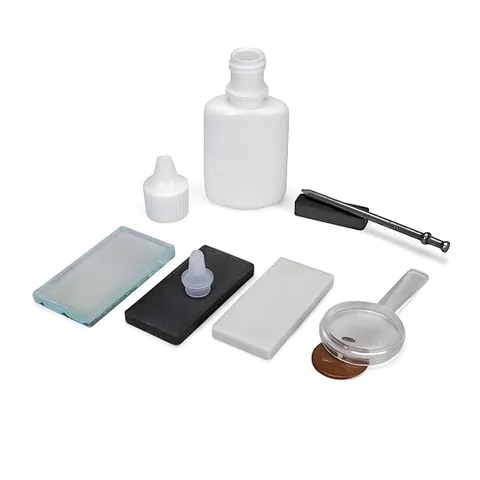
16. United Scientific Mineral ID Kit
Every test an ID guide asks for in one box: streak plates for streak color, a glass plate and a steel nail for hardness, a magnet for magnetite, a dropper bottle for the acid test on calcite (fill it with vinegar) and a hand lens.
- 7 pieces
- Streak plates, glass plate, nail, magnet, dropper bottle, hand lens
Good: the full set of beginner tests. Not great: the included hand lens is basic; a triplet loupe is much sharper.
Check on Amazon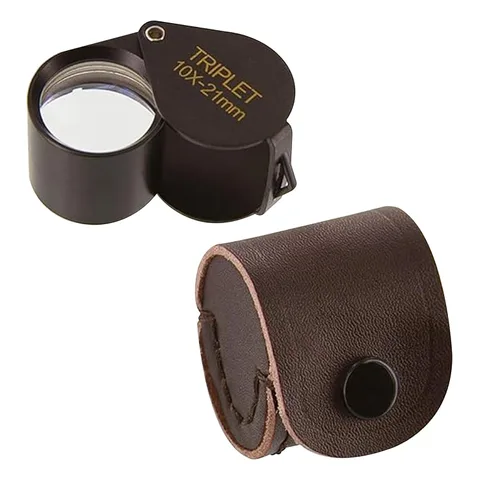
Best hand lens
17. Ade Advanced Optics 10x Triplet Loupe
A 10x hand lens is the tool geologists carry everywhere. It shows the crystal shapes in granite, the rounded grains in sandstone and the flat cleavage faces that separate feldspar from quartz. A triplet lens keeps the image sharp and free of color fringes to the edges, which a single-lens magnifier does not.
- 10x, 21 mm triplet lens
- Folding metal body with a leather case
Good: sharp optics in a pocket size. Not great: easy to lose; put it on a lanyard.
Check on Amazon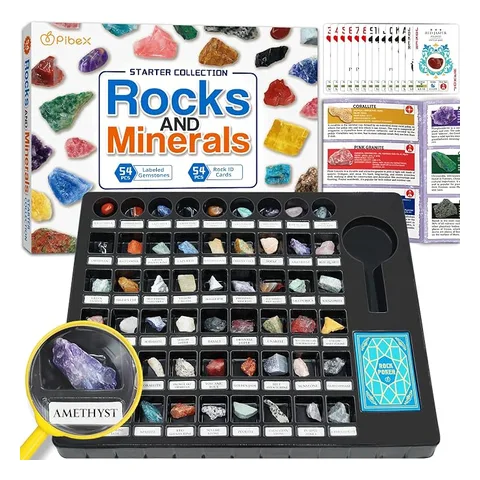
Best reference collection
18. PIBEX Rock Collection Starter Kit
Fifty-four labeled specimens, each about an inch across, with illustrated cards. A labeled reference set is how you learn what quartz, feldspar, mica and calcite look and feel like before you meet them in the field, and it gives you known samples to practice the streak and hardness tests on.
- 54 specimens: 45 raw rocks and minerals, 9 polished stones
- Illustrated ID cards
Good: a quick way to learn the common minerals by touch. Not great: the polished stones show little of the texture you would see in the field.
Check on AmazonWhat Reddit recommends
We read 65 threads from r/geology, r/rockhounds, r/geologycareers, r/whatsthisrock and r/Minerals, dated 2013 to 2026, in which someone asked for a beginner geology book. These were the most named:
| Book or series | Threads | Type |
|---|---|---|
| Annals of the Former World (McPhee) | 20 | Popular science |
| Roadside Geology and Geology Underfoot state guides | 19 | Regional |
| Earth: Portrait of a Planet or Essentials of Geology (Marshak) | 9 | Textbook |
| Audubon Field Guide to Rocks and Minerals | 9 | Field guide |
| Tarbuck and Lutgens textbooks | 8 | Textbook |
| Simon & Schuster’s Guide to Rocks & Minerals | 7 | Field guide |
| Simon Winchester (The Map That Changed the World, Krakatoa) | 7 | Popular science |
| A Short History of Nearly Everything (Bryson) | 6 | Popular science |
| Geology For Dummies | 5 | Introduction |
The threads also carry useful disagreement. McPhee divides people: his fans say Annals is what got them into geology, others call his prose too descriptive to finish. One geologist warned that a book that is easy to read will tell the story but not explain the science, and several replies told the asker to take a community college course or read an intro textbook instead. Bryson gets praise for the history and complaints from students who wanted more geology. The textbook advice is nearly unanimous: buy an older edition.
Reddit also points to free video lectures more than any single book after McPhee. Nick Zentner of Central Washington University has hundreds of hours of geology talks on YouTube, most of them on the Pacific Northwest, aimed at the public.
Free introduction to geology textbooks
Several complete introductory textbooks are free online under open licenses, and they cover the same ground as the paid ones:
- Physical Geology, 2nd edition by Steven Earle (BCcampus): a full first-year course, from minerals to plate tectonics to geologic time, written for Canadian college students.
- An Introduction to Geology (OpenGeology): written by faculty at Salt Lake Community College and other colleges, used in their intro courses.
- This Dynamic Earth (USGS): a short, illustrated online booklet on plate tectonics.
A free textbook is a good way to try the subject before buying anything. Most people still prefer a paper book for a subject this visual, and the open texts have fewer photographs than Marshak or DK. For minerals, Mindat is the reference database collectors use, with photos and properties for every known species and locality lists. Our list of mineralogy topics is a glossary of the terms the ID guides use.
A reading order for the first year
If you are starting from nothing, this order works for most adults:
- One popular science book for the big ideas: Timefulness if you want it short, The Story of Earth if you want the whole history, Basin and Range if you want McPhee.
- One introduction, read with a notebook: Rothery’s Complete Introduction, or Geology For Dummies if you prefer a lighter tone.
- One ID guide and a test kit, used on real rocks: your driveway gravel, a creek bed, a beach. Start with the common minerals, quartz, feldspar, mica, calcite, before anything rare.
- Your state’s Roadside Geology book, on a drive. This is where the terms from step 2 start to mean something.
- A textbook, if you are still going after all that. An older edition of Marshak is the usual choice.
Noor is somewhere around step 3. The hematite is on her windowsill with a label in her handwriting, next to Sami’s creek pebble. If geology turns into a career for either of them, our list of jobs a geologist can do is the next read.
FAQ
For learning geology on your own, the best book is Geology: A Complete Introduction by David Rothery, a 384-page course that covers minerals, rocks, plate tectonics and geologic time with no background needed. For a story rather than a course, read Timefulness by Marcia Bjornerud. To identify rocks, use the National Geographic Pocket Guide to Rocks and Minerals.
Geology: A Complete Introduction by David Rothery and Geology For Dummies by Alecia Spooner are the two best introductions for adults with no science background. For a college-level introduction, Earth: Portrait of a Planet by Stephen Marshak is the textbook most often recommended. Physical Geology by Steven Earle is a free online introduction.
Across 65 beginner threads on r/geology and related subreddits, the most named books were John McPhee’s Annals of the Former World (20 threads), the Roadside Geology state guides (19), Stephen Marshak’s Earth: Portrait of a Planet (9) and the Audubon Field Guide to Rocks and Minerals (9).
Yes. An introduction such as Rothery’s, a rock identification guide, a streak plate and a hand lens are enough to learn the main rock types, the common minerals and how plate tectonics shapes the landscape. Free lectures by geologists such as Nick Zentner on YouTube and local geology club field trips fill in the outdoor side.
Not for self-study. The basics of physical geology change very little between editions, and an edition one or two behind the newest costs much less. Buy the current edition only if a course requires it for assigned problems or online homework.
For beginners, the National Geographic Pocket Guide to Rocks and Minerals of North America covers the common finds in a pocket size. For more depth, the National Audubon Society Field Guide to Rocks and Minerals has several hundred photos organized by color, with collecting localities across North America.
DK’s Earth: The Definitive Visual Guide suits most teenagers who are curious about the planet, because it explains through diagrams and photos. For a teen taking an earth science class, Geology For Dummies explains the same topics in plain language. Add a mineral test kit so the book has something to work on.
It needs no background, and many geologists say it is what got them into the subject. It is also 720 pages of dense prose. Start with Basin and Range, the first of its five books, which is 240 pages; if you like it, the rest of Annals continues the trip east and west along Interstate 80.
Sources
- Amazon product pages for each book and tool, checked November 2026 (editions, page counts, ratings).
- Reddit beginner-book threads in r/geology, r/rockhounds, r/geologycareers, r/whatsthisrock and r/Minerals, 2013 to 2026.
- The Pulitzer Prizes, 1999 General Nonfiction: Annals of the Former World.
- Robert M. Hazen and others, “Mineral evolution”, American Mineralogist 93 (2008).
- Steven Earle, Physical Geology, 2nd edition, BCcampus, 2019.
- U.S. Geological Survey, This Dynamic Earth: The Story of Plate Tectonics.