As an Amazon Associate we earn from qualifying purchases. Disclosure
On my internal medicine rotation I looked after a woman who was about to start CAR-T therapy for lymphoma. Her husband, a retired electrician, sat by the bed with a folder of printouts. On my third morning he stopped me in the hallway and asked what a T cell actually was, and whether there was a book he could read that started at the beginning. The hospital leaflet gave T cells two paragraphs. The immunology textbook on my shelf assumed four years of biology he had never taken. I wrote three titles on the back of a lab slip: one that explained cells with pictures, one that taught the whole subject in order, and one about the immune system for ordinary readers. Six months later he emailed me to ask what to read next.
Most people looking for a biology book to study on their own are in a version of his situation. Some never took biology past high school. Some need it for a nursing or premed prerequisite, the MCAT or a job in a lab. Some studied it twenty years ago and want it back. All of them need a book that teaches in order and lets them check what they have understood.
The best biology book for self-study, for most adults, is Campbell Biology in Focus: the same authors, figures and order as the full Campbell textbook that most universities use, in about 1,100 pages instead of 1,500. If you are starting from zero, begin with Biology: A Self-Teaching Guide by Steven Garber, which asks you a question every few paragraphs and gives the answer. Pair either one with the Biology Coloring Workbook, because biology is learned by drawing it, and use the free OpenStax Biology 2e when you want a second explanation.
I trained in molecular biology and medicine at UCSF, worked in an immunology lab for my PhD and tutored premed students through the sciences during the MD-PhD. The best biology books for self-study below are sorted by level, from complete beginner to the second-year subjects (cell biology, biochemistry, genetics, anatomy, microbiology, evolution), with the edition to buy, how each book lets you check your answers and what Reddit’s biologists tell self-learners to read.
Quick picks
| Pick | Best for | Level |
|---|---|---|
| Campbell Biology in Focus | Best overall for self-study | College intro |
| Biology: A Self-Teaching Guide | Complete beginners | Beginner |
| Biology For Dummies | Plainest explanations | Beginner |
| Biology Coloring Workbook | Learning by drawing | Beginner to college |
| Campbell Biology | The full reference textbook | College intro |
| Essential Cell Biology | Cell and molecular biology | After intro biology |
| Lippincott Illustrated Reviews: Biochemistry | Biochemistry alone | After intro biology |
| The Anatomy Coloring Book | Anatomy and physiology | Any |
| Why Evolution Is True | Evolution, with the evidence | Any |
| The Gene: An Intimate History | Reading for fun alongside | Any |
What makes a biology book good for self-study
Biology is not hard the way physics or mathematics is hard. Very little of an introductory course needs more than arithmetic. The difficulty is volume: an intro textbook introduces several thousand terms, and each new chapter assumes you kept the last one. A student in a classroom has lectures, labs and exams that force them to review. Someone studying alone has only the book, so the book has to do more of that work. Four things separate a good self-study biology book from one that sits on a shelf.
- It teaches in a sensible order. The standard order runs from chemistry to cells, then energy (respiration and photosynthesis), then genetics and DNA, then evolution, then the diversity of life, then plant and animal physiology, then ecology. Every good intro textbook follows some version of it. Popular science books and topic lists do not, which is why reading them is not the same as learning biology.
- It lets you check yourself. Look for review questions with answers in the back, self-tests or a companion workbook. Campbell’s end-of-chapter questions have answers in an appendix; many textbooks keep answers in a course-only website you cannot access without an instructor.
- The figures carry the explanation. Biology is a visual subject. The cell, the membrane, the electron transport chain and the nephron are much easier to learn from a good diagram than from a paragraph. The best textbooks have figures you can learn from even if you skip the text.
- It starts at your level. Biochemistry and cell biology chapters need some chemistry: atoms, bonds, pH and the idea of free energy. A book that reviews this in its first chapters (Campbell does, in chapters 2 to 5) saves you a second book.
Older editions are fine. Introductory biology changes slowly between editions, mostly in figures, examples and the order of a few chapters. An edition one or two behind teaches the same course and is much easier to find used. The exceptions are fast-moving areas such as genome editing and immunotherapy, which you can catch up on from newer popular books.
Where to start, by goal
What you should read first depends on why you are learning biology. These are the five situations I hear about most often.
| Your goal | Start with | Then |
|---|---|---|
| Curious adult, no science background | Garber’s Self-Teaching Guide or The Cartoon Guide to Biology | Campbell Biology in Focus and a popular book |
| Nursing, premed or allied health prerequisite | Campbell Biology in Focus | Tortora and The Anatomy Coloring Book |
| MCAT or a biology degree later | Campbell Biology | Essential Cell Biology and Lippincott Biochemistry |
| Career change into a lab or biotech | Campbell Biology in Focus, chapters 1 to 20 | Essential Cell Biology and Griffiths’ Genetics |
| High school student studying ahead | DK Super Simple Biology | Biology Coloring Workbook |
Best biology books for beginners
These books assume nothing: no high school biology, no chemistry and no idea what a mitochondrion is. Pick one of the first two as your main book, and add the Cartoon Guide if you learn better from pictures.
Best for complete beginners
1. Biology: A Self-Teaching Guide
Wiley’s Self-Teaching Guides were written for one person learning alone, and this is the series’ biology volume. Garber breaks each topic into short sections that end in a question, with the answer right after it, so you never read more than a few pages without finding out whether you followed. Every chapter ends with a self-test and answers.
It covers what a first biology course covers: the chemistry of life, cells, respiration and photosynthesis, cell division, genetics, DNA and protein synthesis, evolution, the kingdoms of life, human body systems and ecology. The writing is plain and the diagrams are simple black and white. It is the book I suggest to adults who tell me they “never understood biology” in school, because it moves on only after you have answered.
- Steven D. Garber
- Jossey-Bass, 3rd edition (2020), paperback, 496 pages
- Covers a full introductory course at roughly high school to first-year level
Good: built for learning alone, with a question and answer every few paragraphs. Not great: black-and-white figures, and it stops short of the detail a college course or the MCAT needs.
Check on Amazon
Plainest explanations
2. Biology For Dummies
Rene Fester Kratz taught biology at a community college, and the book reads like a good lecturer explaining things to a class with no background. Each chapter is short and self-contained, the vocabulary is introduced one term at a time and the analogies work. It is the fastest way to get a map of the whole subject in your head before you open a textbook.
It covers cells, genetics, evolution, ecology, plants and the human body in about 400 pages. There are no practice problems in the book itself. If you want them, the companion Biology Workbook For Dummies by the same author follows the same order.
- Rene Fester Kratz
- For Dummies, 3rd edition (2017), paperback, 416 pages
- Over 1,000 Amazon ratings at 4.6 stars
Good: the clearest short explanation of each topic. Not great: no exercises, and it is an overview, not a course.
Check on Amazon
Best visual introduction
3. The Cartoon Guide to Biology
Larry Gonick has drawn cartoon guides to physics, chemistry, statistics and calculus, and they work because the drawings carry real content. This one, written with microbiologist David Wessner, walks through the chemistry of life, cells, metabolism, genetics, evolution and ecology as a comic, with the jokes attached to the ideas. A ribosome reading messenger RNA, drawn as a machine on a track, stays in memory in a way a paragraph does not.
It is accurate and more detailed than it looks. Read it first, in a weekend, and then the textbook chapters will feel familiar instead of new.
- Larry Gonick and David Wessner
- William Morrow, 2019, paperback, 320 pages
- Covers a full introductory course in comic form
Good: makes the hardest processes (respiration, translation, meiosis) easy to picture. Not great: no exercises, and you will need a textbook for depth.
Check on Amazon
Best for teens and quick review
4. Super Simple Biology
DK’s study guide puts each topic on one or two pages with a large labeled diagram and a few short paragraphs. It was written for students aged 14 to 16 and matches high school courses, but adults use it the same way: as a fast reference to look up a process before reading the long version in a textbook.
It covers cells, transport, enzymes, nutrition, respiration, photosynthesis, genetics, evolution, ecology and human physiology, with a key-facts box on every spread.
- DK
- DK Children, 2020, paperback, 288 pages
- Over 1,100 Amazon ratings at 4.8 stars
Good: the best diagrams for the price of any book here. Not great: high school depth only.
Check on AmazonBiology workbooks and problem books
Reading a biology chapter feels like learning it. Then you close the book and try to list the steps of mitosis, and half of it is gone. These books make you produce the answer instead of recognizing it, which is what moves it into long-term memory.
Best for learning by drawing
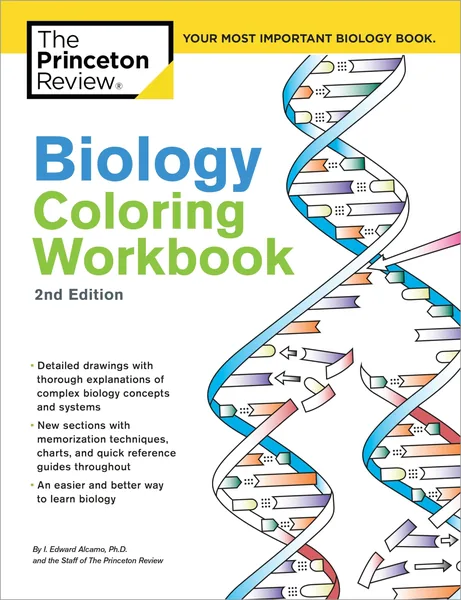
5. Biology Coloring Workbook
Each page is a line drawing of a structure or process (a plant cell, the stages of meiosis, the nitrogen cycle, a neuron firing) with a facing page of text. You read the text and color each named part in its own color as it is mentioned. It sounds childish and it works: you cannot color the inner mitochondrial membrane without finding out where it is and what it folds into.
Edward Alcamo, a microbiologist, wrote the original, and The Princeton Review updated it. It follows the order of an intro course, so you can color the matching plates as you read each textbook chapter.
- Edward Alcamo, The Princeton Review
- Princeton Review, 2nd edition (2017), paperback, 384 pages
- Plates in the order of a full intro course
Good: turns passive reading into active work, and it is the best companion to any textbook here. Not great: you need a set of at least 12 colored pencils, and the text alone is too thin to learn from.
Check on Amazon
Most practice questions
6. Schaum’s Outline of Biology
Schaum’s Outlines compress a college course into a summary plus hundreds of solved and unsolved questions. The biology volume has hundreds of review questions with answers, covering chemistry, cells, genetics, evolution, organisms and ecology. Use it after each textbook chapter as a check: if you can answer its questions on a topic without looking, you are ready to move on.
- George H. Fried and George J. Hademenos
- McGraw Hill, 5th edition (2018), paperback, 528 pages
- Includes access to online practice and videos
Good: the most questions with answers of any biology book. Not great: the explanations are too brief to learn from on their own.
Check on Amazon
Best workbook for beginners
7. Biology Workbook For Dummies
The companion to Biology For Dummies, by the same author, in the same order. Each chapter gives a short review of the topic, then practice questions (multiple choice, labeling diagrams, fill-in and short answer), then answers with explanations of why each wrong option is wrong. Those explanations are what make it useful alone.
- Rene Fester Kratz
- For Dummies, 2nd edition (2022), paperback, 400 pages
- Answer explanations for every question
Good: pitched at a true beginner and explains its answers. Not great: introductory level only, and few Amazon ratings so far.
Check on Amazon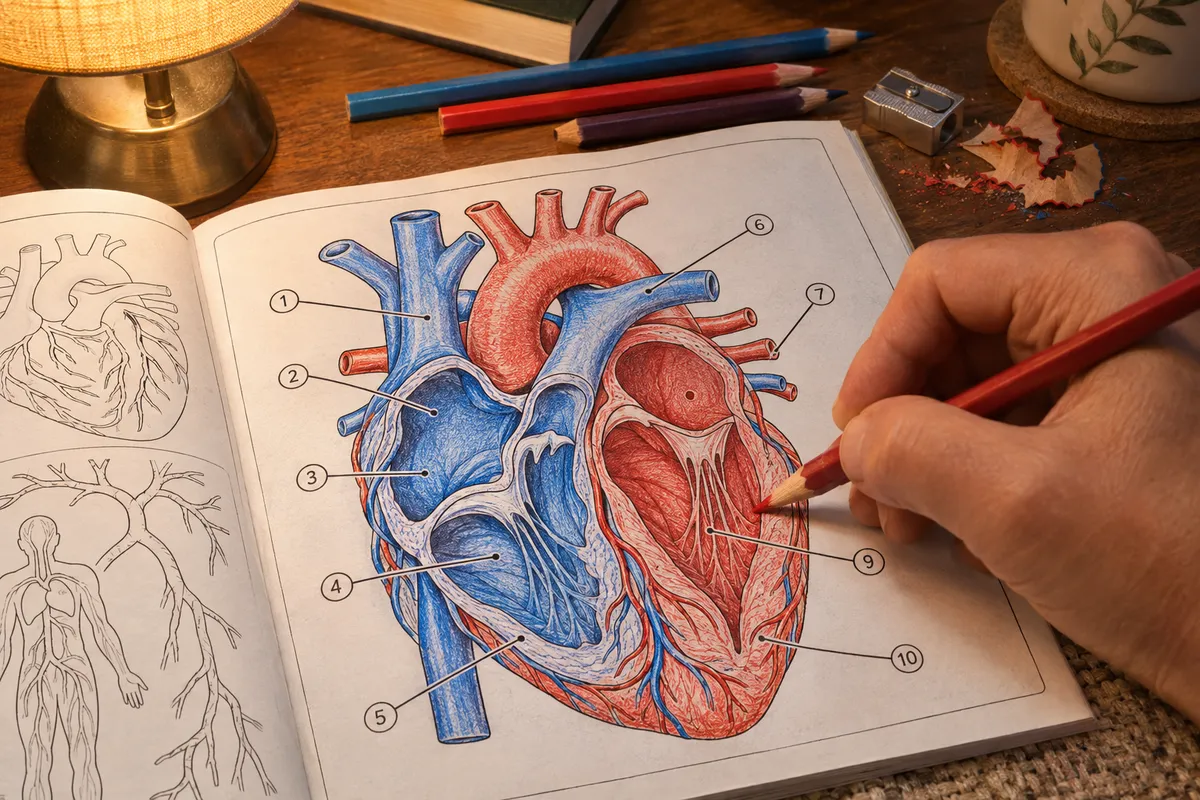
Best biology textbooks for self-study
An introductory college textbook is the spine of self-study. It is the only kind of book that covers the whole subject in a sensible order at enough depth to build on. You do not need more than one.
Best overall for self-study
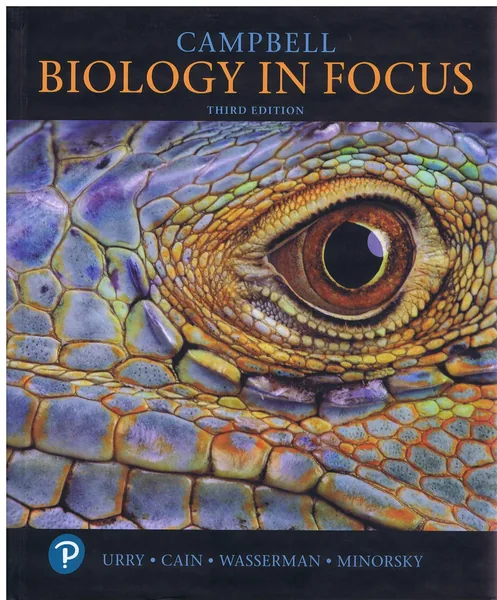
8. Campbell Biology in Focus
Campbell Biology is the most widely used introductory biology textbook in the United States, and Campbell Biology in Focus is the version written for courses that cannot cover all of it. The authors, figures and order are the same as the full book. What changes is length: 56 chapters become 45, and each chapter is cut to the core ideas. For a self-learner that is an advantage, because the full Campbell is long enough that many people never reach the second half.
It starts with the basic chemistry of life, so you need no prior science, and it has Campbell’s figures, which are the best in any intro textbook. Each chapter ends with questions at three levels, with answers in the back. It covers what a two-semester intro course and the biology section of the MCAT cover.
- Lisa Urry, Michael Cain, Steven Wasserman, Peter Minorsky and Rebecca Orr
- Pearson, 3rd edition (2019), hardcover, 1,120 pages
- 595 Amazon ratings at 4.6 stars
Good: Campbell’s figures and order at a length one person can finish in a year. Not great: less detail on plant biology and diversity of life than the full Campbell.
Check on Amazon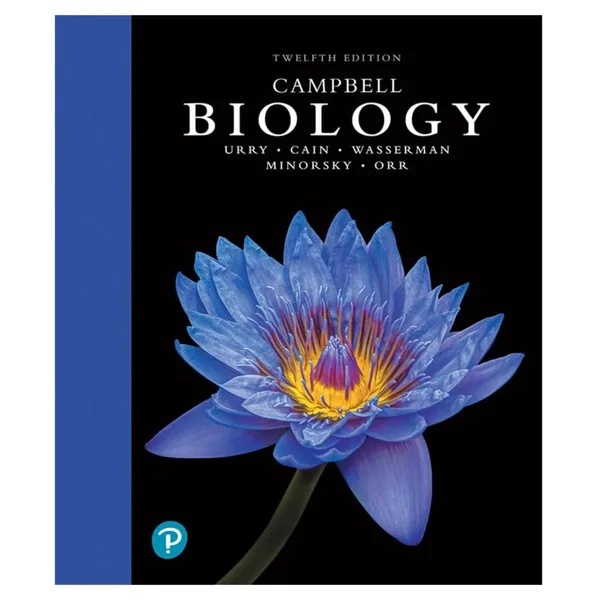
Most complete intro textbook
9. Campbell Biology
The full Campbell is the reference that other intro textbooks are compared to, and it is the book Reddit’s biologists name more than any other for self-study. It runs from chemistry through cells, genetics, evolution, the diversity of life, plant and animal form and function, and ecology, at the depth of a two-semester university course. The diagrams are excellent, and each chapter opens with a list of key concepts and ends with a summary and questions.
The 12th edition (2020) is current. New copies sell mostly through other sellers on Amazon, so it is worth comparing with the 11th edition (2016), which has nearly 3,900 ratings, teaches the same course and is easy to find used. For self-study, either one is fine.
- Lisa Urry, Michael Cain, Steven Wasserman, Peter Minorsky and Rebecca Orr
- Pearson, 12th edition (2020), hardcover, about 1,500 pages
- Answers to end-of-chapter questions in the appendix
Good: the most complete and best-illustrated intro biology book. Not great: very long and heavy, and new copies are expensive.
Check on Amazon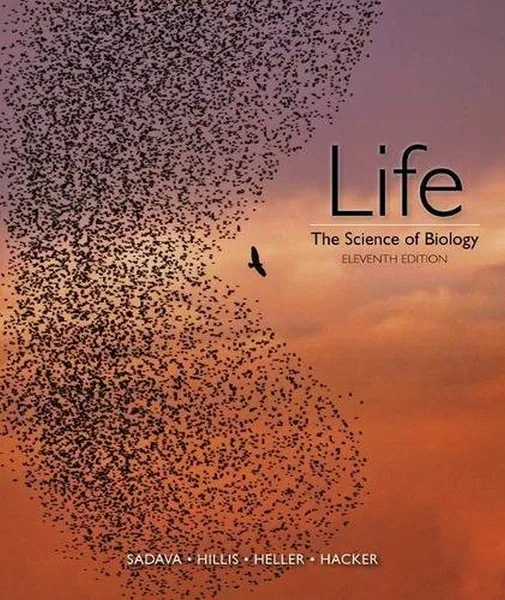
Best for experimental thinking
10. Life: The Science of Biology
Life covers the same ground as Campbell, but it is built around experiments: each chapter shows how scientists found something out, with the actual data, and asks you to interpret it. It is the better choice if you want to understand how biology knows what it knows, or if you are preparing for a research job. David Hillis, one of its authors, is an evolutionary biologist, and the evolution chapters are especially strong.
- David Sadava, David Hillis, H. Craig Heller and Sally Hacker
- Sinauer and Macmillan, 11th edition (2016), hardcover, 1,268 pages
- Covers a full two-semester intro course
Good: teaches the reasoning behind each finding, not only the finding. Not great: denser than Campbell, and fewer worked review questions.
Check on AmazonThe free OpenStax Biology 2e is the third option. It is good, and it costs nothing, but its figures are weaker than Campbell’s and its review questions are less varied. Many self-learners use it alongside Campbell as a second explanation of the chapters that do not click.
Cell and molecular biology
After an intro textbook, cell and molecular biology is the most useful next subject. It is the basis of medicine, genetics, biotechnology and most of what you read about in health news. Before you start, make sure you can explain hydrogen bonds, pH and why water is polar. If you cannot, our guide to the best chemistry books for self-study has the books to fix that. The free 3D cell model on this site is a good way to learn the organelles before you read about them.
Best cell biology book
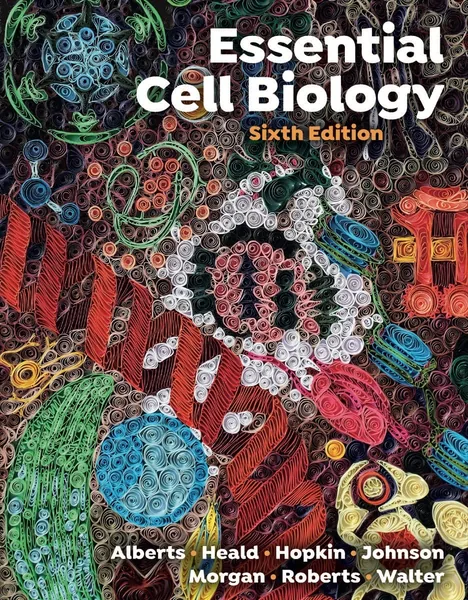
11. Essential Cell Biology
Bruce Alberts and his co-authors wrote Molecular Biology of the Cell, the standard graduate reference, and then wrote this shorter version for first- and second-year students. It is the clearest cell biology book I know. It covers DNA, genes and how they are read, proteins, membranes, energy, cell signaling, the cytoskeleton, the cell cycle and cancer, with drawings that make molecular machines easy to picture. Each chapter has questions in the margins and at the end, with answers in the back of the book.
The 6th edition (2023) is current. The 5th edition (2019) has many more ratings and is a good used buy; the changes between them are small.
- Bruce Alberts, Rebecca Heald, Karen Hopkin, Alexander Johnson, David Morgan, Keith Roberts and Peter Walter
- W. W. Norton, 6th edition (2023), paperback, 904 pages
- Answers to all questions in the back
Good: clear writing, beautiful figures and answers to every question. Not great: long for a second book, and it assumes you remember intro chemistry.
Check on Amazon
Gentlest step up
12. Molecular & Cell Biology For Dummies
A shorter bridge between an intro course and Essential Cell Biology, by the author of Biology For Dummies. It explains DNA replication, transcription, translation, gene regulation, cell signaling and the main lab techniques (PCR, gel electrophoresis, cloning, sequencing) in plain language. If you are moving into a lab job, the techniques chapters are worth the price alone.
- Rene Fester Kratz
- For Dummies, 2nd edition (2020), paperback, 400 pages
- Includes lab techniques and biotechnology
Good: the easiest explanation of molecular biology and lab methods. Not great: fewer figures than Alberts, and no exercises.
Check on Amazon
The graduate reference
13. Molecular Biology of the Cell
The book every PhD student in cell or molecular biology owns. It covers everything in Essential Cell Biology at three times the depth, with the experimental evidence behind each idea. It is not where to start. It is where to go when you have finished Essential Cell Biology and want the full story of a topic, such as how vesicles find the right membrane or how a cell decides to divide.
- Bruce Alberts, Rebecca Heald, Alexander Johnson, David Morgan, Martin Raff, Keith Roberts and Peter Walter
- W. W. Norton, 7th edition (2022), hardcover, 1,552 pages
- The standard graduate textbook
Good: the most complete and authoritative cell biology book. Not great: far too much for a first pass.
Check on AmazonBiochemistry
Biochemistry is where most self-learners stall, because it is the point where biology turns into chemistry: enzyme kinetics, metabolic pathways and the energy accounting of glycolysis. Learn it from a book with good diagrams and take it one pathway at a time.
Best biochemistry book to learn alone
14. Lippincott Illustrated Reviews: Biochemistry
Medical students use this book to learn biochemistry for their board exams, and it is the best biochemistry book for self-study because every page is built around a diagram. Each metabolic pathway is drawn as a flow chart with the enzymes, cofactors and control points marked, and connected to a disease you have heard of (diabetes, phenylketonuria, gout). Every chapter ends with a summary concept map and review questions with explained answers.
It is shorter than a university textbook because it leaves out the detailed chemistry of each reaction, which most self-learners do not need.
- Emine Ercikan Abali, Susan D. Cline, David S. Franklin and Susan M. Viselli
- Wolters Kluwer, 9th edition (2025), paperback, 640 pages
- Review questions with explained answers in each chapter
Good: diagrams for every pathway and a medical reason to care about each one. Not great: less depth on protein structure and enzyme mechanisms than Lehninger.
Check on Amazon
The full biochemistry textbook
15. Lehninger Principles of Biochemistry
The standard undergraduate biochemistry textbook. It covers protein structure, enzymes, carbohydrates, lipids, membranes, metabolism, signaling and nucleic acids, with the chemistry of each reaction explained. It is long and it expects a semester of organic chemistry, but it is very clearly written, and the problems at the end of each chapter have brief answers in the back. Use it after Lippincott, or instead of it if you are heading for a biochemistry degree.
- David L. Nelson and Michael M. Cox
- Macmillan, 8th edition (2021), 1,248 pages
- Answers to end-of-chapter problems in the back
Good: complete, clear and well illustrated. Not great: needs organic chemistry, and it is a lot of book to read alone.
Check on AmazonGenetics
Genetics is the most problem-based part of biology. You learn it by working crosses, pedigrees and probability questions, not by reading. Before these books, read our explanation of what genes are and how they work and try the DNA 3D model.
Best introduction to genetics
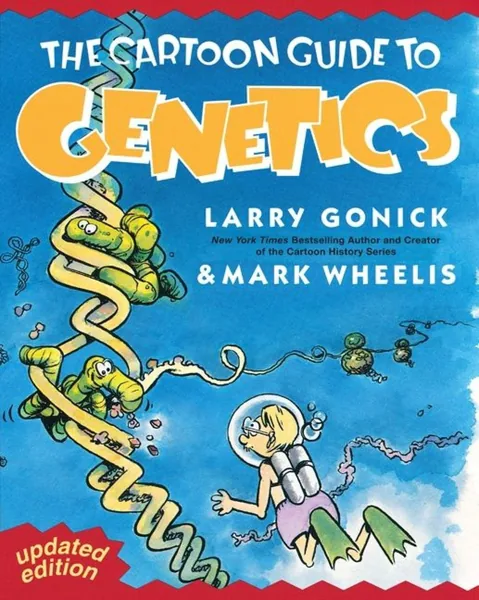
16. The Cartoon Guide to Genetics
Gonick’s guide to genetics, written with geneticist Mark Wheelis, runs from Mendel’s peas through chromosomes, DNA, the genetic code and gene regulation to recombinant DNA. It is the clearest short explanation of why genetics works the way it does, and it teaches Punnett squares and probability better than many textbooks. The last chapters predate genome sequencing and CRISPR, so read something newer for those.
- Larry Gonick and Mark Wheelis
- William Morrow, updated edition (1991), paperback, 224 pages
- Covers classical and molecular genetics
Good: makes inheritance and the genetic code easy to see. Not great: out of date on modern genomics.
Check on Amazon
Best genetics textbook
17. Introduction to Genetic Analysis
The genetics textbook used in most university courses, and the best one for learning to think like a geneticist. Griffiths teaches genetics through analysis: you work out how a trait is inherited from the data of a cross, as geneticists do. Every chapter has dozens of solved problems followed by unsolved ones, with answers to selected problems in the back. Work the solved problems on paper before reading the solution.
- Anthony Griffiths, John Doebley, Catherine Peichel and David Wassarman
- Macmillan, 12th edition (2020), 816 pages
- Solved problems in every chapter
Good: teaches genetics as a problem-solving subject, with many worked examples. Not great: hard going without an intro course first.
Check on AmazonAnatomy and physiology
Anatomy and physiology is the subject nursing, physical therapy and premed students most often need on their own, and it is the one where coloring and drawing help most. Learn the structures with a coloring book and the functions from a textbook.
Best for anatomy
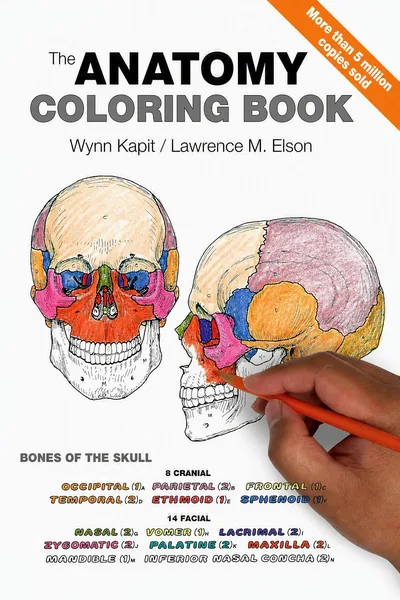
18. The Anatomy Coloring Book
Kapit and Elson’s coloring book has been used by medical and nursing students since 1977, and it has more Amazon ratings than any other book in this guide. Each of its 162 plates is a detailed drawing of one region or system, with the parts named on the facing page. You color each structure as you read its name. In medical school, the classmates of mine who learned anatomy fastest were the ones who drew it from memory, not the ones who reread the atlas, and this book is the structured version of that habit.
- Wynn Kapit and Lawrence M. Elson
- Pearson, 4th edition (2013), paperback, 384 pages
- Over 13,000 Amazon ratings at 4.6 stars
Good: the most effective way to learn anatomical structures alone. Not great: anatomy only, with little physiology.
Check on Amazon
Best A&P textbook
19. Principles of Anatomy and Physiology
Tortora is one of the two standard A&P textbooks for nursing and health science programs (Marieb’s Human Anatomy & Physiology is the other). It covers every body system, from cells and tissues to the endocrine, immune and reproductive systems, and explains how each organ works as well as what it looks like. The clinical connection boxes link each system to a disease, which helps the facts stick. Checkpoint questions throughout each chapter let you test yourself as you read.
- Gerard J. Tortora and Bryan H. Derrickson
- Wiley, 16th edition (2020), 1,296 pages
- Clinical connections and checkpoint questions in every chapter
Good: complete, clear and written for students heading into health careers. Not great: long, and its online practice is tied to a course.
Check on Amazon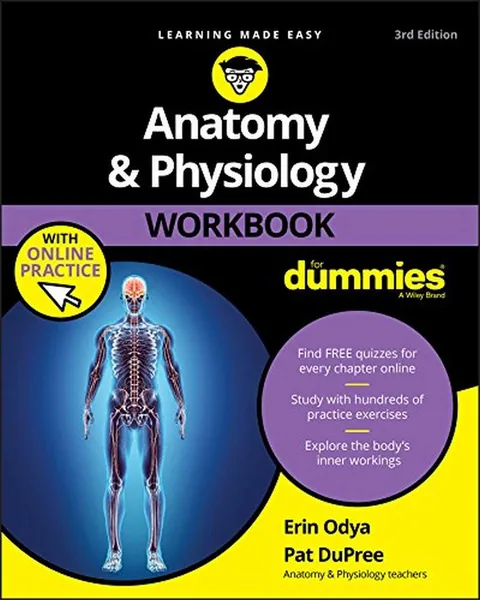
Best A&P practice book
20. Anatomy & Physiology Workbook For Dummies
A short review of each body system followed by labeling diagrams, matching and multiple-choice questions, with answers and explanations at the end of each chapter. It is the best practice book for an A&P prerequisite exam, and it includes online practice quizzes.
- Erin Odya and Pat DuPree
- For Dummies, 3rd edition (2018), paperback, 384 pages
- Over 2,800 Amazon ratings at 4.6 stars
Good: hundreds of questions with explanations. Not great: a workbook, not a place to learn a system for the first time.
Check on AmazonMicrobiology and immunology
Microbiology is a required course for nursing and most health programs, and immunology is the subject behind vaccines, allergies and the new cancer treatments. Both need cell biology first. The branches of microbiology explainer on this site is a good map of the field before you start.
Best microbiology textbook
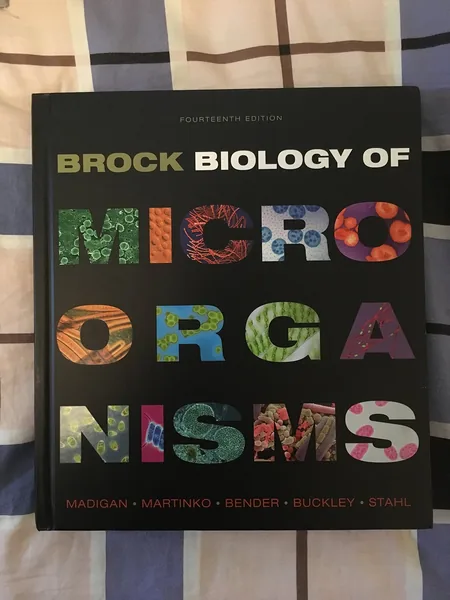
21. Brock Biology of Microorganisms
The standard university microbiology textbook. It covers bacterial and archaeal cell biology, metabolism, genetics, viruses, microbial ecology, the human microbiome and infectious disease. The 14th edition (2014) is the one sold new on Amazon in the US; later editions teach the same core and are mainly sold as rentals. For a nursing prerequisite, it goes deeper than you need on microbial metabolism, so focus on the cell structure, growth, genetics and disease chapters.
- Michael Madigan, John Martinko, Kelly Bender, Daniel Buckley and David Stahl
- Pearson, 14th edition (2014), 1,032 pages
- 459 Amazon ratings at 4.5 stars
Good: complete and clearly illustrated. Not great: long, and the newest editions are hard to buy new.
Check on Amazon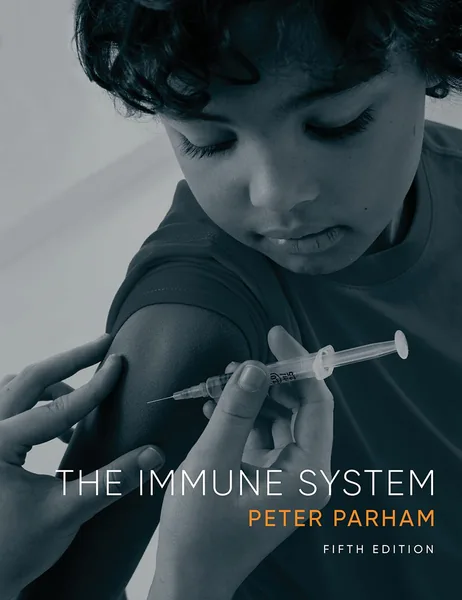
Best immunology book to learn alone
22. The Immune System
Immunology is my field, and this is the book I recommend to people who want to learn it properly without a course. Parham writes in plain sentences and explains the immune system as a story: what happens, in order, from the moment a pathogen gets through the skin. The figures are simple and clear, and the questions at the end of each chapter have answers in the back. Janeway’s Immunobiology, the standard medical textbook, covers more, but it is much harder to read alone. Start here.
- Peter Parham
- W. W. Norton, 5th edition (2021), paperback, 624 pages
- Answers to chapter questions in the back
Good: the most readable immunology textbook. Not great: assumes cell biology, and a 6th edition has just been published.
Check on AmazonEvolution and ecology
Evolution is the idea that makes the rest of biology make sense, and most intro textbooks give it fewer pages than it deserves. Read at least one of these after the intro course.
Best introduction to evolution
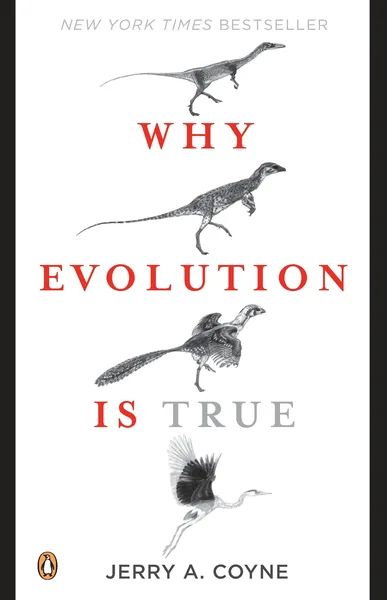
23. Why Evolution Is True
Jerry Coyne is an evolutionary geneticist, and this book lays out the evidence for evolution one kind at a time: the fossil record, vestigial organs, embryos, the geographic distribution of species, natural selection observed in the wild and speciation. It is written for general readers but contains more real biology than most textbooks’ evolution chapters. It is the book I would give anyone who learned evolution as one sentence in school.
- Jerry A. Coyne
- Penguin, 2010, paperback, 282 pages
- Over 1,500 Amazon ratings at 4.6 stars
Good: the evidence for evolution, explained clearly and in order. Not great: does not teach population genetics or the mathematics of selection.
Check on Amazon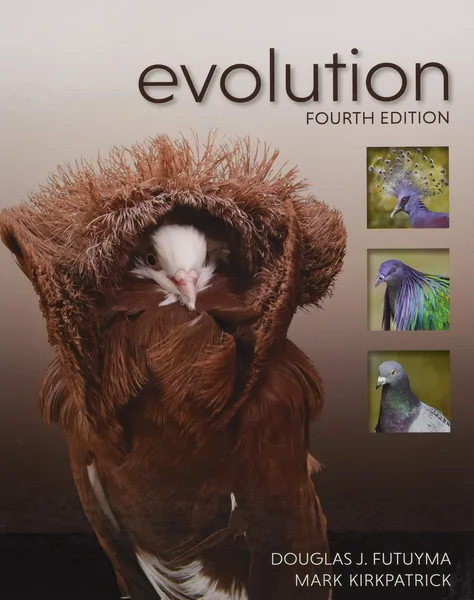
Best evolution textbook
24. Evolution
The standard undergraduate evolution textbook. Futuyma and Kirkpatrick cover natural selection, genetic drift, population genetics, speciation, phylogenetics, the history of life and human evolution, with the evidence for each. It is shorter and more readable than most upper-level textbooks. The 4th edition (2017) has many more ratings than the 5th and is a good used buy.
- Douglas J. Futuyma and Mark Kirkpatrick
- Sinauer and Oxford University Press, 4th edition (2017), 599 pages
- Covers a full university course in evolutionary biology
Good: the clearest evolution textbook. Not great: population genetics chapters need some algebra and probability.
Check on Amazon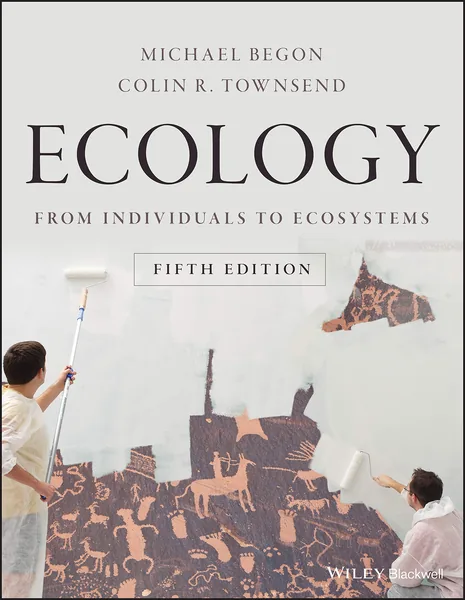
Best ecology textbook
25. Ecology: From Individuals to Ecosystems
Begon’s Ecology is the reference textbook for university ecology courses. It builds from how single organisms cope with their environment to populations, competition, predation, communities and whole ecosystems, with real field studies throughout. It suits self-learners heading into conservation, environmental science or field biology.
- Michael Begon and Colin R. Townsend
- Wiley, 5th edition (2021), 864 pages
- Built around real field studies
Good: complete and backed by evidence. Not great: dense, and the population models need algebra.
Check on AmazonBiology books to read for fun
Keep one book on the side for evenings that has nothing to do with chapter questions. These popular science books will not teach you a course, but they explain why the course matters, and most of them teach more biology than their covers suggest. For more science reading outside biology, see our list of the best science books for non-scientists.
Best popular biology book
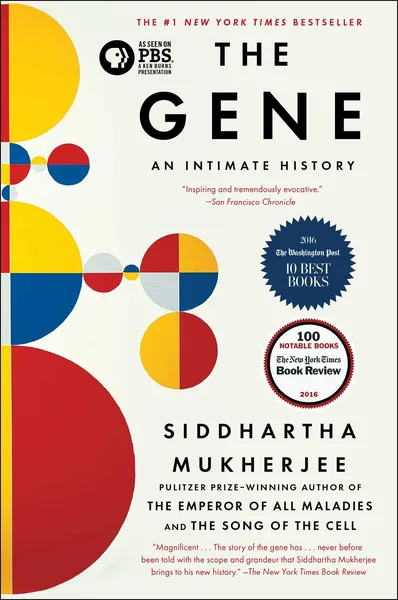
26. The Gene: An Intimate History
Siddhartha Mukherjee is an oncologist, and this is the history of genetics from Mendel to gene editing, told through the scientists who worked it out and through his own family’s history of mental illness. It explains the science properly: what a gene is, how it was found, how DNA was decoded and what genome editing can and cannot do. It is the best single book for understanding what you read about genetics in the news.
- Siddhartha Mukherjee
- Scribner, 2017, paperback, 608 pages
- Over 7,700 Amazon ratings at 4.7 stars
Good: a complete history of genetics that also teaches the science. Not great: long, with some chapters more memoir than biology.
Check on Amazon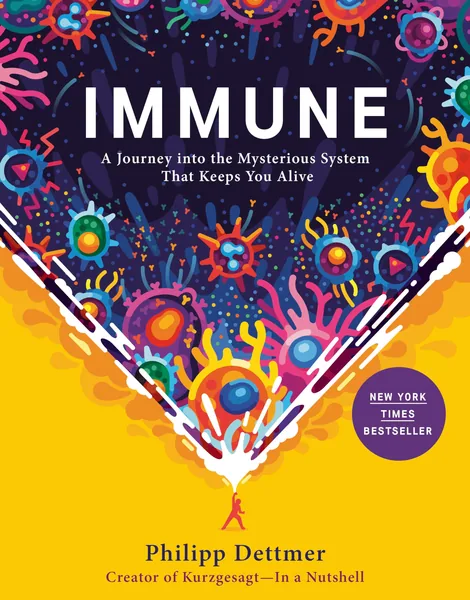
Best book on the immune system for general readers
27. Immune
Philipp Dettmer founded the Kurzgesagt science animation channel, and this book explains the immune system in the same style: plain language, full-color illustrations and a clear order, from the skin barrier and the first responding cells to antibodies, T cells, allergies, autoimmunity and cancer. It is the third title I wrote down for that patient’s husband, and it is still the book I give to anyone who wants to know what their immune system is doing.
- Philipp Dettmer
- Random House, 2021, hardcover, 368 pages
- Over 9,500 Amazon ratings at 4.8 stars
Good: the clearest explanation of immunology for any reader. Not great: simplifies some mechanisms that Parham covers properly.
Check on Amazon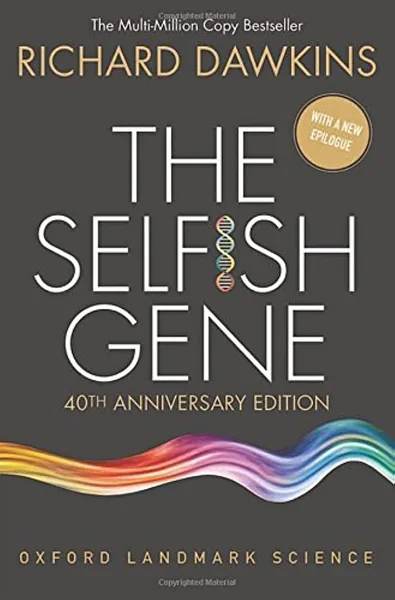
The classic on evolution
28. The Selfish Gene
Published in 1976, The Selfish Gene explains evolution from the gene’s point of view: how behavior that looks altruistic, such as a worker bee dying for its hive, follows from natural selection acting on genes. It changed how biologists talk about evolution and is still one of the best explanations of natural selection for general readers. The 40th anniversary edition includes Dawkins’s later notes answering his critics.
- Richard Dawkins
- Oxford University Press, 40th anniversary edition (2016), paperback, 496 pages
- Over 9,000 Amazon ratings at 4.6 stars
Good: a clear and influential explanation of natural selection. Not great: some of its examples and language are dated.
Check on Amazon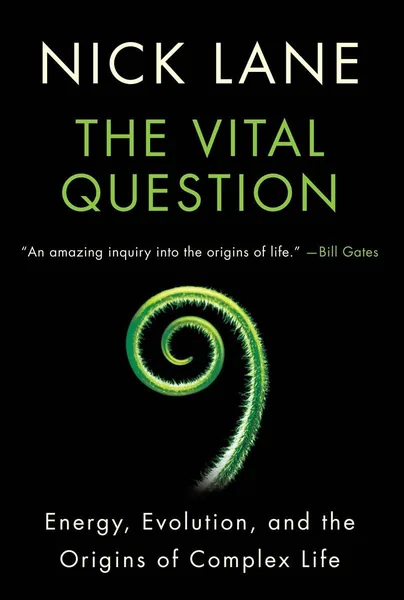
Best for the origin of life
29. The Vital Question
Nick Lane is a biochemist, and this book asks why all complex life is built from the same kind of cell, and why that cell runs on energy from a membrane. It explains respiration, mitochondria and the origin of life as one argument. It is the hardest book in this section and the one that will most change how you see a cell. Read it after the cell and energy chapters of your textbook.
- Nick Lane
- W. W. Norton, 2016, paperback, 368 pages
- Over 1,700 Amazon ratings at 4.6 stars
Good: makes cellular energy the center of biology. Not great: demanding without some biochemistry.
Check on Amazon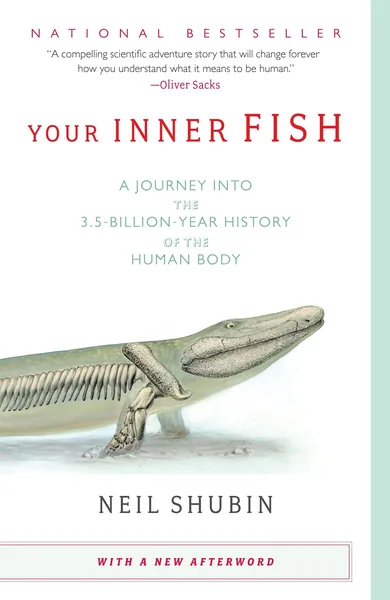
Best for anatomy and evolution together
30. Your Inner Fish
Neil Shubin is a paleontologist and anatomist who co-discovered Tiktaalik, a 375-million-year-old fish with the beginnings of limbs. This book uses that find to explain why the human body is built the way it is: our hands, teeth, ears and even hiccups trace back to fish. It is short, and it makes anatomy and evolution feel like one subject.
- Neil Shubin
- Vintage, 2009, paperback, 256 pages
- Over 2,900 Amazon ratings at 4.6 stars
Good: short, clear and full of anatomy. Not great: covers one theme rather than a whole subject.
Check on Amazon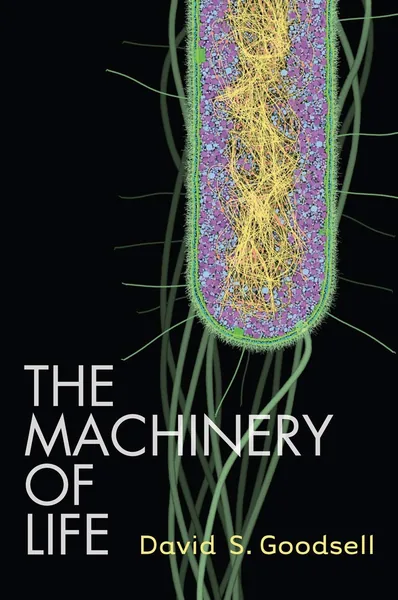
Best visual book on the cell
31. The Machinery of Life
David Goodsell is a structural biologist who paints the inside of cells at true scale, with every protein, ribosome and strand of DNA drawn from real structural data. The result shows how crowded a cell is, which no textbook diagram does. Each painting has a page explaining what you are looking at. It is a short book to keep next to Essential Cell Biology.
- David S. Goodsell
- Springer, 2nd edition (2009), hardcover, 179 pages
- Over 300 Amazon ratings at 4.7 stars
Good: the most accurate pictures of the inside of a cell. Not great: a companion book, not a course.
Check on AmazonTwo more worth reading: I Contain Multitudes by Ed Yong on the microbes that live in and on us, and The Song of the Cell, Mukherjee’s follow-up to The Gene about cell biology and cell therapies, including the CAR-T treatment that started this guide.
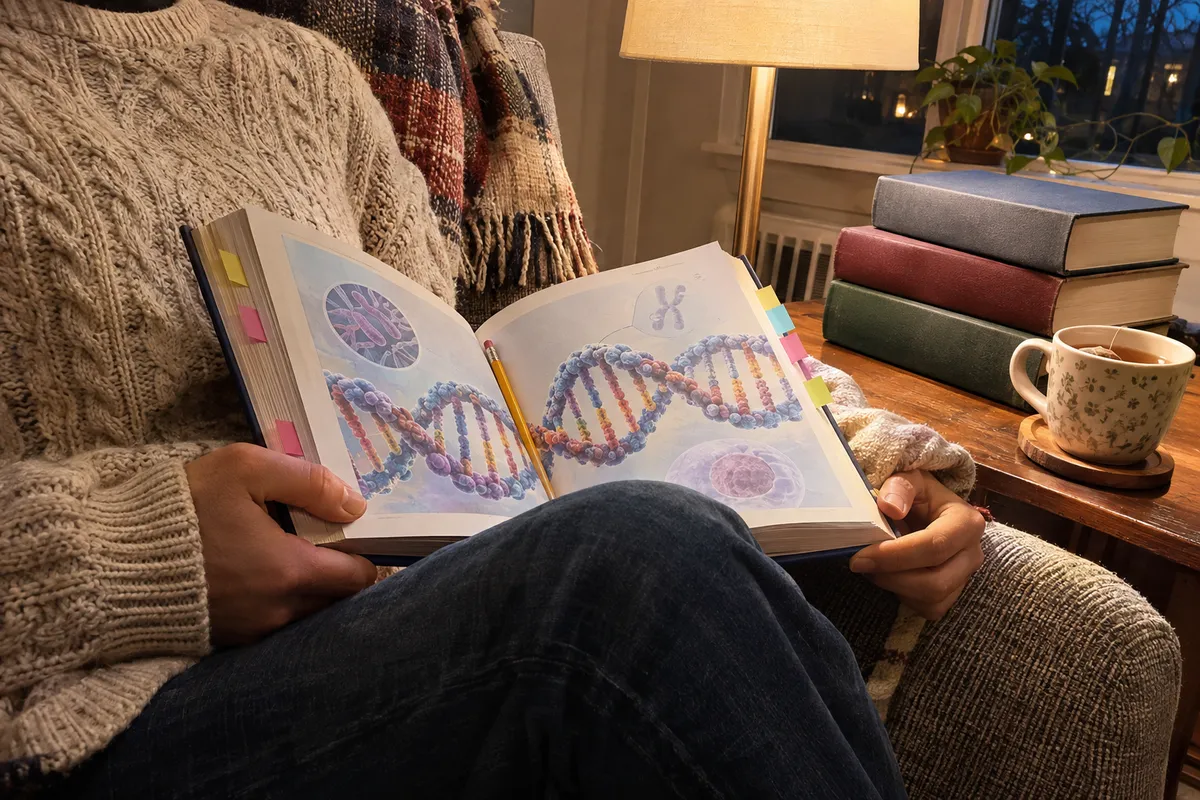
What Reddit recommends
We read 86 Reddit threads where someone asked which books to use to learn biology on their own, most of them in r/biology, and counted the threads in which each book or resource was recommended. These were the most common answers.
| Book or resource | Threads | In this guide |
|---|---|---|
| Campbell Biology | 43 | Yes |
| Molecular Biology of the Cell (Alberts) | 27 | Yes |
| Khan Academy | 25 | Free |
| Free university courses (MIT, edX, Coursera) | 12 | Free |
| OpenStax Biology 2e | 9 | Free |
| Crash Course Biology | 9 | Free videos |
| The Gene (Mukherjee) | 7 | Yes |
| Dawkins (The Selfish Gene and others) | 6 | Yes |
| Janeway’s Immunobiology | 6 | Mentioned |
| Your Inner Fish (Shubin) | 5 | Yes |
| Biology For Dummies | 5 | Yes |
| Essential Cell Biology, Lehninger, The Vital Question | 4 each | Yes |
Campbell came up in half the threads, and the advice around it was consistent: buy a used older edition, do not try to read all of it, and pair it with Khan Academy or OpenStax, which commenters say cover the same material. Several people warned that it is dense and that it spends more pages on plants than someone heading into medicine needs, which is the case for Campbell Biology in Focus.
Alberts’ Molecular Biology of the Cell was called “the bible” of cell biology and, in the same threads, too big for a beginner. Essential Cell Biology is the step in between, and it is the one I would start with. Biology For Dummies was only ever recommended for complete beginners, and nobody said anything against it.
Two other patterns stood out. Commenters kept pointing to chemistry as the thing that stops self-learners at biochemistry and molecular biology. And one of the most upvoted answers said to read about evolution early, starting with Your Inner Fish, because it is the idea that ties the other topics together. I agree with both.
Free biology textbooks and courses
You can learn a full introductory biology course for free. The paid books above are better for some people, mainly because of figures and workbooks, but none of them is required.
- OpenStax Biology 2e: a complete two-semester intro textbook from Rice University, free online and as a PDF. It follows the same order as Campbell and has review questions with answers. OpenStax also publishes free Concepts of Biology (a shorter, non-majors book), Anatomy and Physiology 2e and Microbiology.
- Khan Academy Biology: short videos and practice exercises with instant feedback, from high school through AP and the MCAT. The exercises make up for the one thing books cannot do: grade your answers.
- MIT OpenCourseWare 7.01SC Fundamentals of Biology: MIT’s intro biology course with lecture videos, problem sets and exams with solutions. It focuses on biochemistry, genetics, molecular biology and recombinant DNA, and is the best free course for anyone heading toward a lab.
- HHMI BioInteractive: free animations, short films and data activities from the Howard Hughes Medical Institute, made for teachers and very good for self-learners.
- LibreTexts Biology: a library of free textbooks at every level, including genetics, cell biology, microbiology and ecology.
For a ready list of subjects to explore after the intro course, see our biology topics map.
A 12-month self-study plan
This plan takes an adult with no biology from zero to the end of a two-semester intro course and one second-year subject, at about five hours a week. It uses Campbell Biology in Focus as the main book; the chapter ranges are approximate and work for the full Campbell or OpenStax with small changes.
| Months | Topics | Books |
|---|---|---|
| 1 | Overview and the chemistry of life | Cartoon Guide to Biology, Campbell in Focus ch. 1 to 3 |
| 2 to 3 | Cells, membranes, energy, respiration, photosynthesis | Campbell in Focus ch. 4 to 10, Coloring Workbook |
| 4 to 5 | Cell division, inheritance, DNA, gene expression | Campbell in Focus ch. 11 to 18, Cartoon Guide to Genetics |
| 6 to 7 | Evolution and the diversity of life | Campbell in Focus ch. 19 to 27, Why Evolution Is True |
| 8 to 9 | Plant and animal physiology, ecology | Campbell in Focus ch. 28 to 45, Anatomy Coloring Book |
| 10 to 12 | One second-year subject | Essential Cell Biology, Lippincott, Griffiths or Tortora |
At the end of each month, answer the end-of-chapter questions for every chapter you read without looking back, and redo the ones you missed a week later. If you are falling behind, cut the diversity of life chapters short. They are the most memorization and the least needed later.
How to study biology on your own
When I tutored premed students, the ones who struggled had almost always read the chapter. Some had read it twice and highlighted most of it. What they had not done was close the book and try to explain it. These habits make the difference.
- Draw every process from memory. After reading about mitosis, the Krebs cycle or the nephron, close the book and draw it on a blank sheet with every part labeled. Then check it against the figure and redraw what you missed. This is the single most effective way to learn biology.
- Test yourself before you feel ready. Do the end-of-chapter questions, the workbook pages or the Khan Academy exercises the same day you read the chapter. Getting questions wrong early is how you find what you have not understood.
- Space your review. Use flashcards for vocabulary, with a spaced-repetition app such as Anki, and review a few minutes a day. Biology’s volume of terms is too large to cram.
- Learn the chemistry once. If the first chapters on atoms, bonds, water and pH feel shaky, stop and fix them. Every later chapter on membranes, enzymes and metabolism depends on them.
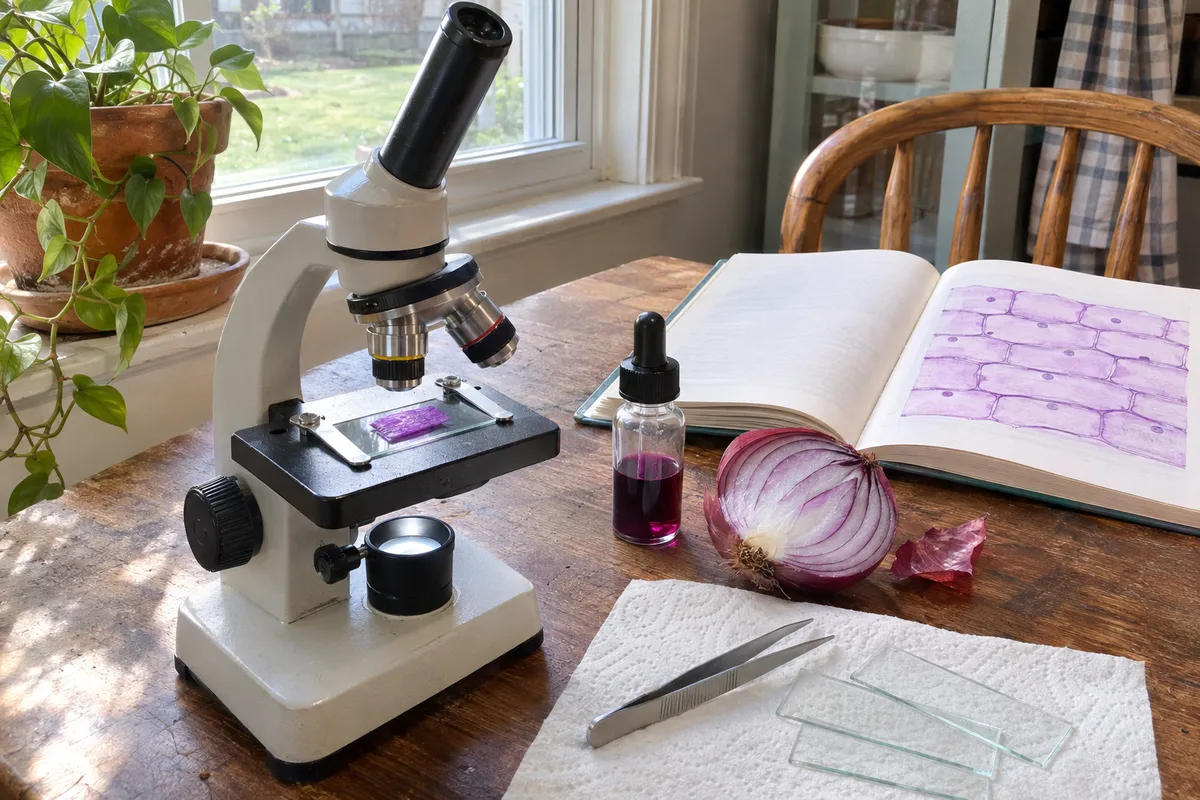
- Look at real cells. A basic microscope and a few slides you make at home, such as onion skin stained with iodine or food coloring, turn the textbook’s cell diagrams into something you have seen. Our microscope finder helps you pick one.
FAQ
For most adults, Campbell Biology in Focus is the best biology book for self-study. It has the same authors, figures and order as Campbell Biology, the most widely used intro textbook, in a length one person can finish in a year. Complete beginners should start with Biology: A Self-Teaching Guide by Steven Garber, which checks your understanding every few paragraphs.
Yes. Introductory biology needs very little math, and a complete course is available in books and for free from OpenStax, Khan Academy and MIT OpenCourseWare. What you cannot easily get alone is lab work; a basic microscope covers part of that at home.
Biology: A Self-Teaching Guide by Steven Garber, because it was written for people learning alone and asks you a question every few paragraphs. Biology For Dummies has the plainest explanations, and The Cartoon Guide to Biology is the best choice if you learn from pictures.
Yes. It is the most complete intro biology textbook, with the best figures and answers to end-of-chapter questions in the back. Its only problem is length, about 1,500 pages. If that is too much, use Campbell Biology in Focus, the shorter version by the same authors, or an older edition of the full book.
About nine months to cover a two-semester introductory course at five hours a week, and a year to add one second-year subject such as cell biology or anatomy and physiology. Adults refreshing biology they studied before usually need three to four months for the intro course.
You need basic chemistry: atoms, bonds, water, pH and the idea of energy in reactions. Campbell and OpenStax teach this in their first chapters. Biochemistry and cell biology need more, roughly a semester of general chemistry. You do not need organic chemistry unless you study biochemistry at the level of Lehninger.
Not for self-study. Intro biology changes little between editions, and an edition one or two behind teaches the same course and is easy to find used. Buy the current edition only if a course requires its online homework or assigns pages by number.
For learning the science behind medicine, doctors most often recommend Campbell Biology for the foundations, Essential Cell Biology for cells, Lippincott Illustrated Reviews for biochemistry, The Anatomy Coloring Book for anatomy and The Immune System by Parham for immunology. For general reading, The Gene and Immune explain the biology behind current medicine.
The Gene by Siddhartha Mukherjee is the best popular biology book, a history of genetics that also teaches the science. Immune by Philipp Dettmer is the clearest book on the immune system, and Your Inner Fish by Neil Shubin explains the human body through evolution.
Sources
- Amazon product pages for each book, checked November 2026 (editions, page counts, publishers and ratings).
- Reddit threads asking for self-study biology books, summarized in the What Reddit recommends section.
- OpenStax, Biology 2e, Rice University, 2018.
- MIT OpenCourseWare, 7.01SC Fundamentals of Biology, Fall 2011.
- National Cancer Institute, CAR T Cells: Engineering Patients’ Immune Cells to Treat Their Cancers.
- Daeschler, Shubin and Jenkins, A Devonian tetrapod-like fish and the evolution of the tetrapod body plan, Nature, 2006.