As an Amazon Associate we earn from qualifying purchases. Disclosure
In my first week of gross anatomy I read the twelve pages on the brachial plexus, the network of nerves that runs from the neck into the arm, three times in one evening. The next morning I could not draw it. A second-year student in the lab took a marker and drew it on the whiteboard in under a minute: five roots coming in, a letter M in the middle, five nerves going out to the arm. I copied that drawing about ten times that night, and I can still draw it now, more than fifteen years later.
That is how anatomy is learned. You do not read it into your head. You draw it, color it, label it, say the names out loud and find the structures on your own body. So the best anatomy books for beginners are the ones that make you do those things, and the most famous anatomy books are often the wrong place to start.
The best anatomy book for most beginners is The Anatomy Coloring Book by Wynn Kapit and Lawrence Elson. It turns every page into an exercise, it covers the whole body, and it has been the standard first anatomy book for almost fifty years. Pair it with Anatomy & Physiology For Dummies when you want things explained in plain words. If you are taking an anatomy and physiology course, use your course textbook or the free OpenStax Anatomy and Physiology 2e. If you are heading toward medicine, add Gray’s Anatomy for Students and the Netter Atlas of Human Anatomy.
I trained in medicine and molecular biology, did clinical rotations in internal medicine, and tutored first-year students through anatomy during my MD-PhD. The picks below are grouped by type and by goal: coloring books, beginner A&P books, books to read for pleasure, textbooks, atlases, flashcards and books for movement, art and kids. Each one has the current edition, what it is good at and where it falls short.
Quick picks
| Pick | Best for | Level |
|---|---|---|
| The Anatomy Coloring Book (Kapit) | Best overall for beginners | Beginner |
| Netter’s Anatomy Coloring Book | Coloring with clinical notes | Beginner to college |
| Anatomy & Physiology For Dummies | Plainest explanations | Beginner |
| The Complete Human Body | Best illustrated reference | Any |
| The Body: A Guide for Occupants | Reading for pleasure | Any |
| Essentials of Human Anatomy & Physiology | One-semester A&P course | College intro |
| Gray’s Anatomy for Students | The Gray’s a beginner should buy | Pre-med to medical school |
| Netter Atlas of Human Anatomy | Best atlas | College and up |
| Trail Guide to the Body | Massage, PT and fitness | Beginner to professional |
| Anatomy for the Artist | Drawing the figure | Beginner |
What makes an anatomy book good for beginners
Anatomy is mostly names and places. An adult body has 206 bones and more than 600 muscles, and each one has a name, a position and a set of neighbors. Understanding is rarely the hard part. Remembering is. A good beginner book gives you a way to practice remembering on every page.
- It makes you produce the answer. Coloring books make you match each name to a structure. Workbooks ask questions and give answers. Flashcards hide the label. Reading a textbook chapter, on its own, does none of this. Psychology research on retrieval practice is consistent here: testing yourself builds memory far better than rereading (Karpicke and Roediger, 2008).
- It knows whether it is teaching anatomy or physiology. Anatomy is structure: what is where. Physiology is function: how it works. Most beginner books combine them as “A&P”. That suits nursing and allied health courses. Medical anatomy and art anatomy books teach structure only.
- It picks one organization and sticks to it. Systemic books go system by system (skeleton, muscles, nerves, heart). Regional books go body part by body part (the upper limb, the thorax, the head and neck), the way a dissection course works. Beginners usually find systems easier. Medical students learn by region.
- The drawings are clean. Clear, simplified illustrations teach better at first than photographs of dissected bodies, which are harder to read until you know what you are looking for.
| Book | How it makes you practice | Size |
|---|---|---|
| The Anatomy Coloring Book | Color each name and its structure in the same color | 384 pages |
| Netter’s Anatomy Coloring Book | Coloring plus review questions with answers | 400 pages |
| Kaplan Anatomy Coloring Book | Coloring plus a labeling quiz for every illustration | 384 pages |
| A&P Workbook For Dummies | Questions in every chapter, every answer explained | 384 pages |
| Essentials of Human A&P | End-of-chapter questions; course-style | About 650 pages |
| Trail Guide to the Body | Find each bone and muscle on a real body with your fingers | 480 pages |
Where to start, by goal
A friend who teaches yoga asked me last year for “a good anatomy book.” I asked what she wanted to understand, and it was one thing: what happens in the hip when a student folds forward and why some students cannot get there. She did not need the brachial plexus or the kidney. She needed bones, joints and muscles, shown in movement. That is a different book from the one a nursing student needs, so start with what you want to be able to do afterwards.
- You are curious and starting from zero: The Anatomy Coloring Book, plus Anatomy & Physiology For Dummies or The Complete Human Body for explanations. Read The Body by Bill Bryson alongside.
- You are taking or preparing for an A&P course (nursing, allied health, kinesiology): your course textbook, or Marieb’s Essentials or the free OpenStax book, plus the Netter or Kaplan coloring book and the A&P Workbook For Dummies for practice.
- You are pre-med or starting medical, PA or dental school: Gray’s Anatomy for Students or Moore’s Essential Clinical Anatomy, the Netter atlas, and Netter’s flashcards.
- You work with bodies in motion (massage, physical therapy, yoga, coaching): Trail Guide to the Body first, then Anatomy of Movement, Strength Training Anatomy or The Key Muscles of Yoga.
- You draw or sculpt people: Anatomy for the Artist, Morpho or Anatomy for Sculptors. Medical books show too much of what lies under the surface.
- You are buying for a child: See Inside Your Body (ages 6 to 9) or the DK Knowledge Encyclopedia Human Body (about 9 to 13).
Best anatomy coloring books
An anatomy coloring book is not a children’s activity book. Each page has a detailed line drawing of one part of the body, with a list of the structures shown. You pick a color for each name, color the name, and then find and color the same structure in the drawing. To do it you have to locate every structure yourself and look at how it relates to the ones around it. For a beginner this is the most efficient way I know to learn anatomy from a book, and it is why medical students still buy these.
The four below differ in their drawings and in how much they quiz you. If you are not sure, start with Kapit.
| Coloring book | Drawing style and extras | Best for |
|---|---|---|
| Kapit and Elson, 4th ed. | Clean line drawings, short text on each page | Complete beginners |
| Netter, 4th ed. | Based on Netter’s medical art; clinical notes and review questions | A&P and pre-med students |
| Kaplan, 10th ed. | Realistic shaded art; a labeling quiz on every illustration | Self-testing |
| DK Human Body, 2nd ed. | Large, simple plates with facing text | Teens and casual learners |
Best overall for beginners
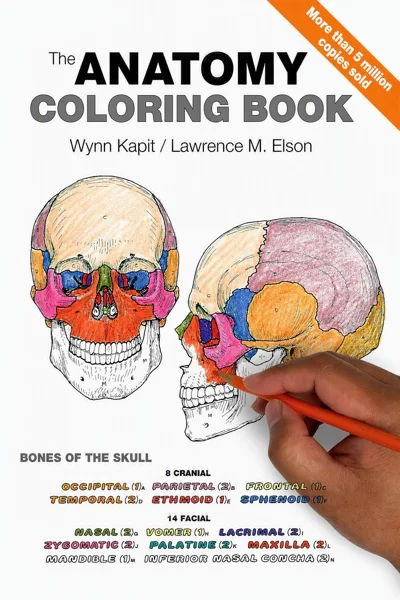
1. The Anatomy Coloring Book
Wynn Kapit was an artist and designer who took an anatomy course and decided the subject was easier to learn with a pencil in hand. He built this book with Lawrence Elson, an anatomist, and it first came out in 1977. The idea has not changed since: each structure’s name carries a small letter, the same letter sits on the drawing, and you color both in one color. Each page has a short text that explains what you are coloring.
It is organized by body system, starting with orientation and tissues and working through the skeleton, joints, muscles, nervous system, heart and vessels, lungs, gut, kidneys, hormones and reproduction. That systemic order is the easiest one for a beginner. It covers more anatomy than most people learning for interest will ever need, so you can stay with it for a year.
- Wynn Kapit and Lawrence M. Elson
- Pearson, 4th edition (2013), paperback, 384 pages
- Covers the whole body, by system
Good: the clearest first anatomy book there is, and it forces you to look at every structure. Not great: the 4th edition is from 2013, and the physiology is thin, so add a text when you want to know how things work.
Check on Amazon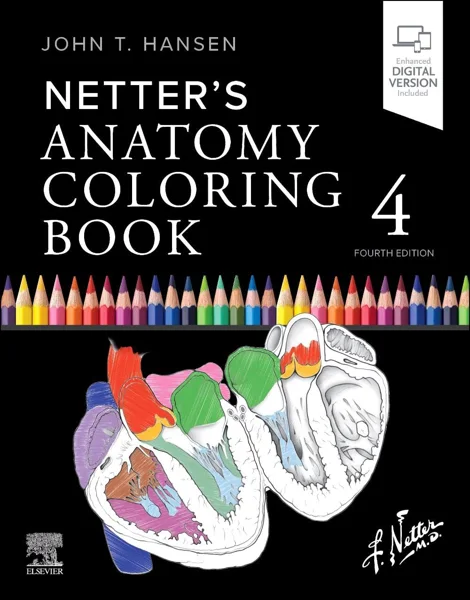
Best for A&P and pre-med students
2. Netter’s Anatomy Coloring Book
John Hansen, an anatomist at the University of Rochester, simplified Frank Netter’s medical illustrations into line drawings for coloring. The result looks closer to what you will see in an atlas or a course than Kapit’s drawings do. Each section adds short clinical notes, which explain why the anatomy matters (why a broken collarbone can damage nerves to the arm, for example), and review questions with answers.
The 4th edition came out in May 2026. The 3rd edition (2021) is still a good book if you find a cheaper copy.
- John T. Hansen
- Elsevier, 4th edition (2026), paperback, 400 pages
- Covers the whole body, with clinical notes
Good: realistic drawings, clinical context and questions in one book. Not great: denser pages than Kapit, which can overwhelm someone who has never seen anatomy before.
Check on Amazon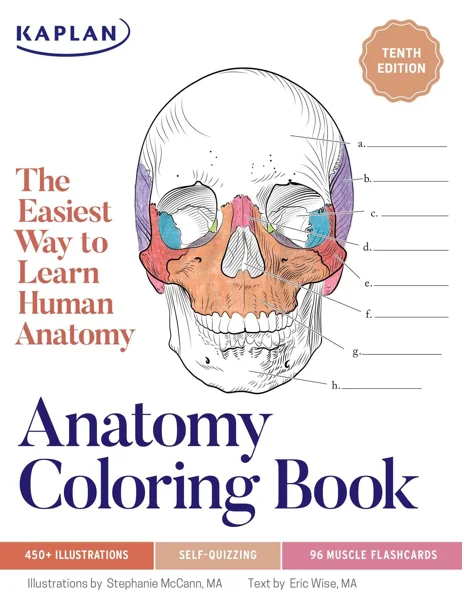
Best for testing yourself
3. Kaplan Anatomy Coloring Book
The Kaplan book has the most realistic art of the four. Stephanie McCann’s illustrations are shaded and detailed, closer to an atlas than a sketch. Every illustration comes with a labeling quiz, so after you color a page you can cover the labels and test yourself on it, which is the step most people skip.
It has more than 450 illustrations, organized by system. The 10th edition was published in 2024.
- Stephanie McCann and Eric Wise
- Kaplan Test Prep, 10th edition (2024), paperback, 384 pages
- Covers the whole body, by system
Good: realistic drawings and a quiz for every illustration. Not great: the detailed shading leaves less room to color, and explanations are short.
Check on Amazon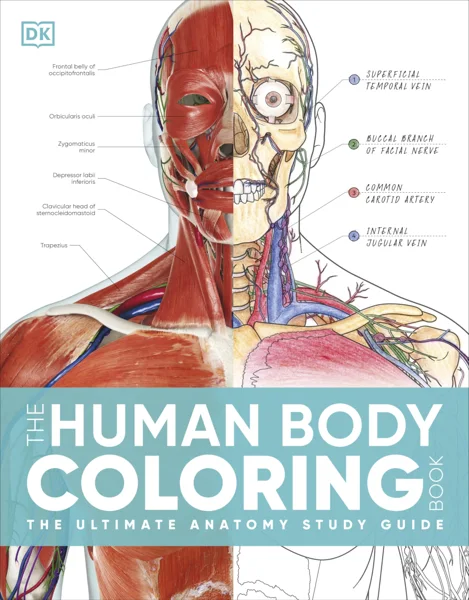
Easiest coloring book
4. The Human Body Coloring Book (DK)
DK’s coloring book is the gentlest of the four. The plates are large and less crowded, and the facing pages explain each system in plain language. It suits a teenager, a homeschool course or an adult who wants an overview of the body rather than every named muscle of the forearm.
- DK
- DK, 2nd edition (2024), flexibound, 264 pages
- Covers all body systems at an introductory level
Good: large, uncluttered drawings with clear text. Not great: far less detail than Kapit or Netter, so it will not carry you through a college course.
Check on Amazon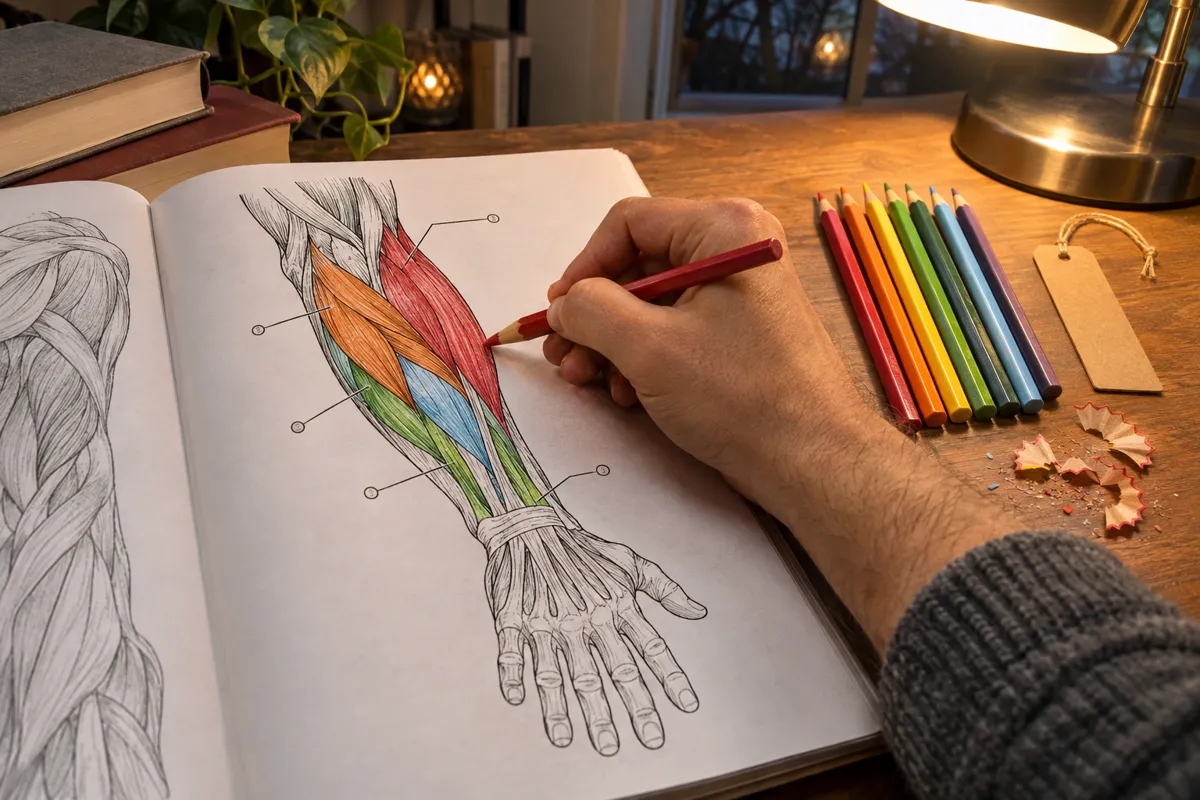
If you want a coloring book that quizzes you more, the Anatomy Student’s Self-Test Coloring Book from Barron’s (2nd edition, 2018, 192 pages) puts the labels on the facing page so you can cover them and test yourself. For physiology, Netter’s Physiology Coloring Book does the same job for how the organs work.
Best anatomy and physiology books for beginners
Coloring teaches you where things are. You also need a book that tells you, in sentences, what they do. These are the best ones for someone without a science background, plus the textbook most community colleges use.
Plainest explanations
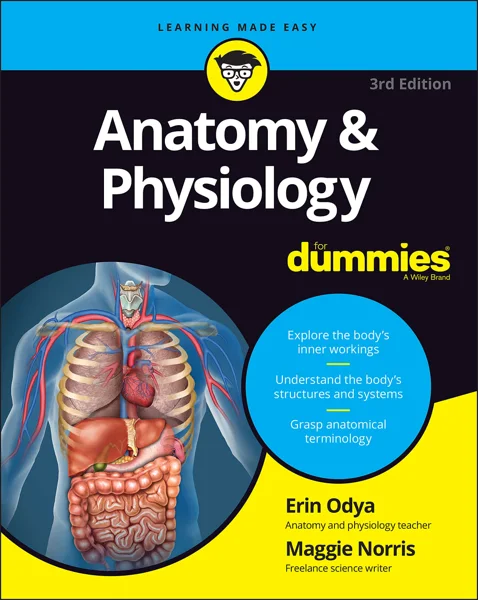
5. Anatomy & Physiology For Dummies
Erin Odya teaches anatomy and physiology to high school students, and the book reads that way: short chapters, plain words and the vocabulary introduced slowly. It covers the body system by system and explains how each one works, not only what its parts are called. It is the book I suggest to adults who want to understand their own body or a family member’s diagnosis without a textbook.
If you want everything in one book, the Anatomy & Physiology All-in-One For Dummies (2023, 496 pages) combines the explanations with practice questions and online chapter quizzes.
- Erin Odya and Maggie A. Norris
- For Dummies, 3rd edition (2017), paperback, 384 pages
- Covers anatomy and physiology of every system at an introductory level
Good: the easiest explanations of how the body works. Not great: few illustrations for an anatomy book, so it needs a coloring book or atlas beside it.
Check on Amazon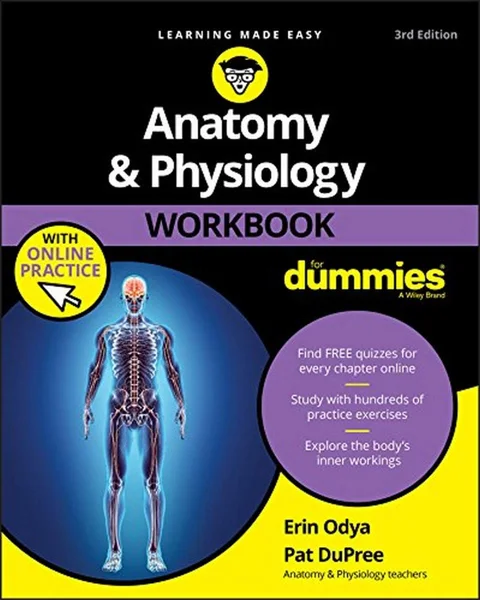
Best workbook
6. Anatomy & Physiology Workbook For Dummies
This is a practice book. Each chapter gives a short summary of one system, then a long set of questions: labeling diagrams, matching terms, multiple choice and short answers. Every answer is explained at the end of the chapter, and the book includes online practice. It is the right companion for anyone taking an A&P course, because it trains the kind of recall exams ask for.
- Erin Odya and Pat DuPree
- For Dummies, 3rd edition (2018), paperback, 384 pages
- Covers A&P at the introductory college level
Good: hundreds of questions with explained answers. Not great: the summaries are too short to learn from on their own.
Check on Amazon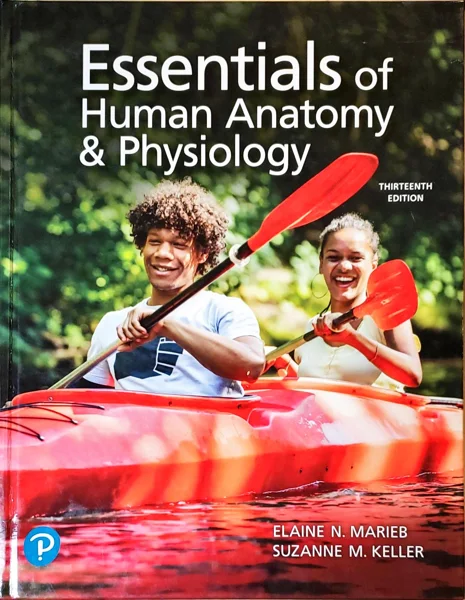
Best one-semester textbook
7. Essentials of Human Anatomy & Physiology
Elaine Marieb’s textbooks are the most widely used A&P books in American colleges. Essentials is the shorter one, written for one-semester courses in nursing, allied health and medical assisting. It is clearly written and well illustrated, and every chapter ends with review questions. If you want a real college A&P course at home without the cost of a 1,200-page book, this is the one.
The two-semester version is Marieb and Hoehn’s Human Anatomy & Physiology (12th edition, 2024, about 1,200 pages). Buy it only if your course assigns it. Older editions of both books are almost as good and cost much less used.
- Elaine N. Marieb and Suzanne M. Keller
- Pearson, 13th edition (2021), about 650 pages
- Covers introductory college A&P
Good: a complete, readable A&P course in one book. Not great: expensive new, and the online homework that courses use is sold separately.
Check on AmazonIf you do not want to buy a textbook, OpenStax Anatomy and Physiology 2e is free online and covers the same two-semester course at the same level as Marieb and Hoehn.
Anatomy books to read for pleasure
These do not train you to name structures. They make the body interesting enough that you keep going with the ones that do.
Best illustrated reference
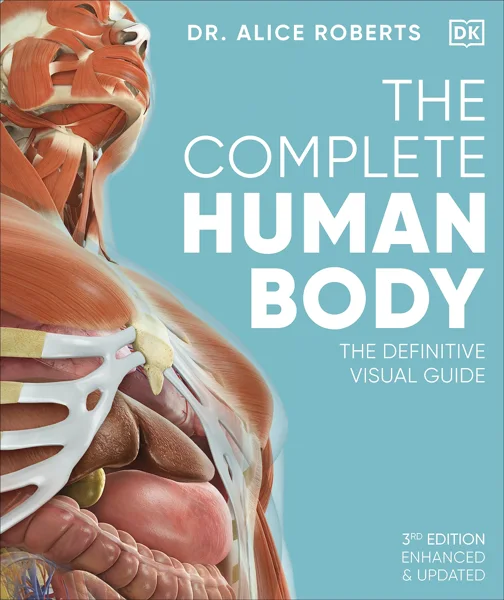
8. The Complete Human Body
Alice Roberts is an anatomist and a professor of public engagement in science at the University of Birmingham, and this is the best-looking general book on the body I know. It covers anatomy, how each system works, how the body develops and ages, and the common diseases of each system, with large 3D-rendered illustrations on almost every page. It is the book to keep on the shelf and open when a question comes up.
- Dr. Alice Roberts
- DK, 3rd edition (2023), hardcover, 536 pages
- Covers anatomy, physiology, development and disease
Good: outstanding illustrations and a huge range. Not great: heavy, and a reference rather than a course, with no questions or exercises.
Check on Amazon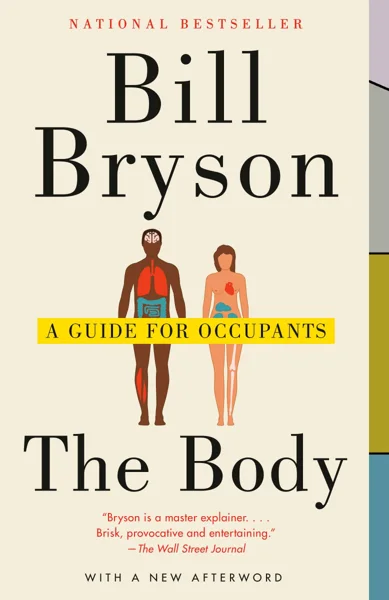
Best to read for pleasure
9. The Body: A Guide for Occupants
Bill Bryson takes a tour of the body from the skin and the skeleton to the immune system, sleep and death, mixing anatomy with history and the people who made the discoveries. It is not a study book, and there are no diagrams to learn from. It is the book that makes a non-scientist want to know more, and it is accurate enough that I have no trouble recommending it to future nurses and doctors.
- Bill Bryson
- Anchor/Vintage paperback (2021), 464 pages
- Covers the whole body as narrative nonfiction
Good: funny, well researched and easy to read. Not great: teaches about the body, not anatomy itself; pair it with a coloring book.
Check on Amazon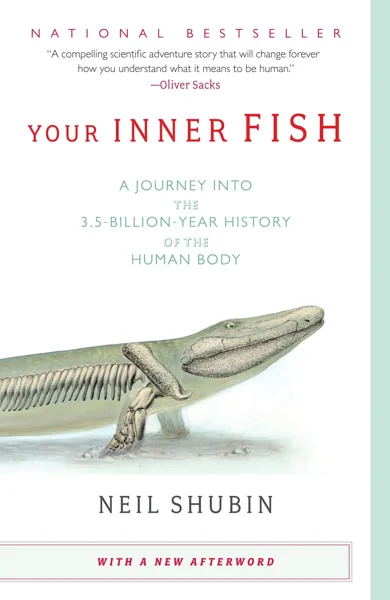
Why the body is built this way
10. Your Inner Fish
Neil Shubin is a paleontologist who also taught human anatomy to medical students. In this book he explains odd features of the human body through evolution: why the nerves of the face follow such strange routes, why our wrists have so many small bones, why hiccups exist. It answers the “why” questions that anatomy textbooks skip, and it makes the names easier to remember because each one now has a story.
- Neil Shubin
- Vintage paperback (2009), 256 pages
- Covers evolution and human anatomy
Good: the best book on why the body looks the way it does. Not great: covers selected parts of the body, not a full tour.
Check on AmazonFor more books like these across all the sciences, see our list of the best science books for non-scientists.
Which Gray’s Anatomy book to buy
Most people who search for “Gray’s Anatomy book” want the famous one, and most of them should not buy it. Four different books carry the name, and only one is meant for learning.
- Gray’s Anatomy: The Anatomical Basis of Clinical Practice. The modern reference edition, edited by Susan Standring and now Shane Tubbs. The 43rd edition came out in November 2025 and runs to 1,624 pages. It is written for surgeons, radiologists and anatomists who need to look up details. It is not a book to learn from, and it costs as much as a textbook and a half.
- The antique Gray’s. Henry Gray published the first edition in 1858, with drawings by Henry Vandyke Carter. Old editions are in the public domain, so you will see leather-bound reprints of the 1901 or 1918 text for little money. They are beautiful objects, and the engravings are still good, but the terminology and the medicine are a century out of date. Buy one as a gift, not as a study book.
- Gray’s Anatomy for Students. A textbook written for medical students, organized by region, with clinical cases. This is the Gray’s to learn from.
- Gray’s Basic Anatomy and Gray’s Atlas of Anatomy. A shorter version of the student book and a companion atlas.
The Gray’s to learn from
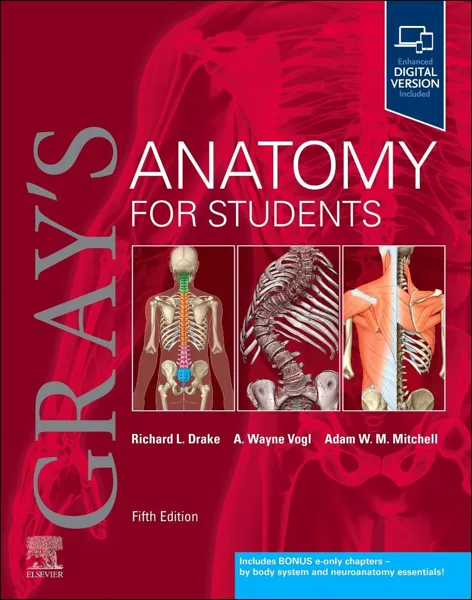
11. Gray’s Anatomy for Students
Richard Drake, Wayne Vogl and Adam Mitchell wrote this for the first-year anatomy course in medical school, and it is one of the two textbooks most courses assign (Moore’s is the other). It goes region by region: back, thorax, abdomen, pelvis, lower limb, upper limb, head and neck. Each chapter starts with an overview, then the detailed anatomy, then clinical boxes and short cases that connect the structure to what goes wrong.
It is a step up from the beginner books above. Read it after a coloring book has given you the main names, or alongside an A&P course if you are aiming for medicine. Older editions are fine: the 4th (2019) is often much cheaper than the 5th.
- Richard L. Drake, A. Wayne Vogl and Adam W. M. Mitchell
- Elsevier, 5th edition (2023), paperback, 1,168 pages
- Covers medical gross anatomy, by region
Good: clear medical-level anatomy with clinical context. Not great: too detailed for someone learning out of interest, and a lot of book to carry.
Check on AmazonBest anatomy atlases for beginners
An atlas is a book of pictures with labels and almost no text. You do not read it; you keep it open next to whatever you are learning from and look at the structure you just read about. Every serious anatomy student owns one. A beginner needs one too, once the coloring book starts to feel easy.
Best atlas
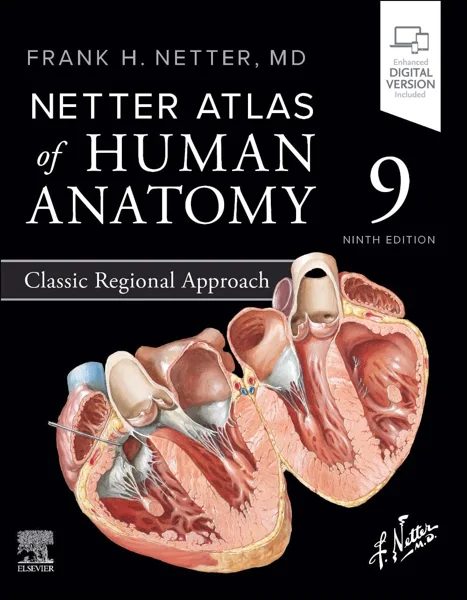
12. Netter Atlas of Human Anatomy
Frank Netter was a surgeon who became a medical illustrator, and his paintings have taught anatomy to several generations of doctors. They are drawn the way you want to see the body when you are learning: layered, clean and with the important structures emphasized. The atlas is the best-selling anatomy atlas in the world and the one I would buy first.
The 9th edition (2026) comes in two versions with the same plates: the Classic Regional Approach, which follows the order of a dissection course, and A Systems Approach, which follows body systems like a coloring book or A&P course. Beginners and A&P students should pick the systems version. Medical students should pick the regional one.
- Frank H. Netter
- Elsevier, 9th edition (2026), paperback, 736 pages
- Covers the whole body; regional and systems versions
Good: the clearest anatomical illustrations in print. Not great: paintings are idealized, so real bodies look messier; it is an atlas, so you need another book for explanations.
Check on Amazon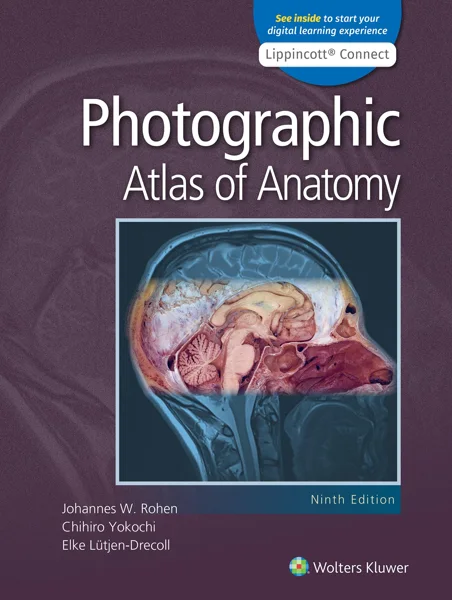
Best photographic atlas
13. Photographic Atlas of Anatomy
Rohen’s atlas uses photographs of real dissections, carefully prepared and labeled. It shows what the body actually looks like: the colors are browns and greys, the fat is everywhere and the nerves are thin and hard to see. That is the point. If you will work in a dissection lab, this is the book that prepares you for it. It is the complement to Netter, not a replacement.
Know before you buy that every page is a photograph of human remains. Some people find that hard at first. Most get used to it within a few pages.
- Johannes W. Rohen, Chihiro Yokochi and Elke Lütjen-Drecoll
- Wolters Kluwer, 9th edition (2021), paperback, 752 pages
- Covers the whole body, by region
Good: shows real anatomy, not idealized drawings. Not great: hard to read as a first atlas, and not for the squeamish.
Check on AmazonThe third common choice is the Thieme Atlas of Anatomy edited by Anne Gilroy (5th edition, 2025), whose computer-drawn illustrations many students find even clearer than Netter’s. Look through a few pages of each in a library or a preview before you pick.
After the basics: clinical anatomy
Clinical anatomy is anatomy taught with medicine in mind: which nerve gets damaged in a broken arm, where to put a needle, why a heart attack can cause jaw pain. These two books are for readers who have the basic names and want to know why they matter.
Best clinical anatomy textbook
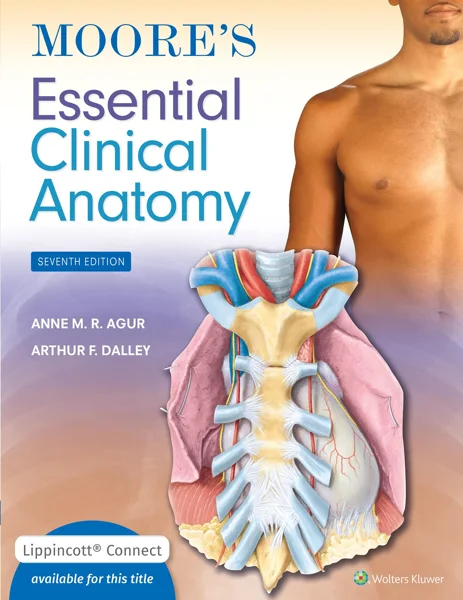
14. Moore’s Essential Clinical Anatomy
Keith Moore’s Clinically Oriented Anatomy has been the standard medical anatomy text for decades, and at 1,200 pages it is too much for most readers. Essential Clinical Anatomy is the shorter version by the same team, about 40 percent smaller. It keeps the blue clinical boxes that made the big book famous and cuts much of the detail. It is the right size for physician assistant, physical therapy and dental students, and for pre-meds getting a head start.
If your medical school assigns the full Moore’s Clinically Oriented Anatomy (10th edition, 2026), buy that one instead.
- Anne M. R. Agur, Arthur F. Dalley II and Keith L. Moore
- Wolters Kluwer, 7th edition (2023), paperback, 736 pages
- Covers clinical gross anatomy, by region
Good: clinical relevance on every page, in a manageable size. Not great: assumes you already know basic anatomy terms.
Check on Amazon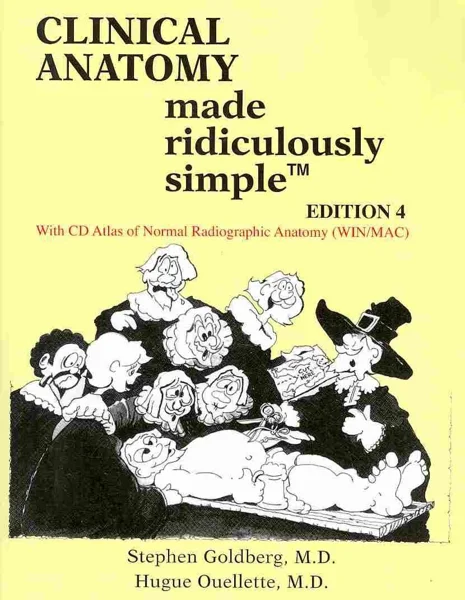
Shortest route to clinical anatomy
15. Clinical Anatomy Made Ridiculously Simple
Stephen Goldberg wrote this short book with cartoons and memory tricks for medical students who needed anatomy to stick. It covers the whole body in under 200 pages, focusing on what matters clinically and leaving out what does not. It is not complete, and it is not trying to be. It is the book to read the week before a course starts or to review the night before an exam.
- Stephen Goldberg and Hugue Ouellette
- MedMaster, 4th edition (2016), paperback, 193 pages
- Covers clinically important gross anatomy
Good: short, memorable and focused on what matters. Not great: the humor is dated, and it leaves out a lot.
Check on AmazonAnatomy flashcards and models
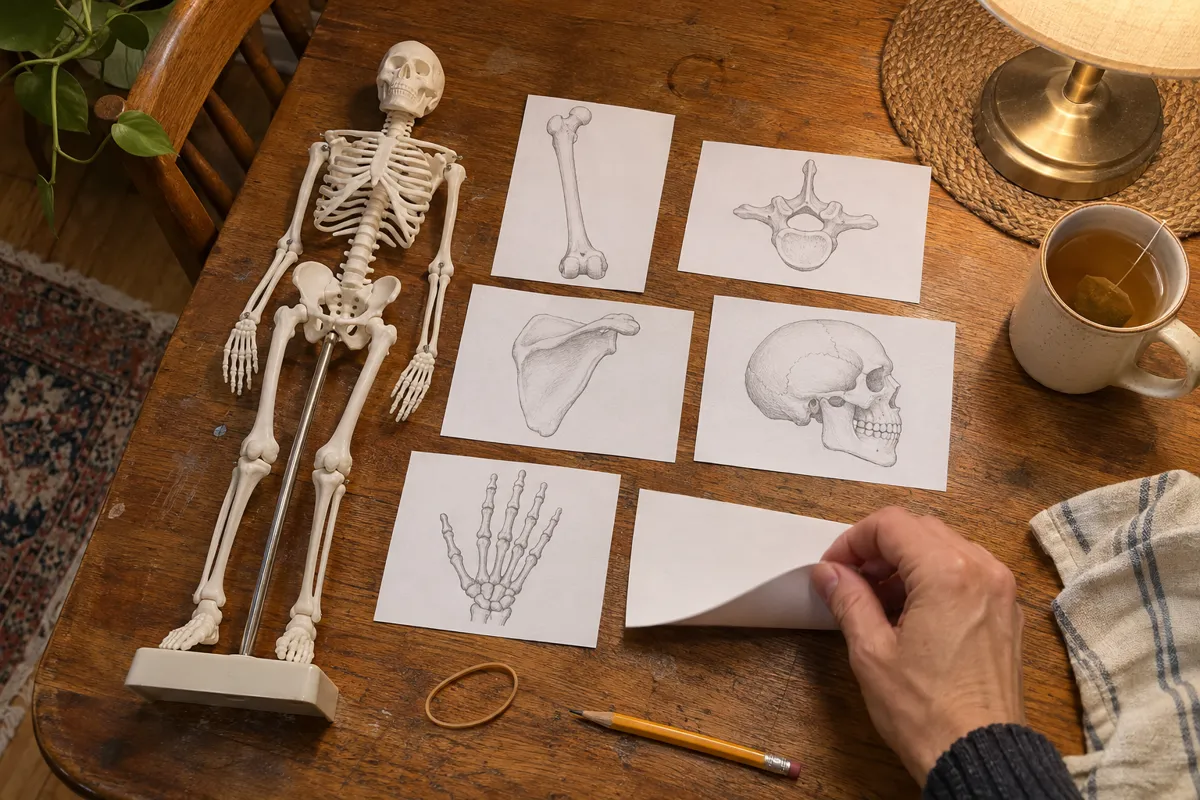
Flashcards are the simplest form of self-testing: the picture on one side, the names on the other. Use them after you have colored or read a region, not before. A small skeleton model does the same job in three dimensions, which helps with joints and with seeing how the bones of the skull, spine and pelvis fit together.
Best anatomy flashcards
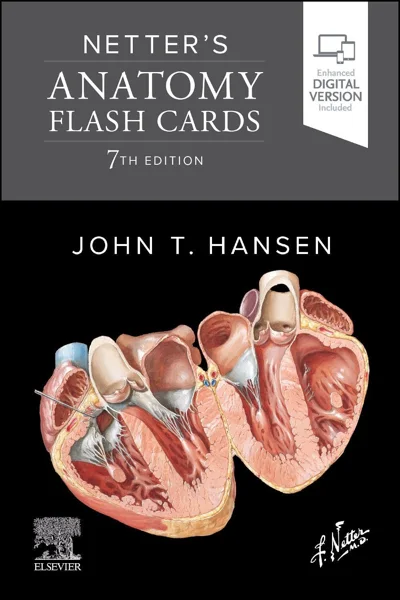
16. Netter’s Anatomy Flash Cards
These are Netter’s illustrations on cards, with numbered leader lines on the front and the answers on the back, plus a short note on clinical relevance. They are sorted by region and match the Netter atlas, so the two work together. The 7th edition came out in March 2026.
- John T. Hansen
- Elsevier, 7th edition (2026), boxed cards
- Covers the whole body, by region
Good: high-quality art and a clinical note on each card. Not great: medical-school level, more detail than a casual learner needs.
Check on Amazon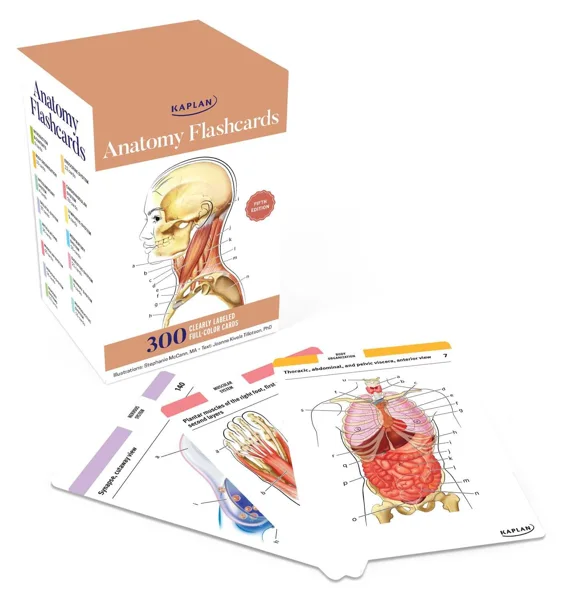
Best flashcards for A&P students
17. Kaplan Anatomy Flashcards
Kaplan’s 300 cards use the same illustrations as the Kaplan coloring book, with a drawing on the front and the labels and descriptions on the back. They are organized by system rather than region, which matches A&P courses better than Netter’s cards do. The box has a ring so you can carry a section at a time.
- Joanne Tillotson, illustrated by Stephanie McCann
- Kaplan Test Prep, 5th edition (2024), 300 cards
- Covers the whole body, by system
Good: system order and clear drawings for A&P students. Not great: less clinical detail than Netter’s cards.
Check on Amazon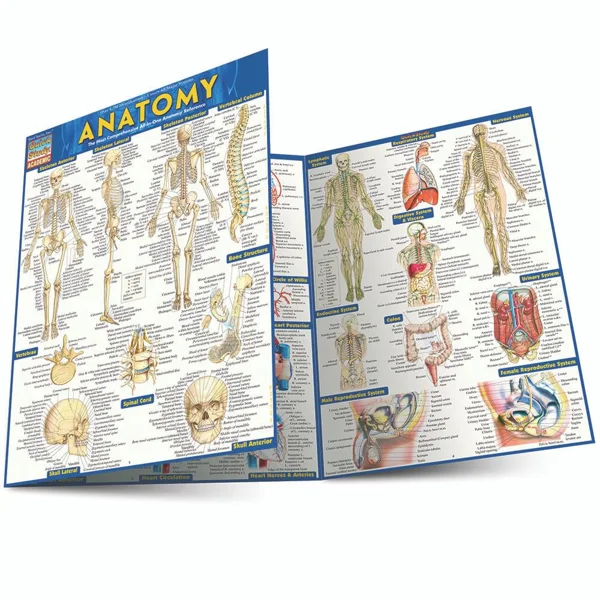
Cheapest one-page review
18. QuickStudy Anatomy Laminated Guide
A six-page laminated fold-out with labeled drawings of the main bones, muscles, organs and vessels. It will not teach you anatomy, but it is the cheapest way to keep the whole body in one place on your desk or in a bag, and it is useful for a quick check while you are working through a book.
- Vincent Perez
- QuickStudy (2014), 6 laminated pages
- Covers the main structures of every system
Good: the whole body at a glance, and it lasts. Not great: small print and very little detail.
Check on Amazon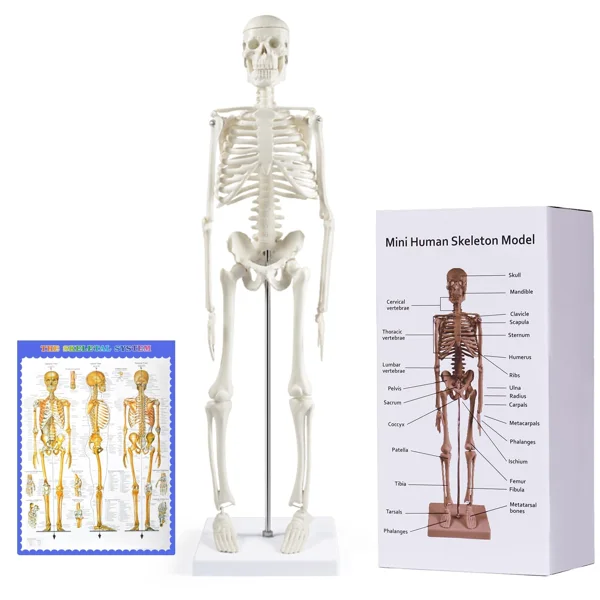
Best desktop skeleton
19. Mini Human Skeleton Model (17.7 in)
A desktop skeleton about 45 cm tall with movable arms and legs on a stand. At this size the individual bones are recognizable, and you can see how the shoulder blade sits on the ribs, how the pelvis is built and how the spine curves. Fine details such as the small bones of the wrist and foot are simplified. For learning the major bones it is enough, and it costs far less than a life-size model.
- Breesky
- 17.7 in tall, 4.75 in base, movable arms and legs
- Covers the major bones of the skeleton
Good: small enough for a desk and cheap. Not great: simplified hands, feet and skull; not anatomically exact.
Check on AmazonTo review the bones and muscles you are learning, try our lists of skeletal muscles and flat bones, or the printable human body word search.
Anatomy books for massage, PT, yoga and fitness
If you work with moving bodies, you need musculoskeletal anatomy: bones, joints and muscles, where they attach and what they do. You also need to find them on a living person, which no medical textbook teaches. These books do.
Best for massage and physical therapy
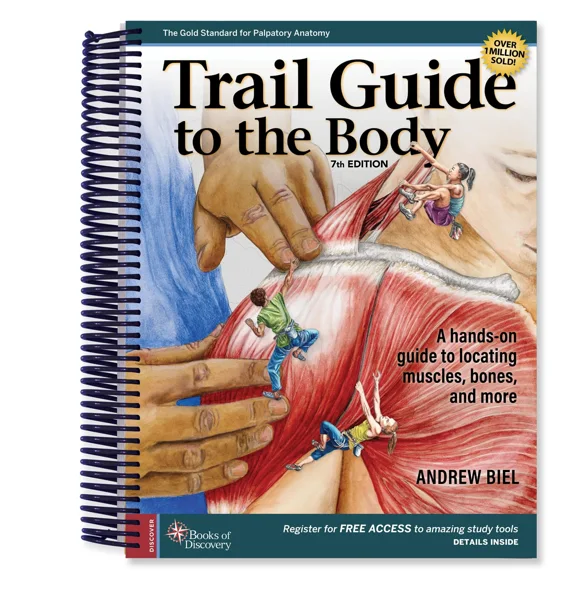
20. Trail Guide to the Body
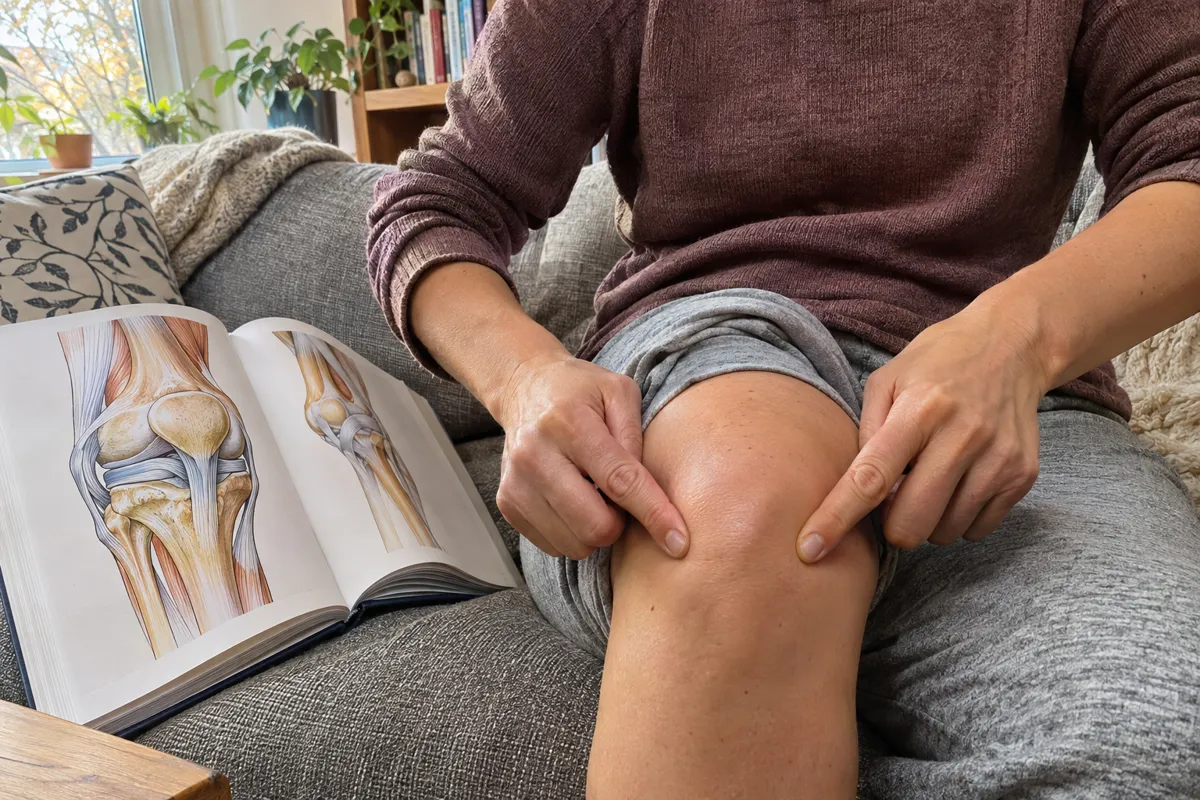
Andrew Biel’s book teaches palpation, which means locating bones, muscles and tendons with your fingers on a living body. Each structure gets a clear illustration, then step-by-step “trails” that walk you from a landmark you can easily feel to the one you are looking for. It is the standard palpation text in American massage therapy schools, and it is useful for personal trainers, yoga teachers and anyone curious about their own body.
The 7th edition came out in May 2026. The 6th edition, with thousands of reviews, is still good if you find it used.
- Andrew Biel
- Books of Discovery, 7th edition (2026), paperback, 480 pages
- Covers the bones, muscles and other structures you can feel
Good: the only book that teaches you to find anatomy on a real body. Not great: covers the musculoskeletal system and little else.
Check on Amazon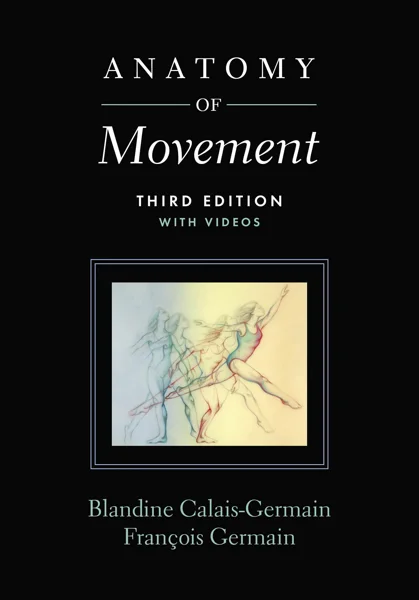
Best for understanding movement
21. Anatomy of Movement
Blandine Calais-Germain trained as a dancer and a physical therapist, and her book explains the bones, joints and muscles through how they move. The drawings are simple and show each muscle in action. It is the book I recommended to my yoga teacher friend, and it is widely used in dance, Pilates and movement teacher training. The 3rd edition (2025) adds videos.
- Blandine Calais-Germain
- Eastland Press, 3rd edition (2025), paperback, 316 pages
- Covers the musculoskeletal system in movement
Good: clear drawings of muscles in motion, written for movers. Not great: no organs or nervous system.
Check on Amazon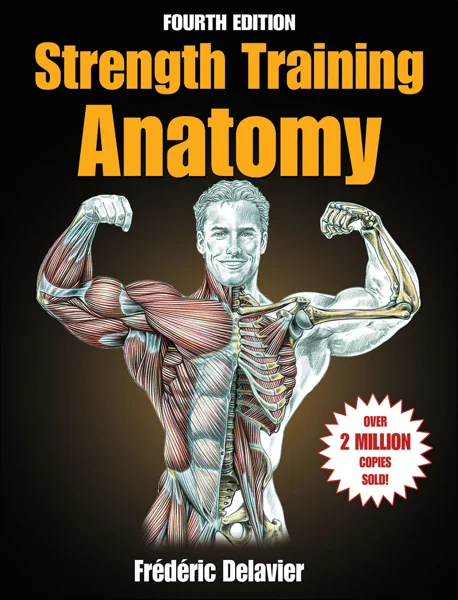
Best for lifters
22. Strength Training Anatomy
Frédéric Delavier draws each exercise with the working muscles colored in, so you see which muscles a squat or a row actually uses. Each exercise also comes with notes on technique and variations. It is the most popular anatomy book among people who lift, and a good way to learn the major muscles through something you already do.
- Frédéric Delavier
- Human Kinetics, 4th edition (2022), paperback, 256 pages
- Covers the skeletal muscles used in strength training
Good: beautiful drawings that connect muscles to exercises. Not great: covers muscles only, organized by exercise rather than by body region.
Check on Amazon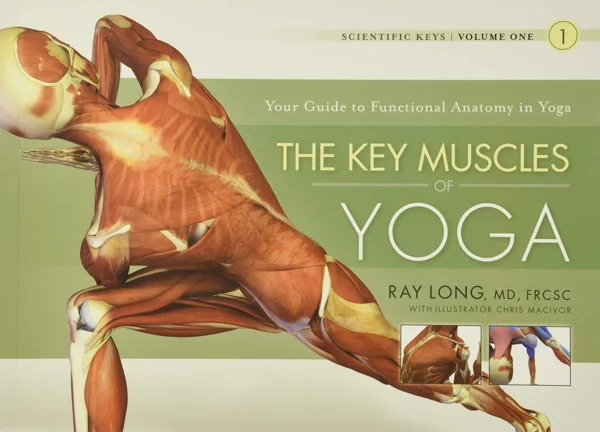
Best for yoga
23. The Key Muscles of Yoga
Ray Long is an orthopedic surgeon and yoga teacher. His book explains the bones, joints and main muscles with large 3D-style illustrations by Chris Macivor, then shows which muscles contract and which stretch in common poses. It is the yoga anatomy book most teacher trainings use.
- Ray Long, illustrated by Chris Macivor
- BandhaYoga, 3rd edition (2009), paperback, 244 pages
- Covers the musculoskeletal system as used in yoga
Good: excellent illustrations tied to real poses. Not great: some of the language about energy and bandhas sits outside anatomy.
Check on AmazonBodyworkers will also hear about Anatomy Trains by Thomas Myers, which describes lines of connective tissue running through the body. It is a useful model for manual therapy, but much of it is still debated in anatomy research, so read it after the books above, not instead of them.
Anatomy books for artists
Artists need surface anatomy: the shapes that bones and muscles make under the skin, and how those shapes change in movement. Medical books bury that under organs and nerves. These three are built for drawing and sculpting.
Best for drawing the figure
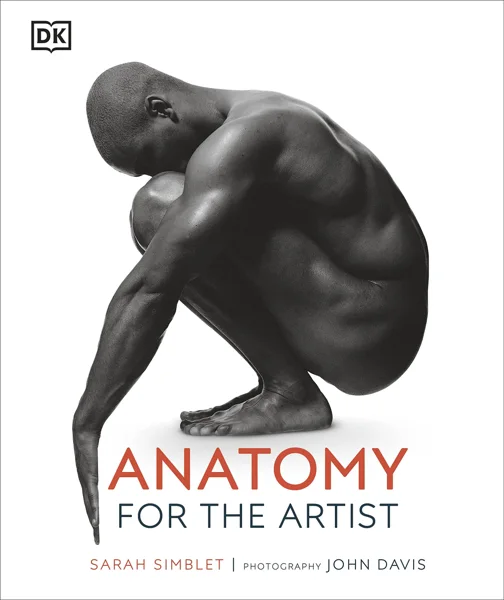
24. Anatomy for the Artist
Sarah Simblet teaches drawing at the Ruskin School of Art in Oxford. The book pairs photographs of live models with her drawings of the skeleton and muscles laid over them, so you see what lies beneath each visible shape. It also includes old master drawings and short drawing lessons. It is the best first anatomy book for an artist.
- Sarah Simblet
- DK (2020), hardcover, 256 pages
- Covers surface anatomy of the whole figure
Good: connects anatomy directly to what you see on a model. Not great: fewer construction drawings than artists who draw from imagination may want.
Check on Amazon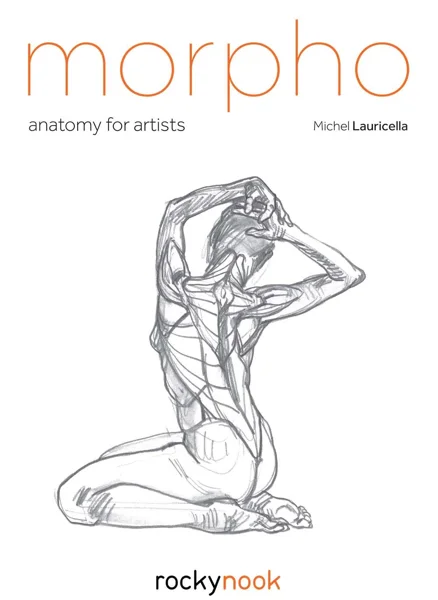
Best for drawing from imagination
25. Morpho: Anatomy for Artists
Michel Lauricella reduces the body to simple, drawable forms: boxes, cylinders and the few muscle shapes that matter on the surface. The book is small and almost all sketches. It is the right companion for artists who draw characters and poses without a model in front of them, and the Morpho series continues with books on hands, feet, heads and movement.
- Michel Lauricella
- Rocky Nook (2018), paperback, 320 pages
- Covers simplified forms of the whole figure
Good: fast, simplified forms you can draw. Not great: very little text, so muscle names and functions are not explained.
Check on Amazon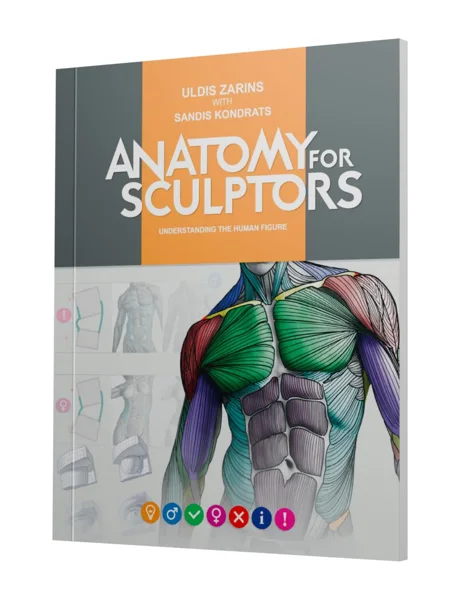
Best for 3D artists and sculptors
26. Anatomy for Sculptors, Understanding the Human Figure
Uldis Zarins built this book around 3D form: each part of the body is shown from many angles, with the muscles drawn as solid shapes and arrows that show how they connect. It is popular with sculptors and digital 3D modelers, who need to understand the body all the way around.
- Uldis Zarins and Sandis Kondrats
- Anatomy Next (2014), paperback, 232 pages
- Covers the form of the whole figure
Good: the clearest book on the body as three-dimensional form. Not great: minimal text and a very graphic style that suits some readers more than others.
Check on AmazonAnatomy books for kids
Children learn anatomy the same way adults do: by looking, pointing and finding it on themselves. Pick books with flaps, cutaways and big pictures.
Best for ages 6 to 9
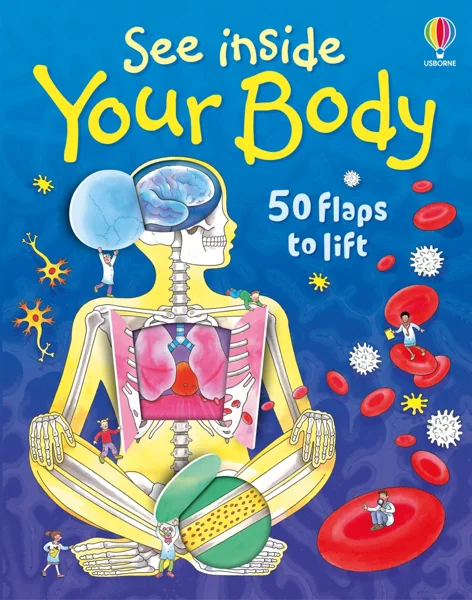
27. See Inside Your Body
A sturdy lift-the-flap book from Usborne. Each spread covers one part of the body, and under the flaps are the bones, muscles and organs beneath. It is short and simple, and children go back to it on their own.
- Katie Daynes, illustrated by Colin King
- Usborne (2024), board book, 16 pages
- Covers the main organs and systems for young children
Good: flaps that show what is underneath. Not great: too simple past about age 9.
Check on Amazon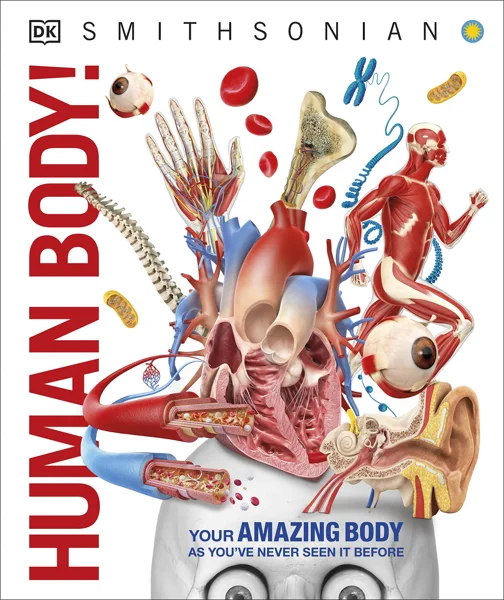
Best for ages 9 to 13
28. Knowledge Encyclopedia Human Body!
DK’s encyclopedia uses large 3D-rendered illustrations, one system or organ per spread, with short blocks of text. It is accurate enough for middle school science and detailed enough to hold a curious teenager. Pair it with the DK coloring book above for a homeschool anatomy unit.
- DK, with the Smithsonian Institution
- DK Children (2017), hardcover, 208 pages
- Covers every body system for older children
Good: excellent illustrations at a child’s reading level. Not great: a browse book, with no activities or questions.
Check on AmazonWhat Reddit recommends
We read 50 Reddit threads from 2013 to 2026 in which people asked how to learn anatomy or which anatomy book to buy, 31 in r/Anatomy and 19 in r/medicalschool. The table counts how many threads named each book or resource at least once in the comments.
| Book or resource | Threads | Type |
|---|---|---|
| Netter Atlas of Human Anatomy | 23 | Atlas |
| YouTube (Ninja Nerd, Crash Course and others) | 19 | Free videos |
| Gray’s Anatomy (any version) | 16 | Textbook or reference |
| Anki and other flashcards | 16 | Self-testing |
| 3D anatomy apps (Complete Anatomy, Essential Anatomy) | 13 | Apps |
| Thieme, Sobotta or Grant’s atlas | 11 | Atlas |
| Moore’s clinical anatomy books | 9 | Textbook |
| Snell’s or BRS Anatomy | 8 | Textbook or review |
| An anatomy coloring book | 7 | Coloring |
| Rohen’s photographic atlas | 7 | Atlas |
| Drawing it yourself | 7 | Method |
| Gray’s Anatomy for Students | 6 | Textbook |
| Kenhub | 6 | Website |
| TeachMeAnatomy | 5 | Free website |
Four patterns stand out.
- An atlas is the one book almost everyone owns. Netter is named most often, but it has rivals: “Netters may be the standard, but I don’t believe it is the best,” wrote one medical student who preferred Thieme (thread). Another summed up the usual medical school set: “Netter: gorgeous to look at, my favorite atlas to learn locations of structures. Moore: great textbook (a bit dense though)” with Rohen’s photographs for the lab practical (thread).
- For beginners, the advice is a coloring book. The most upvoted answer to an adult relearning anatomy was “Get an Anatomy colouring book, seriously does the job! Also highly recommend Netter’s flashcards” (thread). Another commenter called Netter’s coloring book “really good for beginners and people just trying to visualize msk a bit better” (thread).
- The full Gray’s and Moore’s are not beginner books. “People often go for KLM or Gray’s anatomy but they are both difficult to comprehend for a beginner and require a lot of sorting and making notes” (thread). KLM is Keith L. Moore.
- Self-testing matters more than which book. Flashcards, Anki, labeling blank diagrams and drawing from memory come up as often as any single title. One commenter described drawing a diagram with the answer key, erasing it and filling it in again from memory until it stuck (thread).
Reddit’s answers lean toward medical school, because that is who posts most in these communities. Beginner A&P books such as the For Dummies titles and Marieb’s textbooks barely appear, even though they are what most nursing and allied health students use. If you are learning for interest or for an A&P course, give the coloring books and beginner picks above more weight than the vote counts suggest.
Free anatomy resources
You can learn a lot of anatomy without buying anything. These are the free resources I would use alongside, or before, any of the books above.
- OpenStax Anatomy and Physiology 2e. A complete two-semester college A&P textbook from Rice University, free online and as a PDF, with review questions. Many community colleges use it as their course book.
- TeachMeAnatomy. Short, well-illustrated articles on every region of the body, written for medical students but readable by beginners, with clinical notes.
- Kenhub. Articles, videos and quizzes on every structure. Much of it is free, and the paid plan adds full quizzes and atlas images.
- YouTube. Ninja Nerd’s long whiteboard lectures, the Institute of Human Anatomy’s videos with real specimens and Crash Course Anatomy & Physiology for a fast overview.
- 3D models. Turning a structure around in three dimensions helps more than any flat drawing. Try our free 3D science models, including the skin and the animal cell.
How to learn anatomy on your own
On my internal medicine rotation, an attending would not let students listen to a patient’s lungs until we had found the sternal angle, the ridge where the top of the breastbone meets the body, on ourselves. The second rib attaches there, so from it you can count down the ribs by touch. It took ten seconds to learn and I have never forgotten it, because I learned it with my fingers instead of from a page. That is the whole method.
- Study one region or system at a time. Finish the bones of the arm before you start the muscles of the arm. Mixing regions makes everything blur together.
- Draw it. After coloring a page, close the book and draw the structure from memory, with labels. Then compare. Drawing improves recall even for people who do not draw well (Wammes and colleagues, 2016).
- Find it on yourself. Most bones and many muscles can be felt. Find your collarbone, the point of your elbow, your kneecap, the tendon at the back of your ankle. Contract a muscle and feel it harden.
- Say the names out loud. Many anatomy terms are Latin or Greek, and learning a few roots helps. “Supra” means above, “infra” below, “brachi” arm, “costal” rib. Supraspinatus is the muscle above the spine of the shoulder blade.
- Test yourself, then test yourself again later. Cover the labels, use flashcards and come back to a region a few days later and again a week after that. Spacing reviews out works better than cramming (Cepeda and colleagues, 2006).
- Do a little every day. Twenty minutes a day for three months teaches more anatomy than a few long weekends.
A 12-week plan for beginners
This plan uses The Anatomy Coloring Book as the main book, with Anatomy & Physiology For Dummies or OpenStax for explanations. At 20 to 30 minutes a day, five days a week, it covers the whole body once at an introductory level.
| Weeks | Topic | Practice |
|---|---|---|
| 1 | Orientation: directional terms, planes, body regions, tissues | Point to each region on yourself |
| 2 to 3 | Skeleton and joints | Find 20 bones on your own body |
| 4 to 5 | Muscles | Contract and feel each major muscle |
| 6 | Nervous system and senses | Draw a neuron and the brain’s lobes from memory |
| 7 | Heart and blood vessels | Trace blood through the heart on paper |
| 8 | Lymphatic and immune systems, respiratory system | Draw the airway from nose to alveoli |
| 9 | Digestive system | Follow a meal from mouth to colon |
| 10 | Urinary and endocrine systems | Draw a nephron and label the glands |
| 11 | Reproductive system and development | Color the plates, then cover and label |
| 12 | Review | Redraw one page from each system from memory |
After 12 weeks, choose the next step by goal: an A&P course or Marieb’s Essentials for a full college course, Gray’s Anatomy for Students and the Netter atlas for medicine, or Trail Guide to the Body for movement work. For the blood vessels in week 7, our list of blood vessels in the human body is a useful review, and our page on types of tissues covers week 1.
FAQ
The Anatomy Coloring Book by Wynn Kapit and Lawrence Elson is the best anatomy book for most beginners. It covers the whole body system by system, and coloring each structure makes you find and remember it. Pair it with Anatomy & Physiology For Dummies or the free OpenStax Anatomy and Physiology 2e for explanations of how each system works.
Yes. Coloring forces you to locate every named structure and see how it relates to its neighbors, which is a form of active practice. Reading alone does not do that. Medical, nursing and physical therapy students use anatomy coloring books for the same reason. Cover the labels after coloring a page and test yourself to get the most from it.
Kapit’s Anatomy Coloring Book is better for complete beginners because its drawings are simpler and each page explains what you are coloring. Netter’s Anatomy Coloring Book is better for A&P and pre-med students because its drawings match the Netter atlas and it adds clinical notes and review questions. The Kaplan Anatomy Coloring Book is the best of the three for self-testing.
The full Gray’s Anatomy, now in its 43rd edition at 1,624 pages, is a reference for specialists and is not good for beginners. Old reprints of the 1901 or 1918 text are outdated. If you want a Gray’s book to learn from, buy Gray’s Anatomy for Students, a textbook for first-year medical students, and read it after a beginner book.
Yes. Anatomy is mostly names, locations and relationships, which you can learn alone with a coloring book, an atlas, flashcards and your own body. Study one region at a time, draw structures from memory, find bones and muscles on yourself and review on a spaced schedule. Twenty to thirty minutes a day covers the whole body at an introductory level in about three months.
Anatomy is the study of the body’s structure: what each part is and where it is. Physiology is the study of how those parts work: how the heart pumps, how nerves signal, how kidneys filter blood. Nursing and allied health courses usually teach them together as anatomy and physiology (A&P). Medical schools and art schools teach anatomy on its own.
For nursing students, the best books are the course textbook (often Marieb’s Essentials of Human Anatomy & Physiology or OpenStax Anatomy and Physiology 2e), plus a coloring book and a workbook for practice. Netter’s or Kaplan’s Anatomy Coloring Book and the Anatomy & Physiology Workbook For Dummies are the most useful additions.
The Netter Atlas of Human Anatomy is the best atlas for beginners, because its painted illustrations are clear and emphasize the important structures. Beginners and A&P students should buy the Systems Approach version. Medical students usually prefer the Classic Regional Approach, and later add a photographic atlas such as Rohen’s.
Anatomy for the Artist by Sarah Simblet is the best first anatomy book for artists, because it overlays drawings of the skeleton and muscles on photographs of live models. Morpho by Michel Lauricella is better for drawing from imagination, and Anatomy for Sculptors is best for sculptors and 3D modelers.
Sources
- Karpicke, J. D., and Roediger, H. L. (2008). The critical importance of retrieval for learning. Science, 319(5865), 966-968.
- Wammes, J. D., Meade, M. E., and Fernandes, M. A. (2016). The drawing effect: Evidence for reliable and robust memory benefits in free recall. Quarterly Journal of Experimental Psychology, 69(9), 1752-1776.
- Cepeda, N. J., Pashler, H., Vul, E., Wixted, J. T., and Rohrer, D. (2006). Distributed practice in verbal recall tasks: A review and quantitative synthesis. Psychological Bulletin, 132(3), 354-380.
- OpenStax. Anatomy and Physiology 2e. Rice University, 2022.
- Standring, S., and Tubbs, R. S., eds. Gray’s Anatomy: The Anatomical Basis of Clinical Practice, 43rd edition. Elsevier, 2025.
- Publisher and Amazon listings for each book above, checked November 2026 for current editions, page counts and publication dates.