Table of Contents
- TLDR
- So What Actually Makes a Planet a Planet?
- The 8 Planets, In Order From the Sun
- Terrestrial Planets: Rock, Metal, and Not Much Air
- Gas Giants and Ice Giants: The Outer Crowd
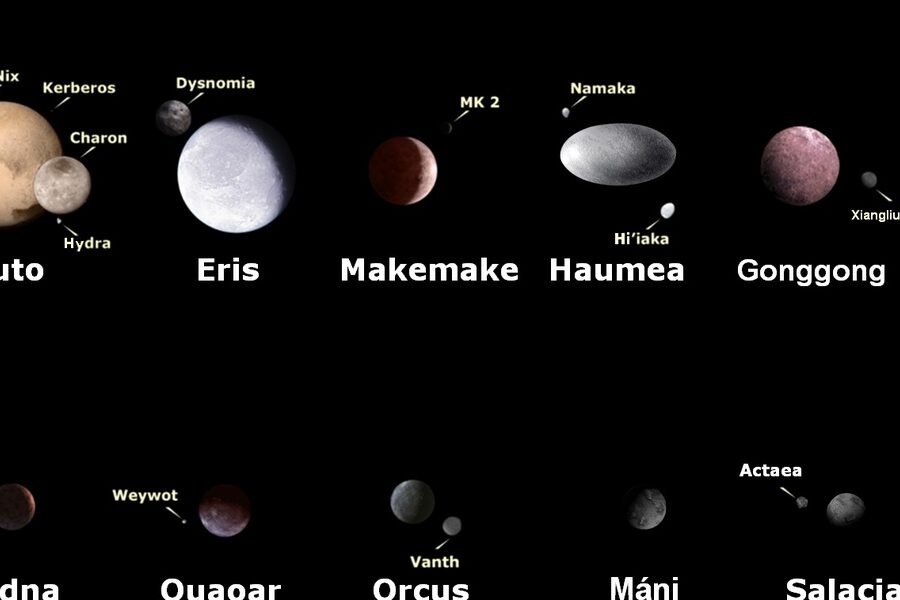
- Dwarf Planets: Pluto’s Neighborhood
- Exoplanets: The Ones Outside Our Solar System
- FAQ
TLDR
There are 8 planets in our solar system: Mercury, Venus, Earth, Mars, Jupiter, Saturn, Uranus, and Neptune. A planet, by the 2006 International Astronomical Union definition, has to orbit the Sun, be round from its own gravity, and have cleared its orbital path of other debris. Pluto fails that third test, which is why it got reclassified as a dwarf planet alongside Eris, Haumea, Makemake, and Ceres. Outside our solar system, astronomers have confirmed more than 5,800 exoplanets, with thousands more candidates waiting on follow-up observation.
So What Actually Makes a Planet a Planet?
For most of the 20th century, “planet” meant whatever textbooks said it meant. Nobody argued about it because nobody needed to — the count sat at nine and stayed there. Then astronomers kept finding Pluto-sized objects out past Neptune, and the definition had to catch up.
In 2006, the International Astronomical Union voted on three criteria an object has to meet to count as a planet:
- It orbits the Sun.
- It has enough mass for its own gravity to pull it into a round shape (astronomers call this hydrostatic equilibrium).
- It has cleared its orbital neighborhood of other objects of comparable size.
Pluto clears the first two without trouble. It fails the third. It shares the Kuiper Belt — the icy debris field beyond Neptune — with thousands of similarly sized objects, and its gravity hasn’t been strong enough to sweep the lane clear or absorb the competition. Earth, by contrast, is the dominant gravitational force in its orbital zone by a wide margin. That’s the actual technical difference, and it’s less about size than about which object controls its neighborhood.
The reclassification demoted Pluto to “dwarf planet,” a category that now includes four other known objects. It wasn’t personal. It was bookkeeping that had been overdue since the 1990s, when telescopes got good enough to start finding Pluto’s neighbors.
The 8 Planets, In Order From the Sun
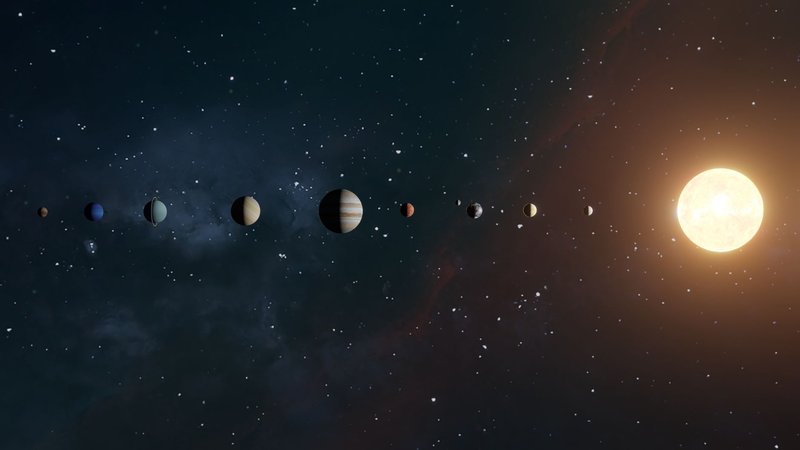
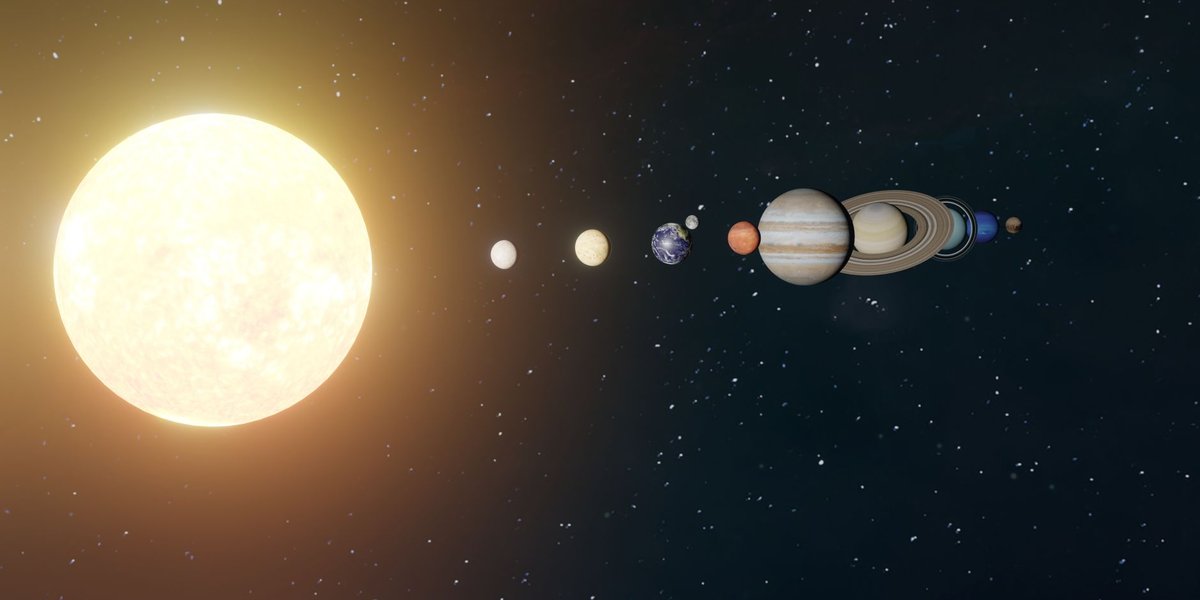
The classic mnemonic still works if you swap out the old “nine pizzas” version: My Very Educated Mother Just Served Us Nachos — Mercury, Venus, Earth, Mars, Jupiter, Saturn, Uranus, Neptune.
| Planet | Distance from Sun | Diameter | Avg. Temperature | Known Moons |
|---|---|---|---|---|
| Mercury | 0.39 AU (36M mi) | 4,879 km | -173°C to 427°C | 0 |
| Venus | 0.72 AU (67M mi) | 12,104 km | 465°C | 0 |
| Earth | 1.0 AU (93M mi) | 12,742 km | 15°C | 1 |
| Mars | 1.52 AU (142M mi) | 6,779 km | -65°C | 2 |
| Jupiter | 5.2 AU (484M mi) | 139,820 km | -110°C | 95 |
| Saturn | 9.58 AU (886M mi) | 116,460 km | -140°C | 146 |
| Uranus | 19.2 AU (1.78B mi) | 50,724 km | -195°C | 28 |
| Neptune | 30.05 AU (2.8B mi) | 49,244 km | -200°C | 16 |
One AU (astronomical unit) is the average Earth-Sun distance — about 93 million miles. It’s the yardstick astronomers use because the actual mileage numbers get unwieldy fast.
Notice Venus, not Mercury, holds the title of hottest planet, even though Mercury sits closer to the Sun. Mercury has no atmosphere to speak of, so heat radiates back into space the moment the Sun sets, leaving nights cold enough to freeze carbon dioxide. Venus has a thick carbon dioxide atmosphere that traps heat the way a sealed car does on a summer day, except permanently and everywhere. It’s the solar system’s clearest working demonstration of the greenhouse effect.
Terrestrial Planets: Rock, Metal, and Not Much Air
Mercury, Venus, Earth, and Mars make up the terrestrial group — small, dense, rocky worlds with solid surfaces you could, in theory, stand on (Venus and Mercury would kill you first, but structurally, there’s ground). They formed close to the Sun, where early solar system heat vaporized lighter gases before they could accumulate, leaving only heavier elements like iron, silicon, and oxygen to clump together.
Mercury is the runt of the group and barely qualifies as having an atmosphere — what little it has gets stripped away by solar wind faster than it can replenish. Mars, by contrast, once had a thicker atmosphere and probably liquid water on its surface, evidence NASA’s Curiosity and Perseverance rovers have been mapping in dried riverbeds and mineral deposits for over a decade. Earth is the only terrestrial planet — the only planet, period — confirmed to host life, largely because it landed in the narrow band where liquid water stays liquid and a magnetic field shields the surface from solar radiation.
Gas Giants and Ice Giants: The Outer Crowd
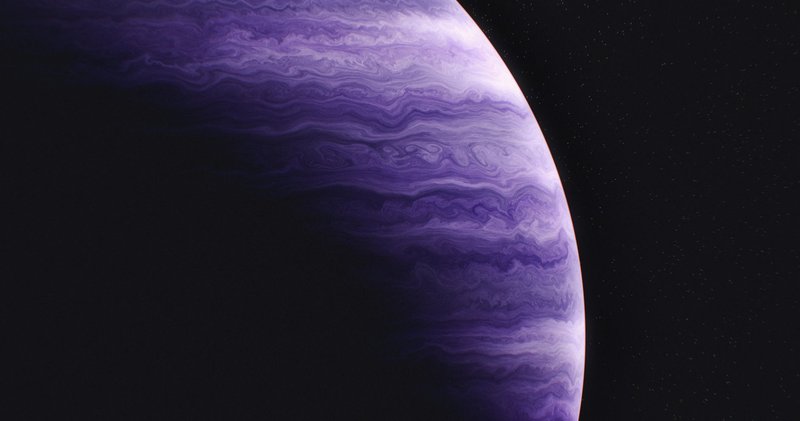
Past the asteroid belt, the rules change. Jupiter and Saturn are gas giants, built almost entirely from hydrogen and helium with no solid surface to land on — what looks like a surface in photos is just where the atmosphere gets dense enough to stop being transparent. Jupiter alone has more mass than every other planet in the solar system combined, roughly 2.5 times over. Its Great Red Spot is a storm that’s been raging for at least 150 years, wide enough to swallow Earth whole.
Uranus and Neptune get their own subcategory: ice giants. They’re still mostly gas by volume, but a bigger share of their interior is made of denser “ices” — water, ammonia, and methane compounds under extreme pressure, not ice in the frozen-cube sense. Uranus is the outlier of the group in a literal way: it rotates on its side, tilted about 98 degrees, likely the result of a massive collision early in its history. Neptune, the farthest official planet, has the fastest winds recorded anywhere in the solar system — gusts over 1,200 miles per hour, faster than the speed of sound on Earth.
Dwarf Planets: Pluto’s Neighborhood
The IAU currently recognizes five dwarf planets: Pluto, Eris, Haumea, Makemake, and Ceres. Four of the five sit out in the Kuiper Belt with Pluto; Ceres is the odd one out, orbiting in the asteroid belt between Mars and Jupiter, and it’s large enough to have been considered a planet briefly back in the 1800s before astronomers realized the belt was full of smaller rocky bodies.
Eris is actually more massive than Pluto, which is part of what forced the 2006 reclassification in the first place — once astronomers found an object bigger than Pluto that clearly wasn’t a planet either, “Pluto is a planet because it’s Pluto” stopped being a defensible position. Pluto still has the distinction of five known moons, including Charon, which is large enough relative to Pluto that the two technically orbit a shared point of gravity between them rather than Charon simply circling Pluto.
Exoplanets: The Ones Outside Our Solar System
The first confirmed exoplanet orbiting a sun-like star, 51 Pegasi b, turned up in 1995 — a gas giant crammed into an orbit closer to its star than Mercury is to ours, a type astronomers now call a “hot Jupiter.” That single discovery kicked off thirty years of searching, and the count has climbed past 5,800 confirmed exoplanets, according to NASA’s Exoplanet Archive, with several thousand more candidates waiting on confirmation.
Most exoplanets get found one of two ways: the transit method, which watches for a star’s light dimming slightly as a planet crosses in front of it, or the radial velocity method, which detects the tiny gravitational wobble a planet induces in its star. The Kepler and TESS space telescopes did the bulk of the transit-method heavy lifting.
The catalog so far includes categories with no equivalent in our own solar system — super-Earths (bigger than Earth, smaller than Neptune) and mini-Neptunes are actually the most common planet type found in the galaxy, which means our solar system’s lineup might be the unusual one, not the template. The TRAPPIST-1 system stands out from the pack: seven roughly Earth-sized planets orbiting a small red dwarf star, three of them sitting in the star’s habitable zone, making it one of the most-studied systems for signs of atmospheric chemistry that might hint at biology.
FAQ
How many planets are there? Eight, if you’re using the current IAU definition: Mercury, Venus, Earth, Mars, Jupiter, Saturn, Uranus, and Neptune. Add the five recognized dwarf planets — Pluto, Eris, Haumea, Makemake, and Ceres — and the count of known round bodies in our solar system rises to thirteen.
What makes something a planet? Three things, per the IAU: it has to orbit the Sun, be massive enough for its own gravity to pull it into a round shape, and have cleared its orbital path of comparable debris. An object that meets the first two but not the third gets classified as a dwarf planet instead.
Why isn’t Pluto a planet anymore? Pluto shares its orbital region, the Kuiper Belt, with thousands of similarly sized icy objects and hasn’t gravitationally cleared that neighborhood — the third IAU criterion. It still meets the other two, which is exactly why the “dwarf planet” category exists rather than Pluto simply losing its status outright.
Are there other planets like Earth? Astronomers haven’t confirmed another planet with liquid water on its surface, but several exoplanets — including some in the TRAPPIST-1 system — orbit in their star’s habitable zone, the distance range where temperatures could allow liquid water. Confirming actual conditions on planets that far away is still beyond current instruments, but next-generation telescopes are closing that gap fast.