TLDR
New Mexico has one show cave everyone’s heard of and half a dozen worth knowing about. Here’s the short version:
- Carlsbad Caverns — the one with paved trails, an elevator, and a bat flight at dusk. Go here if you want a cave with zero prep required.
- Lechuguilla Cave — the deepest, most decorated cave in the park. You cannot go inside. Nobody can, unless they’re a research scientist with a permit.
- Fort Stanton Cave — permit-only wild caving near Ruidoso, home to the Snowy River formation (which is also off-limits to the public, for the record).
- El Malpais lava tubes — free-permit caving in 3,000-year-old volcanic rock west of Grants. Bring your own light and a helmet.
- Bandelier’s cavates — not natural caves, technically, but hand-carved Ancestral Puebloan dwellings you climb into on ladders near Los Alamos.
Read on for what each one actually costs, when it’s open, and which ones you can walk into versus which ones require a background in speleology.
Table of Contents
- Why Carlsbad Caverns isn’t the whole story
- Carlsbad Caverns National Park
- Lechuguilla Cave
- Fort Stanton Cave and the Snowy River formation
- El Malpais lava tube caves
- Bandelier’s cavates and Painted Cave
- Caves near Albuquerque and Santa Fe
- FAQ
Why Carlsbad Caverns isn’t the whole story
Search “caves in New Mexico” and you get Carlsbad Caverns nine times out of ten, sometimes with a tenth result about the caverns’ bat flight. Fair enough — it’s a spectacular cave. But New Mexico sits on top of one of the most geologically varied cave landscapes in the country: limestone solution caves in the Guadalupe Mountains, lava tubes from eruptions that happened after humans were already living in the region, and volcanic tuff soft enough that people carved entire dwellings into it by hand.
The state also has a real distinction most articles skip past: show caves versus wild caves. A show cave has lights, handrails, and a paved or graded path — Carlsbad’s main sections qualify. A wild cave has none of that. You need your own light source, your own helmet, and usually a permit, because wild caves are still fragile and often still home to bat colonies fighting off white-nose syndrome, a fungal disease that’s wiped out bat populations across North America. Most of what makes New Mexico’s cave scene interesting lives in that second category.
Carlsbad Caverns National Park
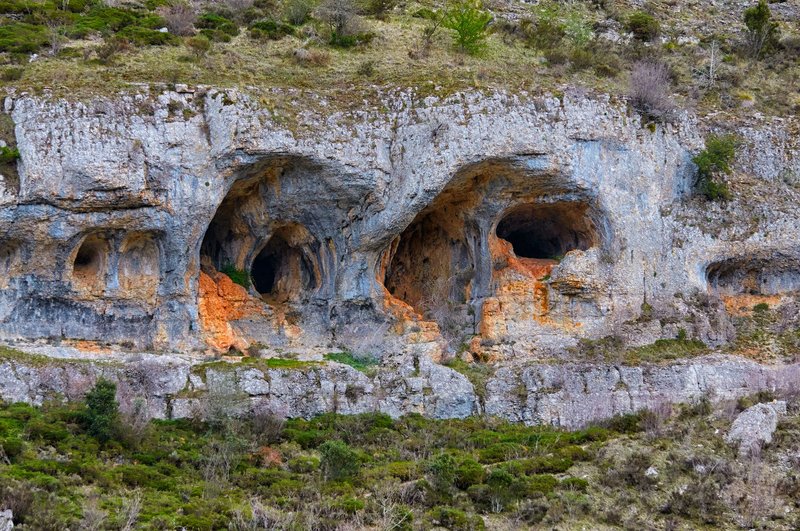
Carlsbad Caverns earns the hype. The Big Room alone covers about 8.2 acres of cave floor, and the natural entrance trail drops you 750 feet through switchbacks before you reach it — National Geographic has called the effect of walking in “the Grand Canyon with a roof on it,” and that’s not far off once you’re standing under the formations.
You have two ways in. The self-guided route costs a $15 general cave entry fee (kids 15 and under are free) plus a $1 reservation fee, and lets you walk the natural entrance or take the elevator straight to the Big Room. Ranger-led tours cost extra on top of that — King’s Palace runs $10 for adults — and get you into sections you can’t reach on your own. Both require booking a timed entry slot in advance through Recreation.gov, and it’s worth checking which tours are actually running before you drive out, since staffing shortages have canceled some ranger-led routes in the past.
If you’re there between late May and October, stick around for sunset. The Brazilian free-tailed bat colony pours out of the natural entrance by the hundreds of thousands, and the amphitheater seating near the entrance is free to watch from.
Lechuguilla Cave
You’ll see Lechuguilla mentioned constantly in anything about Carlsbad — it shares the same limestone reef system and connects to the same park boundaries. What most pages don’t say clearly enough: you cannot visit it. Access is limited to National Park Service staff and vetted scientific research teams working under an approved research permit, full stop.
The reason is worth understanding, not just accepting. Lechuguilla is 138+ miles of surveyed passage and the deepest limestone cave in the continental U.S., decorated with gypsum chandeliers, cave pearls, and hydromagnesite balloons — mineral formations so thin that a person’s breath can rupture them. The cave formed differently than Carlsbad too, through sulfuric acid dissolving the limestone from below rather than rainwater working from above, which is part of why microbiologists keep finding bacteria in it that don’t exist anywhere else on the survey record. There’s no version of public access that doesn’t put that at risk, which is why the park hasn’t built one.
Fort Stanton Cave and the Snowy River formation
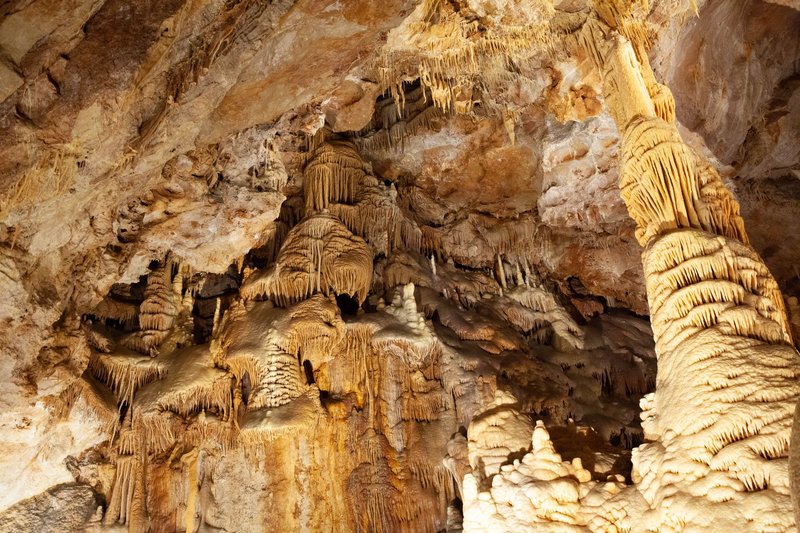
Fort Stanton Cave sits inside the Fort Stanton–Snowy River Cave National Conservation Area near Ruidoso, and it’s the closest thing New Mexico has to a genuine wild-caving destination for people willing to do some paperwork. It’s also New Mexico’s longest cave system, and it’s still being surveyed.
Two things to know before you plan a trip. First, general recreational caving requires a permit from the BLM Roswell Field Office, and access typically runs April 15 through November 1 — outside that window, or during any active bat-protection closure, the cave is shut to visitors entirely to protect hibernating populations from white-nose syndrome. Second, the Snowy River passage itself — a white calcite formation that runs for miles and looks, under headlamp light, like a frozen creek bed — is not open to the public at all, permit or not. It’s considered too scientifically significant and too fragile to risk foot traffic. What permit holders get access to is the broader Fort Stanton system, which is still a serious, technical wild cave, not a casual walk.
Call the field office before you drive out. BLM closes the whole conservation area on short notice when bat surveys flag a problem, and there’s no upside to showing up to a locked gate.
El Malpais lava tube caves
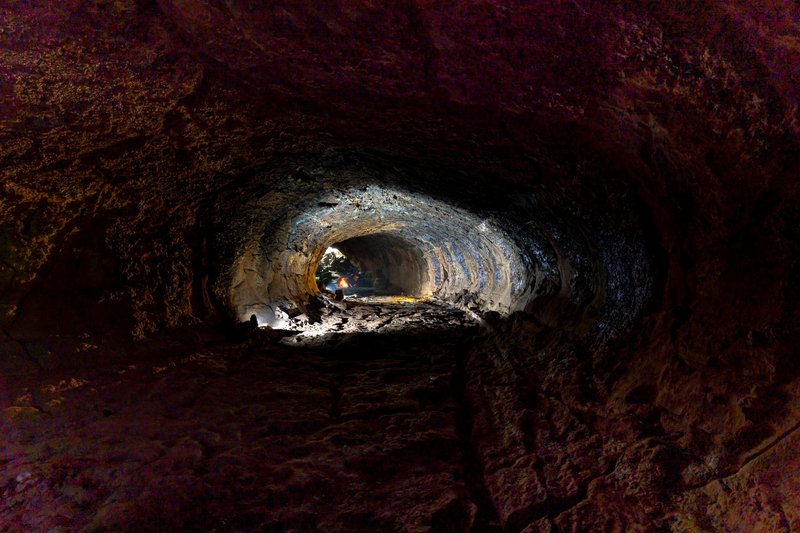
Head northwest to El Malpais National Monument, outside Grants, and the geology changes entirely. These aren’t limestone caves dissolved over millions of years — they’re lava tubes, hollow channels left behind when the outer skin of a lava flow cooled and hardened while molten rock kept draining out underneath. Some of El Malpais’s flows are as young as 3,000 years old, geologically speaking a blink of an eye.
Access is genuinely simple compared to everything else on this list: a free caving permit from the El Malpais or El Morro visitor center, valid for seven days, is all you need for most of the system. A handful of caves — Junction, Xenolith, Big Skylight, and Giant Ice — require that permit specifically because of their fragility or difficulty. Bring a helmet and at least two independent light sources; the park is explicit that a single flashlight isn’t an acceptable backup plan underground. Like Fort Stanton and Carlsbad, the lava tubes close seasonally, from November 1 through April 30, to protect hibernating bats — during summer, typically only Giant Ice Cave and Lava Bomb Cave stay open to the public, so call ahead if you have a specific cave in mind. Groups of eleven or more need to reserve thirty days out by calling the monument directly.
Giant Ice Cave lives up to its name: cold air sinks and pools at the bottom of the tube, and ice persists there through parts of summer even when it’s 90 degrees on the surface above.
Bandelier’s cavates and Painted Cave
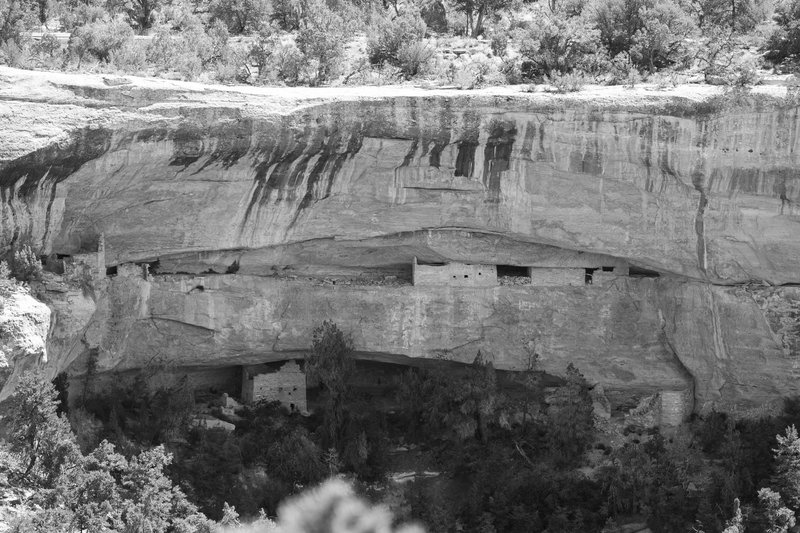
These aren’t caves in the geological sense — they’re rooms the Ancestral Puebloans carved by hand into the soft volcanic tuff of Frijoles Canyon, using little more than digging sticks and sharpened stone tools. More than 1,000 of these cavates exist along the canyon walls at Bandelier National Monument, most dating between roughly 1150 and 1550 CE. Builders faced them south or southeast to catch winter sun, and often added multi-story masonry rooms in front, using the cavate itself as the back room of the house — you can still see rows of holes above many entrances where support beams for those front rooms used to sit.
The Pueblo Loop Trail, a 1.4-mile walk from the visitor center, takes you past 21 numbered stops and lets you climb ladders into several cavates yourself. It’s an easy, family-friendly way to get inside a “cave” without any permit or gear. Further into the canyon and up a considerably longer, more exposed backcountry route sits Painted Cave, a remote rock art site with pictograph panels — a worthwhile add-on for visitors who want to go past the main loop, but a genuine hike rather than a stroll, and one you should plan for with a full day and real water supply.
Caves near Albuquerque and Santa Fe
If you’re based in either city and don’t want a multi-hour drive south to Carlsbad or west to El Malpais, your options thin out fast — most of New Mexico’s headline caves sit closer to the Texas border or the Arizona line than to the I-25 corridor. The Bandelier cavates above are the easiest legitimate option within about an hour of Los Alamos or Santa Fe.
Beyond that, the state has a working network of wild caves managed for scientific and recreational caving through local grottos affiliated with the National Speleological Society, including sites like Torgac Cave in the Lincoln National Forest, a dolomite and gypsum cave that still hosts a hibernating population of cave myotis and Townsend’s big-eared bats. These aren’t tourist destinations — there’s no visitor center, no marked trailhead, and access generally runs through grotto membership or a Forest Service permit rather than a walk-up ticket. If wild caving interests you beyond the permit-and-headlamp caves above, joining a local grotto is the actual on-ramp, not a search engine.
FAQ
Which New Mexico cave should I visit if I only have time for one? Carlsbad Caverns, without much competition. It’s the only cave on this list built for a casual visitor — no permit application, no personal gear, no caving experience.
Can I visit Lechuguilla Cave at all, even with a guide? No. There’s no commercial tour, no permit path for the public, and no exception process. It’s restricted to NPS staff and approved scientific research teams.
Do I need caving experience to visit Fort Stanton Cave or El Malpais? Not formally, but both are genuine wild caves — no lights, no rails, uneven footing. First-timers should go with someone experienced or start with a shorter, well-documented section rather than a deep system.
Why do so many New Mexico caves close part of the year? White-nose syndrome, a fungal disease that has devastated bat colonies across North America. Fort Stanton and El Malpais both close seasonally, and sometimes on short notice, specifically to protect hibernating and maternity bat populations from human disturbance.
Is the Snowy River formation something I can actually see? Not in person. It’s inside Fort Stanton Cave but closed to all public access, permit holders included, due to its fragility and ongoing scientific study.
Do lava tube caves at El Malpais require technical caving gear? No ropes or vertical gear needed for the publicly accessible tubes, but you do need a helmet, at least two light sources, and sturdy footwear — the floors are broken lava rock, not a groomed path.