A scientific law describes what happens in nature, usually as a repeatable pattern or an equation. It doesn’t say why it happens. That job belongs to a theory.
The examples of scientific laws below cover physics, chemistry, biology and earth science, not just the usual Newton-and-friends lineup. Each entry gives the statement, the formula where one exists, a real-world case you can check yourself, and where the law stops working. Because every law stops working somewhere.
Table of Contents
- What Counts as a Scientific Law
- Examples of Scientific Laws in Physics
- Chemistry Laws
- Biology Laws
- Earth and Space Laws
- Laws vs. Theories vs. Hypotheses
- Quick-Reference Table
- FAQ
What Counts as a Scientific Law
A statement earns the label “law” when it holds up across thousands of observations and experiments, and when it can be written compactly. Often that means a short equation—a mathematical model—such as F = ma. Sometimes it’s a plain sentence, like “older rock layers sit beneath younger ones.”
Two things trip people up.
First, laws are not absolute truths carved in stone. They’re descriptions that work inside a defined range. Newton’s law of gravitation guided Apollo missions to the Moon, yet it fails slightly for Mercury’s orbit, where Einstein’s general relativity does better.
Second, a law is not a “proven theory.” The two do different jobs, and one never turns into the other. More on that below.
Examples of Scientific Laws in Physics
Physics has the densest collection of named laws, mostly because motion, force, energy and light are easy to measure. Nine of the strongest ones follow.
1. Newton’s First Law of Motion (Inertia)
An object keeps its state of motion unless a net force acts on it.
Formula: if net force = 0, velocity stays constant.
Brake hard in a car and your coffee keeps moving forward, which is why it lands in your lap. Your body wants to continue at the old speed; the seat belt supplies the force that stops it. Isaac Newton published this in 1687 in the Principia.
Limit: it only holds in an inertial frame of reference. Inside an accelerating car, “forces” appear that don’t have a physical source.
2. Newton’s Second Law of Motion
Acceleration equals net force divided by mass.
Formula: F = ma
Push an empty shopping cart with a steady shove and it jumps forward. Load it with 40 kg of groceries and the same shove gives a much lazier acceleration. Double the mass and, for the same force, acceleration halves. This is also why a loaded truck needs a longer stretch of road to speed up or stop.
Limit: at speeds approaching the speed of light, mass behaves differently and special relativity takes over.
3. Newton’s Third Law of Motion
For every force, there is an equal and opposite force.
Formula: F(A on B) = -F(B on A)
A swimmer pushes the pool wall backward and the wall pushes the swimmer forward. A rocket throws exhaust down; the exhaust pushes the rocket up. The forces act on different objects, which is why they don’t cancel out. That detail is the part most students get wrong.
4. Newton’s Law of Universal Gravitation
Every mass attracts every other mass, with a force that falls off with the square of the distance.
Formula: F = G × m₁ × m₂ / r²
The Moon’s pull on the oceans is why tides exist. Move an object twice as far away and the force between the two drops to one quarter. The constant G, about 6.674 × 10⁻¹¹ N·m²/kg², is one of the hardest fundamental constants to pin down, and the NIST CODATA values still carry a larger uncertainty for it than for most others.
Limit: strong gravity and very precise orbital work need general relativity. Mercury’s orbit is the famous case.
5. Ohm’s Law
Current through a conductor is proportional to the voltage across it.
Formula: V = I × R
A phone charger puts out about 5 volts. Connect it across a 10-ohm load and the current is 0.5 amps. Georg Ohm published the relationship in 1827, and it’s the first equation any electrician learns.
Limit: only “ohmic” materials follow it. LEDs, diodes and incandescent filaments don’t, because their resistance changes with voltage or temperature.
6. Hooke’s Law
The force needed to stretch or compress a spring is proportional to the distance it moves.
Formula: F = -kx
A kitchen spring scale works this way: hang twice the weight and the spring stretches twice as far, so the markings on the dial are evenly spaced. Robert Hooke first stated it in the 1660s, in the form of a Latin anagram.
Limit: past the elastic limit, a spring stays bent and the proportion breaks. Pull a paperclip open and you’ve seen it.
7. Law of Conservation of Energy (First Law of Thermodynamics)
Energy is never created or destroyed, only converted from one form to another.
Formula: ΔE(total) = 0 in an isolated system
A roller coaster’s first hill is its tallest because that’s where all the energy is stored, as height. Every later hill must be lower, since friction and air drag turn a share of that energy into heat. Joule, Mayer and Helmholtz arrived at the idea independently in the 1840s.
8. Second Law of Thermodynamics
In an isolated system, entropy (disorder) never decreases. Heat flows spontaneously from hot to cold, not the other way around.
Formula: ΔS ≥ 0
An ice cube dropped in hot coffee melts and cools the drink. You never see lukewarm coffee separate into hot coffee and an ice cube. A refrigerator doesn’t break the law: it moves heat out of the box using electrical work and dumps even more heat into your kitchen. Rudolf Clausius and Lord Kelvin formulated versions in the 1850s.
9. Snell’s Law of Refraction
Light bends when it crosses from one transparent material into another, and the amount of bending depends on each material’s refractive index.
Formula: n₁ sin θ₁ = n₂ sin θ₂
A straw in a glass of water looks snapped at the surface. Light slows down in water (refractive index about 1.33, versus roughly 1.00 for air), so the rays bend on their way to your eye. The law is named for Willebrord Snellius, 1621, though the Persian scholar Ibn Sahl described it in the 10th century.
Chemistry Laws
Chemistry laws mostly deal with how matter and gases behave, and several were worked out before anyone knew what an atom was.
10. Law of Conservation of Mass
In a chemical reaction, the total mass of the reactants equals the total mass of the products.
Formula: mass(reactants) = mass(products)
Antoine Lavoisier showed this in the 1780s by weighing everything, including the gases. A burning log leaves ash that weighs far less than the log, which looks like mass vanished. It didn’t. The missing mass left as carbon dioxide and water vapor, and the oxygen it reacted with came from the air. Weigh all of it and the books balance.
Limit: nuclear reactions convert a tiny amount of mass into energy, so mass and energy are conserved together.
11. Boyle’s Law
At constant temperature, the pressure of a gas is inversely proportional to its volume.
Formula: P₁V₁ = P₂V₂
Seal the tip of a syringe with your finger and pull the plunger: the air gets less dense and the plunger pulls back. For divers, this law is a safety rule. A breath taken at depth expands as the diver rises and the surrounding pressure drops, so holding your breath on ascent can rupture lung tissue. A sealed bag of chips puffing up on an airplane is the same effect. Robert Boyle published it in 1662.
12. Charles’s Law
At constant pressure, the volume of a gas is proportional to its absolute temperature.
Formula: V₁/T₁ = V₂/T₂ (temperature in kelvin)
Put an inflated balloon in a freezer and it shrinks. Take it out and it recovers. Hot air balloons rely on the same behavior: heated air expands, becomes less dense than the air around it, and floats. Jacques Charles, who flew one of the first hydrogen balloons in 1783, noted the relationship around 1787.
13. Ideal Gas Law
Pressure, volume, temperature and amount of gas are tied together in one equation. It merges Boyle’s and Charles’s laws with Avogadro’s principle.
Formula: PV = nRT, where R ≈ 8.314 J/(mol·K)
Your car’s tire pressure warning light tends to come on during the first cold snap of the year. A common rule of thumb is a drop of about 1 psi for every 10°F fall in air temperature, because cooler air inside the tire pushes less on the walls.
Limit: real gases deviate from the ideal at high pressure and low temperature, when molecules start to attract each other and take up real space.
Biology Laws
Biology gets shortchanged on most lists because living things are messy, with exceptions everywhere. The laws below still hold up as working rules.
14. Mendel’s Law of Segregation
Each organism carries two copies of every inheritance factor (alleles), and these separate during reproduction so that each parent passes on only one.
Formula: a cross of two heterozygous parents gives a 1:2:1 genotype ratio, or 3:1 dominant to recessive appearance.

Gregor Mendel counted thousands of pea plants in the 1860s and found purple flowers outnumbered white by about three to one in the second generation. The same arithmetic applies to people. If both parents carry one copy of the cystic fibrosis allele, each child has a 25% chance of inheriting two copies and developing the disease. Read more about Mendel’s experiments in Nature’s overview of his work.
Limit: many traits, such as height and skin color, involve many genes and don’t split into clean ratios.
15. Hardy-Weinberg Principle
In a large, randomly mating population with no mutation, migration or natural selection, allele frequencies stay constant from one generation to the next.
Formula: p² + 2pq + q² = 1
G. H. Hardy and Wilhelm Weinberg published it independently in 1908. The practical use is estimating carriers of a recessive condition. If about 1 in 2,500 people of European ancestry has cystic fibrosis, then q² = 1/2,500, so q = 0.02 and 2pq comes out near 0.04. That means roughly 1 person in 25 is a carrier, without anyone being tested.
Real populations never meet every condition. Biologists use the principle as a baseline: when allele frequencies deviate from the prediction, something evolutionary is happening.
16. Kleiber’s Law
An animal’s metabolic rate scales with its body mass raised to about the 3/4 power.
Formula: metabolic rate ∝ mass^0.75
An elephant weighs on the order of 200,000 times more than a mouse, but burns only about 10,000 times as much energy overall. Per gram, the mouse runs on a furnace: its heart beats several hundred times a minute, the elephant’s about 30. Max Kleiber reported the pattern in 1932.
Limit: it’s an empirical rule, and biologists still argue over whether the exponent is exactly 0.75 and over what causes it.
Earth and Space Laws
17. Law of Superposition
In an undisturbed stack of sedimentary rock, the oldest layers are at the bottom and the youngest are on top.

Nicolaus Steno proposed it in 1669, and it’s the foundation of reading Earth’s history. At the Grand Canyon, the rim is capped by Kaibab Limestone roughly 270 million years old, and the rocks at the bottom of the gorge are around 1.7 billion years old. The USGS explanation of relative age dating shows how geologists use this order to place events in sequence.
Limit: tectonic folding or faulting can flip layers upside down, so geologists check for that before trusting the order.
18. Kepler’s Third Law of Planetary Motion
The square of a planet’s orbital period is proportional to the cube of its average distance from the Sun.
Formula: T² ∝ a³ (T in years and a in astronomical units gives T² = a³)
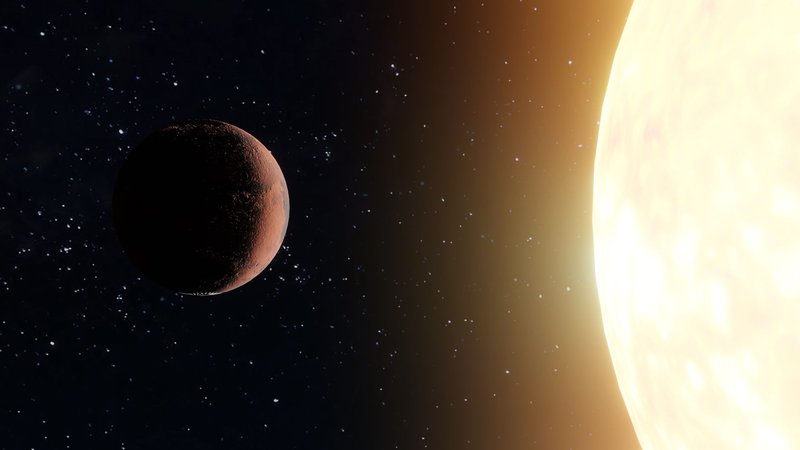
Earth sits at 1 AU and takes 1 year. Mars orbits at about 1.52 AU, and 1.52³ ≈ 3.5, so its year should be the square root of that, around 1.87 Earth years. Mars’s actual orbit takes 1.88. Johannes Kepler published the law in 1619 after years of fighting with Tycho Brahe’s data, and NASA’s page on orbits and Kepler’s laws walks through the other two. Newton later showed that the pattern falls out of his law of gravitation, which is how a descriptive law got a deeper explanation.
Laws vs. Theories vs. Hypotheses
Here’s the confusing part, and the most common myth in school science: that a hypothesis becomes a theory, and a theory, once proven enough, becomes a law. It doesn’t work like that.
- Hypothesis: a specific, testable proposed explanation or prediction. “Plants grow taller under red light” is one.
- Law: a description of a pattern, often mathematical. It tells you what will happen under stated conditions.
- Theory: a well-tested explanation of why something happens, built from many lines of evidence. It can predict new things.
Laws and theories are different kinds of knowledge, and neither outranks the other. Newton’s law of gravitation says how strongly two masses attract. General relativity, a theory, explains gravity as the curvature of spacetime. Atomic theory explains the pattern behind the law of conservation of mass: atoms get rearranged, never created or destroyed in a chemical reaction. The theory of evolution by natural selection explains the biological patterns that Hardy-Weinberg uses as its baseline.
That’s also why “just a theory” is a poor argument. In science, a theory is the strongest kind of explanation there is.
Quick-Reference Table
| # | Law | Field | Formula | Credited to |
|---|---|---|---|---|
| 1 | Newton’s first law | Physics | Net force = 0 → constant velocity | Isaac Newton, 1687 |
| 2 | Newton’s second law | Physics | F = ma | Isaac Newton, 1687 |
| 3 | Newton’s third law | Physics | F(A on B) = -F(B on A) | Isaac Newton, 1687 |
| 4 | Universal gravitation | Physics | F = Gm₁m₂/r² | Isaac Newton, 1687 |
| 5 | Ohm’s law | Physics | V = IR | Georg Ohm, 1827 |
| 6 | Hooke’s law | Physics | F = -kx | Robert Hooke, 1660s |
| 7 | Conservation of energy | Physics | ΔE(total) = 0 | Joule, Mayer, Helmholtz, 1840s |
| 8 | Second law of thermodynamics | Physics | ΔS ≥ 0 | Clausius, Kelvin, 1850s |
| 9 | Snell’s law | Physics | n₁ sin θ₁ = n₂ sin θ₂ | Willebrord Snellius, 1621 |
| 10 | Conservation of mass | Chemistry | Mass in = mass out | Antoine Lavoisier, 1780s |
| 11 | Boyle’s law | Chemistry | P₁V₁ = P₂V₂ | Robert Boyle, 1662 |
| 12 | Charles’s law | Chemistry | V₁/T₁ = V₂/T₂ | Jacques Charles, c. 1787 |
| 13 | Ideal gas law | Chemistry | PV = nRT | Émile Clapeyron, 1834 |
| 14 | Law of segregation | Biology | 3:1 phenotype ratio | Gregor Mendel, 1866 |
| 15 | Hardy-Weinberg principle | Biology | p² + 2pq + q² = 1 | Hardy and Weinberg, 1908 |
| 16 | Kleiber’s law | Biology | Rate ∝ mass^0.75 | Max Kleiber, 1932 |
| 17 | Law of superposition | Earth science | Oldest layers lie at the bottom | Nicolaus Steno, 1669 |
| 18 | Kepler’s third law | Astronomy | T² ∝ a³ | Johannes Kepler, 1619 |
FAQ
What is the simplest definition of a scientific law?
A scientific law is a concise description of a pattern in nature that has held up in every test so far, often written as an equation. It says what happens, not why.
Can a scientific law be wrong?
A law can turn out to be incomplete. Newton’s laws still work for bridges, cars and spacecraft, but they miss details at extreme speeds and in strong gravity, where Einstein’s relativity is needed. Scientists treat laws as accurate within a stated range, not as universal in every condition.
Does a theory become a law?
No. A theory explains why something happens and a law describes what happens. They serve different purposes, and neither is a promoted version of the other.
How many scientific laws are there?
There’s no official count. Hundreds carry the name, spread across physics, chemistry, biology and earth science, and the number changes depending on whether you count principles, rules and effects that don’t use the word “law.”
Which scientific laws should students learn first?
Newton’s three laws of motion, the law of conservation of energy and the law of conservation of mass cover most of an introductory course. Boyle’s law and Ohm’s law come next, since both are easy to test with simple equipment.