
The body and its cells
Tissue and cell structure you can cut open, rotate and label.
-
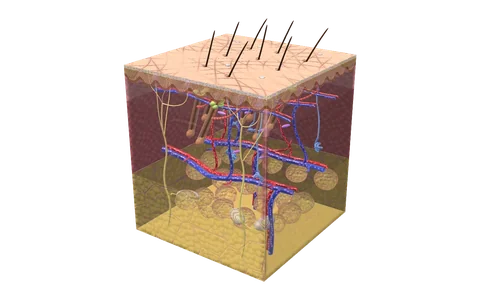
Skin 3D Model
A block of skin cut open to show the epidermis, dermis and hypodermis, with hair follicles, sweat glands, nerves and blood vessels. Switch between thin skin and the thick skin of the palms and soles.
-
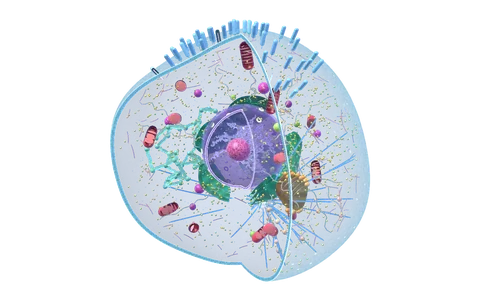
Cell 3D Model
An animal cell with its nucleus, mitochondria, Golgi apparatus and ER, next to a prokaryotic E. coli. Compare both at true scale and take the quiz.
Molecules and atoms
The structures chemistry and genetics are built on.
-
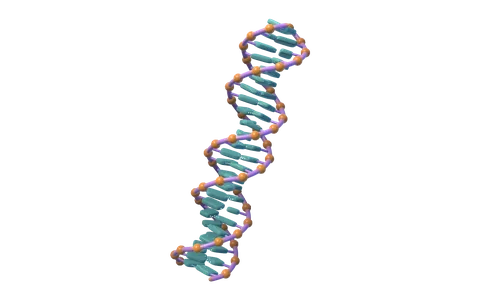
DNA 3D Model
The double helix with its sugar-phosphate backbone, base pairs and hydrogen bonds labeled. Compare the B-DNA, A-DNA and Z-DNA forms.
-
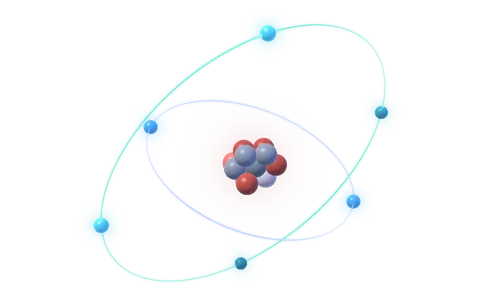
Atom 3D Model
Any of the 118 elements in Bohr or orbital view. Change the isotope or ion, build your own atom and take the quiz.
Free interactive 3D models for biology and chemistry. Each one runs in the browser on a phone, tablet or computer, with no download or sign-up. Rotate it, zoom in and click a part to see its name and what it does.
From skin to atom: the scale of each model
- Skin: about 0.5 mm thick on the eyelids and up to 4 mm on the heels.
- Animal cell: most are 10 to 30 micrometers across. An E. coli bacterium is about 2 micrometers long.
- DNA: the double helix is 2 nanometers wide and makes one full turn every 3.4 nanometers.
- Atom: 0.1 to 0.5 nanometers across, with almost all of its mass in a nucleus tens of thousands of times smaller.
Using the models in class
Project a model on the board and turn it as you explain each part, or have students open it on their own devices. Every part is labeled, and the cell and atom models each have a quiz.