As an Amazon Associate we earn from qualifying purchases. Disclosure
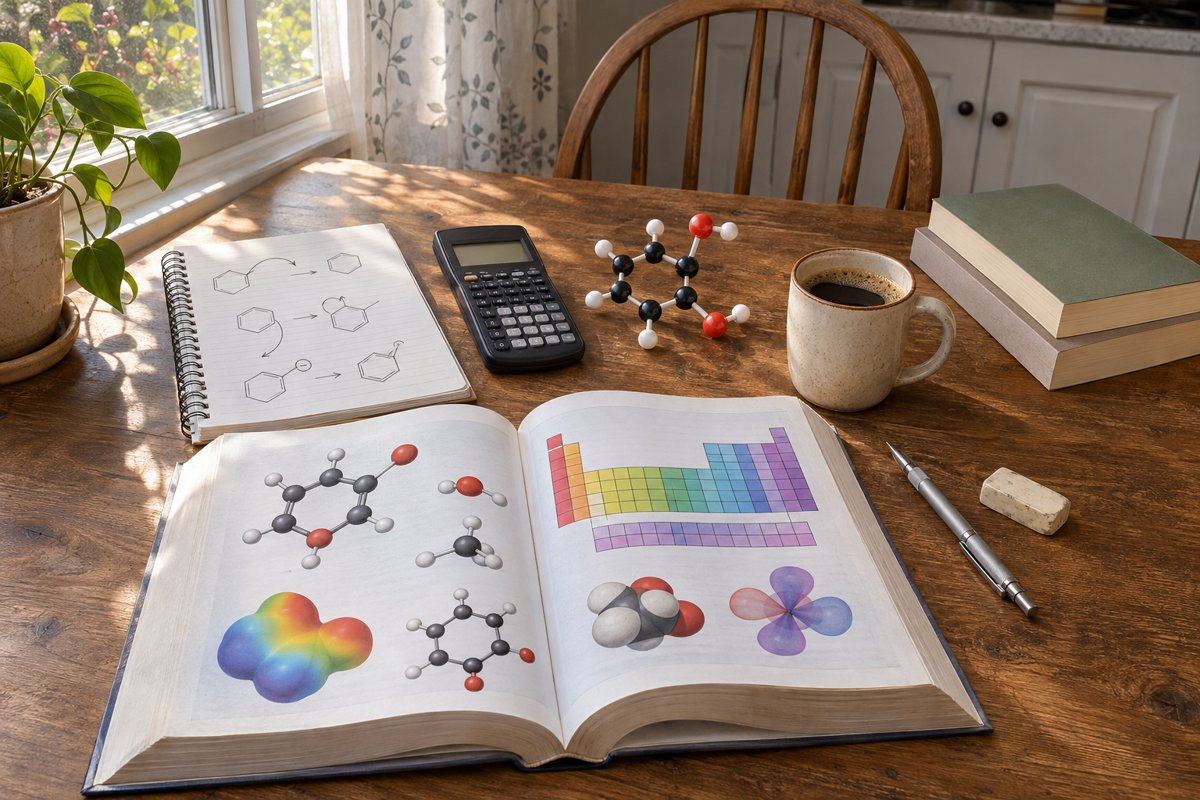
In the second year of my PhD I had to attach a fluorescent dye to a protein. The protocol said to use a buffer at pH 8.3 and never to use Tris. I followed it and had no idea why. The reason is first-year chemistry: the dye reacts with amine groups on the protein, those amines only react when they are not protonated, which is why the pH is raised, and Tris is itself an amine, so it soaks up the dye before the protein can. I had passed organic chemistry years earlier with a good grade, and almost none of it was left. I relearned it at the kitchen table over the next two months with a pad of graph paper, a pencil and a lot of curved arrows.
That is the situation most people searching for a chemistry book to study on their own are in. Some never took chemistry. Some took it and lost it. Some need it back for a prerequisite, an exam or a job. All of them need a book that teaches without a teacher in the room.
The best chemistry book for self-study, for most adults starting from zero, is Chemistry: Concepts and Problems, A Self-Teaching Guide by Houk, Post and Snyder. It was written for people learning alone, and it checks your answer after every step. Pair it with Schaum’s Outline of College Chemistry for problem practice. If you want a full college course, use Zumdahl’s Chemistry or the free OpenStax Chemistry 2e. For organic chemistry, start with Organic Chemistry as a Second Language by David Klein.
I trained in molecular biology and medicine, tutored premed students through general chemistry during my MD-PhD, and still use more chemistry in a week than I expected to when I was nineteen. The picks below are sorted by level, from complete beginner to the second-year subjects, with the edition to buy, how each book handles answers and what Reddit’s chemists tell self-learners to read. If biology is your goal, see the companion guide to the best biology books for self-study.
Quick picks
| Pick | Best for | Level |
|---|---|---|
| Chemistry: Concepts and Problems | Best overall for self-study | Beginner |
| Chemistry For Dummies | Plainest explanations | Beginner |
| Schaum’s Outline of College Chemistry | Most worked problems | Beginner to college |
| Zumdahl, Chemistry | Best textbook to learn alone | College general chemistry |
| Chemistry: The Central Science | Most complete textbook | College general chemistry |
| Why Chemical Reactions Happen | Understanding the why | After general chemistry |
| Organic Chemistry as a Second Language | Best for organic chemistry | Organic |
| Pushing Electrons | Learning curved arrows | Organic |
| Clayden, Organic Chemistry | Organic in full depth | Advanced organic |
| The Disappearing Spoon | Reading for fun alongside | Any |
What makes a chemistry book good for self-study
Chemistry is learned by solving problems, not by reading. You can follow every line of a chapter on limiting reagents and still get the first problem wrong, and you will not know you got it wrong unless someone tells you. In a course that someone is the instructor or a TA. On your own it has to be the book. So the first thing to check in any chemistry book for self-study is what it does when you finish a problem.
- Worked examples before exercises. Each new skill should be shown solved, step by step, before you are asked to do it. All the books below do this. Older and more advanced texts do it less.
- Answers you can check. College textbooks usually print answers to selected exercises (mostly the odd-numbered ones) in the back and sell the full worked solutions as a separate student solutions manual. Self-teaching guides, Schaum’s Outlines and the workbooks give the answer, and often the full working, for every problem.
- A clear order. Atoms, then the periodic table, then bonding, then the mole and stoichiometry, then reactions, gases, thermochemistry, equilibrium and acids and bases. A book that jumps around is harder to follow alone.
- Enough problems. A chapter with five exercises is a reading assignment. You want dozens per topic, graded from easy to hard.
| Book | How it handles answers | Size |
|---|---|---|
| Chemistry: Concepts and Problems | Answer after every short step, plus self-tests with answers | 432 pages |
| Schaum’s College Chemistry | 1,340 fully solved problems, plus extra problems with answers | 416 pages |
| Chemistry Workbook For Dummies | Every answer explained, plus online practice | 320 pages |
| Zumdahl, Tro, Brown LeMay | Selected answers in the back; full solutions in a separate manual | 1,100 to 1,300 pages |
| OpenStax Chemistry 2e | Answers to odd-numbered exercises, free online | About 1,300 pages |
| Pushing Electrons | Answer beside every frame | 224 pages |
Where to start, by goal
A nurse I worked with on an internal medicine rotation asked me a few years ago which chemistry book to buy. She was applying to a nurse anesthesia program that wanted general chemistry within the last five years. I asked her what she had to be able to do at the end, and the answer was simple: pass a timed exam full of calculations. That changed the recommendation from a readable introduction to a problem book. Start with the outcome you need.
- You never took chemistry, or remember none of it: Chemistry: Concepts and Problems, or Chemistry For Dummies if you want shorter chapters. Add the Cartoon Guide to Chemistry if dense text puts you off.
- You need to pass a course, prerequisite or placement exam: the textbook your course uses (or Zumdahl or Tro) plus Schaum’s Outline for volume of practice.
- You want a full college general chemistry course on your own: Zumdahl or Brown LeMay, an older edition, with its student solutions manual. OpenStax Chemistry 2e if you want it free.
- You need organic chemistry: Organic Chemistry as a Second Language and Pushing Electrons first, then a full textbook (Klein or Clayden) once the arrows make sense.
- You are curious and want to understand, not test: one popular book (The Disappearing Spoon, Napoleon’s Buttons), then Atkins’ Very Short Introduction, then Why Chemical Reactions Happen.
- You are preparing for the MCAT or another standardized exam: a general chemistry textbook to rebuild the concepts, then the exam’s own prep materials. A chemistry book alone is not enough for the exam format.
Best chemistry books for beginners
These assume no chemistry and only basic algebra. Pick one and finish it before buying a textbook.
Best overall for self-study
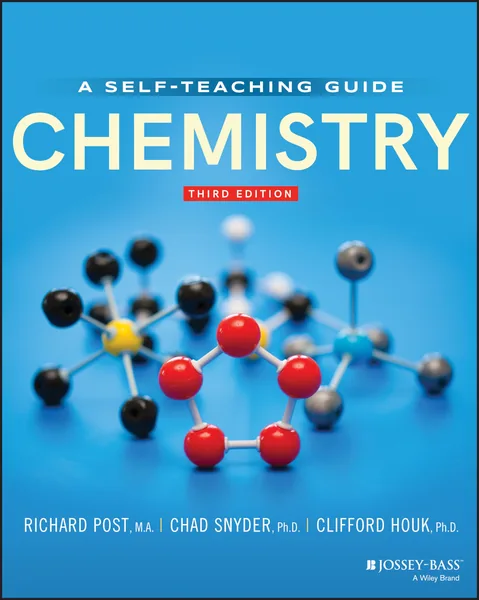
1. Chemistry: Concepts and Problems, A Self-Teaching Guide
This is the only book on the list written specifically for one person learning chemistry alone. It belongs to Wiley’s Self-Teaching Guide series and breaks each topic into short numbered steps. Each step explains one idea and then asks you a question about it, with the answer right below, so you find out within a minute whether you understood. Every chapter ends with a self-test and answers.
It covers introductory and first-semester general chemistry: measurement, atoms, the periodic table, bonding, the mole, chemical equations, gases, solutions and acids and bases. It is the book I suggest to adults who tell me they were “bad at chemistry” in high school, because it never moves on before you have answered.
- Richard Post, Chad Snyder and Clifford C. Houk
- Jossey-Bass, 3rd edition (2020), paperback, 432 pages
- Covers introductory and first-semester general chemistry
Good: built for learning alone, with an answer after every small step. Not great: stops at the first-semester level, and the question-answer format feels slow if you already know some chemistry.
Check on Amazon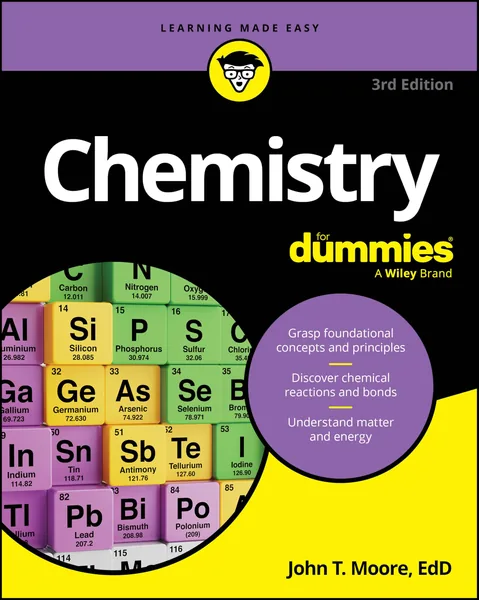
Plainest explanations
2. Chemistry For Dummies
John T. Moore taught chemistry at Stephen F. Austin State University, and this is the most readable explanation of beginner chemistry I know of. Chapters are short and independent, so you can read the one on the mole without the three before it, which makes the book useful for filling one gap as well as for starting from zero.
The 3rd edition came out in June 2026. If you want more practice than the book offers, add the Chemistry Workbook For Dummies. If you want only the core, Chemistry Essentials For Dummies covers the same basics in 192 pages.
- John T. Moore
- For Dummies, 3rd edition (2026), paperback, 384 pages
- Covers high school and introductory college chemistry
Good: clear, short chapters that you can read in any order. Not great: few practice problems, so it explains well but does not train you to solve.
Check on Amazon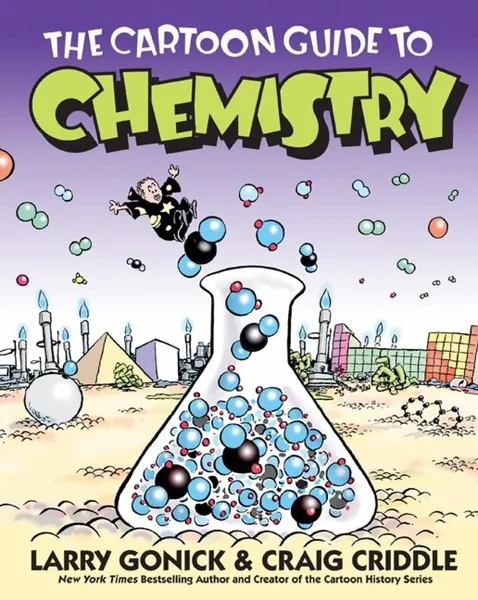
Best for visual learners
3. The Cartoon Guide to Chemistry
Larry Gonick drew the comics and Craig Criddle, an environmental engineer at Stanford, supplied the chemistry. Despite the format this is a real introductory college course: atoms, bonding, stoichiometry, thermochemistry, equilibrium, acids and bases, electrochemistry and a short tour of organic chemistry. The drawings carry the explanation, which helps with abstract ideas such as electron orbitals and equilibrium.
It works best as a first pass before a textbook, or as a second explanation when a textbook chapter does not land.
- Larry Gonick and Craig Criddle
- William Morrow paperback, 256 pages
- Covers first-year college chemistry in comic form
Good: covers more chemistry than its size suggests, and the pictures make abstract ideas stick. Not great: moves fast and has few exercises; you still need a problem book.
Check on Amazon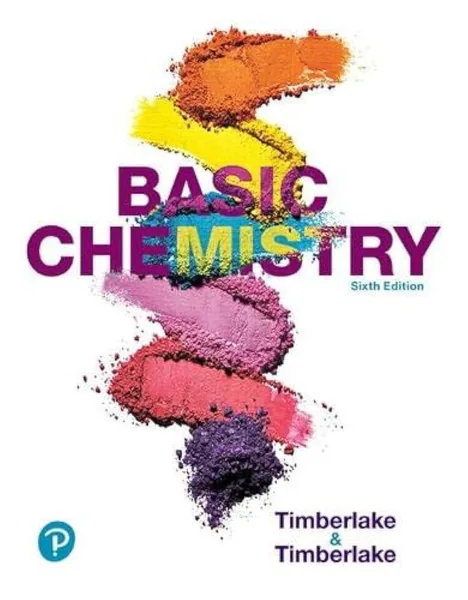
Best preparatory textbook
4. Basic Chemistry
Karen Timberlake’s textbook is written for “prep chem”, the course many colleges offer before general chemistry for students who never took chemistry or need the math refreshed. It spends real time on units, significant figures, scientific notation and dimensional analysis, the skills that trip people up later, and each section ends with practice problems and a “concept check”.
Choose it over the For Dummies books if you want a structured textbook that leads straight into general chemistry.
- Karen Timberlake and William Timberlake
- Pearson, 6th edition (2019), paperback, 704 pages
- Covers preparatory chemistry, with extra math review
Good: patient with the math and units that stop most beginners. Not great: a large textbook for an entry-level course; older editions are much cheaper and work as well.
Check on AmazonBest chemistry problem books and workbooks
Every self-learner needs one of these next to whatever book explains the theory.
Most worked problems
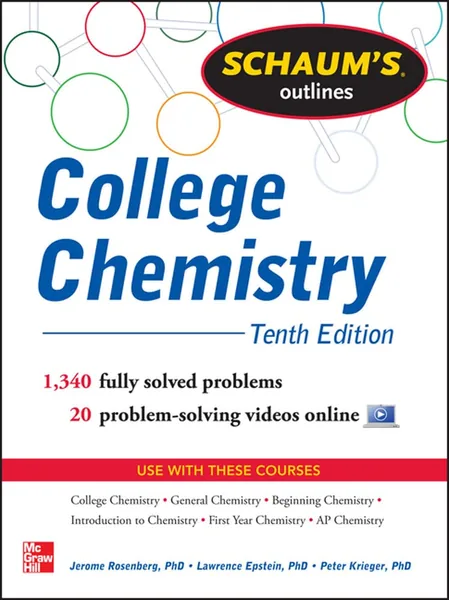
5. Schaum’s Outline of College Chemistry
Schaum’s Outlines are the classic study aid for science courses: a short summary of each topic, then pages of problems solved in full, then supplementary problems with answers. This one has 1,340 solved problems across general chemistry, from unit conversions to equilibrium, electrochemistry and nuclear chemistry.
The summaries are too brief to learn from on their own. Its value is volume: when a textbook gives you one worked example of a dilution problem, Schaum’s gives you ten more with every step shown.
- Jerome Rosenberg, Lawrence M. Epstein and Peter Krieger
- McGraw Hill, 10th edition, paperback, 416 pages
- 1,340 solved problems plus 23 online videos
Good: the most fully worked problems you can buy for general chemistry. Not great: dense layout and short explanations; it is a companion, not a first book.
Check on Amazon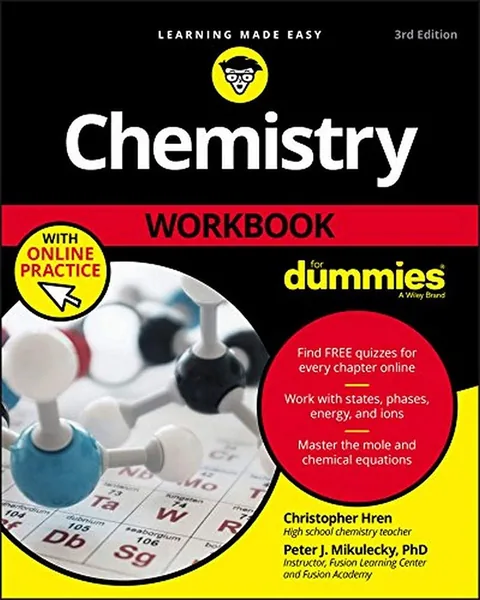
Easiest practice book
6. Chemistry Workbook For Dummies
Where Schaum’s is dense, this workbook is gentle. Each topic opens with a short explanation and a worked example, followed by practice problems, and the answers section explains each solution rather than just listing the number. It follows the same order as most introductory courses, so it fits next to any of the beginner books above. The 3rd edition adds online practice quizzes.
- Chris Hren and Peter J. Mikulecky
- For Dummies, 3rd edition (2017), paperback, 320 pages
- High school and introductory college problems, with online practice
Good: every answer explained in plain language. Not great: fewer and easier problems than Schaum’s; it will not get you to a college exam alone.
Check on AmazonBest general chemistry textbooks for self-study
These are full two-semester college courses of 1,000 pages or more. You do not need the newest edition: general chemistry has barely changed in decades, and an edition one or two behind costs a fraction of the new one. Buy the matching student solutions manual if you can find it, because the back of the book only answers some of the exercises.
Best textbook to learn alone
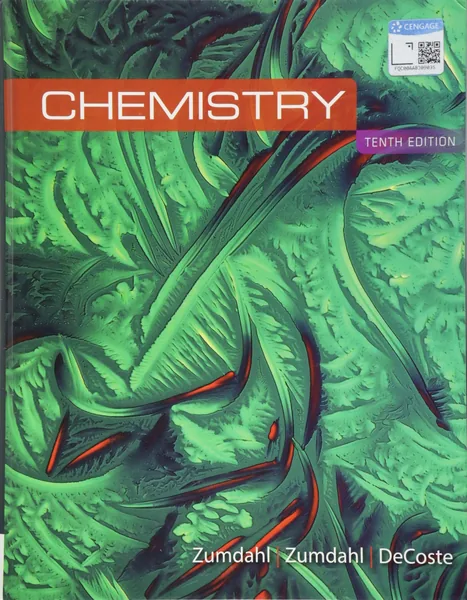
7. Chemistry (Zumdahl)
Steven Zumdahl’s textbook is one of the most used general chemistry courses in the US, and it suits learning without a class. It explains concepts in plain prose, works an example for nearly every type of problem and teaches a consistent problem-solving method that it repeats chapter after chapter. That repetition is what you want when nobody is checking your reasoning.
- Steven Zumdahl, Susan Zumdahl and Donald J. DeCoste
- Cengage, 10th edition (2017), hardcover, 1,200 pages
- Full two-semester general chemistry
Good: clear writing and a problem-solving method you can apply on your own. Not great: heavy and expensive new; the 8th and 9th editions are cheap used and cover the same chemistry.
Check on Amazon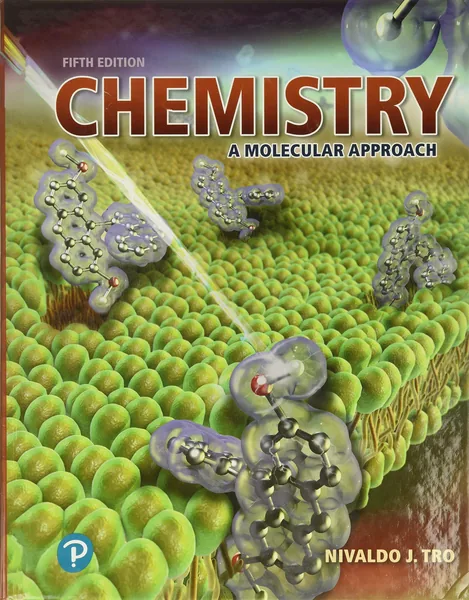
Best worked examples
8. Chemistry: A Molecular Approach
Nivaldo Tro’s textbook sets out its worked examples in a fixed pattern: sort the information, plan the conceptual route, solve, then check whether the answer makes sense. For a self-learner that last step is the most useful habit a book can teach. Tro also starts from the molecular view, explaining what atoms and molecules are doing before the calculations.
It is one of the most widely assigned general chemistry textbooks in the US, so used copies and free study help are easy to find.
- Nivaldo J. Tro
- Pearson, 5th edition (2019), 1,320 pages
- Full two-semester general chemistry
Good: the most methodical worked examples of any textbook here. Not great: long, and Pearson pushes its paid online homework, which you do not need for self-study.
Check on Amazon
Most complete textbook
9. Chemistry: The Central Science
Brown, LeMay and colleagues have written this textbook since 1977, and it is the standard reference for general chemistry. It is more thorough than Zumdahl or Tro, especially on bonding, thermodynamics and kinetics, and its exercises run from routine to hard. The trade-off is density: it suits a self-learner who is comfortable with algebra and wants depth more than a gentle pace.
The 15th edition is current but appears on Amazon mainly as an AP edition with few ratings. The 14th edition, linked here, is the one most self-learners buy.
- Theodore L. Brown, H. Eugene LeMay Jr., Bruce E. Bursten and others
- Pearson, 14th edition (2017), hardcover, 1,094 pages
- Full two-semester general chemistry
Good: the most complete general chemistry course, with hard problems for strong students. Not great: denser than Zumdahl; not the best first textbook for someone weak in math.
Check on Amazon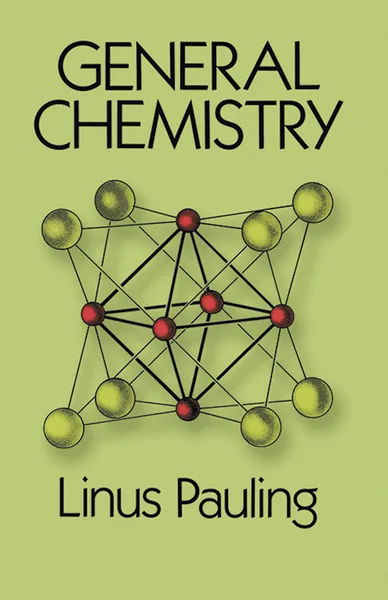
Best classic textbook
10. General Chemistry (Pauling)
Linus Pauling won the Nobel Prize in Chemistry for his work on the chemical bond, and this is his general chemistry textbook, reprinted by Dover from the 1970 third edition. It explains chemistry from atomic structure and bonding upward, with the reasoning of someone who worked much of it out himself. It is also very cheap for a 992-page textbook.
It is a second book, not a first: the problems are fewer and harder than in modern textbooks, and some data and conventions are dated.
- Linus Pauling
- Dover, 1988 reprint of the 3rd edition, paperback, 992 pages
- College general chemistry with emphasis on structure and bonding
Good: explanations of bonding and structure from the chemist who defined them, at a low price. Not great: dated in places, few worked examples and no modern problem sets.
Check on Amazon
Best free textbook, in print
11. Chemistry 2e (OpenStax), print edition
OpenStax, a nonprofit at Rice University, publishes Chemistry 2e free online under an open license. It is a complete, peer-reviewed general chemistry textbook used in many college courses, with answers to the odd-numbered exercises. If you want to study from paper rather than a screen, this two-volume black-and-white print edition is the cheapest physical copy of a full general chemistry course. Read it online first to check that the style suits you.
- OpenStax (Paul Flowers, Klaus Theopold, Richard Langley, William R. Robinson and others)
- Kendall Hunt print, 2nd edition, 2 volumes, about 1,300 pages, black and white
- Full two-semester general chemistry; also free at openstax.org
Good: a complete course for far less than a commercial textbook, and free online. Not great: the print is black and white, which loses the color in orbital and structure diagrams.
Check on AmazonBooks that explain why reactions happen
General chemistry textbooks teach you what happens and how to calculate it. These two short Oxford books explain why. Read them after a first pass through general chemistry, or alongside it if the “why” is what keeps you going.
Best for understanding
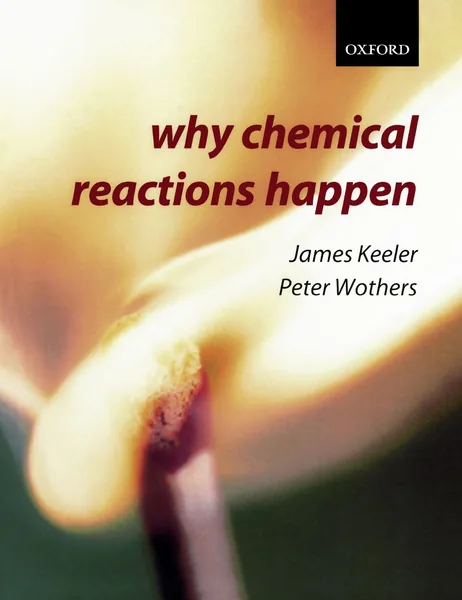
12. Why Chemical Reactions Happen
James Keeler and Peter Wothers teach chemistry at the University of Cambridge, and this book is the bridge between school chemistry and university chemistry. It explains reactions through the ideas that drive them: molecular orbitals, energy and entropy, rates and mechanisms. Where a general chemistry textbook tells you that a reaction happens, this one tells you which electrons move and why the products are lower in energy.
It is the book that turns rules you memorized into ideas you understand, and it prepares you well for organic chemistry.
- James Keeler and Peter Wothers
- Oxford University Press (2003), paperback, 256 pages
- Bonding, orbitals, thermodynamics, kinetics and mechanisms
Good: the clearest short explanation of why reactions go the way they do. Not great: assumes high school chemistry and some comfort with diagrams of orbitals; few exercises.
Check on Amazon
Shortest overview
13. Chemistry: A Very Short Introduction
Peter Atkins wrote some of the most used university chemistry textbooks, including Atkins’ Physical Chemistry. In 128 pages he lays out what chemistry is, how it is organized into its branches and the handful of ideas that hold it together: atoms, bonding, energy and the speed of reactions. There are no equations to solve. It works as a map before you start a textbook, so you know where each chapter fits.
- Peter Atkins
- Oxford University Press (2015), paperback, 128 pages
- An overview of the whole subject, no math
Good: a complete map of chemistry you can read in an evening. Not great: it is an overview; you will not be able to solve problems after reading it.
Check on AmazonBest organic chemistry books for self-study
Organic chemistry is where most self-learners get stuck, and usually for the same reason: they try to memorize reactions. There are hundreds, and memorizing them fails. What works is learning the small set of rules for how electrons move, drawn as curved arrows, and applying them over and over until you can predict reactions you have never seen. The first two books below teach exactly that. Read them before, or alongside, a full textbook.
Best for organic chemistry
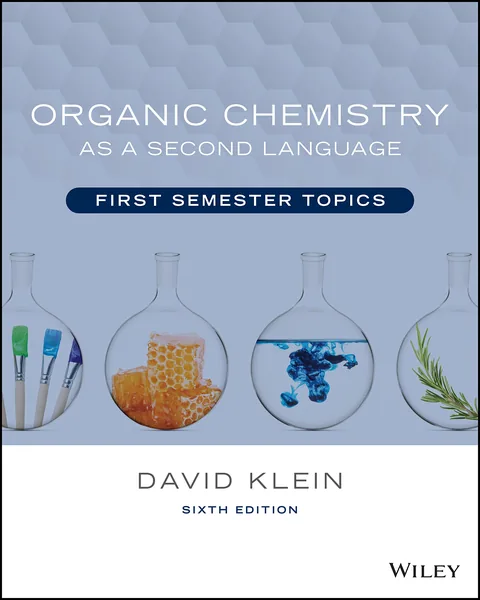
14. Organic Chemistry as a Second Language: First Semester Topics
David Klein wrote this book because his students knew the facts and still could not solve problems. It teaches organic chemistry as a set of skills: drawing structures, reading resonance, identifying acids and bases, assigning configurations, then drawing mechanisms. Each skill is shown with a worked example and practiced straight away. In our count of Reddit threads it was named more often than any other organic chemistry book, and it is the one I would give anyone who needs organic for a prerequisite or the MCAT.
The Second Semester Topics volume continues with aromatic compounds, carbonyl chemistry and amines.
- David R. Klein
- Wiley, 6th edition (2024), paperback, 576 pages
- First-semester organic chemistry skills and mechanisms
Good: teaches how to solve organic problems, not just what the reactions are. Not great: a skills workbook, not a reference; pair it with a full textbook for complete coverage.
Check on Amazon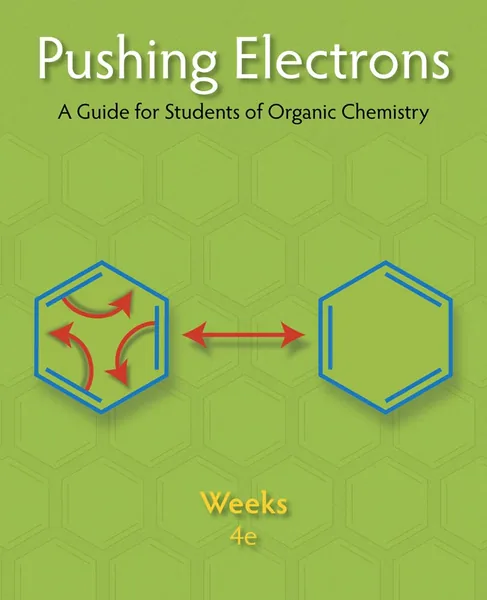
Best for learning curved arrows
15. Pushing Electrons: A Guide for Students of Organic Chemistry
Daniel Weeks wrote this short workbook in a programmed format: a long series of small frames, each with a question and the answer beside it. You cover the answer, draw the arrows, check and move on. It does one thing, teaching you to draw and read electron movement in resonance and reactions, and by the end most readers can do it without thinking. It is the single most useful 224 pages for anyone about to start organic chemistry alone.
- Daniel P. Weeks
- Cengage, 4th edition (2013), paperback, 224 pages
- Curved-arrow notation, resonance and basic mechanisms
Good: immediate feedback on every frame, and short enough to finish in two weeks. Not great: covers only electron pushing; you need another book for the rest of organic chemistry.
Check on Amazon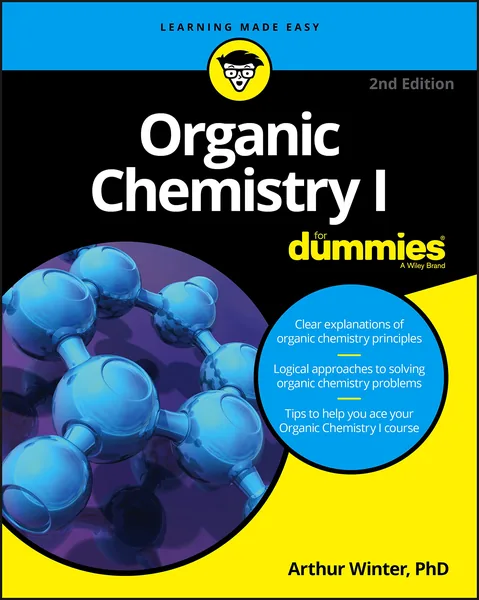
Easiest organic introduction
16. Organic Chemistry I For Dummies
Arthur Winter started explaining organic chemistry on a website when he was a student, and this book keeps that tone: short chapters, plain language and tips on which reactions show up on exams. It covers the first semester, from bonding and nomenclature to stereochemistry, substitution, elimination and alkenes. It is a good first read for people who are nervous about organic, and a good second explanation when a textbook loses you.
- Arthur Winter
- For Dummies, 2nd edition (2016), paperback, 384 pages
- First-semester organic chemistry
Good: the most approachable explanation of first-semester organic chemistry. Not great: few practice problems and not much depth on mechanisms.
Check on Amazon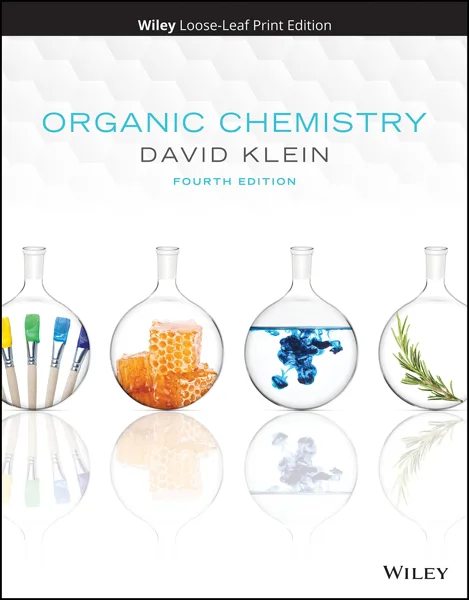
Best organic textbook for self-study
17. Organic Chemistry (Klein)
Klein’s full textbook is built on the same skills approach as his Second Language books, which makes it the easiest complete organic chemistry textbook to work through alone. Each chapter includes “SkillBuilder” sections that walk through a type of problem, then give you similar ones to try, and it introduces mechanisms as patterns of electron movement from the start.
The 5th edition came out in 2025, but on Amazon it is sold mainly as a loose-leaf edition with few ratings. The 4th edition, linked here, covers the same chemistry and is the common buy.
- David R. Klein
- Wiley, 4th edition (2020), 1,376 pages
- Full two-semester organic chemistry
Good: a complete organic course organized around problem-solving skills. Not great: long, and the explanations are more step-by-step than deep; Clayden goes further on why.
Check on Amazon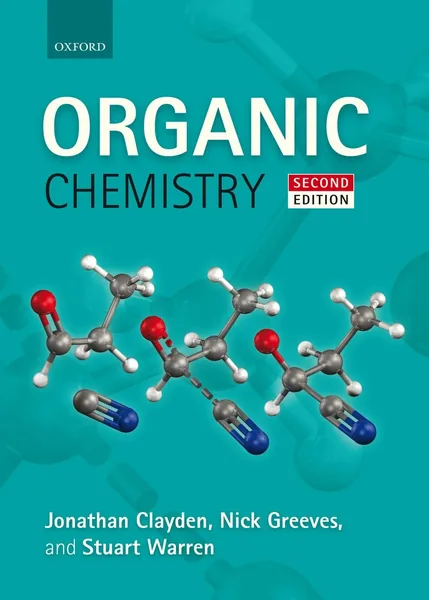
Organic in full depth
18. Organic Chemistry (Clayden)
Clayden, Greeves and Warren’s textbook is the favorite of many working chemists, and it explains organic chemistry better than any other single book. It organizes the subject by mechanism and reasoning rather than by functional group, and it spends real effort on why molecules behave as they do. Many Reddit threads recommend it, with the same warning: it is not a first book.
Use it after Klein or the Second Language books, when you can draw mechanisms and want to understand them. The end-of-chapter problems have their worked answers in a separate solutions manual.
- Jonathan Clayden, Nick Greeves and Stuart Warren
- Oxford University Press, 2nd edition (2012), paperback, 1,260 pages
- Undergraduate organic chemistry, organized by mechanism
Good: the deepest and best-written organic textbook. Not great: too dense for a beginner, and the 2nd edition dates from 2012.
Check on Amazon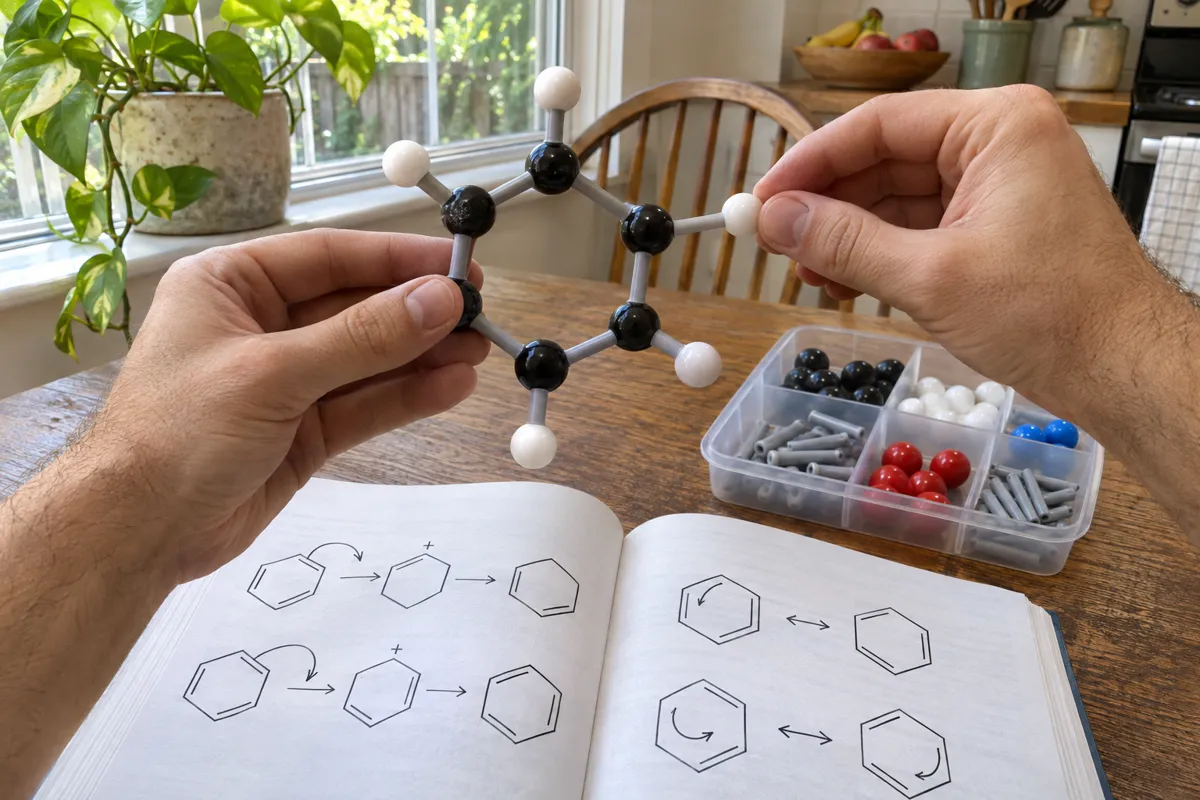
Companion for organic chemistry
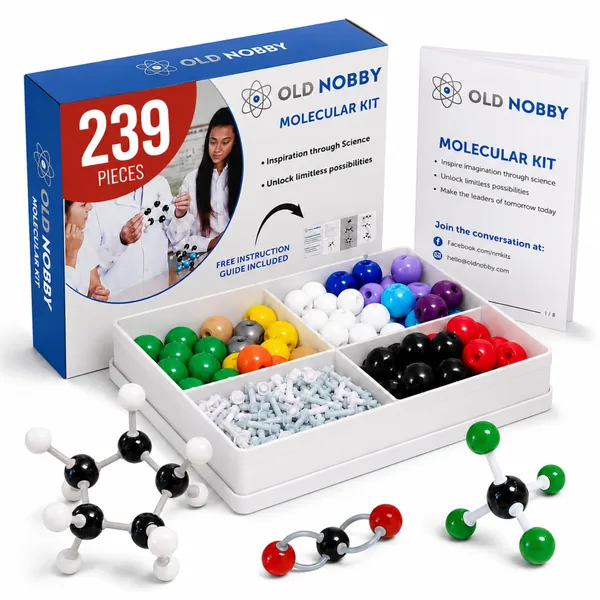
19. Old Nobby Molecular Model Kit (239 pieces)
Stereochemistry, the 3D shape of molecules, is the topic where flat drawings fail most often. A model kit lets you build a molecule, turn it over and check whether two structures are the same or mirror images, which no book can do for you. Many organic chemistry courses allow model kits in exams for this reason. This ball-and-stick set has enough atoms for the molecules in a first-year organic course, in standard colors, with flexible bonds for double and triple bonds and rings.
If you want a smaller set from a classroom brand, the Molymod MMS-008 organic student set covers the basics.
- 239 pieces of atoms and bonds
- Standard CPK colors (black carbon, white hydrogen, red oxygen, blue nitrogen)
- Bond remover tool included
Good: makes chirality and ring conformations easy to see. Not great: it only helps with 3D questions; mechanisms still have to be drawn on paper.
Check on AmazonAfter general chemistry: physical and inorganic
These are second-year university subjects. Physical chemistry needs calculus, and both need a solid grasp of general chemistry first. If you are reading our overview of physical chemistry topics and want to study one properly, these are the standard textbooks.
Best physical chemistry textbook
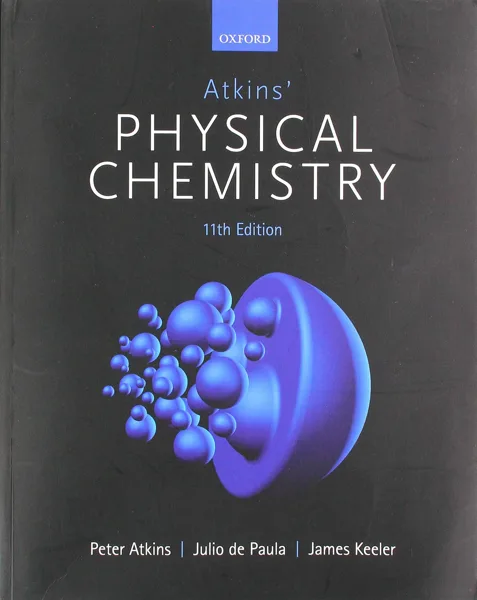
20. Atkins’ Physical Chemistry
This is the standard physical chemistry textbook in much of the world: thermodynamics, quantum chemistry, spectroscopy and kinetics, written by Peter Atkins, Julio de Paula and James Keeler. It explains each equation before deriving it and includes “Mathematical background” sections for the calculus. It is hard because the subject is hard, but it is readable alone if your calculus is current.
The 12th edition (2022) is newer but has few ratings on Amazon and a cover banner for an e-book bundle. The 11th edition, linked here, is the one most self-learners use.
- Peter Atkins, Julio de Paula and James Keeler
- Oxford University Press, 11th edition (2018), paperback, 944 pages
- Thermodynamics, quantum chemistry, spectroscopy, kinetics
Good: the most complete physical chemistry course, with the math explained. Not great: needs calculus; not a book to start chemistry with.
Check on Amazon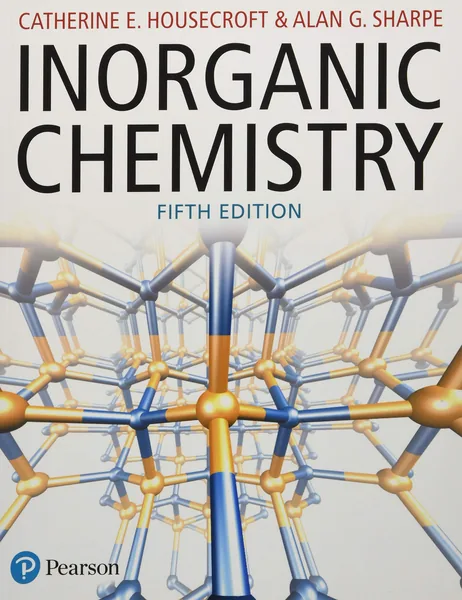
Best inorganic chemistry textbook
21. Inorganic Chemistry (Housecroft)
Catherine Housecroft’s textbook, first written with Alan Sharpe, covers the chemistry of all the elements, not only carbon: bonding theories, symmetry, the main-group elements, transition metals and coordination compounds. The full-color structures help with the 3D shapes inorganic chemistry depends on, and the worked examples and self-study exercises make it workable without a lecturer.
- Catherine E. Housecroft
- Pearson, 5th edition (2018), paperback, 1,296 pages
- Undergraduate inorganic chemistry
Good: clear, well illustrated and organized for study. Not great: a large reference; read it chapter by chapter as you need it.
Check on AmazonChemistry books to read for fun
Self-study takes months, and most people who stop do so because they lose interest, not because the material gets too hard. A chemistry book you read for enjoyment in the evening keeps you coming back to the textbook in the morning. None of these need any background.
Best popular chemistry book
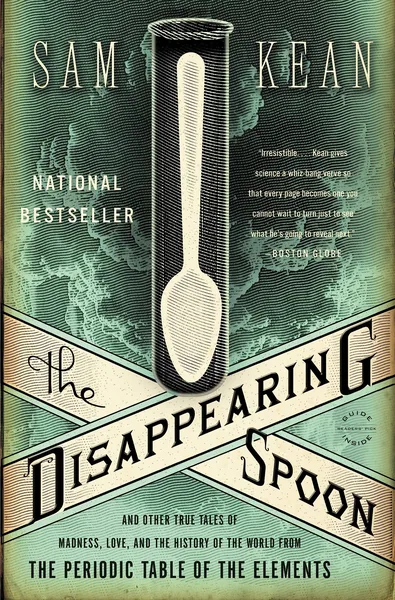
22. The Disappearing Spoon
Sam Kean tells the history of the periodic table through stories about its elements: the gallium spoon that melts in hot tea, the war over tungsten, the poisoners who used thallium. Each story explains a piece of real chemistry, and the periodic table you study in a textbook becomes a map of people and events. Read it with our interactive periodic table open.
- Sam Kean
- Little, Brown paperback, 416 pages
- History of the periodic table and its elements
Good: entertaining and full of real chemistry. Not great: stories come first; some explanations are simplified.
Check on Amazon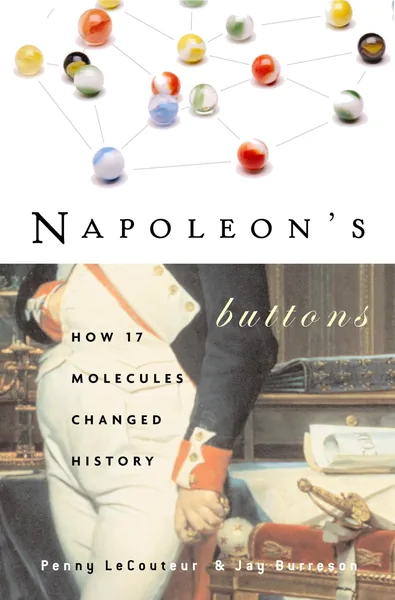
Best for organic chemistry learners
23. Napoleon’s Buttons: How 17 Molecules Changed History
Penny Le Couteur, a chemistry professor, and Jay Burreson, an industrial chemist, pick 17 molecules, including vitamin C, glucose, cellulose, rubber, aspirin and the dyes, and show how each changed history. Unlike most popular books it draws the actual structures, so you see why a small change to a molecule changes what it does. It is the best way to make organic chemistry feel relevant before you start studying it.
- Penny Le Couteur and Jay Burreson
- Tarcher paperback, 384 pages
- History told through molecular structures
Good: real structures and real chemistry inside good history. Not great: the structural diagrams slow down readers with no chemistry at all.
Check on Amazon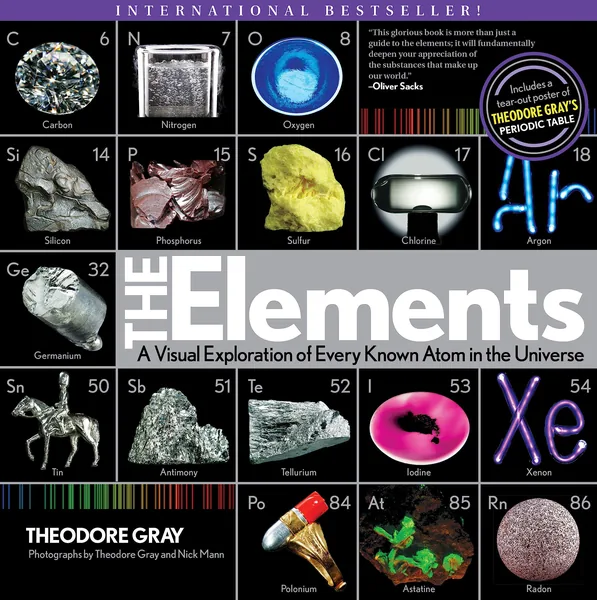
Best visual companion
24. The Elements: A Visual Exploration of Every Known Atom in the Universe
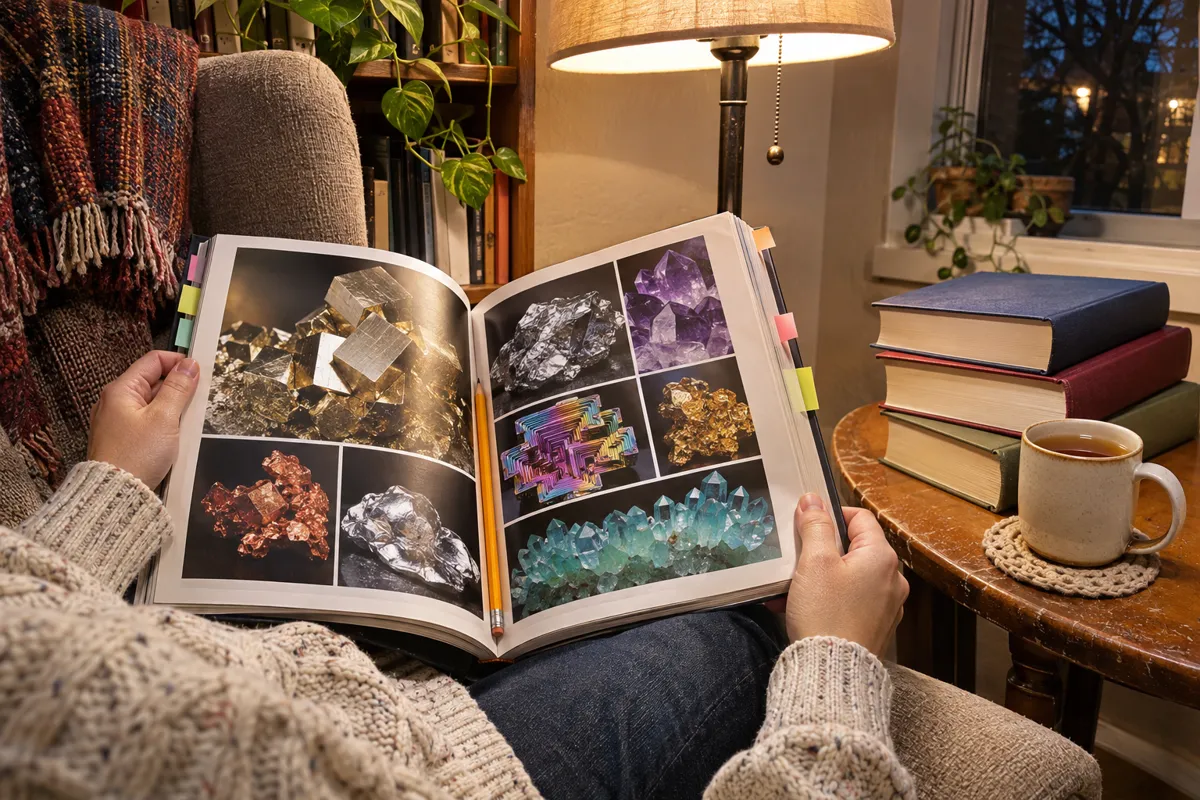
Theodore Gray collects samples of the elements, and this book gives each one a page or two with photographs by Nick Mann on black backgrounds and a short, sharp text about where it comes from and what it is used for. It turns the periodic table from a chart into a set of real substances. His follow-up, Molecules, does the same for compounds and is a good companion to organic chemistry.
- Theodore Gray, photographs by Nick Mann
- Black Dog and Leventhal paperback, 240 pages
- Every element with photographs, data and uses
Good: beautiful and full of facts. Not great: a browsing book, not a course.
Check on Amazon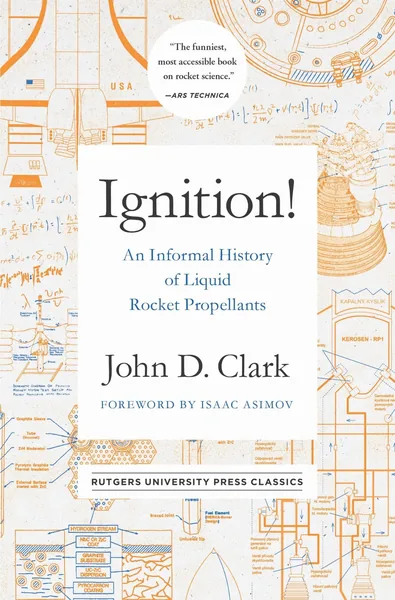
Best for chemists who like danger
25. Ignition! An Informal History of Liquid Rocket Propellants
John D. Clark spent decades developing rocket fuels, and this 1972 memoir is the funniest book ever written about chemistry. It explains why some propellants were tried and abandoned, often because they exploded, corroded everything or were too toxic to handle. You need some general chemistry to follow it, which makes it a reward for finishing the first semester. Rutgers University Press brought it back into print in 2018.
- John D. Clark, foreword by Isaac Asimov
- Rutgers University Press paperback, 216 pages
- History of liquid rocket fuel chemistry
Good: very funny and full of real chemistry. Not great: assumes you know what an oxidizer is and can read a formula.
Check on AmazonTwo more for the shelf: Uncle Tungsten, Oliver Sacks’ memoir of a childhood spent with chemistry sets and his uncle’s lightbulb factory, and Primo Levi’s The Periodic Table, 21 short pieces each named after an element. Our list of science books for non-scientists has more popular science across every field.
Learning chemistry hands-on at home
Books teach the theory, but chemistry is an experimental science, and a few safe experiments at home make the concepts concrete. Do them with splash goggles on (see our guide to the best lab safety goggles), good ventilation and no shortcuts on the safety instructions.
Best home lab book
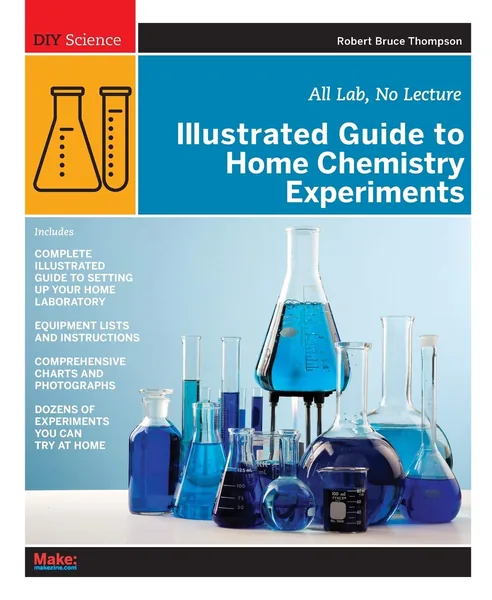
26. Illustrated Guide to Home Chemistry Experiments: All Lab, No Lecture
Robert Bruce Thompson wrote this for homeschoolers and adult self-learners who want the lab half of a chemistry course. It explains how to equip a home lab safely, how to buy and store chemicals and how to dispose of them, then gives dozens of experiments, each with its objective, materials, procedure and questions. Several of them line up with the topics of a first-year general chemistry course.
- Robert Bruce Thompson
- Make, 2008, paperback, 432 pages
- Home lab setup, safety and experiments organized by topic
Good: the most complete guide to running real chemistry experiments at home. Not great: from 2008, so some suppliers it names are gone; you need to buy equipment and chemicals separately.
Check on AmazonFor a family or a teenager, a boxed kit is a simpler start; our guides to the best chemistry set for kids and science kits for adults list the ones with real chemicals. Caveman Chemistry by Kevin M. Dunn is another option: 28 projects that follow the history of chemistry from fire to plastics.
What Reddit recommends
We read 168 Reddit threads from 2013 to 2026 in which people asked for chemistry books for self study, mostly in r/chemistry (74), r/chemhelp (38), r/AskChemistry (13), r/OrganicChemistry (12) and r/Mcat (9). The table counts how many threads named each book or resource at least once.
| Book or resource | Threads | Type |
|---|---|---|
| Khan Academy | 49 | Free videos |
| OpenStax Chemistry 2e | 30 | Free textbook |
| Organic Chemistry as a Second Language (Klein) | 25 | Organic |
| Organic Chemistry (Clayden) | 24 | Organic |
| LibreTexts | 24 | Free textbooks |
| Organic Chemistry (Klein) | 23 | Organic |
| Atkins’ Physical Chemistry and other Atkins titles | 21 | Physical |
| The Organic Chemistry Tutor (YouTube) | 17 | Free videos |
| The Disappearing Spoon | 11 | Popular |
| Chang, Chemistry | 11 | General |
| Uncle Tungsten | 10 | Popular |
| Chemistry (Zumdahl) | 9 | General |
| General Chemistry (Pauling) | 9 | General |
| Chemistry For Dummies | 9 | Beginner |
| Chemistry: The Central Science | 8 | General |
| Chemistry: A Molecular Approach (Tro) | 8 | General |
Three patterns stand out.
- Free materials come first. For general chemistry the most common answer is a free textbook plus Khan Academy: 43 threads name OpenStax, LibreTexts or both. As one r/chemistry commenter put it, “You can get a free pdf of a perfectly good textbook from openstax.org or libretexts.org” (thread).
- No paid general chemistry textbook wins. Chang, Zumdahl, Silberberg, Brown and Tro split the votes, and commenters call them interchangeable: “There isn’t much to distinguish the popular general chem texts” (thread). Zumdahl gets the strongest praise and the strongest dislike in the same thread, “detailed, comprehensive, and exhaustive” and “I thought the language was really annoying” (thread). Tro is the one most often called readable, with “an abundance of practice problems with step by step solutions” (thread).
- For organic chemistry, Klein first and Clayden second. Klein’s two books appear in 42 threads combined. Commenters describe Organic Chemistry as a Second Language as reading “like a tutor walking you through the concepts” (thread) and call Clayden “a superb intermediate level text” (thread).
Reddit’s answers lean toward standard college textbooks, because most posters are students. Books written for learning alone come up rarely: the Houk and Post self-teaching guide appears in only two threads, though one commenter recommended it to a high school student studying alone because it “constantly reinforces lessons with practice problems and chapter self-tests” (thread). If you are an adult starting from zero, that is a bigger advantage than the vote count suggests.
Free chemistry textbooks and courses
You can learn all of general chemistry without buying anything. Use these alongside a book, or try them before spending money.
- OpenStax Chemistry 2e: a complete, peer-reviewed general chemistry textbook, free online and as a PDF. There is also an Atoms First version that teaches atomic structure before stoichiometry.
- Chemistry LibreTexts: a large library of free textbooks from university instructors, covering every branch, including organic, inorganic, physical and analytical chemistry.
- MIT OpenCourseWare 5.111SC Principles of Chemical Science: MIT’s first-year chemistry course with lecture videos, problem sets and exams with solutions.
- Khan Academy Chemistry: short videos and practice exercises with instant feedback, organized like a high school and AP course.
- Our own tools: the interactive periodic table, a printable periodic table for your desk, the molar mass calculator to check your stoichiometry and naming ionic compounds practice.
Free materials have one weakness for self-learners: nothing holds them together. A book gives you an order to follow and a reason to open it every day. Many people get the best results using a free textbook for reading and a paid problem book for practice.
A 12-month self-study plan
This plan assumes four to six hours a week and no previous chemistry. If you remember high school chemistry, start at month 3.
- Months 1 and 2, foundations: Chemistry: Concepts and Problems, cover to cover, with every question answered on paper. Read The Disappearing Spoon in the evenings. Review algebra, scientific notation and unit conversions as they come up.
- Months 3 to 5, first semester of general chemistry: Zumdahl, Tro or OpenStax, chapters on atoms, the mole, stoichiometry, reactions in solution, gases, thermochemistry, atomic structure and bonding. Do at least 20 problems per chapter, with Schaum’s for extra practice.
- Months 6 to 8, second semester: kinetics, equilibrium, acids and bases, solubility, thermodynamics, electrochemistry. Read Why Chemical Reactions Happen at the end of this stage.
- Months 9 to 12, organic chemistry: Pushing Electrons first (two weeks), then Organic Chemistry as a Second Language with Klein’s textbook for reference. Buy the model kit at this stage, not before.
After a year you will know the equivalent of a year of college general chemistry and the start of organic. From there, the branches of chemistry you choose decide the next book: Atkins for physical chemistry, Housecroft for inorganic, Clayden for deeper organic.
How to study chemistry on your own
When I tutored premed students, the ones who gave up did not give up at quantum numbers or thermodynamics. They gave up in chapter 3, at the mole and stoichiometry. The idea is simple, but every later topic depends on doing the conversion between grams, moles and particles quickly and without errors. Students who could do it got through the year. Students who could not fell further behind with every chapter. If you study alone, spend as long as you need on that chapter, and do not move on until you can do the problems without looking at an example.
- Do problems before you feel ready. Read the section, look at the worked example once, then close the book and try the next problem. Struggling with a problem teaches more than rereading.
- Check every answer, and redo the wrong ones. Find where your working went wrong, then solve the problem again from a blank page the next day.
- Write units on every number. Most errors in general chemistry calculations are unit errors, and carrying units through each step catches them.
- Space the practice. Thirty minutes a day beats four hours on Saturday. Revisit old chapters with a few problems each week so they stay fresh.
- Explain it out loud. If you cannot explain why a reaction happens to someone else, or to a notebook, you do not understand it yet.
- Use a second explanation when you are stuck. A different book, a Khan Academy video or a LibreTexts page will often explain the same idea in a way that works for you.
The protein I was labeling in that PhD lab glowed the way it was supposed to after I switched to a phosphate buffer at pH 8.3. I could also explain why, which was the point. Our article on myths about chemistry is a good check on what you think you already know.
FAQ
For beginners, the best chemistry book for self-study is Chemistry: Concepts and Problems, A Self-Teaching Guide by Post, Snyder and Houk, because it gives you an answer after every step. For a full college course on your own, use Zumdahl’s or Tro’s Chemistry, or the free OpenStax Chemistry 2e. Pair either with Schaum’s Outline of College Chemistry for practice problems.
Yes. General chemistry is one of the easiest sciences to learn alone, because it is built on problems with checkable answers. You need a book that explains each topic in order, a source of problems with answers, a scientific calculator and about five hours a week. Expect six to eight months to cover a year of college general chemistry.
Chemistry: Concepts and Problems and Chemistry For Dummies are the two best books for adults with no chemistry background. The first is better for learning step by step with built-in questions; the second is better for clear, short explanations. The Cartoon Guide to Chemistry suits visual learners.
Organic Chemistry as a Second Language by David Klein is the best organic chemistry book for self-study, because it teaches the problem-solving skills of organic chemistry rather than lists of reactions. Work through Pushing Electrons by Daniel Weeks first to learn curved-arrow notation, and use Klein’s or Clayden’s textbook for full coverage.
About six to eight months at five hours a week for the equivalent of a year of college general chemistry, and another three to four months for the first semester of organic chemistry. Relearning chemistry you once studied is faster: most adults need six to ten weeks to rebuild the first semester.
Not for self-study. General chemistry changes very little between editions, and an edition one or two behind costs much less used. Buy the current edition only when a course requires its online homework or assigns problems by number.
No. Clayden’s Organic Chemistry is one of the best organic chemistry textbooks, but it assumes you already know general chemistry well and moves quickly. Start with Organic Chemistry as a Second Language or Klein’s textbook, then use Clayden when you want to understand mechanisms in depth.
General chemistry needs algebra, ratios, scientific notation, logarithms (for pH) and unit conversions. It does not need calculus. Physical chemistry does need calculus. If your algebra is rusty, Basic Chemistry by Timberlake reviews the math as part of the course, and our guide to the best math books for self-study covers algebra and calculus.
The Disappearing Spoon by Sam Kean is the most popular chemistry book for general readers, a history of the periodic table told through its elements. Napoleon’s Buttons explains how 17 molecules changed history, and Theodore Gray’s The Elements is the best visual book about the elements.
Sources
- Amazon product pages for each book and kit, checked November 2026 (editions, page counts, publishers and ratings).
- Reddit threads asking for self-study chemistry books, listed in the What Reddit recommends section.
- OpenStax, Chemistry 2e, Rice University, 2019.
- MIT OpenCourseWare, 5.111SC Principles of Chemical Science, Fall 2014.
- The Nobel Prize, The Nobel Prize in Chemistry 1954: Linus Pauling.
- Wikipedia, N-Hydroxysuccinimide (NHS esters and amine labeling).