If you want the short version: 2005 was the year a doctor who drank a beaker of bacteria to prove a point finally got vindicated, a playwright used his acceptance moment to attack a war, and game theory walked off with the economics prize. Twelve people and one organization split six prizes. Here’s the complete roster, who they were, and why each one mattered, without the jargon the official press releases lean on.
Table of Contents
- The 2005 Nobel Prize Winners at a Glance
- Physiology or Medicine
- Physics
- Chemistry
- Literature
- Peace
- Economic Sciences
- What 2005 Tells Us
The 2005 Nobel Prize Winners at a Glance
Six categories, awarded between October and December 2005. Each prize was worth 10 million Swedish kronor that year, split among co-winners where there were more than one.
| Category | Laureate(s) | Country | Awarded for |
|---|---|---|---|
| Medicine | Barry J. Marshall, J. Robin Warren | Australia | Discovering Helicobacter pylori and its role in ulcers |
| Physics | Roy J. Glauber; John L. Hall, Theodor W. Hänsch | USA; USA, Germany | Quantum optics and laser-based precision spectroscopy |
| Chemistry | Yves Chauvin, Robert H. Grubbs, Richard R. Schrock | France, USA, USA | The metathesis method in organic synthesis |
| Literature | Harold Pinter | United Kingdom | Plays that expose the menace beneath everyday speech |
| Peace | IAEA, Mohamed ElBaradei | International; Egypt | Curbing the military use of nuclear energy |
| Economic Sciences | Robert J. Aumann, Thomas C. Schelling | Israel/USA, USA | Game-theory analysis of conflict and cooperation |
Note that Economic Sciences isn’t technically a Nobel Prize. It’s the Sveriges Riksbank Prize in Economic Sciences in Memory of Alfred Nobel, created in 1968 and funded by Sweden’s central bank, not Alfred Nobel’s will. Everyone calls it the Nobel anyway.
Physiology or Medicine: Barry Marshall and Robin Warren
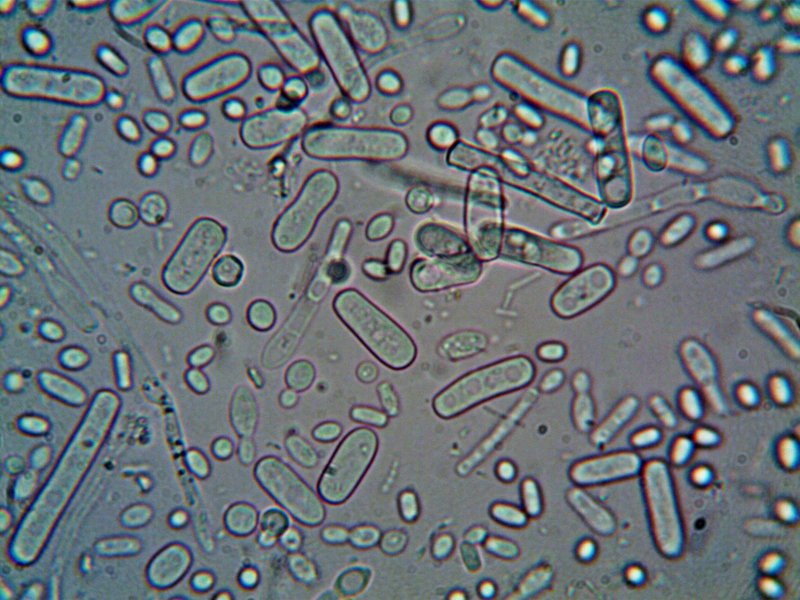
For most of the 20th century, doctors blamed stomach ulcers on stress and spicy food. The treatment was antacids and a bland diet, more or less forever. Then a pathologist and a clinical fellow in Perth, Australia, said the actual cause was a bacterium, and almost nobody believed them.
J. Robin Warren, a pathologist at Royal Perth Hospital, kept seeing curved bacteria in the stomach linings of patients with gastritis, right where the tissue was inflamed. The textbooks said nothing could live in the acid bath of the stomach. Barry Marshall, then a young clinical fellow, took the idea seriously, and together they cultured the organism now called Helicobacter pylori from patient biopsies.
The medical establishment shrugged. So in 1984 Marshall did the thing that made him famous: he drank a broth swarming with the bacteria, gave himself acute gastritis within days, and then cured it with antibiotics. It was reckless, it was unblinded, and it worked. The 2005 Nobel Prize in Physiology or Medicine went to both men “for their discovery of the bacterium Helicobacter pylori and its role in gastritis and peptic ulcer disease.”
The practical payoff is enormous. A condition once managed with lifelong medication is now often cured in a week or two of antibiotics. Marshall was at the University of Western Australia by the time the prize came; Warren had spent his career at Royal Perth Hospital.
Physics: Roy Glauber, John Hall, and Theodor Hänsch
The 2005 physics prize was split, with a backstory worth knowing. Half went to Roy J. Glauber of Harvard “for his contribution to the quantum theory of optical coherence.” In plain terms, Glauber explained, back in the 1960s, what makes laser light fundamentally different from the light of an ordinary bulb. He gave physics the mathematical language to describe how particles of light behave, and it took the field decades to fully catch up to him.
The other half was shared by John L. Hall of the University of Colorado and Theodor W. Hänsch of Germany’s Max Planck Institute of Quantum Optics, “for their contributions to the development of laser-based precision spectroscopy, including the optical frequency comb technique,” per the official summary.
The optical frequency comb is the unsung hero here. Picture a ruler made of light, with millions of perfectly even tick marks, that lets you measure the frequency of light with staggering accuracy. That precision underpins the atomic clocks behind GPS and the search for tiny shifts in the fundamental constants of nature. Every time your phone pinpoints your location, there’s a thread running back to this work.
Chemistry: Yves Chauvin, Robert Grubbs, and Richard Schrock
Three chemists shared the prize “for the development of the metathesis method in organic synthesis.” Metathesis is easier to grasp than it sounds. Think of two dancing couples who swap partners: in a metathesis reaction, two molecules trade chunks of themselves to form two new molecules, with a metal catalyst acting as the choreographer.
Yves Chauvin, of the French Petroleum Institute, worked out the mechanism in the early 1970s, adding his name to France’s long roster of Nobel Prize winners. Richard R. Schrock (MIT) and Robert H. Grubbs (Caltech) then built the practical catalysts that made the reaction usable in everyday labs. The Grubbs catalyst in particular became a workhorse you’ll find in pharmaceutical and plastics chemistry worldwide.
Why the prize? Metathesis is cleaner chemistry. It produces fewer unwanted byproducts and needs less energy, which is exactly what green chemistry is after. The Nobel committee’s summary framed it as a step toward smarter, less wasteful molecular manufacturing.
Literature: Harold Pinter

Harold Pinter is the reason we have the word “Pinteresque.” The British playwright behind The Birthday Party, The Caretaker, and The Homecoming won the literature prize for work that, in the Academy’s words, “uncovers the precipice under everyday prattle and forces entry into oppression’s closed rooms.”
His signature is the menacing pause. Two people make small talk, the silences stretch, and something threatening sits just under the surface without ever being named. That technique reshaped postwar theater.
By 2005 Pinter was 75 and too ill to travel to Stockholm, so he delivered his Nobel lecture by video. He used it not to discuss drama but to deliver a blistering attack on the Iraq war and US and British foreign policy. It made global headlines and split opinion sharply, which was very much the point. Pinter died three years later, in 2008.
Peace: The IAEA and Mohamed ElBaradei
The peace prize went jointly to the International Atomic Energy Agency and its director general, Mohamed ElBaradei of Egypt, “for their efforts to prevent nuclear energy from being used for military purposes and to ensure that nuclear energy for peaceful purposes is used in the safest possible way.”
The timing was pointed. The award came as the IAEA’s inspections in Iraq had become a flashpoint in the lead-up to and aftermath of the 2003 invasion. ElBaradei had publicly cast doubt on claims that Iraq was reconstituting a nuclear weapons program, putting him at odds with the US and UK governments. Giving the prize to him and his agency read, to many, as a quiet endorsement of patient inspection over military action. You can read the committee’s reasoning in the Peace Prize summary.
Economic Sciences: Robert Aumann and Thomas Schelling
Robert J. Aumann and Thomas C. Schelling shared the economics prize “for having enhanced our understanding of conflict and cooperation through game-theory analysis.” Both spent careers asking the same question from different angles: why do rational people cooperate sometimes and clash other times?
Schelling, an American economist, brought game theory to nuclear strategy in his 1960 book The Strategy of Conflict. His big insight was that you can strengthen your position by limiting your own options, the logic of a credible threat. It directly shaped Cold War deterrence thinking. Aumann, a mathematician with dual Israeli-American citizenship, proved that cooperation becomes far more likely in relationships that repeat over time, which is why long-term partners behave differently than one-shot strangers. His win added another name to Israel’s list of Nobel Prize winners, a roster that leans heavily toward the sciences and economics.
It was a fitting pairing for a prize about conflict: a strategist and a mathematician, both showing that the rules of the game shape behavior more than the players’ intentions do.
What 2005 Tells Us
Step back and the 2005 class shares a theme: vindication of the patient, the precise, and the unfashionable. Marshall and Warren waited two decades for the medical world to accept that a bug caused ulcers. Glauber’s quantum optics took forty years to ripen into a prize. Pinter and ElBaradei both used their platforms to say uncomfortable things out loud.
These weren’t overnight breakthroughs. They were long arguments, finally won. For a quick cross-check against any single category, the NobelPrize.org all-laureates list keeps the official record.