Table of Contents
- The Numbers Behind Myanmar’s Endemism
- Why Myanmar Grows Plants Found Nowhere Else
- Endemic or Just Native? The Distinction Matters
- Orchids Found Only in Myanmar
- Rhododendrons of the Northern Hills
- Gingers, Impatiens, and Begonias
- A Magnolia From the Kachin Cloud Forest
- What’s Pushing These Plants Toward Extinction
- The Bigger Picture
The Numbers Behind Myanmar’s Endemism
Myanmar’s vascular flora runs to roughly 14,020 species. Of those, 864 exist nowhere else on the planet — not across the border in Thailand, not in the Yunnan hills, not anywhere. That’s about 6% of the country’s entire plant inventory locked into a single set of borders, according to an updated checklist of Myanmar’s vascular plants compiled by botanists working through decades of scattered collection records.
The reason isn’t a coincidence of geography. Myanmar sits inside the Indo-Burma biodiversity hotspot, and its northern tip pokes into the Eastern Himalaya hotspot as well — one of the only countries on Earth where two global biodiversity hotspots physically overlap. That intersection, plus a north-south mountain spine that traps species in isolated valleys, is why a country roughly the size of Texas has produced hundreds of plants with nowhere else to grow.
Why Myanmar Grows Plants Found Nowhere Else
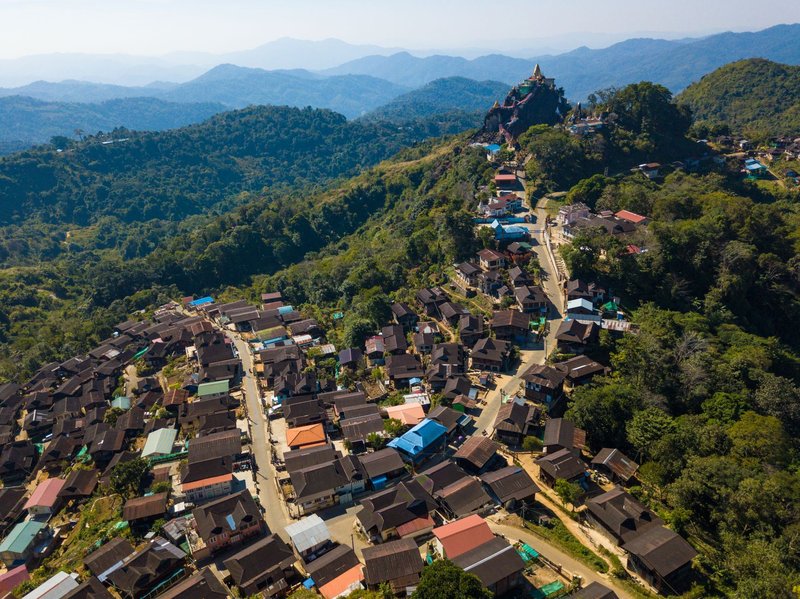
Myanmar’s flora reads like a merger of four separate botanical worlds. Indian floristic elements drift in from the west through the Chin Hills. Sino-Himalayan species — the rhododendrons, magnolias, and gingers that dominate the northern mountains — spill down from Yunnan and the eastern Himalaya. Indochinese flora, shared with Thailand and Laos, occupies the drier central plains and the Shan Plateau. And in the deep south, the Tanintharyi coast picks up Malesian species more at home in Sumatra than in Mandalay.
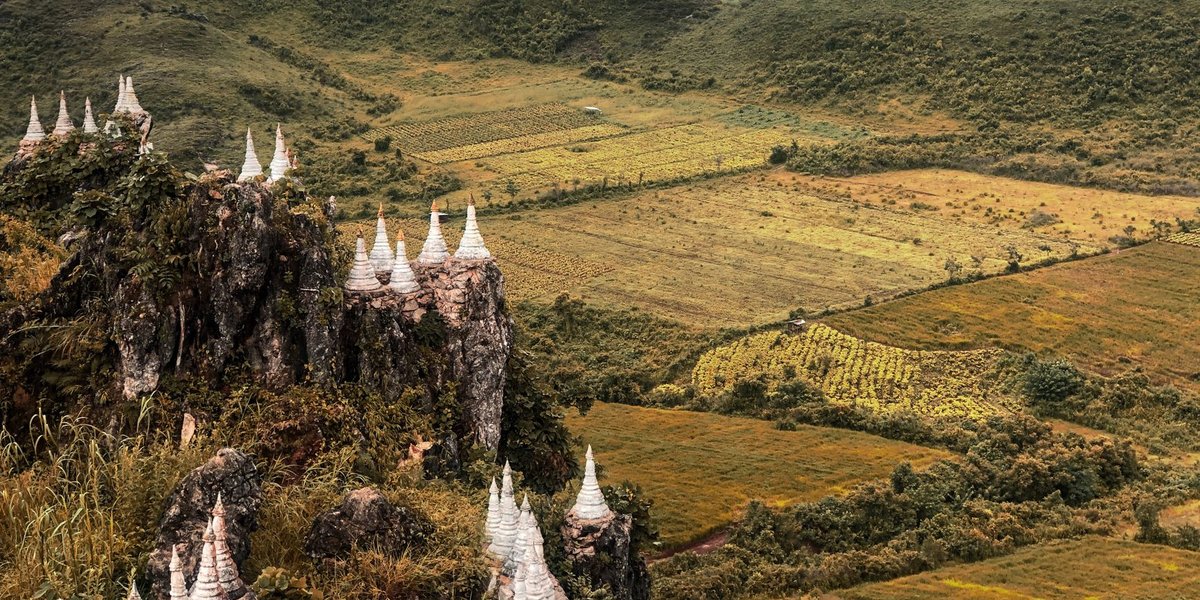
Where those four floras meet, they don’t just coexist — they isolate. A valley in Kachin State can sit high enough and wet enough to trap a Sino-Himalayan lineage long enough for it to diverge into something new. Limestone karst towers in the south do the same thing for orchids, stranding populations on cliff faces separated by kilometers of unsuitable lowland. Myanmar has more of these isolating features, packed into more overlapping climate zones, than most of its neighbors — which is the actual mechanism behind the endemism count, not just a byproduct of undersampling.
Endemic or Just Native? The Distinction Matters
Most reference pages on Myanmar’s flora use “endemic” and “native” interchangeably, and that’s a real problem if you’re trying to understand what actually makes this country’s plant life unusual. Native means the species evolved in or naturally colonized the region — it might also grow across the border in India or Thailand. Endemic means the species exists only within Myanmar’s borders and nowhere else on Earth.
Teak, for instance, is native to Myanmar and economically central to the country, but it’s not endemic — you’ll find it across South and Southeast Asia. Paphiopedilum myanmaricum, on the other hand, grows on a handful of limestone cliffs in Tanintharyi Region and literally nowhere else. That distinction is the whole point of an endemism count, and it’s worth holding onto as you go through the list below.
Orchids Found Only in Myanmar
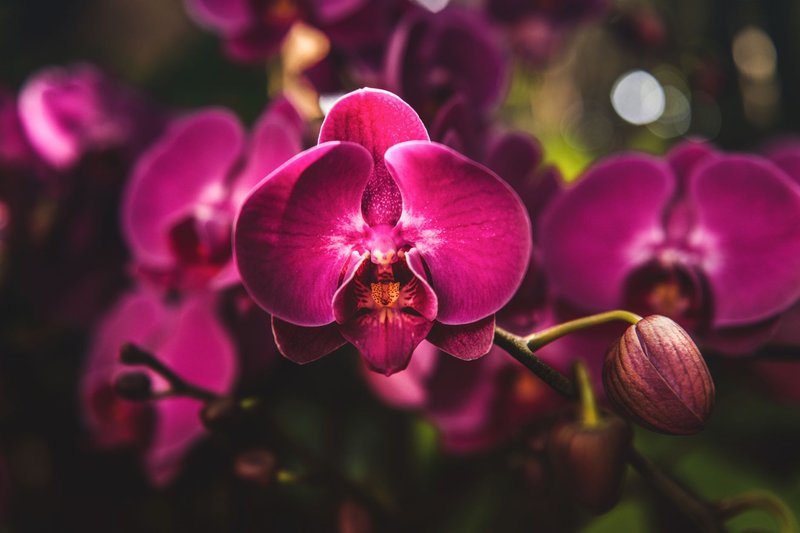
Orchids dominate Myanmar’s endemic plant list by sheer volume. The country’s orchid flora includes over 1,000 species across 151 genera, and a checklist published in PhytoKeys puts the endemic share at 76 species — a number botanists expect to grow as more of the country’s remote highlands get surveyed.
- Paphiopedilum myanmaricum — A slipper orchid discovered in 2017, restricted to primary evergreen forest on limestone cliffs and overhangs in Tanintharyi Region at 200–400 meters elevation. Kew’s Plants of the World Online lists it as one of the more range-restricted slipper orchids described this century.
- Coelogyne putaoensis — Named for Putao, the northernmost town in Kachin State, this epiphytic orchid grows in the cool, wet cloud forest that rings the base of the eastern Himalaya.
- Phalaenopsis natmataungensis — Endemic to Natma Taung (Mount Victoria) in Chin State, an isolated massif that functions as a biological island for cool-climate species surrounded by lowland habitat they can’t tolerate.
- Dendrobium naungmungense — Described from Naung Mung township in far-northern Kachin State, one of the least botanically explored corners of the country.
- Gastrodia kachinensis — A leafless, chlorophyll-free orchid that survives entirely off a fungal partner in the soil — it never photosynthesizes at all, which makes it almost invisible until it flowers.
- Habenaria yomensis — One of 11 endemic Habenaria species in Myanmar, named for the Yoma mountain ranges that run down the country’s spine and shelter much of its endemic flora.
Rhododendrons of the Northern Hills
Northern Myanmar’s high-elevation forests are rhododendron country, an extension of the same Sino-Himalayan diversity that makes Yunnan and northeastern India famous among plant collectors.
- Rhododendron burmanicum — Confined to the mountains of northern Myanmar, part of a cluster of Vireya-adjacent species adapted to cool, cloud-wrapped ridgelines.
- Rhododendron recurvoides — Named for its recurved petals, found in the same general Kachin highlands and nowhere documented outside them.
- Rhododendron preptum — A less-collected endemic that reflects how much of this genus’s Myanmar diversity still needs field verification — herbarium records are sparse enough that population sizes are essentially unknown.
Gingers, Impatiens, and Begonias
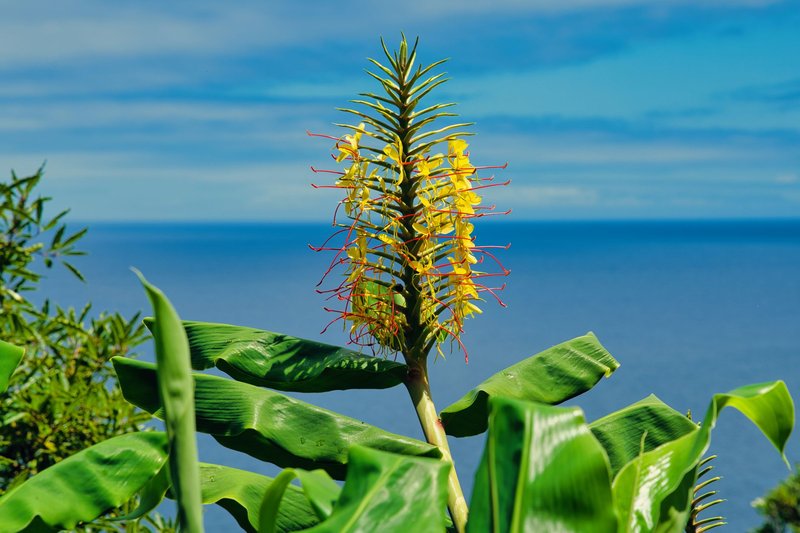
Below the orchid and rhododendron canopy, Myanmar’s understory produces a steady stream of newly described endemics — gingers, balsams, and begonias that botanists keep finding in the same handful of northern townships.
- Curcuma kayahensis — A turmeric relative endemic to Kayah State, in the country’s less-surveyed east.
- Curcuma glandulosa — Placed in the Ecomatae subgenus, described from Myanmar and distinguished by glandular structures on its floral parts that separate it from its closest Curcuma relatives.
- Impatiens casseabriae — One of two balsam species described from Putao in 2017, identified by its narrow, elliptic leaves and long lower petals.
- Impatiens putaoensis — The second Putao balsam, distinguished from its close relative I. xanthina by pale greenish-yellow flowers.
- Begonia rheophytica — A rheophyte, meaning it’s built to survive being submerged in fast-moving river water during monsoon floods — a specific adaptation to the seasonal rivers of northern Myanmar.
- Begonia mariachristinae — Another Kachin State endemic, part of a wave of new Begonia descriptions that has made Myanmar one of the more active fronts in the genus’s global taxonomy.
A Magnolia From the Kachin Cloud Forest
Magnolia kachinensis rounds out the list as one of the more recent tree-sized discoveries. It was collected in Putao County’s Wasadam village at 1,387 meters, growing in mountain rainforest — a reminder that Myanmar’s endemism isn’t limited to small epiphytes and forest-floor herbs. Large-bodied, slow-growing trees are still turning up new to science in the country’s least-accessible ranges, which says something about how much fieldwork remains undone.
What’s Pushing These Plants Toward Extinction
Habitat loss is the blunt instrument behind most of Myanmar’s plant conservation problems. Agricultural expansion, logging concessions, and infrastructure projects are converting the same northern forest belt that produces most of these endemics — species with single-valley or single-mountain distributions have nowhere to retreat to when their forest gets cleared.
Orchids face a second, more targeted threat: collection for the horticultural trade. Slipper orchids like Paphiopedilum myanmaricum are exactly the kind of rare, showy species that command high prices among collectors, and a species restricted to a handful of limestone cliffs can be wiped out by a few determined poachers with no logging involved at all.
Agarwood tells a related story from the tree side of Myanmar’s flora. Aquilaria malaccensis, the primary agarwood-producing species found in the country’s forests, is harvested for the fragrant resin it produces when infected by a specific fungus — resin that can sell for thousands of dollars per kilogram in Middle Eastern and East Asian markets. That price has driven the species onto the IUCN Red List as Vulnerable and into CITES Appendix II, yet illegal harvesting continues because the trees can’t be reliably distinguished as resin-producing until they’re cut open — so collectors fell far more trees than actually contain valuable resin.
The Bigger Picture
None of these 16 species made it onto a “best places to see wildflowers” list because most of them live on cliffs, in cloud forest, or along seasonal rivers that don’t see much foot traffic. That’s partly the point — Myanmar’s endemism is concentrated in exactly the terrain that’s hardest to survey and hardest to protect. A 2025 update to the country’s vascular plant checklist pushed the endemic count higher than earlier estimates, and botanists working the northern Kachin ranges expect that number to keep climbing as access to the region improves.
That’s the real story behind the 864 figure: it’s not a finished inventory, it’s a running tally on a country that still has forest nobody’s catalogued. Every new field season in Putao or the Yoma ranges tends to turn up something that doesn’t match anything else on record — which is a rare thing to be able to say about a landmass this size in 2026.