Table of Contents
- What Actually Makes an Animal a Carnivore
- Land Carnivores
- Marine Carnivores
- Aerial Carnivores
- Carnivorous Plants
- Carnivore vs. Herbivore vs. Omnivore
- Obligate vs. Facultative, at a Glance
What Actually Makes an Animal a Carnivore
A carnivore eats other animals to survive. That’s the whole definition — no requirement about teeth shape, no rule about being scary. The word splits into two harder categories once you look closer: obligate carnivores have digestive systems that can’t extract what they need from plant matter, so meat isn’t a preference, it’s biology. Cats are the textbook case — a house cat fed only vegetables will eventually die from taurine deficiency, no matter how much of it you serve. Facultative carnivores hunt and eat meat regularly but can survive, sometimes thrive, on a mixed diet when prey is scarce. A red fox raiding a garden for berries in autumn hasn’t stopped being a carnivore; it’s just being practical.
Below are 30 real examples, split by where they hunt: on land, in water, and in the air — plus four plants that get their nitrogen the hard way.
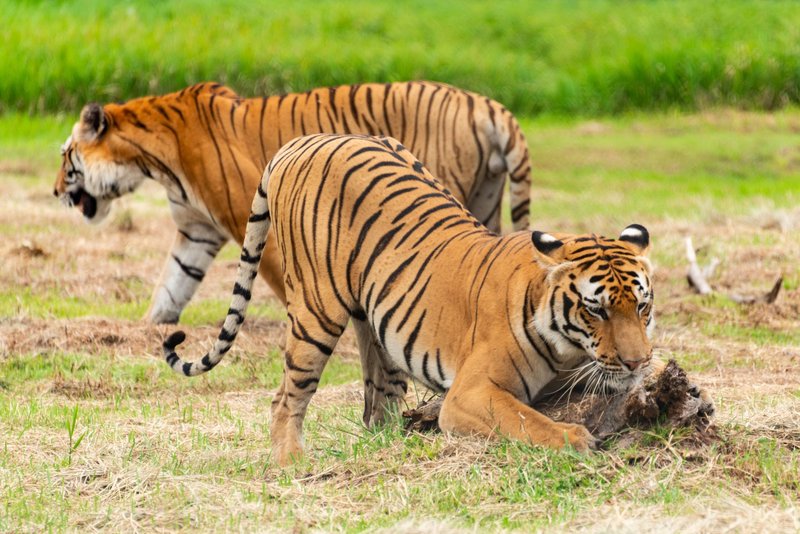
Land Carnivores
Gray Wolf (Canis lupus) — Wolves hunt in coordinated packs of 6 to 10, using stamina rather than speed to wear down elk and moose over distances of several miles. A single pack can bring down prey ten times the size of any individual wolf. Obligate carnivore. According to National Geographic, pack hunting lets wolves take prey no lone predator their size could handle.
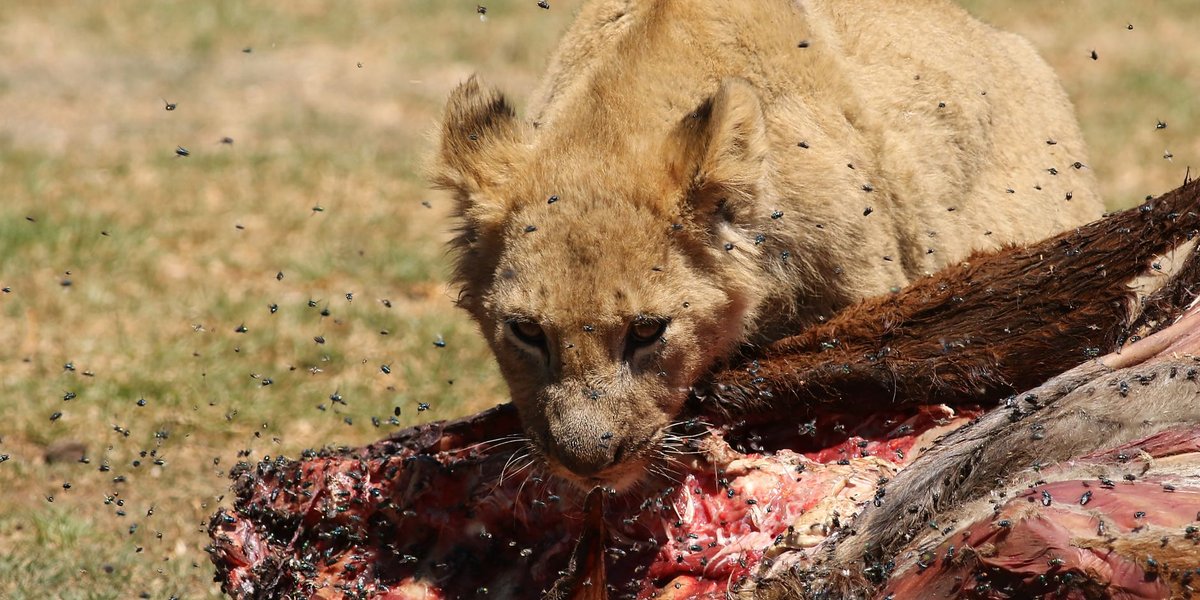
African Lion (Panthera leo) — The only cat that lives in social groups, prides split hunting duties by role: some lionesses flush prey toward ambush points, others wait in cover. Males rarely hunt in open savanna, where their manes give them away. Obligate carnivore that eats almost exclusively large ungulates like zebra and wildebeest.
Cheetah (Acinonyx jubatus) — Built for a single explosive sprint rather than a chase, cheetahs hit roughly 60 mph in three seconds but can only sustain that speed for about 300 meters before overheating. If the kill doesn’t happen fast, they usually give up rather than risk collapse.
Snow Leopard (Panthera uncia) — Adapted to Central Asia’s mountain ranges above 3,000 meters, snow leopards have oversized nasal cavities for thin, cold air and tails almost as long as their bodies for balance on cliffs. The IUCN Red List classifies them as Vulnerable, with fewer than 10,000 believed to remain in the wild.
Tasmanian Devil (Sarcophilus harrisii) — Despite the cartoon reputation, devils are mostly scavengers that finish carcasses other predators leave behind, bones included — their jaw pressure per body weight is among the highest of any living mammal. Facultative carnivore, though carrion makes up most of their real-world diet.
Spotted Hyena (Crocuta crocuta) — Hyenas kill most of what they eat themselves, contrary to their scavenger reputation; studies in the Serengeti found they hunt down roughly 60–95% of their food. Clans are matriarchal, and females outrank every male in the group.
Wolverine (Gulo gulo) — A member of the weasel family that punches well above its 40-pound weight class, wolverines have been documented driving bears off kills and caching food in permafrost that stays frozen through summer. Facultative carnivore that also eats berries when meat is scarce.
Red Fox (Vulpes vulpes) — The most widely distributed carnivore on Earth, found on every continent except Antarctica. Foxes use Earth’s magnetic field to judge pounce distance on prey hidden under snow, locking onto a northeast trajectory before leaping. Facultative — they’ll eat fruit and insects too.
Komodo Dragon (Varanus komodoensis) — The world’s largest lizard delivers a bite loaded with venom and bacteria, then simply follows a bitten animal for days until it weakens and dies. The Smithsonian’s National Zoo confirmed the venom glands in 2009, overturning decades of assumption that bacteria alone did the work.
Black-Footed Ferret (Mustela nigripes) — North America’s most endangered mammal for decades, this ferret is a prairie dog specialist so complete that its range and survival track prairie dog colonies almost exactly. Obligate carnivore, reintroduced from a founding population of just seven animals in the 1980s.
Dhole (Cuon alpinus) — Also called the Asiatic wild dog, dholes hunt in packs that can take down animals as large as water buffalo, communicating with whistling calls instead of barks. They’re one of the few canids that will readily attack tigers in group defense.
Fossa (Cryptoprocta ferox) — Madagascar’s largest predator looks like a small cougar crossed with a mongoose and is the primary threat to lemurs, which it hunts both on the ground and up in the canopy using semi-retractable claws.
Marine Carnivores
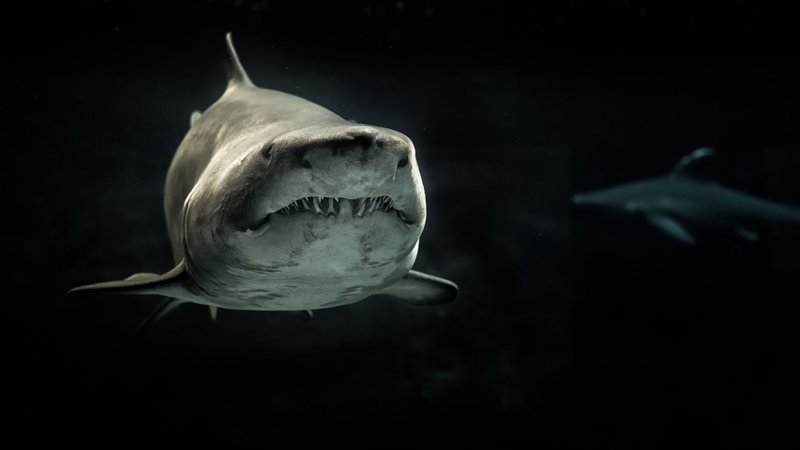
Orca (Orcinus orca) — Different orca populations specialize so heavily that some pods eat only fish while others eat only marine mammals, and the two don’t interbreed or share hunting techniques despite overlapping ranges. NOAA Fisheries tracks these distinct “ecotypes” as functionally separate cultures within one species.
Great White Shark (Carcharodon carcharias) — Great whites can detect a single drop of blood diluted in roughly 25 gallons of water and often ambush seals from below, breaching completely out of the water on impact. Obligate carnivore with no dietary alternative.
Leopard Seal (Hydrurga leptonyx) — Antarctica’s apex seal predator eats penguins by gripping and violently shaking them until the skin separates from the body — an efficient, if grim, technique documented repeatedly by researchers at penguin colonies.
Sea Otter (Enhydra lutris) — Otters use rocks as tools, cracking open sea urchins and clams on their chests while floating on their backs. By controlling urchin populations, they protect kelp forests that would otherwise be stripped bare — a textbook keystone species.
Crown-of-Thorns Sea Star (Acanthaster planci) — This coral-eating starfish everts its stomach out through its mouth, digesting coral tissue externally before retracting it. Obligate carnivore population booms have destroyed large sections of the Great Barrier Reef during outbreak years.
Moray Eel (Gymnothorax spp.) — Morays have a second set of jaws in their throat, called pharyngeal jaws, that shoot forward to drag prey down once the main jaws clamp on — the same mechanism made famous by the movie Alien, discovered in morays in 2007.
Blue Shark (Prionace glauca) — One of the widest-ranging sharks on the planet, blue sharks migrate thousands of miles annually following temperature gradients and prey density, feeding heavily on squid and small schooling fish along the way.
Emperor Penguin (Aptenodytes forsteri) — Diving to depths beyond 500 meters and holding their breath for over 20 minutes, emperor penguins hunt fish and squid under Antarctic ice using their wings as flippers. Obligate carnivore fully dependent on marine prey.
Aerial Carnivores
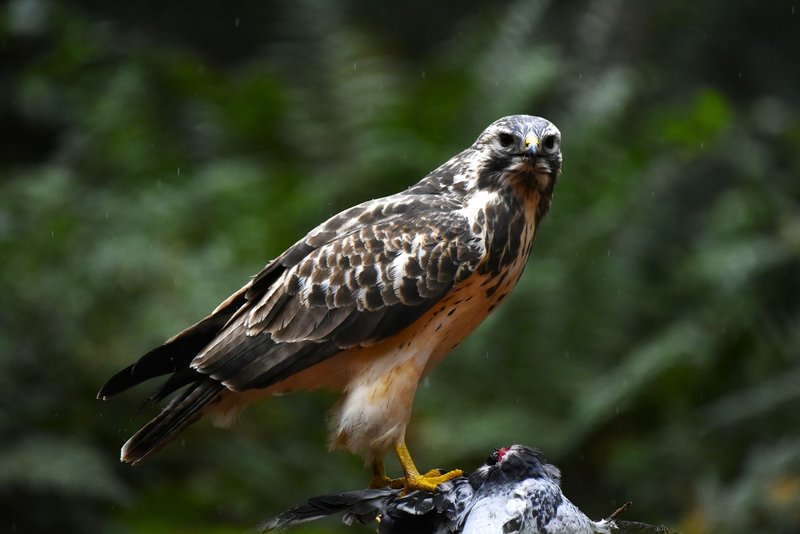
Peregrine Falcon (Falco peregrinus) — The fastest animal on Earth, peregrines reach speeds over 240 mph in a hunting dive called a stoop. Cornell Lab of Ornithology notes the species has recolonized cities worldwide, nesting on skyscraper ledges that mimic cliff faces.
Bald Eagle (Haliaeetus leucocephalus) — Despite the fierce reputation, bald eagles steal a large share of their meals from other birds, including ospreys, in a behavior called kleptoparasitism. They’re primarily fish hunters, snatching prey from just below the surface with talons.
Great Horned Owl (Bubo virginianus) — Silent flight feathers let this owl approach prey without a sound, and its grip strength is strong enough to sever a rabbit’s spine on contact. It’s one of the few predators that regularly kills skunks.
Osprey (Pandion haliaetus) — Nearly every osprey meal is live fish, caught in a feet-first dive from up to 100 feet in the air. Reversible outer toes and barbed foot pads let it carry slippery prey aligned head-first to cut wind resistance in flight.
Golden Eagle (Aquila chrysaetos) — Capable of taking prey as large as young deer or foxes, golden eagles hunt using terrain to stay hidden, flying low along ridgelines before flaring up over prey at the last second.
Secretarybird (Sagittarius serpentarius) — A four-foot-tall raptor that hunts on foot across African grasslands, the secretarybird kills snakes, including venomous species, by stomping them with a strike force measured at several times its own body weight.
Carnivorous Plants
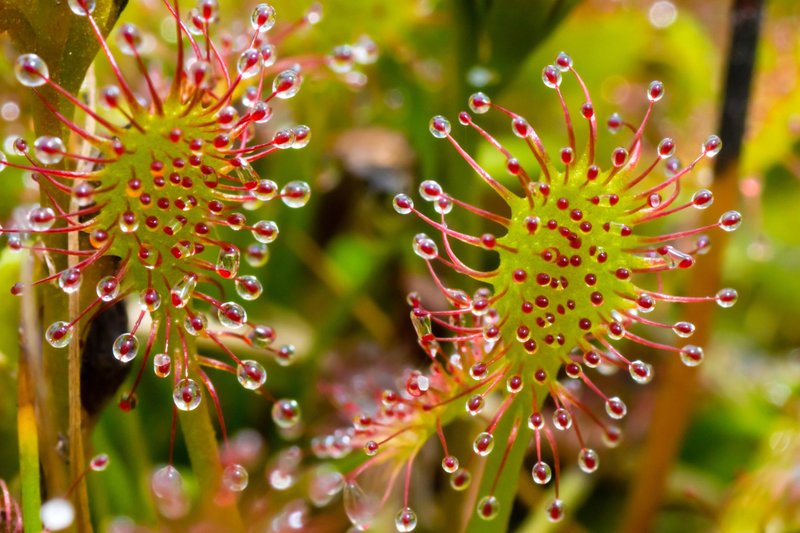
Plants don’t need meat to survive, but a handful evolved to trap and digest animals anyway — usually because they grow in nitrogen-poor soil, like bogs, where getting nutrients from prey is easier than pulling them from the ground.
Venus Flytrap (Dionaea muscipula) — Native to a small strip of North and South Carolina wetlands and nowhere else in the wild, the flytrap snaps shut only after two trigger hairs are touched within about 20 seconds — a safeguard against wasting energy on raindrops or debris.
Pitcher Plant (Nepenthes and Sarracenia genera) — These plants grow tube-shaped leaves filled with digestive fluid and lined with slippery, downward-pointing hairs. Insects that land on the rim lose their footing and can’t climb back out.
Sundew (Drosera spp.) — Covered in sticky, glistening tentacles that look like dew, sundews trap insects on contact and slowly curl their leaves around the prey over several hours to maximize digestive contact.
Bladderwort (Utricularia spp.) — An aquatic plant with one of the fastest movements in the plant kingdom: tiny underwater bladders create a vacuum and suck in small prey like water fleas in under a millisecond when trigger hairs are disturbed.
Carnivore vs. Herbivore vs. Omnivore
| Trait | Carnivore | Herbivore | Omnivore |
|---|---|---|---|
| Primary diet | Other animals | Plants | Both animals and plants |
| Example | Gray wolf, orca | Deer, elephant | Brown bear, raccoon |
| Teeth | Sharp, pointed canines for tearing | Flat molars for grinding | Mix of sharp and flat teeth |
| Gut length | Short, built for fast protein digestion | Long, built to break down cellulose | Moderate length, flexible digestion |
| Hunting behavior | Active predators or ambush hunters | None — forages | Opportunistic, forages and hunts |
Beyond this basic comparison, 10 Differences Between Herbivores and Carnivores explores how each group’s teeth, gut length, and hunting strategies evolved in response to their diets.
Obligate vs. Facultative, at a Glance
| Category | Obligate examples | Facultative examples |
|---|---|---|
| Land | African lion, black-footed ferret | Red fox, wolverine, Tasmanian devil |
| Marine | Great white shark, emperor penguin, crown-of-thorns sea star | Sea otter (occasionally eats algae incidentally) |
| Aerial | Peregrine falcon, osprey | Bald eagle (scavenges when hunting fails) |
The line between the two categories isn’t about aggression or skill — it’s metabolic. Obligate carnivores like cats and eagles lack the enzymes to break down plant cellulose efficiently, so a mixed diet isn’t a lifestyle choice, it’s a nutritional dead end. Facultative hunters keep that flexibility as a hedge against lean seasons, which is often the difference between a species that survives a bad year and one that doesn’t.