As an Amazon Associate we earn from qualifying purchases. Disclosure.
Science kit finder
Find the right science kit for your kid
Six quick questions on age, interests and how much mess you can take. One clear pick at the end.
The best science kit for kids is the one rated for your child’s age that matches what they already like. For ages 3 to 5 that is the Learning Resources Primary Science Deluxe Lab Set. For ages 5 to 7 it is Snap Circuits Beginner. For ages 8 to 10 it is Snap Circuits Jr. SC-100, with Thames & Kosmos Chem C1000 for a 10-year-old ready for real chemistry.
Age is only part of the decision. A kit also has to fit your kid’s attention span, the help you can give and the mess you can take. The quiz above weighs all of it and picks one kit from the 26 on our list.
Best science kit by age
One pick per age, using the maker’s own age rating. Every kit below is rated for the age it is listed under.
Best science kit for a 3 year old
Three-year-olds need big tools and short activities. Reusable lab gear beats a box of single-use packets. For a kid who prefers being outside, the GeoSafari Jr. Kidnoculars are the simpler choice.
Best for age 3
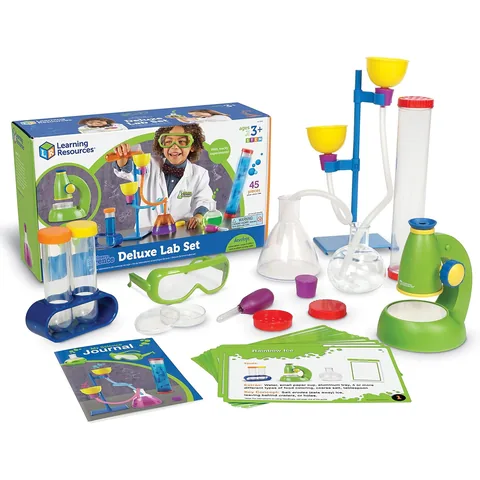
Learning Resources Primary Science Deluxe Lab Set
Test tubes, funnels, droppers, safety glasses and 20 activity cards. Everything can be washed and used again.
Ages 3+ · 20 activity cards · Mid-range
Check on AmazonBest science kit for a 4 year old
Four is when simple cause and effect starts to land: mix two things, watch them react. This set keeps going for 50 experiments, and an adult still pours and measures. The Fizzy Volcano Preschool Science Lab is the smaller option.
Best for age 4
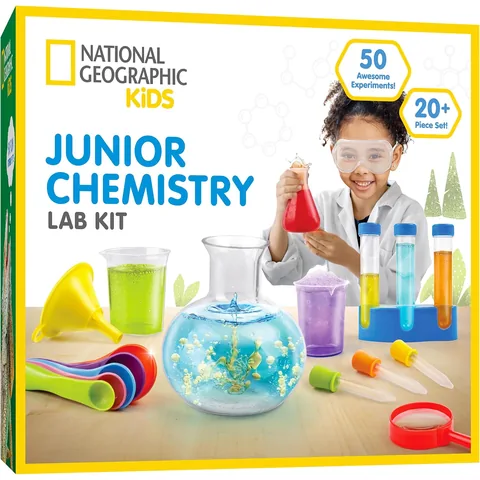
National Geographic Junior Chemistry Set with 50 Experiments
Fifty experiments with kid-sized lab tools, using kitchen staples such as baking soda and vinegar for most of the reactions.
Ages 4+ · 50 experiments · Mid-range
Check on AmazonBest science kit for a 5 year old
Five-year-olds can follow a picture diagram, which is all Snap Circuits asks. Pieces snap together and a light or fan works within minutes. It is also dry, so it stays out on a table.
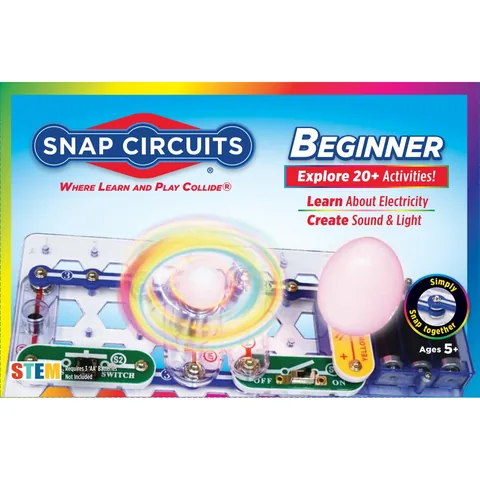
Best for age 5
Snap Circuits Beginner SCB-20 Electronics Kit
Parts snap together with no wires or soldering, and the projects can be rebuilt as often as they like.
Ages 5+ · 20+ projects · Budget
Check on AmazonBest science kit for a 6 year old
Six-year-olds want variety. A hundred short experiments across several sciences show you what sticks before you spend more on one subject. Plan to help: the maker expects an adult at the table.
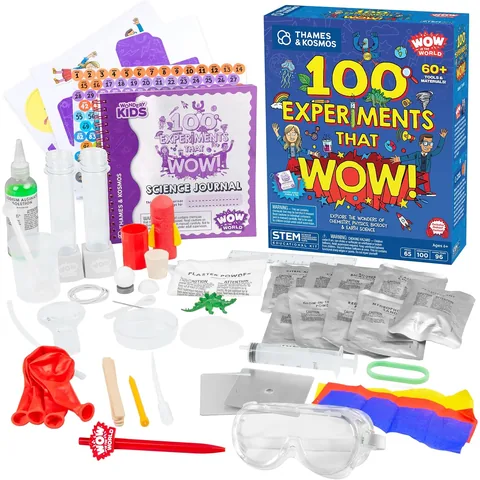
Best for age 6
Wow in the World: 100 Experiments That WOW!
A hundred quick experiments across chemistry, physics, biology and earth science, so a kit-hopping kid keeps finding something new.
Ages 6+ · 100 experiments · Mid-range
Check on AmazonBest science kit for a 7 year old
At seven, many kids want the mess to mean something. Ooze Labs gives slime and color changes a little real chemistry. For a kid who prefers to build, the KiwiCo Astronaut Starter Kit is a better match.
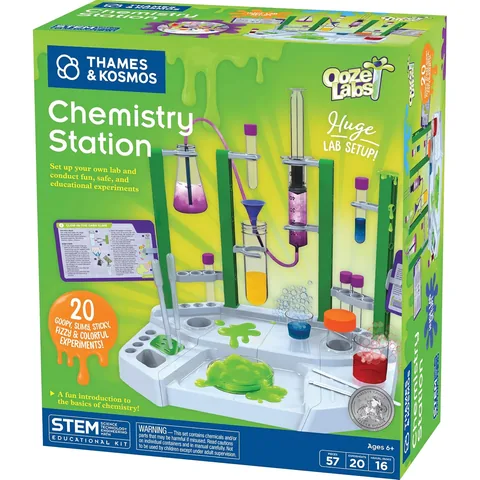
Best for age 7
Ooze Labs: Chemistry Station
Twenty experiments on slime, goo and color changes. It needs an adult at the table and a well-stocked kitchen.
Ages 6+ · 20 experiments · Mid-range
Check on AmazonBest science kit for an 8 year old
Eight is where the selection jumps, because most serious kits start at this rating. This is the pick for long-term use: the parts never run out and the projects get harder as your kid does. For biology, the Kids First Biology Lab is a real microscope with slides to prepare.
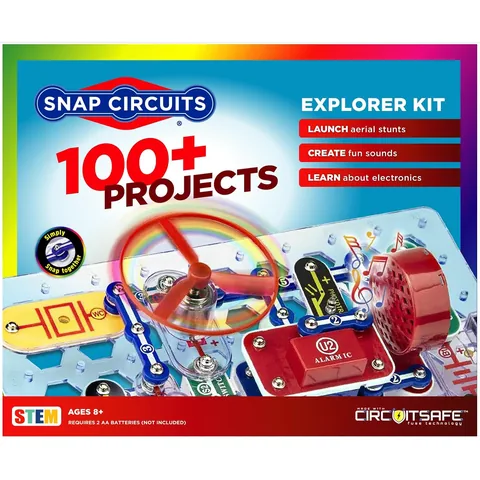
Best for age 8
Snap Circuits Jr. SC-100 Electronics Kit
More than 100 projects from one set of snap-together parts, with no soldering and nothing used up along the way.
Ages 8+ · 100+ projects · Mid-range
Check on AmazonBest science kit for a 9 year old
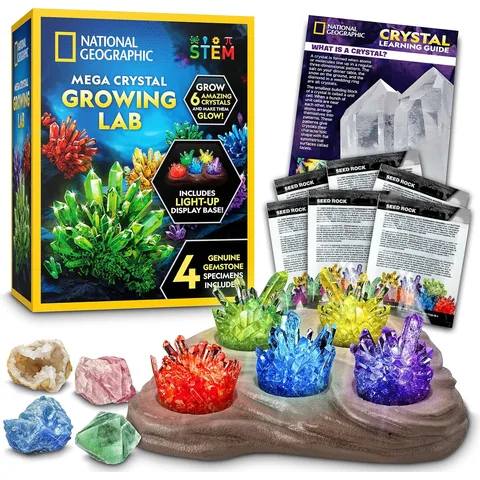
Nine-year-olds can manage a multi-day project and check on it without reminders. Crystal growing rewards that patience. For a kid who takes things apart, the Thames & Kosmos Physics Workshop is the stronger choice.
Best for age 9
National Geographic Mega Crystal Growing Kit (6 Crystals)
Six crystals grow over three to four days, and the box includes four real specimens to compare them with.
Ages 8+ · 6 crystals to grow · Mid-range
Check on AmazonBest science kit for a 10 year old
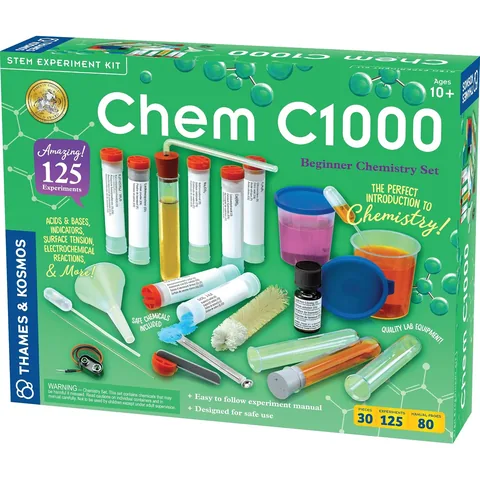
Ten is the minimum age for sets with real lab chemicals. The Chem C1000 is the step up from fizz and slime, and it still needs an adult supervising. For biology, the Genetics & DNA Lab has the same rating.
Best for age 10
Thames & Kosmos Chem C1000 (V2.1) Chemistry Set
The one set here with real lab chemicals and 125 experiments. The maker rates it 10+ and expects an adult supervising.
Ages 10+ · 125 experiments · Premium
Check on AmazonHow to choose a science kit
- Check the maker’s age rating first. It reflects both the safety warnings and the skills the kit assumes. The “ages 3+” line on most boxes is only a choking warning, so read the suggested age instead.
- Match the topic to the kid. A child who loves bugs gets more from a microscope than from the largest chemistry set.
- Count the adult time. Under about age 8, assume you will read steps and handle the liquids.
- Check what runs out. Chemistry and crystal kits are used up. Circuits, magnets and microscopes keep working, so they cost less per use over time.
- Read the “not included” list. Many kits need batteries or kitchen ingredients.
What Reddit parents say about science kits
In the “best science kit for kids” threads on Reddit, parents repeat three points.
- Younger kids need help. In an r/daddit KiwiCo thread, parents say kids under about 8 need an adult for most kits, and leftover crafts pile up.
- Open-ended kits last. One r/homeschool parent reports a 10-year-old still using a 100-piece Snap Circuits set, at times almost daily.
- Simple can beat a kit. In an r/daddit crystal thread, a commenter says plain Epsom salt works well for a 6-year-old.
Chemists on r/chemistry add one caution: kids’ chemistry sets are closer to toys, and no true intermediate set exists between them and lab supplies.
Frequently asked questions
Snap Circuits is the best all-around choice because the parts never run out: Beginner for ages 5 to 7 and Jr. SC-100 for ages 8 to 10. Under age 5, choose a reusable lab set such as the Learning Resources Primary Science Deluxe Lab.
Age 3 is the usual start, with big tools and adult help. Kits with guided experiments suit ages 5 to 7. Kits with real lab chemicals start at age 10.
They are safe when used at the rated age with the supervision the maker specifies. Sets with real chemicals carry a 10+ rating and require an adult. Younger chemistry kits rely on kitchen ingredients such as baking soda and vinegar. Keep eye protection on for any set that includes it.
A science kit runs experiments in subjects such as chemistry, biology or geology. A STEM kit is the wider category and also covers engineering, electronics and coding kits. Snap Circuits fits both.
Thames & Kosmos is one of the strongest brands for ages 8 and up, with detailed manuals and kits by subject. Check the rating on each box, since the range runs from Kids First sets at age 5 to Chem sets at 10+.
A one-time kit suits a single gift or a clear interest. A subscription such as KiwiCo or CrunchLabs brings something new every month, but parents on Reddit report uneven quality and finished builds that pile up.
Choose short activities and reusable parts. Binoculars, magnets and snap-together circuits work in ten minutes and need no setup or cleanup, so they get used again.