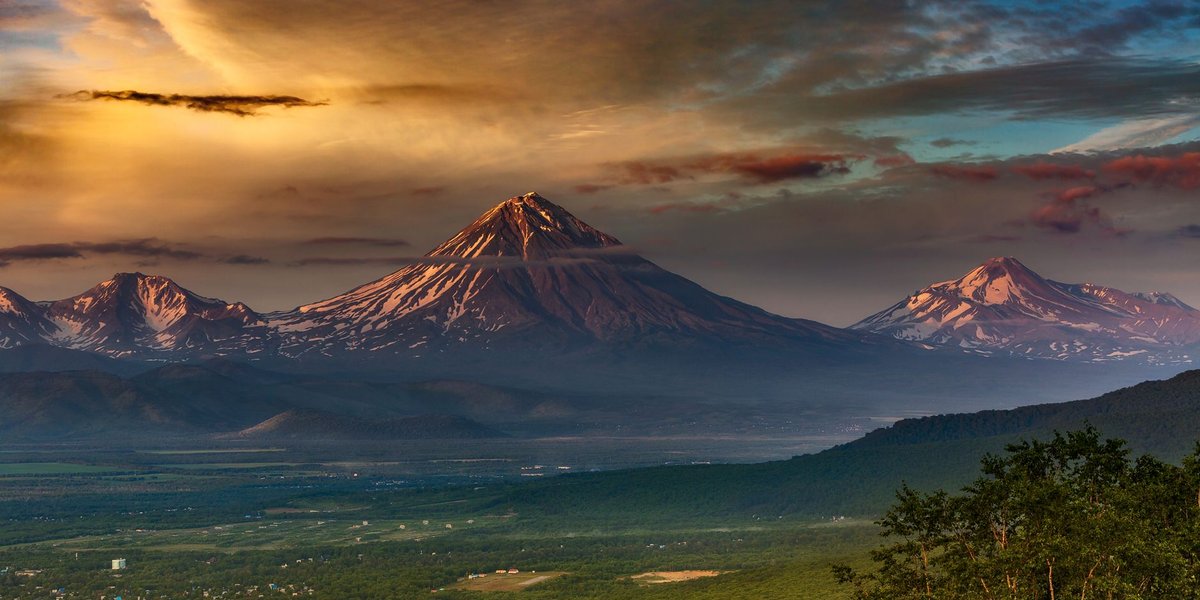
A volcanic mountain is a landform built by erupted material. Lava, ash, and rock fragments pile up around a vent in the crust, layer on layer, until the pile becomes a peak. The mountain isn’t pushed up from below the way most ranges are. It’s stacked from the top down.
That one distinction explains most of what’s interesting about them: why they’re often perfectly symmetrical, why they sit in tidy lines on the map, and why they can appear in a farmer’s field and reach hundreds of meters in a year.
Table of Contents
- How Volcanic Mountains Form
- The Three Main Types of Volcanic Mountains
- Volcanic Mountains vs Fold Mountains
- Famous Volcanic Mountains by Region
- Active, Dormant, and Extinct
- FAQ
- Summary
How Volcanic Mountains Form
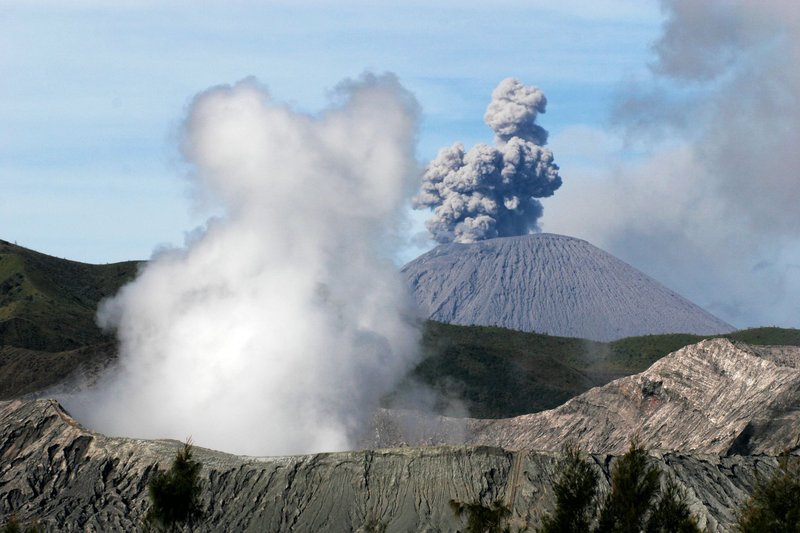
Every volcanic mountain starts with magma, and magma doesn’t come from a giant underground ocean of molten rock. Earth’s mantle is solid. Rock only melts where something changes the pressure or the chemistry. There are three common triggers.
Subduction. When an oceanic plate sinks beneath another plate, it carries water-rich minerals down with it. At depth the water escapes into the hot mantle above and lowers its melting point, so the rock melts without getting any hotter. The magma rises and feeds a chain of volcanoes parallel to the trench. This is the engine behind the Andes, the Cascades, Japan, and most of the Pacific rim.
Rifting. Where plates pull apart, the mantle rises to fill the gap and the pressure on it drops. Lower pressure means melting. This builds the volcanoes along the mid-ocean ridges (Iceland is a ridge poking above the waves) and those in continental rifts like East Africa.
Hotspots. Some magma sources sit under the middle of a plate, not at its edge. The Hawaiian chain is the classic case: a plume of hot mantle stays put while the Pacific plate drifts over it, leaving a trail of islands that get older and more eroded the farther they are from the active end.
Once magma reaches the surface, the mountain grows by repetition. Each eruption adds a coat of lava or ash, and the next eruption builds on top. Shape depends on what comes out. Runny lava spreads far and builds a broad, low dome. Thick, sticky lava and explosive ash build steep cones.
The Three Main Types of Volcanic Mountains
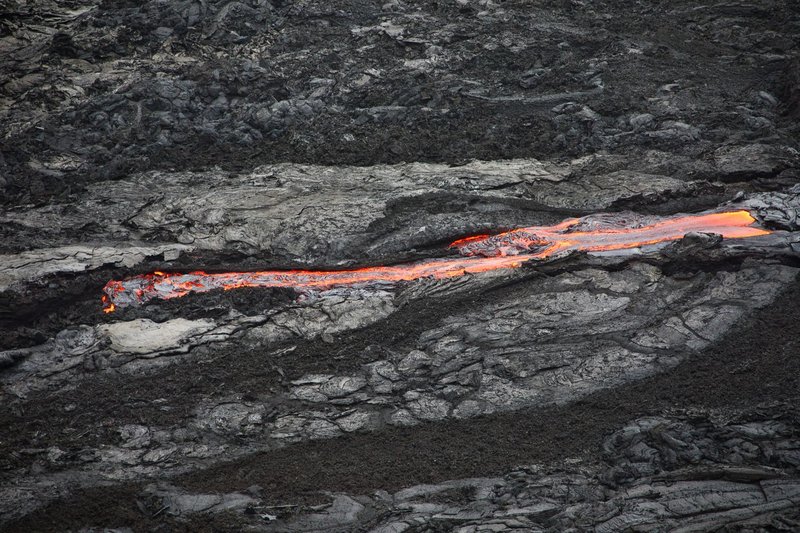
Geologists sort volcanic mountains into three main types. The sorting comes down to lava chemistry and eruption style.
| Type | Shape | Typical slope | Eruption style | Example |
|---|---|---|---|---|
| Shield volcano | Wide, gently domed | About 2-10 degrees | Frequent, mostly effusive; runny lava flows | Mauna Loa, Hawaii |
| Stratovolcano (composite) | Tall, steep, symmetrical cone | About 30-35 degrees | Alternating lava and explosive ash eruptions | Mount Fuji, Japan |
| Cinder cone | Small, steep, bowl-topped cone | About 30-40 degrees | Short-lived bursts of gas-rich lava fragments | Parícutin, Mexico |
Shield volcanoes
Shield volcanoes are named for their profile: a warrior’s shield laid on the ground. Their lava is low in silica, so it flows easily and travels for kilometers before it stiffens. Eruptions tend to be more of a river than a bomb.
Scale is what sets them apart. Mauna Loa rises about 4,170 meters above sea level, and the seafloor it sits on has sagged under its weight, so the volcano’s real mass is much larger than what you see. Its neighbor Mauna Kea measures more than 10,000 meters from seafloor to summit, which is taller than Everest if you count from the base.
Stratovolcanoes
Stratovolcanoes are what most people picture when they hear “volcano.” The lava is thicker and richer in silica, so it moves slowly and traps gas. Pressure builds, and eruptions can be violent. The cone is made of alternating layers of lava flow and fragmented ash, which is where “strato” (layered) comes from.
These are the dangerous ones. Mount St. Helens blew off its north face in 1980. Vesuvius buried Pompeii in 79 CE. They tend to form above subduction zones, which is why they cluster around the Pacific. For a broader look at the hazards behind events like these, see examples of natural disasters and the events behind them.
Cinder cones
Cinder cones are the small ones, usually under 300 meters. Gas-charged lava shoots out of a single vent, breaks into fragments that cool in the air, and falls back as cinders around the opening. The result is a steep, symmetrical heap with a crater on top.
They grow fast. Parícutin appeared in a Mexican cornfield in February 1943 and was about 336 meters tall within a year. Activity ended in 1952, with the cone near 424 meters. Cinder cones rarely erupt more than once, so they stay small.
Volcanic Mountains vs Fold Mountains
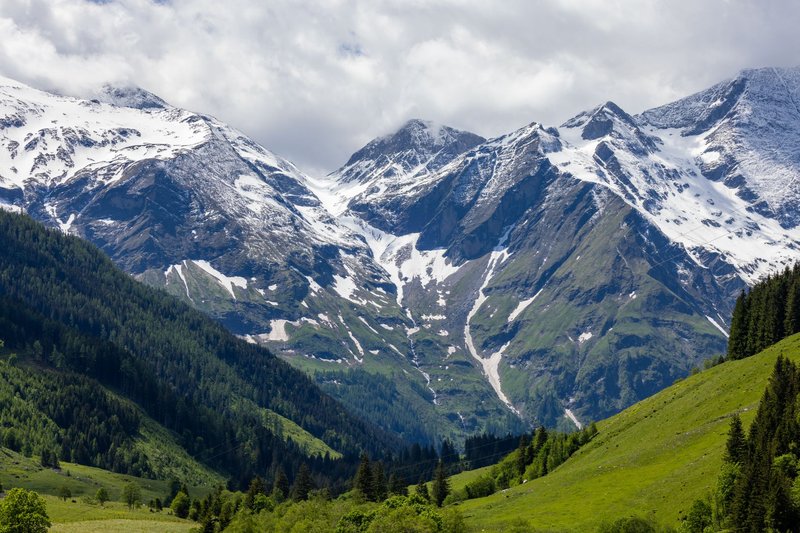
Not every mountain is volcanic. The other big category is fold mountains, and the contrast comes down to which force built them.
Fold mountains form when two plates collide and the crust between them has nowhere to go but up. Layers of rock crumple like a rug pushed across a floor. The Himalayas are the textbook case. India has been driving into Eurasia for roughly 50 million years, and the result includes Everest at 8,849 meters. Neither plate is dense enough to sink, so there’s no subduction, no steady supply of magma, and no active volcanoes in the Himalayas.
Volcanic mountains work the opposite way. Material comes up and builds the peak instead of the crust buckling. The Andes complicate the picture in a useful way. The range is mostly the product of an oceanic plate sliding under South America, and that process both squeezes and thickens the crust (fold-and-thrust uplift) and generates magma (volcanoes). So the Andes are a fold-and-volcanic hybrid.
Even within the Andes, volcanoes aren’t continuous. Where the sinking slab flattens out, as under parts of Peru and central Chile and Argentina, the magma supply is cut off and the range goes largely without active volcanoes. A Discover Magazine piece covers this question in more detail.
| Volcanic mountains | Fold mountains | |
|---|---|---|
| Built by | Accumulated lava, ash, and rock | Compressed, folded, and thrust crust |
| Plate setting | Subduction, rifts, hotspots | Continental collision |
| Typical shape | Isolated cones or domes, or lines of them | Long, continuous ranges |
| Main rocks | Igneous (basalt, andesite) | Sedimentary and metamorphic, deformed |
| Example | Fuji, Mauna Loa | Himalayas, Alps |
One more point of confusion is worth clearing up. A single volcanic peak (Fuji) and a mountain range that contains volcanoes (the Andes) aren’t the same thing. A range counts as volcanic only for the peaks that were actually built by eruptions.
Famous Volcanic Mountains by Region
- Japan: Mount Fuji. A 3,776-meter stratovolcano and the country’s highest peak. It last erupted in 1707, and Japan’s Meteorological Agency still classes it as active.
- North America: Mount Rainier. At 4,392 meters, it’s the highest peak in the Cascades. Its glaciers are the problem: an eruption could melt ice into lahars (volcanic mudflows) that run down valleys toward populated areas. See the USGS profile of Mount Rainier for its hazards.
- Africa: Kilimanjaro. Africa’s highest point at 5,895 meters, built from three volcanic cones: Shira, Mawenzi, and Kibo. Kibo, the summit cone, is dormant and still emits gas.
- Hawaii: Mauna Loa. The largest active volcano on Earth by volume. It erupted in late 2022 for the first time since 1984.
- Europe: Etna. Sicily’s volcano is one of the most active in the world, with eruptions so frequent that its height changes. Records of its activity go back more than 2,500 years.
- Mars: Olympus Mons. A shield volcano roughly 22 kilometers high and about 600 kilometers across, nearly two and a half times the height of Everest above sea level. Mars has no plate tectonics, so a volcano can sit over the same hotspot for a very long time, which is part of why it got so large.
Most of these sit on or near the Ring of Fire, the roughly 40,000-kilometer horseshoe of subduction zones around the Pacific. It holds around three-quarters of the world’s active volcanoes. Fuji, Rainier, and the Andean peaks are all on it. Hawaii, Kilimanjaro, and Etna are not, which shows that subduction isn’t the only way to build a volcano.
Active, Dormant, and Extinct
Volcanoes are usually sorted into three groups by how recently they’ve erupted.
- Active: erupted within the last roughly 10,000 years, or showing signs of unrest such as gas release and earthquakes. Mauna Loa and Etna are active. Yellowstone, in Wyoming, is an active volcanic system even though no volcano there is erupting.
- Dormant: not erupting now but expected to again. Fuji and Rainier fit here. Dormant doesn’t mean safe.
- Extinct: the magma supply is gone and no eruption is expected. Some of the older Hawaiian islands, carried away from the hotspot, are in this category.
The lines are fuzzy. Volcanoes can sleep for thousands of years and then wake, and a volcano that’s labeled extinct is really “no known eruption and no known source.” The National Park Service has a good overview of volcanic landforms if you want to see the types side by side.
FAQ
What is a volcanic mountain? A mountain formed by the accumulation of erupted lava, ash, and rock around a vent.
How are volcanic mountains formed? Magma forms through subduction, rifting, or hotspots, rises to the surface, and erupts repeatedly. Each eruption adds material to the cone or dome.
What are the types of volcanic mountains? Shield volcanoes, stratovolcanoes (composite volcanoes), and cinder cones. Some classifications add lava domes and calderas.
Is Mount Everest a volcano? No. Everest is a fold mountain, formed by the India-Eurasia collision.
What is the tallest volcanic mountain on Earth? It depends on how you measure. Ojos del Salado in the Andes is the highest above sea level at about 6,893 meters. Mauna Kea is the tallest measured from the seafloor.
Summary
Volcanic mountains are built from the top by erupted material, not pushed up by colliding plates. Magma comes from subduction, rifting, or hotspots, and the lava’s thickness decides the result: shield volcanoes from runny lava, stratovolcanoes from sticky lava and ash, cinder cones from short bursts of cinders. Fold mountains like the Himalayas come from collision and have no volcanoes. The Andes are a mix. Active, dormant, and extinct labels describe how recently a volcanic mountain has erupted, and none of them guarantees what it will do next.