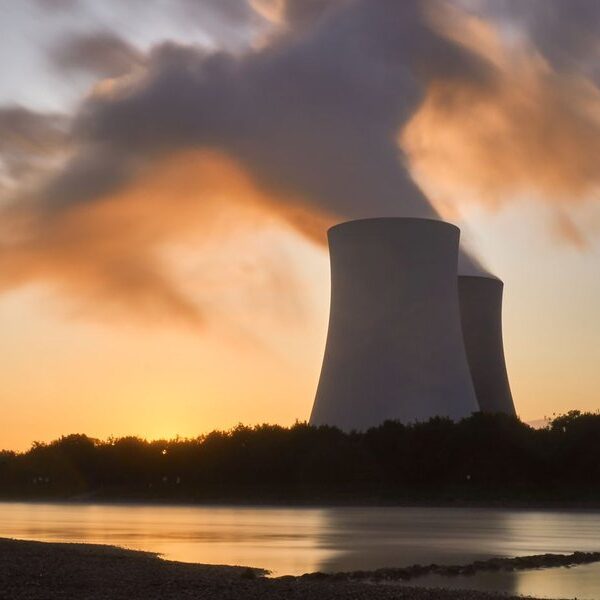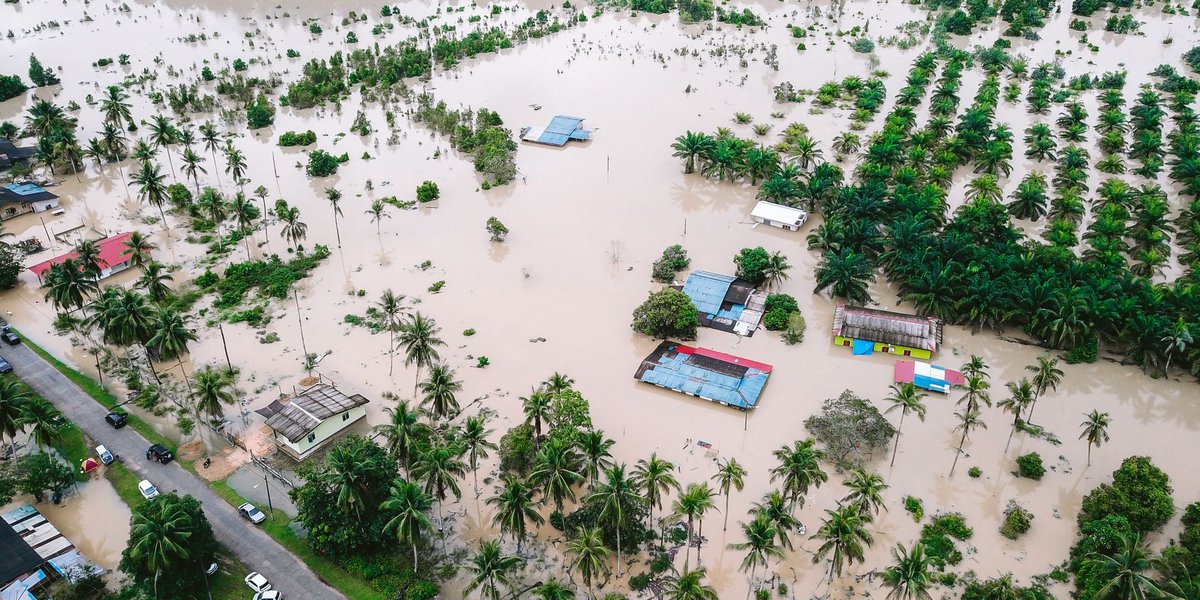
A natural disaster is a natural hazard, such as an earthquake or a storm, that hits people and property hard enough to overwhelm a community’s ability to cope. The list below covers the main types, grouped by what causes them, and pairs each one with a real event you can look up.
- The quick list
- Hazard or disaster? The difference
- Geological disasters
- Hydrological disasters
- Meteorological disasters
- Climatological disasters
- Biological and less obvious disasters
- FAQ
The quick list
| Disaster | Origin | Real example |
|---|---|---|
| Earthquake | Geological | Haiti, January 2010 |
| Tsunami | Geological | Indian Ocean, December 2004 |
| Volcanic eruption | Geological | Mount Tambora, April 1815 |
| Landslide | Geological | Yungay, Peru, May 1970 |
| Flood | Hydrological | Pakistan, summer 2010 |
| Hurricane / tropical cyclone | Meteorological | Hurricane Katrina, August 2005 |
| Tornado | Meteorological | Tri-State Tornado, March 1925 |
| Drought | Climatological | Dust Bowl, 1930s |
| Wildfire | Climatological | Australia’s Black Summer, 2019 to 2020 |
| Heat wave | Meteorological | Europe, summer 2003 |
| Avalanche | Geological / snow | Wellington, Washington, March 1910 |
| Epidemic | Biological | 1918 influenza pandemic |
| Space weather | Extraterrestrial | Carrington Event, September 1859 |
Hazard or disaster? The difference
The same physical event can be a non-event or a catastrophe, depending on where it lands. A hazard is the process itself: ground shaking, a rising river, a hot wind. A disaster is what happens when that process meets people who are exposed and unprepared. The UN’s disaster-risk agency defines a disaster as a serious disruption of a community that causes losses beyond what it can handle on its own.
The cleanest proof is a pair of earthquakes from 2010. Chile’s magnitude 8.8 quake in February was about 500 times more energetic than Haiti’s magnitude 7.0 quake the month before. Chile lost roughly 520 people. Haiti lost well over 100,000. Strict building codes, solid soil and a prepared population made the difference, not the size of the earthquake.
So when you read the examples below, watch for the second half of the story. Every one of them is a hazard plus a vulnerable place.
Geological disasters
These start inside or beneath the Earth’s crust. Plate tectonics drives most of them, which is why they cluster along fault lines and the Pacific “Ring of Fire.”
Earthquakes
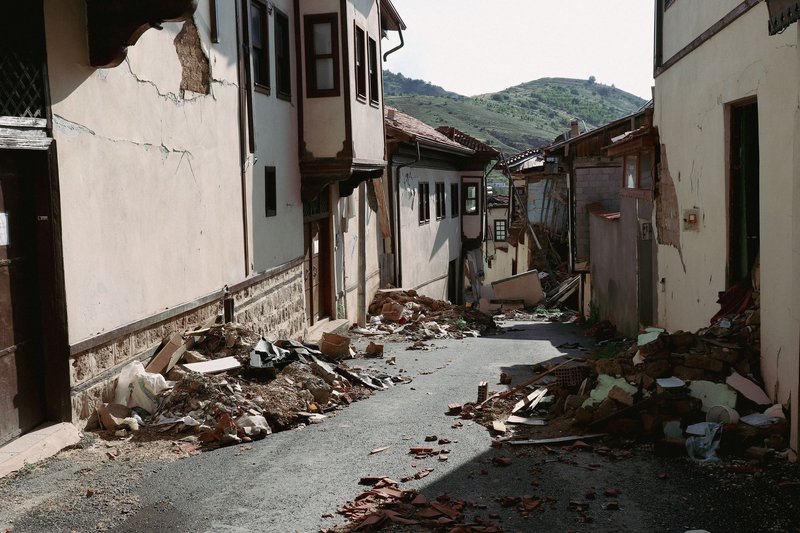
An earthquake is sudden ground shaking caused by rock slipping along a fault, releasing stress that has built up for decades or centuries. They happen mostly at plate boundaries: Japan, Chile, Turkey, California, Nepal.
Example: Haiti, January 12, 2010. A magnitude 7.0 quake struck about 25 km west of Port-au-Prince at a shallow depth. Haiti sits on a fault system that hadn’t ruptured in roughly 250 years, and most buildings in the capital weren’t designed for shaking. Death toll estimates run from about 100,000 to over 300,000, depending on the source, and more than a million people lost their homes.
Tsunamis
A tsunami is a series of long ocean waves, usually triggered when an undersea earthquake lifts or drops a large patch of seafloor. Out in deep water the wave is barely noticeable. Near the coast it slows, bunches up and grows. The trough often arrives first, which is why the sea appears to retreat before the flood.
Example: Indian Ocean, December 26, 2004. A magnitude 9.1 earthquake off Sumatra sent waves across the Indian Ocean in hours. Around 230,000 people died in 14 countries, with Aceh in Indonesia hit hardest. The event is the reason the region now has a tsunami warning system, and NOAA’s global tsunami database records thousands of events like it going back to antiquity.
Volcanic eruptions
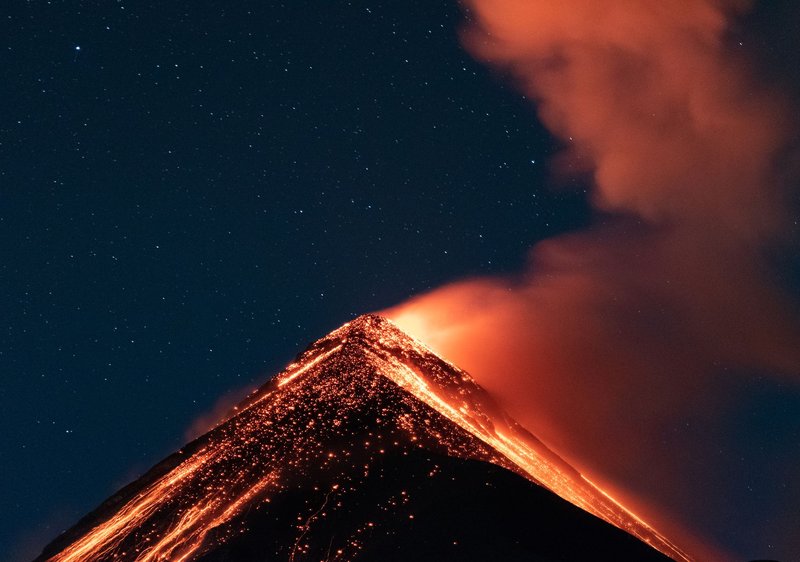
A volcanic eruption happens when magma, gas and ash break through the crust. The deadly parts are rarely the lava. Ash falls collapse roofs, pyroclastic flows move faster than a car, and fine ash and sulfur gas in the atmosphere can change the weather. To understand how magma builds up before it reaches the surface, the best volcanology books for beginners, students and kids are a good place to start.
Example: Mount Tambora, Indonesia, April 1815. It is the largest eruption in recorded history. The blast and its aftermath killed an estimated 70,000 people, most of them from starvation after crops were buried. The sulfur it injected into the stratosphere cooled the planet enough that 1816 became known as the “Year Without a Summer,” with failed harvests across Europe and North America.
Landslides
A landslide is a mass of rock, soil or debris sliding down a slope. Heavy rain, earthquakes, volcanic activity and human activity like deforestation or road cutting can all set one off.
Example: Yungay, Peru, May 31, 1970. A magnitude 7.9 earthquake off the Peruvian coast shook loose a huge slab of ice and rock from Huascarán, the country’s tallest peak. The debris ran down the valley and buried the town of Yungay, killing roughly 20,000 people. Only a few hundred survivors made it to high ground, including a group of children at the town’s stadium.
Hydrological disasters
These involve water moving where it shouldn’t.
Floods
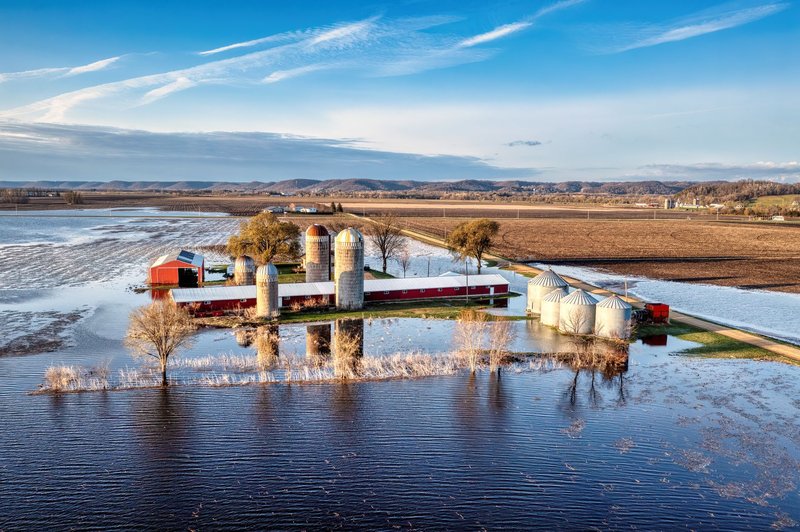
A flood is water covering land that’s normally dry. The causes include river overflow after prolonged rain, sudden flash floods in narrow valleys, coastal surges, and dam or levee failures. Floods are the most common type of weather-related disaster worldwide, because so many people live on floodplains. The soil is fertile and the land is flat, which is exactly why rivers keep reclaiming it.
Example: Pakistan, summer 2010. Monsoon rains were far above normal, and the Indus River basin overflowed from late July. About one-fifth of the country’s land area was underwater. Around 20 million people were affected and roughly 1,700 died, a toll kept low by evacuations but not by the destruction of homes, crops and roads. The deadliest flood on record is China’s 1931 Yangtze and Huai River flooding, with estimates in the millions.
Meteorological disasters
These come from the atmosphere: wind, pressure and moisture.
Hurricanes and tropical cyclones
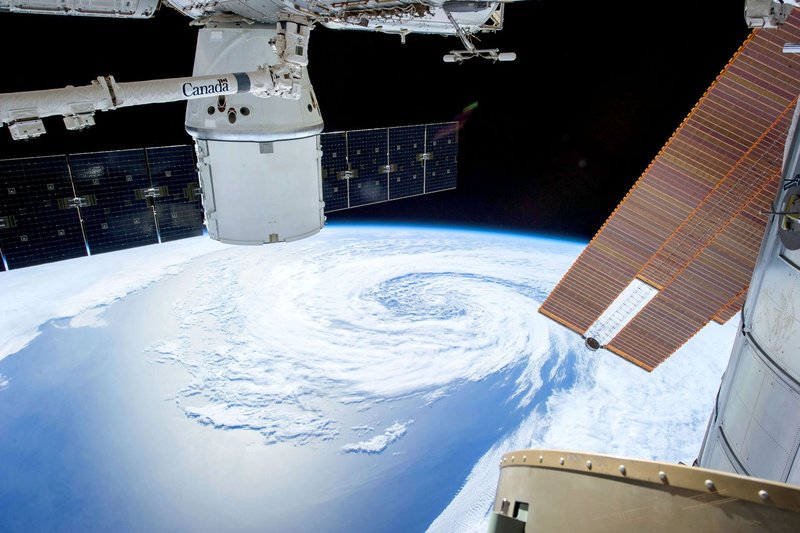
Hurricanes, typhoons and cyclones are the same thing under different names depending on the ocean. They are rotating storms that form over warm water, with winds of at least 119 km/h (74 mph). Most of the deaths come from storm surge, the wall of seawater pushed ashore, rather than the wind.
Example: Hurricane Katrina, August 29, 2005. Katrina made landfall in Louisiana as a Category 3 storm after peaking at Category 5 over the Gulf. Storm surge exceeded 25 feet in parts of Mississippi, and levee failures flooded most of New Orleans. The National Hurricane Center’s official report counts about 1,800 deaths, making it one of the deadliest U.S. hurricanes in a century.
For raw scale, the worst tropical cyclone on record is the Bhola Cyclone, which hit what is now Bangladesh in November 1970. Estimates put the death toll between 300,000 and 500,000, almost all from the surge.
Tornadoes
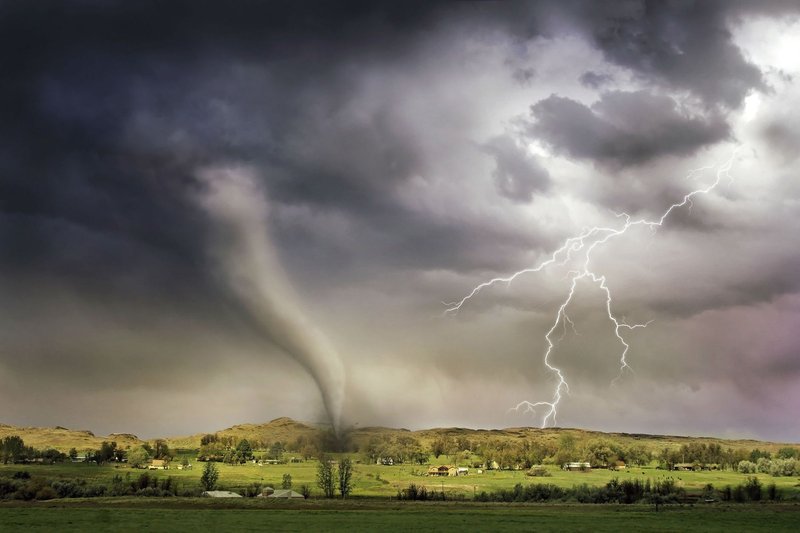
A tornado is a violently rotating column of air that touches the ground, usually spawned by a supercell thunderstorm. The U.S. gets more than any other country, especially across the central plains. They’re small compared to hurricanes, often only a few hundred meters wide, but their winds can top 480 km/h (300 mph) in the strongest cases.
Example: The Tri-State Tornado, March 18, 1925. One storm tracked across Missouri, Illinois and Indiana for about 219 miles in three and a half hours. It killed 695 people, the deadliest single tornado in U.S. history. It also moved so fast, around 60 mph, that many people had little time to react, and the funnel was hidden inside rain and dust.
Climatological disasters
These build slowly, over weeks, months or years, as temperature and rainfall patterns drift outside the norm.
Droughts
A drought is a long stretch of below-normal precipitation that leaves a region short of water for crops, livestock and people. There’s no fast moment to point to. A drought is declared in hindsight, which makes it easy to underestimate.
Example: The Dust Bowl, 1930s. A multi-year drought hit the U.S. Great Plains right after farmers had plowed up the native prairie grass that held the soil in place. Winds lifted the exposed topsoil into huge dust storms, including “Black Sunday” on April 14, 1935. Millions of people left the region, and the exodus reshaped American migration for a generation.
Wildfires
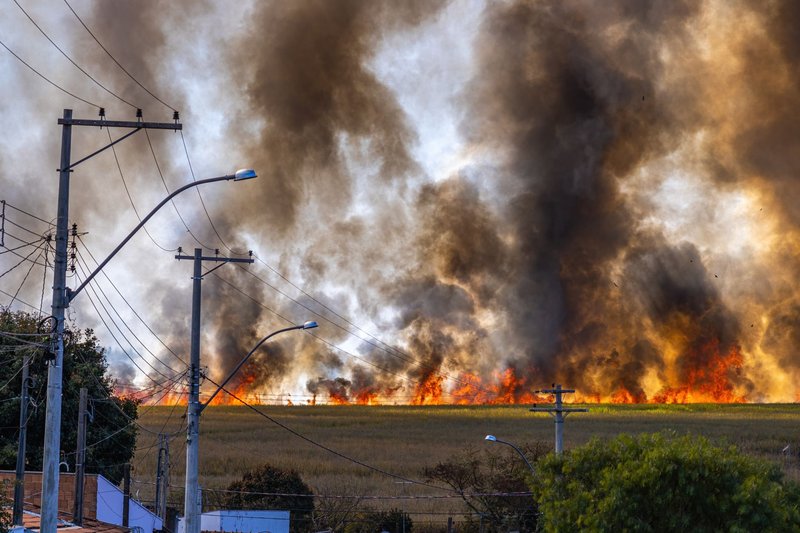
A wildfire is an uncontrolled fire in vegetation. They need fuel, dry conditions and an ignition source, which can be lightning or a human spark. Fire is a natural part of many ecosystems, but longer dry seasons and heavy fuel loads make the worst ones harder to stop.
Example: Australia’s Black Summer, 2019 to 2020. Fires burned across roughly 18 million hectares, an area larger than the state of Washington and Oregon combined. Thirty-three people died directly in the fires, thousands of homes were destroyed, and smoke blanketed Sydney and Canberra for weeks.
Biological and less obvious disasters
Some of the most deadly examples don’t look like disasters in photographs. This is where definitions get blurry, and where textbook lists often stay silent.
Epidemics and pandemics
An epidemic is the fast spread of a disease through a population. A pandemic is the same thing across multiple continents. Many agencies classify outbreaks as biological hazards, and when health systems are overwhelmed, they meet the definition of a disaster.
Example: The 1918 influenza pandemic. According to the CDC, roughly a third of the world’s population got infected with the H1N1 virus, and at least 50 million people died. It was spread partly by troop movements at the end of World War I, and it killed many healthy young adults.
Heat waves
A heat wave is an extended period of abnormally hot weather, often with high humidity. It’s called the silent disaster because it leaves no rubble. The victims are mostly elderly or isolated people dying indoors.
Example: Europe, summer 2003. Temperatures in France peaked above 40°C in August, and hospitals and morgues overflowed. Researchers estimate about 70,000 excess deaths across Europe, the majority in France, Italy, Spain and Germany.
Avalanches
An avalanche is a mass of snow sliding down a mountainside, often triggered by new snowfall, wind loading or a person’s weight. Most fatal ones today involve skiers and snowmobilers who set off the slide themselves.
Example: Wellington, Washington, March 1, 1910. Two trains were stuck in a snowstorm near the Cascade Mountains. A slab of snow broke loose above them and swept both off the tracks and into a canyon, killing 96 people. It remains the deadliest avalanche in U.S. history.
Space weather
Space weather is the effect of solar storms on Earth: charged particles and magnetic fields that disturb satellites, radio and power grids. NOAA’s Space Weather Prediction Center tracks these events and issues alerts the way a forecaster would for a storm.
Example: The Carrington Event, September 1859. The strongest geomagnetic storm on record lit up auroras as far south as the Caribbean and sent so much current through telegraph lines that operators got shocks and some paper caught fire. A smaller storm on March 13, 1989 collapsed Quebec’s power grid in about 90 seconds and left six million people without electricity for roughly nine hours. A storm the size of Carrington’s today would hit a far more wired world.
Meteor impacts
Rare, but real. On February 15, 2013, a roughly 20-meter asteroid exploded above Chelyabinsk, Russia. No one was killed, but the shock wave broke windows across the city and injured about 1,500 people, mostly from flying glass.
FAQ
What are five examples of natural disasters? Earthquakes, floods, hurricanes, wildfires and volcanic eruptions are the five most commonly listed. Tornadoes, tsunamis and droughts round out the usual top eight.
What’s the deadliest natural disaster in history? The 1556 Shaanxi earthquake in China is usually cited, with an estimated 830,000 deaths. Counts for the 1931 China floods and the 1970 Bhola Cyclone are also in the hundreds of thousands or more, though older figures are rough.
Is a pandemic a natural disaster? It depends on who’s counting. Many disaster databases, including the one used by international relief agencies, classify epidemics as biological disasters. Others reserve the term for physical events. Either way, the 1918 flu killed more people than any earthquake or storm on this list.
How are natural disasters grouped? Most scientists sort them by origin: geological (earthquakes, volcanoes, tsunamis, landslides), hydrological (floods), meteorological (storms, tornadoes, heat waves), climatological (drought, wildfire) and biological (epidemics).