Type “Nigerian scientists” into a search bar and you get two kinds of pages: bare Wikipedia indexes that list a name and a job title with nothing else, or listicles that recycle the same seven or eight men every time. Neither answers the actual question, which is usually more specific than it looks: scientists who were born in Nigeria, not scientists of Nigerian descent who happened to grow up somewhere else.
That distinction matters more than it seems. A lot of “famous Nigerian scientist” round-ups quietly include people raised in London or Houston whose only Nigerian credential is a parent’s passport. The twelve people below were born on Nigerian soil, in a specific town or city named below their entry, before any of them left for a lab, a university, or a hospital elsewhere.
Table of Contents
- Deborah Ajakaiye
- Grace Alele-Williams
- Ekanem Ikpi Braide
- Philip Emeagwali
- Francis Akanu Ibiam
- Chike Obi
- Theophilus Oladipo Ogunlesi
- Francisca Nneka Okeke
- Adegoke Olubummo
- Bennet Omalu
- Oyewale Tomori
- Charles Wambebe
TLDR
Twelve scientists, all born inside Nigeria, spanning physics, mathematics, medicine, computing, and virology:
Deborah Ajakaiye (physics), Grace Alele-Williams (mathematics), Ekanem Ikpi Braide (parasitology), Philip Emeagwali (computer science), Francis Akanu Ibiam (medicine), Chike Obi (mathematics), Theophilus Oladipo Ogunlesi (medicine), Francisca Nneka Okeke (physics), Adegoke Olubummo (mathematics), Bennet Omalu (forensic pathology), Oyewale Tomori (virology), and Charles Wambebe (pharmacology).
Four of the twelve are women — a ratio most “Nigerian scientists” lists don’t even attempt.
Deborah Ajakaiye

Born in 1940 in Jos, Plateau State, Ajakaiye studied physics at the University of Ibadan before earning her PhD in geophysics from Ahmadu Bello University in 1970. In 1980 she became the first woman in Africa to hold a full professorship in physics — not just in Nigeria, on the continent.
Her research wasn’t theoretical. She compiled a Bouguer gravity map covering roughly 40 percent of Nigeria’s landmass, work that mining and groundwater surveys in the country still reference. She was also the first Black African elected a fellow of the Geological Society of London, a body that had existed since 1807 without one.
Grace Alele-Williams

Alele-Williams was born on December 16, 1932, in Warri, in what was then Nigeria’s Western Region. She graduated from University College Ibadan with an honors degree in mathematics in 1954, then went to the University of Chicago, where in 1963 she became the first Nigerian woman to earn a doctorate of any kind — hers was in mathematics education.
She later became Vice-Chancellor of the University of Benin, the first Nigerian woman to run a Nigerian university. She held that post through the 1980s, a decade in which Nigerian universities weren’t exactly stable ground to lead from.
Ekanem Ikpi Braide
An indigene of Cross River State, born March 6, 1946, Braide trained as a zoologist at the University of Ife before completing a PhD in epidemiology at Cornell in 1978. Her specialty was parasitology, specifically the blackflies that transmit onchocerciasis, better known as river blindness.
She sat on the national committee that helped eliminate Guinea worm disease in Nigeria, one of the rare disease-eradication campaigns to actually finish what it started. Braide went on to serve as Vice-Chancellor of Cross River University of Technology and, later, Federal University Lafia, before becoming the first woman elected president of the Nigerian Academy of Science.
Philip Emeagwali
Emeagwali was born August 23, 1954, in Akure, in present-day Ondo State. His schooling stopped in 1967 when the Nigerian Civil War reached his region — he served in the Biafran army at thirteen — and he rebuilt his education afterward largely through self-study before winning a scholarship to Oregon State University.
The verified achievement, and it’s a real one, is the 1989 Gordon Bell Prize, awarded by the Association for Computing Machinery. Emeagwali programmed 65,536 processors on a Connection Machine to run in parallel, hitting 3.1 billion calculations per second to simulate oil flowing through porous rock — a petroleum-reservoir modeling problem that had resisted that kind of speed before. He’s also made broader claims about inventing the internet and building the world’s fastest computer that the scientific community disputes; the Gordon Bell Prize itself needs no inflating.
Francis Akanu Ibiam
Born November 29, 1906, in Unwana, a town in what’s now Ebonyi State, Ibiam became the first African medical graduate of the University of St Andrews in 1934. He turned down a comfortable government post to work as a medical missionary instead, founding Abiriba hospital in 1936 and running mission hospitals at Itu and Uburu for the next decade.
He later became president of the Christian Council of Nigeria and, after independence, governor of Nigeria’s Eastern Region — an unusual second act for a physician, and proof that the line between medicine and public life in mid-century Nigeria was thinner than it looks today.
Chike Obi
Obi was born April 17, 1921, in Zaria, in Nigeria’s north. He studied as an external student of the University of London, then won a research place at Pembroke College, Cambridge, before completing his doctorate at MIT in 1950 — becoming, by most accounts, the first sub-Saharan African to hold a PhD in mathematics.
His research focused on nonlinear ordinary differential equations, dense enough territory that most popular science coverage skips it entirely in favor of his politics. He taught at the University of Ibadan and later the University of Lagos, and remained a working mathematician alongside a parallel career as a writer and politician.
Theophilus Oladipo Ogunlesi
Born July 12, 1923, in Sagamu, Ogun State, Ogunlesi trained at Yaba Higher College before completing postgraduate medical study in London and at the University of Minnesota. He joined the University of Ibadan’s Department of Medicine in 1961 and became a full professor there in 1965 — Nigeria’s first professor of medicine, a title that sounds procedural until you remember someone has to be first.
He led the department from 1969 to 1972 and kept an emeritus appointment until his death in January 2023, at 99. Six decades between his first academic post and his last public tribute is not a small stretch to hold a field’s founding role.
Francisca Nneka Okeke

Okeke was born October 14, 1956, in Onitsha, Anambra State. She built her career at the University of Nigeria, Nsukka, where she became the physics department’s first female head, studying the equatorial electrojet — the band of electric current that flows through the upper atmosphere near the magnetic equator and links solar activity to changes in Earth’s climate system.
In 2013 she won the L’Oréal-UNESCO For Women in Science Award for that work. Over her career she’s supervised 25 doctoral and 38 master’s students and published more than 140 papers — the kind of number that reflects decades of unglamorous data collection, not a single breakthrough paper.
Adegoke Olubummo
Born April 19, 1923, in Orin-Ekiti, in what’s now Ekiti State, Olubummo earned his BA at Fourah Bay College in Sierra Leone before completing an MA and PhD in mathematics at King’s College, University of Durham, finishing in 1955. He joined University College, Ibadan that same year and became a full professor in 1964 — Nigeria’s first professor of mathematics.
His research field was functional analysis, and beyond his own papers, he founded the Nigerian Mathematical Society and the Forum for Functional Analysis and Its Applications, institutions that outlasted him and gave later Nigerian mathematicians a professional home that hadn’t existed before.
Bennet Omalu
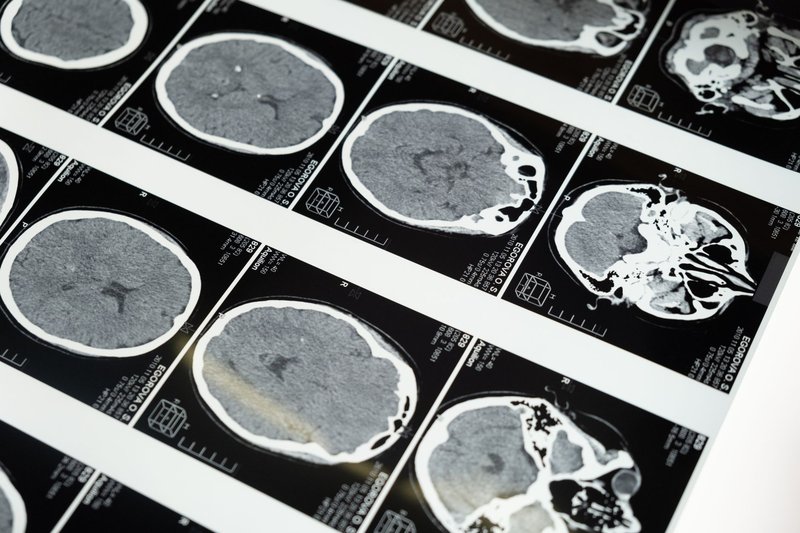
Omalu was born in September 1968 in Nnokwa, Anambra State, during the Nigerian Civil War, the sixth of seven children. He trained as a forensic pathologist, and in 2002, working in Pittsburgh, he performed the autopsy on former Steelers center Mike Webster.
Webster’s brain looked normal on the initial exam. Omalu, unsatisfied, paid for further tissue analysis himself and found the pattern of degeneration now known as chronic traumatic encephalopathy — a diagnosis the Boston University CTE Center has since documented in hundreds of former football players. The discovery cost Omalu his standing with the NFL for years before it became accepted science; the 2015 film Concussion dramatized that fight, with Will Smith playing him.
Oyewale Tomori
Tomori was born February 3, 1946, in Ilesa, Osun State. He built his career as a virologist at the University of Ibadan from 1971 to 1994, and in 1981 the U.S. Centers for Disease Control and Prevention recognized his contributions to Lassa fever research — a disease that still kills thousands across West Africa most years.
From 1994 to 2004 he served as WHO-AFRO’s regional virologist, building a network of 16 polio laboratories across the continent that gave the eradication campaign the diagnostic backbone it needed. In between, he was on the ground for outbreak investigations covering Ebola, Marburg, and yellow fever in Nigeria, Liberia, the DRC, and Uganda — the unglamorous fieldwork that epidemic response actually runs on.
Charles Wambebe

Wambebe was born August 8, 1946, in Emi Tsado, Kogi State. As director-general of Nigeria’s National Institute for Pharmaceutical Research and Development, he led the team that developed Niprisan, a standardized phytomedicine for managing sickle cell disease — a condition that affects an estimated 150,000 Nigerian children born each year.
The work earned him The World Academy of Sciences Award in Medical Sciences and a visiting professorship at Georgetown University Medical Center, where he continued collaborating with the World Health Organization. He died in November 2022, having spent most of his career arguing that indigenous African medicine deserved the same rigor applied to it as anything coming out of a Western pharma lab.
The pattern worth noticing
Put these twelve side by side and a shape appears: half of them didn’t just do the science, they built the institution around it — the first physics chair, the first math department, the first polio lab network, the first academy presidency held by a woman. Being first in a country with a young university system in the 1950s through ’80s wasn’t a footnote to the research. It often was the research’s precondition. That’s a different story than “Nigerian genius invents X,” and it’s the truer one.