Table of Contents
- The main groups of pollinating insects
- Bees
- Flies and hoverflies
- Butterflies and moths
- Beetles
- Wasps
- Comparison table
- How insect pollination works
- Why pollinating insects are declining
- How to help pollinating insects in your garden
The main groups of pollinating insects
Five groups do most of the pollinating: bees, flies, butterflies and moths, beetles, and wasps. Bees are the specialists, built to collect and carry pollen. The others pollinate as a side effect of feeding, which is why they get ignored.
That matters because the scale is huge. Over 80% of flowering plants rely on animals to move their pollen, and the IPBES global assessment of pollinators found that about three-quarters of the leading food crop types depend on animal pollination to some degree. Most of those animals are insects, and many are not bees.
Bees
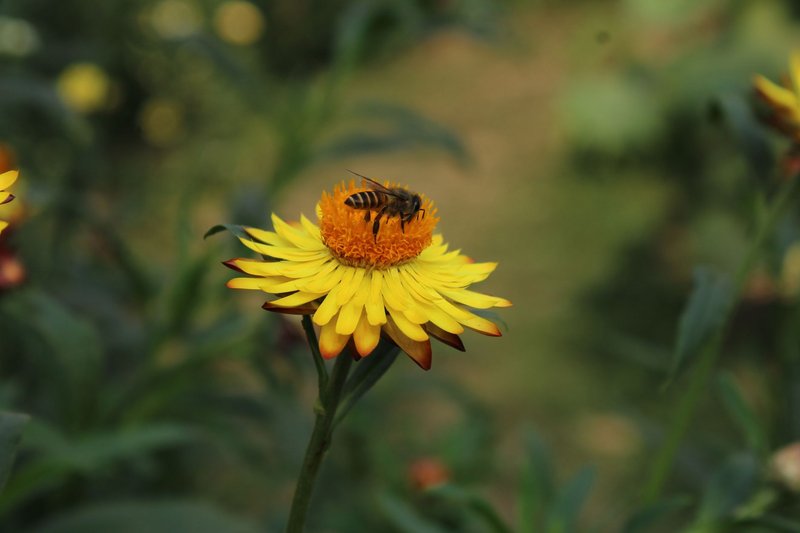
Bees are the benchmark. There are roughly 20,000 described species, and both larvae and adults live on pollen and nectar, so a bee has a reason to visit flower after flower all day.
Their bodies are designed for it. Branched hairs trap pollen grains by static charge, and honeybees pack the load into a pollen basket (a flattened, fringed section of the hind leg) to carry home. Bumblebees add a trick called buzz pollination: they grip a flower and vibrate their flight muscles to shake pollen out of tight anthers. Tomatoes, blueberries and potatoes need this, and honeybees can’t do it.
Honeybees get the credit, but wild bees often do better per visit. A solitary mason bee carries pollen loose on the underside of her belly and drops far more of it than a honeybee that has packed her load tight.
Flies and hoverflies
Flies are the second-largest pollinator group in many regions, and the least appreciated. Hoverflies look like small wasps, hover in place, and feed on nectar and pollen as adults. Their larvae often eat aphids, so a garden full of hoverflies pollinates and pest-controls at once.
Flies do most of the work where bees struggle. In cold, high-altitude and Arctic habitats, flies outnumber bees on flowers. Midges pollinate cacao, so every chocolate bar traces back to a creature a few millimeters long. For more of the non-bee species behind everyday food, see 8 pollinating insects that keep the world fed.
Butterflies and moths
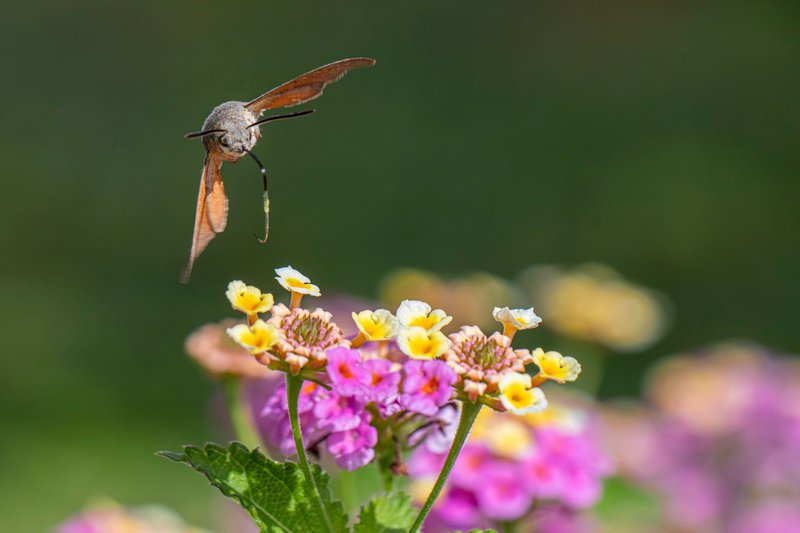
Butterflies and moths drink nectar through a long coiled proboscis, which touches pollen only briefly. They are less efficient than bees on any single flower, but they fly farther and carry pollen between distant plants.
Moths cover the night shift. Hawk moths hover at pale, strongly scented flowers that open at dusk. Darwin looked at a Madagascan orchid with a nectar tube nearly 30 centimeters long and predicted a moth with a matching tongue. The moth, Morgan’s sphinx, was found decades after his death.
Beetles
Beetles are among the oldest pollinators. They visited the first flowering plants well before bees diversified, and they still favor ancient lineages such as magnolias and water lilies.
Their method is blunt. Researchers call it “mess and soil” pollination: beetles chew petals, eat pollen and defecate in the flower, covering themselves in pollen as they crawl around. The flowers they visit tend to be wide, bowl-shaped and sturdy enough to survive the damage.
Wasps
Most wasps hunt rather than feed on flowers, but adults of many species still drink nectar and carry pollen by accident. Some depend on plants completely. Every fig species has its own fig wasp, which pollinates the fruit while laying eggs inside it. Neither partner survives without the other, which makes it one of the tightest cases of mutualism in nature.
Comparison table
| Group | Main activity time | Flowers favored | Crops served |
|---|---|---|---|
| Bees | Day | Open, colorful flowers with accessible pollen | Apples, almonds, berries, tomatoes, squash |
| Flies and hoverflies | Day, active in cool weather | Small, flat, shallow flowers | Carrots, onions, mangoes, cacao |
| Butterflies | Day | Clustered, tubular flowers with nectar | Few crops; mainly wildflowers |
| Moths | Night and dusk | Pale, scented, long-tubed flowers | Some tropical fruits; many wild plants |
| Beetles | Day and night | Large, bowl-shaped, strongly scented flowers | Few crops; magnolias, pawpaw |
| Wasps | Day | Small flowers, figs | Figs |
How insect pollination works
Pollination is the transfer of pollen from an anther (the male part of a flower) to a stigma (the female part). The step-by-step version looks like this:
- The insect lands for a reward. Nectar and pollen are the payment. Flowers advertise with color, scent and ultraviolet patterns that insects see and people don’t.
- Pollen sticks to its body. Hairs, legs, mouthparts and wings all pick up grains.
- It visits another flower. Plants of the same species are the target. Bees help here by sticking to one species per trip, a habit called flower constancy.
- Pollen lands on the stigma. Some rubs off during contact.
- A pollen tube grows. Each grain sends a tube down to the ovule, and fertilization produces the seed and often the fruit.
The Washington State University fact sheet on pollinators covers the mechanics in more detail.
Why pollinating insects are declining
Loss comes from several sources at once: habitat destruction, intensive farming, pesticides, disease and a warming climate. The data on non-bee groups is thinner than for honeybees, but what exists is stark. Between 1976 and 2017, UK butterflies that eat many plants (generalists) fell by 46% in abundance, and habitat specialists fell by 77%.
The specialists drop faster because they can’t shift diets when a habitat disappears. That is the risk for the overlooked groups too: a moth with a single host plant has nowhere to go when meadows become lawn.
How to help pollinating insects in your garden
A good pollinator garden is simple. Provide flowers across the whole season, a place to nest and no poison.
- Spring: crocus, willow, pulmonaria and fruit blossom feed queen bumblebees waking from hibernation.
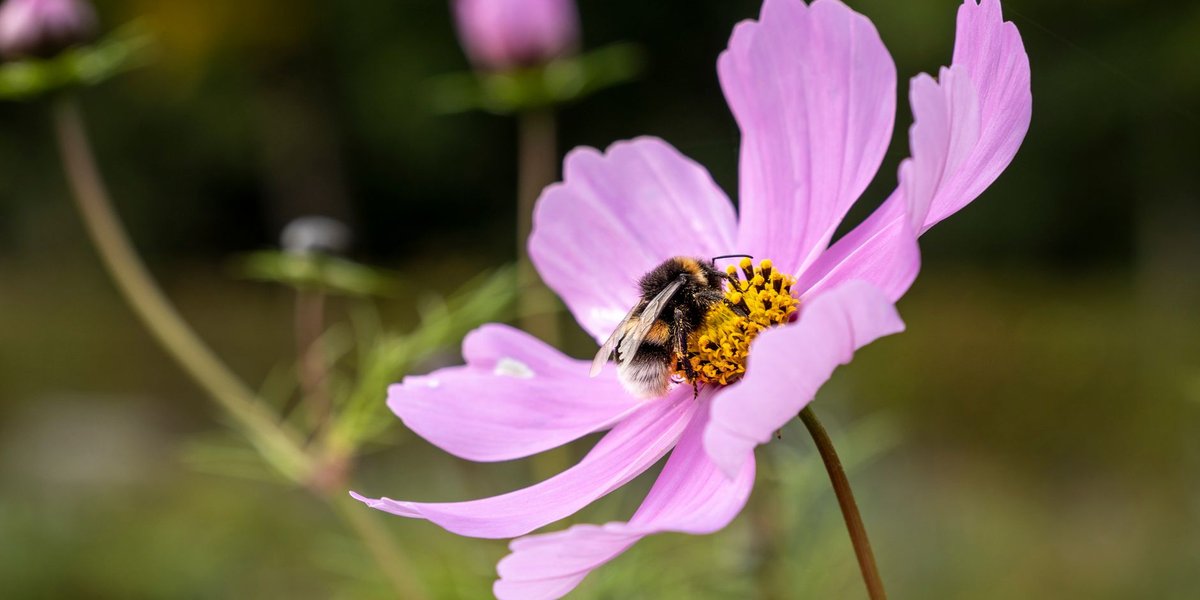
- Summer: lavender, borage, marjoram, knapweed and open daisy-type flowers such as cosmos and ox-eye daisy suit bees, hoverflies and butterflies.
- Autumn: ivy, sedum and asters give late-flying insects a final fuel source. Ivy flowers are a major autumn food source for bees and flies.
- Nesting: leave patches of bare, sunny soil for ground-nesting bees, and some hollow stems or dead wood for cavity nesters. Skip neat tidying in autumn.
- Pesticides: avoid insecticides, especially on flowering plants. The US Forest Service pollinator guidance recommends native plants and minimal chemical use.
Pollinating insects are a whole community, not just honeybees. Plant for the full range, and the ones you rarely notice, the hoverflies, moths and beetles, will turn up on their own.