Pull one stone from a Roman arch and the whole thing collapses. That stone — the wedge-shaped one at the very top — is the keystone, and it carries far more load than its size suggests. A keystone species does the same job in nature: an organism whose presence holds an entire ecosystem in shape, and whose removal makes the structure fall apart in ways nobody would predict from its numbers alone.
The term isn’t a loose metaphor science borrowed and never tested. It comes from a specific experiment on a rocky Pacific shoreline, and the idea has held up for more than fifty years.
Table of Contents
- What Counts as a Keystone Species
- The Starfish That Started It All
- The Five Types, With Examples
- Case Study: Wolves and the Yellowstone Cascade
- Keystone Species at a Glance
- What Happens When a Keystone Species Disappears
- Keystone vs. Indicator Species
- How You Can Support Keystone Species
What Counts as a Keystone Species
A keystone species has an effect on its ecosystem that is disproportionately large relative to its abundance. That second half matters. Plenty of species are important because there are millions of them — a kelp forest or a herd of bison shapes its environment through sheer mass. A keystone species is different. It’s often not the most numerous organism around, sometimes not even close, yet pull it out and the whole community reorganizes.
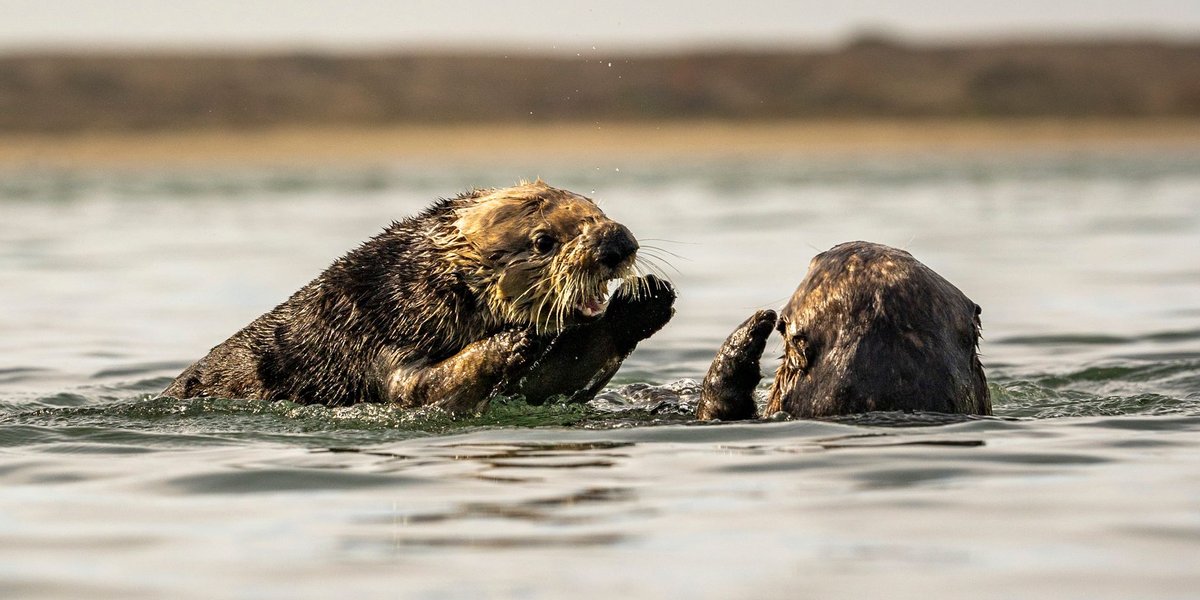
Sea otters weigh maybe 65 pounds and never form huge populations, but they decide whether the coast is a kelp forest or a barren rock. That mismatch between a small footprint and an outsized role is the whole point.
The opposite of a keystone species is a redundant one: remove it and something else fills the gap with little fuss. Most species sit closer to that end. Keystones are the exceptions worth knowing by name.
The Starfish That Started It All
In 1963, ecologist Robert T. Paine started prying ochre sea stars off a stretch of rocky shore in Makah Bay, Washington, and chucking them into the sea. He kept one plot starfish-free and left an identical plot alone as a control. Then he watched.
The ochre sea star eats mussels. With the predator gone, the mussels did what mussels do when nothing stops them: they spread, crowding out the barnacles, anemones, snails, and algae that had shared the rock. The cleared plot went from fifteen species down to eight. The control plot, still patrolled by starfish, stayed diverse.
Paine published the result in 1966 and coined the term “keystone species” in a 1969 paper. The lesson was bigger than starfish. A single predator, never especially common, was the thing holding species diversity in place. The research on Pisaster predation became one of the most-cited experiments in ecology, and it’s the reason almost every article on this topic starts on a tide pool in Washington State.
The Five Types, With Examples
Keystone species don’t all work the same way. They tend to fall into five rough categories, sorted by how they exert their influence.
Keystone Predators
These are the textbook cases — predators that control the population of a prey species that would otherwise dominate. Paine’s sea star is one. So is the sea otter, which eats sea urchins.
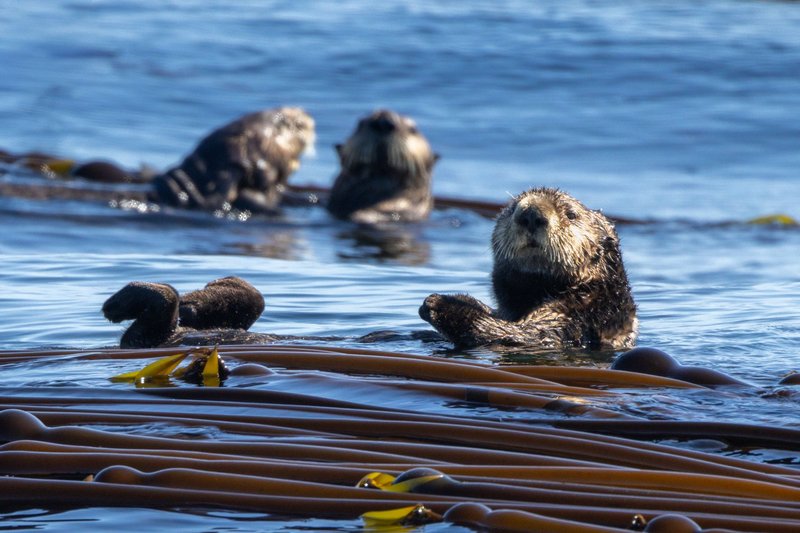
Without otters, urchin numbers explode and the urchins mow down kelp until the seafloor is a bare “urchin barren.” With otters back, kelp forests return, and with them come fish, invertebrates, and even the gray whales that shelter near the canopy. According to the U.S. Fish and Wildlife Service, southern sea otter recovery is tracked closely precisely because of this cascading effect on nearshore ecosystems.
Ecosystem Engineers
Engineers don’t control populations through predation — they physically rebuild the habitat. The beaver is the headline example. A beaver fells trees, dams a stream, and turns a fast channel into a slow wetland. That single act of plumbing creates ponds that store water, recharge groundwater, filter sediment, and house everything from frogs to moose to migratory birds.
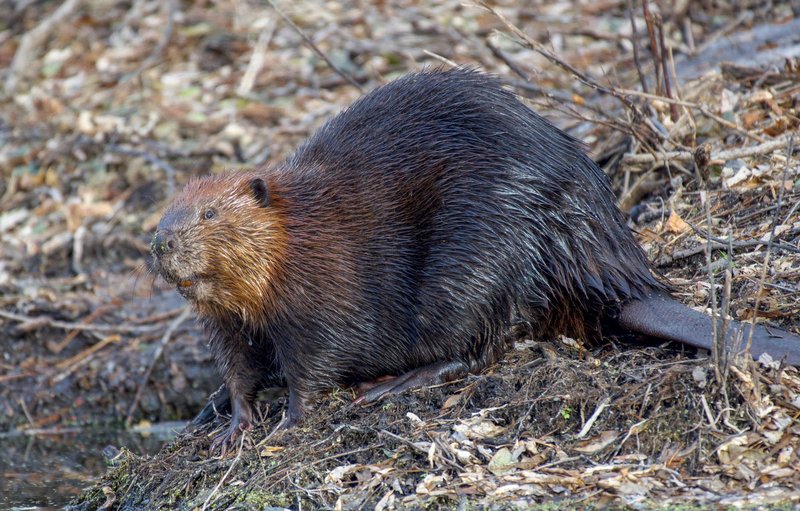
Other engineers include the African elephant, which knocks down trees and keeps savanna from turning into closed woodland, and corals, which build the reef structure that thousands of marine species depend on.
Mutualists and Pollinators
Some keystones hold the system together through partnership rather than pressure. Bees are the obvious case: a huge share of flowering plants depend on pollinators to reproduce, and the plants in turn feed countless other animals. Remove the pollinator and the chain unravels from the bottom up.
Hummingbirds, certain bats, and fig wasps play the same load-bearing role in their own ecosystems. Fig wasps are a tidy example — many fig species can only be pollinated by one specific wasp, and figs feed a startling range of tropical animals during lean seasons.
Prey Species
Occasionally the keystone is the one being eaten. Krill in the Southern Ocean are tiny and almost incomprehensibly numerous, and they form the base that whales, seals, penguins, and seabirds all depend on. Snowshoe hares play a similar role in the boreal forest, where their boom-and-bust cycle drives the population of lynx, foxes, and owls — the whole tier of consumers that feed on them rises and falls with the hare.
The prairie dog fits here too. Its colonies feed black-footed ferrets, hawks, and badgers, and its burrowing aerates soil and creates shelter for burrowing owls and other species. Lose the prairie dog and a whole grassland food web thins out.
Plants and Habitat Providers
Plants can be keystones when they provide a resource nothing else supplies. The saguaro cactus anchors the Sonoran Desert: it stores water, its flowers feed bats and birds, its fruit feeds nearly everything, and woodpeckers carve nest holes in its trunk that later become homes for owls, finches, and reptiles. In a place where shelter and moisture are scarce, one slow-growing cactus becomes an apartment block and a water tower at once.
Case Study: Wolves and the Yellowstone Cascade
The clearest real-world demonstration of a keystone effect played out in Yellowstone National Park, and it’s worth walking through because it shows how far the ripples travel.
Gray wolves were hunted out of Yellowstone by 1926. For seventy years the park had no wolves, and the elk population swelled. Elk browsed hard on willow, aspen, and cottonwood saplings along rivers and in valleys, grazing the young growth before it could mature. The vegetation never recovered, and the land that depended on it changed with it.
In 1995 and 1996, wolves were reintroduced — 31 animals brought down from Canada. What followed is the most-studied trophic cascade in the world. Wolves preyed on elk, yes, but they also changed elk behavior, pushing herds out of the open river valleys where they were easy to ambush. With the browsing pressure relieved in those areas, willow and aspen started growing back.
The recovering vegetation brought beavers, which need willow to survive the winter. Beaver dams reshaped the streams, creating ponds and wetlands. Songbirds returned to the regrown trees. Wolves also suppressed coyotes, which let small-mammal populations rise, which fed hawks, foxes, and badgers. Scavengers from ravens to grizzly bears fed on wolf kills.
Researchers debate how much of the river-channel change to credit to wolves versus other factors like climate and bison numbers, and that caveat is fair. But the broad pattern — one predator returning and the food web reorganizing around it — is exactly what “keystone species” describes.
Keystone Species at a Glance
| Species | Type | Ecosystem Role |
|---|---|---|
| Sea otter | Keystone predator | Eats urchins, protects kelp forests |
| Ochre sea star | Keystone predator | Controls mussels, maintains shoreline diversity |
| Gray wolf | Keystone predator | Limits elk, triggers Yellowstone cascade |
| Beaver | Ecosystem engineer | Builds wetlands that house many species |
| African elephant | Ecosystem engineer | Knocks down trees, maintains savanna |
| Bees | Mutualist / pollinator | Pollinate flowering plants across food webs |
| Fig wasp | Mutualist / pollinator | Sole pollinator of many fig species |
| Krill | Prey species | Base of the Southern Ocean food web |
| Prairie dog | Prey species / engineer | Feeds predators, aerates and shelters grassland |
| Saguaro cactus | Plant / habitat provider | Supplies water, food, and nesting in the desert |
What Happens When a Keystone Species Disappears
The defining feature of a keystone species is what its absence does, so this is the part that actually proves the concept.
When the predator goes, the prey explodes. Otters gone, urchins strip the kelp. Wolves gone, elk overgraze the willows. The technical name for this chain reaction is a trophic cascade, and it runs downhill from the missing animal through every level beneath it — the same energy flow that links a simple food chain into a tangled food web.
The collapse rarely stops at one species. In the kelp example, losing otters doesn’t just mean more urchins — it means no kelp forest, which means no habitat for the fish, crabs, and snails that lived there, which means less food for the seals and birds that ate them. One removal, a dozen downstream casualties. Ecologists sometimes call this an “extinction cascade,” and it’s why conservation increasingly targets keystone species specifically: protect the right one animal and you protect the network it holds up.
The flip side is the hopeful part. Because the effect is so concentrated, putting the keystone back can restore the whole system. Yellowstone is the proof of concept. So is the slow return of sea otters along the Pacific coast.
Keystone vs. Indicator Species
These two terms get mixed up constantly, and the difference is simple once you see it.
A keystone species holds the ecosystem together. Remove it and things fall apart. Its value is structural.
An indicator species tells you how the ecosystem is doing. Frogs and amphibians are classic indicators — their permeable skin makes them sensitive to pollution, so a crash in frog numbers warns you something’s wrong with the water before bigger problems show up. The frog isn’t necessarily propping up the food web; it’s a gauge on the dashboard.
A species can occasionally be both, but the roles are distinct. One is load-bearing. The other is a warning light.
How You Can Support Keystone Species
You don’t need a national park to matter here. A few of these species respond directly to what ordinary people do with land and policy.
Plant for pollinators. Native flowering plants feed native bees and other pollinators far better than ornamental hybrids, which are often bred for looks and produce little usable nectar or pollen. A patch of native wildflowers is a small keystone-support project.
Skip the broad-spectrum pesticides. Neonicotinoid insecticides are linked to pollinator decline, and home-garden use adds up. Spot-treating problems beats blanket spraying.
Back beaver-friendly and predator-recovery policy. Beavers were nearly trapped out of North America for the fur trade, and their wetlands disappeared with them. Restoration programs that reintroduce or protect beavers are some of the cheapest water-management tools available. Supporting them, and supporting science-based predator management, has outsized returns.
A keystone species is a reminder that ecosystems aren’t democracies where every member counts equally. Some species carry the load. Find them, protect them, and the rest of the structure tends to hold.