About one-third of every bite of food you eat exists because an insect moved pollen from one flower to another. Bees get most of the credit — and they’ve earned it — but the full cast of pollinating insects is stranger and more varied than most people realize. Fungus gnats pollinate cacao. Beetles pollinated plants long before bees existed. Some moths only fly at night and pollinate flowers that bloom after dark specifically for them.
Here are eight pollinating insects worth knowing, with the plants they serve and the detail that makes each one interesting.
Table of Contents
- What Is Insect Pollination?
- 1. Honey Bees
- 2. Bumblebees
- 3. Solitary Bees
- 4. Butterflies
- 5. Moths
- 6. Hoverflies
- 7. Wasps
- 8. Beetles
- Quick Comparison Table
- Why Pollinator Diversity Matters
What Is Insect Pollination?
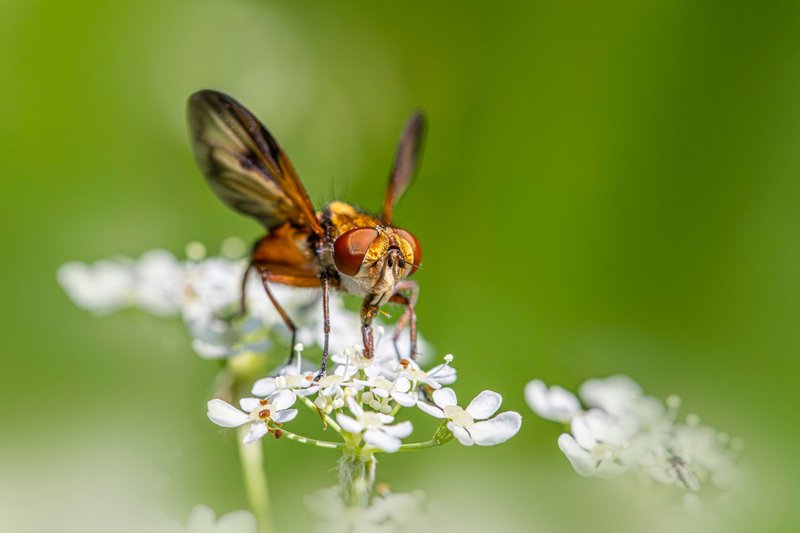
Pollination happens when pollen grains are transferred from the male part of a flower (the anther) to the female part (the stigma), enabling fertilization and seed production. Insects accomplish this accidentally — they’re visiting flowers for food (nectar, pollen) and pick up pollen on their bodies in the process.
Different insects favor different flowers. This isn’t random. Over millions of years, plants and their pollinators have co-evolved: the shape of the flower, its color, scent, and the timing of its bloom are all signals tuned to attract specific insects. A tubular red flower is essentially advertising for butterflies with their long proboscises; a flat open flower with a strong smell is more likely targeting beetles. The yucca-moth relationship described later in this article is one of the most striking examples of mutualism in the natural world — where two species evolve in such tight dependence that neither can survive without the other.
1. Honey Bees
Apis mellifera
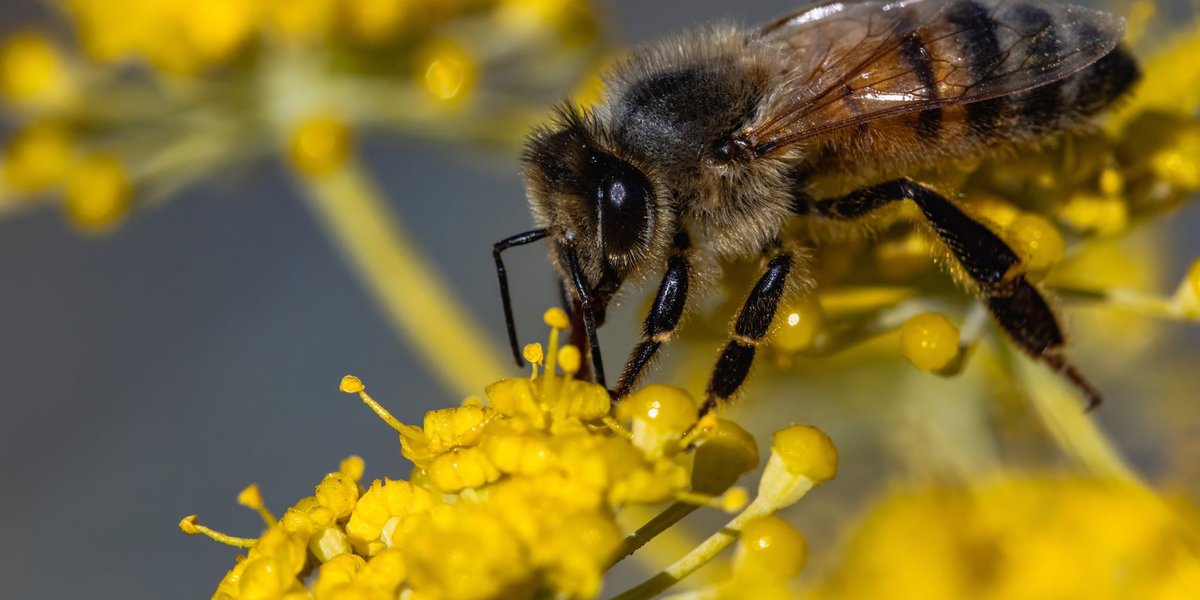
Honey bees are responsible for pollinating an estimated 90% of the world’s most important crop species, according to the Food and Agriculture Organization of the United Nations. That list includes apples, almonds, blueberries, cucumbers, and many others.
They’re generalists, meaning they’ll visit a huge range of flowers. But what makes honey bees especially efficient isn’t just their numbers — it’s their behavior. Forager bees practice “flower constancy,” visiting only one species of flower per foraging trip. This keeps pollen transfers between the same species, which is exactly what effective pollination requires.
A single honey bee colony can make 50,000 or more foraging trips per day during peak season.
2. Bumblebees
Bombus spp.
Bumblebees do something honey bees can’t: buzz pollination, also called sonication. They grab onto a flower and vibrate their flight muscles at a specific frequency, shaking loose pollen that would otherwise stay locked inside enclosed anthers. Tomatoes, peppers, blueberries, and eggplants all benefit from this technique — it’s why commercial greenhouses import bumblebee colonies specifically for tomato production.
They’re also cold-tolerant. Bumblebees fly at temperatures that ground honey bees and are active earlier in spring and later in autumn, extending the effective pollination window for many plants.
3. Solitary Bees
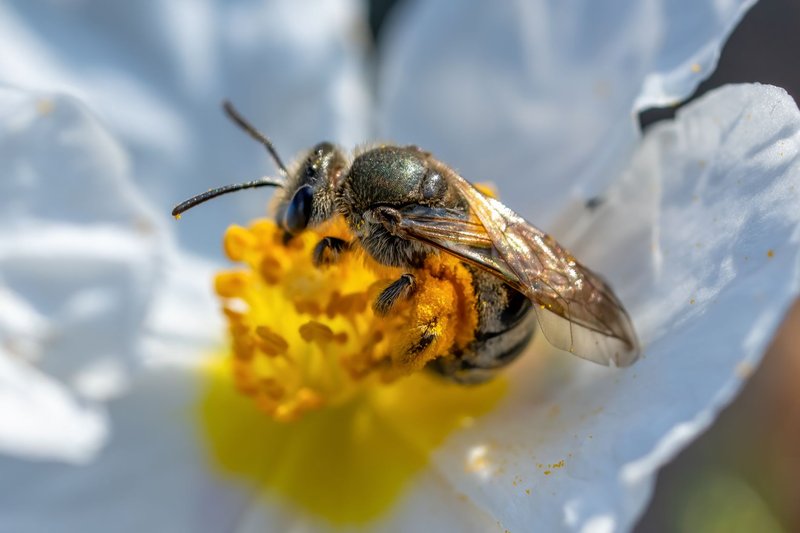
Osmia, Andrena, Halictus, and hundreds of other genera
Most bee species are solitary — no queen, no colony, no hive. A female digs a nest, provisions it with pollen, lays her eggs, and that’s it. There are over 20,000 known bee species worldwide, and the vast majority of them live this way.
Mason bees (Osmia spp.) are among the most efficient crop pollinators known. A single female mason bee can pollinate as many apple blossoms as 120 honey bees, because she’s less efficient at packing pollen onto her body — she drops more of it onto flowers as she goes. Mining bees (Andrena spp.) are among the first insects active in early spring and are critical pollinators for fruit trees, often working when honey bee colonies are still building up their numbers.
4. Butterflies
Lepidoptera (various species)
Butterflies are not particularly efficient pollinators by insect standards. They’re clumsy compared to bees and don’t pack pollen tightly. But they’re mobile — they travel farther between flowers than most bees do, which makes them important for genetic diversity in plant populations across wider areas.
Milkweed (Asclepias spp.) relies on butterflies and other large insects because its pollen is packaged in small waxy bundles called pollinia that require an insect of sufficient size to dislodge. Monarchs are milkweed specialists and are among the most studied butterfly pollinators.
Butterflies favor flowers that are flat and open, brightly colored (especially red and orange, which bees can’t see well), and mildly fragrant.
5. Moths
Lepidoptera (nocturnal species)
Moths get overlooked because they work at night. But moths pollinate a substantial number of plant species — especially pale, strongly scented flowers that are easy to find in the dark. Night-blooming jasmine and moonflowers are examples of plants adapted specifically for moth pollination.
The classic example is the yucca plant and the yucca moth (Tegeticula spp.), one of the most specialized plant-pollinator relationships in nature. The female yucca moth actively collects pollen, carries it to another flower, deposits it on the stigma, and then lays her eggs inside the flower’s ovary. The developing larvae eat some of the seeds — but not all of them. The plant and the moth are so tightly linked that neither can reproduce without the other.
Hawk moths (Sphingidae) pollinate many deep-throated flowers, including some orchids with nectaries so long that only they can reach them.
6. Hoverflies
Syrphidae family
Hoverflies look like small bees or wasps — yellow and black striped, hovering near flowers — but they’re true flies. The mimicry is defensive, not functional. They have no sting.
They’re the second-most important group of flower visitors after bees in many ecosystems, and they’re significant crop pollinators for plants including onions, carrots, and many fruit trees. Research from the University of Reading has found that migratory hoverfly species travel hundreds of kilometers across Europe, carrying pollen across distances that resident bees never could.
Unlike bees, hoverflies don’t actively collect pollen — they feed on it and on nectar, and transfer pollen incidentally as they move between flowers.
7. Wasps
Vespidae and Ichneumonidae families
Wasps are less dedicated flower visitors than bees. They lack the fuzzy body hair that makes pollen stick to bees, and they’re not provisioning pollen for larvae the way bees are. But they do visit flowers for nectar, and in ecosystems where bee diversity is low, wasps can fill a significant pollination role.
The fig wasp is the starkest example. Figs (Ficus spp.) are not pollinated by any other insect. Each fig species has its own specific wasp species that enters the developing fig, pollinates the flowers inside, and lays eggs there. Without the wasp, there are no figs. Without figs, in some ecosystems, dozens of bird and mammal species lose a key food source — the pollination dependency ripples outward.
Some orchids are also wasp-pollinated, including species that produce pheromones that mimic female wasps, luring males into contact with the flower’s pollen without offering any food reward.
8. Beetles
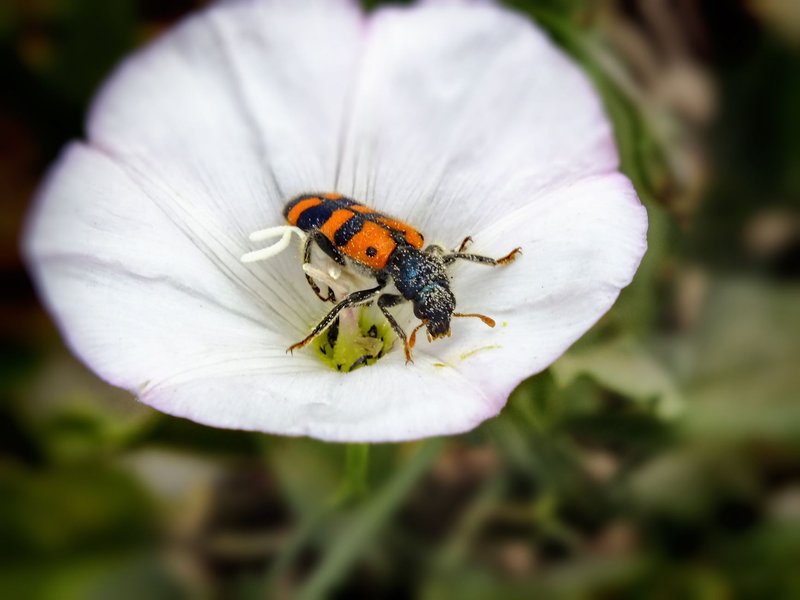
Coleoptera (many species)
Beetles were pollinating plants before bees existed. They’re among the oldest known pollinators, and plants that evolved with beetles tend to have bowl-shaped flowers with exposed reproductive parts, strong scent, and tough petals — the beetle’s feeding often damages the flower, so durability matters.
Magnolias are a classic example of beetle-pollinated plants, and their basic floral architecture has changed little in millions of years. Cacao (Theobroma cacao) — the plant chocolate comes from — is primarily pollinated by tiny midges and fungus gnats, but beetles contribute in some regions.
Beetles tend to eat as much as they transfer, which makes them less efficient per visit than bees. But their sheer diversity (over 400,000 described species) means that across ecosystems, they contribute to pollination of a wide range of plants, especially in tropical forests. Like all pollinators, beetles are examples of invertebrates — animals without a backbone that nonetheless perform ecological work no vertebrate can replicate at the same scale.
Quick Comparison Table
| Insect | Key Plants Pollinated | Pollination Style | Distinctive Feature |
|---|---|---|---|
| Honey bee | Almonds, apples, blueberries | Active collector, flower-constant | Pollinate ~90% of major crop species |
| Bumblebee | Tomatoes, peppers, eggplant | Buzz pollination (sonication) | Active in cold temperatures |
| Solitary bee | Apples, cherries, squash | Active collector | Mason bees 120x more efficient than honey bees per individual |
| Butterfly | Milkweed, wildflowers | Incidental transfer, long-distance | Increases genetic diversity across wider areas |
| Moth | Yucca, night-blooming flowers | Incidental or mutualistic | Some orchids evolved specifically for hawk moths |
| Hoverfly | Onions, carrots, fruit trees | Incidental (feeds on pollen/nectar) | Migratory species cross hundreds of kilometers |
| Wasp | Figs, some orchids | Incidental or obligate mutualism | Fig wasps are the only pollinator for figs |
| Beetle | Magnolias, cacao | Incidental (often damages flower) | Oldest known pollinators; > 400,000 species |
Why Pollinator Diversity Matters
Most food security conversations focus on honey bees — and for good reason, given their outsize role in commercial agriculture. But the broader ecosystem runs on diversity, and that’s where the risk concentrates.
Many crops that honey bees don’t pollinate well depend on wild bees, flies, moths, and other insects. Wild blueberries are better pollinated by native bumblebees than by managed honey bee colonies. Cacao production in some regions depends on midges so small they’re invisible to the naked eye. If the crop is a monoculture and the pollinator is a specialist, losing that pollinator can collapse production entirely — which is exactly what the yucca-moth relationship illustrates on a small scale.
According to the IPBES Global Assessment on Biodiversity, 40% of insect pollinator species face extinction risk globally, driven by habitat loss, pesticide use, and climate change. The practical consequence isn’t just ecological — it’s agricultural. Crops dependent on insect pollination represent an estimated $235 to $577 billion in annual global food production value.
A garden that attracts bees is good. A garden that also attracts solitary bees, hoverflies, moths, and beetles — by including a range of flower shapes, colors, and bloom times — is substantially better. The diversity of insects doing the work is the actual foundation, and honey bees are just the most visible part of it.