Most roundups of caves in Scotland read like folklore anthologies. You get Robert the Bruce and his spider, a saint’s hermitage, a clan massacre — all good stories, all light on the part where you actually need to know if there’s parking, whether the tide will trap you, and if your eight-year-old can handle the walk in.
This list keeps the stories. It just adds the part everyone else skips.
We’ve grouped 11 caves by region, because “caves in Scotland” isn’t one trip — it’s four or five different trips depending on whether you’re based in Edinburgh, Glasgow, or working your way around the NC500. Each entry tells you the hook and the logistics: how to get there, what it costs, and who it actually suits.
Table of Contents
- Quick Picks
- The Highlands & North Coast
- The Hebrides & West Coast Islands
- Southwest Scotland & Arran
- Edinburgh, Fife & the Borders
- Bonus: Wild Caves and How Not to Get Hurt
Quick Picks
| Category | Cave |
|---|---|
| Best overall | Smoo Cave, Durness |
| Best sea cave (no boat needed) | Smoo Cave, Durness |
| Best for the legend | King’s Cave, Arran |
| Best for kids | King’s Cave, Arran |
| Best day trip from Edinburgh | Wemyss Caves, Fife |
| Best day trip from Glasgow | King’s Cave, Arran |
| Best for photography | Fingal’s Cave, Staffa |
| Best for advanced/wild caving | Traligill Caves, Assynt |
The Highlands & North Coast
1. Smoo Cave, Durness
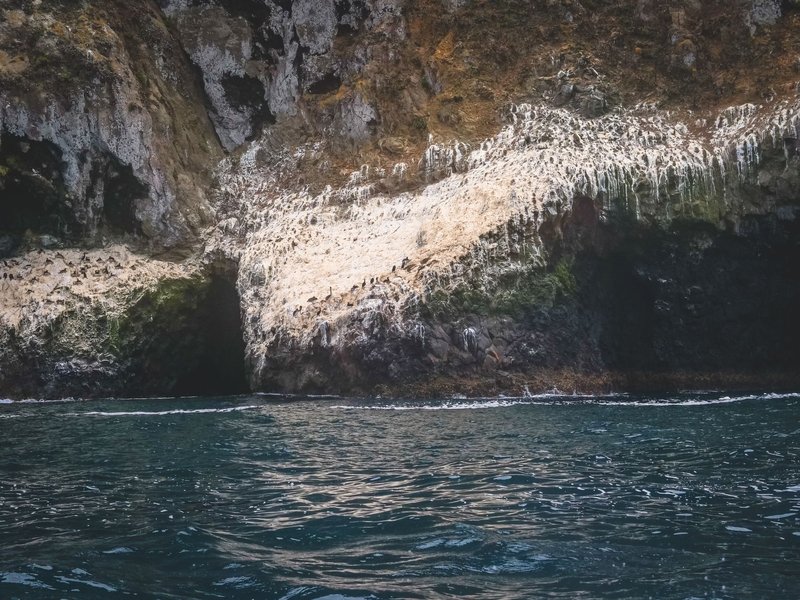
Smoo Cave sits right off the NC500 in Durness, and it’s the only entry on this list you can walk into without booking anything. The entrance chamber is enormous — 15 metres high, 40 metres wide, cut into the limestone by a mix of sea action and a freshwater burn that still drops through the roof as a waterfall partway in. That combination, sea cave meets freshwater cave, is rare enough that geologists specifically come here to look at it.
The main chamber is open around the clock, year-round, free. A steep, uneven path leads down from the car park, so it’s not a great fit for anyone with mobility issues, but most people manage it fine. Getting into the second and third chambers requires the seasonal boat tour (April to October, roughly 30 minutes, £15 for adults), which floats you past the waterfall and into a stream-walk section most visitors never see. Skip the boat if it’s been raining hard — the cave floods fast, and tours get cancelled without much warning.
Getting there: On the A838 in Durness, signposted car park with a short walk down. Best for: First-timers, anyone without a boat budget, families.
2. Bone Caves, Inchnadamph, Assynt
Four caverns cut into a limestone cliff above the Allt nan Uamh — the “Burn of the Caves” — that turned out to hold one of the most important archaeological finds in Scotland. Excavations pulled out reindeer antler fragments dated as old as 47,000 years, along with bones from brown bear, arctic fox, lynx, and what may be the only polar bear remains ever found in Scotland. Human burials here have been radiocarbon dated to roughly 2700–2500 BC. Most of what was recovered now sits in the National Museum of Scotland in Edinburgh, so what you’re seeing on-site is the empty stage, not the finds themselves — worth knowing before you go, so you’re not disappointed there’s no glass case waiting for you.
The walk in from the road is about 5 km round trip, good underfoot but steep in the final stretch, roughly 30 minutes each way.
Getting there: Park near Inchnadamph on the A837, follow the path up the glen. Best for: Anyone into prehistory over folklore, a stop on an Assynt or NC500 loop.
3. Sculptor’s Cave, Covesea, Moray
A sandstone sea cave between Burghead and Lossiemouth, named for the Pictish symbols — fish, crescents, a stylised flower — carved into the rock near both entrances sometime in the 6th or 7th century. What makes it unusual is the layered history underneath that art: excavations turned up Late Bronze Age burial evidence and, separately, Roman Iron Age material including decapitated remains, plus gold hair-rings roughly 3,000 years old. The Society of Antiquaries of Scotland has funded ongoing work here precisely because so few British sites show that kind of continuous ritual use across two completely different eras.
The cave sits at the base of 30-metre cliffs and floods at high tide, so time your visit around the tide tables, not the other way around.
Getting there: Coastal path from Covesea Lighthouse, near Lossiemouth. Best for: Archaeology fans, a quieter alternative to the Highland tourist trail.
The Hebrides & West Coast Islands
4. Fingal’s Cave, Isle of Staffa
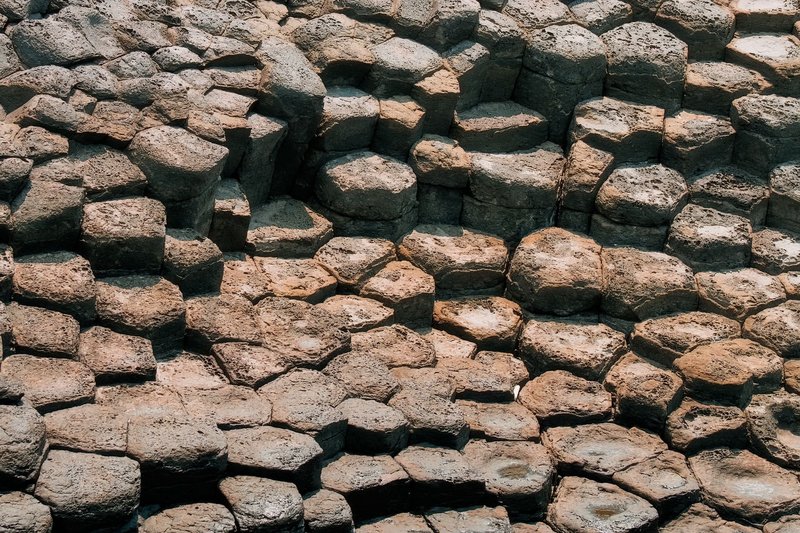
Staffa’s lava cooled slowly enough that it fractured into thousands of near-perfect hexagonal columns, and the sea carved a cave straight through them — 20 metres high, 75 metres deep, with a natural walkway along the fractured rock at water level. The acoustics are the whole reason anyone outside Scotland has heard of it: Felix Mendelssohn visited in 1829 and came away writing the Hebrides Overture, and the cave’s Gaelic name, An Uamh Bhinn, translates to “cave of melody.”
Staffa is owned and maintained by the National Trust for Scotland, and there’s no dock or path built into the island — you get there by boat, full stop. Staffa Tours runs daily from Fionnphort on Mull, and other operators run from Oban and Iona. Landing depends on sea conditions, so build a spare day into island-hopping itineraries if you can.
Getting there: Boat only, from Mull, Iona, or Oban. Best for: Photography, a full-day excursion rather than a quick stop.
5. Spar Cave, Isle of Skye
Walter Scott visited in 1814 and described it as a “mermaid’s alabaster grot” — accurate, if a little purple, for a cave lined with 80 metres of flowstone formations. It sits east of Elgol, reached over a stretch of seaweed-slick boulders, and here’s the part every source agrees on: you get exactly one hour either side of low tide to be inside it. Miscalculate and you’re not swimming out — you’re waiting twelve hours for the next low water.
Check tide times at the tearoom in Elgol before you set off, not after. This isn’t a cave you improvise.
Getting there: Short but rough walk from Glasnakille, near Elgol. Best for: Experienced hikers who plan around tides; skip with young kids.
6. Massacre Cave, Isle of Eigg
The name isn’t a marketing flourish. In 1577, most of Eigg’s population hid in this cave during a feud between the MacDonalds and the MacLeods of Skye — the entrance is barely a metre high, easy to miss. After three days of searching, the MacLeods spotted a scout’s footprints in fresh snow leading back to the cave and, according to tradition, killed everyone inside: close to 400 people. Human remains recovered from the cave have been radiocarbon dated to 1430–1632, which lines up with the story rather than debunking it.
It’s a roughly one-mile walk from the pier, marked with purple waymarkers, and Eigg itself is reachable by ferry from Arisaig or Mallaig.
Getting there: Ferry to Eigg, then a signposted coastal walk from the pier. Best for: History with weight to it — not a cheerful family stop.
Southwest Scotland & Arran
7. King’s Cave, Isle of Arran
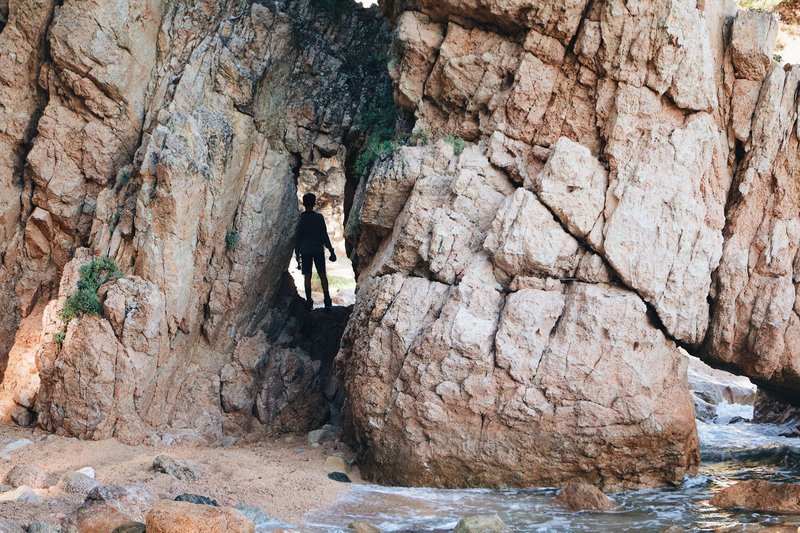
This is the Robert the Bruce spider cave — the one where, per the story Sir Walter Scott popularised in 1828, Bruce hid after his 1306 defeat at Methven and watched a spider fail and retry a web until it succeeded, talking himself into one more attempt at the crown. Historians will tell you there are at least five candidate caves for that legend across Scotland, and Arran’s isn’t even the strongest claim. Doesn’t matter. It’s the one people visit, and the cave itself — carved into sandstone cliffs above a raised beach, with genuinely old inscriptions on the walls — earns the trip regardless of which spider story you believe.
The walk is a straightforward 3-mile circular route from a signposted car park north of Blackwaterfoot, easy to moderate, fine for most families, free, no booking required. Bring a torch for the inscriptions. Arran itself is a ferry ride from Ardrossan, under an hour from Glasgow — genuinely one of the easiest wild caves to reach from a Scottish city.
Getting there: Car park on the Machrie road near Blackwaterfoot, then a 3-mile loop. Best for: Families, a Glasgow day trip, anyone who wants legend without logistics.
8. St Ninian’s Cave, Whithorn, Galloway
A small sea cave 4 miles from Whithorn, believed to have served as a retreat for St Ninian, generally credited as Scotland’s first saint, active in the region in the late 4th century. Crosses carved into the cave walls date back to the 6th and 7th centuries, and according to Historic Environment Scotland, pilgrims have been visiting continuously since at least the early medieval period — the Catholic diocese of Galloway still holds an annual pilgrimage here on the last Sunday of August. Some of the original carved stones are now in the Whithorn museum; what remains on-site are later, cruder copies, which is worth knowing if you’re expecting something museum-grade.
Getting there: Signposted walk from the car park near Physgill, south of Whithorn. Best for: Quiet reflection over spectacle, a stop on a Galloway coastal trip.
Edinburgh, Fife & the Borders
9. Wemyss Caves, East Wemyss, Fife
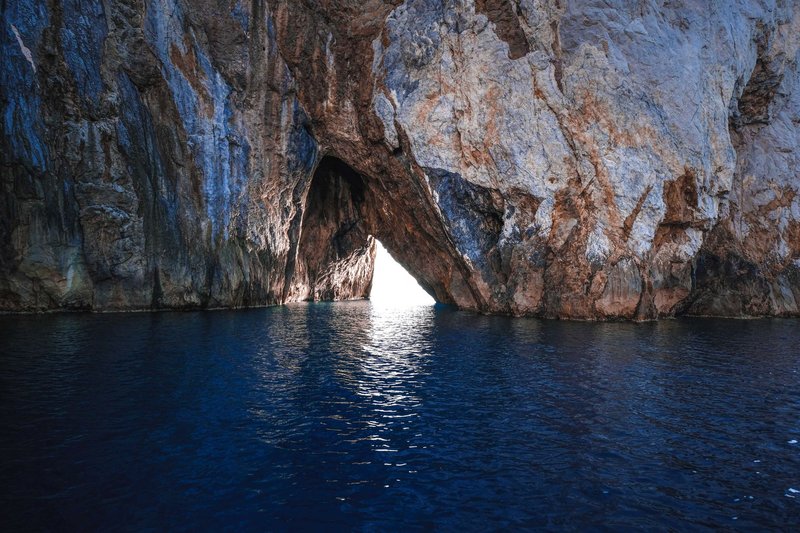
Six sea caves strung along the Fife coast, cut by wave action somewhere between 5,000 and 8,000 years ago, holding what’s thought to be the largest concentration of Pictish cave carvings anywhere in Britain — more than 50 symbols, animals, and even a Pictish boat, mostly dated to the 6th through 9th centuries. Jonathan’s Cave has the densest collection. Storm damage has closed some sections to casual walk-in visits, so guided tours, run free (donations welcome) through the visitor centre, are currently the reliable way to see the best carvings — check ahead before you drive out.
It’s under an hour from Edinburgh by car, which makes it the easiest Pictish site on this list to fold into a day trip.
Getting there: Car park in East Wemyss, roughly 1 km walk to the furthest cave. Best for: An Edinburgh day trip, anyone interested in Pictish art specifically.
10. Gilmerton Cove, Edinburgh
Not a natural cave — this is a hand-carved network of passages and rooms cut into sandstone beneath the Edinburgh suburb of Gilmerton, first documented in the early 1700s. Nobody has ever nailed down why it was built. Theories range from a smugglers’ hideout to a meeting place for a banned religious sect to, more mundanely, a blacksmith’s workshop; an early record has a local blacksmith hauled in for drinking on the Sabbath down here. It’s the one entry on this list you reach by tour guide rather than daylight, so book ahead and double-check it’s currently open — small heritage sites like this do pause for maintenance and restoration work.
Getting there: Booked guided tour only, in the Gilmerton area of Edinburgh. Best for: History over geology, bad-weather days, anyone already in Edinburgh.
11. Cove Harbour, Cockburnspath, Borders
A hand-cut tunnel through a headland on the Berwickshire coast, dug in the 1700s to give fishermen a way down to a natural harbour, with side chambers that stored herring and mackerel — and, if you believe the local stories, smuggled whisky and brandy too. The chambers stayed in use as bathers’ changing rooms until they were sealed in 1981. It’s a small, low-key stop: no ticket, no tour, just a short walk down a genuinely atmospheric tunnel to a working harbour and beach.
It sits close to the A1, about 45 minutes from Edinburgh, making it an easy add-on to a Borders trip rather than a destination on its own.
Getting there: Signposted parking near Cockburnspath village. Best for: A quick stop en route elsewhere, coastal walkers.
Bonus: Wild Caves and How Not to Get Hurt
The Traligill Caves near Inchnadamph, in the same Assynt limestone country as the Bone Caves, mark the entrance to the largest connected cave system in Scotland. You can walk up the valley from the Inchnadamph Hotel car park and look at the entrances safely enough. Going further is a different matter — NatureScot and local caving clubs both flag the rock here as dangerously slick, with sections that require crawling under low, water-filled passages and a collapsed shaft edge that’s claimed more than one careless step. This is caving-club territory, not a family detour.
The general rule for any unmanaged cave in Scotland: check tide tables before sea caves (Spar Cave and Smoo Cave both punish bad timing), tell someone your route before wild caves, bring a proper torch rather than a phone light, and turn back the moment weather turns — limestone systems like Traligill and Smoo flood fast enough to trap someone who waited five minutes too long to decide.
That’s the real throughline across all 11 sites here: the caves in Scotland worth visiting split cleanly into two types, the ones you can wander into on a whim and the ones that punish whim specifically. Know which one you’re looking at before you leave the car park.