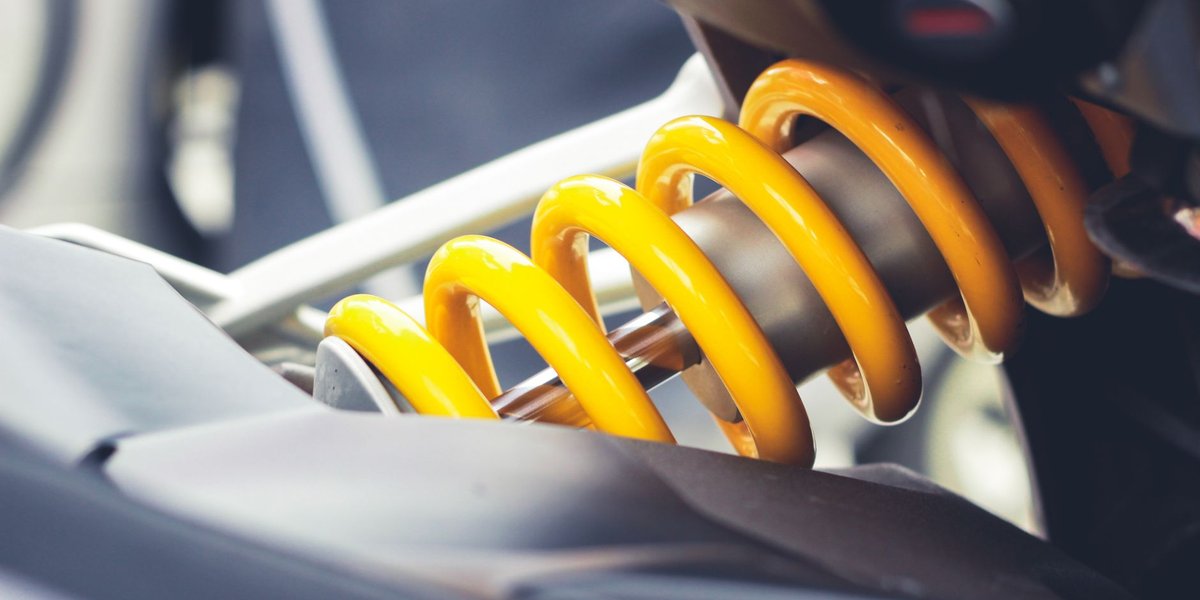
Elastic potential energy is the energy stored in an object when you stretch, compress, bend or twist it, and it comes back when the object snaps back to its original shape. A drawn bow, a squashed tennis ball and a wound-up watch spring all work this way. The object does the storing; its shape change is the battery.
The 15 examples below are grouped by how the object deforms, because that’s the fastest way to see the pattern. For each one, you get what deforms, where the energy goes on release, and a real number where one exists. A formula box and a worked problem follow, then the cases that look elastic but aren’t.
Table of contents
- How elastic potential energy works
- Examples of elastic potential energy from stretching
- Examples from compression
- Examples from bending
- Examples from twisting
- The formula: U = ½kx²
- What does not count
- Elastic vs. gravitational potential energy
- Two experiments to try at home
- FAQ
How elastic potential energy works
Three things have to be true for an object to store elastic energy.
- It deforms when a force acts on it.
- It tries to return to its original shape when the force goes away.
- You haven’t pushed it past its elastic limit, the point where the deformation becomes permanent.
Do the work of deforming the object and that work gets stored. Let go, and the stored energy turns into kinetic energy (motion), plus a little heat and sound. Every example below follows that same loop: work in, energy stored, energy out.
One unit to keep in your head: a joule is roughly the energy needed to lift a small apple one meter. The same unit measures every form of energy, from heat to chemical energy.
Examples of elastic potential energy from stretching
When you pull an object longer, its internal bonds resist, and that resistance stores energy.
1. Rubber band
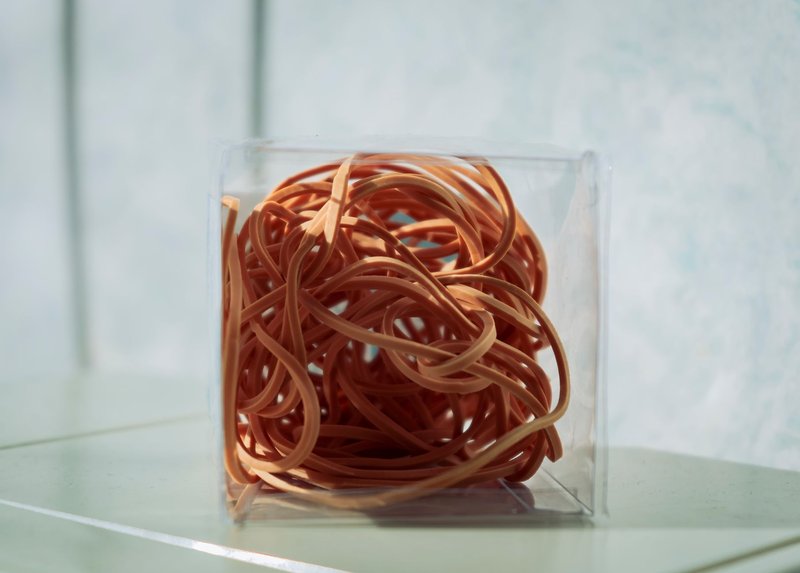
Pull a rubber band back and its long polymer chains uncoil and straighten. The energy lives in those chains. Release it and the band shortens, flinging itself (or a paper wad) forward. A standard office band stretched a few centimeters stores well under one joule, which is why it stings but doesn’t injure.
2. Bungee cord
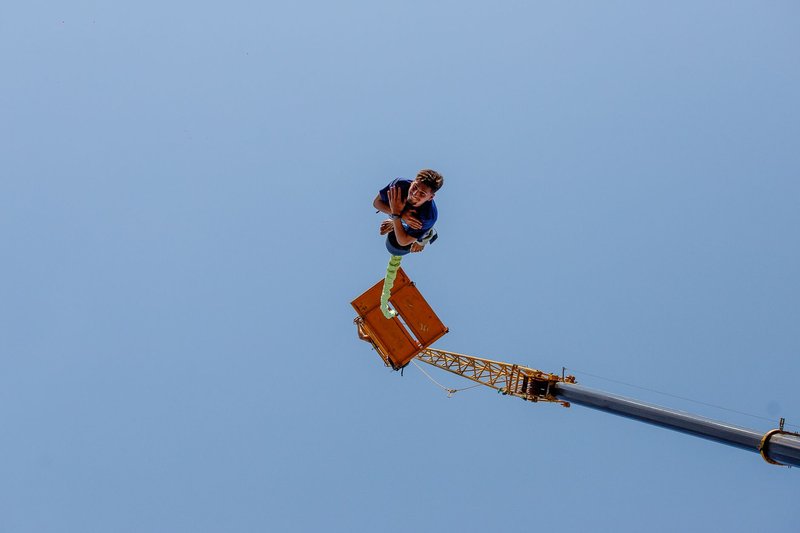
A bungee jumper trades gravitational energy for elastic energy. Take a 70 kg jumper who falls 40 meters before the cord stops them. The energy stored in the stretched cord at the lowest point is about 70 × 9.8 × 40, or roughly 27,000 joules, ignoring air resistance. Then the cord recoils and throws them back up, though never as high as the start, because some energy leaves as heat inside the cord.
3. Slingshot
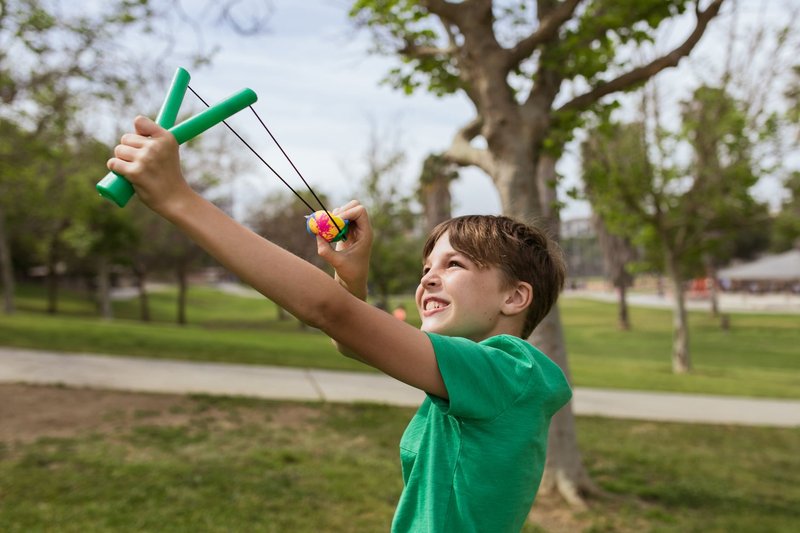
The slingshot is a rubber band with a handle. Pulling the pouch back stretches the bands, and the energy goes into whatever sits in the pouch. A strong slingshot can send an 8-gram steel ball out at around 45 meters per second, which means the bands stored roughly 8 to 10 joules and delivered most of it to the ball.
4. Trampoline

A trampoline stores energy in two places: the dozens of steel springs around the frame and the woven mat itself. A 60 kg jumper who rises 1 meter above the mat carries about 590 joules of energy at the bottom of the landing, and the springs hold that as they stretch. They hand it back as upward motion. Without the springs, a landing on the mat alone would feel closer to a thud on a tarp.
Examples of elastic potential energy from compression
Squeeze an object shorter and its bonds are pushed together. They push back.
5. Pogo stick
A pogo stick is a spring in a tube. Landing compresses it, and the spring stores the rider’s downward energy, then fires it back upward. To lift a 70 kg rider half a meter, the spring has to return at least 340 joules each bounce. The rider tops it up with each push, since some energy is always lost to friction and heat.
6. Mattress

An innerspring mattress holds several hundred coils, each carrying a small share of your weight. Lie down and each coil compresses a few millimeters. Roll over and they push back, which is why you can feel the bounce. Memory foam is the contrast case: it deforms slowly and returns that energy slowly too, so far less of it comes back as push.
7. Car suspension
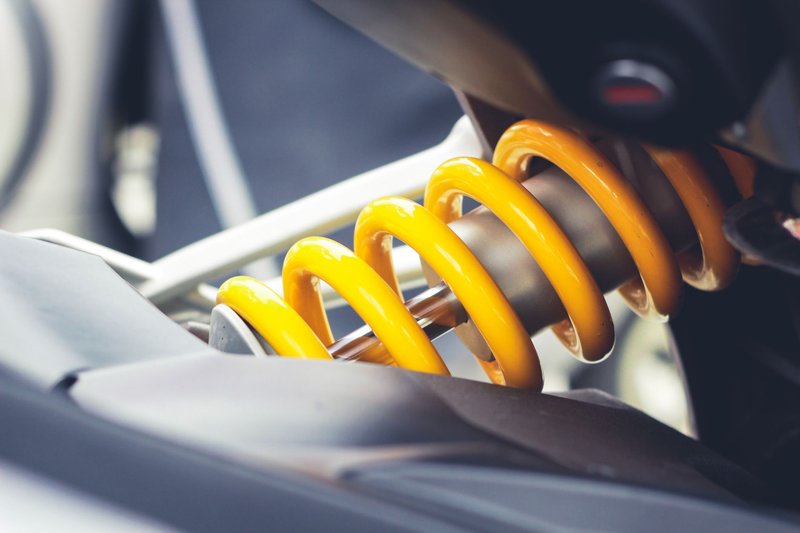
Each wheel of a typical car sits on a coil spring with a stiffness around 25,000 newtons per meter. Hit a bump that squeezes it 5 centimeters and the spring stores about 31 joules (the formula for that comes below). The shock absorber next to it deals with the release by turning that energy into heat. Without it, the car would bounce up and down like a pogo stick.
8. Tennis ball
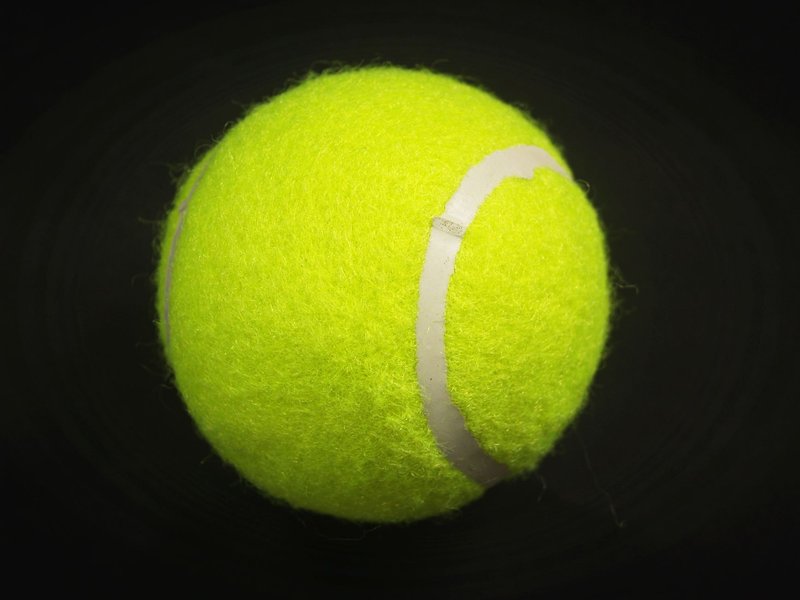
A bouncing ball is the example people forget. On impact, the ball flattens against the ground for a few thousandths of a second, storing its energy in the squashed rubber and the compressed air inside. Then it springs back. The International Tennis Federation requires that a ball dropped from 254 cm bounce between 135 and 147 cm. That’s roughly 53 to 58 percent of the height, so nearly half the energy is lost as heat and sound on every bounce.
Examples of elastic potential energy from bending
Bending stretches the outside of a material and compresses the inside at once. A flexible material handles that without breaking.
9. Archery bow
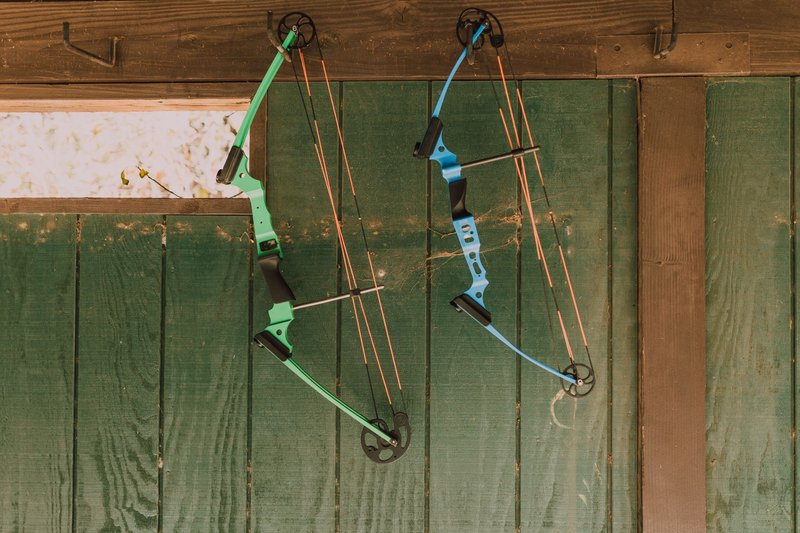
Drawing a bow bends the limbs, and the bowstring transfers your pull into them. A typical hunting bow stores tens of joules, enough to send an arrow at 60 to 90 meters per second. Crossbows go further. Their short, stiff limbs often have draw weights of 150 pounds or more, so they pack more stored energy into a smaller package than a traditional bow, and the bolt leaves faster.
10. Diving board
A springboard is a bent beam. The diver’s landing flexes the tip down, often 20 centimeters or more, and the board stores that energy. As it straightens, it launches the diver up. Elite divers time their jump to match the board’s natural rhythm so each bounce adds energy instead of fighting it.
11. Pole vault pole

A 75 kg vaulter sprinting at 9.5 meters per second carries about 3,400 joules of kinetic energy. Planting the pole bends it into a deep arc, and a large share of that running energy goes into the flex of the fiberglass or carbon fiber. The pole straightens and pushes the vaulter up, which is how athletes clear heights above 6 meters. Stiffer poles store energy faster but demand more speed from the vaulter.
12. Fishing rod
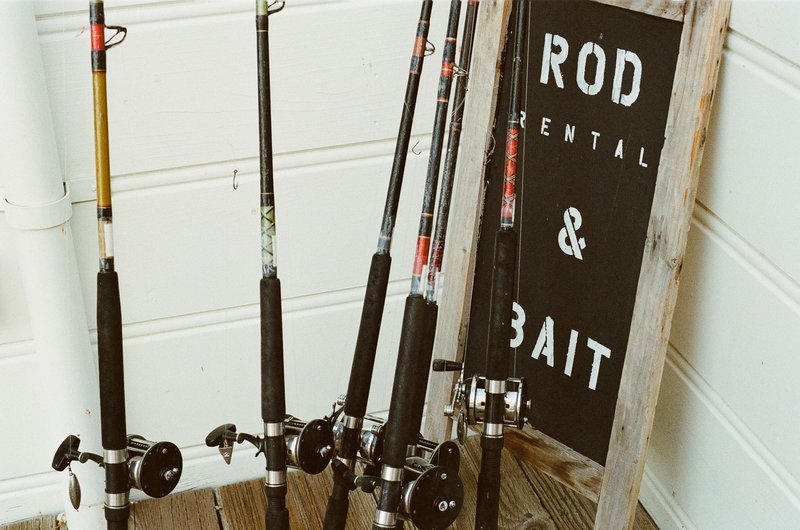
Casting works by loading the rod. On the backswing, the weight of the lure bends the tip back. On the forward swing, the rod straightens and its tip speeds up well beyond what an arm could manage on its own. That’s why a long, flexible rod casts farther than a stiff stick of the same weight.
Examples of elastic potential energy from twisting
Twisting winds up the material along its length. The stored energy is called torsional energy, and it’s elastic energy in a different shape.
13. Wind-up toy
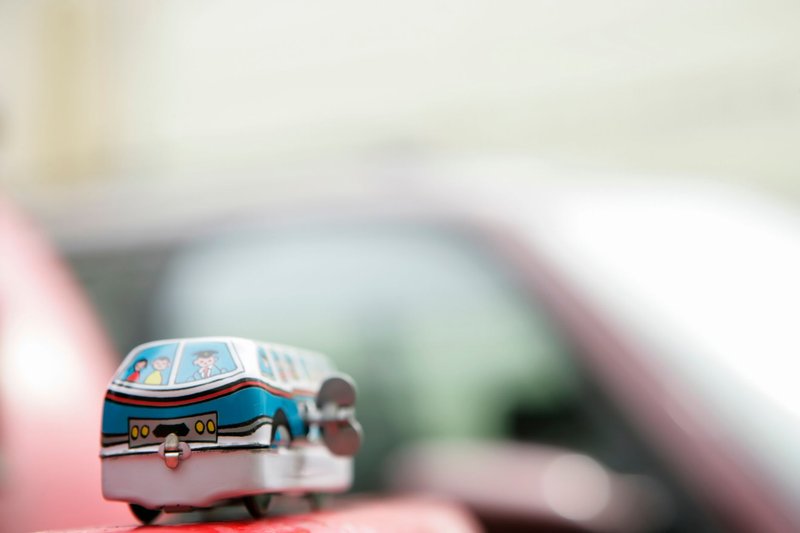
Turning the key coils a flat spiral spring tighter. A small ratchet holds it in place. When the toy is released, the spring slowly unwinds through a gear train and drives the legs or wheels. The total energy is small, on the order of a joule, but a gear train spreads it out over many seconds.
14. Mechanical watch
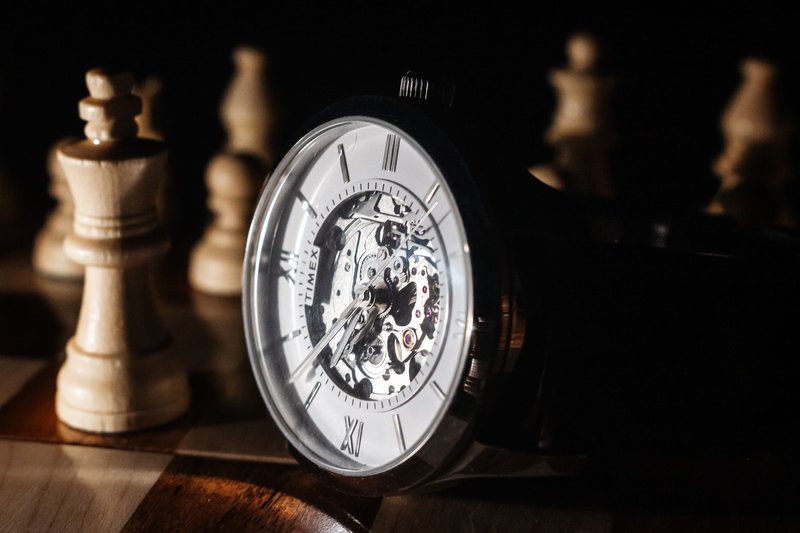
The mainspring inside a mechanical watch is a long ribbon of steel coiled up in a barrel. Winding the crown tightens it. The spring then releases energy at a controlled pace through a part called the escapement, which ticks at 18,000 to 28,800 beats per hour. Even a fully wound watch holds only about a joule or so, and that has to last around two days for many models.
15. Mousetrap
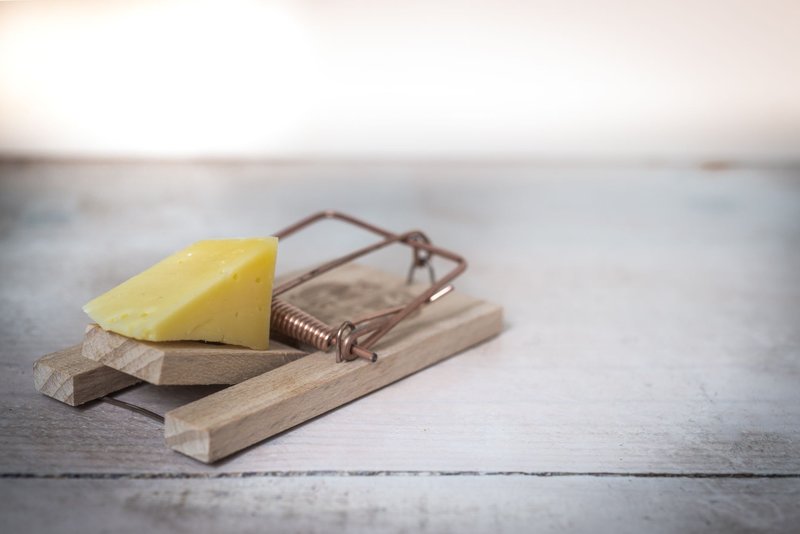
The classic snap trap uses a torsion spring: a bent wire coil twisted tight and held by the trigger. A tiny nudge releases the catch, and the bar swings shut faster than you can blink. It’s a good demonstration of how little force can trigger the release of a large store of energy.
The formula: U = ½kx²
For a spring (or anything that behaves like one), the stored energy is:
U = ½ × k × x²
- U is the elastic potential energy in joules (J)
- k is the spring constant in newtons per meter (N/m), a measure of stiffness
- x is how far the spring is stretched or compressed from its resting length, in meters
This comes from Hooke’s law, which says the force a spring exerts is F = kx. The force grows as you stretch further, so the work done adds up to the area under that line, which is the ½kx² result. If you want the full derivation, OpenStax’s University Physics walks through it.
Worked example. A spring has a stiffness of 200 N/m. You stretch it 0.10 m. How much energy does it store?
- U = ½ × 200 × (0.10)²
- U = ½ × 200 × 0.01
- U = 1 joule
Now stretch it 0.20 m instead. The stretch doubled, but U = ½ × 200 × (0.20)² = 4 joules. The energy quadrupled, because x is squared. This is the detail most worksheets are checking for.
A caveat: rubber bands and many real materials don’t follow Hooke’s law cleanly. Their stiffness changes as they stretch, so ½kx² works as an estimate for them, not an exact answer.
What does not count
Some things look elastic and aren’t.
- Clay and putty. Stretch clay and it stays stretched. The deformation is permanent, so the work you did turned into heat and a new shape instead of stored energy.
- A paperclip bent past its limit. Bend it a little and it springs back. Bend it enough and it stays bent. That’s the elastic limit: past it, the energy goes into rearranging the metal and warming it.
- A book on a high shelf. That’s gravitational potential energy. Nothing is deformed, and the energy comes from height.
- Gasoline and batteries. Their energy is chemical, stored in molecular bonds, not in a change of shape.
- Compressed air. A squeezed air pocket does store energy and pushes back, but physics classes usually treat it under pressure and thermodynamics, not as a spring. (The air inside a tennis ball is a partial exception, since it works alongside the rubber.)
Elastic vs. gravitational potential energy
Both are potential energy, meaning stored energy waiting to become motion. The difference is where it’s stored.
| Elastic potential energy | Gravitational potential energy | |
|---|---|---|
| Stored by | Change in shape | Height above a reference point |
| Formula | ½kx² | mgh |
| Depends on | Stiffness and distance stretched | Mass and height |
| Example | A drawn bow | A book on a shelf |
The two trade places constantly. A bouncing ball has gravitational energy at the top, kinetic energy on the way down, elastic energy at the instant it squashes against the floor, and kinetic energy again on the way up.
Two experiments to try at home
Rubber band launcher. Tape a ruler to a table edge, hook a rubber band over one end, and use it to launch a small toy car along a flat floor. Pull back 5 cm, then 10 cm, and measure how far the car rolls each time. The 10 cm pull should send it roughly four times as far, though friction will blur the result.
Spring or rubber band stretch test. Hang a rubber band from a hook and add identical coins to it one at a time, measuring the stretch after each one. For a metal spring, the stretch grows evenly with each coin. For the rubber band, it won’t. That’s the gap between Hooke’s law and real materials.
FAQ
What is the simplest example of elastic potential energy?
A stretched rubber band. Pull it, and it holds energy. Let go, and the energy turns into motion.
Is elastic potential energy kinetic or potential?
Potential. It’s stored energy. It becomes kinetic energy the moment the object is released.
Does an object need a spring to have elastic potential energy?
No. Any elastic material works: a diving board, a pole, a tennis ball, a rubber band. A spring is just the cleanest case, because it follows Hooke’s law closely.
Where does the energy go when the object returns to its shape?
Mostly into motion, with some lost as heat and sound. A tennis ball loses nearly half of its energy per bounce this way.
Does the human body use elastic potential energy?
Yes. Tendons like the Achilles tendon stretch when your foot lands while running and recoil as you push off, returning energy your muscles would otherwise have to supply.
What happens if I go past the elastic limit?
The object deforms permanently or breaks. Energy still goes in, but it doesn’t come back as motion. A stretched-out spring that no longer returns to its length has crossed that limit.