Italy gave the world the telescope’s first great user, the battery, the radio, the first nuclear reactor and the microprocessor. This list collects 25 scientists born in Italy, each with a birthplace, a birth year, and the one thing they are actually remembered for. Nine of them won Nobel Prizes. Several did their best-known work in another country, and a few are included precisely because their credit is still argued over.
Contents
- Why So Many Scientists Were Born in Italy
- The 25 at a Glance
- Physicists
- Astronomers
- Chemists
- Medicine and Biology
- Mathematicians
- Engineers and Inventors
- Born in Italy, Famous Elsewhere
Why So Many Scientists Were Born in Italy
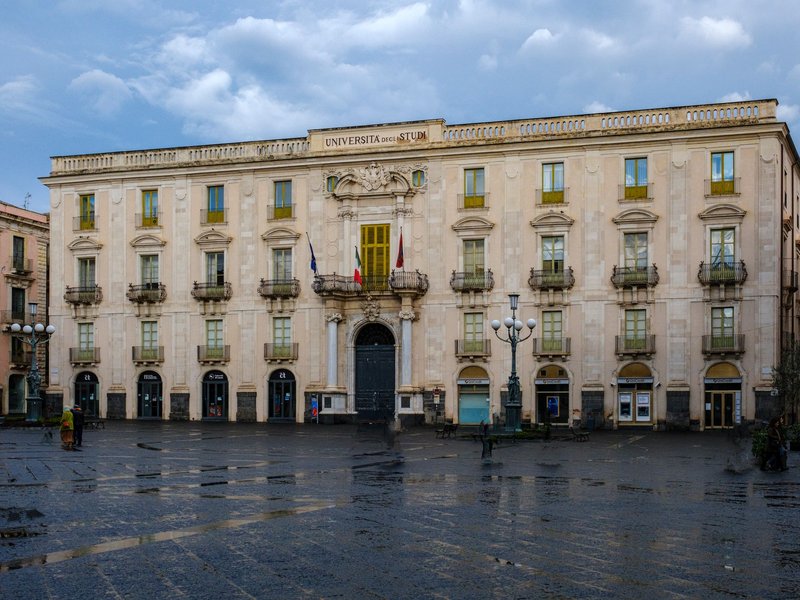
The University of Bologna opened in 1088 and is usually called the oldest university in continuous operation. Padua followed in 1222, and Galileo taught there for 18 years. Add the wealthy Renaissance city-states, where princes and merchants paid for instruments, observatories and court mathematicians, and you get a country with a research culture centuries before most of Europe had one.
The later story is darker. Italy’s 1938 racial laws pushed Jewish scientists out of universities, and Fermi, Segrè, Luria and Levi-Montalcini all ended up working abroad because of it. That is why so many names below have a second country attached. The same split between birthplace and nationality shows up in lists such as scientists actually born in Turkey, not just Turkish, where the people counted often spent their careers somewhere else.
The 25 at a Glance
| # | Scientist | Born | Field | Famous for |
|---|---|---|---|---|
| 1 | Galileo Galilei | Pisa, 1564 | Physics, astronomy | Moons of Jupiter, modern experimental method |
| 2 | Laura Bassi | Bologna, 1711 | Physics | Teaching Newtonian physics at a university |
| 3 | Alessandro Volta | Como, 1745 | Physics | The first electric battery |
| 4 | Guglielmo Marconi | Bologna, 1874 | Physics, engineering | Practical radio telegraphy |
| 5 | Enrico Fermi | Rome, 1901 | Physics | First nuclear reactor |
| 6 | Ettore Majorana | Catania, 1906 | Physics | Majorana fermions, and a famous disappearance |
| 7 | Emilio Segrè | Tivoli, 1905 | Physics | Technetium and the antiproton |
| 8 | Giorgio Parisi | Rome, 1948 | Physics | Order inside disordered systems |
| 9 | Giovanni Schiaparelli | Savigliano, 1835 | Astronomy | The “canali” of Mars |
| 10 | Margherita Hack | Florence, 1922 | Astrophysics | Stellar spectra, a national observatory |
| 11 | Riccardo Giacconi | Genoa, 1931 | Astrophysics | Founding X-ray astronomy |
| 12 | Amedeo Avogadro | Turin, 1776 | Chemistry | Equal volumes, equal molecules |
| 13 | Giulio Natta | Imperia, 1903 | Chemistry | Polypropylene |
| 14 | Francesco Redi | Arezzo, 1626 | Biology | Disproving maggots from meat |
| 15 | Marcello Malpighi | Crevalcore, 1628 | Anatomy | Capillaries |
| 16 | Luigi Galvani | Bologna, 1737 | Physiology | “Animal electricity” |
| 17 | Camillo Golgi | Corteno, 1843 | Neuroscience | Staining single nerve cells |
| 18 | Rita Levi-Montalcini | Turin, 1909 | Neurobiology | Nerve growth factor |
| 19 | Renato Dulbecco | Catanzaro, 1914 | Virology | Tumor viruses, the Human Genome Project |
| 20 | Fibonacci (Leonardo of Pisa) | Pisa, c. 1170 | Mathematics | Bringing Hindu-Arabic numerals to Europe |
| 21 | Gerolamo Cardano | Pavia, 1501 | Mathematics | Solving the cubic equation |
| 22 | Maria Gaetana Agnesi | Milan, 1718 | Mathematics | The first calculus textbook by a woman |
| 23 | Joseph-Louis Lagrange | Turin, 1736 | Mathematics | Analytical mechanics |
| 24 | Antonio Meucci | Florence, 1808 | Invention | The telephone, disputed |
| 25 | Federico Faggin | Vicenza, 1941 | Engineering | The Intel 4004 microprocessor |
Physicists
1. Galileo Galilei
Born: Pisa, 1564 | Field: Physics and astronomy
In January 1610 Galileo pointed a telescope he had improved himself at Jupiter and saw four small points of light that changed position night after night. They were moons orbiting another planet, which made an Earth-centered universe much harder to defend. He also saw the phases of Venus and the mountains of the Moon, and he showed that falling bodies accelerate at the same rate regardless of weight. The Inquisition convicted him in 1633 for defending the Sun-centered model, and he spent his last years under house arrest near Florence.
2. Laura Bassi
Born: Bologna, 1711 | Field: Physics
Bassi earned a doctorate from the University of Bologna in 1732 and went on to teach there, which made her one of the first women in Europe with a university teaching post in science. She was an early champion of Newton’s physics in Italy, running experiments and public disputations at a time when most Italian universities still taught older Aristotelian ideas. She kept lecturing and experimenting while raising a large family.
3. Alessandro Volta
Born: Como, 1745 | Field: Physics
Volta stacked discs of zinc and silver separated by brine-soaked cardboard and produced a steady electric current for the first time. The “voltaic pile” of 1800 was the first battery, and the unit of electric potential, the volt, is named after him. He built it while arguing with Luigi Galvani (entry 16) about whether the electricity came from the animal or from the metals. Volta was right about the metals.
4. Guglielmo Marconi
Born: Bologna, 1874 | Field: Physics and engineering
Marconi was not a theorist. He took the radio waves that Hertz had generated in a lab and made them carry messages across distances that scientists said were impossible because of the Earth’s curve. In December 1901 he received the Morse letter “S” in Newfoundland from a transmitter in Cornwall. He shared the 1909 Nobel Prize in Physics with Ferdinand Braun, and he built his career mostly in Britain.
5. Enrico Fermi
Born: Rome, 1901 | Field: Physics
Fermi is one of the few physicists who excelled at both theory and experiment. He won the 1938 Nobel Prize in Physics for showing that slow neutrons trigger nuclear reactions, and he left Italy straight from the Stockholm ceremony because his wife, Laura, was Jewish. On December 2, 1942, in a squash court under the University of Chicago’s stadium, his team started Chicago Pile-1, the first self-sustaining nuclear chain reaction. Element 100, fermium, carries his name.
6. Ettore Majorana
Born: Catania, 1906 | Field: Theoretical physics
Fermi reportedly ranked Majorana alongside Galileo and Newton. In 1937 Majorana proposed a particle that would be its own antiparticle, now called a Majorana fermion, and physicists are still hunting for one in neutrino research and in quantum computing materials. In March 1938 he boarded a ship from Palermo to Naples and was never seen again. Whether he died at sea, vanished on purpose or lived under another name has never been settled.
7. Emilio Segrè
Born: Tivoli, 1905 | Field: Physics
Segrè was one of Fermi’s Rome students and co-discovered technetium in 1937, the first element made artificially, from a molybdenum strip that came out of a Berkeley cyclotron. He was visiting California when Italy’s racial laws passed, so he stayed. In 1955 he and Owen Chamberlain produced the antiproton at Berkeley, which earned them the 1959 Nobel Prize in Physics.
8. Giorgio Parisi
Born: Rome, 1948 | Field: Theoretical physics
Parisi is the most recent Italian-born physics laureate. He shared the 2021 Nobel Prize in Physics for finding hidden order in disordered systems, starting with spin glasses, magnetic materials whose atoms point in frustrated, conflicting directions. The same mathematics now shows up in flocks of starlings, neural networks and climate variability. He is still based at Sapienza University in Rome, where he studied.
Astronomers
9. Giovanni Schiaparelli
Born: Savigliano, 1835 | Field: Astronomy
During the close approach of Mars in 1877, Schiaparelli mapped dark lines on the surface and called them canali, Italian for channels. English-language writers translated it as “canals,” which suggested someone had dug them, and Percival Lowell built a theory of Martian engineers on the mistake. The lines turned out to be an optical illusion. Schiaparelli’s lasting contribution was real: from his Milan observatory he showed that the Perseid meteor shower follows the orbit of comet Swift-Tuttle.
10. Margherita Hack
Born: Florence, 1922 | Field: Astrophysics
Hack studied the spectra of stars to work out their temperatures and compositions. In 1964 she became director of the Trieste Astronomical Observatory, the first woman to run an Italian observatory, and she held the job until 1987. She also became a household name in Italy as a science communicator, with a plain-spoken style and a long public record on atheism and animal rights. She was active until her death in 2013 at age 91.
11. Riccardo Giacconi
Born: Genoa, 1931 | Field: Astrophysics
X-rays from space are absorbed by the atmosphere, so nobody could study them from the ground. Giacconi pushed for instruments above it, and in 1970 the Uhuru satellite, launched from a platform off the coast of Kenya, produced the first X-ray map of the sky. He moved to the United States early in his career and led the effort that became the Chandra X-ray Observatory. He shared the 2002 Nobel Prize in Physics for opening X-ray astronomy.
Chemists

12. Amedeo Avogadro
Born: Turin, 1776 | Field: Chemistry
In 1811 Avogadro proposed that equal volumes of different gases, at the same temperature and pressure, contain the same number of molecules. That one idea explained why gases combine in simple ratios, and it separated atoms from molecules. Almost nobody paid attention for roughly 50 years, until fellow Italian chemist Stanislao Cannizzaro revived it at the 1860 Karlsruhe congress. Avogadro never calculated the number that carries his name.
13. Giulio Natta
Born: Imperia, 1903 | Field: Chemistry
Natta used a catalyst developed by Karl Ziegler to build polypropylene with a regular, ordered molecular structure in 1954. That order is what makes the plastic strong and heat-resistant enough for food containers, car parts and carpet fiber. Ziegler and Natta shared the 1963 Nobel Prize in Chemistry. Natta worked at the Politecnico di Milano, and his employer Montecatini sold the plastic as Moplen.
Medicine and Biology
14. Francesco Redi
Born: Arezzo, 1626 | Field: Biology
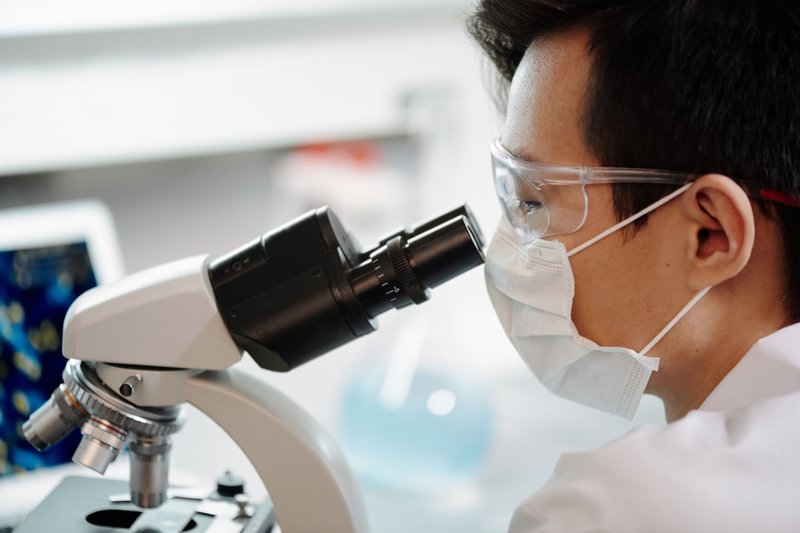
Redi put pieces of meat in jars. He left some open, covered some with gauze and sealed others, and found that maggots appeared only where flies could land. In 1668 this was a direct challenge to the belief that rotting meat generated life by itself. It is one of the cleanest controlled experiments of the 17th century, and he ran it with no more equipment than a kitchen.
15. Marcello Malpighi
Born: Crevalcore, 1628 | Field: Anatomy
William Harvey had argued that blood circulates, but nobody had seen how it got from arteries to veins. In 1661 Malpighi looked at a frog’s lung under a microscope and found the capillaries, the tiny vessels that close the loop. He also described red blood cells, the structure of the skin and early insect anatomy, and he is often called the founder of microscopic anatomy.
16. Luigi Galvani
Born: Bologna, 1737 | Field: Physiology
In the 1780s Galvani noticed that dissected frog legs twitched when touched with metal tools during an electrical spark. He concluded that animals carry their own “animal electricity.” He was half right: nerves do run on electrical signals, which makes him a founder of neurophysiology, but his explanation of the metal contact was wrong, and Volta (entry 3) proved it. The word galvanize comes from him.
17. Camillo Golgi
Born: Corteno, 1843 | Field: Neuroscience
In 1873 Golgi worked out a stain, now called the black reaction, that colors a small fraction of neurons completely black against a clear background. It was the first time anyone could see an entire nerve cell. He shared the 1906 Nobel Prize in Physiology or Medicine with Santiago Ramón y Cajal, who used Golgi’s own method to prove that neurons are separate cells. Golgi believed in a continuous network and argued against Cajal in his Nobel lecture.
18. Rita Levi-Montalcini
Born: Turin, 1909 | Field: Neurobiology
Barred from university work as a Jewish woman after 1938, Levi-Montalcini built a small lab in her bedroom and studied chick embryos. After the war she moved to Washington University in St. Louis, where she identified nerve growth factor, a protein that tells developing nerve cells to grow. She shared the 1986 Nobel Prize in Physiology or Medicine with Stanley Cohen. She lived to 103 and was a life senator in Italy.
19. Renato Dulbecco
Born: Catanzaro, 1914 | Field: Virology
Dulbecco studied medicine in Turin, where Levi-Montalcini and Salvador Luria were his fellow students under the same professor, and all three later won Nobel Prizes. He moved to the United States and showed how tumor viruses insert their genes into the DNA of the cells they infect, which earned him the 1975 Nobel Prize in Physiology or Medicine. In a 1986 article in Science he argued for sequencing the human genome, helping to launch the project.
Mathematicians
20. Fibonacci (Leonardo of Pisa)
Born: Pisa, c. 1170 | Field: Mathematics
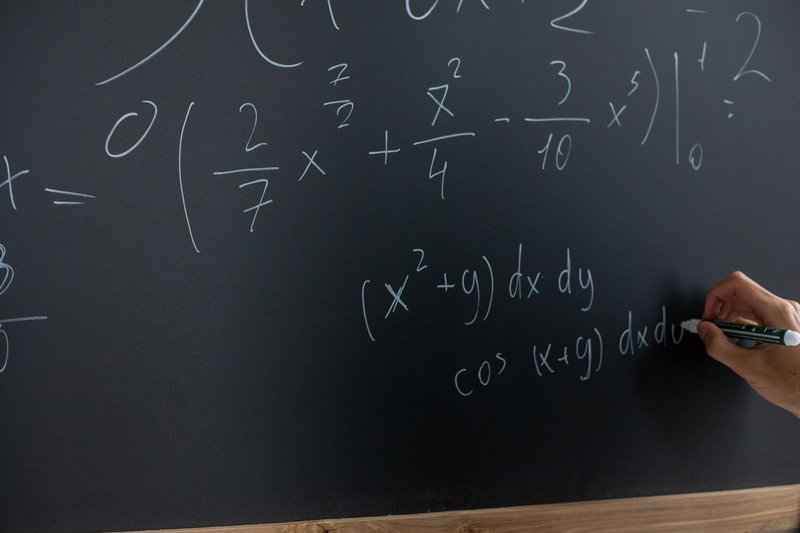
Leonardo grew up in a trading port in what is now Algeria, where he learned the Hindu-Arabic numerals that Europe’s merchants had never used. His 1202 book Liber Abaci taught Europeans to calculate with 0 through 9 instead of Roman numerals. The sequence named after him, 1, 1, 2, 3, 5, 8 and so on, appears in the book as a problem about breeding rabbits. Indian mathematicians had described it centuries earlier.
21. Gerolamo Cardano
Born: Pavia, 1501 | Field: Mathematics
His 1545 book Ars Magna was the first printed solution for cubic equations. Cardano got the method from Niccolò Tartaglia under a promise of secrecy and published it anyway, which started a bitter feud. His student Lodovico Ferrari then solved the quartic equation. Cardano also wrote the first systematic treatment of probability, a book on dice games, and he was a practicing physician too.
22. Maria Gaetana Agnesi
Born: Milan, 1718 | Field: Mathematics
At 30 Agnesi published Instituzioni analitiche (1748), a two-volume textbook that took students from algebra through calculus, and it was widely translated. It also contains a bell-shaped curve called the versiera. An English translator confused the word with avversiera, “witch,” and the curve has been called the “witch of Agnesi” ever since. She gave up mathematics in later life to work with the poor in Milan.
23. Joseph-Louis Lagrange
Born: Turin, 1736 | Field: Mathematics
Born Giuseppe Lodovico Lagrangia, he was Frederick the Great’s pick to succeed Euler at the Berlin Academy in 1766 and later moved to Paris. His Mécanique analytique (1788) recast Newtonian mechanics in pure algebra, with no diagrams. The Lagrange points, where a small object stays put relative to two large bodies, are named after him. The James Webb Space Telescope sits at one of them.
Engineers and Inventors
24. Antonio Meucci
Born: Florence, 1808 | Field: Invention
Meucci built an electric voice-communication device in Havana and later in Staten Island, New York, in the 1850s, so that he could talk to his wife, who was bedridden. In 1871 he filed a caveat, a notice of intent to patent, but was too poor to renew it after 1874. Alexander Graham Bell received the telephone patent in 1876. In 2002 the U.S. House of Representatives passed a resolution acknowledging Meucci’s work on the telephone. It did not overturn Bell’s patent, and historians still disagree about how close Meucci’s device was to a working telephone.
25. Federico Faggin
Born: Vicenza, 1941 | Field: Engineering
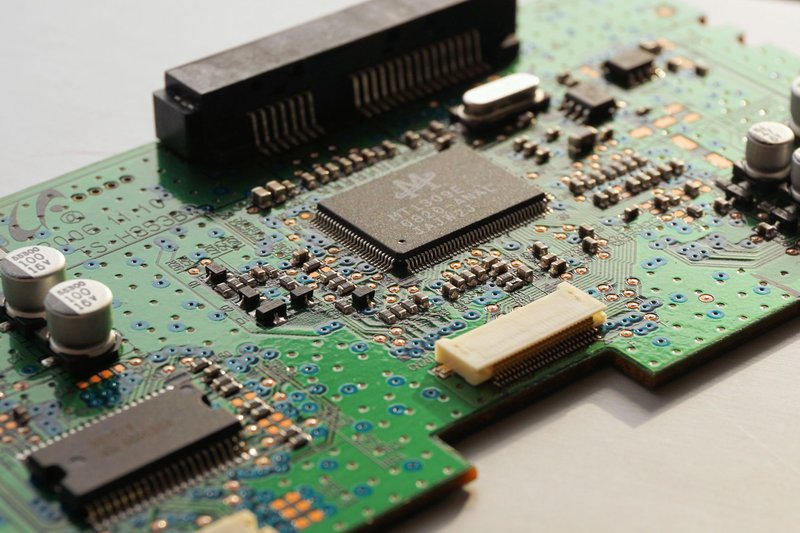
Faggin left Italy for the U.S. in the 1960s and joined Intel, where he led the design of the 4004, the first commercial microprocessor, released in 1971. The chip carries his initials, “FF,” etched on the silicon. He developed the silicon-gate process that made it manufacturable, then founded Zilog and designed the Z80, which powered a generation of early home computers.
Born in Italy, Famous Elsewhere
Nine of the 25 did their defining work outside Italy: Fermi in Chicago, Segrè in Berkeley, Giacconi in the United States, Dulbecco in California, Levi-Montalcini in St. Louis, Faggin in Silicon Valley, Meucci in New York, Lagrange in Berlin and Paris, and Marconi in England. Racial laws, funding and better-equipped labs pushed them out. A list limited to scientists who stayed in Italy would lose most of its Nobel laureates.