Hungary has logged just under 400 bird species across an area smaller than Indiana. That density isn’t an accident. The country sits on a migratory crossroads where the Great Hungarian Plain — the puszta — funnels birds between northern breeding grounds and African wintering sites, and the lowland grasslands here are some of the last large fragments of their kind left in Europe.
This isn’t the full taxonomic checklist. If you want all 397 species in alphabetical order, Wikipedia has you covered. This is the shorter, more useful version: the birds worth knowing, what makes each one special, and the practical stuff about when and where you’d actually run into them.
Table of Contents
- The National Bird Question
- Grassland Giants
- Birds of Prey
- Wetland Spectacles
- Woodpeckers: All Eight
- Owls After Dark
- Common Birds You’ll See Everywhere
- Where to Go Birdwatching
- When to Visit: A Seasonal Cheat Sheet
- Quick Reference Table
The National Bird Question
Hungary has two birds people argue about, and the argument is more interesting than the answer.
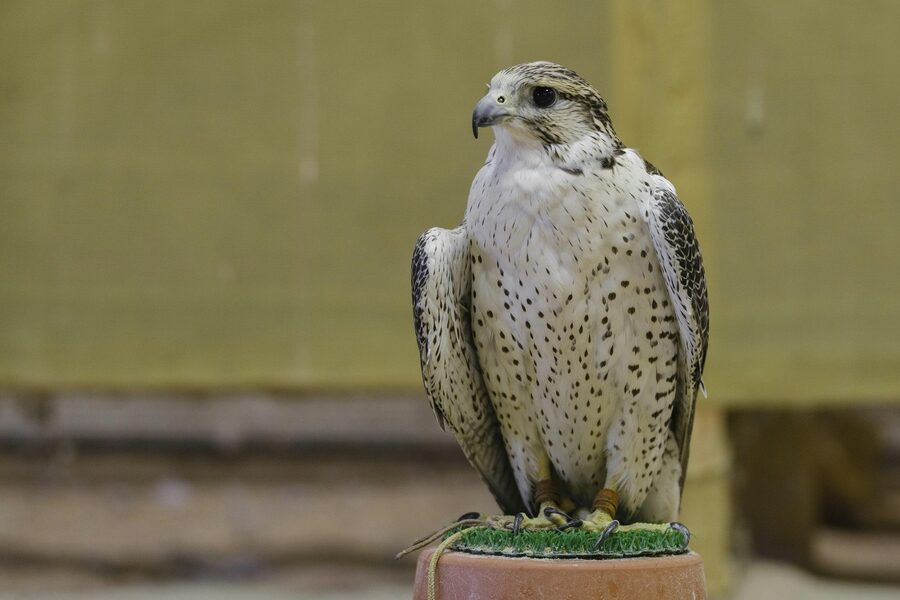
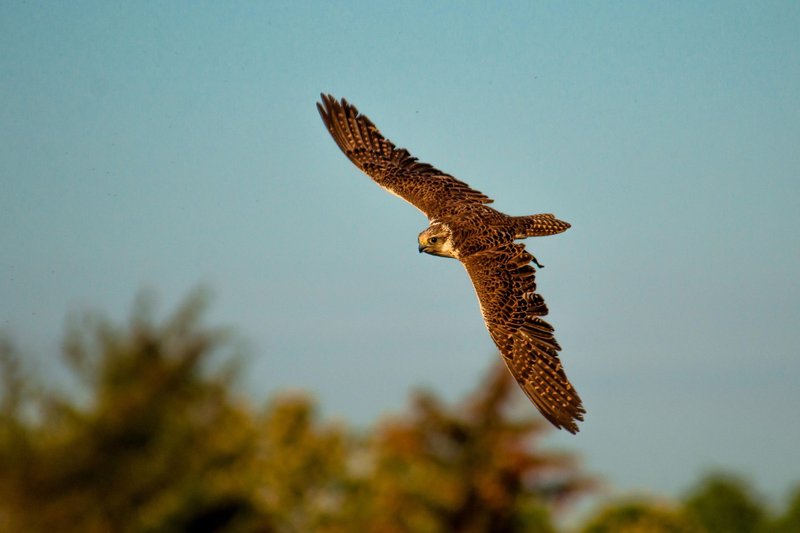
The Saker Falcon (Falco cherrug) is the official one. It was voted Hungary’s national bird in 2012, and it has deep roots — the turul, the mythical bird of Magyar origin legend, is usually depicted as a saker or a related falcon. This is a serious raptor: a heavy, powerful falcon that hunts ground squirrels and pigeons across open country, often by flying low and fast rather than the vertical stoop you’d expect from a peregrine. Hungary is one of its European strongholds, with conservation work bringing the population back from real trouble. The IUCN still lists it as Endangered globally, which makes the Hungarian population genuinely important.
The Great Bustard (Otis tarda) is the unofficial rival, and the case for it is strong. It’s one of the heaviest flying birds on Earth — males can top 16 kilograms — and the puszta is its kingdom.
Grassland Giants
The Great Bustard deserves its own moment. Picture a turkey-sized bird with the bulk of a small deer, strutting across open grassland. In spring the males perform one of the strangest displays in the bird world: they essentially turn themselves inside out, inflating a throat sac and fanning white feathers until they look like a giant cotton ball visible across a kilometer of flat plain.
Hungary protects roughly 1,500 of these birds, mostly in the Kiskunság and around Dévaványa. They’re shy, they need uninterrupted grassland, and they’ve vanished from most of their former range. Seeing one is the closest thing Hungarian birding has to a pilgrimage. The grasslands that sustain them are part of a much larger picture — these plains rank among the country’s most important natural resources of Hungary, alongside its forests, rivers, and soils, and their survival is exactly what makes this kind of birding possible.
The grassland also holds the Stone Curlew, a cryptic, large-eyed bird that’s far easier to hear than see, and the Tawny Pipit, a pale, long-legged songbird of bare, sandy ground.
Birds of Prey
Beyond the saker, Hungary’s open country is excellent raptor territory.
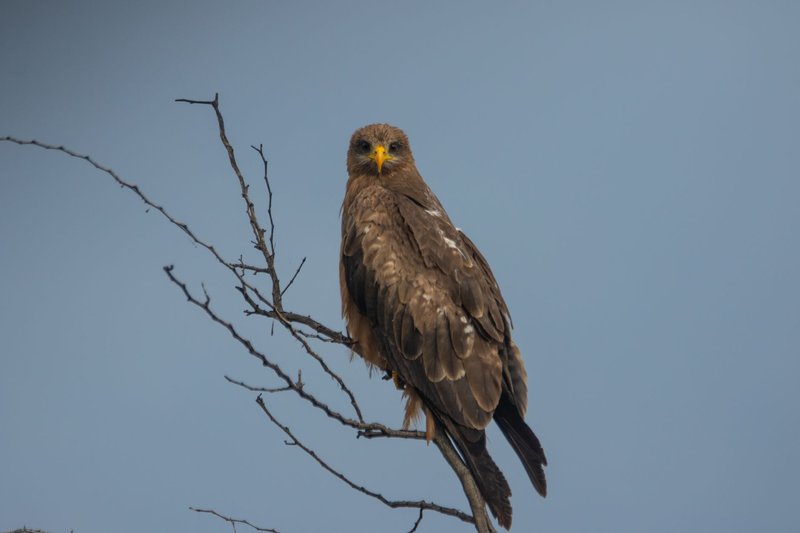
The Eastern Imperial Eagle (Aquila heliaca) is the headline act — a massive dark eagle with pale shoulder patches that nests in the hills and hunts over the plains. Hungary is a European stronghold, and the species is a conservation flagship here.
The Red-footed Falcon is the charmer: a small, slate-gray falcon (rust-colored in males) that nests colonially, often in old rook nests, and hunts insects on the wing over the puszta at dusk. The Montagu’s Harrier quarters low over grain fields and grassland, and the Western Marsh Harrier does the same over every decent reedbed in the country.
Wetland Spectacles
If the grassland is Hungary’s signature, the wetlands are its showstopper.
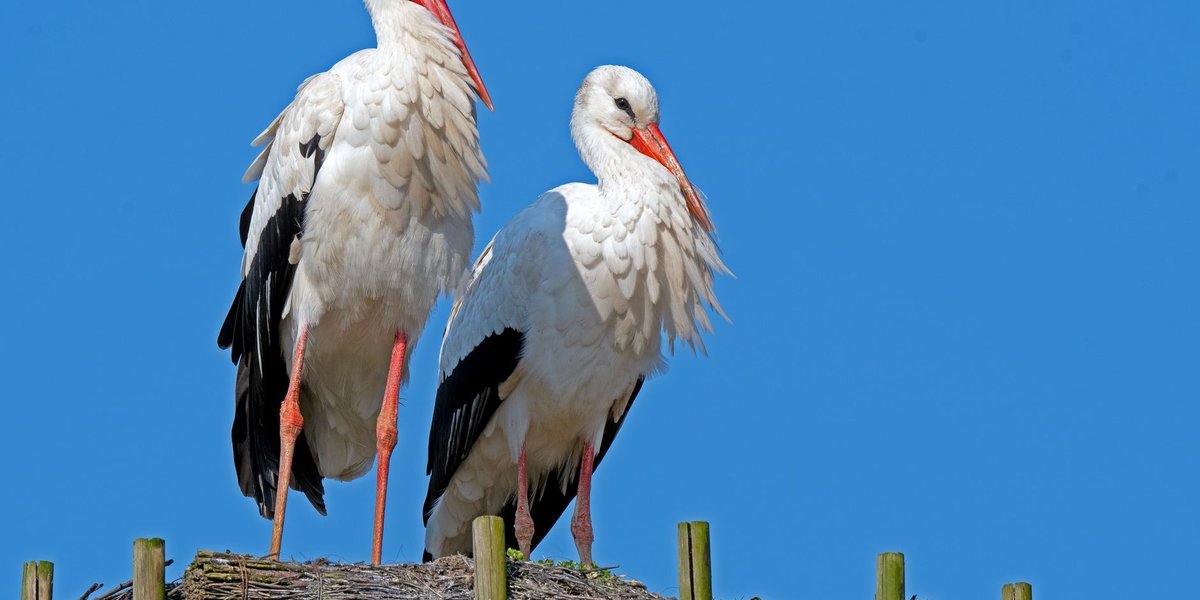
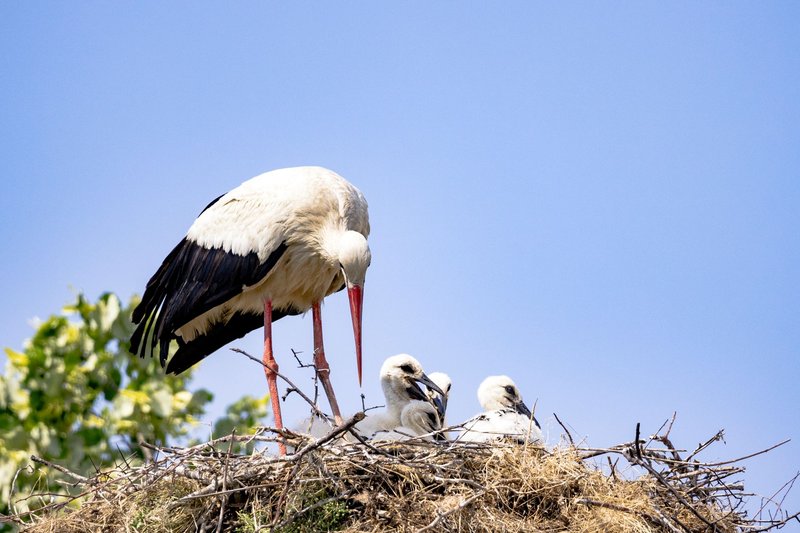
The White Stork (Ciconia ciconia) is the bird most Hungarians grow up with. They nest on chimneys, poles, and purpose-built platforms in villages across the country, and their spring arrival is a genuine cultural marker. Then there’s the Black Stork, a shyer forest-dwelling cousin you’ll only find in quiet woodland near water.
Hungary’s marshes also hold a stack of herons and their relatives: the Great Egret, the smaller Little Egret, the secretive Purple Heron, the Eurasian Spoonbill with its ridiculous flattened bill, and the Pygmy Cormorant, a Balkan-region specialty that thrives in the reedy backwaters of the Tisza.
But the real wetland event is the Common Crane. Every autumn, well over 100,000 cranes stage in the Hortobágy on their way south, roosting on shallow flooded grassland and pouring out at dawn in long, bugling skeins. It’s one of Europe’s great wildlife gatherings, and it happens on a national park’s doorstep.
Woodpeckers: All Eight
Hungary is a woodpecker hotspot — eight breeding species, which is most of what mainland Europe has to offer. The forests of the Bükk and Zemplén hills are where you stack them up:
- Black Woodpecker — crow-sized, all black with a red crown, the giant of the group
- Great Spotted Woodpecker — the common, boldly pied one you’ll see at feeders
- Middle Spotted Woodpecker — an oak specialist with a full red cap
- Lesser Spotted Woodpecker — sparrow-sized and easy to miss
- White-backed Woodpecker — a rare lover of old, dead-wood-rich forest
- Syrian Woodpecker — a southeastern species that took to towns and orchards
- Grey-headed Woodpecker — quieter and greener than the green woodpecker
- European Green Woodpecker — the “yaffle,” famous for ant-hunting on the ground
The middle-spotted, white-backed, and grey-headed woodpeckers are the prizes — birds that serious listers travel to Hungary specifically to find.
Owls After Dark
Six owl species breed here, and the standout is the Eurasian Eagle-Owl (Bubo bubo) — a powerful predator with ear tufts and burning orange eyes that nests on quarry cliffs and hunts everything up to the size of a young fox. The tiny Little Owl is a creature of barns and ruins, often visible in daylight perched on a post, while the Long-eared Owl has a party trick: in winter, flocks of them roost together in town-square conifers, sometimes a dozen in one tree.
Common Birds You’ll See Everywhere
Not every notable Hungarian bird is a rarity. Some of the best are the ones you’ll see on a casual walk.
The European Bee-eater is borderline tropical — a rainbow-colored bird that nests in sandy banks and hawks dragonflies over the lowlands all summer. The European Roller, electric blue and cinnamon, perches on wires across the puszta. The Hoopoe, with its pinkish crest and butterfly flight, probes village lawns for grubs. And the Common Nightingale floods riverside thickets with song on May nights.
In gardens and parks you’ll get the European staples — Great Tit, Blue Tit, Eurasian Blackbird, European Robin, House Sparrow, and the Common Chaffinch — plus the European Goldfinch and the Hawfinch, a heavy-billed finch that can crack a cherry stone.
Where to Go Birdwatching
Three places do most of the work.
Hortobágy National Park is the heart of it — a UNESCO World Heritage Site and the largest continuous natural grassland in Europe. This is crane central in autumn, bustard and raptor country year-round, and the spiritual home of the puszta. The park’s own birding information is the place to start planning.
Kiskunság National Park, between the Danube and the Tisza, is a patchwork of sandy grassland, alkaline lakes, and marsh. It’s your best shot at the Great Bustard and a strong site for Red-footed Falcons and bee-eaters.
Lake Tisza (Tisza-tó), a large shallow reservoir, is a wetland magnet — spoonbills, Pygmy Cormorants, herons, terns, and a famous waterfowl-rich bird reserve you can explore by boat.
For deeper trip planning, MME — Hungary’s BirdLife partner runs reserves and publishes site information across the country.
When to Visit: A Seasonal Cheat Sheet
Timing changes everything in Hungary.
- Spring (April–May) is peak song and display. Storks return, bustards display, woodpeckers drum, and the bee-eaters and rollers pour back in. The best all-round window.
- Summer (June–August) is for breeding specialties — bee-eaters at the nest, harriers over the fields, and warm-weather visitors at their most active.
- Autumn (September–November) is crane season. The Hortobágy gathering peaks in October, and it’s the single most spectacular thing on the Hungarian calendar.
- Winter (December–February) thins the list but concentrates raptors, owls, and large flocks of geese on the plains, plus those communal Long-eared Owl roosts.
Quick Reference Table
| Species | Group | Best Site | Best Season |
|---|---|---|---|
| Saker Falcon | Raptor | Hortobágy / Kiskunság | Spring–Summer |
| Great Bustard | Grassland | Kiskunság / Dévaványa | Spring (display) |
| Eastern Imperial Eagle | Raptor | Hortobágy hills | Year-round |
| White Stork | Wetland | Villages countrywide | Spring–Summer |
| Common Crane | Wetland | Hortobágy | Autumn |
| Eurasian Spoonbill | Wetland | Lake Tisza | Spring–Summer |
| Black Woodpecker | Woodpecker | Bükk / Zemplén forests | Year-round |
| Eurasian Eagle-Owl | Owl | Quarry cliffs, hills | Year-round |
| European Bee-eater | Lowland | Kiskunság sand banks | Summer |
| European Roller | Lowland | Puszta wires | Summer |
Hungary rewards the birder who plans around the calendar. Come in May for the full chorus, or come in October and stand under a sky full of cranes. Either way, the puszta delivers something most of Europe lost a century ago: room for the big, wild grassland birds to still be wild.