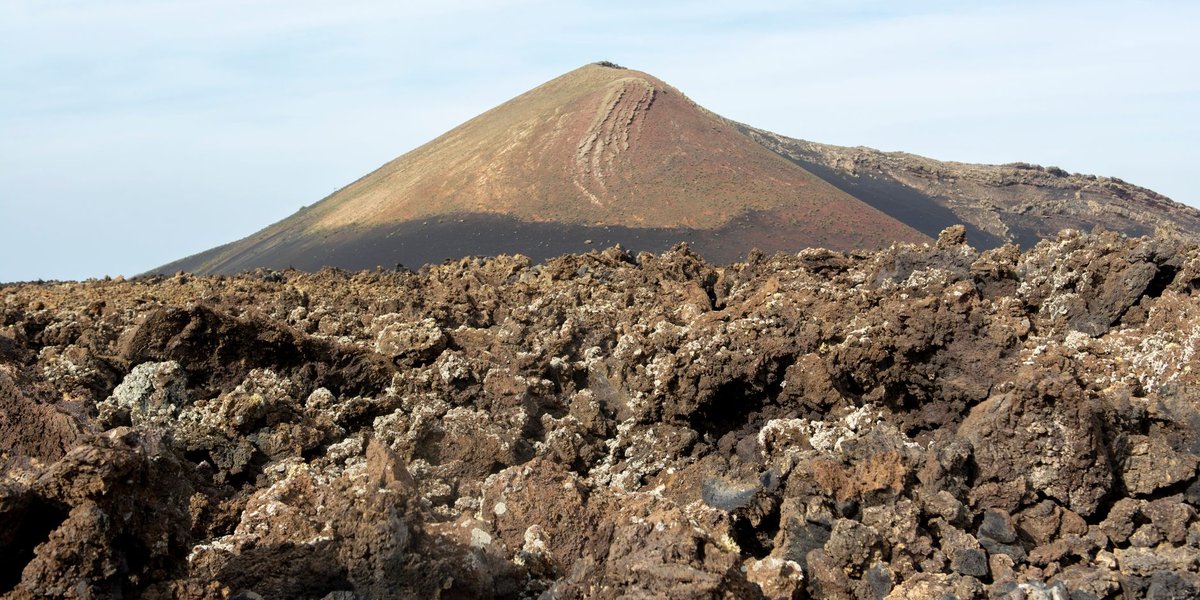
Yes, Niger has volcanoes. Not the smoking, lava-spitting kind you’d picture from Hawaii or Iceland, but a sprawling field of roughly 150 fault-controlled cones spread across about 1,050 square kilometers of the southern Aïr Mountains. It’s called the Todra Volcanic Field, and almost nobody outside of geology circles has heard of it.
That’s a shame, because the story is genuinely interesting. Niger sits on some of the oldest crust in Africa, and yet a corner of it kept erupting long after most of the continent went quiet. One of these cones may have last erupted within the past few centuries.
Here’s everything worth knowing.
Table of Contents
- Are there volcanoes in Niger?
- Where is the Todra Volcanic Field?
- How the volcanoes formed
- Eruption history: are they active?
- What the volcanoes are made of
- The lesser-known Tin Taralle field
- Can you visit the volcanoes in Niger?
- Quick facts
- FAQ
Are there volcanoes in Niger?
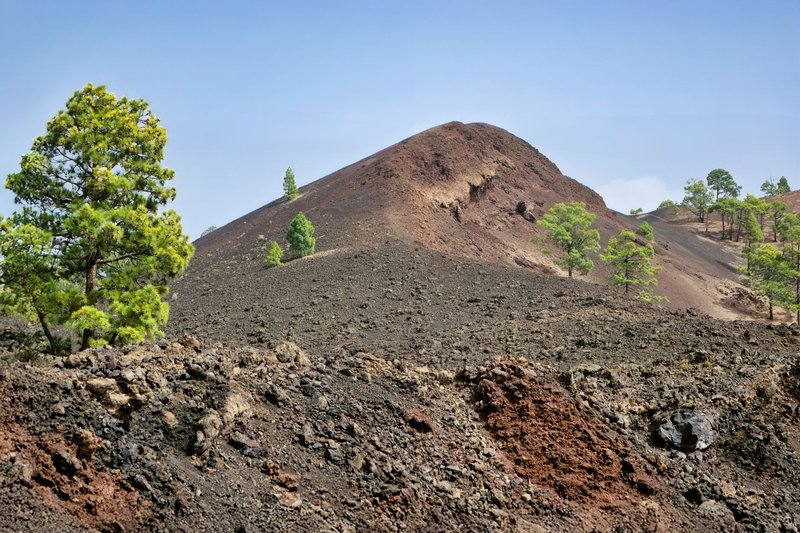
Niger has exactly one recognized volcanic field with eruptions recent enough to count in geological bookkeeping: the Todra Volcanic Field. The Smithsonian’s Global Volcanism Program lists it as the country’s single Holocene volcano — meaning it has erupted within roughly the last 11,700 years.
So Niger isn’t a volcanic hotspot in the way Indonesia or East Africa is. There’s no active vent puffing away today, no monitored crater, no evacuation plans. What it has is a large, geologically young field that went quiet recently enough to keep geologists curious. “Recently,” in this world, can mean a few hundred years.
The field is named after the Todra area in the Aïr region, and it’s the closest thing Niger has to a volcanic landscape you could walk across.
Where is the Todra Volcanic Field?
The field sits in the southern Aïr Mountains, a granite massif in north-central Niger that rises out of the southern Sahara. The Aïr is the country’s high country — a crystalline shield poking up through the sand, home to the Tuareg and, historically, a trade and caravan corridor.
Todra’s cones are clustered in and around the Téfidet graben, a fault-bounded valley that drops between blocks of much older basement rock. That setting matters. The volcanoes didn’t pop up randomly; they followed the cracks. Magma found the faults and rose along them, which is why the cones line up rather than scatter.
The whole field covers about 1,050 square kilometers. For scale, that’s a bit larger than the city of Los Angeles, dotted with around 150 small volcanoes instead of freeways.
How the volcanoes formed
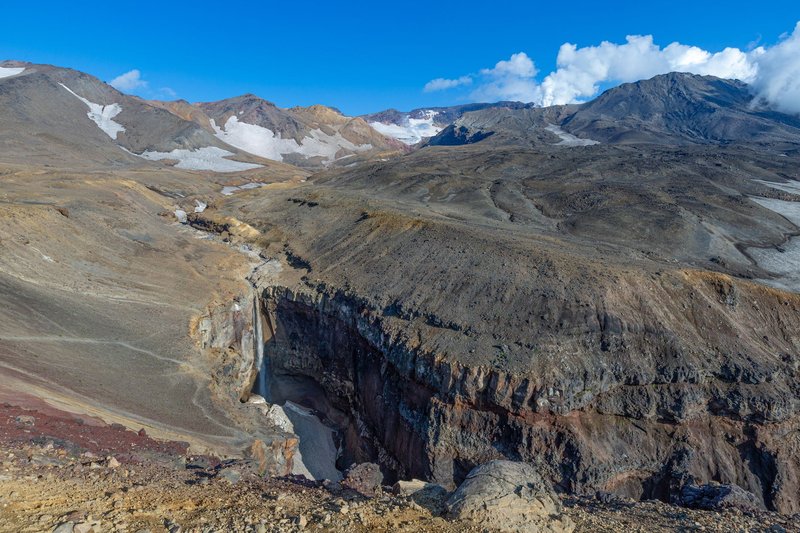
The Aïr Mountains are part of the Tuareg Shield, a chunk of ancient Precambrian crust assembled well over half a billion years ago during the building of the supercontinent Gondwana. That rock is the foundation. The volcanism came much, much later, and on top.
The trigger was extension — the crust pulling apart along the Téfidet graben. When continental crust stretches and thins, it cracks, pressure drops in the mantle below, and rock starts to melt. That melt rises through the new faults and erupts at the surface. This is the same basic mechanism that built volcanic fields across the Sahara, from Niger to Chad’s Tibesti.
The Todra field built itself in two acts:
- The trachytic phase — roughly 30 volcanoes erupted thick, sticky, silica-rich lava (trachyte and phonolite). This stuff doesn’t flow far. It piles up into steep domes and plugs.
- The basaltic phase — around 130 cones followed, this time erupting runnier basaltic magma that builds classic cinder cones and short lava flows.
That ordering — evolved, silica-rich lavas first, then a flood of plain basalt — is a recognizable signature of a maturing rift, and it’s part of what makes Todra a useful natural laboratory.
Eruption history: are they active?
Here’s the headline most database entries bury: at least one Todra cone may have erupted within the last few centuries. Not millions of years ago. Centuries.
The Smithsonian and the COMET volcano database both flag the field as Holocene, with the youngest activity estimated at well under a thousand years. The dating is uncertain — there’s no eyewitness record, and the Sahara isn’t crawling with monitoring stations — but the geomorphology of the freshest cones backs it up. Young volcanic features erode slowly in a dry climate, and the youngest Todra cones still look sharp.
So is it active? In the strict, monitored sense, no. There’s no current unrest. But “dormant” is closer to the truth than “extinct.” A field that erupted a few hundred years ago hasn’t necessarily finished. Geologists would call Todra potentially active rather than dead, and that’s the honest answer.
What the volcanoes are made of
The rock types tell the whole formation story in miniature:
- Trachyte and phonolite — the early, evolved lavas. Light-colored, silica-and-alkali-rich, viscous. These built the domes and plugs that erupted first.
- Basalt — the later, dominant rock. Dark, iron-and-magnesium-rich, fluid. This is what most of the ~130 younger cones are made of.
The shift from trachyte to basalt over the life of the field reflects how the magma source and plumbing evolved. Early on, magma sat in the crust long enough to differentiate into those evolved, silica-rich melts. Later, basalt punched straight through from the mantle with less time to change on the way up. If you ever stood in the field, you’d literally be walking across two different chapters of the same geological story.
The lesser-known Tin Taralle field
Todra gets what little attention Niger’s volcanoes receive, but it isn’t completely alone. Nearby lies the smaller, even more obscure Tin Taralle volcanic field, another cluster of cones in the same broad Aïr region tied to the same extensional fault system.
There’s far less published about Tin Taralle, and it rarely shows up in the casual fact-table listings that dominate searches for Niger volcanoes. But it reinforces the bigger point: this part of the Aïr saw more than a single one-off burst of volcanism. The whole region was geologically restless, and Todra is just the best-documented piece of it.
Can you visit the volcanoes in Niger?
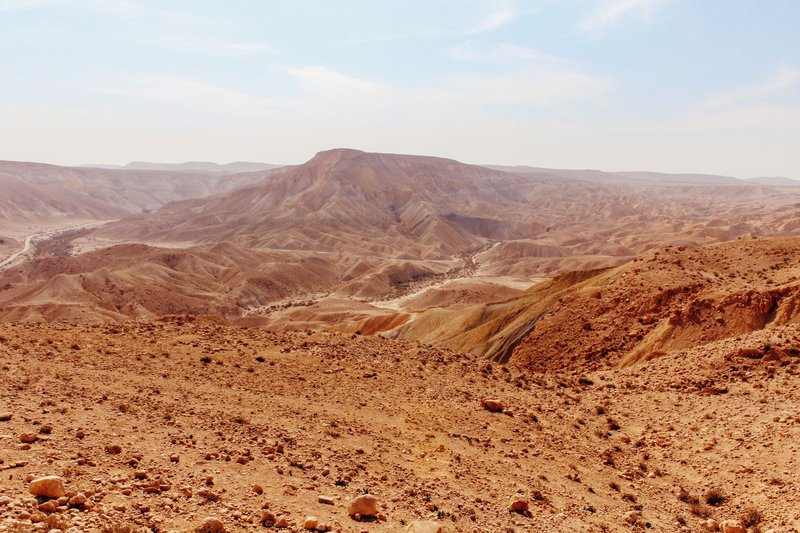
Technically, the volcanoes sit in the Aïr Mountains, a starkly beautiful region of granite peaks, oases, and Tuareg communities that has historically drawn adventurous desert travelers. The neighboring Ténéré desert and the broader Aïr massif make up a UNESCO-listed natural reserve.
In practice, though, this is not a casual trip. Much of northern Niger, including the Aïr region, has faced significant security concerns for years, and most governments — including the U.S. State Department — advise against travel there. Check your own government’s current advisory before planning anything, and treat the situation as fluid.
If you’re after the scenery without the risk, the Aïr’s landscapes show up in plenty of documentary photography of the central Sahara. The volcanoes themselves remain a destination mostly for the determined few — and for now, for geologists with the right permissions.
Quick facts
| Feature | Detail |
|---|---|
| Field name | Todra Volcanic Field |
| Location | Southern Aïr Mountains, north-central Niger |
| Setting | Téfidet graben, on the Tuareg Shield |
| Area | ~1,050 km² |
| Number of cones | ~150 |
| Formation | ~30 trachytic/phonolitic volcanoes, then ~130 basaltic cones |
| Most recent eruption | Possibly within the last few centuries (Holocene) |
| Status | Dormant / potentially active, not monitored |
| Other field nearby | Tin Taralle volcanic field |
FAQ
Are there active volcanoes in Niger? Not actively erupting or monitored today. The Todra Volcanic Field is classified as Holocene, meaning it erupted within the last ~11,700 years — possibly within the last few centuries — so it’s best described as dormant rather than extinct.
How many volcanoes does Niger have? The Todra Volcanic Field contains roughly 150 cones: about 30 early trachytic and phonolitic volcanoes followed by around 130 basaltic cones, spread over about 1,050 km².
Where are the volcanoes in Niger? In the southern Aïr Mountains in north-central Niger, concentrated along the Téfidet graben, a fault valley cutting through ancient Tuareg Shield rock.
What is the highest volcano in Niger? Niger’s volcanoes are mostly small cones rather than towering stratovolcanoes, so there’s no famous high peak the way there is for West Africa’s tallest volcano, Mount Cameroon. The Aïr’s elevation comes mainly from its granite basement, not from the volcanic cones themselves.
Can you visit the Todra volcanoes? The field lies in the Aïr Mountains, a scenically stunning but security-sensitive region. Most governments advise against travel to northern Niger, so visits are realistically limited to those with specific reasons and permissions. Always check current travel advisories first.