One country mines roughly four out of every five tons of tungsten on Earth. That’s not a typo, and it’s not a historical artifact — it’s the situation right now, in 2025. China’s grip on tungsten is tighter than its hold on almost any other strategic metal, and in February 2025 Beijing reminded everyone exactly how that leverage works.
So when you search for which countries produce the most tungsten, the honest answer is “China, and then a long way down to everyone else.” But the gap between the list of producers and the list of countries that could produce is where the real story lives. Australia sits on more than half a million tons of tungsten reserves and mines about as much as Austria. The UK has a fully built mine that hasn’t run in years. Understanding why is the difference between memorizing a table and actually knowing how this market works.
Table of Contents
- TLDR: The 2025 ranking
- Production by country (full table)
- Country profiles: the top producers
- Reserves vs. production: the disconnect
- Why China dominates tungsten
- What tungsten is actually used for
- FAQ
TLDR: The 2025 Ranking
China produced roughly 67,000 metric tons of tungsten in 2025 — about 79% of the world’s ~85,000-ton total. Vietnam is a distant second at around 3,000 tons. After that, no single country clears the 3,000-ton mark.
The 2025 order, by mine production of tungsten content:
- China — ~67,000 t
- Vietnam — ~3,000 t
- Kazakhstan — ~2,400 t
- Russia — ~2,000 t (tied)
- North Korea — ~2,000 t (tied)
- Bolivia — ~1,700 t
- Rwanda — ~1,300 t
- Australia — ~1,000 t
- Austria — ~840 t
- Spain — ~800 t
The headline isn’t the ranking. It’s the concentration. Knock China out and global supply collapses by nearly 80% overnight — which is precisely the vulnerability that makes tungsten a national-security conversation in Washington and Brussels.
Production by Country (Full Table)
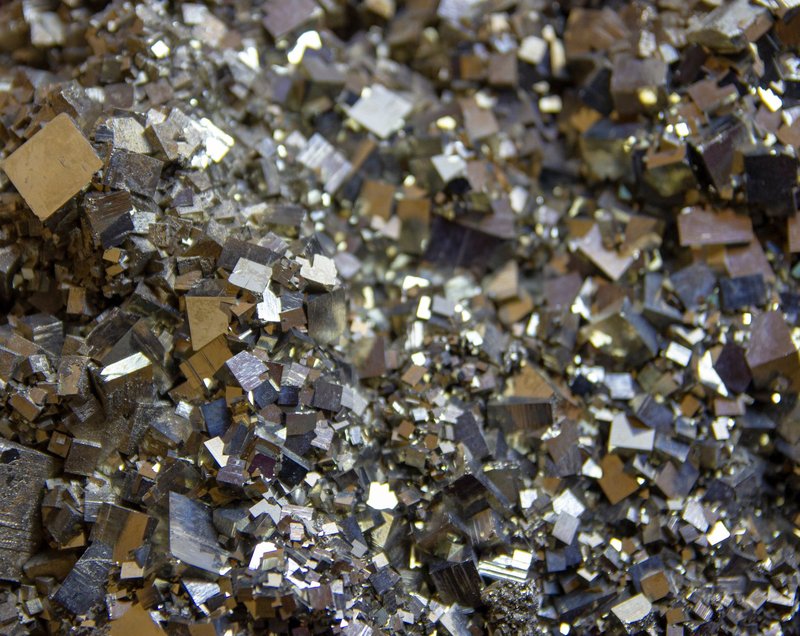
Figures are mine production measured in metric tons of contained tungsten, based on the U.S. Geological Survey’s 2025 Mineral Commodity Summaries. Measuring contained tungsten rather than raw ore or concentrate is what makes the numbers comparable across countries — ore grades and concentrate forms vary wildly, so you compare the metal itself.
| Rank | Country | 2025 Production (t) | Reserves (t) |
|---|---|---|---|
| 1 | China | ~67,000 | ~2,400,000 |
| 2 | Vietnam | ~3,000 | ~170,000 |
| 3 | Kazakhstan | ~2,400 | large, undisclosed |
| 4 | Russia | ~2,000 | ~400,000 |
| 4 | North Korea | ~2,000 | ~29,000 |
| 6 | Bolivia | ~1,700 | small |
| 7 | Rwanda | ~1,300 | small |
| 8 | Australia | ~1,000 | ~570,000 |
| 9 | Austria | ~840 | ~10,000 |
| 10 | Spain | ~800 | ~66,000 |
| — | World total | ~85,000 | ~4,600,000 |
Read the two number columns side by side and the disconnect jumps out. Australia produces about 1,000 tons but holds 570,000 in reserves. Vietnam mines three times as much as Australia from a reserve base less than a third the size. That mismatch isn’t a measurement error — it’s the whole game, and we’ll get to why below.
Country Profiles: The Top Producers
China
China doesn’t just lead; it operates on a different scale entirely. Its ~67,000 tons come from hard-rock and skarn deposits concentrated in Jiangxi, Hunan, and Henan provinces, and the country sits on roughly 2.4 million tons of reserves — over half the world’s total. Crucially, China’s dominance isn’t only in the ground. The country also controls the bulk of global tungsten processing — turning concentrate into ammonium paratungstate, tungsten carbide, and finished tools. Even tungsten mined elsewhere often gets shipped to China to be refined.
Vietnam
Vietnam is the West’s favorite tungsten talking point because its output comes almost entirely from one place: the Núi Pháo mine in Thái Nguyên Province, one of the largest tungsten operations outside China. Núi Pháo is a polymetallic deposit — tungsten alongside fluorspar, bismuth, and copper — which improves the economics that sink so many single-metal tungsten projects. At ~3,000 tons, Vietnam is the closest thing to a non-Chinese anchor in the supply chain.
Kazakhstan
Kazakhstan is the country to watch. Its 2025 figure of ~2,400 tons reflects the startup of the Boguty deposit, and that’s just the warm-up — Boguty is projected to ramp toward roughly 7,000 tons of contained tungsten by 2026. If that holds, Kazakhstan could vault past Vietnam and become the most significant new non-Chinese source in a generation.
Russia and North Korea
Tied at ~2,000 tons each. Russia’s reserves are substantial (~400,000 tons), much of it tied to the historic Tyrnyauz deposit in the Caucasus, long discussed for revival. North Korea’s production runs through the Mannyŏn mine, and as with most North Korean mineral data, the figures are estimates layered on opacity. Neither is a reliable supplier for Western buyers, which matters as much as the raw tonnage.
Bolivia and Rwanda
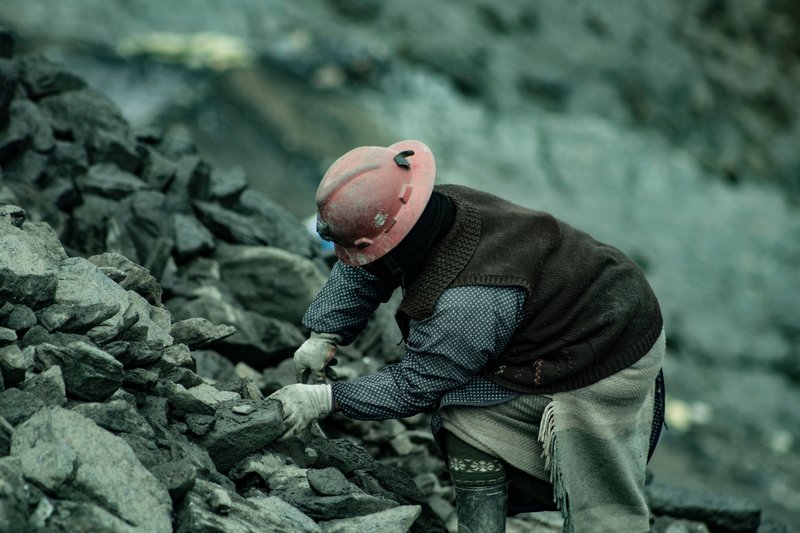
These two punch above their reserve weight through artisanal and small-scale mining. Bolivia’s output (~1,700 t) centers on deposits like Chojlla and the Himalaya mine in the highlands. Rwanda (~1,300 t) mines tungsten at Nyakabingo and is one of Africa’s few meaningful sources — though the region’s mineral trade carries persistent conflict-mineral scrutiny that buyers have to navigate.
Australia, Austria, and Spain
The bottom of the top ten is the most revealing. Australia (~1,000 t) holds the world’s second-largest reserve base outside China — ~570,000 tons across deposits like Dolphin (King Island), Mount Carbine, and Kara — yet mines a fraction of it. Austria’s ~840 tons come from the Mittersill mine in the Alps, Europe’s most consistent producer. Spain (~800 t) leads continental Europe’s reserve picture and runs the reopened Barruecopardo mine in Salamanca. Three reserve-rich, politically stable countries — and together they barely out-produce North Korea.
Reserves vs. Production: The Disconnect
Here’s the part most “top 10” lists skip. Having tungsten in the ground and pulling it out profitably are two completely different things.
Australia’s 570,000 tons of reserves should, on paper, make it a tungsten powerhouse. It isn’t, because tungsten prices have spent most of the past decade too low to justify the cost of mining and processing in a high-wage, high-regulation country. The metal trades through a benchmark called the APT price (ammonium paratungstate), and for years it hovered below the level a Western mine needs to break even.
The clearest case study is the Hemerdon mine in Devon, England — also called Drakelands. It’s one of the largest tungsten deposits in the world. It was built, opened in 2015 by Wolf Minerals, and then went into administration in 2018 when the numbers didn’t work. The infrastructure still stands. The tungsten is still there. It just sits idle, waiting for a price that makes it worth restarting. That’s not a quirk; it’s the rule. Call it the economic viability problem: the West’s reserves stay in the ground not because they’re hard to find, but because, for years, China’s cheap exports made everyone else’s mines uncompetitive.
Which brings us to 2025.
Why China Dominates Tungsten
China didn’t inherit this position by geological luck alone. It built it. Decades of state-backed mining, low-cost labor, and — critically — investment in processing capacity gave China control over not just the raw concentrate but the refined intermediates and the carbide products that actually go into tools. For a long time, that meant cheap, abundant supply, and the rest of the world happily bought it instead of developing domestic mines.
Then the leverage got used. On February 4, 2025, China announced export controls on five critical minerals, tungsten among them, requiring special licenses to export. According to Reuters reporting on the policy, the move was widely read as a response to escalating trade tensions. The effect was immediate: tungsten prices climbed roughly 35% as the controls took hold, with some specialized grades jumping more than 40%. Export volumes fell measurably through 2025.
The deeper vulnerability is processing. Even countries that mine their own tungsten frequently ship concentrate to China for refining because refining capacity barely exists elsewhere — and China’s export controls extend to the technology for processing, not just the metal. You can open a mine in Australia. Building the refining chain to turn that ore into finished tungsten carbide is a much longer, more expensive project. That’s the bottleneck Western governments are scrambling to address.
What Tungsten Is Actually Used For
None of this would matter if tungsten were replaceable. It mostly isn’t.
Tungsten has the highest melting point of any metal — about 3,422°C (6,192°F) — and is exceptionally hard and dense. That combination makes it irreplaceable in a handful of applications:
- Cemented carbide (tungsten carbide): the largest use by far. Cutting tools, drill bits, mining and machining equipment. If you’ve used a carbide-tipped saw blade, that’s tungsten.
- Defense and aerospace: armor-piercing rounds, missile components, and high-temperature parts. This is why tungsten is treated as a strategic metal, not just an industrial one.
- Electronics and semiconductors: tungsten is used in chip interconnects and contacts, which is why the 2025 export controls rattled the semiconductor industry specifically.
- Filaments and high-temperature alloys: the classic light-bulb filament use is fading, but high-temp superalloys for turbines remain significant.
Tungsten’s hardness and heat resistance are documented by sources like the Royal Society of Chemistry. The short version: in the applications that matter most — defense, machining, chips — there’s no cheap drop-in substitute. That’s what turns a supply concentration problem into a strategic one.
FAQ
Which country produces the most tungsten? China, by an enormous margin — roughly 67,000 metric tons in 2025, about 79% of global output.
Where is tungsten mined outside China? The largest non-Chinese producers are Vietnam (Núi Pháo mine), Kazakhstan (Boguty), Russia, North Korea, Bolivia, and Rwanda. Australia, Austria, and Spain round out the top ten.
Does the United States produce tungsten? Not at commercial scale. The U.S. has not had significant tungsten mine production for years and relies almost entirely on imports and recycling, which is exactly why China’s 2025 export controls drew so much attention in Washington.
Why doesn’t Australia mine more tungsten if it has huge reserves? Because for most of the past decade, tungsten prices were too low to make high-cost Western mines profitable against cheap Chinese exports. Several built mines, like the UK’s Hemerdon, sit idle waiting for better economics — which the 2025 price spike may finally provide.
Is tungsten a critical mineral? Yes. The U.S., EU, and other governments classify tungsten as a critical mineral due to its strategic uses in defense and manufacturing combined with extreme supply concentration in a single country.