Myanmar produces roughly 70% of the world’s high-quality jadeite. Not 70% of one type of stone in some niche category — 70% of the planet’s supply of the green gem that a single boulder in Hpakant once sold for a figure rivaling a small country’s annual health budget. The country also sits on the second-largest natural gas export operation in the Asia-Pacific region, holds ruby deposits that produced the legendary “pigeon’s blood” stones, and since 2021 has quietly become the single most important source of the heavy rare earth elements that go into electric vehicle motors and wind turbines.
And most of its people are poor. That contradiction is the whole story of natural resources in Myanmar, and it’s worth understanding region by region rather than as a single national statistic.
Table of Contents
- The Quick Version
- Gemstones: Jade and Rubies
- Metals: Tin, Tungsten, Copper, and Rare Earths
- Energy: Offshore Gas, Hydropower, and Coal
- Forestry: Burmese Teak
- Resource Reserves at a Glance
- The Paradox: Abundance and Poverty
The Quick Version
If you just want the map in your head: Myanmar’s wealth is concentrated in its highland and offshore edges, not its central plains.
- Jade comes almost entirely from Kachin State in the far north, around the town of Hpakant.
- Rubies and sapphires come from the Mogok valley in Mandalay Region, the so-called “Valley of Rubies.”
- Tin and tungsten run down the long southern tail of Tanintharyi and the eastern Shan State.
- Natural gas is offshore, in the Yadana, Yetagun, and Shwe fields in the Andaman Sea and Bay of Bengal.
- Rare earths are mined in northern Kachin, right up against the Chinese border, and shipped north.
- Teak grows in the natural hardwood forests of the central and northern hill regions.
Almost every one of these sits in territory that is contested, ethnically distinct from the Bamar-majority center, or both. That geography is not a coincidence, and it explains a lot about why the money rarely reaches the national treasury.
Gemstones: Jade and Rubies
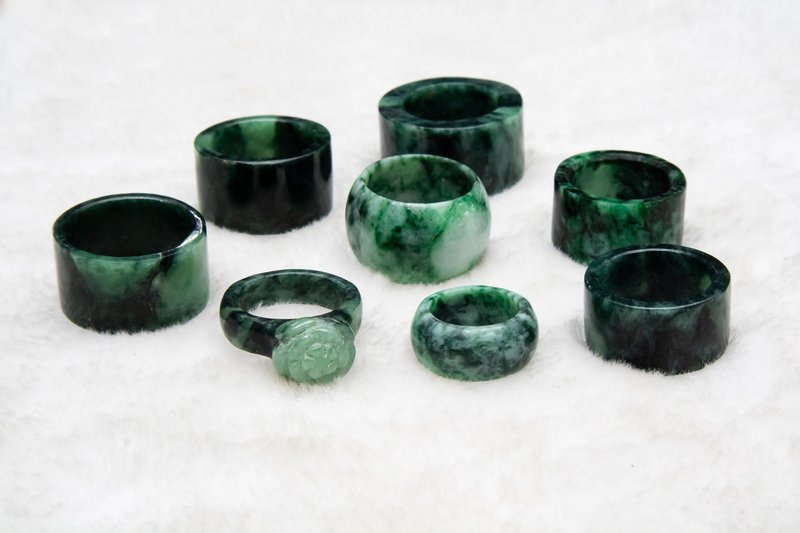
Jade is the resource Myanmar dominates more completely than any other country dominates any other gem. The deposits sit around Hpakant in Kachin State, a town that has become shorthand for both extraordinary wealth and extraordinary danger. The jadeite there forms in serpentinite, and the best material — translucent “imperial” green — feeds an almost entirely Chinese luxury market where a single bangle can sell for seven figures.
The scale is genuinely hard to picture. A 2015 investigation by Global Witness estimated the value of jade production in 2014 alone at up to $31 billion — a sum equivalent to nearly half of Myanmar’s entire official GDP that year. Very little of that showed up in government accounts. The mines are worked by a mix of military-linked companies, armed-group interests, and tens of thousands of freelance “hand-pickers” who scavenge the waste heaps. Those waste heaps collapse. A 2020 landslide at a Hpakant mine killed at least 170 people, most of them scavengers buried under a wall of mining debris.
Rubies are the other crown jewel, and they come from a different place entirely: the Mogok valley northeast of Mandalay. Mogok rubies carry the “pigeon’s blood” color grade — a pure, slightly fluorescent red that commands the highest prices in the gem trade. Sapphires, spinel, and peridot come out of the same metamorphic marble belt. The deposits are old and increasingly worked-over, but Mogok’s name still functions as a quality stamp at auction the way “Burgundy” does for wine.
Metals: Tin, Tungsten, Copper, and Rare Earths
Myanmar’s metal story used to be a footnote. Then two things happened: a tin surge in the 2010s and a rare-earth surge after 2021.
Tin is the older story. The granite belt running down Tanintharyi Region in the south and into eastern Shan State holds significant tin and tungsten. This southern tail forms part of the long Malay Peninsula — one of the many peninsulas whose mineral-rich spines stretch for hundreds of kilometers — and around 2013–2015, Myanmar briefly became one of the world’s top tin producers, with most of the ore crossing into China for smelting. Production has since cooled, but the country remains a meaningful supplier of a metal that goes into nearly every solder joint on the planet.
Copper is centered on the Monywa mines in Sagaing Region, particularly the Letpadaung deposit. These are large open-pit operations run as joint ventures with Chinese state-linked firms, and they’ve been a flashpoint for protest over land seizures and the use of sulfuric-acid leaching near farmland.
The newest and most geopolitically loaded resource is heavy rare earth elements — dysprosium and terbium especially. Mining exploded across the Kachin highlands near the border town of Pangwa after the 2021 coup. These elements are essential for the permanent magnets in EV motors and wind turbines, and Myanmar now supplies a large share of the world’s heavy-rare-earth feedstock, almost all of it processed in China. The mining method — drilling holes, pumping in ammonium sulfate leaching solution, and collecting the runoff — has poisoned rivers downstream, a cost documented by Global Witness reporting on the region’s contaminated waterways.
Energy: Offshore Gas, Hydropower, and Coal
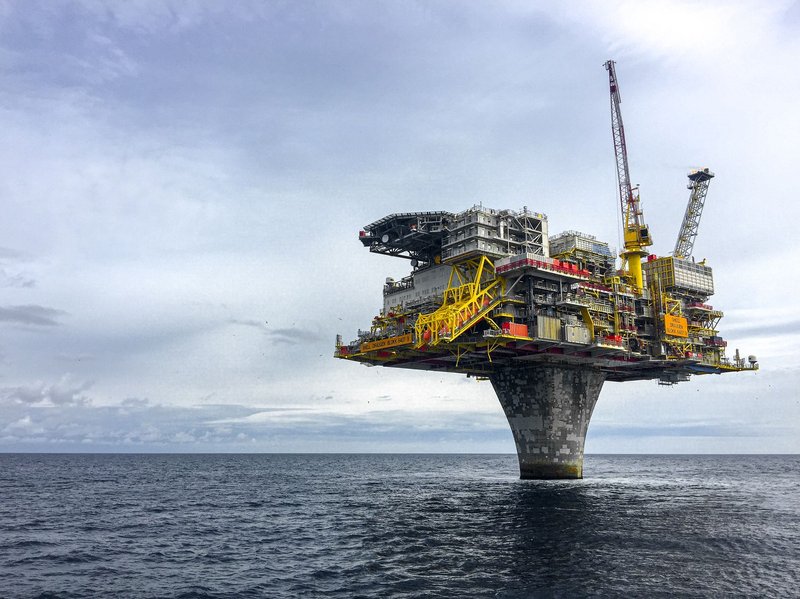
Natural gas is Myanmar’s single largest source of foreign currency, and unlike the gems, most of it is offshore where it’s harder to smuggle and easier to tax. The major fields — Yadana and Yetagun in the Andaman Sea, and Shwe in the Bay of Bengal off Rakhine State — feed export pipelines that run to Thailand and to China’s Yunnan province. According to the U.S. Energy Information Administration, Myanmar has historically been one of the larger natural gas exporters in the Asia-Pacific region, with gas sales providing a substantial slice of state revenue.
That revenue stream is exactly why energy gets discussed differently from jade. It’s the one resource the central government genuinely controls and depends on, which is also why pipeline access has been a point of foreign leverage.
Hydropower is the unfulfilled promise. Myanmar’s rivers — above all the Irrawaddy and its tributaries — carry enormous potential, but the flagship project tells the cautionary tale. The Chinese-backed Myitsone Dam at the Irrawaddy’s headwaters was suspended in 2011 after public outrage: it would have flooded an area the size of Singapore and exported 90% of its electricity to China while much of Myanmar still lacked grid access. It remains suspended, a symbol of resource deals written for the buyer rather than the seller.
Coal exists in scattered, lower-grade deposits and feeds domestic power and cement, but it’s a minor player next to gas.
Forestry: Burmese Teak
Teak deserves its own section because Myanmar holds something close to the last large stands of natural-grown teak on Earth. Plantation teak grows in many tropical countries, but the dense, tight-grained, naturally weather-resistant Burmese teak from old-growth forests is the material prized for luxury yacht decks and high-end furniture.
That value drove decades of overcutting. The forests of the central and northern hills have shrunk dramatically, and illegal logging — much of it flowing across the Chinese border in trucks — has continued despite a 2014 ban on raw log exports. The European Union has restricted Burmese teak imports over due-diligence concerns, since buyers can’t reliably prove a given board wasn’t cut from a conflict zone or a protected forest. It’s a resource being spent faster than it regrows.
Resource Reserves at a Glance
None of the existing reference pages put this in one place, so here’s the integrated view. Figures are approximate and drawn from pre- and post-2021 industry estimates; precise numbers are genuinely hard to verify given how much production goes unrecorded.
| Resource | Primary Region | Global Significance | Who Controls It |
|---|---|---|---|
| Jadeite | Hpakant, Kachin State | ~70% of world high-quality jade | Military-linked + armed groups |
| Rubies/sapphires | Mogok, Mandalay Region | Top-grade “pigeon’s blood” rubies | Mix of licensed and informal |
| Natural gas | Offshore Andaman & Bay of Bengal | Major Asia-Pacific exporter | State (MOGE) + foreign partners |
| Tin & tungsten | Tanintharyi, Shan State | Brief top-5 global tin producer (2010s) | Border-region, China-bound |
| Copper | Monywa, Sagaing Region | Large open-pit production | China JV + military |
| Rare earths (heavy) | Pangwa, Kachin State | Leading global heavy-REE source post-2021 | Armed groups, China-processed |
| Teak | Central & northern hills | Last major natural-grown teak stocks | State + illegal logging |
The pattern jumps out of the table: the high-value, easily-smuggled resources sit in border regions outside firm central control, while the resource the state actually captures revenue from — gas — is the one physically locked offshore.
The Paradox: Abundance and Poverty
Here’s the uncomfortable part. A country this rich in resources ranks among the poorer nations in Asia, and the resources are a big reason why rather than a solution to it. Economists call it the resource curse, and Myanmar is close to a textbook case.
Three mechanisms drive it. First, the money doesn’t enter the public budget. When jade worth tens of billions produces almost no recorded tax revenue, there’s nothing to build schools or clinics with. Second, the resources fund the fighting. Jade, rare earths, and timber all sit in territories controlled by the military or by ethnic armed organizations, and the revenue buys weapons on both sides — which is why decades of civil conflict have clustered exactly where the deposits are. Third, the environmental bill lands on locals. The Hpakant landslides, the rivers poisoned by rare-earth leaching, the flooded valleys behind proposed dams — those costs fall on the communities living on top of the wealth.
On paper, the Ministry of Natural Resources and Environmental Conservation (MONREC) oversees mining, forestry, and environmental policy. In practice, regulatory oversight competes with powerful military and armed-group interests that have every incentive to keep extraction off the books. Myanmar joined the Extractive Industries Transparency Initiative in 2014 in an attempt to clean this up, then was suspended after the 2021 coup ended any pretense of transparent governance.
So the honest summary of Myanmar’s natural resources is two sentences long. The country is, by deposit value, one of the richest pieces of ground in Asia. And almost nothing about how those resources are extracted, sold, or accounted for is designed to make ordinary Burmese people richer — a gap that defines the place far more than any single reserve figure does.