TLDR
- Vanuatu has roughly 190 recorded bird species. About 9 are endemic and about 10 are introduced.
- Published counts range from about 121 to 189 because sources disagree on seabirds, vagrants and how to split species.
- The nine endemics: Vanuatu kingfisher, Vanuatu white-eye, Vanuatu scrubfowl, mountain starling, buff-bellied monarch, Tanna fruit dove, Vanuatu imperial-pigeon, white-bellied honeyeater and Vanuatu petrel.
- Espiritu Santo is the best island for endemics. Efate is the easiest for a short visit.
- Two species are gone: the Tanna ground dove and the oceanic parrot.
Table of Contents
- How many birds live in Vanuatu?
- The endemic birds of Vanuatu
- Common birds you will actually see
- Species, habitat and status at a glance
- Conservation and threatened birds
- Extinct birds of Vanuatu
- Where to go birding by island
- Field guides worth carrying
- FAQ
How many birds live in Vanuatu?
About 190 species have been recorded in the archipelago, and roughly nine of them live nowhere else. Around ten more were brought in by people. That is the working answer, and it matches the checklist figure of 189 species that most references build on.
You will see lower numbers. Some pages say 121, others 135, others 160-something. The gap is mostly bookkeeping. Lists that count only breeding land birds land near the bottom. Lists that add seabirds seen offshore, migrant shorebirds and one-off vagrants climb toward 190. Taxonomy adds noise: when a bird gets split into two species or lumped back into one, the endemic count shifts by one. That is why the same website can say 8 endemics in one paragraph and 9 in another.
For current numbers, the BirdLife DataZone country profile and the eBird Vanuatu region page are the sources to check. Both update as records and taxonomy change.
The islands matter here. Vanuatu is a chain of roughly 80 islands running north to south across more than 1,000 km, from wet lowland rainforest in the north to drier, volcanic country in the south. Deep water separates it from its neighbors, which is why so few land birds arrived and why the ones that did diverged. Many species have a different subspecies on different islands.
The endemic birds of Vanuatu
Nine species are generally treated as endemic. They are not equally easy. A few turn up in a hotel garden. One lives at sea and almost never comes ashore where you can see it.
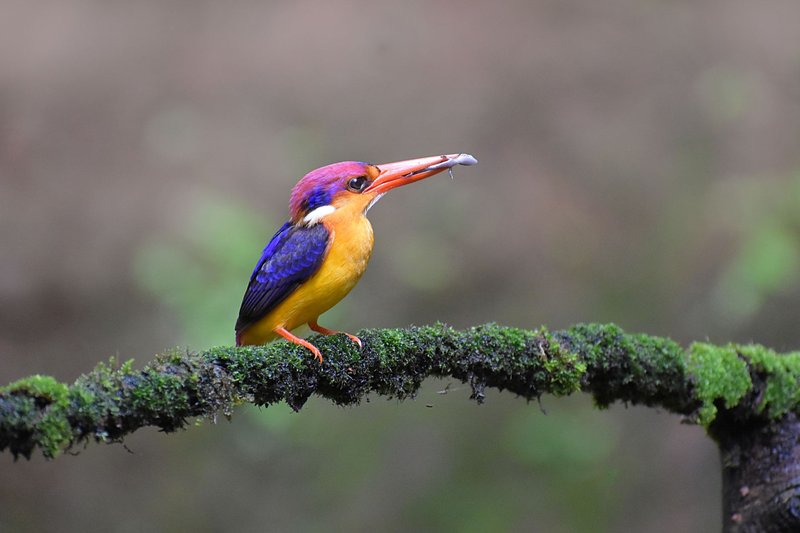
Vanuatu kingfisher (Todiramphus farquhari)
A forest kingfisher of the northern and central islands, including Espiritu Santo and Malekula. The mistake is to assume every kingfisher you see is this one. The collared kingfisher is far more common and hunts along coasts, roads and gardens. The Vanuatu kingfisher stays in forest, so seeing one means leaving the shoreline.
Vanuatu white-eye (Zosterops flavifrons)
The easiest endemic. Small, olive and yellow, and usually in a flock moving through the canopy, gardens and forest edge on many islands. Each island population has its own look, which is why field guides list several subspecies. Listen for thin, constant contact calls before you see anything.
Vanuatu scrubfowl (Megapodius layardi)
Also called the Vanuatu megapode. It does not sit on its eggs. It buries them in warm ground, using volcanic heat or the warmth of rotting vegetation and sand, and the chicks hatch fully feathered and dig themselves out. Local communities have long collected the eggs, which affects some populations. Look for scratched-up patches of ground and mounds before you look for the bird.
Mountain starling (Aplonis santovestris)
A bird of the high forest on Espiritu Santo. Reaching it takes a guided hike into the mountains, which is the reason it is a prize on birders’ lists. Its small range makes it one of the more vulnerable endemics.
Buff-bellied monarch (Neolalage banksiana)
The only member of its genus, with no close relative among the other monarch flycatchers. It is widespread in forest across the archipelago and often sits low, flicking through the understory. Of the endemics, it is the one most visitors who walk a forest trail will see.
Tanna fruit dove (Ptilinopus tannensis)
Named for Tanna, where it was collected, though it is not confined to that one island. Fruit doves are the color-block birds of the Pacific, and this one fits the pattern. They are also hard to see. They sit still in fruiting trees, and what gives them away is a low, repeated call.
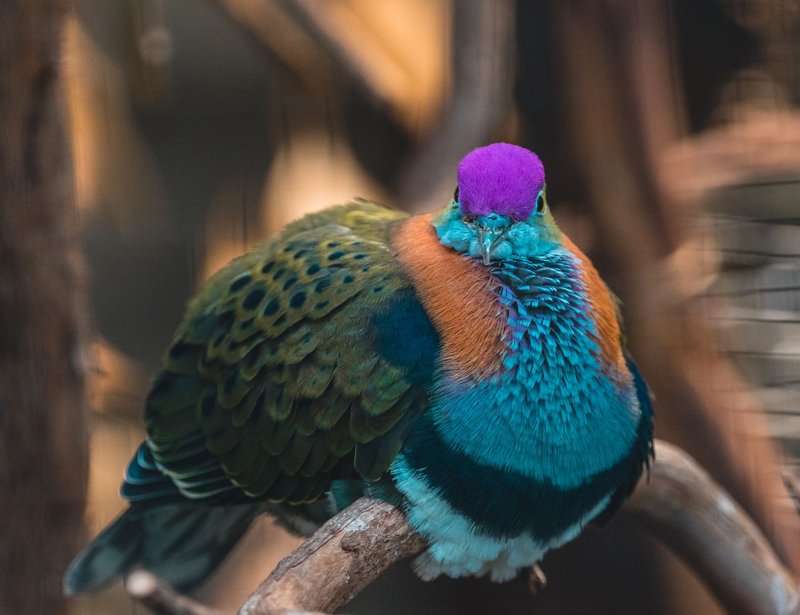
Vanuatu imperial-pigeon (Ducula bakeri)
A large pigeon of the forest canopy, and a bird people hunt. Large fruit pigeons are among the first birds to disappear from an island where hunting pressure rises, which makes it a useful indicator of forest health.
White-bellied honeyeater (Glycifohia notabilis)
A honeyeater that feeds on nectar, fruit and insects across forest and gardens on many islands. It is vocal and moves constantly, so it is easier to hear than to photograph.
Vanuatu petrel (Pterodroma occulta)
The odd one out. A seabird that spends nearly its entire life over open ocean, described to science only in 2001 and known for decades from a handful of old specimens. Its breeding grounds were a mystery for a long time. It is listed as threatened by the IUCN Red List. Realistically, you will not see one from the shore. Organized seabird trips are the only real chance.
Common birds you will actually see
Most visitors will tick off a short, reliable list within a day.
- Pacific swallow. Over open ground, airstrips and village edges, hawking insects low. The most visible bird in the country.
- Collared kingfisher. On wires, dead branches and mudflats. Loud, bold and everywhere near the coast.
- Coconut lorikeet. Fast, noisy flocks that rush between flowering trees. You will hear them before you see them.
- Cardinal myzomela. A small red honeyeater, the males almost glowing against green foliage. A good bird for first-time photographers because it stays out in the open.
- Common myna. Introduced, aggressive and abundant around towns. Not a bird to chase, but a species to recognize.
Species, habitat and status at a glance
| Species | Typical habitat | Status |
|---|---|---|
| Vanuatu kingfisher | Lowland and hill forest | Endemic |
| Vanuatu white-eye | Forest, gardens, forest edge | Endemic |
| Vanuatu scrubfowl | Forest floor, volcanic ground, coastal sand | Endemic |
| Mountain starling | High-altitude forest, Espiritu Santo | Endemic, restricted range |
| Buff-bellied monarch | Forest understory | Endemic |
| Tanna fruit dove | Forest with fruiting trees | Endemic |
| Vanuatu imperial-pigeon | Forest canopy | Endemic |
| White-bellied honeyeater | Forest and gardens | Endemic |
| Vanuatu petrel | Open ocean, breeding sites remote | Endemic, threatened |
| Pacific swallow | Open country, coasts, villages | Resident, native |
| Collared kingfisher | Coasts, gardens, mangroves | Resident, native |
| Coconut lorikeet | Flowering trees, coconut groves | Resident, native |
| Cardinal myzomela | Gardens, forest edge, flowering shrubs | Resident, native |
| Common myna | Towns, villages, farmland | Introduced |
| Tanna ground dove | Forest floor, Tanna | Extinct |
| Oceanic parrot | Forest | Extinct |
Conservation and threatened birds
Island birds tend to lose to the same four things: introduced predators, habitat loss, hunting and storms. Vanuatu has all four.
Rats, and to a lesser degree cats, are a threat to ground-nesting birds and to eggs and chicks. Forest clearance for gardens and plantations shrinks the lowland habitat that kingfishers and pigeons use. Hunting hits the large pigeons, and egg collecting affects megapodes. Cyclones can also strip fruit and flowers from the forest, which is hard on nectar and fruit feeders. Category 5 Cyclone Pam in 2015 hit the country hard and reminded everyone how exposed the archipelago is.
Species with a small range carry the highest risk. The mountain starling is limited to one island’s highlands. The Vanuatu petrel is a threatened seabird with a poorly known breeding range. The IUCN Red List holds the current category for each species, and categories change as surveys improve, so check it rather than trusting a number in a blog post, this one included.
The common myna deserves a mention. It is one of the best-known invasive birds on Pacific islands, and it competes with native cavity nesters and fruit feeders around settlements.
Extinct birds of Vanuatu
Two birds belong in any honest list of Vanuatu’s fauna, and neither can be seen.
The Tanna ground dove (Alopecoenas ferrugineus) is known from a single drawing and description made on Tanna during Captain Cook’s second voyage in 1774. No specimen survives, and no one has recorded it since. It is a species we know almost nothing about, which is its own kind of loss.
The oceanic parrot (Eclectus infectus) is known from subfossil bones in the Pacific, including Vanuatu. It was a large, short-tailed parrot related to the living eclectus parrot, and it disappeared after people settled the islands. Bone evidence points to human arrival as the cause rather than a natural change in climate.
Where to go birding by island
Pick your island by the birds you want, not the other way around. The best season for birding is the drier, cooler months, roughly May through October. Cyclone season runs from about November to April.

Efate. The island with Port Vila, which makes it the easy option. Gardens, coastal scrub and forest trails near the capital give you Pacific swallow, collared kingfisher, cardinal myzomela, coconut lorikeet, Vanuatu white-eye and buff-bellied monarch within a day or two. If you have only a short stopover, this is the island.
Espiritu Santo. The largest island and the best for endemics. Lowland forest holds the Vanuatu kingfisher, and the highlands are the only place for the mountain starling. The Loru Conservation Area on the east side protects lowland forest and is a standard birding stop. Budget time and a local guide for the mountains.
Tanna. Better known for the Mount Yasur volcano than for birds, but volcanic landscapes are where megapodes make use of warm ground. The island is also the namesake of both the Tanna fruit dove and the extinct Tanna ground dove, so it carries a lot of ornithological history.
Malekula. The second-largest island, less visited than Efate or Santo. It adds the Vanuatu kingfisher and other forest birds to a list with fewer other birders for company. Expect basic logistics and plan flights in advance.
For fresh trip reports, eBird shows recent sightings by location, which helps you target a hotspot instead of guessing.
Field guides worth carrying
Two books cover the ground.
Heinz Bregulla’s Birds of Vanuatu (1992) is the country-specific guide. It is older, so its taxonomy needs updating in your head, but it is the one built entirely around Vanuatu’s birds and islands.
Guy Dutson’s Birds of Melanesia (2011) covers Vanuatu alongside the Solomon Islands, Bismarcks and New Caledonia. It is more current and its plates make comparing similar species easier, particularly pigeons, honeyeaters and kingfishers. The tradeoff is size, since it covers a much larger region.
A realistic pairing is Dutson for field ID and eBird for where to go.
FAQ
How many bird species are in Vanuatu? About 190 recorded species. Lists that count only regular breeding birds give lower numbers, around 120 to 135.
How many birds are endemic to Vanuatu? About nine, depending on taxonomy: the Vanuatu kingfisher, Vanuatu white-eye, Vanuatu scrubfowl, mountain starling, buff-bellied monarch, Tanna fruit dove, Vanuatu imperial-pigeon, white-bellied honeyeater and Vanuatu petrel.
What is the Vanuatu megapode? The Vanuatu scrubfowl, a ground-dwelling bird that buries its eggs in warm soil or sand and lets the heat incubate them.
Which island is best for birdwatching in Vanuatu? Espiritu Santo for endemics, Efate for convenience.
When is the best time to go? The drier months, roughly May to October, avoiding the November to April cyclone season.
Are there any extinct birds in Vanuatu? Yes. The Tanna ground dove and the oceanic parrot are both extinct.