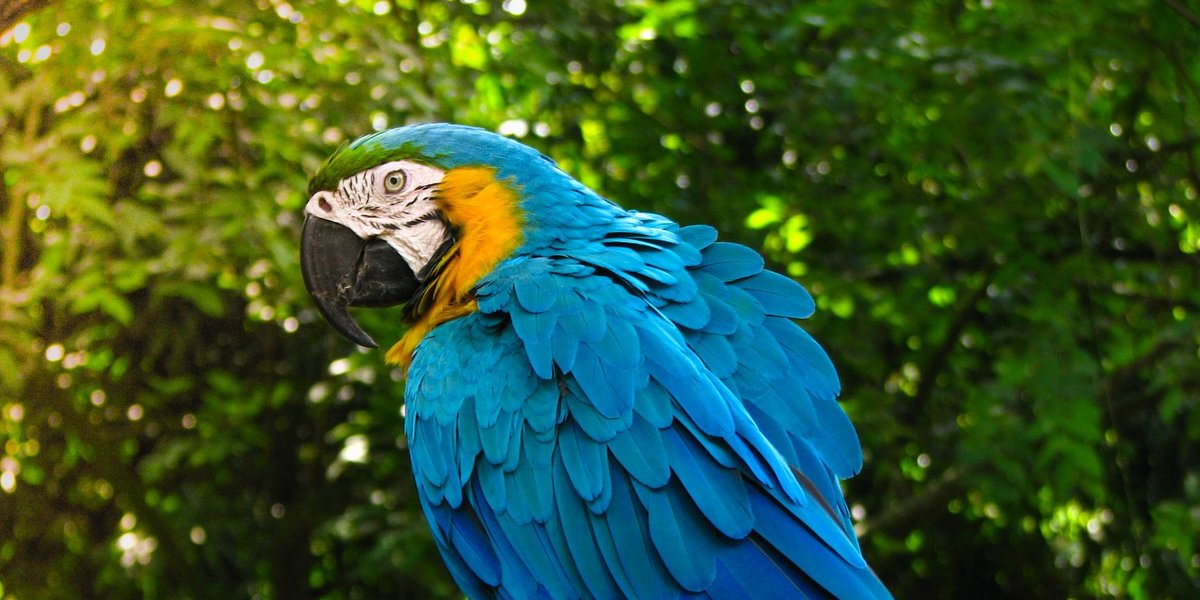
The birds of Hawaii split into two groups that rarely overlap: the ones you’ll see from a beach chair, and the ones you have to climb into the clouds to find. The first group is mostly imports. The second is some of the most unusual wildlife on Earth, and a lot of it is running out of time.
This guide covers 19 birds: 15 native species and 4 introduced ones you’ll meet within an hour of landing. Each entry has the Hawaiian name with a pronunciation, a size, a conservation status, and where to look for it.
Quick facts
- Hawaii sits about 2,400 miles from the nearest continent. Almost every land bird here descends from a handful of lucky arrivals.
- The state’s bird checklist runs past 330 species, but about 130 are vagrants that showed up once or twice. Of the species on the list, 64 are endemic, meaning they live nowhere else. Many of those are extinct.
- The nēnē (Hawaiian goose) has been the state bird since 1957. By the 1950s only a few dozen were left.
- Hawaiian honeycreepers, the group behind the red and yellow forest birds, once numbered more than 50 species. Fewer than 20 survive.
- Most surviving forest birds live above roughly 4,500 feet, where mosquitoes carrying avian malaria are scarce.
Contents
- Why Hawaii has so many birds found nowhere else
- Native land birds
- Wetland birds
- Seabirds and migrants
- Introduced birds you’ll see everywhere
- Where to see the birds of Hawaii by island
- Why the forest birds are disappearing
- FAQ
Why Hawaii has so many birds found nowhere else
Birds got to Hawaii the hard way: by wind, storm, or very long flights. Few made it, and the ones that did landed in a place with no ground predators, no snakes, and nearly empty ecological niches.
The honeycreepers are the best example of how endemic species take shape. They descend from a single finch-like ancestor, and over millions of years that one lineage split into dozens of species. Some grew thick, parrot-like bills for cracking seeds. Others grew long, curved bills for reaching into lobelia flowers. One, the ʻakiapōlāʻau, evolved to act like a woodpecker. Same ancestor, wildly different tools.
The flip side of evolving in isolation is having no defenses. Birds that never met a rat, a cat, or a mosquito had no reason to fear them. The Hawaii Division of Forestry and Wildlife keeps an overview of the native species that remain, and it reads like a list of survivors.
Native land birds
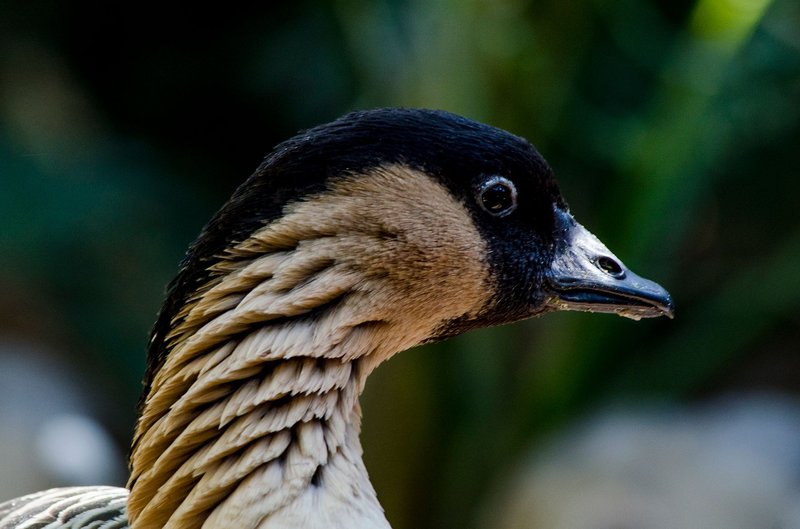
1. Nēnē (Hawaiian goose), “NAY-nay”
The nēnē is a goose that gave up on water. It lives on lava fields, shrubland and golf courses, and its feet have less webbing than other geese so it can walk across rough rock. It’s a relative of the Canada goose, with a buff-streaked neck and black face.
- Size: about 22 to 26 inches long
- Status: federally threatened, recovered from a low of a few dozen birds in the 1950s to roughly 3,000 today
- Habitat: volcanic slopes, grasslands, and coastal dunes
- Where to see it: Haleakalā National Park on Maui, Hawaiʻi Volcanoes National Park on the Big Island, and Kīlauea Point on Kauai
Don’t feed them. Fed nēnē hang around roads, and cars are one of the main things still killing them.
2. ʻIʻiwi, “ee-EE-vee”
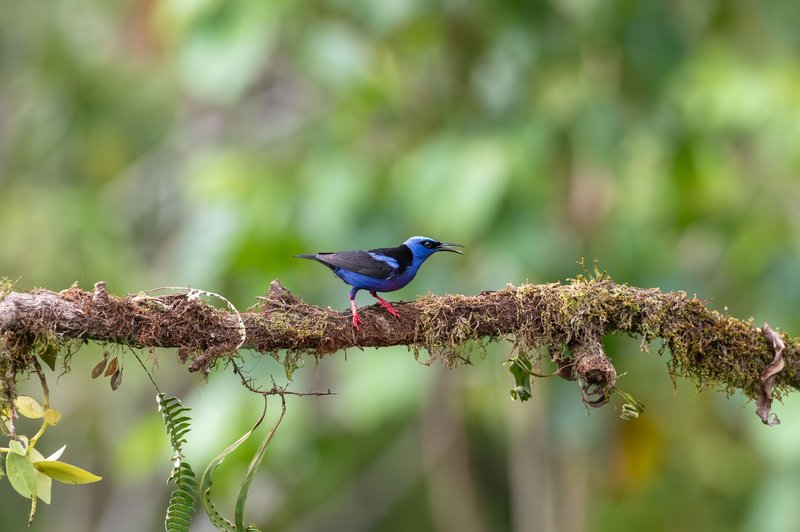
Scarlet body, black wings, and a salmon-colored bill bent like a sickle. The ʻiʻiwi’s bill fits the curved flowers it feeds on, especially ʻōhiʻa lehua blossoms and native lobelias. Hawaiians used its feathers in the capes of chiefs.
- Size: about 6 inches
- Status: threatened and declining, with sharp losses on Kauai and Molokai
- Habitat: native ʻōhiʻa forest, mostly above 4,000 feet
- Where to see it: Hakalau Forest on the Big Island, Kōkeʻe on Kauai, Hosmer Grove on Maui
3. ʻApapane, “ah-pah-PAH-neh”
Crimson body, white belly patch under the tail, black wings. The ʻapapane is the most abundant honeycreeper, and the one you’re most likely to actually see. It hurtles between ʻōhiʻa trees and makes a lot of noise, from squeaks and clicks to buzzy trills.
- Size: about 5.5 inches
- Status: common, though still dependent on high-elevation forest
- Habitat: ʻōhiʻa lehua forest
- Where to see it: Kīpukapuaulu at Hawaiʻi Volcanoes National Park, Hosmer Grove on Maui, Kōkeʻe on Kauai
Telling ʻapapane from ʻiʻiwi: the ʻiʻiwi has the long orange bill. The ʻapapane has a short black one.
4. ʻAmakihi, “ah-mah-KEE-hee”
A small yellow-green bird that looks unremarkable until you know its story. Some ʻamakihi populations in low, mosquito-heavy forest have evolved tolerance to avian malaria, which kills most other honeycreepers. Scientists are watching them closely because they might hold a clue to saving other species.
- Size: about 4 inches
- Status: common
- Habitat: forest from sea level to the treeline, plus gardens
- Where to see it: nearly any native forest trail on the Big Island, Maui, and Kauai
5. ʻAkiapōlāʻau, “ah-kee-ah-poh-LAH-ow”
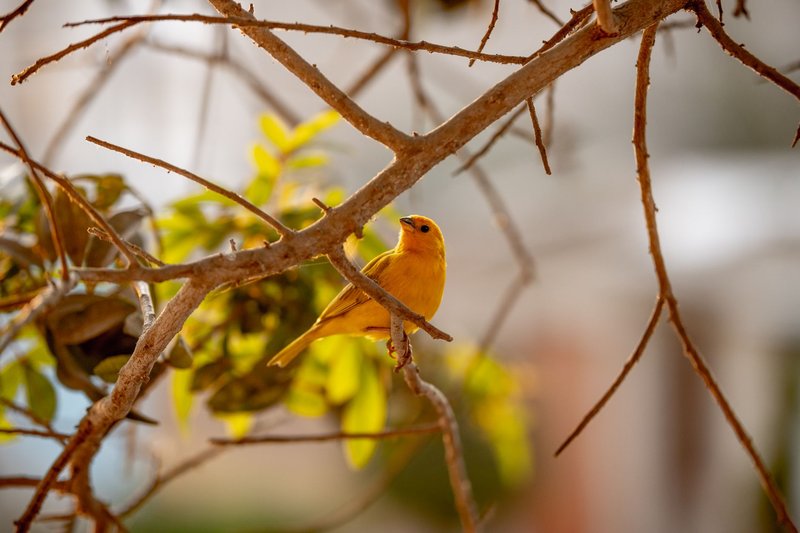
This is the honeycreeper that acts like a woodpecker. It hammers bark with its short, straight lower bill, then pulls out insects with the long, curved upper bill. No other bird has a beak built this way.
- Size: about 5.5 inches
- Status: endangered, with an estimated 1,000 to 1,500 birds left
- Habitat: high-elevation koa and ʻōhiʻa forest on the Big Island only
- Where to see it: Hakalau Forest National Wildlife Refuge, which has restricted access and a rough road, so check the refuge’s current rules before you go
6. ʻElepaio, “eh-leh-PIE-oh”
A small flycatcher with a cocked tail and a lot of curiosity. There are three species, one each on the Big Island, Oʻahu, and Kauai. The ʻelepaio will often hop within a few feet of hikers and inspect them.
- Size: about 5.5 inches
- Status: the Hawaiʻi ʻelepaio is fairly common, while the Oʻahu ʻelepaio is endangered
- Habitat: native and mixed forest
- Where to see it: the Kīpukapuaulu loop on the Big Island, Kōkeʻe on Kauai
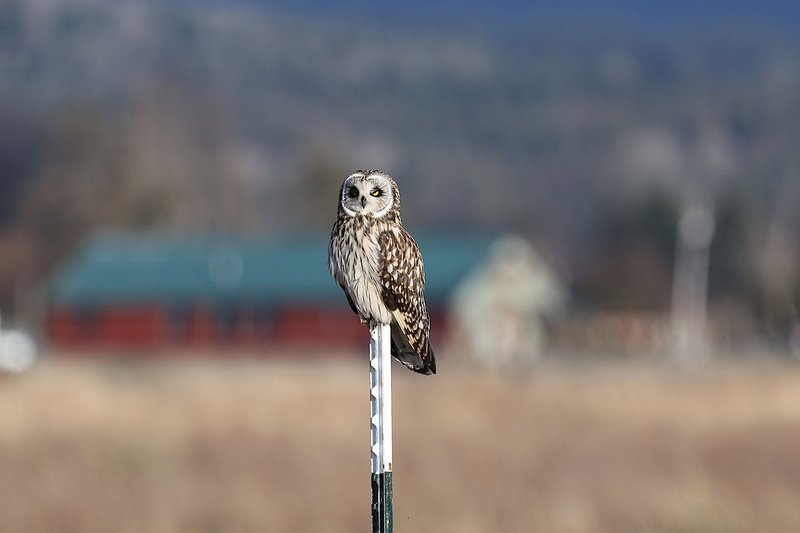
7. Pueo (Hawaiian short-eared owl), “poo-EH-oh”
The only native owl in Hawaii, and one of the few owls that hunts in daylight. The pueo drifts low over open grassland, lava fields, and pasture, hunting rodents and small birds. In Hawaiian tradition it’s a family guardian, and seeing one is considered lucky.
- Size: 13 to 17 inches long, with a wingspan of about 3 feet
- Status: widespread, but the Oʻahu population is listed as endangered by the state
- Habitat: open country on all the main islands
- Where to see it: open grassland and high pasture at dawn or dusk
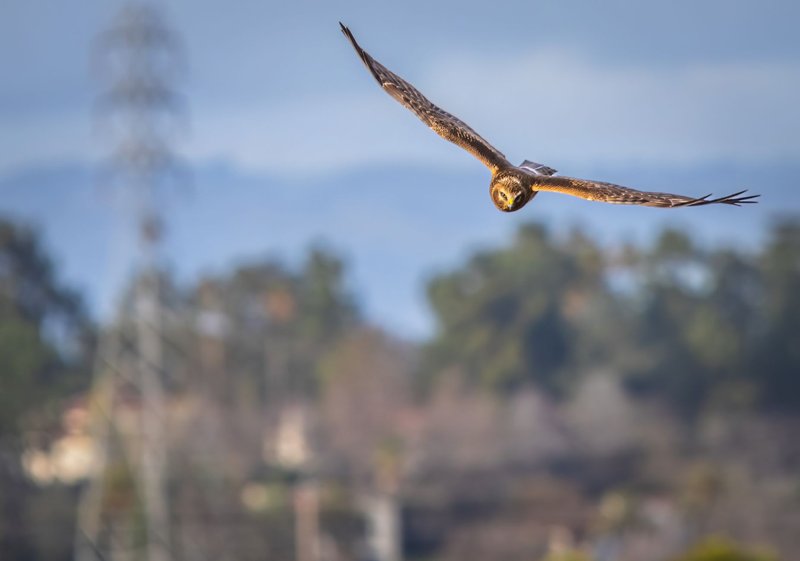
8. ʻIo (Hawaiian hawk), “EE-oh”
The ʻio is the Big Island’s only native hawk and shows up nowhere else in the world. It comes in a pale morph and a dark morph, soars on thermals, and holds a place in Hawaiian tradition as a royal bird.
- Size: about 17 inches long, wingspan around 3 feet
- Status: recovered, and removed from the federal endangered species list in 2020
- Habitat: forest, ranchland, and lava fields on the Big Island
- Where to see it: circling above forest edges near Hawaiʻi Volcanoes National Park and along the Hāmākua coast
Wetland birds
Hawaii’s wetlands are small, and so are the populations that depend on them. Most are protected in national wildlife refuges where you can watch from a boardwalk or a roadside.
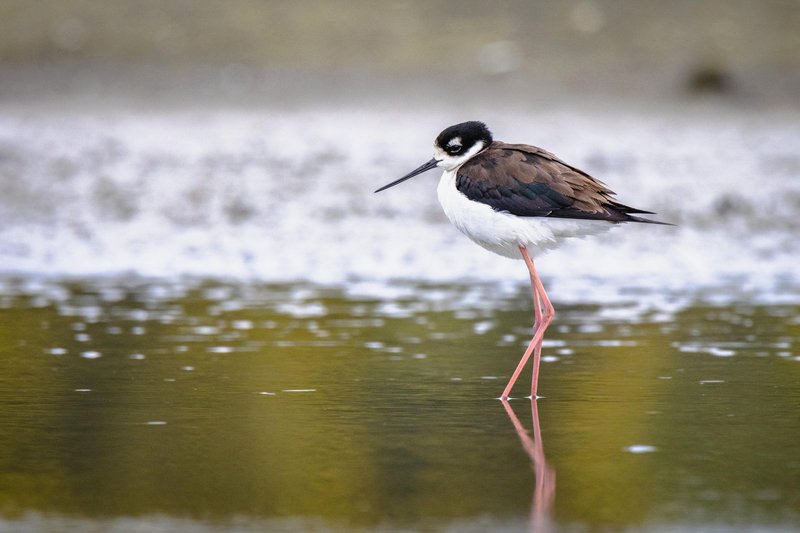
9. Aeʻo (Hawaiian stilt), “eye-EH-oh”
Black back, white belly, and pink legs so long they look borrowed. The aeʻo wades through shallow ponds and mudflats picking up insects and small crustaceans. It’s a distinct Hawaiian subspecies of the black-necked stilt.
- Size: about 16 inches
- Status: endangered, with fewer than 2,000 birds
- Habitat: coastal ponds, taro fields, and wetlands
- Where to see it: Kealia Pond National Wildlife Refuge on Maui, Hanalei National Wildlife Refuge on Kauai, James Campbell refuge on Oʻahu
10. Koloa maoli (Hawaiian duck), “koh-LOH-ah MOW-lee”
A mottled brown duck that looks like a hen mallard, and that’s a big part of its problem. Introduced mallards interbreed with koloa, and the hybrids are watering down the native gene pool.
- Size: about 20 inches
- Status: endangered
- Habitat: streams, taro fields, and ponds
- Where to see it: Kauai is the stronghold, especially the Hanalei valley
Seabirds and migrants
Hawaii’s coastlines are nesting grounds for some of the world’s great ocean wanderers, and one small shorebird that flies thousands of miles to spend the winter on your hotel lawn.
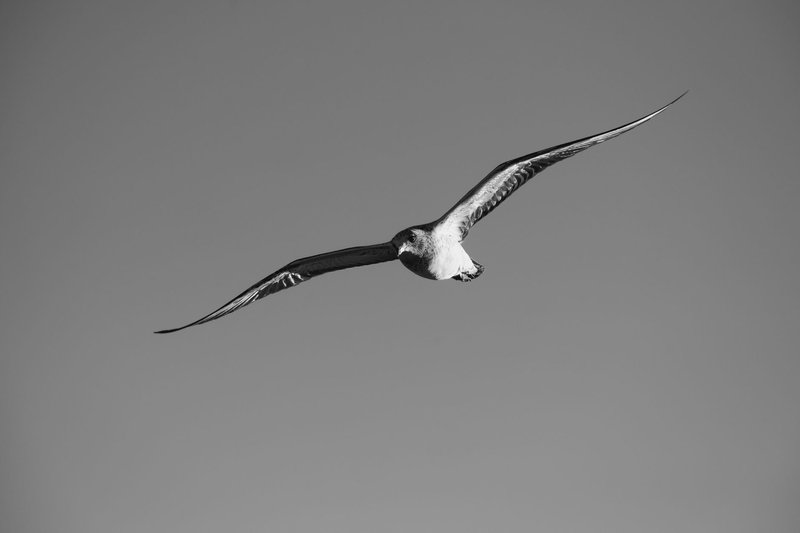
11. Moli (Laysan albatross), “MOH-lee”
With a wingspan of about 6.5 feet, the moli looks clumsy on land and spectacular in the air. Adults arrive in late November, perform elaborate courtship dances, and raise a single chick that fledges around June or July. Most of the world’s Laysan albatrosses breed on Midway Atoll at the far northwestern end of the chain. A bird called Wisdom, banded there in 1956 and now the oldest known wild bird, keeps returning to raise chicks. You can read more about her colony at Midway Atoll National Wildlife Refuge.
- Size: wingspan about 6.5 feet
- Status: near threatened
- Habitat: open ocean, nesting on coastal grassland and dunes
- Where to see it: Kīlauea Point National Wildlife Refuge on Kauai and Kaʻena Point on Oʻahu, from about November to July
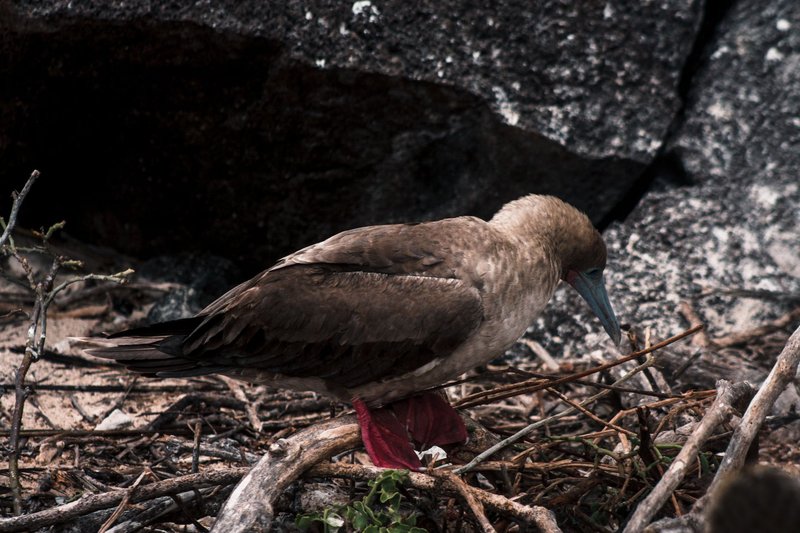
12. ʻĀ (red-footed booby), “ah”
The smallest booby, with bright red feet, a blue-and-pink bill, and a habit of nesting in trees rather than on the ground. Kīlauea Point is one of the best places in the islands to see a colony close up.
- Size: about 28 inches long, wingspan around 3.5 feet
- Status: common
- Habitat: sea cliffs and coastal shrubs
- Where to see it: Kīlauea Point on Kauai
13. ʻUaʻu kani (wedge-tailed shearwater), “OO-ah-oo KAH-nee”
The name means “moaning petrel,” and it fits. Wedge-tailed shearwaters nest in burrows on coastal dunes and sound like something ghostly is happening underground. They arrive in March and leave around November.
- Size: about 17 inches long
- Status: common
- Habitat: coastal dunes and offshore islets
- Where to see it: Kaʻena Point on Oʻahu and Kīlauea Point on Kauai. Visit at dusk, when they come ashore.
14. ʻUaʻu (Hawaiian petrel), “OO-ah-oo”
This is the hardest bird on this list to see. The Hawaiian petrel spends most of its life at sea and nests in burrows high on volcanoes, where it comes and goes only at night. The largest colony is on Haleakalā. You’re more likely to hear its call than spot one, and that’s part of why it matters.
- Size: about 16 inches long, wingspan around 3 feet
- Status: endangered
- Habitat: open ocean, nesting at high elevation on Maui, Kauai, Lānaʻi, and the Big Island
- Where to see it: Haleakalā National Park after dark. Few visitors ever do.
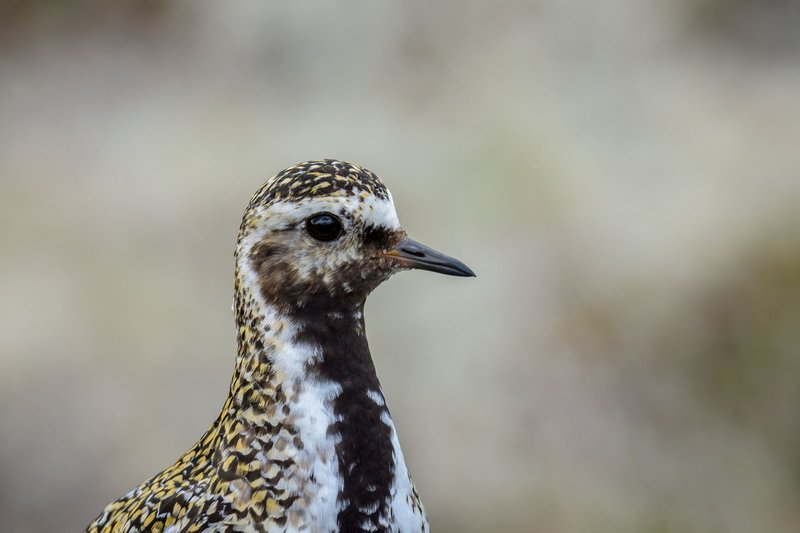
15. Kōlea (Pacific golden plover), “koh-LEH-ah”
The kōlea breeds in Alaska and Siberia and flies about 3,000 miles to Hawaii for the winter, often returning to the same lawn year after year. In breeding plumage the males are striking, with black faces and bellies edged in white. In Hawaiian tradition the kōlea is said to carry souls.
- Size: about 10 inches
- Status: common seasonal visitor
- Habitat: lawns, golf courses, fields, and beaches
- Where to see it: nearly anywhere, from late August through April
Introduced birds you’ll see everywhere
Most of what flies around Hawaii’s cities, beaches, and parking lots was brought here on purpose. That includes the four below, and the difference between a species that arrives and one that spreads on its own explains why some of them became so common.
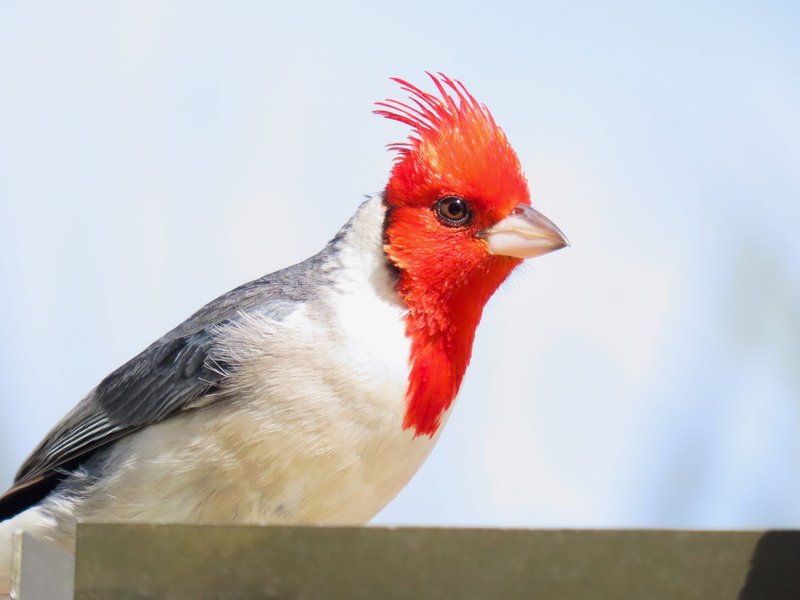
16. Red-crested cardinal, “red-CREST-ed CAR-din-ul”
Gray back, red head, red crest. It’s not a true cardinal but a South American tanager relative, released in the late 1920s. It now forages in parks, gardens, and golf courses across the islands, and it’s often confused with the native ʻapapane by newcomers. The giveaway is habitat: if it’s on a lawn, it’s not an ʻapapane.
- Size: about 7.5 inches
- Status: common and introduced
- Where to see it: gardens and parks on Oʻahu and the Big Island
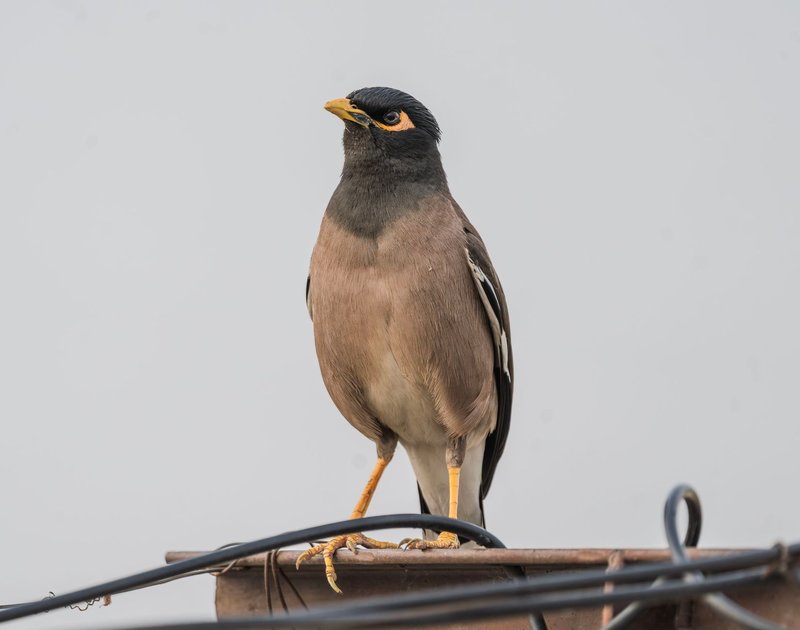
17. Common myna, “MY-nuh”
Brought to Oʻahu in 1865 to control army worms in the sugarcane fields, the myna turned out to be better at taking over parking lots than controlling pests. It’s brown, with yellow eye patches and a loud, varied call.
- Size: about 9 to 10 inches
- Status: abundant and introduced
- Where to see it: any town, outdoor café, or shopping center
18. Japanese white-eye (mejiro), “meh-JEE-roh”
A small olive-green bird with a white ring around each eye. It arrived in 1929 and became one of the most common birds in Hawaii, reaching forests where native honeycreepers live. It competes with some of them for nectar and insects.
- Size: about 4.5 inches
- Status: abundant and introduced
- Where to see it: gardens, forests, and anywhere there are flowering trees
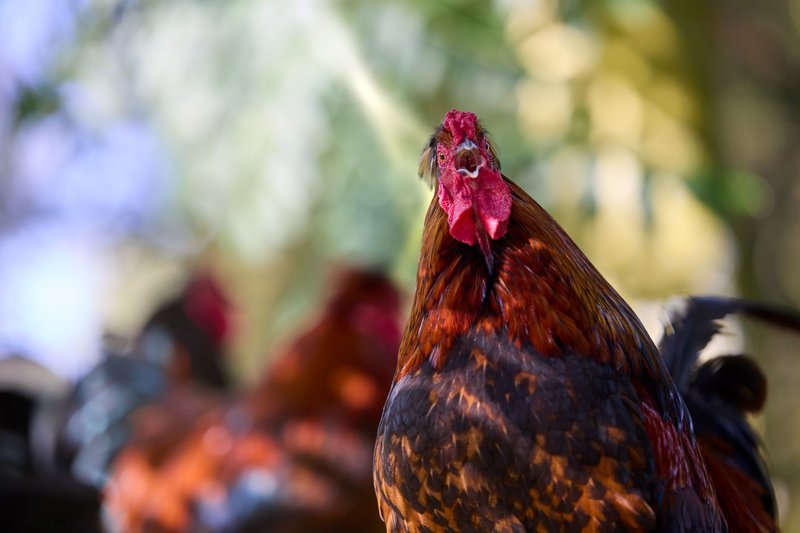
19. Red junglefowl (moa), “MOH-ah”
Yes, the wild chickens. Polynesian settlers brought jungle fowl to the islands as a food source, and later escaped domestic birds mixed in. On Kauai, where there are no mongooses to eat eggs and chicks, they are everywhere: roadsides, beach parks, gas stations.
- Size: roosters around 2 feet long
- Status: abundant and introduced
- Where to see it: Kauai especially, but present on most islands
Where to see the birds of Hawaii by island
You won’t see forest birds from a resort. The honeycreepers live at elevation, so the plan on each island is the same: go uphill, go early.
Big Island. Hawaiʻi Volcanoes National Park gives you the easiest forest birding in the islands, with ʻapapane, ʻiʻiwi, ʻamakihi, ʻelepaio, and nēnē in one day, especially at Kīpukapuaulu. For the rarest species, including the ʻakiapōlāʻau, you need Hakalau Forest, which requires planning. Look up for the ʻio.
Maui. Hosmer Grove at Haleakalā National Park is the best short walk for forest birds. At the summit you’ll find nēnē, and at Kealia Pond near Kīhei you can watch aeʻo from a boardwalk.
Kauai. Kōkeʻe State Park is the main forest birding area, with native honeycreepers on the trails above Waimea Canyon. Kīlauea Point is the island’s seabird stop, with albatross, boobies, shearwaters, and nēnē in one place. Hanalei gives you wetland birds. And the chickens find you.
Oʻahu. The island with the most people has the fewest native land birds you can easily reach. Go to Kaʻena Point for albatross and shearwaters, and to the Kahuku wetlands for aeʻo and koloa. Expect mostly introduced species in town.
If you have one morning and one island, pick the Big Island, drive to Hawaiʻi Volcanoes National Park, and be on a trail by dawn.
Why the forest birds are disappearing
The main killer isn’t habitat loss or hunting, although both contributed. It’s avian malaria, carried by the southern house mosquito, which was first recorded in Hawaii in 1826 after arriving on a ship at Lahaina. Native birds have no resistance, and a single bite can be fatal.
For a century, cool high-elevation forest worked as a refuge because mosquitoes struggled above about 4,500 feet. Warming temperatures are pushing malaria uphill, and the refuge is shrinking. On Kauai, the ʻakikiki has dropped to a handful of wild birds at most.
The ʻalalā, or Hawaiian crow, is extinct in the wild. Roughly a hundred survive in captivity, and releases of captive-bred birds in recent years have struggled against predators and disease.
There are some positive signs. The nēnē recovered from about a few dozen birds. The ʻio came off the endangered species list. And since 2023, conservation groups have been releasing sterile male mosquitoes by drone over forest on Maui to suppress mosquito populations. Whether it scales fast enough is the open question.
If you visit, stay on trails, clean your shoes between forest areas to avoid spreading ʻōhiʻa disease, and never feed wildlife.
FAQ
What is the state bird of Hawaii?
The nēnē, or Hawaiian goose. It became the official state bird in 1957.
How many birds are native to Hawaii?
Hawaii’s checklist includes 64 endemic species, but many are now extinct. Among the honeycreepers, fewer than 20 species survive out of more than 50 that once existed.
What is the best time of year to go bird watching in Hawaii?
Forest birds can be seen year-round, and early morning is best. Laysan albatross are on the islands from about November to July, wedge-tailed shearwaters from March to November, and kōlea from late August through April.
Can you see Hawaiian honeycreepers on a short trip?
Yes, if you go to elevation. The most reliable places are Hawaiʻi Volcanoes National Park, Hosmer Grove on Maui, and Kōkeʻe on Kauai. Plan a morning, bring binoculars, and expect to hear birds before you see them.
Is it okay to feed nēnē?
No. Fed nēnē lose their wariness and gather near roads, where cars kill them. Keep your distance and let them forage on their own.