Tungsten has the highest melting point of any metal (3,422 °C), a density almost identical to gold’s, and enough hardness to cut steel once it’s bonded into carbide. Those three properties explain nearly every use of tungsten, from the filament in an old light bulb to the cutters on a tunnel boring machine. Pick a use, find the property behind it, and the choice stops looking random.
Table of contents
- Why tungsten gets used for so much
- Uses that depend on heat resistance
- Uses that depend on hardness
- Uses that depend on density
- Uses of tungsten as an alloying element
- Where the world’s tungsten actually goes
- Tungsten in everyday life
- Why LED bulbs replaced tungsten filaments
- Can anything replace tungsten?
- FAQ
Why tungsten gets used for so much
The numbers are lopsided. Tungsten melts at 3,422 °C and boils at 5,930 °C, according to the Royal Society of Chemistry’s element data. Its density is 19.25 g/cm³, against 19.3 for gold and 11.3 for lead. It also has the lowest vapor pressure and the lowest thermal expansion of any pure metal, so it holds its shape when it’s hot.
The name tells you the same story. “Tung sten” is Swedish for “heavy stone.” The symbol W comes from wolfram, the German name for the ore.
Tungsten has one weakness: pure tungsten is brittle at room temperature and hard to machine. Nearly all of its industrial uses are workarounds for that, either by making it into a wire, a powder-metallurgy part, or a carbide.
Uses that depend on heat resistance
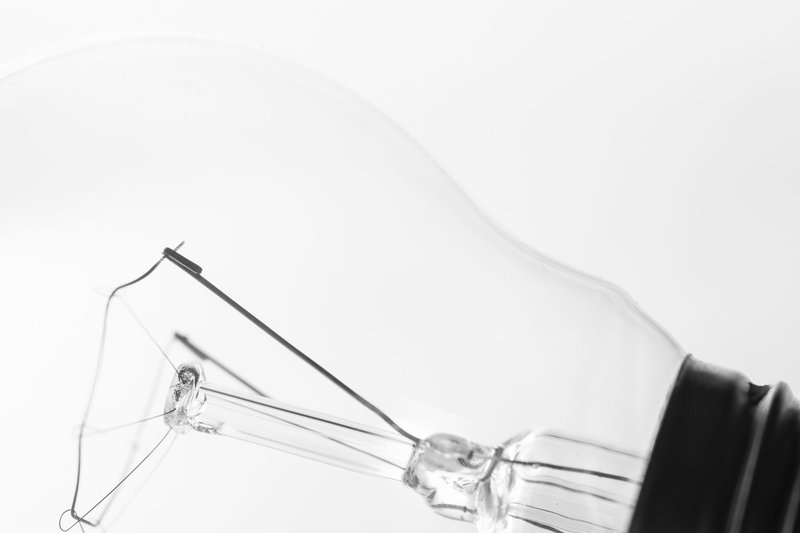
Light bulb filaments. An incandescent filament glows at roughly 2,500 °C. Most metals would melt or vaporize long before that. Tungsten does neither quickly, which is why it replaced carbon filaments in the early 1900s once William Coolidge’s team at General Electric worked out how to make the metal into a ductile wire. The bulb is filled with inert gas, or in halogen lamps a halogen vapor, because tungsten would burn up in open air at that temperature. Krypton, a noble gas, is one of the fills used in high-intensity lamps, which is covered in more detail in what the noble gas krypton does.
Welding electrodes. TIG (gas tungsten arc) welding uses a tungsten rod to carry the arc. The rod is non-consumable: it stays solid while the metal beneath it melts. Welders pick tips by color code. Older thoriated electrodes contain slightly radioactive thorium, so many shops now use ceriated or lanthanated ones.
Rocket nozzles and furnace parts. Throat inserts in solid-fuel rocket motors and the heating elements and heat shields in vacuum furnaces are made of tungsten or tungsten-rhenium alloys. Exhaust gas at several thousand degrees erodes most materials. Tungsten erodes slowly.
Fusion reactors. The divertor in ITER, the experimental fusion reactor under construction in France, is armored with tungsten. It takes the worst heat and particle load in the machine, and tungsten sputters less than the alternatives.
Semiconductors. Chipmakers deposit a thin layer of tungsten, using tungsten hexafluoride gas, to make the tiny vertical contacts that link transistor layers. The metal survives the high-temperature steps that follow.
Uses that depend on hardness
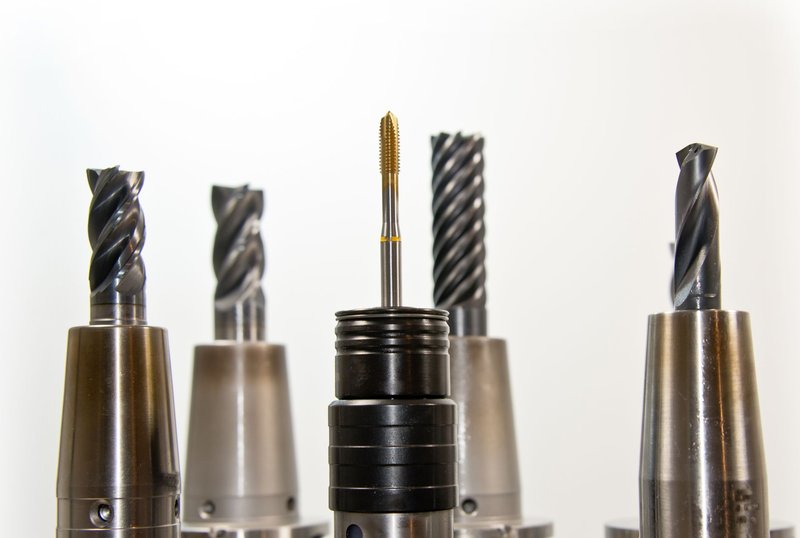
Tungsten metal on its own isn’t the hardest thing around. Tungsten carbide, a compound of tungsten and carbon, is. It scores around 9 on the Mohs scale, with diamond at 10. The carbide powder is pressed with a cobalt binder and sintered into a solid, which is called cemented carbide or simply “carbide.”
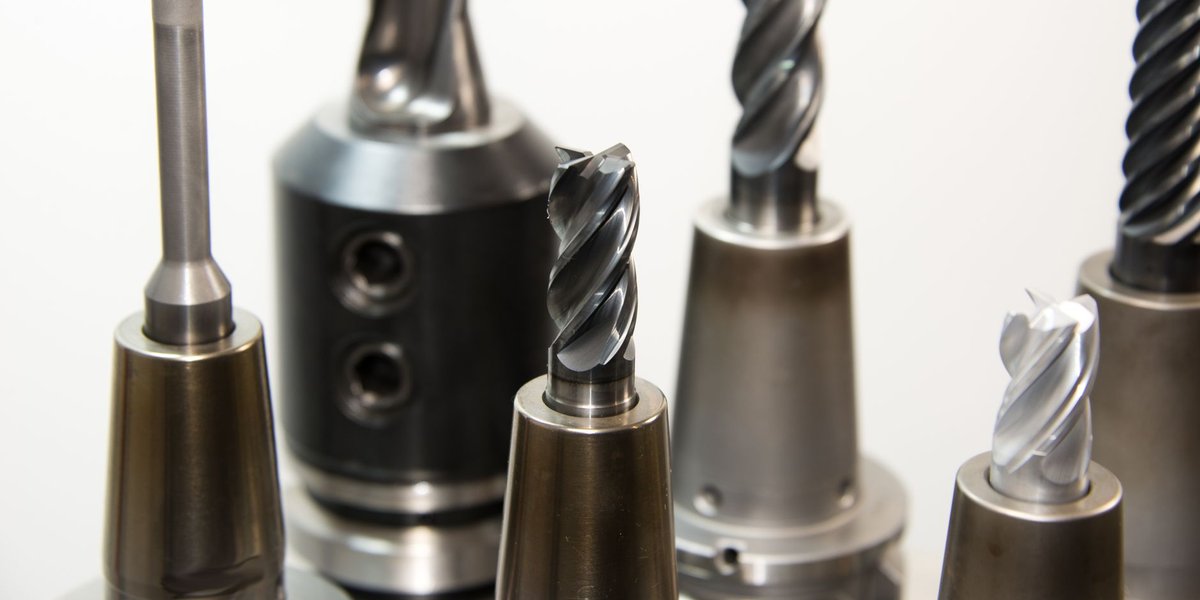
- Cutting tools and drill bits. Carbide inserts on lathes and milling machines cut steel at speeds that would soften a plain steel tool within seconds.
- Mining and tunneling. The picks on coal cutters, the teeth on oil-well drill bits, and the disc cutters on tunnel boring machines are tipped with carbide.
- Wear parts. Valve seats, extrusion dies, and the ball in a ballpoint pen are carbide, because they need to keep their shape while something abrasive moves across them.
Uses that depend on density
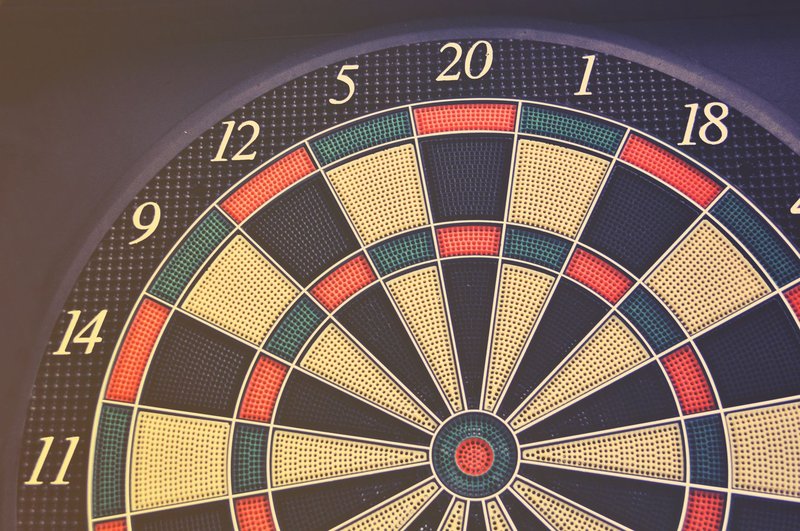
Tungsten is about 70% denser than lead and not toxic the way lead is, so it wins whenever you need maximum weight in minimum space.
- Radiation shielding. Tungsten alloys stop X-rays and gamma rays well. They’re used for collimators in radiotherapy machines and for shielding in medical imaging equipment, where a thinner wall matters.
- X-ray tubes. The anode, the target that electrons hit, is usually tungsten or a tungsten-rhenium alloy. Its high atomic number makes it efficient at turning electron energy into X-rays, and it survives the heat.
- Counterweights and ballast. Aircraft control surfaces, helicopter rotors, and racing cars use small tungsten weights to balance parts without adding bulk.
- Darts. Pro darts are typically 80% to 97% tungsten. The density lets the barrel stay thin, so darts can be grouped tightly on the board.
- Golf clubs and fishing weights. Tungsten inserts shift a club’s center of gravity, and tungsten sinkers are smaller than lead ones of the same weight.
- Ammunition and armor penetrators. Tungsten alloy cores are used in some armor-piercing rounds, partly as an alternative to depleted uranium.
Density has a darker side effect. Gold-plated tungsten bars have turned up in fraud cases because they weigh the same as gold. A bar’s weight alone can’t tell you what’s inside.
Uses of tungsten as an alloying element
Small additions of tungsten change what other metals can do.
- High-speed steel. Tool steels such as the classic T1 grade contain up to 18% tungsten. The tungsten carbides in the steel keep the edge hard when friction heats it.
- Superalloys. Nickel- and cobalt-based alloys in jet engines and gas turbines use tungsten to stay strong at high temperature.
- Stellite. This cobalt-chromium family, which includes tungsten, resists wear and corrosion and is used on engine valves and surgical tools.
Where the world’s tungsten actually goes
The USGS tracks tungsten supply and use. In its commodity summaries, about 60% of tungsten goes into cemented carbide parts for cutting and wear-resistant applications. The remainder goes into steels and superalloys, electrodes, filaments, wires, and other electrical, heating, lighting, and welding components.
| Use group | Approximate share | Main property used |
|---|---|---|
| Cemented carbide (cutting tools, mining, wear parts) | About 60% | Hardness |
| Steels and superalloys | Part of the remaining 40% | Alloying, hot strength |
| Mill products: wire, filaments, electrodes, rods | Part of the remaining 40% | Heat resistance |
| Heavy alloys, chemicals, other | Part of the remaining 40% | Density, other |
The exact split of that last 40% shifts year to year, and USGS reports it only in broad groups. Carbide’s roughly 60% share is the stable number.
China supplies roughly four-fifths of mined tungsten, according to the same USGS data. For how that output breaks down by country, see Tungsten-Producing Countries: The 2025 Ranking. That concentration is why tungsten sits on the European Union’s critical raw materials list and why export restrictions announced by China in 2025 moved prices.
Tungsten in everyday life

You probably own more tungsten than you’d guess.
- Rings. Tungsten carbide wedding bands resist scratches far better than gold or titanium. The tradeoff is that carbide is hard but not tough. A hard enough hit can crack it, and it can’t be sized by bending the way gold can. If one needs to come off in an emergency, it gets cracked off with locking pliers rather than cut.
- Phone vibration motors. The small off-center weight on the motor shaft that makes a phone buzz is a tungsten alloy. The density makes the vibration strong in a motor a few millimeters wide.
- Bulbs. Halogen lamps and some specialty bulbs still use tungsten filaments.
- Pen tips. The ball in a ballpoint pen is tungsten carbide, rolling against a paste of ink.
- Tools. The hardware-store drill bit labeled “carbide-tipped” is a small piece of cemented carbide brazed onto steel.
Why LED bulbs replaced tungsten filaments
Tungsten was the right metal for an inefficient job. A filament bulb turns most of its electricity into heat, with only a small share becoming visible light. The US Department of Energy says residential LEDs use at least 75% less energy and last up to 25 times longer than incandescent lighting.
Tungsten didn’t fail as a filament. The physics of heating a wire until it glows lost to a semiconductor that makes light directly. That’s also why LEDs, not another filament metal, ended the era. Nothing was wrong with the metal.
Can anything replace tungsten?
Sometimes, at a cost. Molybdenum can stand in for tungsten in some steels and furnace parts, but it melts at 2,623 °C, nearly 800 °C lower. Lead and depleted uranium compete on density but are toxic or controlled. Ceramics and diamond-based materials compete with carbide in some cutting jobs, though they’re more brittle or costlier. For the mix of heat, density, and hardness in a single material, there is no equal.
FAQ
What is tungsten mostly used for? About 60% of it goes into tungsten carbide for cutting tools, mining bits, and wear-resistant parts, according to the USGS.
Why is tungsten used in light bulbs? It has the highest melting point of any metal and low vapor pressure, so a filament can glow white-hot for a long time without melting or evaporating away.
Is tungsten harder than steel? Pure tungsten is fairly hard but is not what’s cutting steel. Tungsten carbide, a compound of tungsten and carbon, is much harder than steel, and it’s what cutting tools and drill bits use.
Is tungsten safe to wear as jewelry? Tungsten carbide rings are widely sold and generally safe. A small share of people react to the nickel or cobalt used as the binder, and nickel-free binders are available.
Is tungsten radioactive? No. Natural tungsten is stable for practical purposes. The radioactivity some welders worry about comes from thorium added to older thoriated electrodes.
Why is tungsten called a strategic metal? Its supply is concentrated in one country, and it’s essential to defense hardware, machine tools, and electronics, which is why governments track it as a critical raw material.