As an Amazon Associate we earn from qualifying purchases. Disclosure
In October I visited a friend from my CERN years who now teaches high school physics. Her class was measuring the period of a pendulum. Two of the six stopwatches had dead batteries, so she was timing the front bench with her phone while a list of things to replace sat in blue ink on the back of her hand: AA cells, string, a meter stick someone had snapped. That list is a better guide to what she wants than anything with “world’s best teacher” printed on it.
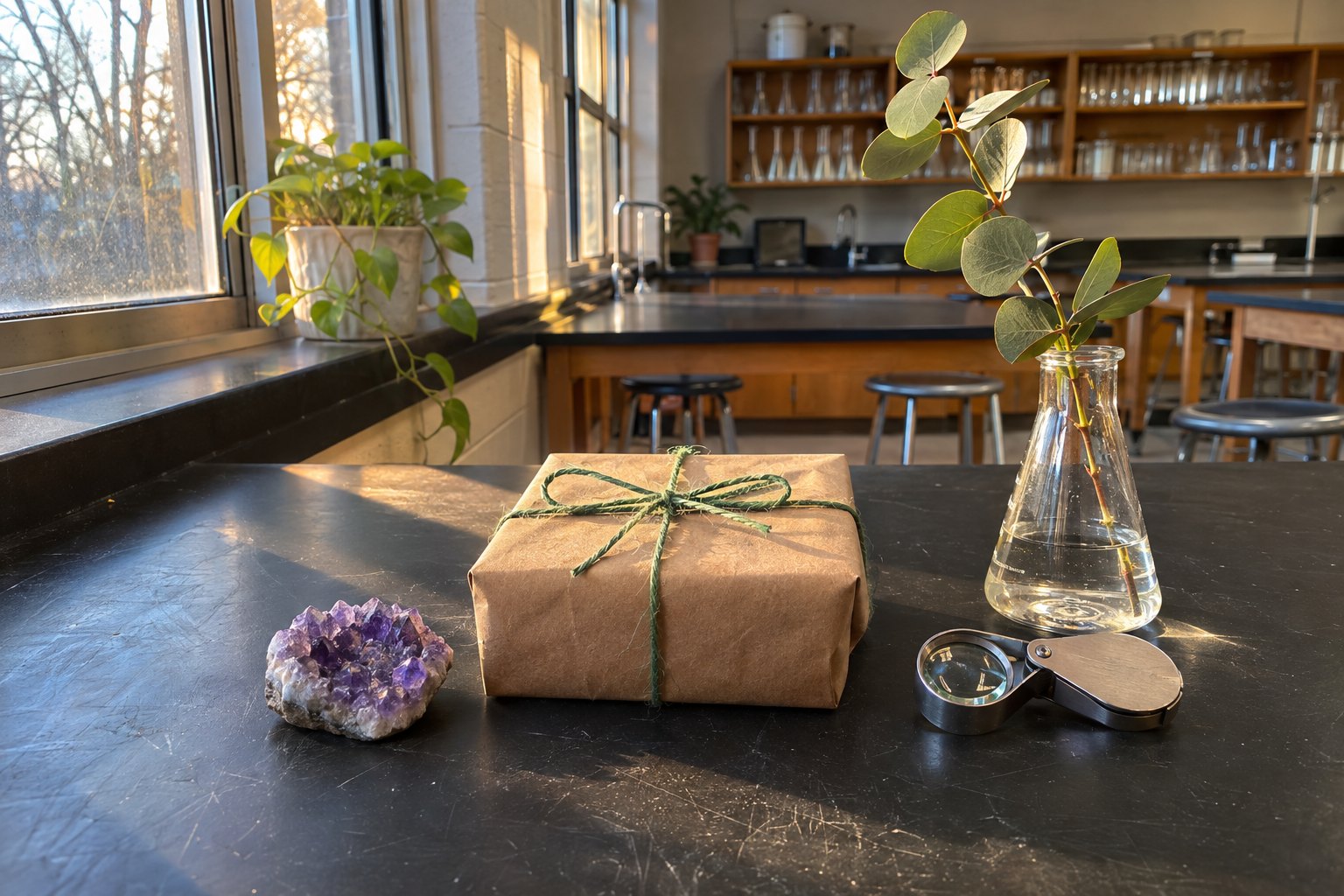
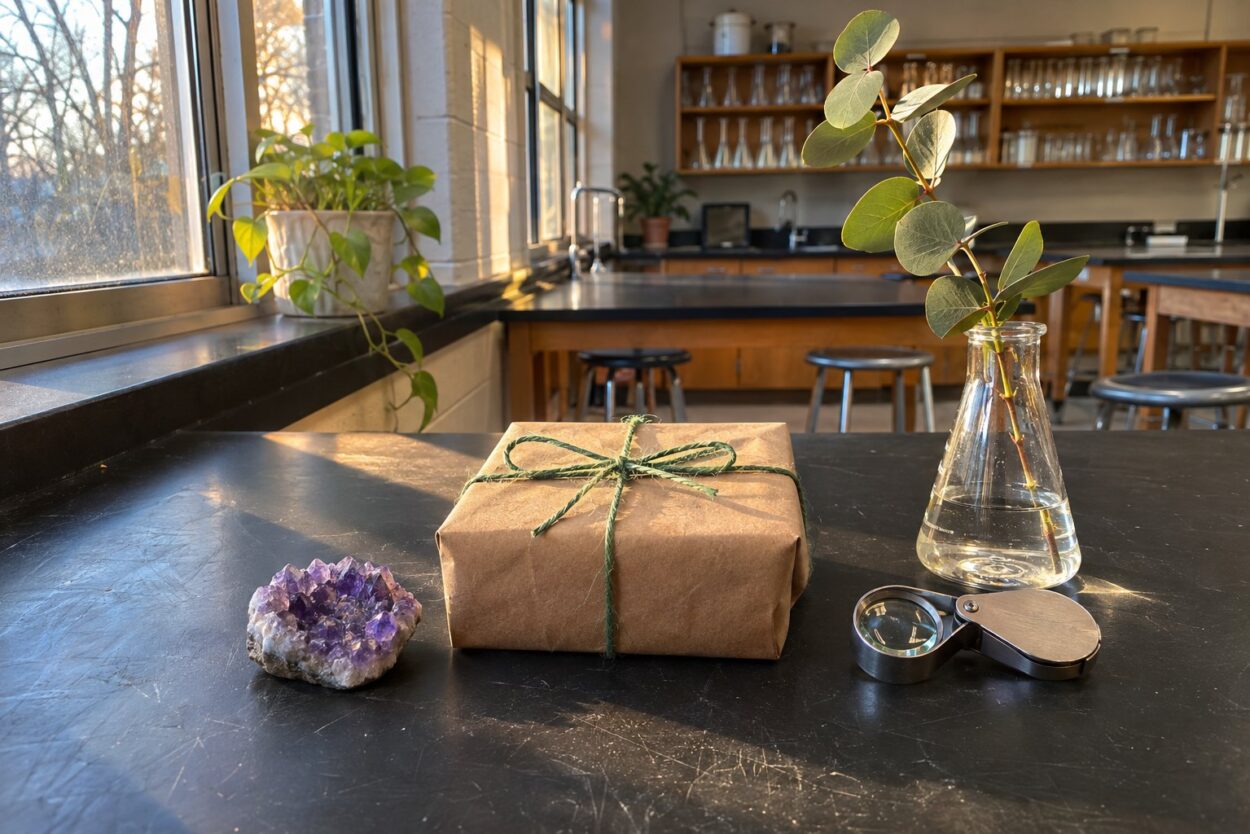
The best gifts for science teachers are tools they can put in front of a class, supplies they would otherwise buy themselves and books that give them new stories to tell. A label maker, a molecular model set, diffraction gratings, a 10x loupe and The Disappearing Spoon all pass that test.
I have a PhD in particle physics, spent five years at CERN on detector calibration and taught first-year labs before that. The 26 picks below are sorted by what the person teaches, with a short note on the science behind each one. Budget, Mid-range and Premium show how the picks compare with each other.
Quick picks
| Gift | Best for | Budget |
|---|---|---|
| Brother label maker | Any science teacher | Mid-range |
| IPEVO document camera | A group gift | Premium |
| Molymod model set | Chemistry teachers | Mid-range |
| Periodic table with element samples | A chemistry desk | Mid-range |
| Prepared microscope slides | Biology teachers | Budget |
| Euler’s Disk | Physics teachers | Mid-range |
| Diffraction grating slides | A class set on a small budget | Budget |
| 10x triplet loupe | Earth science teachers | Budget |
How to choose a gift for a science teacher
Four questions sort a good idea from a drawer filler.
- Can it be used in a lesson? An object that shows momentum or molecular shape earns shelf space. A trinket with a flask on it does not.
- Does it replace something they buy? Batteries, markers, streak plates and slides run out. A federal survey found that 94.8 percent of public school teachers spent their own money on classroom supplies in 2019-20.
- Is it allowed in a school lab? Chemicals, high-power lasers, live animals and anything with mercury stay out. The school’s safety officer has the final say.
- Which science do they teach? A middle school teacher often covers all of them, so start with the first group. A high school teacher usually has one subject, and the sections below follow it.
If you don’t know the subject, ask your student what the last lab was about. It takes one question at dinner.
Gifts for any science teacher
These five work in every science room, from sixth grade general science to a senior elective.
Best for the prep room · Mid-range
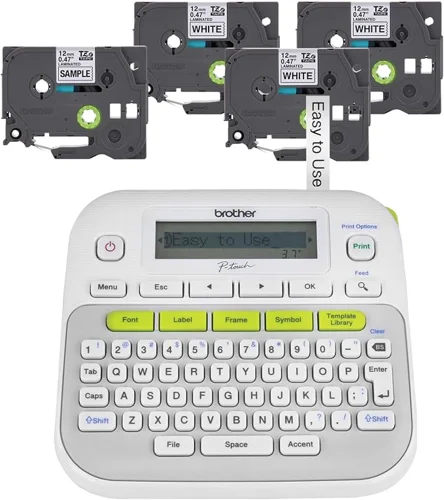
1. Brother P-touch PT-D210 Label Maker With 4 Tapes
A handheld label maker with a keyboard, a preview screen and a choice of fonts, symbols and frames. This bundle comes with four tape cartridges, and the machine takes tape from 3.5 mm to 12 mm wide. It runs on six AAA batteries, which are not included.
A science room is full of things that look alike: jars of white powder, clear solutions, drawers of slides, bins of clamps. A printed label stays readable long after marker on masking tape has smudged. A chemical container still needs the full hazard information the school requires, so treat these labels as shelf, drawer and equipment labels unless the safety officer says otherwise.
- Four tape cartridges in the bundle
- Tape widths from 3.5 to 12 mm
- Needs 6 AAA batteries or an optional adapter
Good: it gets used in the first week and every week after. Not great: six batteries are a separate purchase, and refill tapes are an ongoing cost.
Check on Amazon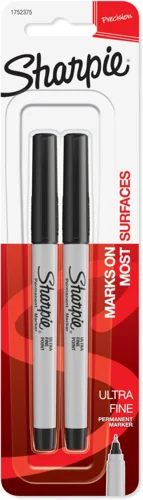
Best small add-on · Budget
2. Sharpie Ultra Fine Point Permanent Markers, Black, 2 Count
Two black markers with a narrow tip that writes on plastic, glass, metal and paper. The ink dries quickly and resists water and fading. The tip is fine enough to write a sample code on the cap of a small tube.
Permanent marker ink is dye in an alcohol-based solvent. The solvent evaporates and leaves the dye on the surface, so water does not lift it. Alcohol does. Wipe a labeled beaker with ethanol and the writing comes straight off, which is useful for reusing glassware and a nasty surprise when it happens by accident.
- 2 black markers
- Ultra fine tip
- Water and fade resistant
Good: every teacher who labels samples runs through these. Not great: two markers is a token on its own, so tuck them into a larger gift.
Check on Amazon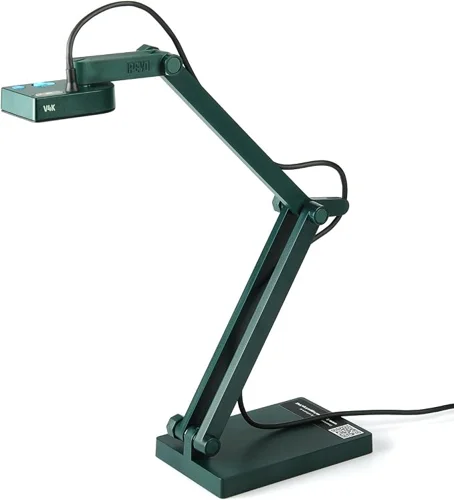
Best group gift for a classroom · Premium
3. IPEVO V4K USB Document Camera
An 8-megapixel camera on a jointed stand that shows whatever sits under it on a screen. It captures up to 3264 x 2448 pixels, streams full HD at up to 30 frames per second and covers an area of up to 13.46 x 10.04 inches. It connects by USB to Mac, Windows and Chromebook computers.
A document camera lets 30 students watch one small thing at once. A precipitate forming in a test tube, the mouthparts of a pinned insect or the cleavage planes of a piece of mica are hard to see from the third row. Put them under the lens and they fill the wall. Ask the teacher or the school first, since some rooms already have one.
- 8 MP, up to 3264 x 2448
- Up to 13.46 x 10.04 inch shooting area
- USB, Mac, Windows and Chromebook
Good: it changes what a whole class can see during a demonstration. Not great: it depends on the room computer and projector, and a district may not allow unapproved devices.
Check on Amazon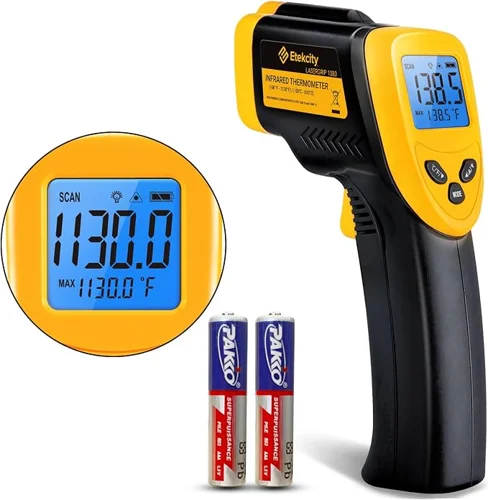
Best for demonstrations · Budget
4. Etekcity Infrared Thermometer
A pistol-grip thermometer that reads surface temperature without touching, from -50 to 610 degrees C (-58 to 1130 degrees F). It has a 12 to 1 distance-to-spot ratio, adjustable emissivity from 0.1 to 1.0 and two AAA batteries in the box. It is not made for taking body temperature.
Every warm object radiates infrared light, and the sensor converts the amount it collects into a temperature. How strongly a surface radiates is its emissivity, which is why shiny metal reads far colder than it is. Point it at a bare aluminum can and a taped patch on the same can filled with hot water, and the two numbers make a lesson. The 12 to 1 ratio means that at 12 inches it averages a spot about 1 inch wide.
- -50 to 610 degrees C
- 12:1 distance to spot
- Adjustable emissivity, batteries included
Good: it works for chemistry, physics, earth science and biology lessons alike. Not great: it has an aiming laser, so it belongs in an adult hand and away from eyes.
Check on Amazon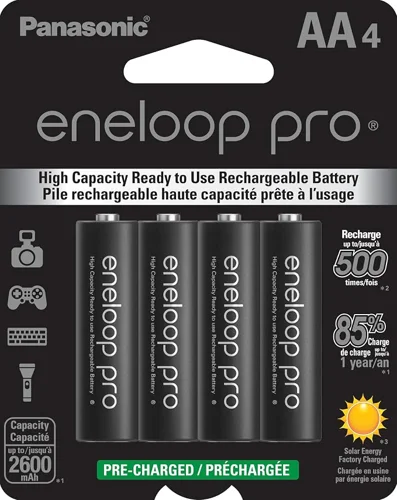
Best practical gift · Budget
5. Panasonic eneloop pro AA Rechargeable Batteries, 4-Pack
Four nickel-metal hydride AA cells with a minimum capacity of 2500 mAh, charged at the factory and rated for up to 500 recharges. Panasonic says unused cells keep up to 85% of their charge after a year. No charger is in the pack.
Stopwatches, balances, motion sensors and UV lamps all eat batteries, and the dead set tends to show up at the start of a lab period. These cells give 1.2 volts, a little under the 1.5 volts of a fresh alkaline. Most devices run fine on that, but a few show a low-battery warning early.
- 4 AA cells, 2500 mAh minimum
- Up to 500 recharges
- Charger sold separately
Good: it removes a small, regular annoyance from the school year. Not great: useless without a NiMH charger, so check that the teacher has one or add it.
Check on AmazonChemistry teacher gifts
Chemistry is the hardest of the school sciences to see, since the objects of study are too small to look at. The best chemistry teacher gifts make particles and elements visible. For more ideas aimed at working chemists, see our gifts for chemists, and send students to our interactive periodic table.
Best for teaching structure · Mid-range
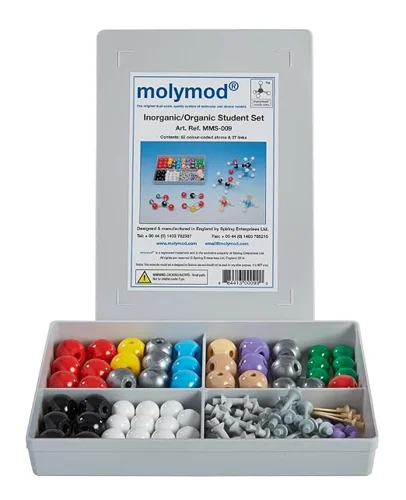
6. Molymod MMS-009 Molecular Model Set, 52 Atoms
A student set of 52 color-coded plastic atoms with links, stored in a box with four compartments. The atoms measure 17 to 23 mm across, and it covers both inorganic and organic structures. The maker aims it at grades 7 to 12.
A drawing of methane looks like a flat cross. Build it and the four hydrogens spread out at about 109.5 degrees, as far from each other as they can get around the carbon. The same set shows why water is bent and carbon dioxide is straight. A teacher uses one set at the front of the room and wants several for group work, so ask how many they already have.
- 52 atom parts with links
- Color-coded
- Storage box with 4 compartments
Good: a long-lived tool that makes molecular geometry visible. Not great: one set serves one small group, and small parts go missing.
Check on Amazon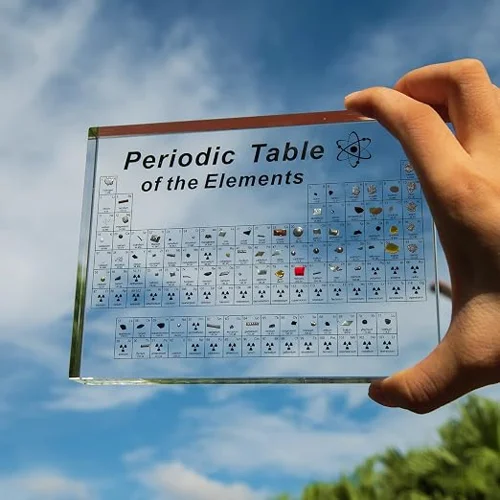
Best desk piece for a chemistry teacher · Mid-range
7. Acrylic Periodic Table With Real Element Samples
A clear acrylic slab about 5.9 x 4.5 x 0.8 inches with 83 sample cells laid out as a periodic table, plus a flannel bag. The seller says reactive and volatile elements are specially treated and some hard-to-collect ones are replaced with substitutes.
Students read that bromine is a liquid and sulfur is yellow. Seeing samples side by side makes the trends concrete: the left side dull and reactive, the middle full of silvery metals, the right side holding the gases. The substitutes are part of the lesson too. Ask the class why nobody can seal a stable sample of astatine in plastic.
- 83 sample cells in acrylic
- About 5.9 x 4.5 x 0.8 in
- Flannel storage bag
Good: students pick it up and ask questions without any prompting. Not great: the samples are tiny and not all are the true element, so it is a display and not a reference set.
Check on Amazon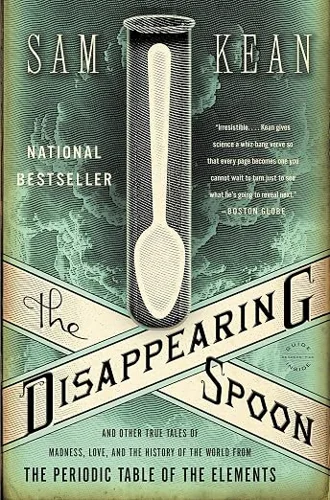
Best book for a chemistry teacher · Budget
8. The Disappearing Spoon by Sam Kean
A paperback of stories about the elements, organized around the periodic table. Kean covers discovery, war, money, medicine and madness, one element or family at a time.
The title comes from gallium, a metal that melts at about 29.8 degrees C, below body temperature. A spoon cast from it looks ordinary and vanishes into a cup of hot tea. Chemistry teachers tell stories like this to wake a class up, and the book is a deep supply of them. Check the shelf first, since it is a popular title.
- Paperback, Little, Brown
- Element stories across the periodic table
- Readable in short chapters
Good: it feeds lesson openers for a whole year. Not great: many chemistry teachers already own it.
Check on Amazon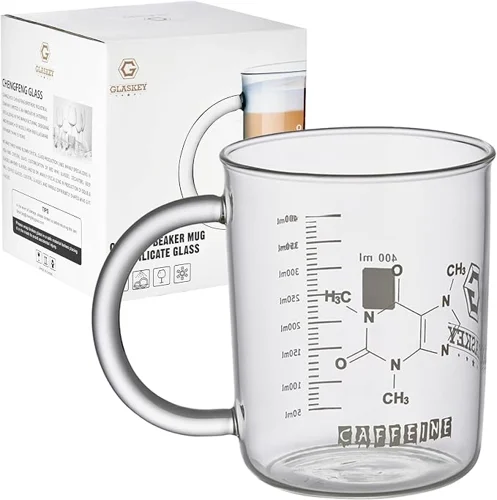
Best chemistry gag gift · Budget
9. Glaskey Caffeine Beaker Mug, 16 oz
A 16-ounce mug of borosilicate glass shaped like a beaker, with metric and standard volume markings, a handle and a caffeine molecule printed on the side. The listing calls it microwave and dishwasher safe.
Borosilicate glass expands only about a third as much as ordinary soda-lime glass when heated, so it handles hot coffee without cracking. It is the same family of glass as lab beakers. This one is a mug and stays one: it goes home or to the staff room, and never onto a lab bench where food and drink are banned.
- 16 oz borosilicate glass
- Volume markings and handle
- Microwave and dishwasher safe
Good: a chemistry joke that works as a real mug. Not great: it is still a mug, and many teachers have a shelf full of them.
Check on AmazonBiology teacher gifts
Biology teachers need things to magnify, models to take apart and stories that connect cells to people. Pair a gift here with the free 3D cell model or 3D DNA model as a note for their next lesson, or browse our biology books for self-study.
Best for field work · Budget
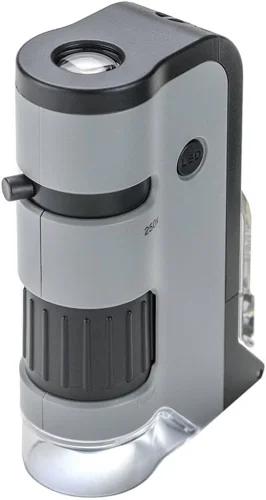
10. Carson MicroFlip 100x to 250x Pocket Microscope
A pocket microscope with 100x to 250x magnification, an LED light, a UV light, a wrist strap and a clip for taking photos through a phone. It weighs 2.56 ounces.
At 100x you can see the cells in a thin onion skin and the structure of a butterfly wing. Depth of field is very shallow at these powers, so a specimen needs to be thin and flat and the focus needs patience. Bacteria are too small to show as more than specks, whatever a listing suggests. A teacher on a pond walk or schoolyard survey can show a sample on the spot and photograph it for the class.
- 100x to 250x
- LED and UV light, phone clip
- 2.56 oz with wrist strap
Good: small enough to live in a lab coat pocket. Not great: harder to focus than a bench microscope, and the rating is lower than most picks here.
Check on Amazon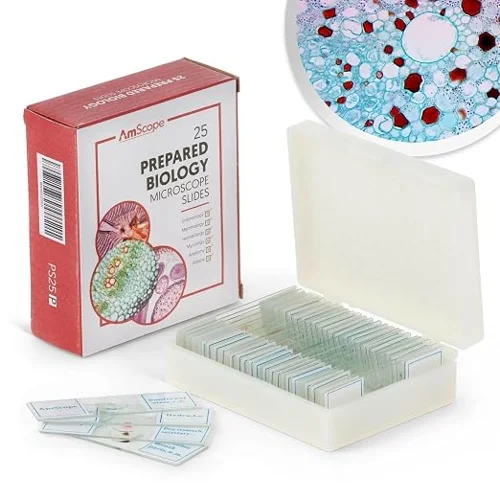
Best for any life science room · Budget
11. AmScope 25-Piece Prepared Slide Set
Twenty-five standard 1 x 3 inch slides of plant, insect and animal tissue specimens, each marked with its name, in a plastic storage box. They need a compound microscope.
Making a good permanent slide takes fixing, slicing a section a few thousandths of a millimeter thick, staining and mounting. Most school rooms are not set up for it, so prepared slides carry the histology lessons. Class sets break one slide at a time over the years, which makes a fresh box welcome.
- 25 slides, 1 x 3 in
- Plant, insect and animal tissues
- Plastic storage box
Good: ready to use the day it arrives. Not great: useless without a microscope, and a slide dropped on a floor is gone.
Check on Amazon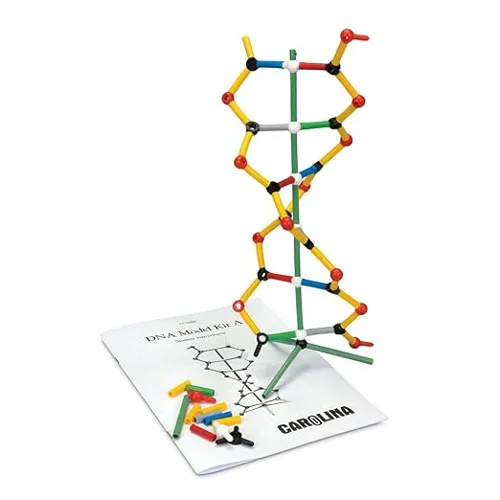
Best desk model for genetics · Budget
12. Carolina Double Helix DNA Model
A color-coded plastic model about 25 cm tall that shows six paired nucleotides. It comes unassembled with instructions, from Carolina Biological Supply, a long-running seller of school science materials.
The model makes base pairing physical: adenine goes with thymine and guanine with cytosine, and the two sugar-phosphate backbones run in opposite directions. A real turn of the common B form of DNA holds about 10.5 base pairs, so six pairs show a little more than half a turn. Students can take it apart and see how one strand tells you the other.
- 6 base pairs, about 25 cm tall
- Color-coded parts
- Instructions included
Good: a model students can assemble, break and assemble again. Not great: it is short, and the listing has only a handful of ratings.
Check on Amazon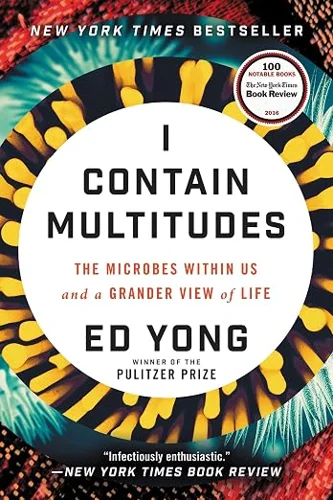
Best biology book · Budget
13. I Contain Multitudes by Ed Yong
A paperback on the microbes that live in and on animals, from squid and corals to people. Yong, a science journalist, follows researchers in the field and the lab.
Many school units still treat microbes mainly as germs. This book shows them building organs, digesting food and defending their hosts. The Hawaiian bobtail squid is the standout example: it houses glowing bacteria that help hide its silhouette from predators below. It is the kind of case that fits a ten-minute lesson opener.
- Paperback, Ecco
- Microbiology for general readers
- Strong case studies for class
Good: current ideas in microbiology told through memorable animals. Not great: microbiome research moves fast, so a few claims will have moved on since publication.
Check on Amazon
Best for teaching research ethics · Budget
14. The Immortal Life of Henrietta Lacks by Rebecca Skloot
The story of a Black woman whose cervical cancer cells were taken in 1951 without her knowledge and grew into HeLa, one of the most used cell lines in biology. Skloot tells the science alongside the story of the Lacks family.
HeLa cells helped test the polio vaccine and have been used in cancer, virus and genetics research for decades. The book gives a biology teacher a way into cell culture, mitosis and informed consent at once. It suits older students as assigned reading, and a teacher who has not read it will want to.
- Paperback, Crown
- Cell biology and research ethics
- Widely assigned in schools and colleges
Good: it connects a lab technique to a person. Not great: it is well known, so ask whether they have a copy.
Check on Amazon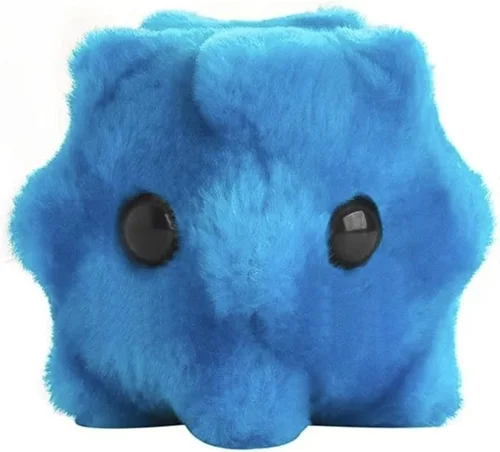
Best funny gift · Budget
15. GIANTmicrobes Common Cold Plush
A soft toy shaped like a cold virus, about 4.5 inches across, with a card of facts about the virus and microbes.
The common cold is mostly caused by rhinoviruses, which are about 30 nanometers across. A plush a few inches wide is therefore millions of times larger than the real thing, and working out the exact factor is a good scale problem. It also earns its place in January, when half the class has one.
- About 4.5 inches
- Information card included
- Soft plush
Good: cheerful, useful for a hygiene lesson and unlikely to be a duplicate. Not great: it is a toy, so pair it with something practical if you want to spend more.
Check on Amazon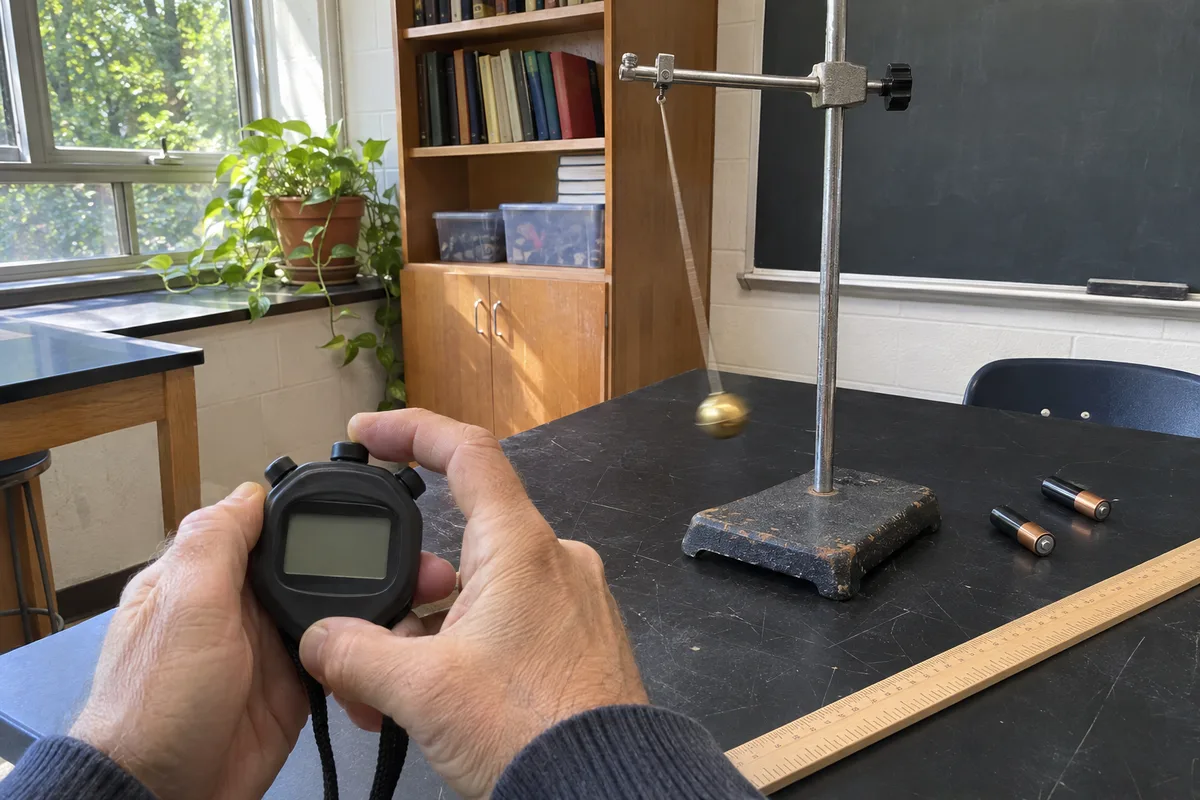
Physics teacher gifts
A physics teacher’s favorite object is one that does something unexpected and then forces the class to explain it. Four of these six do that without a power cord. Readers who want the theory can start with our physics books for self-study.
Best physics showpiece · Mid-range
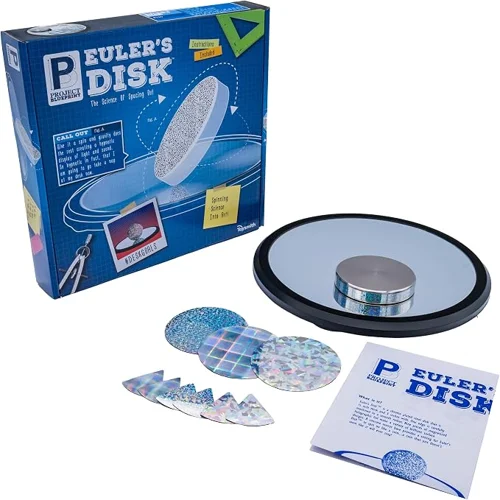
16. Toysmith Euler’s Disk
A heavy chrome-plated disk, 3 inches across, with a mirrored base and a set of stick-on foils. Spin it like a coin and it rolls on its edge with a rising hum before stopping all at once. The maker rates it for ages 8 and up.
As the disk settles, the point of contact races around the rim faster and faster even though the disk is losing energy. The sound climbs in pitch and then cuts off. In 2000 the physicist Keith Moffatt published a paper in Nature on the air drag in the thin gap under the disk, and others argued that rolling friction matters more. A teacher gets a demonstration and an open argument about models in one object.
- 3 inch chrome disk
- Mirrored base and foils
- Ages 8 and up
Good: silent classrooms are rare, and this makes one. Not great: dropping the disk can chip the mirror, so it needs a stable table.
Check on Amazon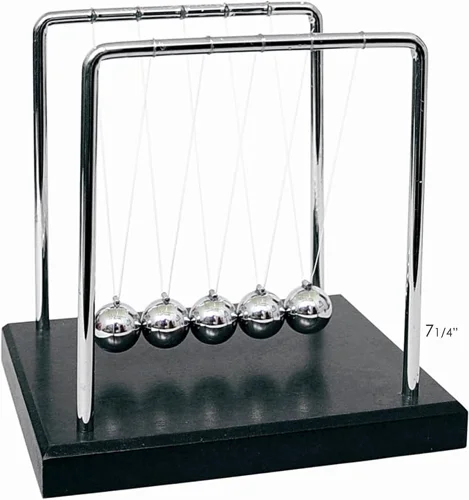
Best desk classic · Budget
17. PowerTRC Newton’s Cradle, 7 1/4 Inch
Steel balls hung in a row from a frame about 7 inches wide. Lift one at the end, let go and one flies off the other side.
The cradle shows momentum and kinetic energy being conserved together. One ball in could not send two balls out at half the speed: momentum would balance and kinetic energy would not. Ask a class why, and let them test lifting two or three. Real cradles lose energy to sound and heat, so the motion dies away.
- About 7 1/4 inches
- Steel balls
- No batteries
Good: it explains two conservation laws without a worksheet. Not great: strings tangle if it travels, and ratings are lower than for most picks here.
Check on Amazon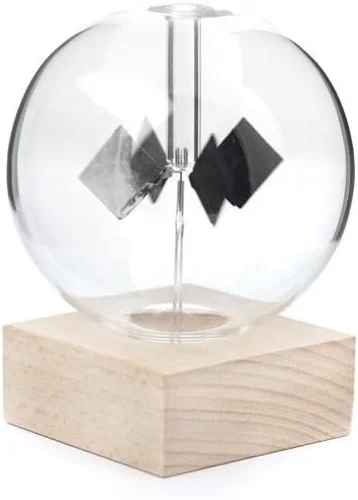
Best windowsill gift · Mid-range
18. Kikkerland Solar Radiometer
A glass bulb on a stand, about 6 inches tall, holding four vanes that are dark on one face and light on the other. Put it in sunlight and they spin. It needs no batteries.
The obvious explanation, that light pushes the vanes, is wrong. Light pressure would turn them the other way, since the reflective faces get the bigger kick. The bulb holds a thin gas, and the dark faces warm up more. Gas forces at the vane edges, including a creep of gas from the cool face to the warm face, drive the rotation. It is one of the best “are you sure?” objects in physics.
- About 6 x 4.5 x 4.5 in
- Runs on light, no batteries
- Glass bulb
Good: a quiet moving object that starts a real argument. Not great: it is thin glass, so keep it off a crowded bench.
Check on Amazon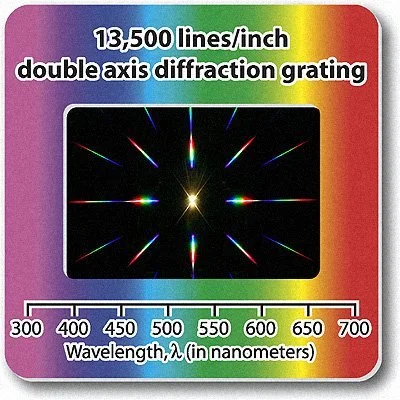
Best class set · Budget
19. Rainbow Symphony Diffraction Grating Slides, 10-Pack
Ten slide-mounted double-axis gratings with 13,500 lines per inch. They are made for looking at the spectra of gas discharge tubes and other light sources.
Thousands of evenly spaced lines split light by wavelength. A filament bulb gives a smooth rainbow, while a fluorescent tube or a neon lamp gives separate bright lines that act as a fingerprint for the gas. Astronomers read the composition of stars the same way. Double axis means the spectra spread in two directions. Never view the sun or a laser through them.
- 10 slides
- 13,500 lines per inch, double axis
- No power needed
Good: a whole lab group can look at once. Not great: fingerprints spoil them, and card mounts bend.
Check on Amazon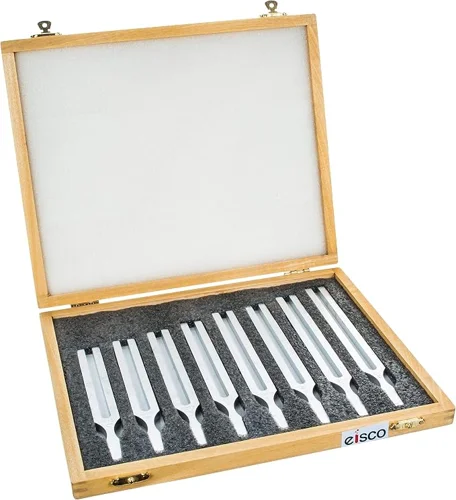
Best for a sound unit · Mid-range
20. Eisco Aluminum Tuning Forks, Set of 8
Eight forks covering the octave from C 256 Hz to C 512 Hz in scientific pitch, in a wooden case with foam inserts.
Scientific pitch sets middle C at 256 Hz, a power of two, so each octave doubles to a tidy number. That differs slightly from concert tuning, where A is 440 Hz. Strike two forks a note apart and students hear beats. Hold a ringing fork over a tube of water, raise the tube and the sound swells where the air column resonates.
- 8 forks, 256 to 512 Hz
- Scientific pitch
- Wooden case with foam inserts
Good: a complete set that supports frequency, resonance and speed of sound labs. Not great: it has few ratings, and the bullets do not mention a striker, so check before wrapping.
Check on Amazon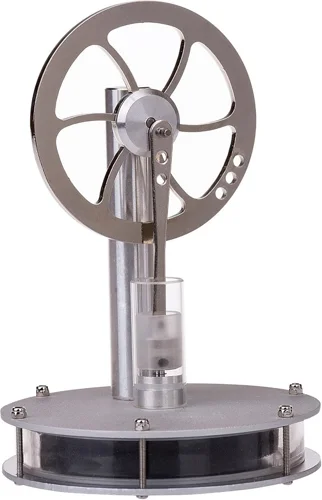
Best for thermodynamics · Mid-range
21. Sunnytech Low Temperature Stirling Engine
A small engine with a stainless steel base, a glass cylinder and a flywheel. Set it on a mug of hot water, give the wheel a push and it runs on the temperature difference. The maker rates it for ages 15 and up.
Gas inside the engine is shifted between the warm bottom plate and the cooler top plate. It expands when warmed, pushes a small piston and contracts again when cooled. An ice cube on top widens the temperature gap and speeds it up, which is the second law of thermodynamics you can watch: the work comes from heat flowing from hot to cold.
- Runs on a cup of hot water
- Glass cylinder, steel base
- Ages 15 and up
Good: it shows a heat engine with every moving part visible. Not great: it needs a gentle push to start and care in handling.
Check on AmazonEarth science teacher gifts
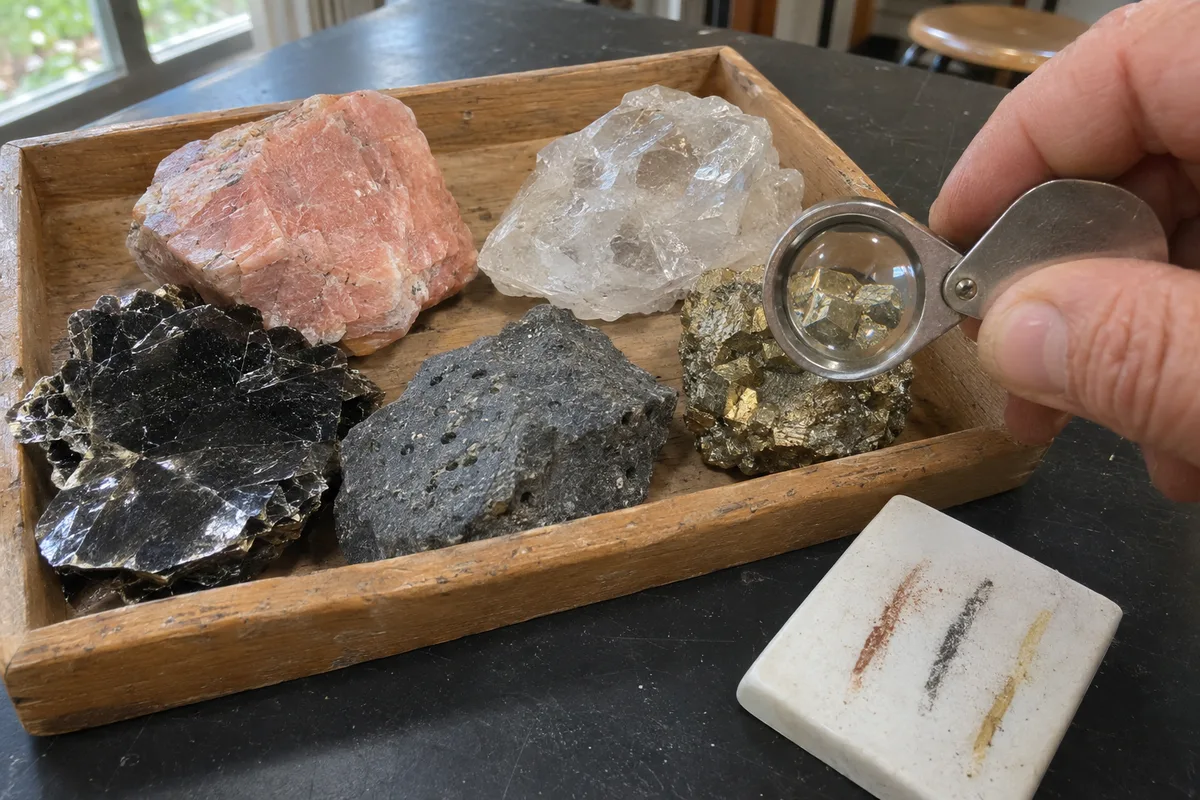
Earth science runs on specimens. Loupes, streak plates and a UV lamp turn a box of gray rocks into a lab. Our geology books for beginners and fossil finder help with the next field trip.
Best for a rock and mineral unit · Budget
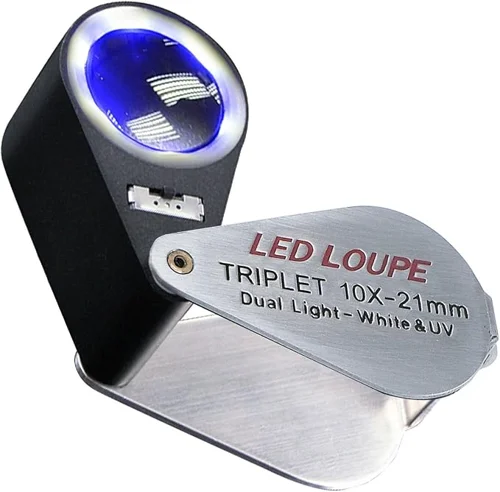
22. Gain Express 10x Triplet Loupe With LED and UV
A 10x loupe with a three-element lens in a metal body, with six white LEDs and one long-wave UV light. It is sold for jewelers, and the magnification is the one geologists use in the field.
A triplet lens cements three pieces of glass to cancel the color fringes and edge blur of a single lens. At 10x you can tell feldspar cleavage faces from the glassy broken surface of quartz in a granite. Hold the loupe close to your eye and bring the rock up to it until it snaps into focus.
- 10x triplet lens
- 6 white LEDs and 1 UV
- Metal body
Good: pocket-size and used on nearly every specimen. Not great: it is one loupe, not a class set.
Check on Amazon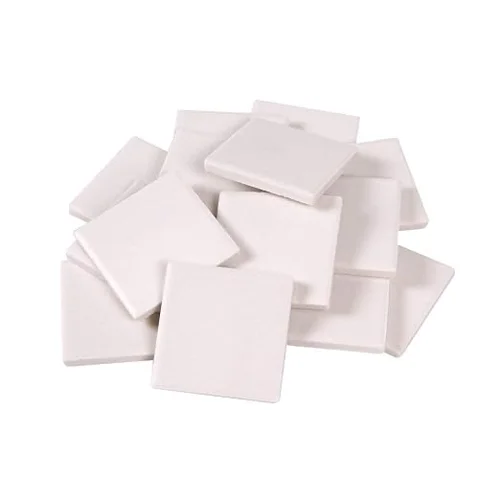
Best lab refill · Budget
23. hand2mind White Streak Plates, 10-Pack
Ten unglazed porcelain squares, 2 x 2 inches, for testing the color of a mineral in powder form.
A mineral’s surface color varies with impurities and weathering, but its powder is far more consistent. Brassy pyrite leaves a greenish black streak, and hematite leaves red-brown even when the specimen looks silver. Porcelain has a Mohs hardness of about 6.5 to 7, so harder minerals scratch the plate and leave no streak. Plates get lost, chipped and covered in old streaks.
- 10 plates
- 2 x 2 inches
- Unglazed porcelain
Good: a cheap supply that earth science rooms use up. Not great: white plates show pale streaks poorly.
Check on Amazon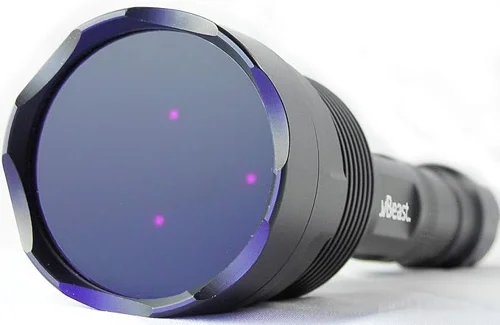
Best for fluorescent minerals · Premium
24. uvBeast V3 365 nm UV Flashlight
A filtered ultraviolet flashlight with a 365 nm output. The filter blocks most of the visible light that cheaper 395 nm lamps spill, so glowing specimens stand out.
Some minerals absorb ultraviolet light and give back visible light. Calcite and willemite from Franklin, New Jersey, glow red and green. Fluorite takes its name from the same effect. A US Army Public Health Center alert calls UV-A flashlights a hazard to the eye, although the LED units it tested would not cause injury in normal use. An adult should hold it, keep it on the specimens and never point it at a face.
- 365 nm, filtered
- Aluminum body
- Batteries listed as included
Good: a dark room, a tray of rocks and the class is hooked. Not great: it is a strong UV source and not a toy.
Check on Amazon
Best earth science book · Budget
25. The Story of Earth by Robert M. Hazen
A history of the planet across 4.5 billion years by a mineralogist, written for general readers.
Hazen argues that rocks and life changed each other. Many of the minerals on Earth today could not exist without the oxygen that living things put into the air. That idea links a geology unit to a biology one, which helps a middle school teacher who covers both.
- Paperback, Penguin
- Whole-Earth history
- Written by a working mineralogist
Good: a single readable arc from the first rocks to the present. Not great: the earliest chapters rest on thin evidence, as the whole field does.
Check on Amazon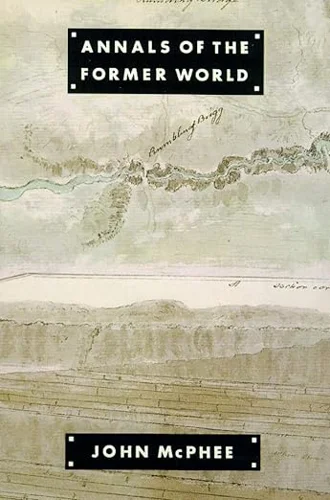
Best big book · Budget
26. Annals of the Former World by John McPhee
A single volume that gathers McPhee’s geology books, which cross the United States along Interstate 80 with working geologists. It won the 1999 Pulitzer Prize for General Nonfiction.
Road cuts expose rock that would otherwise be buried, and McPhee reads them one after another, from the Appalachians to California. Plate tectonics was still new when the early parts were written, and you watch geologists absorbing it. A teacher who loves field trips will keep it for years.
- Paperback, Farrar, Straus and Giroux
- Pulitzer Prize winner
- Long, can be read in parts
Good: a serious, generous present for a geology lover. Not great: it is very long, and some geology has been revised since.
Check on AmazonGifts that are not things
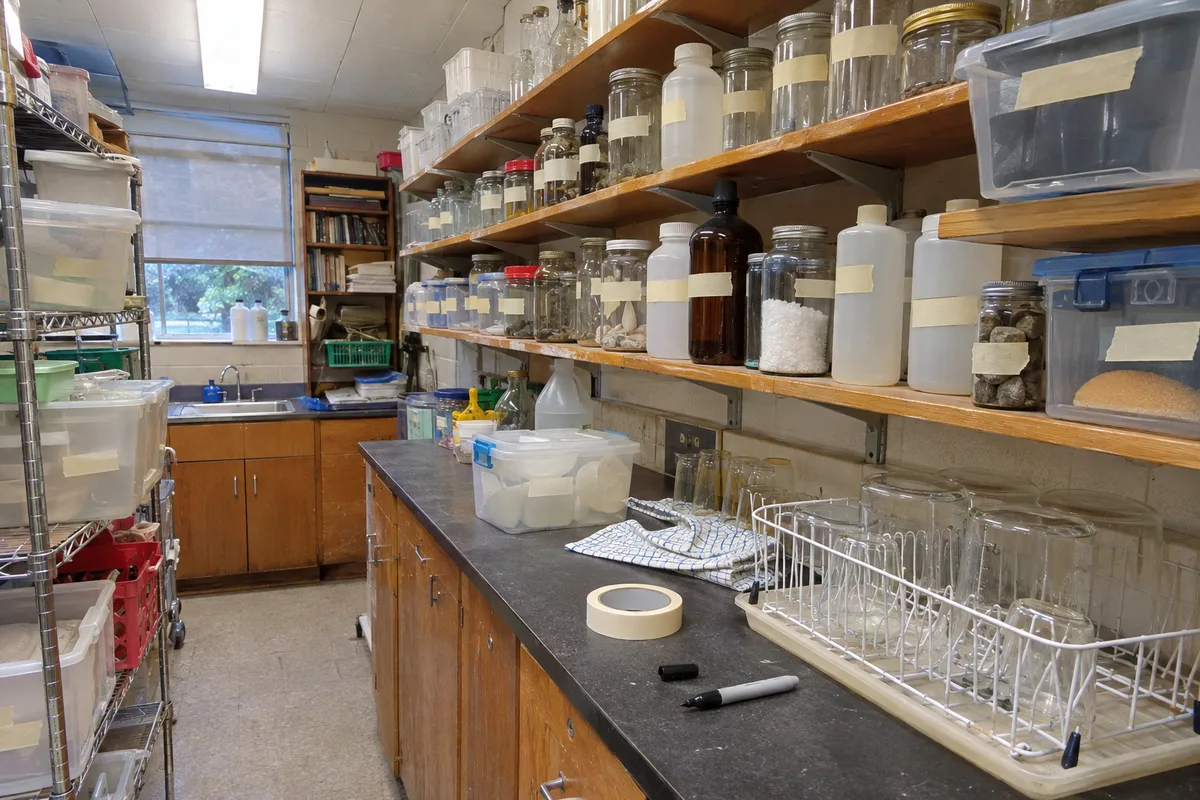
Some of the most welcome science teacher gifts take up no shelf space.
- A specific note. Name the lab, the explanation or the afternoon of extra help. “The day you made us time pendulums was when physics made sense” says more than “thanks for everything”.
- A funded classroom project. On DonorsChoose, teachers post the supplies and equipment they need and donors fund them. Ask the teacher for a project link, or browse projects by location and filter by topic and grade.
- A professional membership. Subject societies give teachers journals and lesson material: NSTA for science teachers in general, AACT for chemistry, AAPT for physics and NABT for biology. Ask whether the teacher already belongs before you pay for a year.
- An hour of work. If you are a parent with a lab or field job, offer to visit the class, judge a science fair or help wash glassware. Ask the teacher which of these the school allows.
Gift ideas by occasion
- End of year or teacher appreciation week: a note from the student plus a book from the lists above. Summer is when teachers read.
- Christmas and winter break: smaller classroom items and comforts. Our Christmas gifts for teachers and stocking stuffers for teachers cover non-science picks. For ornaments and stocking items with a science twist, see our Christmas gifts for science teachers.
- A first year of teaching: the label maker, rechargeable batteries and a proper pair of lab safety goggles of their own.
- Retirement: Annals of the Former World, the radiometer or the element block, with notes from former students tucked in.
- A group gift: the document camera, or a full set of tuning forks with a shared card. A lab coat that fits (or a men’s cut) works if someone can find out the size.
School gift rules
Public school teachers are public employees, and many states and districts cap what they can accept. Two examples show how far the rules differ.
- Massachusetts: under 930 CMR 5.08, a teacher may accept class gifts totaling up to $150 in a school year when they are identified only as from the class. Individual gifts worth $50 or more may not be accepted, according to district guidance on the state law.
- Montgomery County, Maryland: the district ethics page bars accepting an unsolicited gift worth more than $20.
Check your own district’s rule before buying anything large. Gifts to the classroom, such as the document camera, can fall under a separate donation process, so ask the front office. A note is the safe choice everywhere.
What to skip
- Another periodic table mug. My detector group at CERN once banned periodic table gifts from Secret Santa after 4 of 11 turned out to be mugs. Science teachers have the same shelf.
- Drinkware for the lab. The National Science Teaching Association says food and drink should not be permitted in rooms where lab work is done, and university safety offices ban drinking from lab glassware. A beaker mug is for home or the staff room.
- Chemicals and reaction kits. Schools buy and store these under rules that a gift bag cannot follow.
- Laser pointers from unknown sellers. Cheap ones can put out far more power than the label says.
- Live animals or cultures. They need care over every break and often need approval.
- A second microscope or telescope they did not ask for. Large equipment needs storage and maintenance. Ask first.
FAQ
Choose something they can use in a lesson or would otherwise buy themselves: a label maker, rechargeable batteries, a molecular model set, prepared microscope slides, diffraction gratings, a 10x loupe or a popular science book. Add a note that names something the teacher did.
A molecular model set, an acrylic periodic table with element samples or The Disappearing Spoon by Sam Kean. A borosilicate beaker mug is a good joke gift as long as it stays out of the lab.
Prepared microscope slides, a pocket microscope, a DNA model or a book such as I Contain Multitudes or The Immortal Life of Henrietta Lacks.
Euler’s Disk, a Newton’s cradle, a solar radiometer, a set of diffraction gratings, tuning forks or a small Stirling engine. Each one doubles as a classroom demonstration.
A 10x triplet loupe, streak plates, a 365 nm UV flashlight for fluorescent minerals or a book such as The Story of Earth by Robert M. Hazen.
Fine-tip permanent markers, streak plates, diffraction grating slides or a paperback. A handwritten note from a student costs nothing.
Often yes, within limits set by the state or district. Massachusetts allows class gifts totaling up to $150 a school year, while Montgomery County, Maryland bars unsolicited gifts worth more than $20. Check the school handbook or ask the front office.
Skip chemicals, high-power lasers, live organisms, large equipment they did not request and one more science-themed mug.
Sources
- National Center for Education Statistics, teacher spending on classroom supplies, 2020-21 National Teacher and Principal Survey (94.8 percent of public school teachers spent their own money in 2019-20).
- Massachusetts, 930 CMR 5.08 (Legal Information Institute); Chelmsford Public Schools, Ethics and Gifts Guidelines.
- Montgomery County Public Schools, Ethics.
- National Science Teaching Association, position statement on safety.
- US Army Public Health Center, hazard alert for ultraviolet-A flashlights.
- Plus Magazine, An old problem with a new spin (on Moffatt, Nature, 2000).
- Philip Gibbs, How does a light-mill work? (Physics FAQ, University of California, Riverside).
- PubMed Central, article on Henrietta Lacks and HeLa cells.
- Amazon product listings, specifications and ratings for every product above, checked November 2026.