Contents
- What counts as a sulfur compound
- The main types at a glance
- Hydrogen sulfide: the rotten-egg gas
- Sulfur dioxide, sulfites and sulfates
- Sulfides and minerals
- Thiols and sulfoxides: the organosulfur compounds
- Sulfur compounds in food and drink
- What sulfur compounds are used for
- Safety: H2S and sulfites
- FAQ
- Summary
What counts as a sulfur compound

Sulfur compounds are substances in which sulfur atoms are chemically bonded to other elements. Sulfur is unusually flexible about it. It can sit at oxidation states from -2 (in hydrogen sulfide and metal sulfides) up to +6 (in sulfuric acid and sulfates), with +4 (sulfur dioxide, sulfites) in between. That range is why one element produces a rotten-egg gas, a battery acid, a gemstone-like mineral, and the flavor of garlic.
Chemists split the family in two. Inorganic sulfur compounds, such as sulfur dioxide and iron sulfide, have no carbon backbone. Organosulfur compounds, such as thiols and the molecules in garlic, have sulfur attached to carbon. Living things rely on the organic side. Two of the 20 standard amino acids, cysteine and methionine, contain sulfur, so every protein-making cell is running sulfur chemistry right now.
The main types at a glance
Most sulfur compounds you’ll meet fall into a handful of classes. The table covers the ones that matter in daily life.
| Compound | Formula | Where you find it | Smell | Hazard or use |
|---|---|---|---|---|
| Hydrogen sulfide | H2S | Sewers, swamps, volcanoes, rotten eggs | Rotten eggs | Toxic gas |
| Sulfur dioxide | SO2 | Volcanoes, coal burning, wine, dried fruit | Sharp, like a struck match | Preservative; causes acid rain |
| Sulfuric acid | H2SO4 | Car batteries, fertilizer plants | Odorless | Most-produced industrial chemical |
| Sulfites | SO3 2- | Wine, dried apricots, some bottled juices | None at food levels | Preservative; trigger for some asthmatics |
| Sulfates | SO4 2- | Gypsum, Epsom salt, seawater | None | Plaster, fertilizer, bath salts |
| Iron disulfide (pyrite) | FeS2 | Rock veins | None | Ore, “fool’s gold” |
| Mercury sulfide (cinnabar) | HgS | Volcanic rock | None | Mercury ore, red pigment |
| Ethanethiol (a thiol) | C2H5SH | Added to natural gas | Rotting cabbage, skunk | Leak warning |
| Dimethyl sulfoxide | (CH3)2SO | Industrial solvent | Faint, garlicky | Solvent |
The structural difference between the organic classes comes down to a few atoms. A thiol is a carbon chain ending in sulfur-hydrogen (R-SH). A sulfide, or thioether, puts sulfur between two carbons (R-S-R). A disulfide links two sulfurs (R-S-S-R). A sulfoxide adds one oxygen to a sulfide (R-S(=O)-R).
Hydrogen sulfide: the rotten-egg gas
H2S is what you smell when bacteria break down protein without oxygen: in sewers, marshes, stagnant water, and a rotting egg. Volcanoes and oil and gas wells release it too. Your nose is absurdly sensitive to it and picks it up at levels of a few parts per billion.
That sensitivity is a trap. At around 100 ppm the gas starts to paralyze the smell receptors, so the odor seems to vanish exactly when the danger spikes. The gas is also heavier than air and collects in pits, manholes and tanks. Details are in the safety section below.
The body makes small amounts of H2S on purpose. It acts as a signaling molecule that relaxes blood vessels, which is one of the topics in this review of sulfur biochemistry in the body.
Sulfur dioxide, sulfites and sulfates
These three names get mixed up constantly, and the mix-up matters for labels and allergies.
Sulfur dioxide (SO2) is a gas made when sulfur-bearing material burns. Volcanoes and coal plants are the big sources. In the air it reacts with water and oxygen to form sulfuric acid, which is the chemistry behind acid rain.
Sulfites are the salts and related ions that SO2 forms in water. They stop browning and kill microbes, so they show up in wine, dried fruit and some processed foods.
Sulfates are the fully oxidized form (+6). Gypsum (calcium sulfate) is the main ingredient of drywall, and Epsom salt is magnesium sulfate. Sulfates are not the same as sulfites, and neither is the “sulfa” in sulfa allergy, which refers to a family of antibiotics called sulfonamides.
Sulfides and minerals
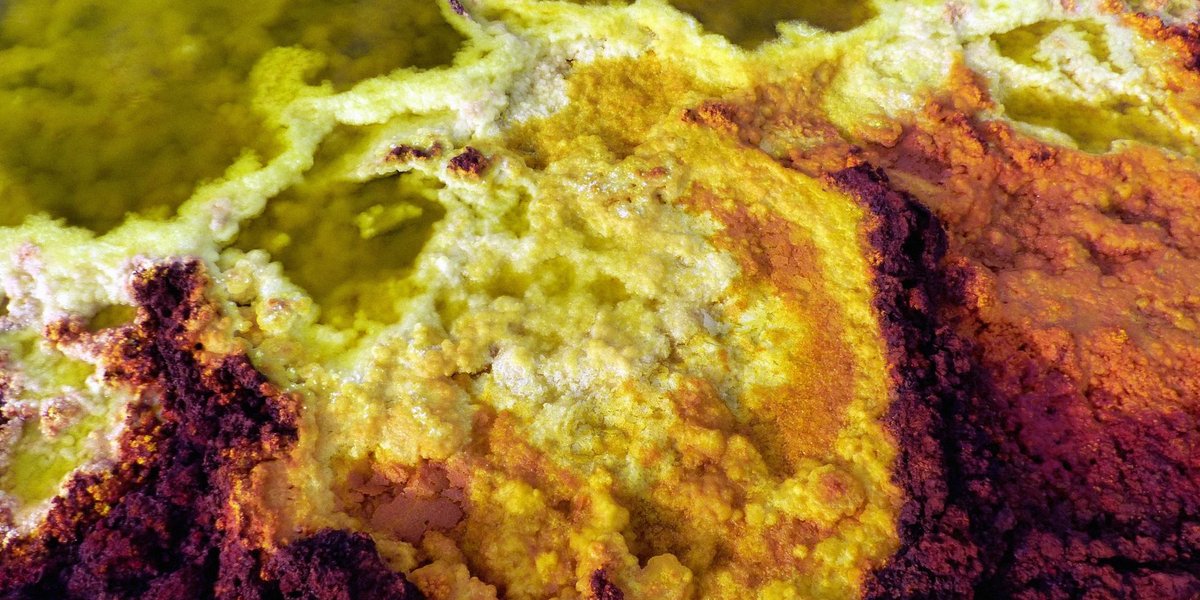
Metals bind sulfur strongly, and the result is a big share of the world’s ore. Pyrite (FeS2) is brassy and gets called fool’s gold. Galena (PbS) is the main lead ore. Cinnabar (HgS) is a vivid red mineral and was the main source of mercury and of the red pigment vermilion for centuries.
Sulfide minerals also cause a lasting environmental problem. When mining exposes pyrite to air and rain, it oxidizes into sulfuric acid and iron compounds. The runoff, called acid mine drainage, can stay acidic for decades after a mine closes.
Thiols and sulfoxides: the organosulfur compounds

Thiols (also called mercaptans) are the reason sulfur has a reputation. Human noses detect some of them at parts-per-billion concentrations, and the smells are rarely pleasant. Skunk spray is a mix of thiols and related compounds, including (E)-2-butene-1-thiol and 3-methyl-1-butanethiol. Methane, the main component of natural gas, has no smell of its own. Utilities add a thiol such as tert-butyl mercaptan so a leak announces itself. The practice became standard after a 1937 gas explosion at a school in New London, Texas, that killed roughly 295 people.
Thiols also hold your body together. Cysteine’s thiol group links to another cysteine’s thiol to form a disulfide bridge, and those bridges lock proteins into shape. Insulin has them. So does hair keratin, which is why a perm works by breaking disulfide bonds and reforming them in a new arrangement.
Sulfoxides are less famous. Dimethyl sulfoxide (DMSO) is a solvent that dissolves both oily and watery substances, and it carries other chemicals through skin, a property that makes it useful in labs and risky near anything toxic. Its relative dimethyl sulfide (DMS), released by marine algae, is a large part of what people call the smell of the sea.
Sulfur compounds in food and drink
This is where most people meet organosulfur chemistry, usually without noticing.
Garlic and onion. An intact garlic clove holds a odorless compound called alliin. Crushing the clove lets an enzyme, alliinase, convert it into allicin, which then breaks down into diallyl disulfide and similar molecules. That’s the sequence behind the sharp bite of raw garlic and the smell that lingers on your breath afterward. Onions follow a related path and produce a sulfur compound, syn-propanethial-S-oxide, that irritates the eyes.
Broccoli, cabbage and other cruciferous vegetables. These contain glucosinolates. Chopping or chewing brings them into contact with the enzyme myrosinase, which converts them into isothiocyanates such as sulforaphane. Those give raw mustard and horseradish their heat. Boil cabbage too long and it releases hydrogen sulfide and other volatile sulfur compounds, hence the kitchen smell.
Eggs. Egg whites are rich in sulfur-containing amino acids. Overcook a hard-boiled egg and the sulfur in the white reacts with iron in the yolk, forming iron sulfide, the gray-green ring around the yolk. It’s harmless and cosmetic. Cooling the eggs quickly after boiling reduces it.
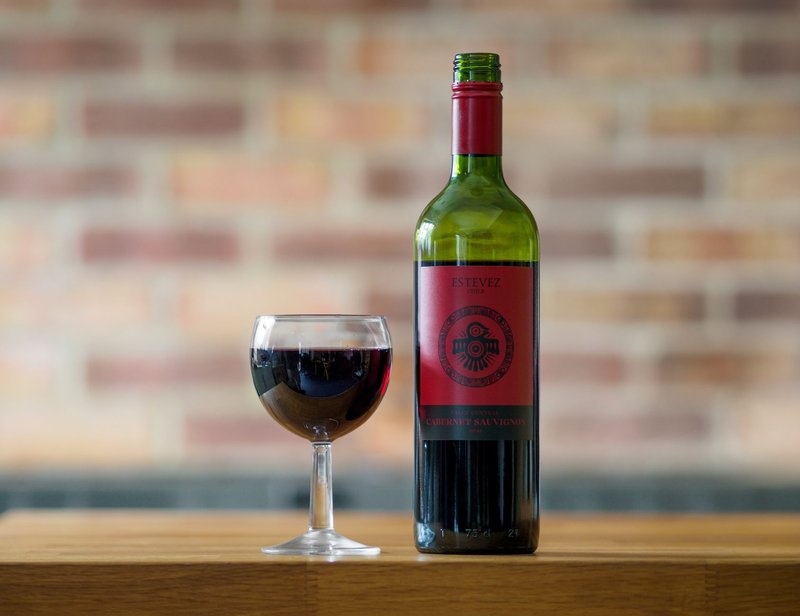
Wine. Winemakers add sulfur dioxide to protect against oxidation and spoilage, and yeast also produces some on its own. Thiols matter too, in a good way: compounds like 3-mercaptohexanol give Sauvignon Blanc its grapefruit and passion fruit notes. In a bad way, wine stored without enough oxygen can develop hydrogen sulfide and mercaptans, the “reduction” faults that smell like struck matches or boiled cabbage.
Protein in general. Methionine is an essential amino acid, meaning your body can’t make it, and it comes from eggs, fish, meat, nuts and grains. Cysteine, which the body can make from methionine, comes along with it. There’s no need to track “sulfur” as a separate nutrient.
What sulfur compounds are used for
Sulfuric acid is made in larger volumes than any other industrial chemical, well over 200 million tonnes a year. The biggest single use is turning phosphate rock into fertilizer. It’s also used in lead-acid batteries, metal processing, and chemical manufacturing.
Vulcanized rubber. Charles Goodyear’s 1839 discovery was that heating natural rubber with sulfur creates sulfur bridges between the polymer chains. Raw rubber turns sticky in heat and brittle in cold. Vulcanized rubber stays elastic across a wide temperature range, which is why tires exist.
Sulfa drugs. Sulfonamides, developed in the 1930s after Gerhard Domagk’s work on the dye Prontosil, were the first broadly effective antibacterial drugs.
Penicillin. Its core structure includes a sulfur atom in a thiazolidine ring, so the best-known antibiotic family is a sulfur compound too.
Preservatives. Sulfur dioxide and sulfites slow spoilage and browning in wine, dried fruit and some other foods. Sulfur burning to make SO2 has been used to fumigate wine barrels since antiquity.
Safety: H2S and sulfites
Hydrogen sulfide. Regulators treat H2S seriously. The U.S. Occupational Safety and Health Administration lists hydrogen sulfide hazards and exposure limits, including an enforceable ceiling of 20 ppm in general industry. The rough effects by concentration:
- Under 1 ppm: smell, usually the only effect.
- 10 to 50 ppm: eye and airway irritation.
- Around 100 ppm: you lose the ability to smell it, and it’s considered immediately dangerous to life and health.
- 500 ppm and above: collapse within minutes. Above about 700 ppm, a single breath can drop a person.
If you smell a strong rotten-egg odor that suddenly fades in a confined space, leave and call for help rather than assuming it’s gone. Don’t enter a manhole, tank or pit to rescue someone without breathing equipment. Many H2S deaths are would-be rescuers.
Natural gas. If you smell the added mercaptan in your home, leave, then call the gas company or emergency services from outside. Don’t flip switches or use a lighter on the way out.
Sulfites. For most people sulfites in food are harmless. A small share of people, concentrated among those with asthma, react with wheezing, hives or breathlessness. In the U.S., food labeling rules require sulfites to be declared when present at 10 parts per million or more. Wine labels carry “contains sulfites” for that reason, and it applies to nearly all wine, since fermentation produces some on its own.
Sulfur dioxide. The gas irritates the airways quickly, which is why it’s a particular concern for people with asthma near volcanic vents or industrial plants.
FAQ
Are sulfur compounds always smelly? No. Sulfates, sulfites at food levels, pyrite and sulfuric acid have no meaningful smell. The smelly ones are volatile and low-molecular-weight: hydrogen sulfide, thiols and some sulfides.
Why do so many sulfur compounds smell bad? Sulfur-containing gases are produced when organisms break down protein, so noses evolved to flag rot and spoiled food. We’re also sensitive to them at tiny concentrations, so even traces register.
Is “sulfa allergy” the same as a sulfite or sulfate allergy? No. Sulfa allergy refers to sulfonamide antibiotics. Sulfite sensitivity is a separate reaction, and sulfates are a different chemical class again.
Does sulfur in the diet matter? You need the sulfur amino acids methionine and cysteine, and ordinary protein foods provide them. You don’t need supplements for this.
Why does garlic smell stronger after chopping? Chopping breaks cells and lets alliinase meet alliin, which makes allicin and, after that, other sulfur compounds. Whole cloves smell faint.
What do the sulfites in wine do? They protect against oxidation and microbes. Wine without added sulfites exists, but it spoils more easily.
Summary
Sulfur compounds span a wide range: toxic H2S, acid-rain-forming SO2, pyrite and cinnabar, preservative sulfites, and the thiols and organosulfur compounds behind garlic, skunk spray and natural gas warnings. Sulfur’s ability to change oxidation state from -2 to +6 explains why it’s so varied. For everyday purposes, remember three points: sulfites, sulfates and sulfa drugs are different things; the smelly sulfur compounds are the volatile ones; and H2S is the one to treat as a real hazard, because at high levels it switches off the nose that would warn you.