
The natural resources of Mauritania come down to four earners: iron ore, gold, fish and, since 2025, liquefied natural gas. Almost everything else on the list is small, declining or still on a slide deck. This guide separates what is producing today from what is merely promised.
Table of Contents
- TLDR: the resource scorecard
- Iron ore: the backbone
- Gold: the biggest export
- Copper: Guelb Moghrein
- Fisheries: the resource nobody counts
- Gas: Greater Tortue Ahmeyim and BirAllah
- Oil: a small field in decline
- Gypsum, phosphate and salt
- Natural resources of Mauritania: what comes next and what could go wrong
TLDR: the resource scorecard
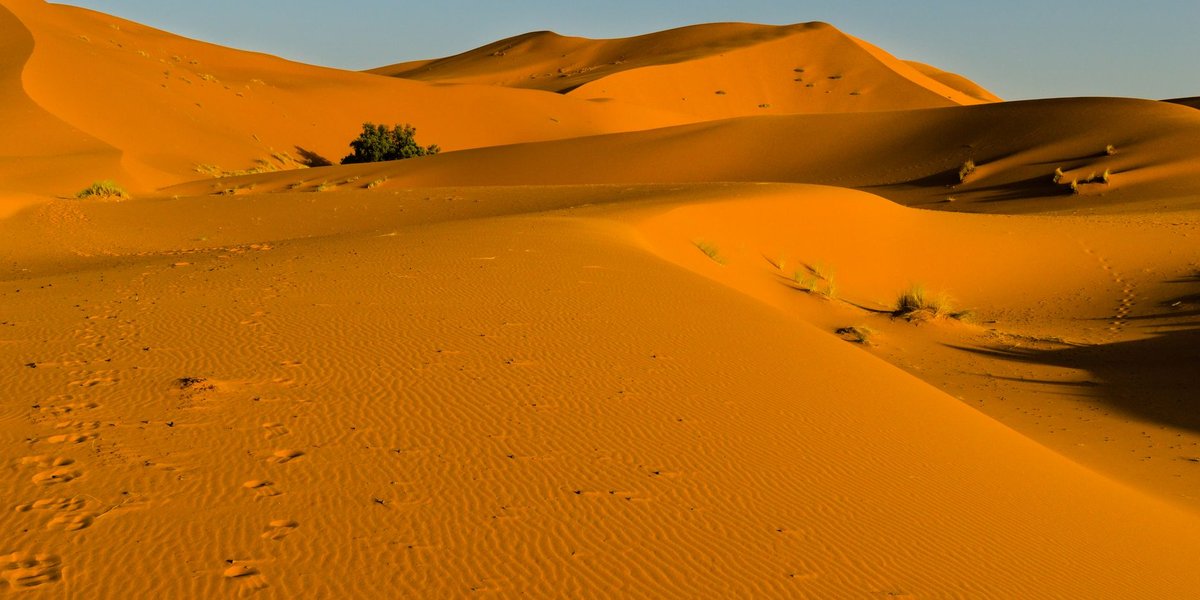
Mauritania is a Sahara and Sahel country of roughly 4.5 million people, and most of its wealth is either under the desert or off the Atlantic coast. Export shares below are approximate and move with commodity prices from year to year.
| Resource | Status | Weight in exports |
|---|---|---|
| Iron ore | Producing (SNIM) | Roughly a quarter, price-dependent |
| Gold | Producing (industrial and artisanal) | About 39% |
| Copper | Producing (Guelb Moghrein) | Smaller, tied to one mine |
| Fish and seafood | Producing (domestic and foreign fleets) | Large, often a fifth or more |
| Natural gas (LNG) | Producing since April 2025 (GTA), second field in development | Growing from near zero |
| Oil | Producing at a trickle (Chinguetti) | Minor |
| Gypsum, phosphate, salt | Small-scale or undeveloped | Negligible |
| Green hydrogen, uranium | Announced or exploration only | None |
Iron ore: the backbone
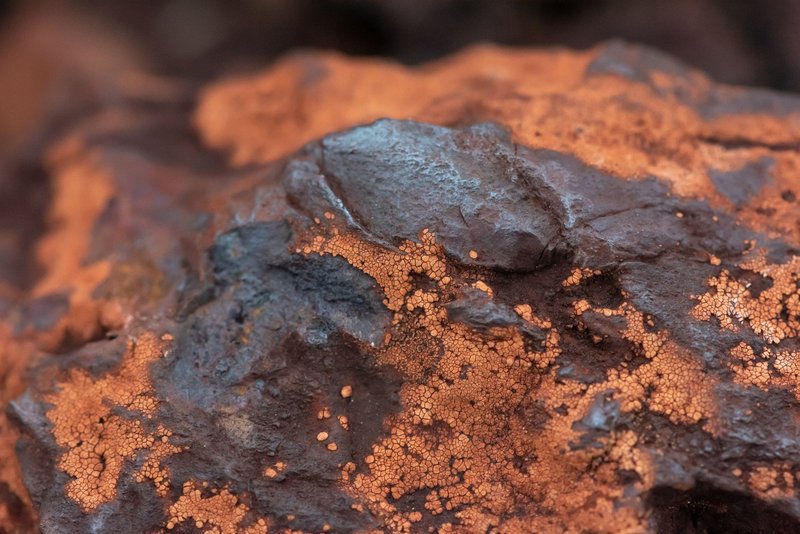
Iron ore is the oldest industrial resource in the country. The state company SNIM (Société Nationale Industrielle et Minière) mines it around Zouérat and F’Dérik in the northern Tiris Zemmour region, then hauls it to the port of Nouadhibou on a railway of more than 700 kilometers. The ore trains are among the longest in the world, with well over 200 wagons per convoy, and they run through the desert almost on their own timetable.
Mauritania ranks as Africa’s second-largest iron ore producer, behind South Africa, with SNIM output in the range of 12 to 13 million tonnes a year in recent years. That makes the country a price-taker in a market dominated by Australia and Brazil. When Chinese steel demand dips, Nouadhibou feels it within a quarter.
The long-term bet is the Guelb magnetite project, which processes lower-grade ore into concentrate. It matters because the high-grade hematite that built SNIM is finite.
Gold: the biggest export
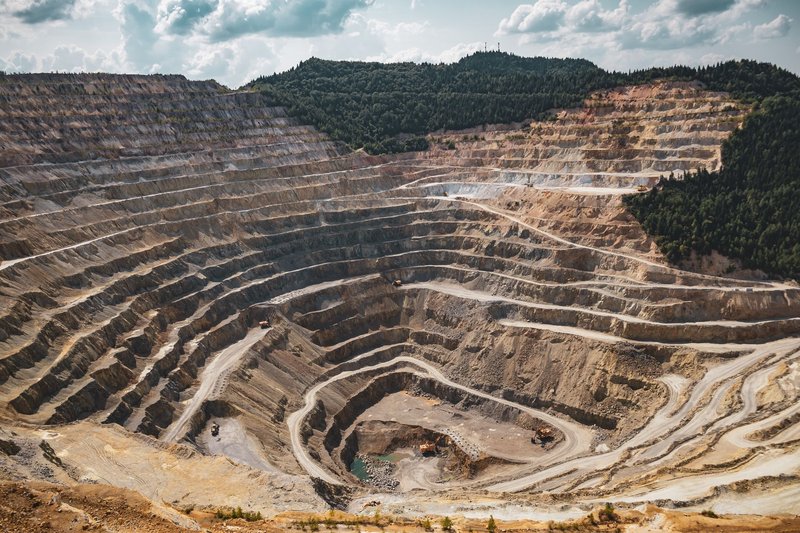
Gold overtook iron ore as the top export earner in the 2010s and now accounts for about 39% of export value. The anchor is the Tasiast mine in the northwest, run by Kinross Gold, which has been expanded repeatedly to process far more ore per day than the original plant. It sits in open desert about 300 kilometers north of Nouakchott, and nearly everything is flown in or trucked across sand.
A second, stranger source is artisanal. Since 2016, thousands of prospectors with handheld metal detectors have worked the stony plains of the north, picking up nuggets near the surface. The government later set up regulated zones, such as the Chami area, to bring that activity into official channels.
Gold’s weight has a downside. A country that earns this much from one metal is exposed to the gold price, and to the fortunes of a couple of mines.
Copper: Guelb Moghrein
Copper comes mainly from Guelb Moghrein, near Akjoujt, a deposit that carries copper, gold and magnetite together. The mine ships copper concentrate and a gold byproduct. Akjoujt has a mining history older than the independent state: the first copper operation there shut down in the late 1970s, and the current mine reopened the site in the 2000s.
Copper’s share of exports is well below iron ore and gold. The risk is concentration. One mine supplies nearly all of it, so any shutdown or ore-grade problem shows up in national trade figures.
Fisheries: the resource nobody counts
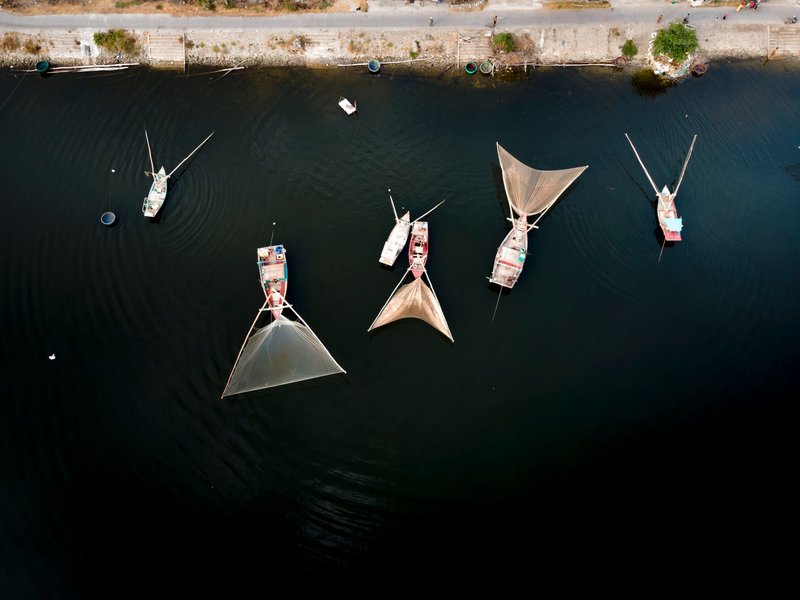
Fish gets less attention than minerals in most lists, but the World Bank has described fisheries as a major share of the country’s natural wealth, on the order of a quarter. The reason is geography. Cold water rises along the coast in the Canary Current upwelling system, feeding plankton, which feeds small pelagic fish, octopus, shrimp and hake.
Mauritania sells fishing access to foreign fleets, including vessels under agreements with the European Union and with other countries, and also runs a domestic fleet out of Nouadhibou and Nouakchott. Octopus is the high-value catch. Sardinella and other small pelagics go increasingly to fishmeal and fish-oil plants, which has drawn criticism because the same fish feed people across West Africa.
The coast also holds the Banc d’Arguin National Park, a UNESCO World Heritage Site and a winter stopover for millions of migratory wading birds. The nursery waters that protect it are also the ones commercial fishing depends on.
Gas: Greater Tortue Ahmeyim and BirAllah
Gas is the newest and fastest-changing item on the list. The Greater Tortue Ahmeyim (GTA) project sits on the maritime border between Mauritania and Senegal, and the two countries share it. BP and Kosmos Energy developed it. A floating LNG vessel moored at a nearshore hub processes the gas, and the first cargo shipped in April 2025. Phase one is designed for about 2.3 million tonnes of LNG a year.
Two points matter for anyone sizing up the numbers. First, the output is split between two governments, so Mauritania does not keep all of it. Second, phase one is modest by global LNG standards. It is a proof of concept, not a Qatar.
The next project is BirAllah, a separate field in Mauritanian waters. It is a development target rather than a producing asset, so any production figure for it is a plan, not a measurement. The US International Trade Administration tracks the sector for foreign investors and is a useful current reference.
Oil: a small field in decline
Oil was the original excitement. The Chinguetti field, discovered in 2001 and in production from 2006, peaked at roughly 75,000 barrels a day in its first year and then dropped steeply as the reservoir underperformed. It never delivered the windfall that was forecast. Later exploration has found more gas than oil.
The lesson shaped policy. Mauritania set up a National Hydrocarbon Revenue Fund in 2006 after Chinguetti, so that future income would pass through a dedicated account rather than straight into the budget.
Gypsum, phosphate and salt
These are the minor minerals, and none of them moves the national accounts.
- Gypsum: extracted in small volumes for construction and cement.
- Phosphate: the Bofal deposit in the south is known and large enough to attract interest, but it has not been developed at scale.
- Salt: harvested from dry salt flats (sebkhas) for local use, continuing a trade older than the state.
Add the land. Only about 0.44% of Mauritania is arable, because the Sahara covers most of the territory. What farming exists clusters along the Senegal River in the far south. Elsewhere, herding of camels, goats and sheep is the working economy and a resource in its own right, even though it rarely appears in trade statistics.
Natural resources of Mauritania: what comes next and what could go wrong
Three projects are discussed far more than they are built. Treat each as announced, not producing.
- GTA phase two: expansion beyond 2.3 million tonnes a year, dependent on investment decisions that have not been finalized.
- Green hydrogen: the AMAN project, led by CWP Global, proposes up to 30 gigawatts of wind and solar to make hydrogen and ammonia. It is a very large plan on paper with no plant operating.
- Uranium: exploration in the north has found deposits, but there is no mine.
The risks are as concrete as the opportunities:
- Overfishing. Licensing to foreign fleets and the rise of fishmeal plants put pressure on stocks that the coast’s economy and food supply depend on.
- Revenue management. Gas income will arrive in volume for the first time. Whether the hydrocarbon fund holds its discipline is an open question.
- Concentration. Iron ore and gold together dominate exports. One bad price cycle hits both.
- Desertification. Farmland is already scarce, and the desert continues to move south.
The old resource base of iron, gold and fish still pays the bills. Gas and hydrogen are the new story, and only gas is real so far. For current production data, the USGS Minerals Yearbook for Mauritania is the standard government source, though the edition linked here covers 2019 and newer figures should be checked against company and ministry reports.