TLDR
Stars make their own light by fusing hydrogen in their cores. Planets don’t fuse anything and shine by reflecting starlight. The real dividing line is mass: an object heavier than about 80 Jupiters becomes a star, and anything below about 13 Jupiters is a planet. In the sky, the bright dot that doesn’t flicker much and sits along the Sun’s path is probably a planet.
Table of contents
- Planets vs stars at a glance
- Why mass is the real dividing line
- The edge cases that break the rules
- How to tell a planet from a star in the night sky
- FAQ
Planets vs stars at a glance
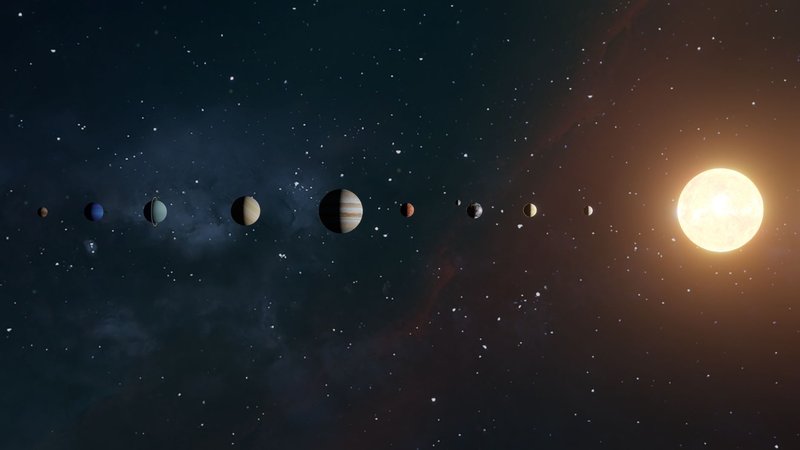
The differences between planets and stars come down to one process. A star’s core is hot and dense enough to fuse hydrogen into helium, and that reaction releases the energy that makes it shine. A planet’s core never gets there. Everything else in the table follows from that.
| Feature | Stars | Planets |
|---|---|---|
| Light source | Make their own through nuclear fusion | Reflect light from a star (plus a faint heat glow) |
| Mass | Above roughly 80 Jupiter masses (about 0.08 Suns) | Below roughly 13 Jupiter masses |
| Size | From about Jupiter’s width to roughly 1,000 times the Sun’s width | Mercury (4,879 km) to Jupiter (about 140,000 km) in our system |
| Temperature | Surfaces from about 2,000 °C to over 40,000 °C; cores at millions of degrees | Earth averages 15 °C; Neptune’s cloud tops sit near -200 °C; hot Jupiters exceed 2,000 °C |
| Formation | Collapse of a gas and dust cloud | Build up from the leftover disk around a young star |
| Composition | Mostly hydrogen and helium (the Sun is about 73% hydrogen, 25% helium by mass) | Rock and metal, or gas and ice, with far more heavy elements by proportion |
| Orbit | Circle the galaxy’s center; some orbit each other in pairs | Orbit a star |
| Lifespan | Millions of years for massive stars, trillions for small red dwarfs; the Sun gets about 10 billion | No fixed lifespan; they last as long as their system stays intact |
| Count in the Milky Way | Roughly 100 to 400 billion | Likely more than the number of stars |
For scale: the Sun is about 109 Earths wide and about 10 Jupiters wide. By volume, it could hold roughly a million Earths. NASA’s Sun fact sheet has the exact numbers.
Why mass is the real dividing line
Brightness is a symptom. Mass is the cause.
Squeeze enough gas together and gravity heats the core. At around 80 Jupiter masses (roughly 8% of the Sun), the core reaches about 3 million kelvin and starts sustained hydrogen fusion. That’s a star. Below that, the object can’t hold the reaction, and it cools over time.
There’s a lower threshold too. Between about 13 and 80 Jupiter masses, the core gets hot enough to fuse deuterium, a heavier form of hydrogen, but never enough for ordinary hydrogen. Astronomers call these objects brown dwarfs. Below 13 Jupiter masses, not even deuterium burns, and the object counts as a planet by the working definition used for worlds beyond our solar system.
Notice that size isn’t on that list. Jupiter is about as wide as the smallest red dwarf stars. It’s the mass that differs: the smallest stars pack in roughly 80 times more.
How they form matters too. Stars collapse directly out of clouds of gas. Planets grow in the disk of gas and dust that’s left spinning around a newborn star, with dust clumping into rocks and rocks into planets. The International Astronomical Union’s planet definition for our own solar system adds a rule: a planet orbits the Sun, is round, and has cleared its orbit of other debris.
The edge cases that break the rules
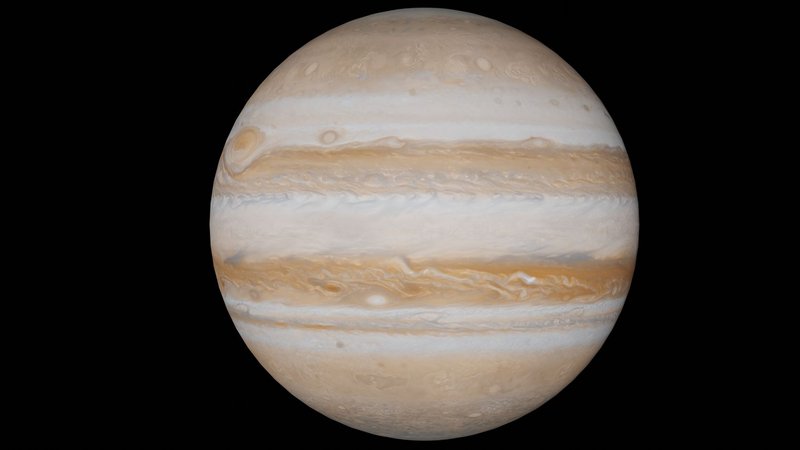
Nature doesn’t care about tidy categories. Four objects come up constantly.
Brown dwarfs. Often called failed stars, they sit between the 13 and 80 Jupiter-mass thresholds. They glow faintly in infrared light from leftover heat. The labels get argued over: some astronomers sort by mass, others by how the object formed.
White dwarfs. These are dead stars, not planets. A white dwarf is the exposed core of a star like the Sun after it sheds its outer layers. It no longer fuses anything, yet it’s the mass of a star packed into a ball roughly the size of Earth. It shines only from stored heat.
Rogue planets. These planets drift through space with no star to orbit. They’re still planets, because the definition rests on mass and fusion, not on having a parent star.
Hot Jupiters. KELT-9b is the extreme case. It’s a gas giant about three times Jupiter’s mass, and it circles its star in under two days. Its star is far hotter than the Sun, and researchers reported a dayside temperature above 4,000 K, hotter than many actual stars. It’s still a planet. It’s just a planet being roasted. The temperature doesn’t change the category because the mass is far below the fusion threshold.
How to tell a planet from a star in the night sky
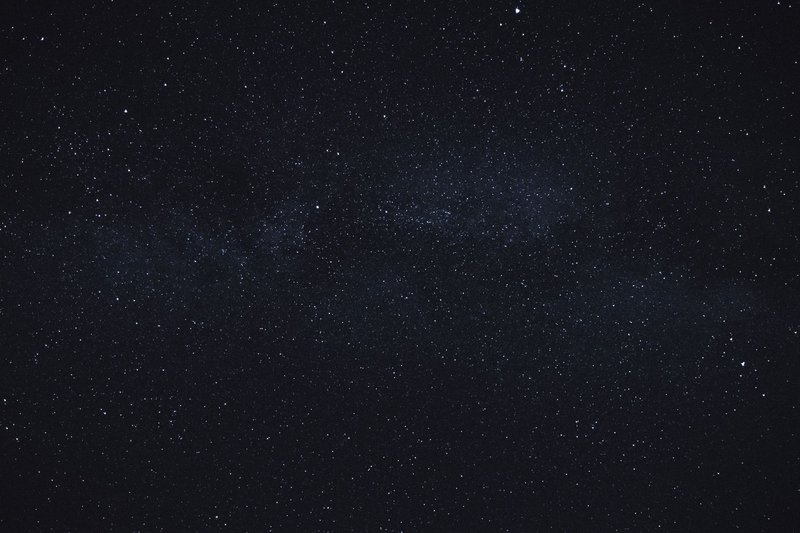
Five checks, roughly in order of usefulness.
1. Look for twinkling, but don’t treat it as a law. Stars are so far away that they’re effectively points of light. Turbulent air bends that single thin beam around, so the brightness and color flicker. Planets are close enough to show a tiny disk. Each point on that disk gets bent a slightly different way, and the flickers average out. The result is a steadier glow.
The rule breaks near the horizon. Looking through more air makes even planets shimmer, and bright stars like Sirius can flash red, blue and white on a turbulent night. Judge twinkling when the object is well above the horizon.
2. Check the ecliptic. The planets orbit in nearly the same plane, so they all appear along one arc across the sky, the path the Sun and Moon follow. A bright object far from that arc, near the north celestial pole, say, is a star.
3. Notice the color. Mars looks orange-red. Saturn is pale yellow. Venus is brilliant white, and Jupiter is cream-white. Stars vary too (Betelgeuse is orange-red), so color helps only alongside the other checks.
4. Point binoculars at it. A star stays a point however much you magnify it. Jupiter becomes a small disk with up to four tiny dots beside it, its Galilean moons. Venus shows a crescent or gibbous phase. Saturn’s rings need a small telescope, but binoculars show it’s not round.
5. Come back next week. Planets drift against the background stars night after night (the word “planet” comes from the Greek for “wanderer”). The constellations don’t move relative to each other.
If you spot a brilliant light low in the west just after sunset, it’s almost certainly Venus. Venus never strays more than about 47 degrees from the Sun, so it only appears as an evening or morning object. A star-like point high at midnight and bright enough to cast a glow is more likely Jupiter. A free app or a planet-position chart settles it in seconds.
The Smithsonian’s National Air and Space Museum has a good walkthrough of why a planet is not a star if you want the explanation in plain terms.
FAQ
What is the main difference between a planet and a star?
A star produces its own light through hydrogen fusion in its core. A planet doesn’t fuse hydrogen and shines by reflecting starlight.
Can a planet become a star?
No, not by any natural process we know of. A planet would need to gain enough mass to cross about 80 Jupiter masses, and that’s roughly 80 times Jupiter. Jupiter would need to grow about 80-fold to ignite. Nothing in the solar system comes close.
Why do stars twinkle but planets don’t?
Stars are point-like, so atmospheric turbulence bends their light as a whole and the brightness flickers. Planets show a tiny disk, and the distortions across it average out into a steadier light. It’s a tendency, not a guarantee.
Is the Sun a star or a planet?
The Sun is a star. It’s about 333,000 times Earth’s mass and about 1,000 times Jupiter’s, and it fuses hydrogen in its core.
What’s the difference between a brown dwarf, a planet and a star?
It’s mass. Below about 13 Jupiter masses is a planet, roughly 13 to 80 is a brown dwarf, and above about 80 is a star.
Are there more planets or more stars in the galaxy?
Probably more planets. Surveys suggest the typical star hosts at least one planet, and many have several, so planets likely outnumber the roughly 100 to 400 billion stars in the Milky Way.