Table of Contents
- TLDR
- What Counts as a Natural Satellite
- Earth’s Moon: The One We Take for Granted
- Mars’s Two Odd Moons: Phobos and Deimos
- Jupiter’s Galilean Moons
- Saturn’s Titan and Enceladus
- Neptune’s Backward Moon: Triton
- Natural Satellites at a Glance
- The Outliers Nobody Puts on the List
- Not All Moons Form the Same Way
- Natural vs. Artificial Satellites
- How Many Moons Does Each Planet Have
TLDR
A natural satellite is any object that orbits a planet, dwarf planet, or even an asteroid, held there by gravity instead of a rocket. Earth has one: the Moon. Mars has two: Phobos and Deimos. Jupiter’s four big ones — Io, Europa, Ganymede, and Callisto — are worlds in their own right. Saturn’s Titan has lakes of liquid methane. Neptune’s Triton orbits backward. Pluto and its moon Charon are so evenly matched that the point they orbit around sits in empty space between them. And even asteroids get moons — 243 Ida has one called Dactyl.
What Counts as a Natural Satellite
A natural satellite is anything that orbits a larger body because gravity put it there — not because a launch vehicle did. That covers moons around planets, moons around dwarf planets, and even the handful of asteroids that turned out to have small companions of their own once spacecraft got close enough to check.
The “natural” part matters because it separates the Moon from something like the International Space Station, which also orbits Earth but got there on a rocket. More on that distinction later, since it trips people up more than the science actually warrants.
Earth’s Moon: The One We Take for Granted
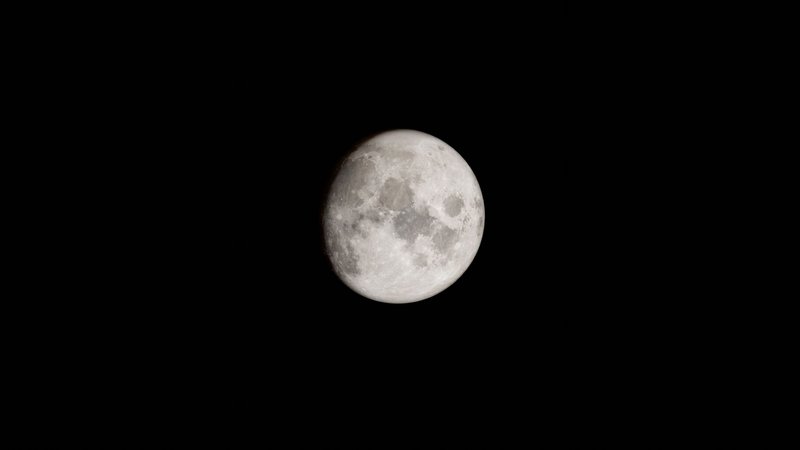
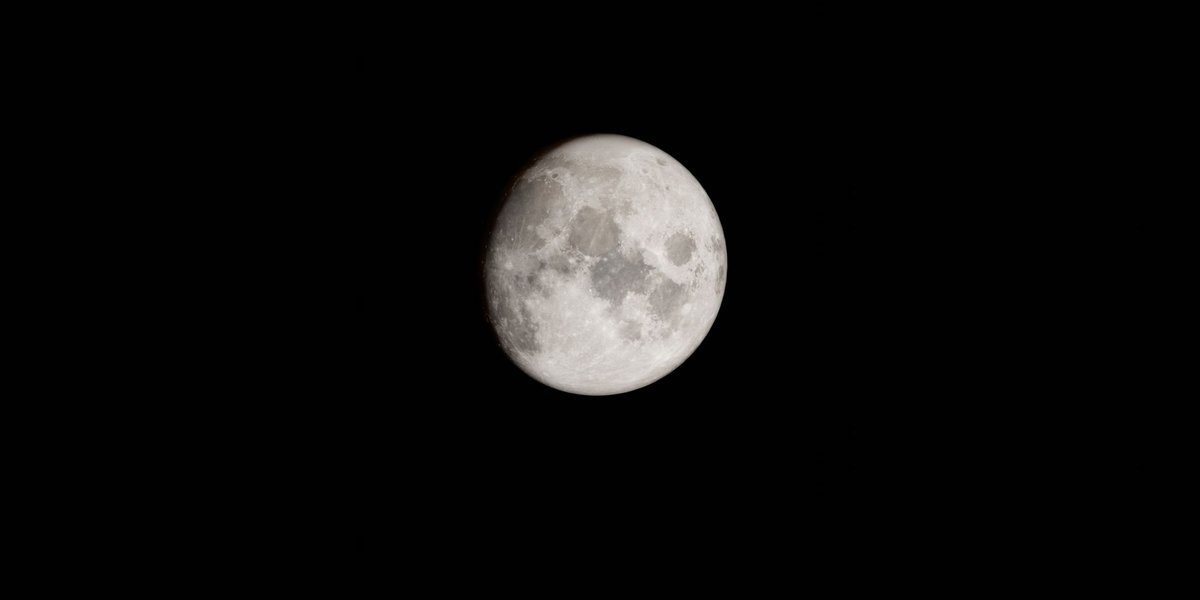
Earth’s Moon is 3,474 kilometers across, roughly a quarter of Earth’s own diameter — big enough that some scientists call the pair a double planet system rather than a planet with a satellite. The leading explanation for how it formed involves a Mars-sized object slamming into early Earth about 4.5 billion years ago, throwing debris into orbit that eventually clumped together.
It’s tidally locked, which is why the same face has stared at us for as long as humans have been looking up. The far side, which we never see from the ground, wasn’t photographed until a Soviet probe flew past it in 1959. Its gravity is also the reason Earth has tides at all — one of the most interesting facts about gravity we can experience. Pull the Moon out of the equation and the oceans stop sloshing on a predictable schedule.
Mars’s Two Odd Moons: Phobos and Deimos
Mars only manages two moons, and neither looks like a moon is supposed to look. Phobos and Deimos are lumpy, cratered, and small enough that most planetary scientists think they’re captured asteroids rather than moons that formed alongside Mars.
Phobos is the stranger of the two. It orbits so close — about 6,000 kilometers up, closer than most satellites orbit Earth — that it circles Mars three times a day and rises in the west. It’s also spiraling inward, and current models put it on a collision course with the Martian surface, or a breakup into a ring, in roughly 30 to 50 million years. Deimos, smaller and farther out, is doing the opposite: slowly drifting away.
Jupiter’s Galilean Moons
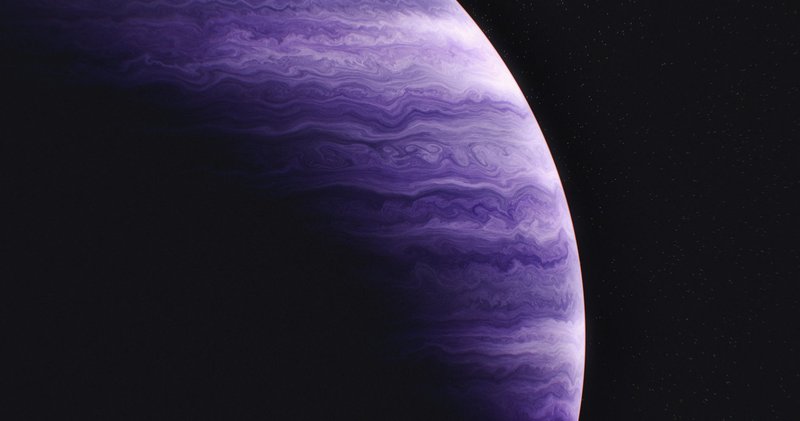
Jupiter has more confirmed moons than any planet except Saturn, but four of them have carried the conversation since Galileo spotted them through a telescope in 1610. Io, Europa, Ganymede, and Callisto are each strange enough to anchor their own headline.
Io is the most volcanically active body NASA has ever tracked in the solar system, with sulfur eruptions that repaint its surface in yellows and oranges. Europa hides a saltwater ocean under an icy shell thick enough to survive Jupiter’s radiation, which is exactly why NASA sent the Europa Clipper mission to study whether that ocean could support life. Ganymede is the largest moon in the solar system, bigger than the planet Mercury, and the only moon known to generate its own magnetic field. Callisto rounds out the four with a surface so heavily cratered that it hasn’t changed much since the solar system was young.
Saturn’s Titan and Enceladus
Saturn’s moon count edged past Jupiter’s in recent years, but Titan and Enceladus are the two that keep astrobiologists up at night. Titan is larger than Mercury and the only moon in the solar system with a thick atmosphere — dense enough that the Huygens probe parachuted through it in 2005 and landed on a surface with rivers and lakes of liquid methane and ethane instead of water.
Enceladus is smaller and icier, but its south pole vents geysers of water vapor and ice grains straight into space. NASA’s Cassini spacecraft flew directly through those plumes and found organic molecules, which is about as strong a hint as you can get without landing a probe on the ocean floor underneath.
Neptune’s Backward Moon: Triton
Triton is Neptune’s only large moon, and it does something no other big moon in the solar system does: it orbits backward, opposite to the direction Neptune spins. That retrograde motion is the main reason astronomers think Triton didn’t form with Neptune at all — it’s a captured Kuiper Belt object, similar in composition to Pluto, that wandered too close and got pulled into orbit instead of continuing past.
It’s also geologically active in a way that shouldn’t make sense for something this cold. Nitrogen geysers erupt from its surface, driven by sunlight warming subsurface ice even at a temperature that hovers around -235°C.
Natural Satellites at a Glance
| Planet | Moon | Notable Fact | Diameter |
|---|---|---|---|
| Earth | Moon | Formed from debris after a giant impact | 3,474 km |
| Mars | Phobos | Spiraling inward toward a future breakup | 22 km |
| Mars | Deimos | Slowly drifting away from Mars | 12 km |
| Jupiter | Io | Most volcanically active body in the solar system | 3,643 km |
| Jupiter | Europa | Icy shell over a subsurface saltwater ocean | 3,122 km |
| Jupiter | Ganymede | Largest moon in the solar system, bigger than Mercury | 5,268 km |
| Jupiter | Callisto | Oldest, most cratered surface among the Galilean moons | 4,821 km |
| Saturn | Titan | Only moon with a thick atmosphere and surface liquid | 5,150 km |
| Saturn | Enceladus | Water-ice geysers erupt from its south pole | 504 km |
| Neptune | Triton | Orbits backward — likely a captured Kuiper Belt object | 2,707 km |
The Outliers Nobody Puts on the List
Most “examples of natural satellites” lists stop at the planets. But when exploring different types of celestial bodies, you quickly discover the interesting outliers.
Pluto and its moon Charon are close enough in size — Charon is about half of Pluto’s diameter — that the barycenter, the point both bodies actually orbit around, sits in open space above Pluto’s surface rather than inside it. Every other planet-moon pair in the solar system has a barycenter buried inside the larger body. Pluto and Charon don’t, which is a big part of why some astronomers argue they should be classified as a binary dwarf planet system instead of a planet with a moon.
Asteroids get moons too. In 1993, the Galileo spacecraft flew past the main-belt asteroid 243 Ida on its way to Jupiter and spotted a tiny companion orbiting it — the first confirmed moon of an asteroid. It was named Dactyl, and its discovery opened up a whole category: hundreds of asteroids are now known to have small satellites of their own.
Not All Moons Form the Same Way
Lump every natural satellite into one category and you miss why they look so different from each other. There are roughly three ways a moon comes to exist:
Impact debris. Earth’s Moon formed from material thrown into orbit by a collision, then reassembled itself over time.
Capture. Phobos, Deimos, and Triton are widely thought to be objects — likely former asteroids or Kuiper Belt bodies — that wandered too close to a planet’s gravity and got stuck orbiting it instead of passing by.
Co-accretion. Titan and the Galilean moons most likely formed the way planets do, out of a disk of gas and dust that circled their parent planet while it was still forming, just on a smaller scale.
That third category explains why the Galilean moons and Titan look and behave like proper worlds — geologically active, differentiated into cores and mantles — while captured moons like Phobos tend to be lumpy, low-density leftovers.
Natural vs. Artificial Satellites
The word “satellite” covers both, and that’s the source of most of the confusion. A natural satellite forms through gravity and geology — an impact, a capture, or a disk of debris settling into a sphere over millions of years. An artificial satellite is built, launched, and placed into orbit on purpose, on a timeline measured in months, not eons.
The Moon is a natural satellite. The International Space Station, GPS satellites, and the Hubble Space Telescope are artificial ones. In casual conversation, “moon” almost always means the natural kind — nobody calls a GPS satellite a moon — but “satellite” by itself is neutral. The International Astronomical Union, which handles the formal naming of moons across the solar system, treats every naturally orbiting body the same way regardless of what planet it circles.
How Many Moons Does Each Planet Have
Moon counts change as telescopes and spacecraft get better at spotting small, distant objects, so treat these as current snapshots rather than fixed totals. Mercury and Venus have zero. Earth has one. Mars has two. Jupiter has 95 confirmed moons, Saturn has 146, Uranus has 28, and Neptune has 16 — though most of those are small, irregular objects discovered in the last two decades, not the household names covered above.
The gap between Jupiter and Saturn’s totals and the four inner planets isn’t a coincidence. Gas giants sit farther out, carry stronger gravity wells, and formed with enough leftover material circling them to capture or accrete dozens of smaller bodies. Rocky planets closer to the Sun simply didn’t have that much debris to work with.