As an Amazon Associate we earn from qualifying purchases. Disclosure
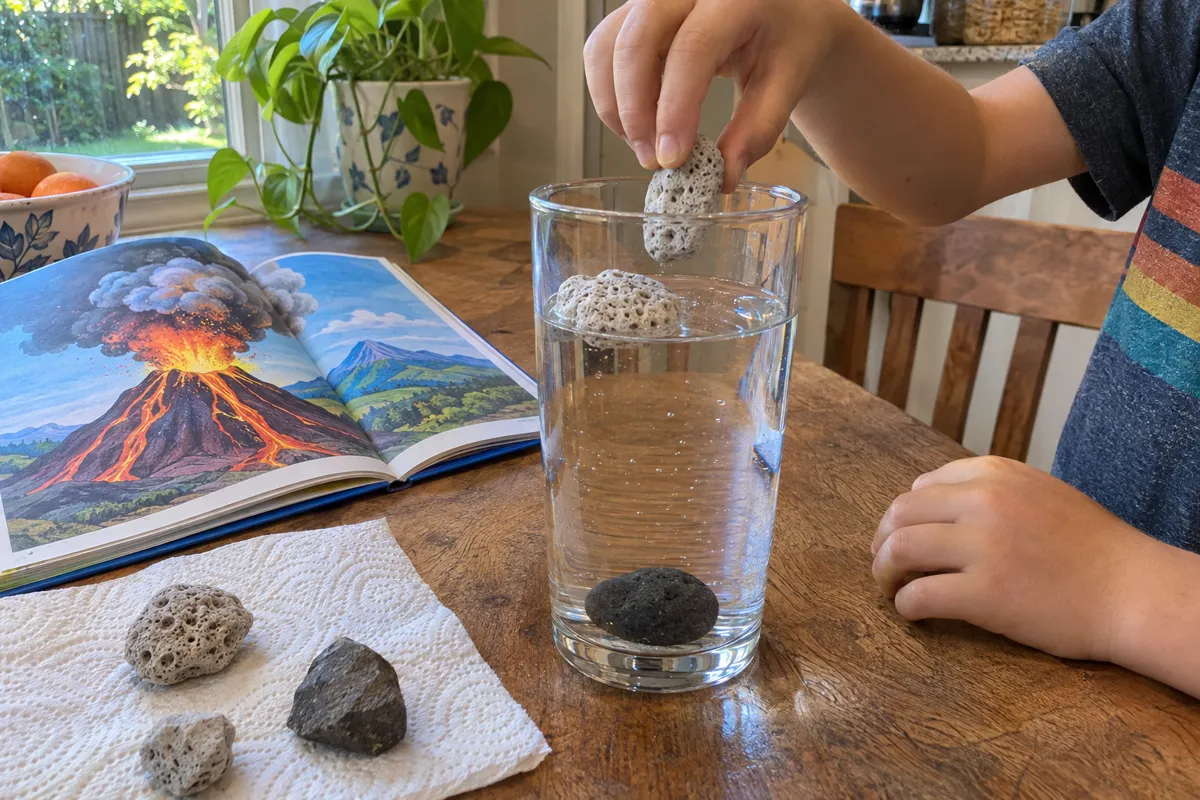
Last month my son Sami dropped a grey stone into a glass of water at the kitchen table and waited for it to sink. It bobbed back up and floated. It was pumice, a piece of frothed-up lava so full of gas bubbles that it is lighter than water, and Sami wanted to know how a rock could be made of air. Then he wanted to know why volcanoes explode at all, why some only ooze and whether the one we visited last summer could erupt again. Those are the questions volcanology answers, and they are also the questions most volcano books skip in favor of big photographs.
The best volcanology book for a beginner is Volcanoes, Earthquakes and Tsunamis: A Complete Introduction by David Rothery, a plain-language course in book form. For a short first read, get Volcanoes: A Very Short Introduction. If you want a story rather than a course, start with Super Volcanoes by Robin George Andrews or Krakatoa by Simon Winchester, the volcano book Reddit names most often. For a real volcanology textbook that still reads well, the answer has been the same for twenty years: Volcanoes by Peter Francis and Clive Oppenheimer.
I am a geoscientist. Part of my field career was spent at volcano monitoring stations in East Africa, measuring gas and ground movement on volcanoes that were awake, and these days most of my geology happens at home with two kids and a shoebox of rocks. The 28 picks below cover every kind of volcanology book: beginner introductions, popular science, histories of famous eruptions, university textbooks, field guides for visiting volcanoes and books for kids. Each one is in print on Amazon, with the edition to buy.
Quick picks
| Pick | Best for | Type |
|---|---|---|
| Volcanoes, Earthquakes and Tsunamis | Best overall for beginners | Introduction |
| Volcanoes: A Very Short Introduction | Best short intro | Introduction |
| Super Volcanoes | Best popular science | Popular science |
| Krakatoa | Reddit’s top pick | Eruption history |
| Eruption | Best Mount St. Helens book | Eruption history |
| Volcanoes (Francis and Oppenheimer) | Best first textbook | Textbook |
| Fundamentals of Physical Volcanology | Best for students | Textbook |
| Roadside Geology of Hawaii | Best for visiting volcanoes | Field guide |
| Science Comics: Volcanoes | Best for kids 9 to 13 | Kids |
Which kind of volcanology book to start with
At the monitoring stations, every visitor eventually asked the same thing: what should I read to understand what you do here? Journalists, students on their first field trip and a district official all got a different answer, because volcano books split into groups that answer different questions.
- Beginner introductions teach the subject in order: what magma is, why it rises, why some eruptions explode and others pour out lava, how volcanoes are monitored and what the hazards are. They are the right start if you want to understand volcanoes rather than read about them.
- Popular science tells the science through stories: the volcanologists, the field trips, the discoveries. You read it like any good nonfiction book and come away with the big ideas.
- Eruption histories follow one famous eruption, such as Krakatoa, Mount St. Helens or Tambora, from the first warning signs to the aftermath. They are the most gripping volcano books and the ones most people have already heard of, but each covers one event, so the science comes in pieces.
- Textbooks and references are written for university courses. They are complete and accurate, they are expensive, and the advanced ones assume physics, chemistry and math.
- Field guides explain the volcanoes of one region, stop by stop, for people who are going there.
One warning from a volcanologist on Reddit applies to the whole shelf: there are very few true volcanology textbooks, and many popular volcano books are little more than coffee-table books with big pictures. The photo books are fine as gifts. They will not teach you why composite volcanoes explode while shield volcanoes mostly don’t.
Best volcanology books for beginners
These assume no science beyond school. Each one covers how volcanoes work from start to finish. Read one of them before anything else on this list and every other book will make more sense.
Best overall volcanology book for beginners
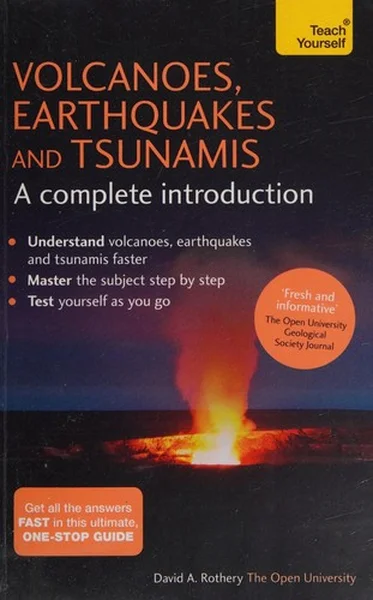
1. Volcanoes, Earthquakes and Tsunamis: A Complete Introduction
David Rothery is a professor of planetary geosciences at the Open University, the UK university that built its reputation on teaching adults at home, and this book reads like one of its courses. It starts with plate tectonics, explains how magma forms and why its silica and gas content decide how violent an eruption will be, then works through eruption styles, volcanic products, monitoring and hazards before moving on to earthquakes and tsunamis.
About half the book is about volcanoes. Each chapter ends with a short summary and a few questions, which is what makes it work for self-study. It is the book I would give an adult who wants to learn volcanology properly but has no time for a textbook.
- David M. Rothery
- Teach Yourself (John Murray), paperback, 2016, 384 pages
- Over 150 Amazon ratings, 4.6 stars
Good: a structured course by a working planetary geologist, with the physics explained in words. Not great: few photographs, and the earthquake half is no use to readers who only want volcanoes.
Check on Amazon
Best short introduction
2. Volcanoes: A Very Short Introduction
Michael Branney is a volcanologist at the University of Leicester who studies explosive eruptions and their deposits, and Jan Zalasiewicz is a geologist at the same department. Their book covers the whole subject in under 200 small pages: how magma moves, the main eruption styles, ash and pyroclastic flows, volcanoes on other planets, eruptions that changed the climate and how to live near an active volcano.
It is the best book here to finish in a weekend. It is dense: the authors do not repeat themselves, so a beginner gets more out of it after Rothery or alongside him.
- Michael J. Branney and Jan Zalasiewicz
- Oxford University Press, paperback, 2021, 192 pages
- Pocket size, black-and-white figures
Good: written by an active volcanologist, current and very short. Not great: packed tight, with small diagrams and no color.
Check on Amazon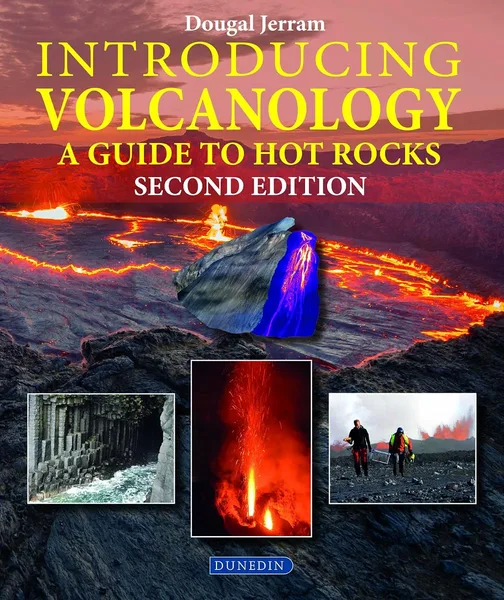
Best illustrated short introduction
3. Introducing Volcanology: A Guide to Hot Rocks
Dougal Jerram is a geologist who studies large volcanic provinces and has presented volcano documentaries on television. His book is part of Dunedin’s Introducing Earth and Environmental Sciences series: about 150 pages with a color photograph or diagram on almost every spread. It covers magma, eruption types, volcanic landforms, the rocks volcanoes leave behind and the giant flood basalt eruptions linked to mass extinctions.
It is the gentlest of the beginner books and the most visual, which makes it a good choice for teenagers and for adults who learn from pictures. The r/geology book list places it under non-technical volcano reading.
- Dougal Jerram
- Dunedin Academic Press, paperback, 2nd edition 2021, 152 pages
- Full color throughout
Good: clear, short and illustrated on nearly every page. Not great: covers less monitoring and hazard science than Rothery or Branney.
Check on Amazon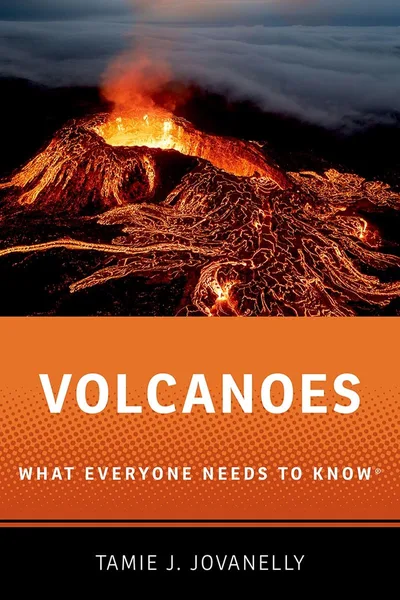
Newest beginner book (2026)
4. Volcanoes: What Everyone Needs to Know
Oxford’s What Everyone Needs to Know series is written as questions and answers, and geologist Tamie Jovanelly’s volume follows the format: what is a volcano, why do they erupt, can eruptions be predicted, could Yellowstone blow, do volcanoes affect the climate. Each answer is a page or two, so you can read it in order or jump to the question you care about.
It came out in July 2026, so it is the most current book here on recent eruptions and on how monitoring works today. It has only a handful of ratings so far.
- Tamie J. Jovanelly
- Oxford University Press, paperback, 2026, 328 pages
- Question-and-answer format
Good: the newest beginner book, organized around the questions people ask. Not great: the Q&A format repeats itself in places and has fewer diagrams than a course book.
Check on Amazon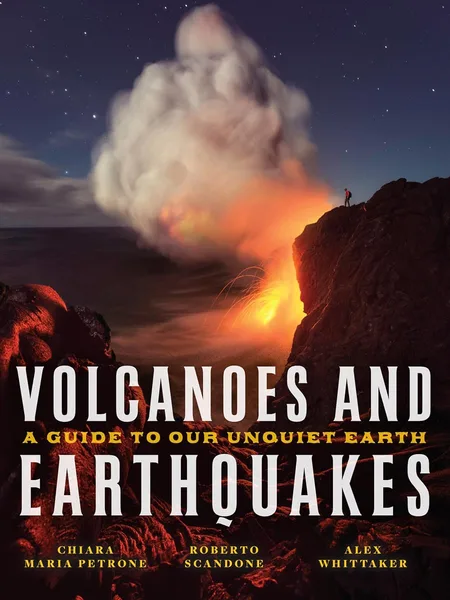
Best visual guide
5. Volcanoes and Earthquakes: A Guide to Our Unquiet Earth
Chiara Maria Petrone is a volcanologist at the Natural History Museum in London, Roberto Scandone is a volcanologist in Rome and Alex Whittaker is a geologist at Imperial College London. Their book is short and large-format, built around photographs and cutaway diagrams: plate boundaries, magma chambers, eruption columns, lava types, famous eruptions and how scientists watch a restless volcano.
It is the best pick for someone who wants the science explained in pictures rather than a coffee-table photo book, and it works for confident readers from about 12 up.
- Chiara Maria Petrone, Roberto Scandone and Alex Whittaker
- Firefly Books, paperback, 2019, 144 pages
- 4.8 stars on Amazon
Good: expert text with strong diagrams in a short book. Not great: covers earthquakes too, so the volcano chapters are brief.
Check on AmazonBest popular science books about volcanoes
These books teach volcanology through the people who do it. You need no background, and you will finish each one knowing far more than when you started.
Best popular science volcano book
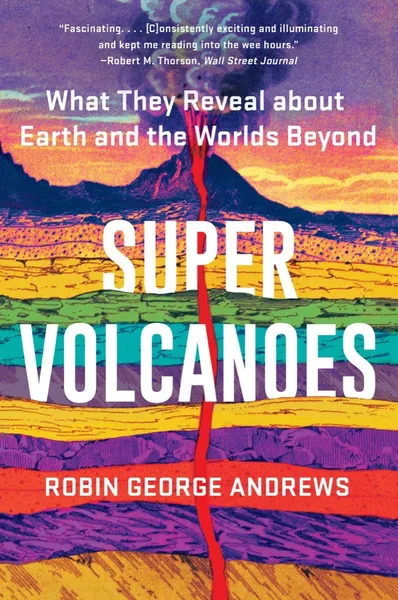
6. Super Volcanoes: What They Reveal about Earth and the Worlds Beyond
Robin George Andrews trained as a volcanologist before becoming a science journalist. Each chapter takes one remarkable volcano and the people who study it: Kīlauea’s 2018 eruption, Yellowstone, Mount St. Helens, the lunar maria, the giant volcanoes of Mars, the sulfur eruptions of Jupiter’s moon Io and the ice volcanoes of the outer solar system. The comparison with other worlds is what sets it apart: you learn what a volcano is by seeing how many forms one can take.
It is the most recent of the big popular volcano books and the one most up to date on monitoring. The writing is enthusiastic. One Reddit reader found the opening anecdote off-putting, so give it a chapter or two.
- Robin George Andrews
- W. W. Norton, paperback, 2022, 336 pages
- 4.5 stars, over 200 Amazon ratings
Good: current science, written by a trained volcanologist, from Earth to the outer solar system. Not great: a breezy, exclamation-heavy style that not every reader likes.
Check on Amazon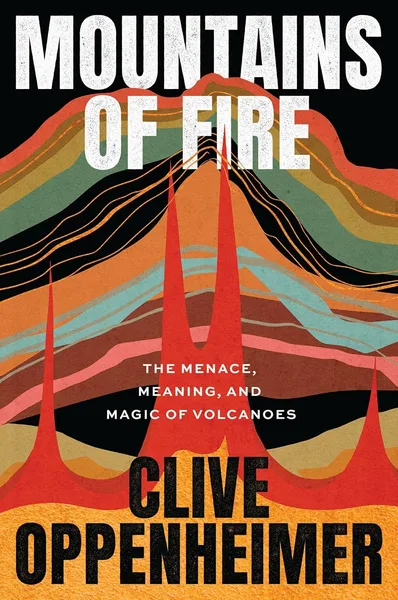
Best volcanologist’s memoir
7. Mountains of Fire: The Menace, Meaning, and Magic of Volcanoes
Clive Oppenheimer is a volcanologist at the University of Cambridge, known outside science for the Werner Herzog documentary Into the Inferno. This book follows his own fieldwork: the lava lake of Mount Erebus in Antarctica, Paektu on the border of North Korea and China, Indonesia, Ethiopia and more. Each trip explains a piece of the science, and each also covers what the volcano means to the people who live beside it.
It is the closest thing on this list to spending a season in the field with a volcanologist. The UK paperback from Hodder carries a different subtitle (The Secret Lives of Volcanoes); it is the same book.
- Clive Oppenheimer
- University of Chicago Press, hardcover, 2023, 352 pages
- Sold by Amazon
Good: real fieldwork told by a leading volcanologist, with the culture of volcanoes as well as the science. Not great: organized by trip rather than topic, so it does not replace an introduction.
Check on Amazon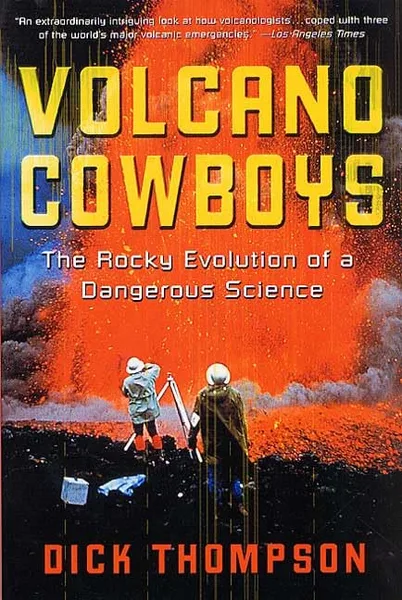
Best history of modern volcanology
8. Volcano Cowboys: The Rocky Evolution of a Dangerous Science
Dick Thompson, a journalist, tells how volcano forecasting grew up in about a decade. It starts with the 1980 eruption of Mount St. Helens, goes through the 1985 disaster at Nevado del Ruiz in Colombia, where a mudflow buried the town of Armero and killed more than 20,000 people despite warnings, and ends with the 1991 eruption of Pinatubo in the Philippines, where forecasts and evacuations saved many thousands of lives. Along the way the US Geological Survey builds the team that now flies to restless volcanoes around the world.
Reddit’s volcano community calls it “an oldie” and the best account of the early days of modern volcanology. It is the book that explains why monitoring works the way it does.
- Dick Thompson
- St. Martin’s Griffin, paperback, 2002, 336 pages
- Sold by third-party sellers
Good: the best history of how volcano monitoring and forecasting were invented. Not great: published in 2000, so nothing after Pinatubo, and the paperback is sold only by third-party sellers.
Check on Amazon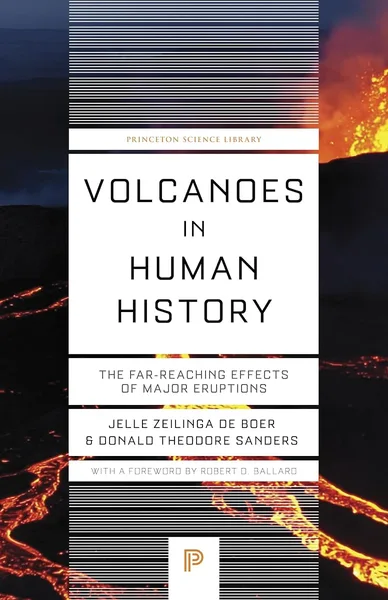
Best tour of history-making eruptions
9. Volcanoes in Human History: The Far-Reaching Effects of Major Eruptions
Two Wesleyan University geologists take one eruption per chapter and follow its effects on people: the Bronze Age eruption of Santorini and the end of Minoan Crete, Vesuvius in AD 79, Laki in Iceland, Tambora and the year without a summer, Krakatau, Mont Pelée on Martinique and others. Each chapter explains the geology of the eruption first, then the history.
It is the best single book if you want the famous eruptions in one place instead of a separate book for each. Princeton reissued it in its Science Library in 2025.
- Jelle Zeilinga de Boer and Donald Theodore Sanders
- Princeton University Press, paperback, 2025 edition, 320 pages
- 4.5 stars on Amazon
Good: geology and history together, a chapter per eruption. Not great: written in 2002 and not updated with recent research.
Check on AmazonTwo more to consider. The Ends of the World by Peter Brannen visits the five mass extinctions with the geologists who study them, and several of them start with continent-sized volcanic eruptions; it has more than 2,000 Amazon ratings. Volcano: Nature and Culture by James Hamilton, an art historian, is a short illustrated history of how people have painted, written about and feared volcanoes, which several Reddit readers recommend for its color plates.
Best books about famous eruptions
These are the volcano books most people have heard of. Each follows one eruption in detail, and the best of them explain the science of that eruption along the way. They are the easiest books here to give as gifts.
Reddit’s most recommended volcano book
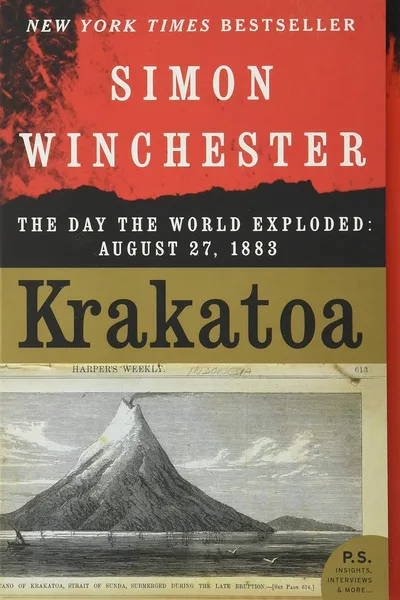
10. Krakatoa: The Day the World Exploded: August 27, 1883
Simon Winchester studied geology at Oxford before becoming a writer, and this is his account of the 1883 eruption of Krakatoa in what is now Indonesia. The explosions were heard nearly 3,000 miles away, and the tsunamis killed more than 36,000 people on the coasts of Java and Sumatra. Winchester builds up to the eruption through the Dutch colonial history of the region, the telegraph that carried the news around the world in hours and the plate tectonics that put a volcano there.
In the Reddit threads we read it was named in 10 threads, more than any other volcano book. The standard verdict: “Not a volcano overview but a thrilling read.” Winchester digresses often, which readers either love or hate.
- Simon Winchester
- Harper Perennial, paperback, 2005, 416 pages
- Nearly 2,000 Amazon ratings
Good: the most famous volcano book, with real geology woven through the history. Not great: long detours into colonial trade and telegraphy before the eruption arrives.
Check on Amazon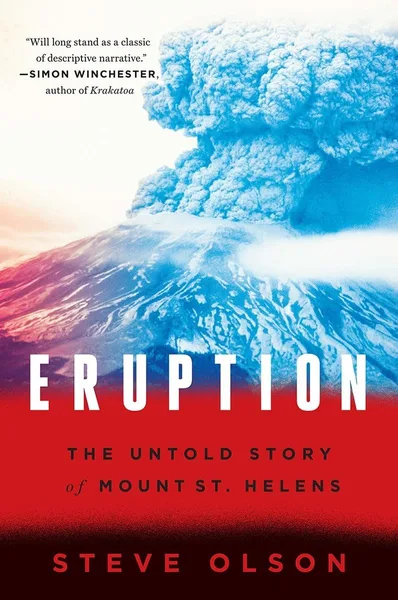
Best Mount St. Helens book
11. Eruption: The Untold Story of Mount St. Helens
Steve Olson tells the story of the May 18, 1980 eruption, the deadliest and most destructive in US history, through the people around it: the USGS geologist David Johnston, who radioed his last message from a ridge six miles from the summit, the loggers and campers inside the blast zone and the timber company and officials who drew the restricted zones. Fifty-seven people died. Olson shows how land ownership decided who was allowed where, as much as the science did.
For the eruption told only through eyewitnesses, add In the Path of Destruction by USGS geologist Richard Waitt, which collects hundreds of first-hand accounts in the order they happened.
- Steve Olson
- W. W. Norton, paperback, 2017, 336 pages
- Over 1,500 Amazon ratings, 4.4 stars
Good: a gripping account that explains the science and the human decisions together. Not great: as much about logging history and politics as about the volcano.
Check on Amazon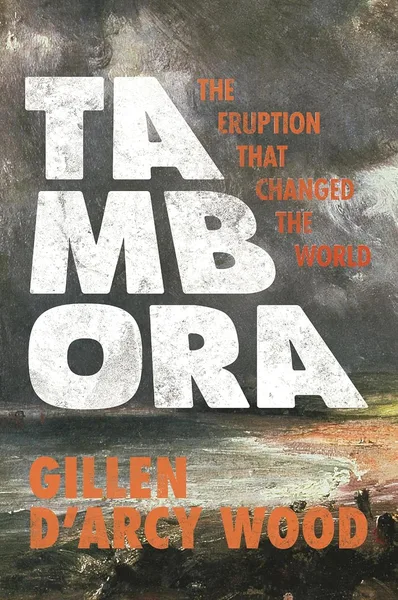
Best book on a volcano and climate
12. Tambora: The Eruption That Changed the World
The 1815 eruption of Tambora in Indonesia was the largest in recorded history. Its sulfate haze cooled the planet, and 1816 became the “year without a summer”: snow in New England in June, failed harvests across Europe, famine in China’s Yunnan province. Gillen D’Arcy Wood, a professor of English at the University of Illinois, traces those effects around the world, including the cold, stormy summer at Lake Geneva in which Mary Shelley began Frankenstein.
It is the best book here on how one eruption can change the weather for years. For the same story told from the American and European side, read The Year Without Summer by William and Nicholas Klingaman.
- Gillen D’Arcy Wood
- Princeton University Press, paperback, 2015, 312 pages
- 4.1 stars on Amazon
Good: links volcanic gas, global climate and history clearly. Not great: very little about the volcano itself; the eruption is over by chapter one.
Check on Amazon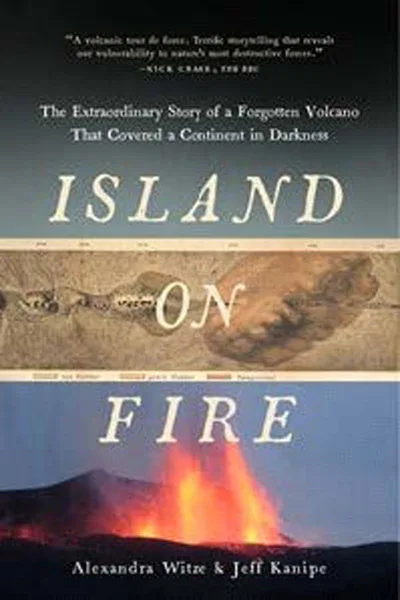
Best short eruption history
13. Island on Fire: The Extraordinary Story of a Forgotten Volcano That Changed the World
In June 1783 a 17-mile line of fissures opened in southern Iceland and poured out lava and gas for eight months. The Laki eruption poisoned grass and livestock, and about a fifth of Iceland’s people died in the famine that followed. Its haze spread across Europe and was blamed for deaths in England. Alexandra Witze, a science journalist, and Jeff Kanipe tell the story through the local pastor’s eyewitness record and then follow the science, including what a Laki-style eruption would do to air travel today.
At 224 pages it is the shortest of the eruption histories, and it covers a quieter style of eruption than Krakatoa or St. Helens. Pair it with our guide to active volcanoes in Iceland.
- Alexandra Witze and Jeff Kanipe
- Pegasus Books, paperback, 2016, 224 pages
- 4.4 stars on Amazon
Good: short, well researched, with the modern risk explained. Not great: the European chapters lean on scattered historical records.
Check on Amazon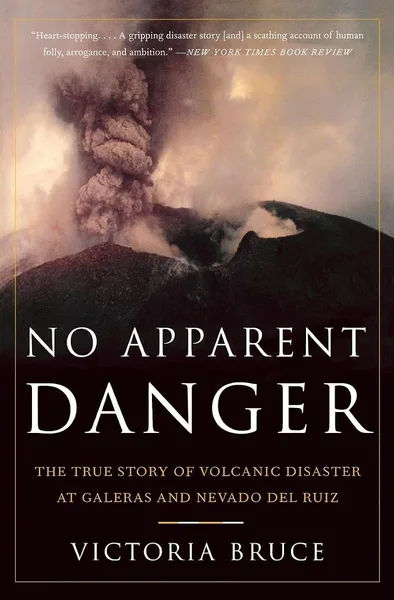
Best book on the risks volcanologists take
14. No Apparent Danger: The True Story of Volcanic Disaster at Galeras and Nevado del Ruiz
Victoria Bruce, a journalist with a geology degree, tells two Colombian disasters. In 1985 a mudflow from Nevado del Ruiz buried Armero after warnings failed to reach the town in time. In 1993 Galeras erupted during a scientific workshop while a group of volcanologists was inside the crater, killing six scientists and three visitors. Bruce asks whether the warning signs were read correctly, and she is critical of how the expedition leader later told the story.
It is the most serious book here about the gap between monitoring data and decisions, and it is a hard read in places.
- Victoria Bruce
- Harper Perennial, paperback, 2002, 272 pages
- 4.4 stars on Amazon
Good: a careful account of how volcanic crises go wrong. Not great: takes sides in a scientific dispute, so read it knowing the other side wrote a book too.
Check on Amazon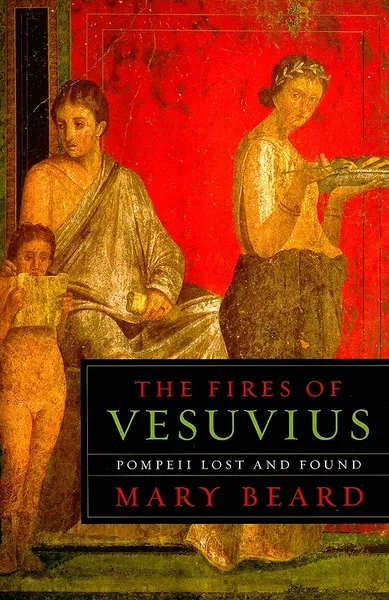
Best Pompeii book
15. The Fires of Vesuvius: Pompeii Lost and Found
Mary Beard is a Cambridge classicist, and this book won the 2008 Wolfson History Prize. It is about life in Pompeii before AD 79, read from the excavated town: the streets, houses, bars, baths, politics and graffiti. The eruption itself frames the book rather than filling it.
Buy it for anyone who is curious about Pompeii and the Romans. Do not buy it to learn volcanology; Reddit commenters make the same point. For the eruption itself, read Pliny the Younger’s two letters describing it, which are free online and take ten minutes.
- Mary Beard
- Belknap Press (Harvard), paperback, 2010, 384 pages
- 4.6 stars on Amazon
Good: the best book on what Pompeii tells us about Roman life. Not great: almost no volcano science.
Check on AmazonBest volcanology textbooks
Volcanology is a small field, so there are few textbooks, and the good ones are mostly expensive academic titles. The first two below are readable by a motivated adult with school science. The rest assume a university course in geology, physics or chemistry.
Best first volcanology textbook
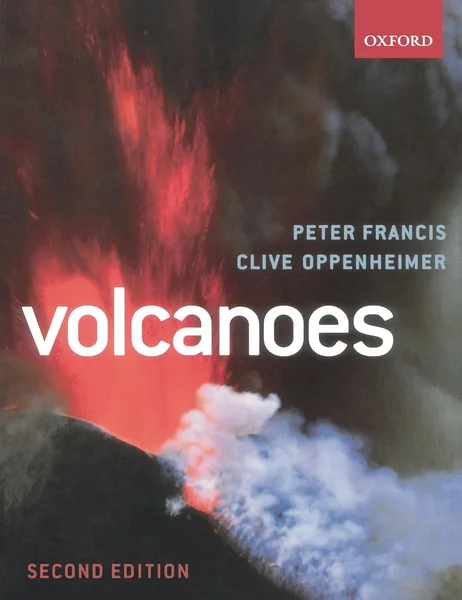
16. Volcanoes (Francis and Oppenheimer)
Peter Francis was a planetary volcanologist at the Open University, and after his death Clive Oppenheimer revised the book into this second edition. It covers the whole field at the level of an undergraduate course: magma and why it rises, eruption mechanics, lava flows, pyroclastic deposits, calderas, volcanoes and climate, monitoring, hazards and volcanoes on other planets. It is full of diagrams and examples from real eruptions.
Reddit volcanologists recommend it more than any other textbook: “a textbook but very well written, engaging enough to read outside of a classroom setting.” It is the book to read after a beginner introduction if you want the real thing without equations on every page.
- Peter Francis and Clive Oppenheimer
- Oxford University Press, paperback, 2nd edition 2003, 536 pages
- Sold by third-party sellers
Good: complete, accurate and readable, by two respected volcanologists. Not great: from 2003, so it misses two decades of eruptions and satellite monitoring, and new copies come from third-party sellers.
Check on Amazon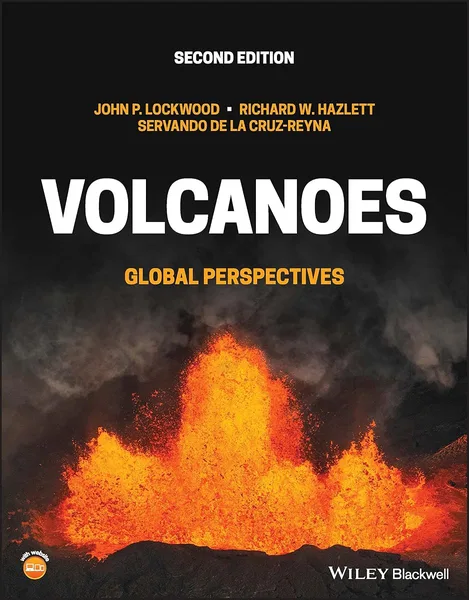
Best current intro textbook
17. Volcanoes: Global Perspectives
John Lockwood spent his career as a USGS volcanologist, much of it at the Hawaiian Volcano Observatory, Richard Hazlett taught volcanology at Pomona College, and the second edition adds Servando de la Cruz-Reyna of the National Autonomous University of Mexico. Their textbook is written for a first university course and for non-majors, with many color photographs, short case studies and clear diagrams. It covers eruption styles, volcanic landforms and deposits, monitoring, hazards and the effects of volcanoes on climate and people.
The second edition came out in 2022, so it is the most up-to-date introductory textbook available. It is priced like a university textbook.
- John P. Lockwood, Richard W. Hazlett and Servando de la Cruz-Reyna
- Wiley-Blackwell, paperback, 2nd edition 2022, 480 pages
- Expensive textbook
Good: current, well illustrated and written for beginners at university level. Not great: textbook price, and some sections assume a geology vocabulary.
Check on Amazon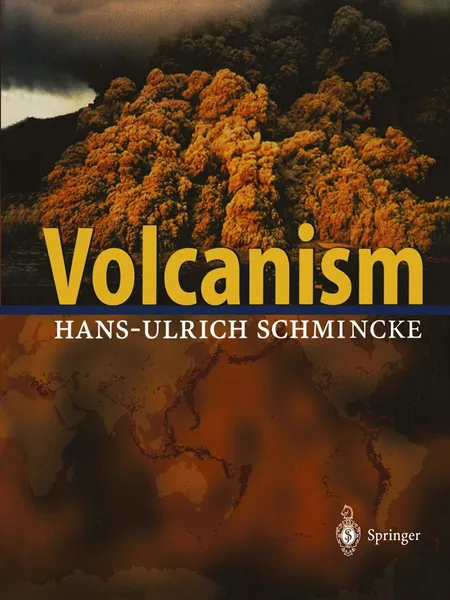
Best illustrated technical textbook
18. Volcanism
Hans-Ulrich Schmincke is a German volcanologist who spent his career at GEOMAR in Kiel. His textbook is written at a slightly more basic level than Francis and Oppenheimer, with fewer references and many more diagrams and photographs. It goes from magma origin through eruption types to volcanic gases, volcanoes and climate and the hazards they pose.
It suits a reader who has finished a beginner book and wants more detail with plenty of pictures. The Springer softcover reprint is sold by Amazon.
- Hans-Ulrich Schmincke
- Springer, softcover reprint, 334 pages
- Sold by Amazon
Good: excellent figures and a clear structure. Not great: the original edition dates from 2004, and the translated text is plain rather than lively.
Check on Amazon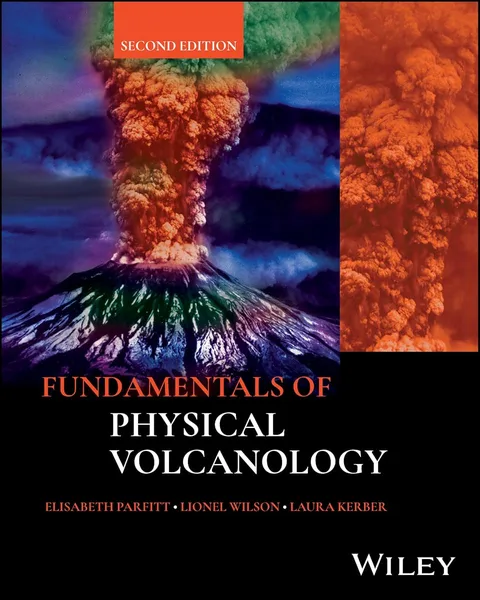
Best textbook for science students
19. Fundamentals of Physical Volcanology
Liz Parfitt and Lionel Wilson worked at Lancaster University, and this is the standard short textbook on the physics of eruptions: how magma rises and degasses, why bubbles fragment magma into ash, how eruption columns rise and collapse, how lava flows move and cool. Unlike everything above it, it includes the math, with the simple equations volcanologists use to model each process.
Reddit’s volcanology students describe it as “concise without dumbing anything down” and right for senior undergraduates. The second edition came out in 2025, with planetary scientist Laura Kerber joining as a third author.
- Elisabeth Parfitt, Lionel Wilson and Laura Kerber
- Wiley-Blackwell, paperback, 2nd edition 2025, 272 pages
- Expensive textbook
Good: the clearest route into the physics of eruptions, short and current. Not great: needs first-year calculus and physics, and it covers physical volcanology only, not chemistry or petrology.
Check on Amazon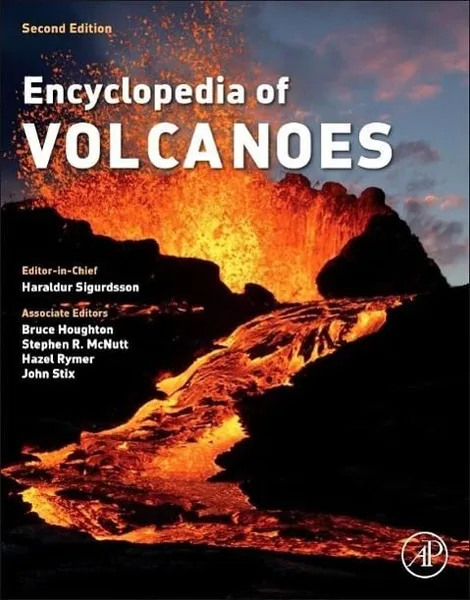
The standard reference
20. The Encyclopedia of Volcanoes
Edited by the Icelandic volcanologist Haraldur Sigurdsson with four co-editors, this is the field’s main reference: more than 1,400 pages of chapters by leading researchers on every part of volcanology, from mantle melting to eruption forecasting, volcanic art and volcano tourism. On Reddit it is “arguably the canonical reference for volcanology” and the set text for many university volcanology courses.
It is a library book for most people. Buy it if you are studying volcanology seriously or writing about it.
- Haraldur Sigurdsson (editor)
- Academic Press, hardcover, 2nd edition 2015, 1,456 pages
- Expensive reference
Good: complete and authoritative, with chapters for beginners and specialists. Not great: very expensive and very heavy, and chapters vary in difficulty.
Check on AmazonTwo more for graduate level. Volcanology: Processes, Deposits, Geology and Resources by Ray Cas, Guido Giordano and co-authors (Springer, 2nd edition 2024) is the most complete modern textbook on volcanic deposits, at over 1,500 pages. Volcanologists also need igneous petrology, the study of how magmas form and crystallize, and Igneous Rocks and Processes by Robin Gill and Godfrey Fitton is the practical guide most often suggested.
Best books for visiting volcanoes
A field guide explains the volcano in front of you, stop by stop. These three cover the most visited volcanic areas in the United States. Mountain Press publishes guides for many other states; our Roadside Geology books guide lists every one.
Best field guide for visiting volcanoes
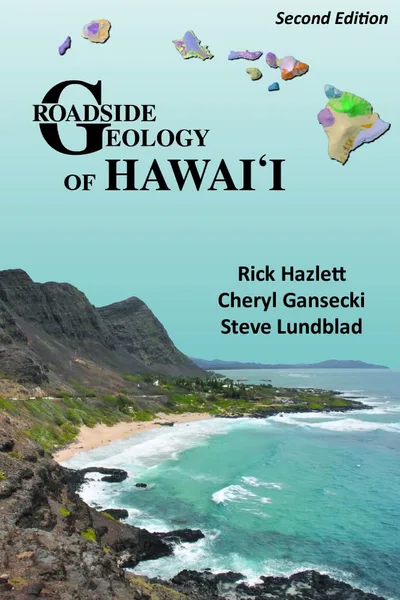
21. Roadside Geology of Hawaii
Hawaii is the easiest place in the world to see active volcanoes up close, and this is the guide to take. Rick Hazlett (co-author of Volcanoes: Global Perspectives above), Cheryl Gansecki and Steve Lundblad, both geologists at the University of Hawaii at Hilo, describe the geology island by island and road by road: lava flows of known dates, cinder cones, lava tubes, black and green sand beaches, collapse craters.
The second edition (2022) includes the 2018 Kīlauea eruption, which drained the summit lava lake, collapsed the caldera floor and buried hundreds of homes in lower Puna. The older edition does not.
- Rick Hazlett, Cheryl Gansecki and Steve Lundblad
- Mountain Press, paperback, 2nd edition 2022, 336 pages
- 4.9 stars on Amazon
Good: current, written by working volcanologists, organized for driving. Not great: a road guide, so the background science is brief.
Check on Amazon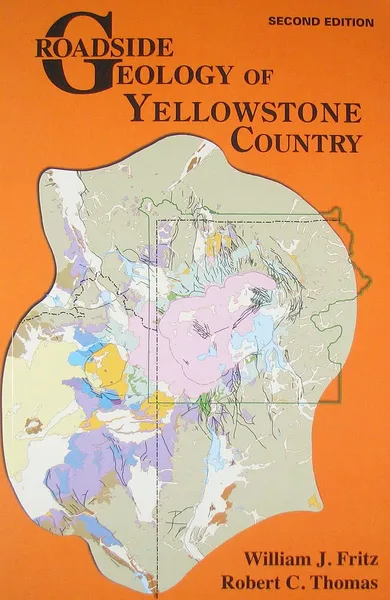
Best Yellowstone guide
22. Roadside Geology of Yellowstone Country
Yellowstone sits on one of the largest volcanic systems on Earth, and its geysers and hot springs are heated by the magma beneath it. This guide follows the park’s roads and the routes into it, explaining the three caldera-forming eruptions, the rhyolite lava flows, the hydrothermal areas and the glaciers that shaped the land afterward.
For a deeper book on the Yellowstone volcano itself, add Windows into the Earth by Robert Smith, a University of Utah geophysicist who studied Yellowstone for decades, and Lee Siegel. Our page on active volcanoes in Wyoming covers the current risk.
- William J. Fritz and Robert C. Thomas
- Mountain Press, paperback, 2nd edition 2011, 328 pages
- 4.8 stars on Amazon
Good: the best roadside explanation of the Yellowstone volcano. Not great: last revised in 2011.
Check on Amazon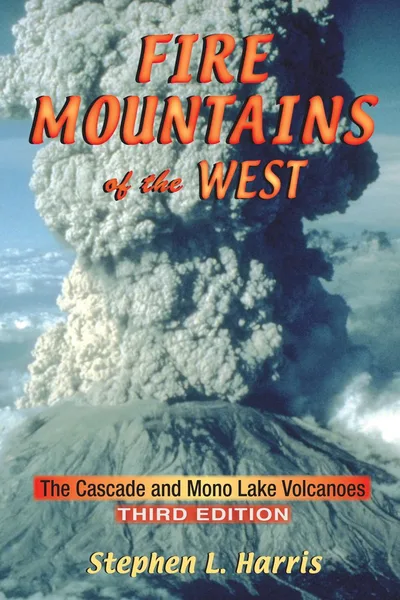
Best guide to the Cascade volcanoes
23. Fire Mountains of the West: The Cascade and Mono Lake Volcanoes
Stephen Harris gives each major volcano of the Cascade Range its own chapter, from Lassen Peak in California north through Shasta, Crater Lake, the Three Sisters, Hood, St. Helens, Adams and Rainier to Baker and the volcanoes of British Columbia, plus the Mono Lake area. Each chapter covers the volcano’s eruptive history, its hazards and what you can see on a visit.
It is the guide for anyone who lives in or travels to the Pacific Northwest. See also our pages on volcanoes in Oregon and active volcanoes in California.
- Stephen L. Harris
- Mountain Press, paperback, 3rd edition 2005, 454 pages
- Sold by third-party sellers
Good: one chapter per volcano, with history, hazards and visits. Not great: last revised in 2005.
Check on Amazon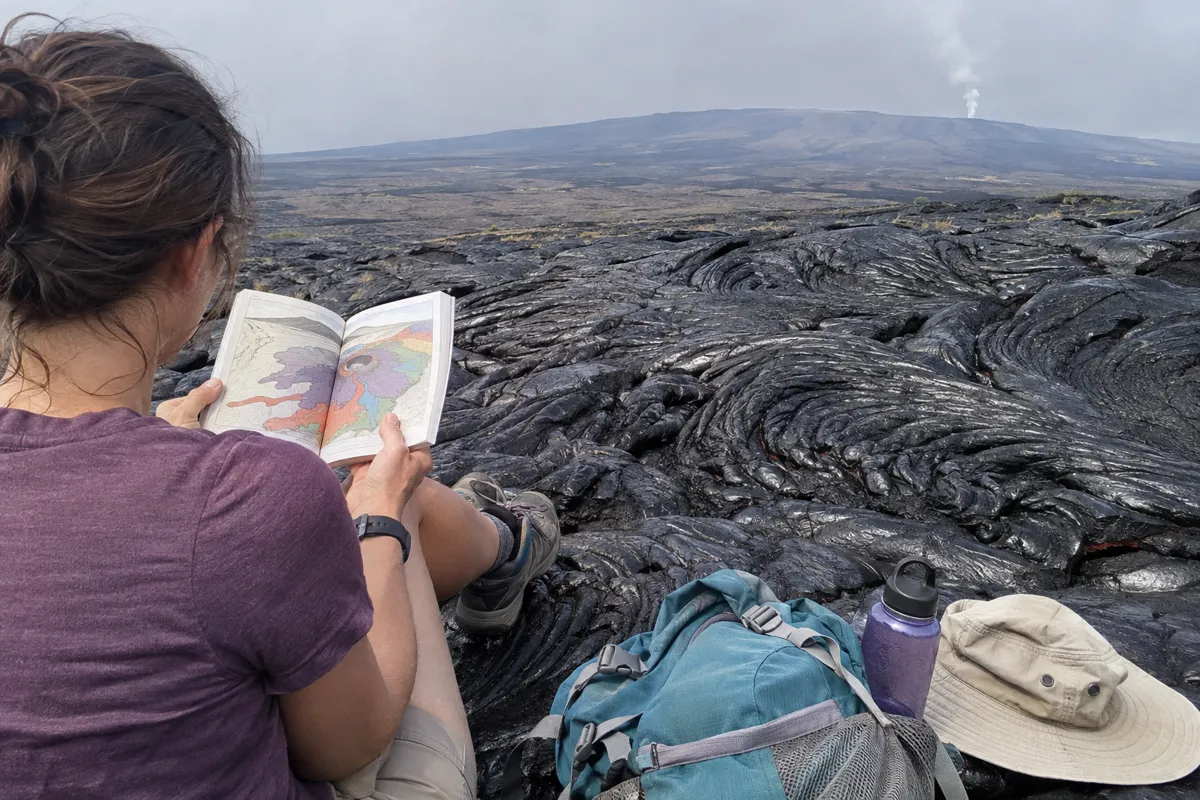
Best volcano books for kids
Volcanoes are one of the subjects that turns children into scientists. These books are accurate as well as exciting, which is not true of every kids’ volcano book.
Best for ages 4 to 7
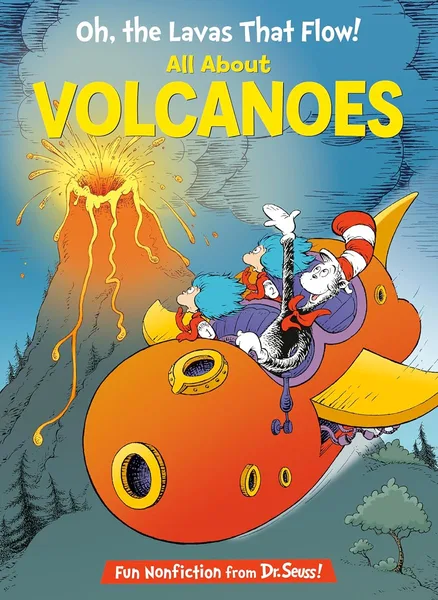
24. Oh, the Lavas That Flow! All About Volcanoes
Part of the Cat in the Hat’s Learning Library, this rhyming picture book takes the Cat and two children to visit volcanoes and explains, in verse, what magma and lava are, how volcanoes form, the main types and why they erupt. A short glossary and a reading list sit at the back.
It is a read-aloud for preschoolers and early readers, and a Reddit parent in r/Volcanoes put it on the list for a volcano-mad four-year-old.
- Todd Tarpley, illustrated by Aristides Ruiz
- Random House, hardcover, 2021, 48 pages
- 4.9 stars, over 400 Amazon ratings
Good: accurate science in an easy rhyme, with a glossary. Not great: too young for most children over eight.
Check on Amazon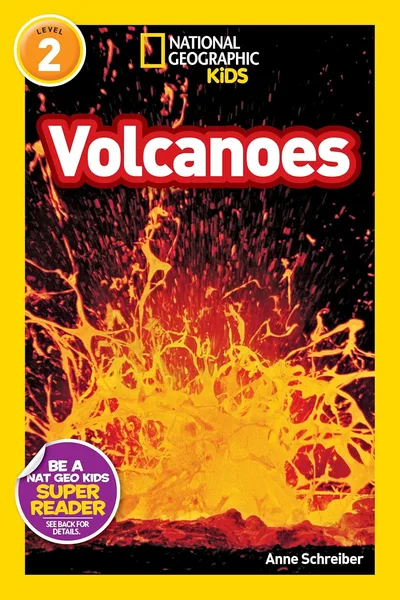
Best first reader
25. Volcanoes! (National Geographic Readers)
A level 2 reader for children who are starting to read on their own, built around large National Geographic photographs of real eruptions. It explains what a volcano is, what comes out of one and where they are, with short sentences and a picture glossary.
With more than 2,000 Amazon ratings it is the most popular volcano book for young children. For a step up, the same series has Erupt! at level 3.
- Anne Schreiber
- National Geographic Kids, paperback, 32 pages
- About ages 5 to 7
Good: real photographs and text a new reader can manage. Not great: very short; confident readers finish it in ten minutes.
Check on Amazon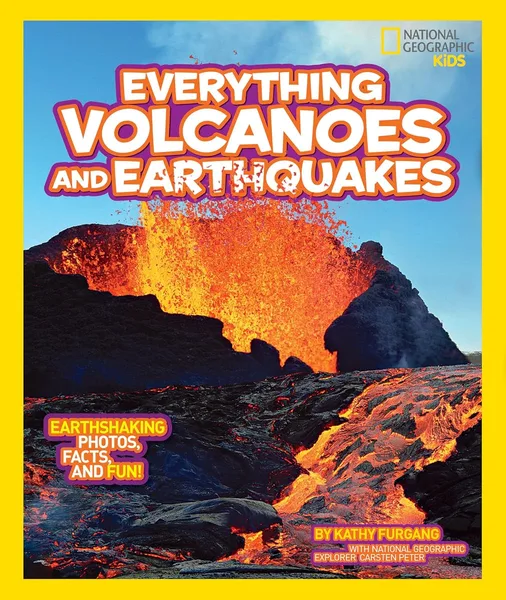
Best for ages 8 to 12
26. National Geographic Kids Everything Volcanoes and Earthquakes
A photo-heavy reference with short sections on plate tectonics, volcano types, famous eruptions, earthquakes and the scientists who study them, including an interview with a volcanologist. Children can read it front to back or browse.
A parent on Reddit described it well: one to read together at first, and it ages well as the child starts reading alone. If your child prefers stories, the I Survived the Eruption of Mount St. Helens, 1980 novel, with over 3,000 ratings, carries fact pages at the back.
- Kathy Furgang
- National Geographic Kids, paperback, 2013, 64 pages
- 4.8 stars on Amazon
Good: broad coverage with excellent photographs. Not great: splits its pages with earthquakes.
Check on Amazon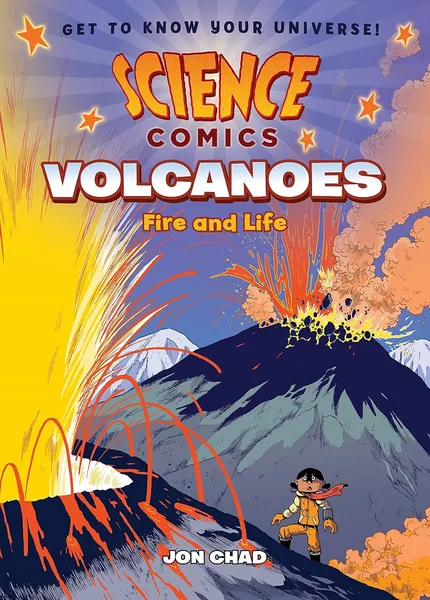
Best for ages 9 to 13
27. Science Comics: Volcanoes: Fire and Life
A 128-page nonfiction graphic novel with a story frame set in a frozen future. It teaches how the Earth’s interior works, how magma forms, the different eruption styles and how volcanoes created land and atmosphere.
It covers more science than any other kids’ book here, in a format that reluctant readers finish.
- Jon Chad
- First Second, paperback, 2016, 128 pages
- 4.8 stars on Amazon
Good: real depth for the age group, told as a story. Not great: the story frame takes a few pages to get going.
Check on Amazon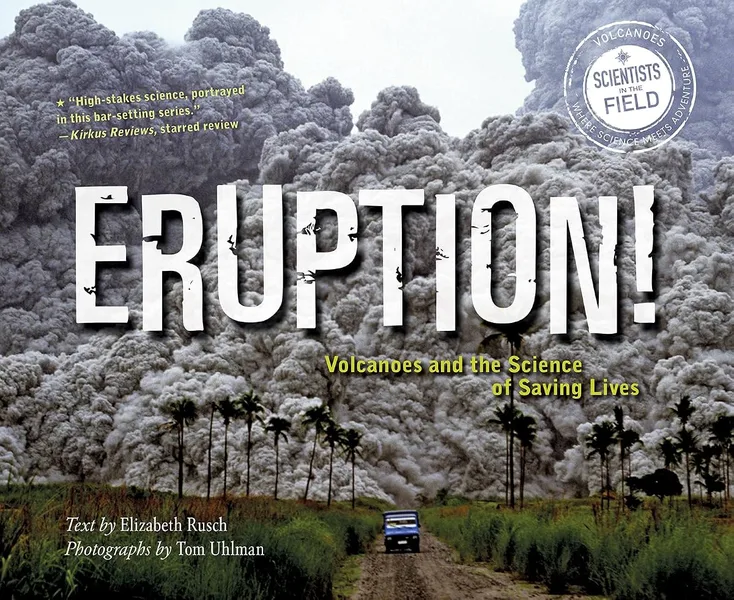
Best for future volcanologists
28. Eruption! Volcanoes and the Science of Saving Lives
From the Scientists in the Field series, this book follows the USGS Volcano Disaster Assistance Program, the team whose origins Volcano Cowboys describes, on the job. Its central story is the 2010 eruption of Merapi in Indonesia, where forecasts and evacuations saved many thousands of people, with flashbacks to Nevado del Ruiz and Pinatubo.
It is the best book here for a child who says they want to be a volcanologist, because it shows what the job is: instruments, data, meetings with officials and hard calls under pressure.
- Elizabeth Rusch, photographs by Tom Uhlman
- HMH Books for Young Readers, paperback, 2017, 80 pages
- About ages 10 to 14
Good: shows real volcanologists at work, with strong photography. Not great: dense for younger readers.
Check on AmazonFor younger children who love the Kraffts, the French couple who filmed eruptions for two decades, Chasing Eruptions (2026) is an illustrated biography of Katia and Maurice Krafft. For preschoolers, The Magic School Bus Blows Its Top is still in print.
Rocks to hold while you read
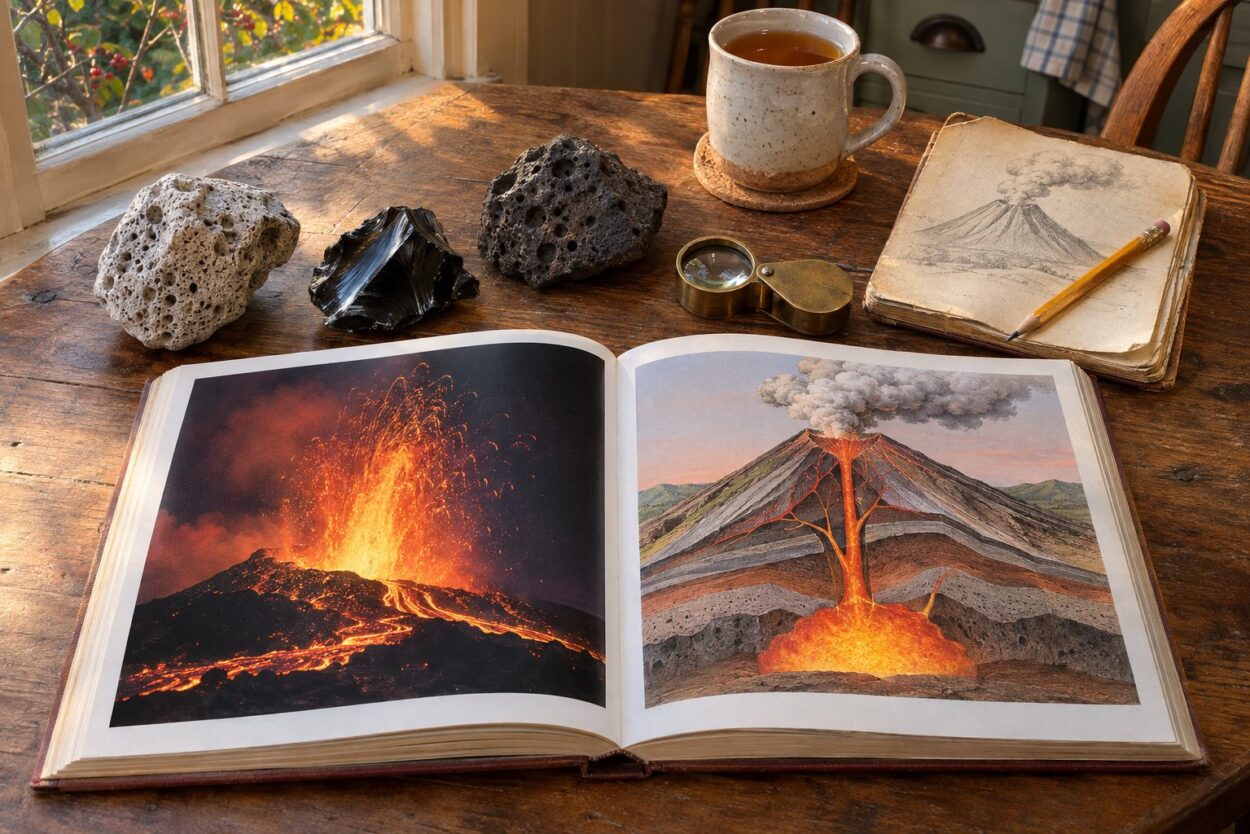
Volcanic rocks make the books real, especially for kids. Sami’s floating pumice cost nothing because a neighbor brought it back from a beach, but a cheap specimen pack does the same job: a 12-piece pumice pack floats, and a few pieces of raw obsidian show what happens when lava cools so fast that no crystals form. Put a dark basalt pebble in the same glass of water and it sinks: same family of rock, different amount of gas. That one glass explains why some eruptions froth and explode while others pour out as lava.
For kids who want an eruption on the table, the National Geographic Ultimate Volcano Science Kit is the best-reviewed volcano kit on Amazon, with more than 4,500 ratings. It is a baking-soda reaction, not real volcanology, but it opens the door to the books above. Our volcano word search is a free printable to go with them.
What Reddit recommends
We tallied book recommendations in 66 Reddit threads where people asked for volcano books or how to start in volcanology, mostly from r/geology, r/geologycareers, r/suggestmeabook, r/Volcanoes and r/Volcanology. A book counts once per thread in which a commenter names it. Volcanology threads are rare on Reddit, so the counts are small.
| Book | Threads | Type |
|---|---|---|
| Winchester, Krakatoa | 10 | Eruption history |
| Francis and Oppenheimer, Volcanoes | 4 | Textbook |
| Oppenheimer, Eruptions That Shook the World | 4 | Popular science |
| Thompson, Volcano Cowboys | 4 | History of science |
| Beard, The Fires of Vesuvius | 4 | History |
| Parfitt and Wilson, Fundamentals of Physical Volcanology | 3 | Textbook |
| Sigurdsson, The Encyclopedia of Volcanoes | 3 | Reference |
| Olson, Eruption | 3 | Eruption history |
| Waitt, In the Path of Destruction | 3 | Eyewitness accounts |
| Hamilton, Volcano: Nature and Culture | 3 | Cultural history |
Three patterns stand out. First, Krakatoa is the book that gets people interested: one commenter “never had any interest in volcanoes at all” until reading it. Second, when someone asks for a real textbook, the answer is almost always Francis and Oppenheimer, with Parfitt and Wilson for students who want the math and Schmincke for more pictures. Third, the career threads give the same advice every time: volcanology jobs need a PhD, and the way in is through geochemistry, geophysics or petrology. “A lot of volcanology is ultimately applied chemistry,” as one volcanologist put it. Clive Oppenheimer’s Eruptions That Shook the World is the one favorite we left out of the cards, because only a hardcover from third-party sellers is available new; his newer Mountains of Fire covers similar ground.
Free volcanology resources
Much of the best volcano reading is free, published by the agencies that watch volcanoes.
- USGS Volcano Hazards Program. The About Volcanoes pages are a plain-language introduction, and the photo glossary defines every term in the books above with a picture.
- Free USGS books. Fire and Mud, the full scientific account of the 1991 Pinatubo eruption, is online free, as is Professional Paper 1250 on the 1980 eruptions of Mount St. Helens.
- Volcano observatories. The Hawaiian Volcano Observatory publishes daily updates and a weekly Volcano Watch column written by its scientists.
- Free textbook chapters. Chapter 4 of Physical Geology (BCcampus) and chapter 4 of An Introduction to Geology (OpenGeology) are university-level introductions to volcanoes, free and openly licensed.
- A free course. Planet Earth…and You! on Coursera, taught by Stephen Marshak of the University of Illinois, covers volcanoes as part of a short introduction to geology.
- Our own tools. The World Volcano Map shows every Holocene volcano and which ones are erupting this week, built on Smithsonian Global Volcanism Program data.
A reading order
My daughter Noor asked me this year how you become a volcanologist. The honest answer is a long one: a science degree, usually a PhD, and a lot of chemistry and physics. But the reading starts the same way for a curious adult and for a future scientist.
- Get hooked. Read one story: Krakatoa, Eruption or Super Volcanoes.
- Learn the basics in order. Work through Rothery or the Very Short Introduction. Look up every unfamiliar term in the USGS photo glossary.
- See it on the ground. Take a field guide to the nearest volcanic area, or use our volcano map to find one, and match what you see to what you read.
- Read a real textbook. Francis and Oppenheimer or Lockwood and Hazlett, a chapter a week, with a notebook.
- Go technical, if you are heading for a degree. Parfitt and Wilson for the physics and an igneous petrology text for the chemistry, with the Encyclopedia of Volcanoes at the library for everything else.
Most people stop happily at step three. If volcanoes lead you to the rest of the Earth, our guide to the best geology books for beginners is the next shelf, and all our book and gift guides are on the buying guides page.
FAQ
Volcanoes, Earthquakes and Tsunamis: A Complete Introduction by David Rothery is the best volcanology book for beginners. It teaches the subject in order, from plate tectonics and magma to eruption styles, monitoring and hazards, with summaries and questions for self-study. For a shorter start, read Volcanoes: A Very Short Introduction by Michael Branney and Jan Zalasiewicz.
Volcanoes by Peter Francis and Clive Oppenheimer (2nd edition) is the volcanology textbook most often recommended for a first serious read, because it is complete and still readable outside a classroom. Volcanoes: Global Perspectives by Lockwood and Hazlett is the most current introductory textbook. Students who want the physics and math should use Fundamentals of Physical Volcanology by Parfitt and Wilson.
Krakatoa: The Day the World Exploded by Simon Winchester is the most popular book about volcanoes, with nearly 2,000 Amazon ratings, and it was the volcano book named most often in the Reddit threads we read. It is a narrative history of the 1883 eruption rather than an overview of volcanology.
Yes. Oh, the Lavas That Flow! suits ages 4 to 7, the National Geographic Readers book Volcanoes! suits new readers, National Geographic Kids Everything Volcanoes and Earthquakes suits ages 8 to 12, and the graphic novel Science Comics: Volcanoes teaches the most science for ages 9 to 13. Eruption! by Elizabeth Rusch shows real volcanologists at work for ages 10 and up.
Start with a beginner introduction such as Rothery, then a textbook such as Francis and Oppenheimer, then Parfitt and Wilson for physical volcanology and an igneous petrology textbook for the chemistry. Volcanologists on Reddit stress that the career requires a science degree and usually a PhD, built on geology, chemistry, physics or geophysics.
Eruption: The Untold Story of Mount St. Helens by Steve Olson is the best general book about the 1980 eruption. In the Path of Destruction by USGS geologist Richard Waitt collects eyewitness accounts in order, and the USGS Professional Paper 1250 on the eruption is free online.
Windows into the Earth by Robert Smith and Lee Siegel explains the Yellowstone volcano from the geophysicist who studied it for decades. Roadside Geology of Yellowstone Country is the best guide to take on a visit, and Super Volcanoes by Robin George Andrews has a chapter on Yellowstone with more recent science.
Yes. The USGS publishes free books on the Pinatubo and Mount St. Helens eruptions and a photo glossary of volcano terms. Free open textbooks from BCcampus and OpenGeology have full chapters on volcanoes, and Coursera’s Planet Earth…and You! covers volcanoes in a free introductory geology course.
Sources
- Amazon product pages for each book, checked November 2026 (editions, page counts, publishers and ratings).
- Reddit threads asking for volcano books and volcanology career advice, summarized in the What Reddit recommends section.
- U.S. Geological Survey, About Volcanoes, Volcano Hazards Program.
- U.S. Geological Survey, Photo Glossary of Volcano Terms.
- Newhall and Punongbayan (eds.), Fire and Mud: Eruptions and Lahars of Mount Pinatubo, Philippines, USGS and PHIVOLCS.
- Lipman and Mullineaux (eds.), The 1980 Eruptions of Mount St. Helens, Washington, USGS Professional Paper 1250.
- U.S. Geological Survey, Hawaiian Volcano Observatory.
- Steven Earle, Physical Geology, 2nd edition, chapter 4: Volcanism, BCcampus.
- OpenGeology, An Introduction to Geology, chapter 4: Igneous Processes and Volcanoes.
- Five Books, The Best Books on Volcanoes, interview with volcanologist David Pyle.