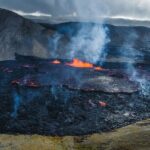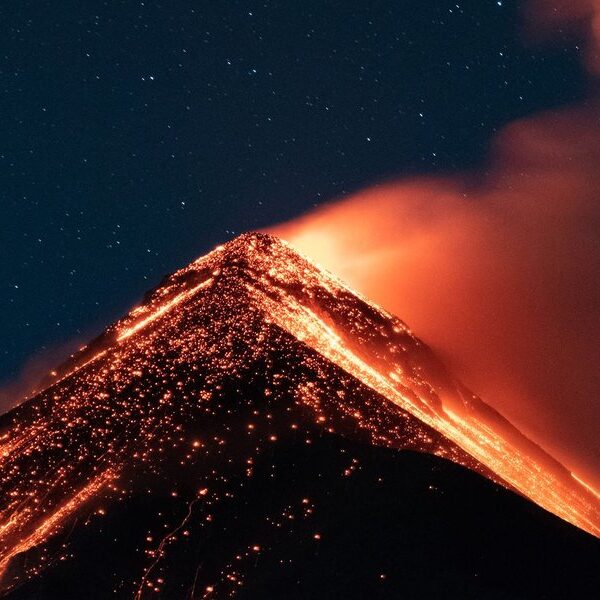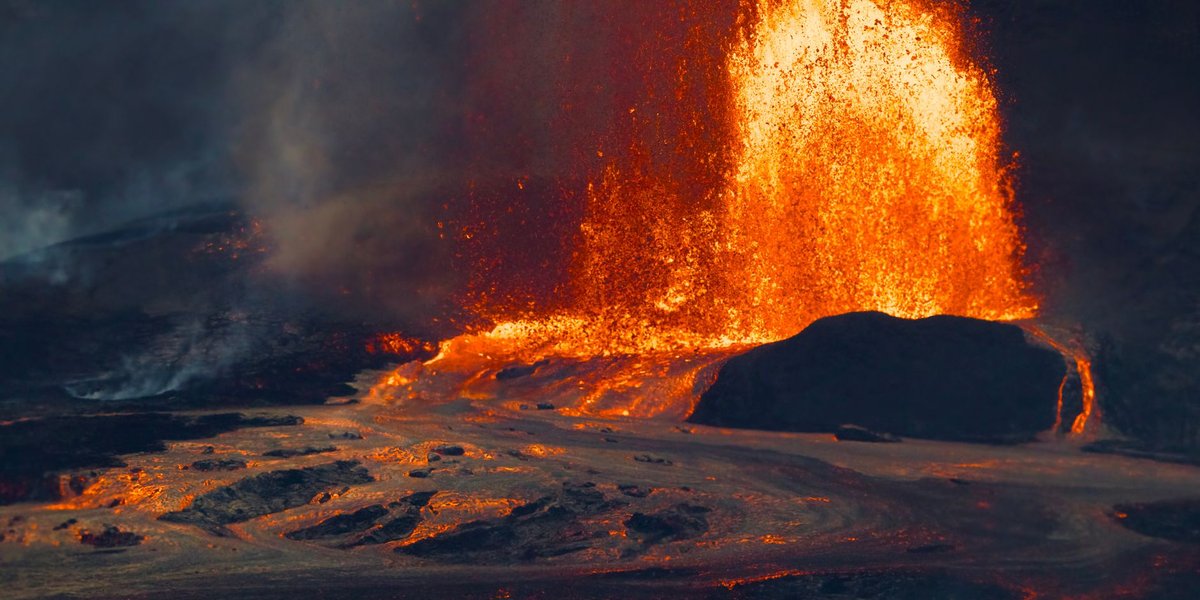
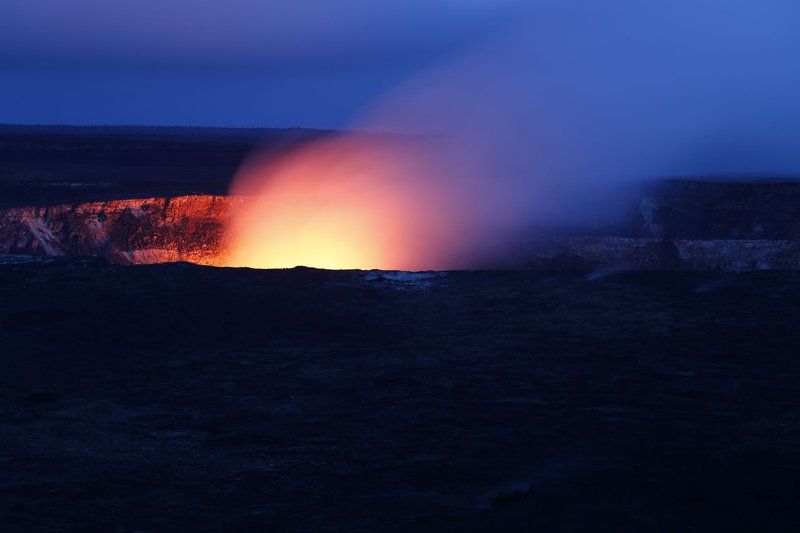
A shield volcano looks nothing like the cone kids draw in school. Picture a warrior’s shield laid flat on the ground, curved but low — that’s the shape, and it’s why 19th-century Icelandic geologists named the type after it. The cause is runny, low-silica basaltic lava that spreads out thin instead of piling up steep. Eruptions tend to be effusive rather than explosive: lava oozes and flows for miles instead of blasting ash into the stratosphere. Over thousands of eruptions, those flows stack into something enormous — broad, gently sloped, and in a few cases, the largest single mountains on any planet we’ve measured.
Here are 15 of them, organized by where you’d actually go looking, plus one you’d need a rocket to visit.
Table of Contents
- Hawaii: the type specimen
- Iceland: where the name comes from
- The Galápagos: shield volcanoes with wildlife
- East Africa: lava lakes and rift zones
- Réunion Island: the world’s most productive shield
- Central America and Kamchatka: shields off the Ring of Fire
- The Pacific Northwest: shield volcanoes outside Hawaii
- Beyond Earth: Olympus Mons
- Shield volcano vs. stratovolcano vs. cinder cone
- Which shield volcanoes are erupting right now
Hawaii: the type specimen
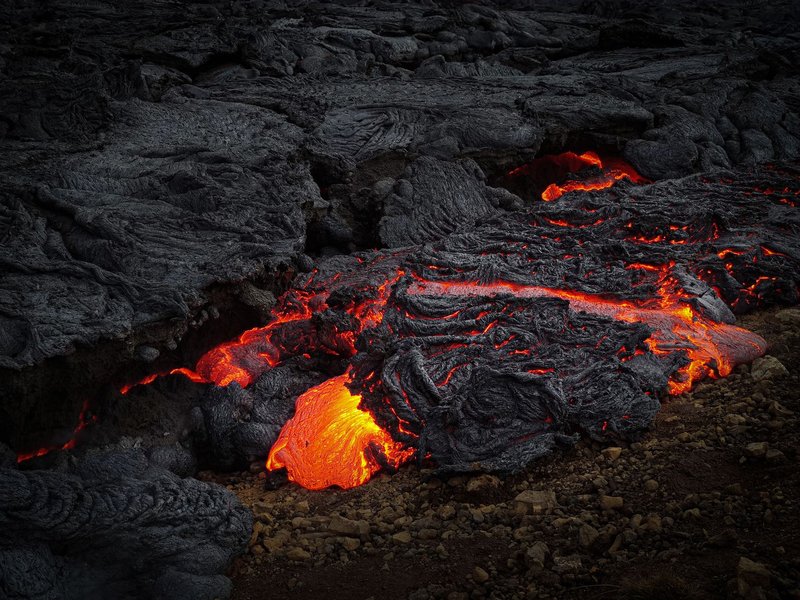
Every geology textbook reaches for Hawaii first, and for good reason — the islands are a working demonstration of the shield-building process, still in progress.
1. Mauna Loa is the benchmark everyone else gets measured against. Measured from the seafloor to its summit, it’s taller than Everest, and it holds the title of Earth’s largest active volcano. It last erupted in November 2022, sending lava within a few miles of Saddle Road, and the USGS Hawaiian Volcano Observatory keeps it under continuous monitoring for the next one.
2. Kīlauea is the one that never really stops. It erupted almost continuously from 1983 to 2018, then again through 2024 and into 2025, and more than 90% of its surface is covered in lava younger than 1,000 years. If you want a shield volcano that’s actively rewriting its own coastline, this is it.
3. Mauna Kea is Mauna Loa’s quieter neighbor — dormant, not extinct, and famous for a different reason: measured base to summit, it’s the tallest mountain on Earth, most of it underwater, and its high, dry, dark summit hosts some of the world’s most powerful astronomical observatories.
4. Hualalai last erupted in 1801, which sounds ancient until you remember shield volcanoes think in geologic time. It’s the third-most active volcano on the Big Island and sits directly beneath Kailua-Kona, which is exactly why Hawaiian County keeps a hazard plan for it on file.
Iceland: where the name comes from
5. Skjaldbreiður, literally “broad shield” in Icelandic, is the volcano that gave the whole category its name. It formed after the last ice age, its lava pouring out from a central vent to build the flat, shield-like profile that’s now the textbook silhouette. It’s been quiet for roughly 10,000 years — dormant enough that hikers treat it as scenery, not a hazard.
The Galápagos: shield volcanoes with wildlife
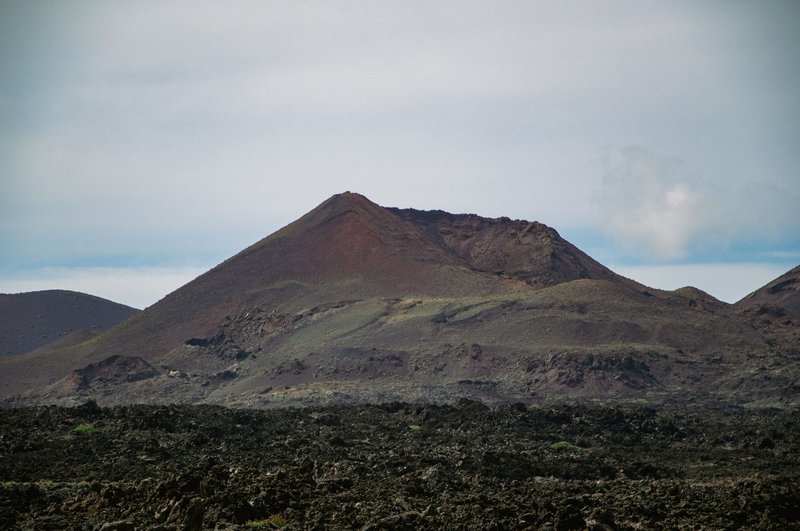
The Galápagos hotspot has produced some of the youngest, most active shield volcanoes on the planet, and they double as habitat for species found nowhere else.
6. Fernandina is the youngest and most volcanically active island in the archipelago, with a summit caldera that has collapsed more than once in recorded history. Its most recent eruption, in 2024, sent lava toward the coast where marine iguanas — the only lizards on Earth that forage in the ocean — bask on the cooled flows.
7. Wolf Volcano, on the northern tip of Isabela Island, is the tallest point in the Galápagos and home to the pink land iguana, a species discovered nowhere else and found only on its slopes. It erupted in 2015 and again in 2022, both times prompting park rangers to monitor wildlife displacement as lava crossed known iguana nesting ground.
East Africa: lava lakes and rift zones
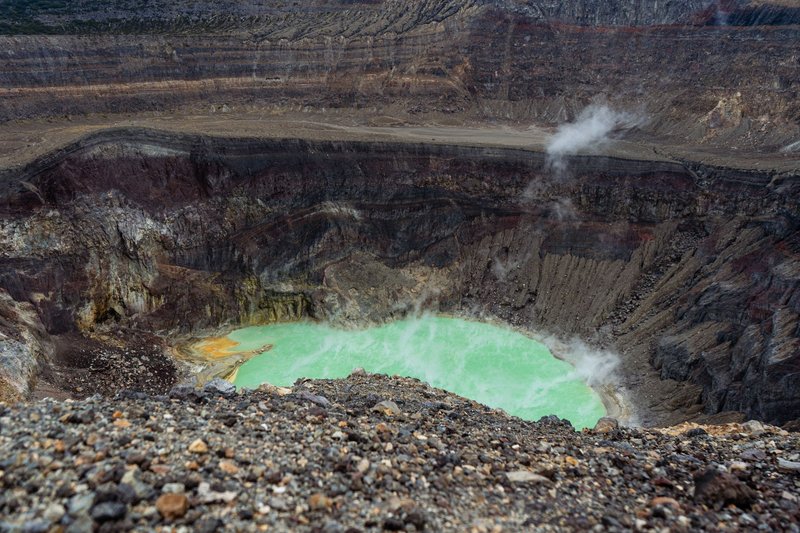
The East African Rift is slowly tearing a continent apart, and the thinning crust lets basaltic magma reach the surface with unusual ease — a setup that produces some of the world’s rarest volcanic features.
8. Erta Ale, in Ethiopia’s Danakil Depression, holds one of only a handful of persistent lava lakes on Earth, a churning pit of exposed magma that’s been active on and off since at least 1967. Getting there means a trek through one of the hottest inhabited places on the planet, which is part of why it’s become a bucket-list destination for volcano tourism despite the logistics.
9. Nyamuragira, in the Democratic Republic of Congo, is one of Africa’s most consistently active volcanoes, erupting more than 40 times since 1885 — roughly once every three years on average. Its lava flows have repeatedly reached into Virunga National Park, home to critically endangered mountain gorillas.
10. Karthala, on Grande Comore in the Comoros archipelago, is a shield volcano with a summit caldera wide enough to be seen from orbit. It’s erupted more than 20 times since the 19th century, most recently in 2024, and its slopes support the water supply for a large share of the island’s population.
Réunion Island: the world’s most productive shield
11. Piton de la Fournaise is arguably the most active shield volcano on Earth by sheer frequency — it has erupted more than 150 times since the 17th century, and since 2014 the pace has picked up to three or four eruptions a year, most lasting under two weeks. Its nested caldera and twin craters, Dolomieu and Bory, sit over the same hotspot that built the rest of Réunion Island, and eruptions there are frequent enough that local tour operators build hiking trips around watching one from a safe distance.
Central America and Kamchatka: shields off the Ring of Fire
12. Masaya, in Nicaragua, breaks the Central American pattern of steep, explosive stratovolcanoes — it’s a broad, low basaltic shield with a nested caldera, and its Santiago crater holds one of the few lava lakes on Earth visible from a paved overlook. Sulfur dioxide plumes from the crater are strong enough that the surrounding national park issues gas-mask advisories on high-emission days.
13. Ploskiy Tolbachik, on Russia’s Kamchatka Peninsula, produced one of the 21st century’s largest basaltic fissure eruptions between 2012 and 2013, burying roughly 40 square kilometers under new lava in under a year. Its name translates to “flat,” a fitting description for a shield summit that sits beside a much steeper stratovolcano of the same name.
The Pacific Northwest: shield volcanoes outside Hawaii
14. Newberry Volcano, in central Oregon, is the largest volcano by footprint in the contiguous United States — a low, broad shield roughly 20 miles across that most visitors don’t even register as a volcano because it doesn’t look like Rainier or Hood. Its last eruption, around 1,300 years ago, produced the Big Obsidian Flow, a glassy black lava field you can still walk across today.
Beyond Earth: Olympus Mons
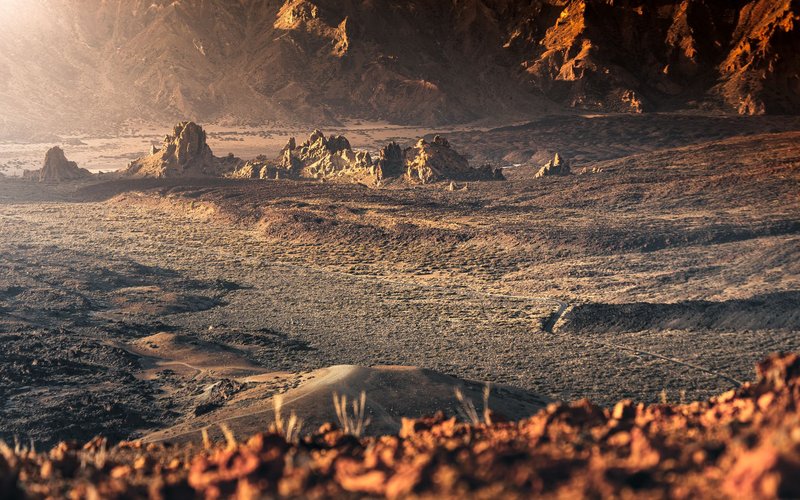
15. Olympus Mons, on Mars, is the largest known volcano in the solar system — roughly 600 kilometers across and about two and a half times the height of Mauna Loa measured from base to summit. It grew so large partly because Mars has no plate tectonics: the crust never shifted the way Earth’s does over a hotspot, so instead of building a chain of islands like Hawaii, the same vent kept erupting in place for hundreds of millions of years. NASA’s Mars imagery shows a summit caldera complex big enough to swallow several Earth calderas whole.
Shield volcano vs. stratovolcano vs. cinder cone
If you landed on this page slightly unsure which volcano shape is which, here’s the quick reference most competitors skip:
| Feature | Shield Volcano | Stratovolcano | Cinder Cone |
|---|---|---|---|
| Profile | Broad, gently sloped (2–10°) | Steep, symmetrical cone (30–35°) | Small, steep-sided (30–40°) |
| Magma type | Basaltic, low silica, runny | Andesitic/rhyolitic, high silica, thick | Basaltic, gas-rich |
| Eruption style | Effusive lava flows | Explosive, ash and pyroclastic flows | Explosive but short-lived |
| Typical size | Miles to tens of miles wide | Thousands of feet tall, symmetrical peak | Usually under 1,000 feet |
| Example | Mauna Loa, Skjaldbreiður | Mount Fuji, Mount Rainier | Paricutín, Sunset Crater |
The short version: shield volcanoes are wide because their lava is thin and travels far before it cools. Stratovolcanoes are steep and dangerous because thick, gassy magma builds pressure and then lets go all at once. Cinder cones are the small, fast-forming ones — some grow to hundreds of feet tall in a matter of months, then usually erupt just once in their lifetime.
Which shield volcanoes are erupting right now
Activity status changes fast enough that any list goes stale within months, but as a general pattern: Kīlauea, Piton de la Fournaise, and Erta Ale are the three most reliably active shield volcanoes on Earth, each erupting on a cycle measured in months rather than years. The Smithsonian Global Volcanism Program tracks real-time status for all of them if you want the current word before planning a trip anywhere near one.
What ties all 15 of these together isn’t size or location — Nicaragua and Mars don’t have much else in common. It’s the physics of thin, fast-moving lava, repeated over enough eruptions that a wide, low mountain is the only shape that makes sense. Once you’ve seen that pattern in Kīlauea’s flows, you’ll spot it in the Martian photos too.