TLDR
A composite volcano — also called a stratovolcano — is a tall, steep-sided cone built from alternating layers of hardened lava, ash, and volcanic rock. They form at subduction zones, where thick, gas-rich magma erupts explosively instead of flowing out gently. Mount St. Helens, Krakatoa, Pinatubo, Vesuvius, and Fuji are all composite volcanoes, and together they’re responsible for most of the deadliest eruptions in recorded history.
Table of Contents
- What Is a Composite Volcano
- How Composite Volcanoes Form
- Layer by Layer: The Anatomy of a Stratovolcano
- Why They Explode Instead of Flow
- Composite vs. Shield vs. Cinder Cone Volcanoes
- Famous Composite Volcanoes
- The Hazards They Produce
- FAQ
What Is a Composite Volcano
A composite volcano is a tall, symmetrical cone built up over tens of thousands of years by repeated eruptions that alternate between lava flows and layers of ash, pumice, and volcanic debris. Geologists call the same landform a stratovolcano — “strata” referring to those stacked layers, which is exactly what you’d see if you sliced one in half.
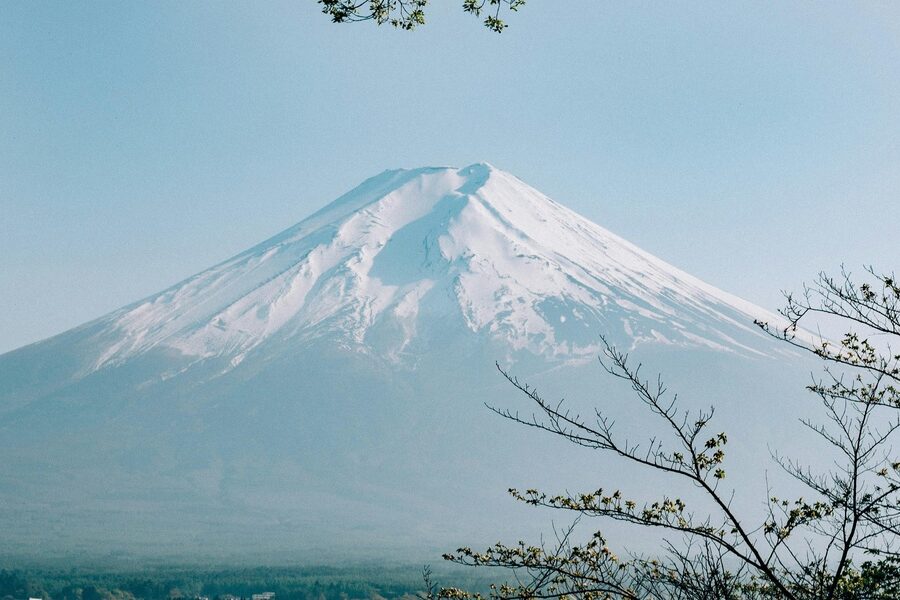
Picture Mount Fuji’s postcard silhouette, or the classic cone shape kids draw when asked to sketch a volcano. That’s a composite volcano. The steep flanks, often 30 to 35 degrees near the summit, come from thick magma that doesn’t travel far before it cools and hardens close to the vent.
They’re not the biggest volcanoes on Earth by volume — that title goes to broad, gently sloped shield volcanoes like Hawaii’s Mauna Loa. But composite volcanoes are the ones that show up in disaster headlines, because the same properties that make them tall and steep also make them explosive.
How Composite Volcanoes Form
Composite volcanoes form almost exclusively at subduction zones, the boundaries where one tectonic plate slides underneath another. As the descending, or subducting, plate sinks into the mantle, it drags water trapped in its rock and sediment down with it. That water lowers the melting point of the surrounding mantle rock, the same way salt lowers the freezing point of ice, and triggers melting where there wouldn’t otherwise be any.
The magma produced this way is different from the magma at, say, a Hawaiian hotspot. It picks up silica-rich material from the crust it melts through, which makes it thicker and more viscous by the time it reaches the surface. According to the U.S. Geological Survey, this subduction process is why more than 80% of Earth’s volcanoes above sea level sit along the Pacific Ring of Fire, the horseshoe-shaped chain of subduction zones ringing the Pacific Ocean.
Each eruption cycle adds a new layer. A lava flow cools into a hard cap. The next eruption, often more explosive, blankets that cap in ash and pyroclastic material. Repeat that thousands of times over 100,000 years or more, and you get a mountain — not a single event, but a very long argument between the volcano and gravity.
Layer by Layer: The Anatomy of a Stratovolcano
Cut a composite volcano in cross-section and you’d find a magma chamber deep underground feeding a central conduit, with the layered cone built around it like tree rings. The main layers include:
- Lava flows — thick, slow-moving andesitic or dacitic rock that hardens close to the vent, reinforcing the cone’s structure
- Tephra — the general term for any fragmented volcanic material ejected during an eruption, from fine ash to boulder-sized blocks
- Pyroclastic deposits — the solidified remains of fast-moving flows of hot gas, ash, and rock fragments
- Volcanic ash — fine, glassy particles that can travel hundreds of miles on wind and blanket entire regions
That layering is structural, not decorative. The alternating hard lava caps and looser ash layers make composite volcanoes prone to partial collapse — a weak ash layer under a heavy lava cap is exactly the kind of instability that triggered the 1980 lateral blast at Mount St. Helens, when the volcano’s north flank gave way and released the largest landslide ever recorded.
Why They Explode Instead of Flow
The magma feeding composite volcanoes — mostly andesite and dacite — has a high silica content, generally 55 to 70%. Silica molecules link together into long chains as magma cools, which is what makes the melt viscous, or resistant to flow. Compare that to the low-silica basaltic magma at a shield volcano like Kilauea, which is thin enough to flow for miles, the way honey behaves differently from cold molasses.
Viscous magma traps dissolved gases instead of letting them escape gradually. Pressure builds inside the conduit until it releases all at once, fragmenting the magma into ash and pumice and launching it skyward. That’s the mechanism behind a Plinian eruption, named for Pliny the Younger, who documented Vesuvius’s 79 CE eruption that buried Pompeii. It’s also why composite volcano eruptions tend to be sudden and violent rather than a slow, watchable lava flow you can outwalk.
Composite vs. Shield vs. Cinder Cone Volcanoes
Volcano type isn’t a single category — shape, magma chemistry, and eruption style all track together. Here’s how the three main types compare:
| Feature | Composite (Stratovolcano) | Shield | Cinder Cone |
|---|---|---|---|
| Shape | Tall, steep, symmetrical cone | Broad, gently sloped dome | Small, steep-sided cone |
| Magma type | Andesite/dacite (high silica) | Basalt (low silica) | Basalt |
| Viscosity | High | Low | Variable |
| Eruption style | Explosive | Effusive (flowing) | Explosive but short-lived |
| Typical height | Up to ~12,000+ ft | Up to ~30,000+ ft (base to peak, e.g., Mauna Loa) | Under ~1,000 ft |
| Example | Mount Fuji | Mauna Loa | Paricutín |
| Formation time | Tens of thousands of years | Similar, via repeated flows | Single eruptive episode, often months |
The size comparison surprises people: shield volcanoes are actually bigger overall, since low-viscosity lava spreads far and wide instead of piling up steeply. Composite volcanoes just look bigger because their slopes are so much steeper, and they concentrate all that mass into a narrower footprint.
Famous Composite Volcanoes
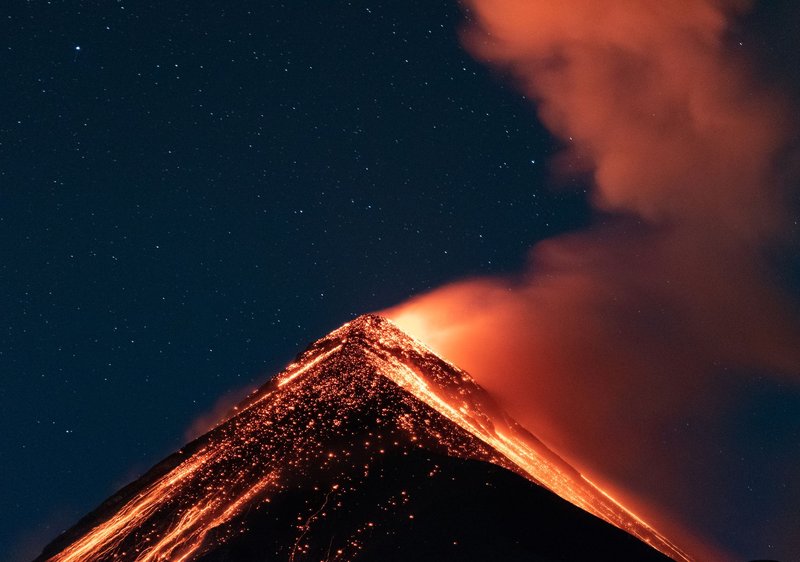
Most of the volcanoes people can actually name are composite volcanoes, and that’s not a coincidence — their explosive eruptions make history.
Mount St. Helens (Washington, USA) erupted in 1980 after a magnitude 5.1 earthquake triggered the flank collapse mentioned earlier, flattening 230 square miles of forest in minutes.
Krakatoa (Indonesia) produced one of the loudest sounds ever recorded in 1883, heard nearly 3,000 miles away, and its explosion generated tsunamis that killed more than 36,000 people.
Mount Pinatubo (Philippines) erupted in 1991 in one of the largest eruptions of the 20th century, ejecting enough sulfur dioxide into the stratosphere to cool global temperatures by roughly 0.5°C for over a year, according to NASA’s Earth Observatory.
Mount Vesuvius (Italy) buried Pompeii and Herculaneum in 79 CE and still looms over more than 3 million people in the Naples metropolitan area, making it one of the most closely watched volcanoes on Earth.
Mount Fuji (Japan) last erupted in 1707 and remains active, its symmetrical cone the result of three overlapping volcanic structures built over roughly 100,000 years.
Mount Rainier (Washington, USA) worries volcanologists less for eruption risk than for its lahar potential — its summit ice cap sits above densely populated valleys, a combination the National Park Service flags as one of the most hazardous in the Cascade Range.
The Hazards They Produce
Composite volcanoes don’t just erupt — they generate a cluster of secondary hazards that often do more damage than the initial explosion.
Pyroclastic flows are fast-moving currents of superheated gas and volcanic material that can travel over 400 mph and reach temperatures above 1,000°F. They move too fast to outrun, which is what made Pompeii’s fate a matter of minutes, not hours.
Lahars are volcanic mudflows, a slurry of ash, rock, and melted snow or ice that races down river valleys with the consistency of wet concrete. Rainier’s ice cap makes it a lahar risk even during minor volcanic unrest.
Ashfall can bury crops, collapse roofs under its weight, and contaminate water supplies for hundreds of miles downwind of an eruption.
Aviation risk is a modern hazard the older eruptions never had to reckon with — volcanic ash can stall jet engines, and Iceland’s 2010 Eyjafjallajökull eruption (a different volcano type, but the same ash mechanism applies to composite volcanoes) grounded flights across Europe for nearly a week.
FAQ
Are composite volcanoes still active? Many are. The Smithsonian’s Global Volcanism Program tracks dozens of composite volcanoes with eruptions in the past century, including Fuji, Rainier, and several in Indonesia and the Philippines that erupt on an ongoing basis.
What’s the tallest composite volcano? Ojos del Salado, on the Chile-Argentina border, is generally cited as the tallest at roughly 22,600 feet, though it’s technically a compound volcanic complex rather than a single classic cone.
How are composite volcanoes different from shield volcanoes? Composite volcanoes have steep slopes, explosive eruptions, and viscous silica-rich magma. Shield volcanoes are broad and gently sloped, built by runny, low-silica lava that flows rather than explodes.
How many composite volcanoes exist? Estimates place the number in the low hundreds worldwide, concentrated heavily along the Pacific Ring of Fire, with additional clusters in the Mediterranean, Indonesia, and Central America.