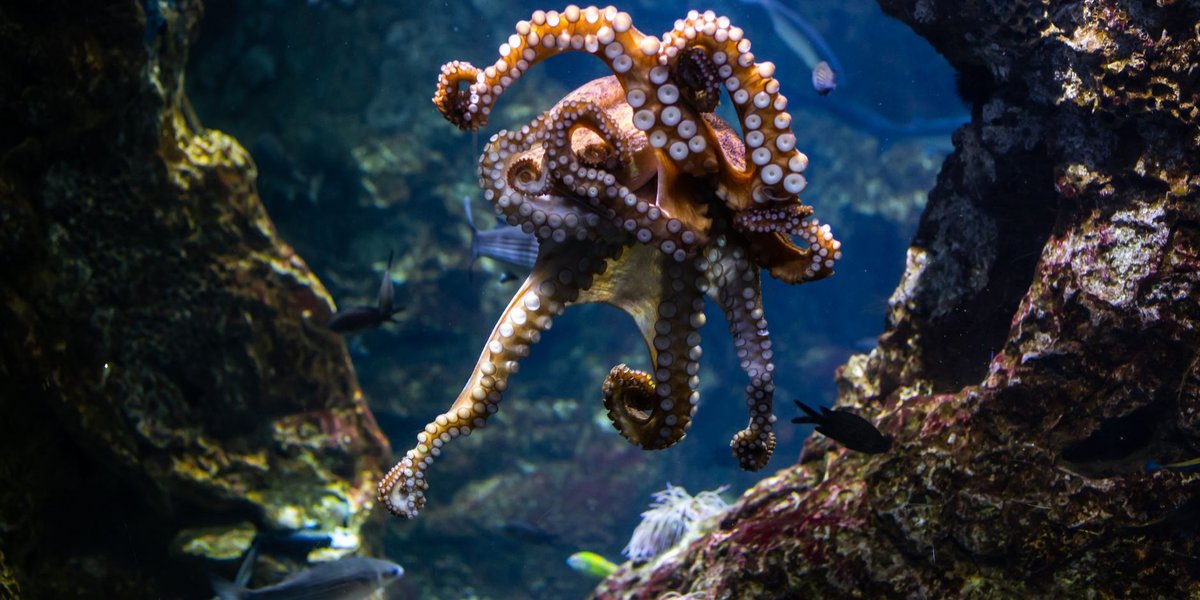
Mollusks are soft-bodied invertebrates, and the examples you already know are clams, snails, squid and octopus. Oysters, mussels, scallops, slugs, cuttlefish and abalone belong on the list too. So does the shipworm that eats wooden piers, which is not a worm at all.
The phylum Mollusca holds roughly 85,000 living species, according to the Smithsonian Ocean portal, which makes it the second-largest animal group after arthropods. What ties them together is a body plan: a muscular foot, a fold of tissue called the mantle (which builds the shell, when there is one), and a tongue-like toothed ribbon called the radula, used for scraping or tearing food. Bivalves are the main exception, since they filter-feed and have no radula.
Contents
- Quick reference: the main mollusk classes
- Bivalves: clams, oysters, mussels and scallops
- Gastropods: snails, slugs and their relatives
- Cephalopods: octopus, squid, cuttlefish and nautilus
- The lesser-known classes
- Examples of mollusks by where you find them
- Mollusks with shells vs without shells
- Common misconceptions
- FAQ
Quick reference: the main mollusk classes
| Class | Example species | Habitat | Shell? |
|---|---|---|---|
| Bivalvia | Clams, oysters, mussels, scallops | Ocean, rivers, lakes | Two hinged shells |
| Gastropoda | Garden snail, abalone, conch, banana slug | Ocean, freshwater, land | One shell, or none (slugs) |
| Cephalopoda | Octopus, squid, cuttlefish, nautilus | Ocean only | Mostly internal or absent; nautilus has an external shell |
| Polyplacophora | Chitons | Rocky shores | Eight overlapping plates |
| Scaphopoda | Tusk shells | Ocean sediment | Tapered, tube-like shell |
| Monoplacophora | Neopilina | Deep sea | Single cap-shaped shell |
| Aplacophora | Solenogasters, caudofoveates | Deep sea | None; tiny spicules |
Bivalves: clams, oysters, mussels and scallops
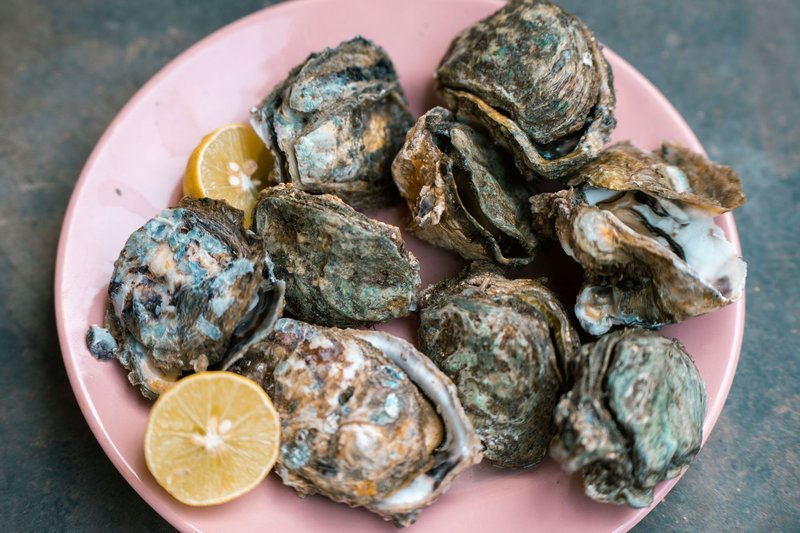
Bivalves have two shells joined by a hinge and no distinct head. Most sit in sand or mud, or cling to rock, and pump water through their gills to catch plankton. They are also the mollusks most people eat.
Giant clam (Tridacna gigas). The largest living bivalve reaches about 1.2 meters across and can weigh over 200 kilograms. It lives on Indo-Pacific reefs, and its fleshy mantle hosts symbiotic algae that photosynthesize and feed it. The IUCN Red List classifies the species as vulnerable, largely because of harvesting.
Ocean quahog (Arctica islandica). This North Atlantic clam is among the longest-lived animals ever measured. One specimen dredged off Iceland in 2006 was aged at around 500 years by counting growth rings in its shell.
Scallops. Scallops swim. They clap their shells together to jet away from starfish, and many species carry dozens to over a hundred tiny blue eyes along the edge of the mantle. These eyes use a mirror-like layer to focus light, not a lens.
Oysters and mussels. Oysters cement one shell to a hard surface and stay put for life. Mussels anchor themselves with strong protein threads called byssus. Both build dense reefs and beds that filter large volumes of water.
Freshwater pearl mussel (Margaritifera margaritifera). It lives in cold rivers of Europe and North America and can survive more than a century. Its larvae hitch a ride on the gills of young trout and salmon before dropping to the riverbed.
Shipworm (Teredo navalis). A bivalve that looks like a pale, wormy noodle. Its two tiny shells at the front are used as drill bits to bore through submerged wood.
Gastropods: snails, slugs and their relatives
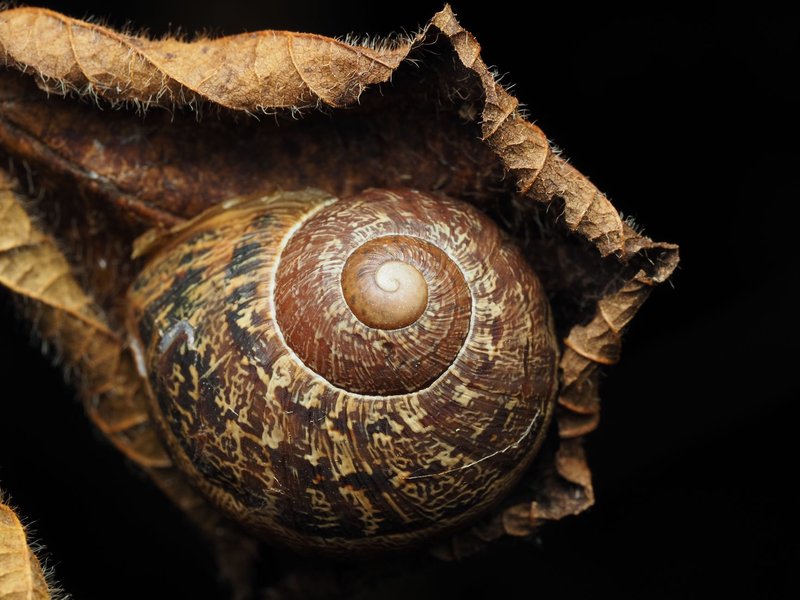
Gastropods are the largest class of mollusks, with tens of thousands of species. The name means “stomach foot,” a fair description of how they crawl on a single muscular foot. Most have a coiled shell, though slugs and sea slugs have lost theirs. Gastropods are the only mollusk class to have made it onto land.
Garden snail (Cornu aspersum). The snail in your vegetable bed. Its radula carries thousands of tiny teeth, and it uses them to rasp leaves into a pulp. It seals itself into its shell with dried mucus when conditions turn dry.
Banana slug (Ariolimax). Native to the Pacific coast of North America, this slug grows up to about 25 centimeters long, making it one of the largest land slugs on the continent. It has a tiny remnant shell buried under its mantle, and it eats fallen leaves and fungi, leaving seeds and spores spread across the forest floor.
Abalone (Haliotis). A flattened, ear-shaped snail clamped to rocks in cold coastal water. The inside of its shell is mother-of-pearl, and the row of holes along one edge lets water and waste leave the body. Several species are endangered from overfishing.
Queen conch (Aliger gigas). A large Caribbean sea snail with a flared pink-lipped shell. Its shell is a classic souvenir, and the animal is heavily fished for its meat.
Cone snails (Conus). Tropical marine snails with beautiful patterned shells and a harpoon-like radula tooth loaded with venom. Some species can kill a fish in seconds, and a few can seriously harm a person. Researchers study the venom’s peptides for pain drugs.
Limpets. Cone-shaped snails that cling to intertidal rocks. They graze algae in a small patch and return to the same spot, a “home scar” worn into the stone.
Nudibranchs. Sea slugs with no shell and flamboyant colors. Many keep stinging cells from the jellyfish and anemones they eat and reuse them as their own defense.
Cephalopods: octopus, squid, cuttlefish and nautilus
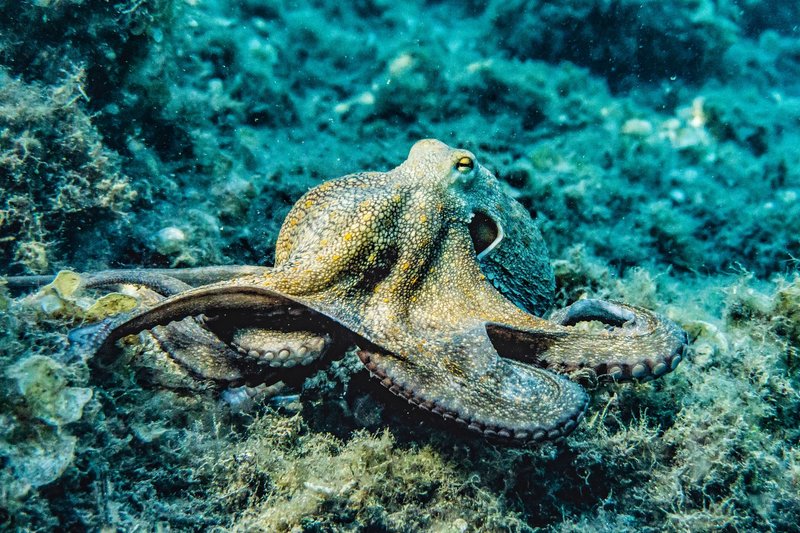
Cephalopods are the fast, clever end of the mollusk family. The name means “head foot”: the foot has evolved into arms and tentacles that sit around the head. All of them are marine, and all are predators. The group includes some of the most intelligent invertebrates, and each species displays unique adaptations that you can explore in our list of cephalopods.
Octopus. Eight arms, no tentacles, three hearts and blue blood. An octopus has roughly 500 million neurons, and about two-thirds of them are in its arms, so each arm can handle some decisions on its own. Octopuses open jars, escape tanks and squeeze through any gap larger than their beak, the only hard part of the body.
Squid. Ten limbs: eight arms and two longer feeding tentacles. Squid are built for speed, using jet propulsion through a funnel. The giant squid (Architeuthis dux) reaches roughly 12 meters in length with the tentacles included and has the largest eyes of any animal, around 25 centimeters across.
Cuttlefish. They are not fish. They have ten limbs like squid, plus a porous internal shell called the cuttlebone that they use to control buoyancy. Cuttlefish change skin color and texture in a fraction of a second, a trick that fools predators and prey alike. Pet birds chew on dried cuttlebones for calcium.
Nautilus. The only cephalopod with a coiled external shell still alive today. It lives in deep Indo-Pacific waters and rises toward shallower reefs at night. The shell is divided into chambers, and the animal regulates gas and fluid in them to float. Its relatives, the ammonites, went extinct with the dinosaurs.
The lesser-known classes
Most lists stop at the big three. Four smaller classes round out the phylum, and none of them is rare in nature, just overlooked.
Chitons (class Polyplacophora). Oval, flat mollusks wearing eight overlapping shell plates like armor. Turn one over on a rocky shore and you find a broad foot that grips with astonishing strength. The radula teeth are capped with magnetite, an iron mineral, which makes them among the hardest biological materials known.
Tusk shells (class Scaphopoda). Small tubes shaped like a miniature elephant tusk, open at both ends. They live buried head-down in sea-floor sand and catch tiny organisms with thread-like tentacles. Beachcombers find the empty shells on many coasts.
Monoplacophorans (class Monoplacophora). Limpet-like animals with a single cap-shaped shell. Scientists knew them only as 400-million-year-old fossils until living ones were dredged up from deep water off Costa Rica in 1952. The genus is Neopilina.
Aplacophorans (class Aplacophora). Worm-shaped mollusks with no shell, covered in tiny calcium spicules instead. They live on the deep-sea floor and are easily mistaken for worms.
Examples of mollusks by where you find them
Sorting by habitat makes quick identification easier.
On land. Garden snails, banana slugs, the giant African land snail (Lissachatina fulica, up to about 20 centimeters), and the common grey field slug. Land mollusks need damp conditions, which is why you see them after rain and at night.
In freshwater. Freshwater pearl mussels, zebra mussels, apple snails (common in aquariums) and pond snails (Lymnaea). Zebra mussels are invasive in the Great Lakes, where they clog water-intake pipes.
In the ocean. Everything else: all the cephalopods, tusk shells, chitons, scallops, abalone, conchs, cone snails, nudibranchs and giant clams. The ocean holds the vast majority of mollusk species, from tide pools to the deep trenches.
On your plate. Oysters, clams, mussels, scallops, squid (calamari), octopus, abalone, snails (escargot) and whelks. Mollusks supply a large share of the world’s seafood.
In your garden. Slugs and snails, the animals responsible for the holes in your lettuce.
On the beach. Cockles, razor clams, moon snails, whelks, periwinkles and the empty cuttlebones that wash ashore. If you collect shells, you are collecting the skeletons of mollusks.
Mollusks with shells vs without shells
Shelled mollusks include nearly all bivalves, most snails, chitons (plates), tusk shells, monoplacophorans and the nautilus. Shell-free mollusks include octopuses, slugs, sea slugs, and aplacophorans. Squid and cuttlefish sit in between, keeping an internal remnant: a thin, flexible “pen” in squid and the cuttlebone in cuttlefish.
Losing the shell bought flexibility. An octopus fits through a crack the size of its beak. It paid for that with vulnerability, so shell-free mollusks lean on camouflage, ink, venom, toxicity or intelligence.
Common misconceptions
Is a slug a mollusk? Yes. A slug is a snail that lost most of its shell, and both belong to Gastropoda.
Is a nautilus a snail? No. It looks like a coiled snail shell but belongs to the cephalopods, alongside octopus and squid.
Is a cuttlefish a fish? No. It is a cephalopod mollusk.
Is a shipworm a worm? No. It is a bivalve with a very reduced shell.
Are starfish mollusks? No. Starfish are echinoderms, a separate phylum with significant anatomical differences from mollusks.
Are crabs and shrimp mollusks? No. They are crustaceans, which are arthropods. Despite the name, “shellfish” covers both groups.
FAQ
What are the 3 main types of mollusks? Bivalves (clams, oysters), gastropods (snails, slugs) and cephalopods (octopus, squid).
What are the seven classes of mollusks? Bivalvia, Gastropoda, Cephalopoda, Polyplacophora, Scaphopoda, Monoplacophora and Aplacophora (sometimes split into two groups, Solenogastres and Caudofoveata).
Do all mollusks have shells? No. Slugs, sea slugs, octopuses and aplacophorans do not. Squid and cuttlefish have only internal remnants.
What are the characteristics of mollusks? A soft, unsegmented body, a muscular foot, a mantle, and in most classes a radula. Many have a shell made of calcium carbonate.
What is the largest mollusk? By length, the colossal squid and giant squid. By shell, the giant clam.
Are mollusks vertebrates? No. They have no backbone and are invertebrates.