
As an Amazon Associate we earn from qualifying purchases. Disclosure
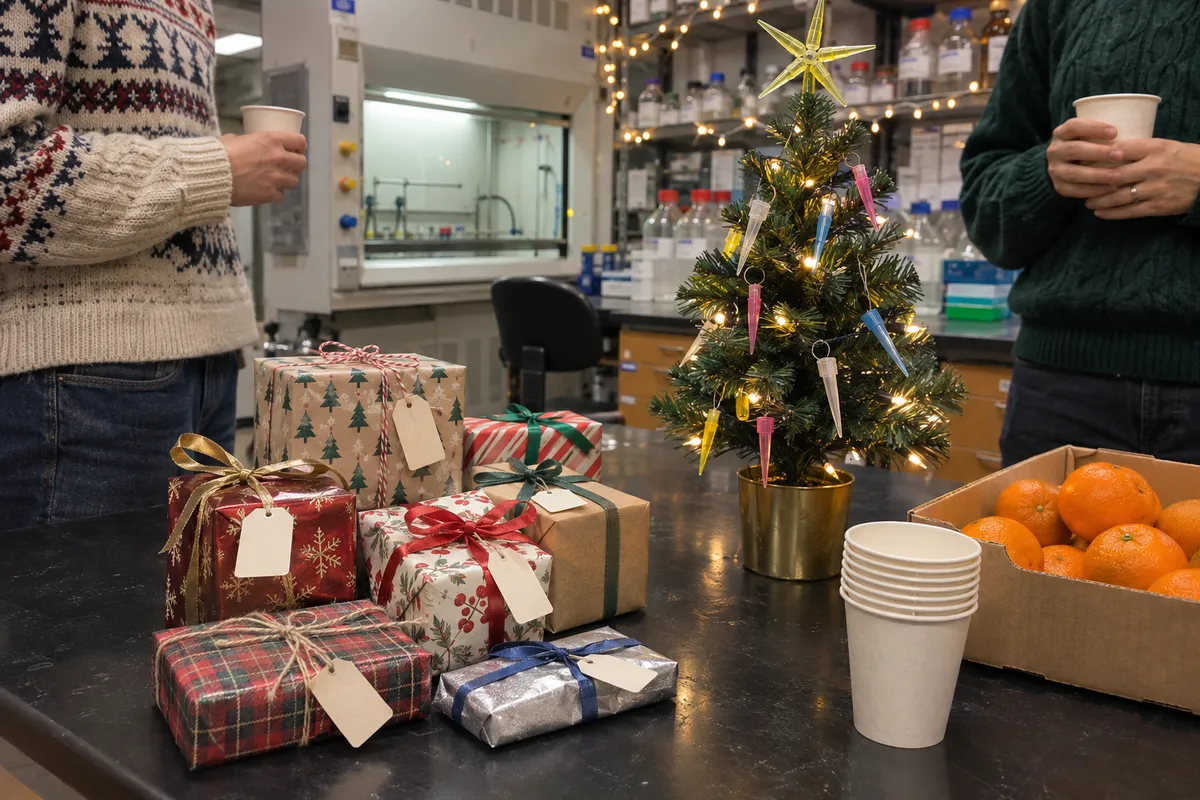
Every December the detector group I worked with at CERN ran a Secret Santa with one rule: nothing with a periodic table printed on it. The rule existed because the year before, four of the eleven gifts were periodic table mugs. Two people got one each. Nobody drank from them.
Scientists are not hard to buy for. They are easy to buy for badly. The gifts that went home from that party and stayed on a desk or a shelf for years had one of three things in common: they showed a piece of physics or biology working in front of you, they were a book written by someone who explains things well, or they were something a working scientist uses every day and never buys a good version of for themselves.
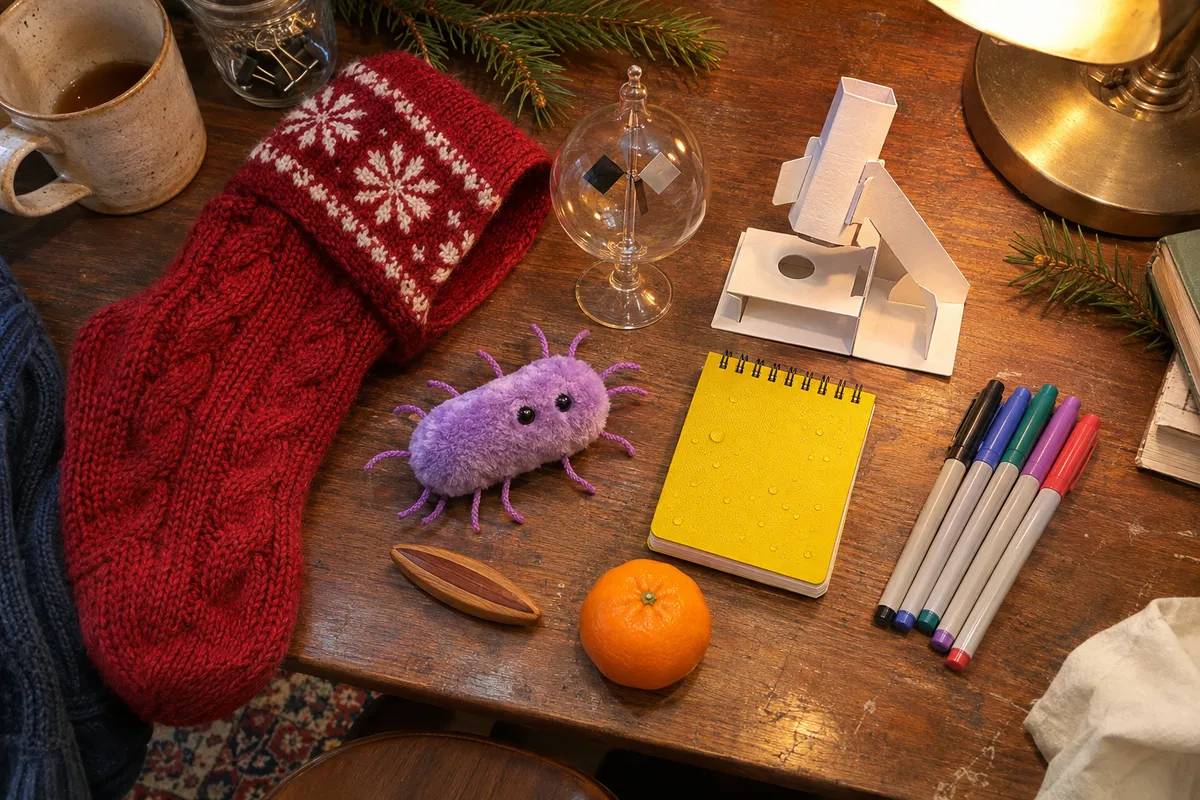
The best Christmas gifts for scientists in 2026 follow those three rules. For a science lover with no particular field, start with the LEGO Saturn V or a Galileo thermometer. For a biologist, An Immense World by Ed Yong. For a physicist, a Geiger counter or the Feynman Lectures. For someone who works in a lab or in the field, a waterproof field notebook and a mug that keeps coffee hot through a long experiment.
I have a PhD in particle physics and spent five years at CERN calibrating detectors before I started writing about science. I live with a synthetic organic chemist and my friends are mostly biologists, geologists and astronomers, so most of my Christmas shopping is for scientists. The 24 picks below are sorted by field, with stocking stuffers and the gifts to skip at the end.
Quick picks
| Pick | Best for |
|---|---|
| LEGO Icons NASA Apollo Saturn V | The big gift for any science lover |
| Galileo thermometer | Science you can put on a shelf |
| An Immense World by Ed Yong | Biologists and animal lovers |
| GQ GMC-300S Geiger counter | Physicists and the curious |
| Celestron SkyMaster 15×70 binoculars | Amateur astronomers |
| Convoy C8+ 365nm UV flashlight | Geologists and rock collectors |
| Rite in the Rain field notebooks | Field scientists |
| Crookes radiometer | Stocking stuffer |
How to choose a Christmas gift for a scientist
Start with the field. “Scientist” covers a cell biologist who spends the day at a tissue culture hood and a geologist who spends the summer in a tent, and a gift that delights one will mean nothing to the other. If you do not know the field, ask what they work on and listen for the noun: cells, rocks, stars, particles, birds, molecules. The sections below follow those nouns.
Then decide between a gift to look at and a gift to use. Display pieces such as the Saturn V or a Galileo thermometer work for science lovers of any kind, including people who left science years ago. Working gifts such as a field notebook or a good travel mug are for people who are in a lab or in the field now, and they get used every day.
Skip anything that tries to be funny about the job. A scientist has seen every “Trust me, I’m a scientist” shirt. A gift that shows how something works, or a book that explains a field better than they could, says you know what they find interesting.
Christmas gifts for any science lover
These work when you know someone loves science but not which kind. Most of them are things to look at or play with, and none of them need a background in the subject.
The big gift
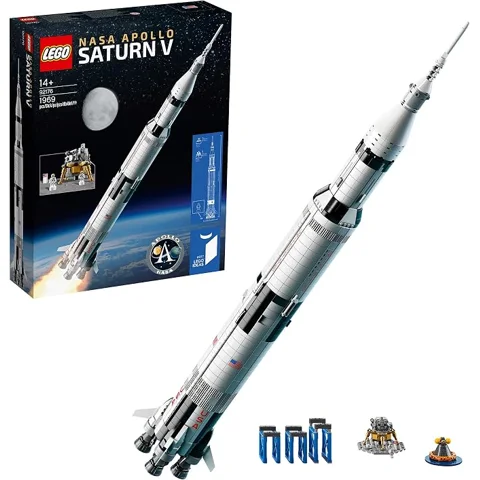
1. LEGO Icons NASA Apollo Saturn V (92176)
The Saturn V took the Apollo crews to the Moon, and this is the LEGO model of it: about one meter tall at roughly 1:110 scale, with 1,969 pieces, a number chosen for the year of Apollo 11. The three stages come apart, the lunar module sits inside the adapter and the set includes a small landing scene and a splashdown capsule.
The build takes most people a few evenings, which makes it a good Christmas break project. It started as a fan design on LEGO Ideas in 2017 and has stayed in production because adults keep buying it.
- 1,969 pieces, about 100 cm tall when standing
- Stages separate to show the Apollo mission sequence
- Comes with display stands for horizontal display
Good: a project and a display piece in one, and accurate enough that space engineers own it. Not great: a one-meter rocket needs a shelf or a corner to stand in; check the space before you buy.
Check on Amazon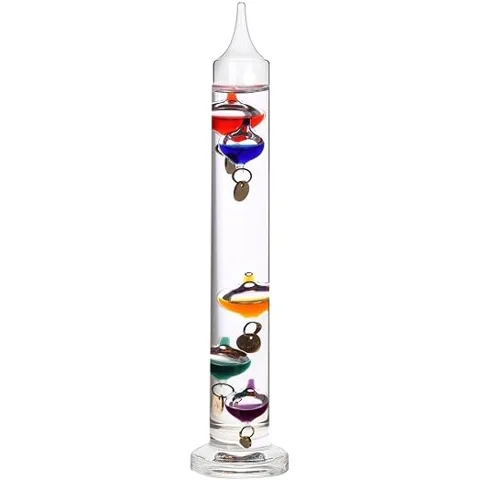
Science for the shelf
2. Lily’s Home 14-inch Galileo thermometer
A Galileo thermometer is a sealed glass tube of clear liquid with colored glass floats inside. Each float has a slightly different density and a tag with a temperature. When the room warms, the liquid expands and gets less dense, so the floats sink one by one. The temperature is the tag on the lowest float in the group at the top.
The name is a marketing choice. The design came from the Accademia del Cimento in Florence in the 1600s, a group of scientists that included Galileo’s students, not from Galileo himself. It is a slow, silent lesson in buoyancy that works on anyone who walks past it, and the idea links to how density changes across the states of matter.
- 14 inches tall, hand-blown glass, five floats
- Filled with an inert oil-hydrocarbon mix similar to mineral oil
- An 11-inch version is also sold
Good: real physics as decor, and it reads the room temperature well enough to be useful. Not great: it is glass and slow to respond; keep it out of direct sun and away from cats.
Check on Amazon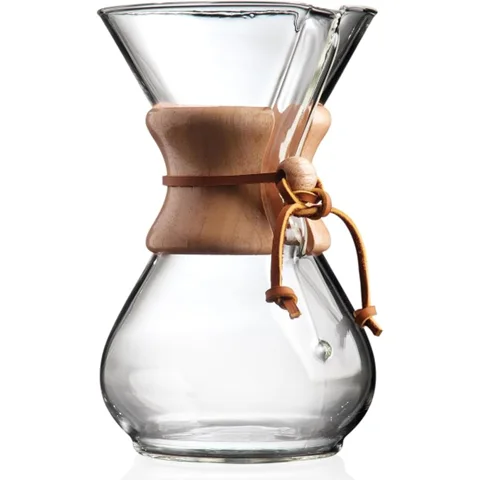
For the coffee drinker
3. Chemex Classic 6-cup pour-over coffeemaker
Peter Schlumbohm, a German chemist living in New York, designed the Chemex in 1941 by joining the shape of a laboratory Erlenmeyer flask to a glass funnel and adding a wooden collar so you can hold it hot. It is in the permanent collection of the Museum of Modern Art and it still sells in nearly the same form.
Scientists drink a lot of coffee, and a Chemex makes brewing a small procedure: weigh the beans, heat the water, pour in stages. My partner, a chemist, would tell you the thick bonded filters are the point, because they hold back the oils and fine grounds that make other brews cloudy.
- Non-porous borosilicate glass, wood collar and leather tie
- Six cups of 5 oz each, about 30 oz in total
- Needs Chemex bonded filters
Good: lab glassware history in daily use, and it looks good on a counter. Not great: it needs its own filters; add a box of Chemex FSU-100 filters so the first brew happens on Christmas morning.
Check on Amazon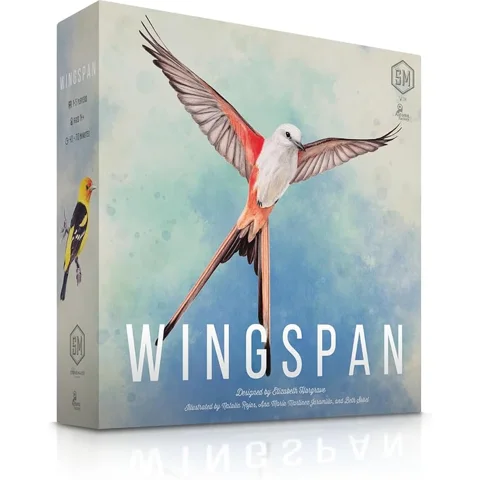
Board game for the holidays
4. Wingspan
Wingspan is a card game about attracting birds to wildlife preserves. Each of its 170 bird cards is a real North American species, drawn by hand, with its real wingspan, habitat, nest type and clutch size, and a line of natural history at the bottom. Those numbers matter in play: birds that lay more eggs or eat certain foods do different things.
Elizabeth Hargrave, a birder, designed it, and it won the Kennerspiel des Jahres, Germany’s connoisseur game of the year award, in 2019. It plays well with family members who do not care about birds, which is what makes it a Christmas gift and not only a biologist gift.
- 1 to 5 players, about 40 to 70 minutes
- 170 bird cards, egg miniatures and a birdhouse dice tower
- European, Oceania and Americas expansions add more birds
Good: real species data inside a game people want to play again. Not great: the first game takes a while to learn; read the rules before the family sits down.
Check on Amazon
The book for anyone
5. What If? 2 by Randall Munroe
Randall Munroe worked on robotics at NASA before he started xkcd, the stick-figure web comic that half the scientists I know have taped to an office door. What If? 2 takes absurd questions sent in by readers and answers them with real physics, real numbers and drawings.
The chapters are a few pages each, so it works as a bedside book and as a book to leave on a coffee table over the holidays. If they already own it, the first What If? is just as good.
- Riverhead Books, 2022, hardcover, 368 pages
- Short chapters, each answering one question
- Works for teens and adults
Good: real calculations with jokes, readable in five-minute pieces. Not great: it is popular; ask quietly whether they already have it.
Check on Amazon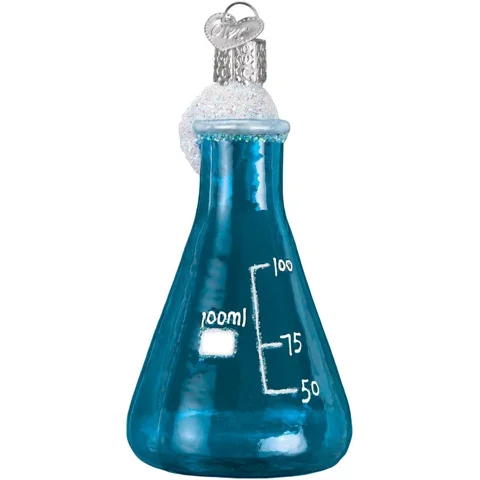
Christmas ornament
6. Old World Christmas glass flask ornament
Old World Christmas makes mouth-blown, hand-painted glass ornaments, and this one is a cobalt blue laboratory flask with white measurement lines and a silver neck. The listing calls it a beaker. It is an Erlenmeyer flask, which any chemist will point out within a second of opening it, and that is part of the fun.
An ornament is the one science-themed object that gets away with being decorative, because it comes out once a year and then goes back in the box. It is also a small gift to add to a bigger one.
- Mouth-blown glass, about 3.5 inches tall
- Hand-painted with glitter “bubbles”
- Hook loop at the top
Good: real glass, not plastic or wood, and it looks like lab glass. Not great: it is fragile; wrap it in its own box and tissue.
Check on AmazonGifts for biologists
Biologists come in two kinds for gift purposes: the ones who work with organisms you can see, such as birds, fungi and animals, and the ones who work with organisms you cannot, such as bacteria and cells. Wingspan, above, belongs to the first group. These cover both.

Best book for biologists
7. An Immense World by Ed Yong
Ed Yong won a Pulitzer Prize in 2021 for his pandemic reporting at The Atlantic. An Immense World is his book about how other animals sense the world: the ultraviolet patterns bees see on flowers, the electric fields a platypus feels underwater, the pressure waves a seal tracks with its whiskers through dark water. Each chapter takes one sense and goes from the biology of the sensor to what the animal does with it.
It is the book I give most often to biologists, because it is accurate enough for a specialist and written well enough that they finish it.
- Random House paperback, 480 pages
- One sense per chapter, with color photo inserts
- Also good for vets, birders and pet owners
Good: deep biology told as a series of stories, with sources in the notes. Not great: long; a reader who wants something lighter should get Entangled Life below.
Check on Amazon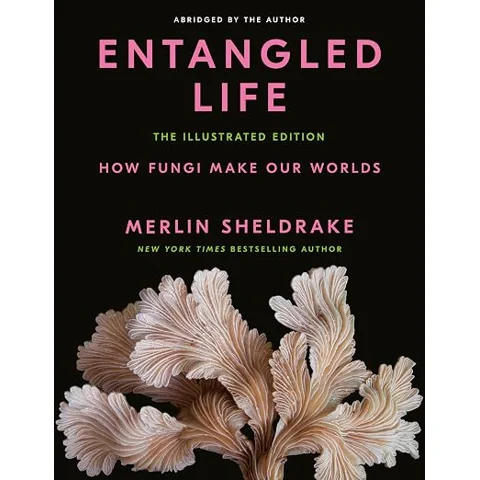
Best illustrated book
8. Entangled Life: The Illustrated Edition by Merlin Sheldrake
Merlin Sheldrake is a biologist who studies fungi, and Entangled Life is his book about what they do: the mycorrhizal networks that link plant roots underground, the yeasts behind bread and beer, the fungi that steer the insects they infect. The illustrated edition, published in 2023, shortens the text and adds color illustrations and photographs on almost every spread.
The large format and the art make it a better Christmas gift than the original paperback. It sits on a coffee table, gets picked up by guests and connects to our list of facts about fungi if they want more.
- Random House hardcover, 2023, 240 pages, abridged
- Full-color illustrations and photographs
- Works for mycologists, gardeners and cooks
Good: one of the best-written biology books of the decade in a gift format. Not great: abridged; a fungi specialist may prefer the full-text original edition.
Check on Amazon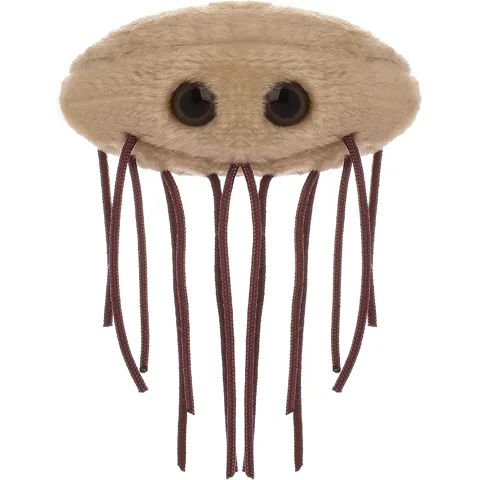
For microbiologists
9. GIANTmicrobes E. coli plush
GIANTmicrobes makes plush versions of real microbes, each shaped after the organism under a microscope and sold with a fact card. The E. coli is the one to give a microbiologist: it is the workhorse of molecular biology labs, the bacterium most of them have grown on a plate, and a fair share of them have a story about a contaminated culture.
Most E. coli strains live harmlessly in the human gut; a few, such as O157:H7, cause serious illness, which is on our list of pathogenic bacteria. The company sells dozens of others, from penicillin mold to red blood cells, and themed boxes such as the blood cells set for hematologists.
- About 6 by 7 inches
- Comes with a printed card on the microbe
- Dozens of other species sold, including viruses and cells
Good: a small, funny gift that is also accurate in shape. Not great: it is a soft toy; it suits a desk or an office shelf more than a home.
Check on Amazon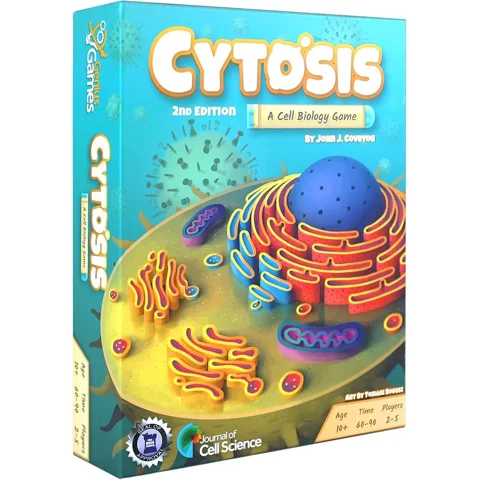
Board game for cell biologists
10. Cytosis: A Cell Biology Board Game
Cytosis is a worker placement game set inside a human cell. Players place flask tokens on organelles to collect resources such as mRNA, lipids and ATP, then build enzymes, hormones and hormone receptors for points. The board is a cross-section of a cell, the cards use real terms and the order of operations follows real cell biology: proteins go through the endoplasmic reticulum and the Golgi before they are finished.
For cell biologists it is a game where they know the rules before reading them. If they want to see the organelles in 3D after playing, our interactive cell model labels each one.
- 2 to 5 players, ages 10 and up, about an hour
- Genius Games, worker placement
- Plant cell version sold separately as Cellulose
Good: accurate biology in a game that holds up as a game. Not great: the vocabulary will slow down players who never took biology.
Check on Amazon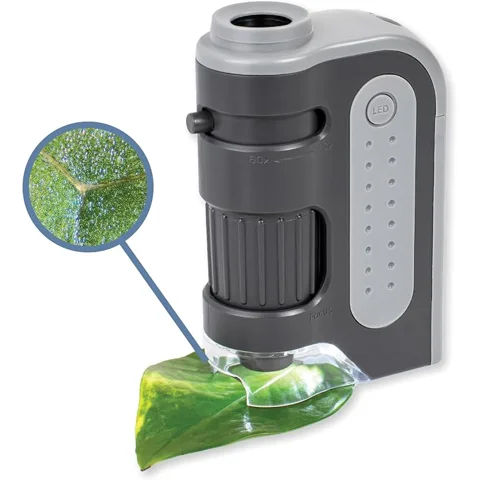
For field biologists
11. Carson MicroBrite Plus pocket microscope
The MicroBrite Plus is a 60x to 120x zoom microscope the size of a lipstick case, with an LED that lights what you put under it. You hold it against a leaf, an insect wing, a fabric weave or a printed page and look. It weighs about 2 ounces and goes in a jacket pocket.
For a field biologist it is a quick look at things that do not fit under a hand lens. For anyone else it is the cheapest way to start seeing the small world. A biologist who wants a real instrument at home should use our microscope finder instead.
- 60x to 120x zoom, LED light
- About 3.5 inches tall, 2 ounces
- Fits in a shirt pocket
Good: small, cheap and always with you. Not great: the field of view is narrow at 120x and the image is not lab quality.
Check on AmazonGifts for physicists and engineers
Physicists like objects that do something unexpected and then turn out to obey the rules. These are the gifts I would put on a physicist’s desk, and two of them measure something real.
Best gift for physicists
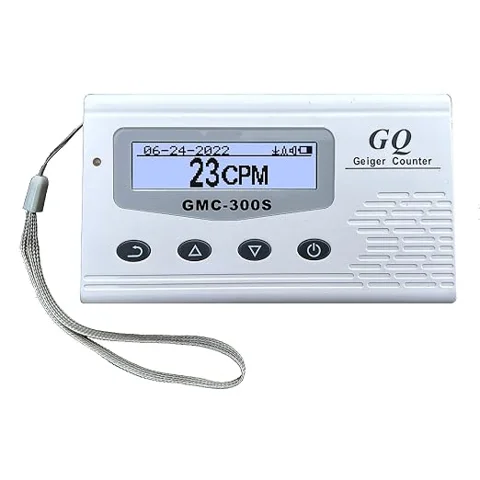
12. GQ GMC-300S Geiger counter
The GMC-300S is a handheld Geiger counter that detects beta, gamma and X-ray radiation and shows counts per minute and an estimated dose rate. It logs every second to internal memory and sends the data to a computer over USB. It is one of the best-selling hobby Geiger counters, and it is accurate enough for the things a curious person wants to measure.
Those things are everywhere. Granite countertops tick above background. The orange-red Fiesta dinnerware made before 1973 was glazed with uranium oxide and makes the counter chatter. Uranium glass, the green vintage glassware sold at flea markets, registers too, and it glows under the UV flashlight further down this list. A physicist who worked with real detectors will enjoy measuring the house; someone who did not will learn what background radiation is in an afternoon.
- Geiger-Müller tube, beta, gamma and X-ray
- Counts per minute, dose rate, graph mode, data logging
- Rechargeable battery, about 7.7 ounces
Good: a real instrument with real data, and it turns a house into an experiment. Not great: it does not detect alpha particles, and it is a hobby instrument, not a calibrated safety meter.
Check on Amazon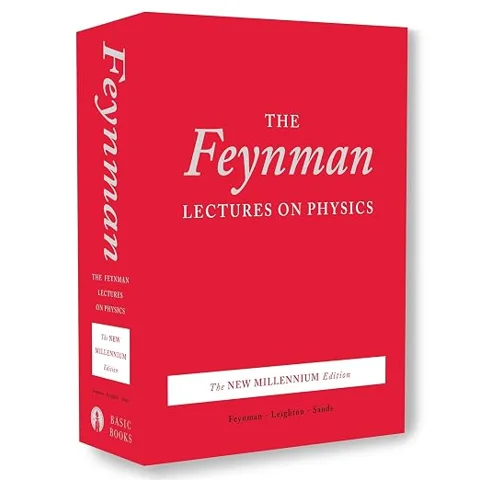
The classic
13. The Feynman Lectures on Physics, boxed set
Richard Feynman gave these lectures to Caltech undergraduates between 1961 and 1963, and they are still the physics books that physicists reread for pleasure. Volume I covers mechanics, radiation and heat, Volume II electromagnetism and matter, Volume III quantum mechanics. The New Millennium Edition corrects the errors found in earlier printings and redraws the figures.
Caltech publishes the full text free online. The boxed set is still the gift, because the people who love these books want them on a shelf, in hardcover, with a ribbon on the box.
- Basic Books, 2011, three hardcover volumes, 1,552 pages
- Errata corrected, figures redrawn
- About 10 pounds boxed
Good: the best-loved physics text ever written, in its best edition. Not great: it is a textbook; a reader who wants a lighter Feynman should get Six Easy Pieces.
Check on Amazon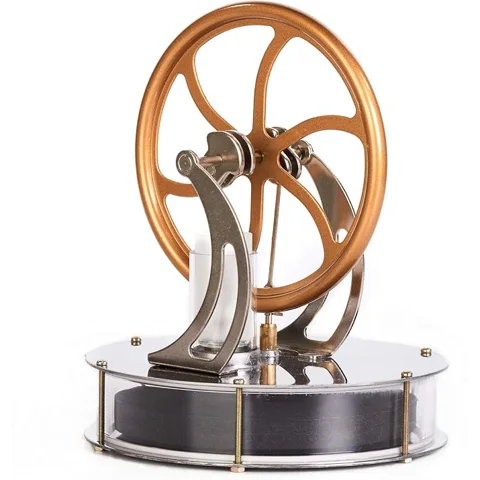
Thermodynamics on a coffee mug
14. Sunnytech low-temperature Stirling engine
Robert Stirling patented his hot-air engine in 1816. This desk model runs on the temperature difference between its bottom plate and the air: set it on a mug of hot coffee and the flywheel starts turning after a minute; set it on a glass of ice water and it runs the other way. Nothing burns and nothing plugs in.
It is the second law of thermodynamics in a form you can watch, and it keeps running as long as the coffee stays hot. The physics behind it is in our guide to the branches of thermodynamics.
- Runs on a mug of hot water or on ice
- Arrives assembled, ready to run
- Brass and aluminum, several finishes
Good: a working heat engine on a desk, with no fuel. Not great: it needs a clearly hot or cold mug to start, and it slows down as the coffee cools.
Check on Amazon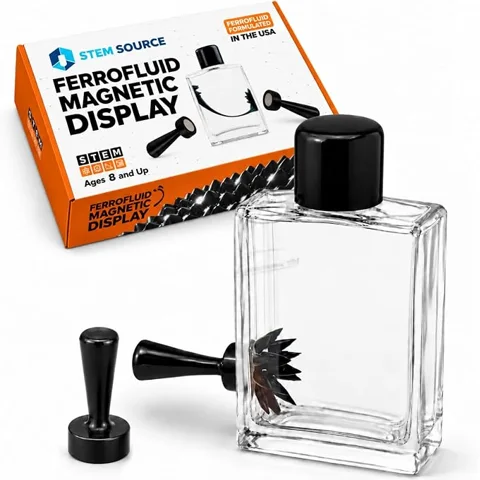
Magnetism you can see
15. Ferrofluid display with magnets
Ferrofluid is a liquid with nanometer-sized iron oxide particles suspended in it. Steve Papell at NASA invented it in the 1960s to move rocket fuel in weightlessness with a magnet. In a display bottle, hold a magnet to the glass and the black liquid climbs toward it and rises into rows of spikes that follow the magnetic field lines.
It is the most hands-on desk toy on this list: people pick it up every time they pass it. Our page of magnetic materials explains why the particles respond to the field.
- Sealed glass display with two magnets
- About 5 by 4 inches
- Ferrofluid in a clear liquid that keeps it off the glass
Good: magnetic field lines made visible. Not great: over months, cheaper displays can stain the glass; keep it out of the sun and do not shake it hard.
Check on Amazon
Gifts for astronomers
An amateur astronomer probably owns a telescope already, so the best gifts add to it: a second instrument that is quicker to set up, and a book that tells them what to point at. Our sister site Little Astronomy has more astronomy gear guides for a telescope buyer.
Best gift for astronomers
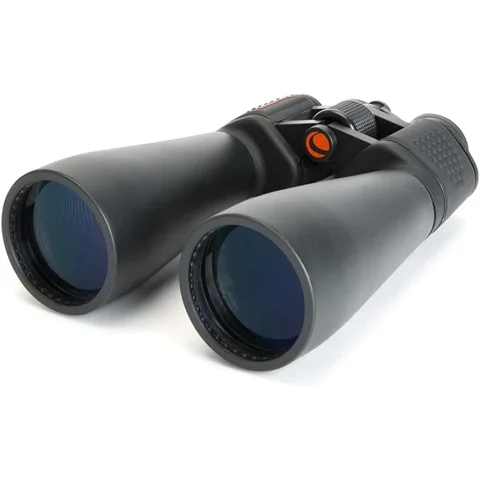
16. Celestron SkyMaster 15×70 binoculars
Large astronomy binoculars are the instrument many observers use more than their telescope, because they are ready in a minute. The SkyMaster 15×70 has 70 mm objectives and 15x magnification, enough to show Jupiter’s four large moons as points of light, the Orion Nebula as a glowing cloud and the Andromeda Galaxy as an oval smudge, plus star clusters such as the Pleiades in a single field.
They weigh 3.3 pounds, which is too heavy to hold steady for long at 15x. The built-in tripod adapter fits a standard camera tripod, and on a tripod they show far more.
- 15x magnification, 70 mm objectives, BaK-4 prisms
- Built-in 1/4-20 tripod adapter (tripod not included)
- 3.3 pounds
Good: wide, bright views with no setup, for years of use. Not great: it needs a tripod for steady views; if they lack one, add one to the gift.
Check on Amazon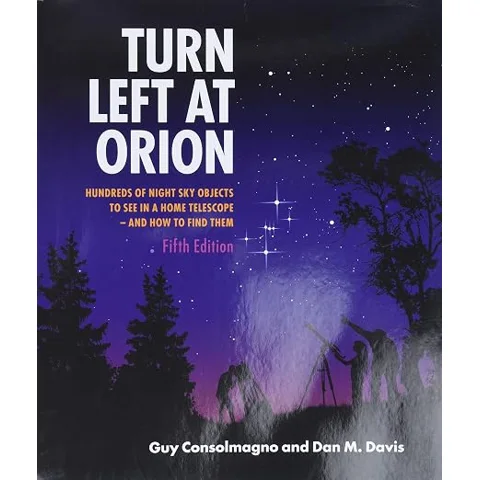
The observing book
17. Turn Left at Orion by Guy Consolmagno and Dan M. Davis
Turn Left at Orion is the standard book for people with a small telescope who want to know what to look at. For each object it shows a finder chart, how to star-hop to it from a bright star, and a sketch of what it actually looks like in a small eyepiece, not a long-exposure photo that no telescope will match.
Guy Consolmagno is a planetary scientist and a former director of the Vatican Observatory. The fifth edition, from 2019, covers hundreds of objects and works for both hemispheres.
- Cambridge University Press, 5th edition, 2019, 256 pages
- Large format with finder charts and eyepiece sketches
- Organized by season
Good: it shows what an object will really look like, which saves a beginner a lot of disappointment. Not great: large and heavy for a field book; it is meant for the table beside the telescope.
Check on AmazonGifts for geologists
A geologist already owns a hammer and a hand lens. A good UV light is the gift most of them have not bought, and a Roadside Geology book for the state they drive through most is the other.
Best gift for geologists
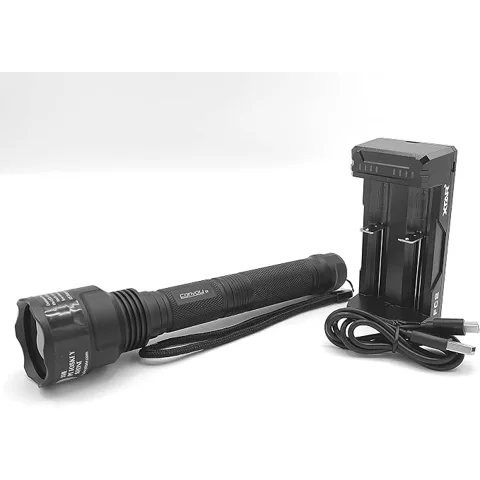
18. Convoy C8+ 365 nm UV flashlight
Many minerals glow under ultraviolet light. Willemite glows green and calcite red in the famous ores of Franklin, New Jersey, and the “Yooperlites” found on Lake Superior beaches glow orange because of fluorescent sodalite. The common purple “black light” flashlights use 395 nm LEDs and leak so much visible light that weak fluorescence gets lost.
The Convoy C8+ uses a 365 nm LED and a glass filter that blocks the visible purple, so what you see is the mineral’s own glow. It is the light rock hunters use for Yooperlite searches at night, and it makes uranium glass glow bright green. Our page of ultraviolet radiation examples covers the wavelengths.
- 365 nm LED with a filter that absorbs visible light
- Waterproof to IP-65, charger included
- Takes a rechargeable 18650 lithium cell
Good: the right wavelength and a real filter, so fluorescence shows clearly. Not great: it is a UV source; never shine it at eyes, and add a pair of UV-blocking glasses for long sessions.
Check on AmazonGifts for chemists
Chemists get their own guide: our best gifts for chemists has 18 picks, from a siphon coffee brewer to a tungsten cube and the funniest chemistry book ever written. One more fits here, because any science lover will enjoy it over the holidays.
Holiday puzzle
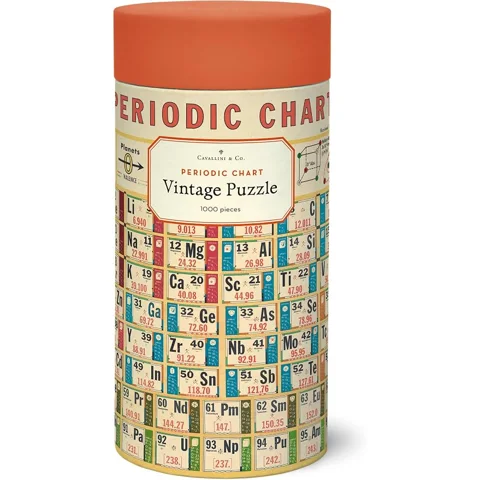
19. Cavallini Chemie periodic table 1,000-piece puzzle
Here is the one periodic table that passes the Secret Santa rule. Cavallini reprints a vintage German classroom chart, “Chemie,” with its old typography and color blocks, as a 1,000-piece jigsaw. A puzzle on the dining table is a Christmas week tradition in a lot of houses, and this one gives the chemist in the family an advantage.
The finished puzzle is about 28 by 20 inches. The chart is historical, so it is missing the elements named in the last few decades; the interactive periodic table has all 118.
- 1,000 pieces, about 28 by 20 inches finished
- Vintage German chart design
- Plastic-free packaging
Good: a periodic table as a shared holiday activity, not a mug. Not great: the vintage chart is out of date by design.
Check on AmazonPractical gifts for working scientists
Ask a scientist in a lab what they want and the honest answer is often something boring they use every day. Labs buy cheap versions of everything, and nobody buys a good one for themselves. These three get used every working day.
Best for field scientists
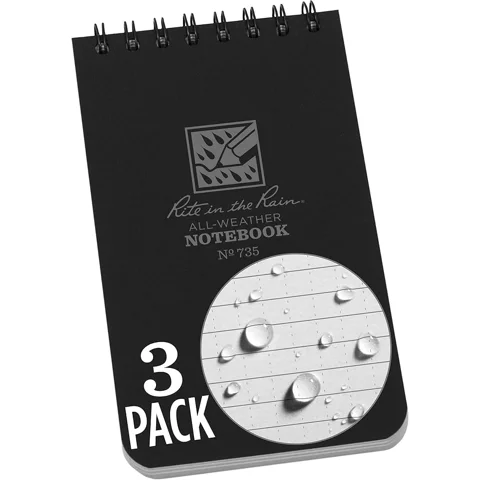
20. Rite in the Rain 3 x 5 weatherproof notebooks
Rite in the Rain paper repels water, mud and grease, and you can write on it in the rain with a pencil. Field geologists, ecologists, archaeologists and wildlife biologists use these notebooks because a field notebook is the primary record of the work, and a soaked paper notebook loses a season of data.
The 3 x 5 top-spiral size fits a shirt pocket. My geologist colleagues go through several a year, which makes them a gift that is always welcome.
- 3 x 5 inches, 100 pages per notebook, Wire-O top binding
- Use a pencil or an all-weather pen when wet
- Larger and side-spiral sizes sold
Good: the notebook field scientists already rely on. Not great: water-based ink beads up and washes off; add an all-weather pen or a few pencils.
Check on Amazon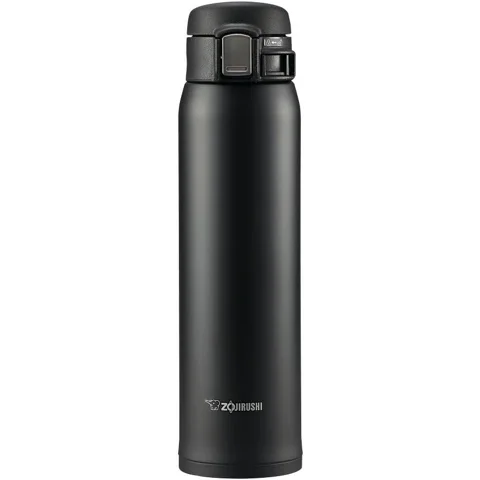
For long lab days
21. Zojirushi 20 oz stainless travel mug
Drinks are banned at most lab benches, so a scientist’s coffee sits in the office or the break room for hours between experiments. A vacuum-insulated mug that keeps coffee hot through a long incubation or a night at a telescope is a better gift than any science-themed mug.
The Zojirushi SM-SA60 holds 20 ounces, locks shut so it does not leak in a bag, and is one of the most-reviewed travel mugs on Amazon. It comes in many colors.
- 20 oz, vacuum insulated stainless steel
- Locking flip lid
- Many colors
Good: keeps coffee hot for hours and does not leak. Not great: the lid has a gasket to clean, and the mug is hand-wash only.
Check on Amazon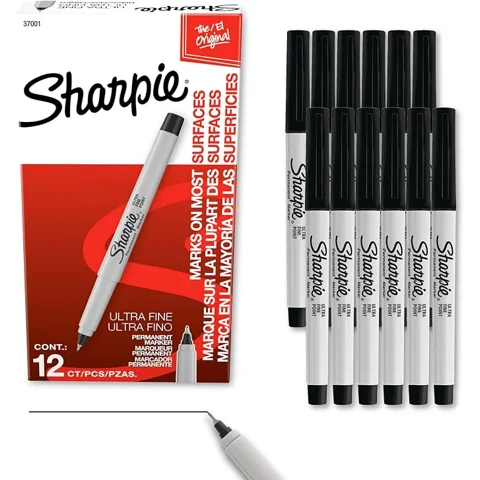
Stocking stuffer for the lab
22. Sharpie Ultra Fine permanent markers, 12 pack
Every tube, flask, plate and sample bag in a biology or chemistry lab gets labeled, and most of them get labeled with an ultra fine Sharpie. Lab markers disappear from benches faster than anything else, so a scientist with their own box is a scientist who does not have to borrow one.
It is a stocking stuffer, not a main gift, and every working scientist will use the whole box.
- 12 black ultra fine tip permanent markers
- Writes on plastic, glass and coated surfaces
- Quick drying
Good: it gets used to the last marker. Not great: ethanol wipes Sharpie off tubes, which every lab learns the hard way; for samples washed in alcohol, a solvent-resistant lab marker is better.
Check on AmazonScience stocking stuffers
Small gifts work best when they do something. Besides the two picks below, the flask ornament, the E. coli plush, the pocket microscope and the markers above all fit in a stocking.
Best stocking stuffer
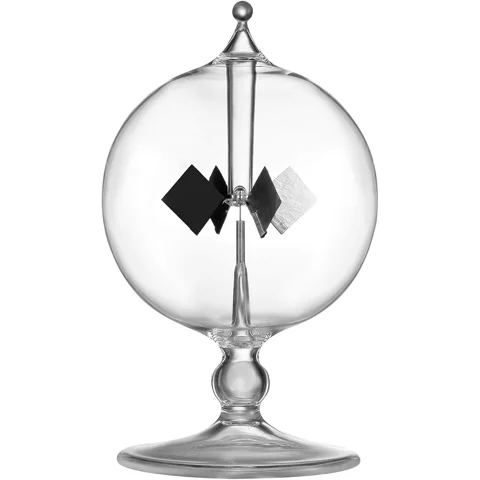
23. Crookes radiometer
A radiometer is a glass bulb with most of the air pumped out and four vanes, black on one side and silver on the other, on a needle. Put it in sunlight and the vanes spin. William Crookes built the first one in 1873, and it is still the best desk object for starting an argument among physicists.
Most people guess light pressure pushes the vanes. If it did, the shiny sides would be pushed harder and the vanes would turn the other way. The black sides absorb more light and get warmer, and the thin gas left in the bulb pushes harder on the warm side, mostly at the edges of the vanes. Osborne Reynolds worked that out in 1879.
- Glass bulb, about 6 inches tall
- Spins in sunlight or under an incandescent bulb
- No batteries
Good: a good physics puzzle for the price of a stocking stuffer. Not great: LED light has little infrared, so it turns slowly indoors; it needs a sunny windowsill.
Check on Amazon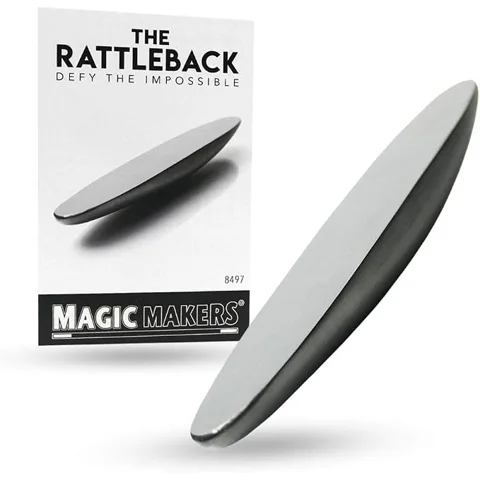
Physics puzzle
24. Magic Makers metal rattleback
A rattleback is a small boat-shaped top that spins smoothly in one direction. Spin it the other way and it wobbles, rattles, stops and starts spinning back the way it prefers. The packaging says it defies the conservation of angular momentum. It does not: its curved bottom is slightly skewed against the way its mass is distributed, and friction with the table converts the wobble into a spin the other way.
Explaining it properly takes a page of equations, which is why physicists keep one in a desk drawer. This one is metal and heavier than the plastic versions, so it spins longer.
- Metal alloy, about 4 inches long
- Works on any smooth, flat table
- No batteries
Good: a puzzle that takes a second to show and a long time to explain. Not great: small and easy to lose.
Check on AmazonScience gifts to skip
- Periodic table mugs, socks and shirts. Every scientist already has one, usually from a conference.
- Lab equipment for their lab. Labs order their own instruments and supplies, through their institution, to their own specifications.
- Cheap toy microscopes and telescopes. A scientist will notice the plastic optics. Get a real one or something else.
- “Science is magic” or “Trust me, I’m a scientist” slogans. They are a joke the recipient has heard a hundred times.
- Kits meant for children, given to adults. If they want a hands-on project, our science kits for adults are built for grown-ups. For the children in the family, see our science gifts for kids.
For more ideas, the science buying guides page lists every gift guide on the site, including the best science coffee table books.
FAQ
A good Christmas gift for a scientist shows a piece of science working, explains a field well or improves something they use every day. Strong picks are a Galileo thermometer or a LEGO Saturn V for display, An Immense World or the Feynman Lectures for reading, a Geiger counter for a physicist, astronomy binoculars for a stargazer and a waterproof field notebook or an insulated travel mug for someone in a lab or the field.
Get a science nerd something that does real physics or biology in front of them: a ferrofluid display, a low-temperature Stirling engine, a Crookes radiometer or a rattleback. Books such as What If? 2 by Randall Munroe and board games such as Wingspan and Cytosis are also good choices, because they use real science.
For science lovers who do not work in science, choose gifts that need no background: the LEGO Saturn V, a Galileo thermometer, What If? 2, the illustrated edition of Entangled Life, a Chemex coffeemaker or the board game Wingspan. These are about curiosity, not expertise.
Good science stocking stuffers include a Crookes radiometer, a metal rattleback, a GIANTmicrobes plush, a pocket LED microscope, a glass flask Christmas ornament and a box of ultra fine Sharpie markers for a lab worker.
Avoid periodic table mugs and shirts, slogan merchandise, children’s science kits and equipment for their lab. Most scientists already own the merchandise, and labs buy their own equipment through their institution.
For a biologist, An Immense World by Ed Yong and Entangled Life: The Illustrated Edition by Merlin Sheldrake are the strongest books. A GIANTmicrobes plush suits a microbiologist, Cytosis suits a cell biologist, Wingspan suits a birder and a pocket microscope or Rite in the Rain notebooks suit a field biologist.
For a physicist, a GQ GMC-300S Geiger counter, the Feynman Lectures on Physics boxed set, a low-temperature Stirling engine and a ferrofluid display are the strongest picks. A Crookes radiometer or a rattleback makes a good small gift, because both start an argument about how they work.
Order by the first week of December for items shipped by third-party sellers, and by mid-December for items sold and shipped by Amazon. Large items such as the LEGO Saturn V and books in popular editions can sell out in the last two weeks before Christmas, so buy those first.
Sources
- Caltech: The Feynman Lectures on Physics (free online edition)
- Chemex Coffeemaker: history and design
- Galileo thermometer: origin and how it works
- Crookes radiometer: history and explanation
- Ferrofluid: invention at NASA and properties
- Rattleback: the physics of spin reversal
- NASA: Apollo program
- US EPA: Radioactivity in antiques (uranium glaze and glass)
- Franklin Mineral Museum: fluorescent minerals of Franklin, New Jersey