As an Amazon Associate we earn from qualifying purchases. Disclosure
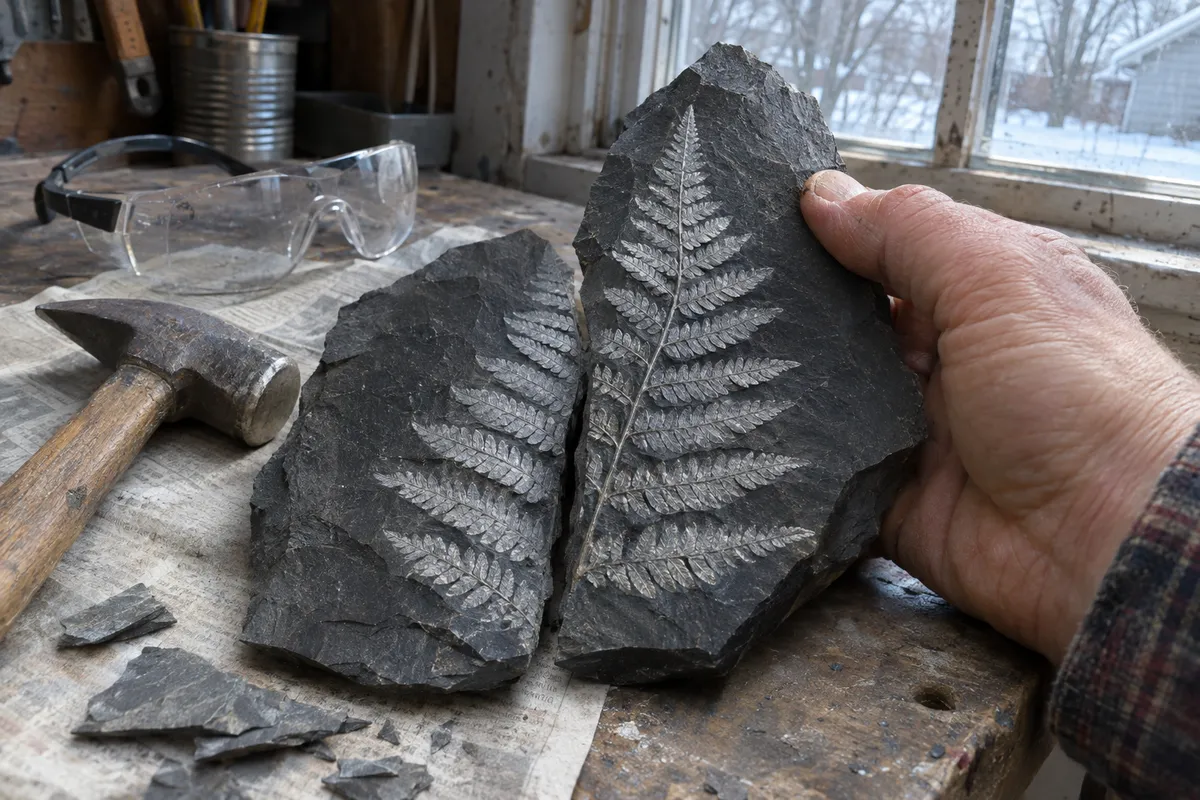
When I was eight, my grandmother in Pennsylvania coal country put a lump of newspaper in my Christmas stocking with “COAL” written on it in marker. Inside was a flat slab of black shale from the spoil heap behind her town. My father took it out to the garage after lunch, set a chisel along the edge and tapped it once. It opened like a book, and on both halves was a silvery fern frond about 300 million years old. Geologists call that slice of time the Pennsylvanian, after the same hills. I still have both halves.
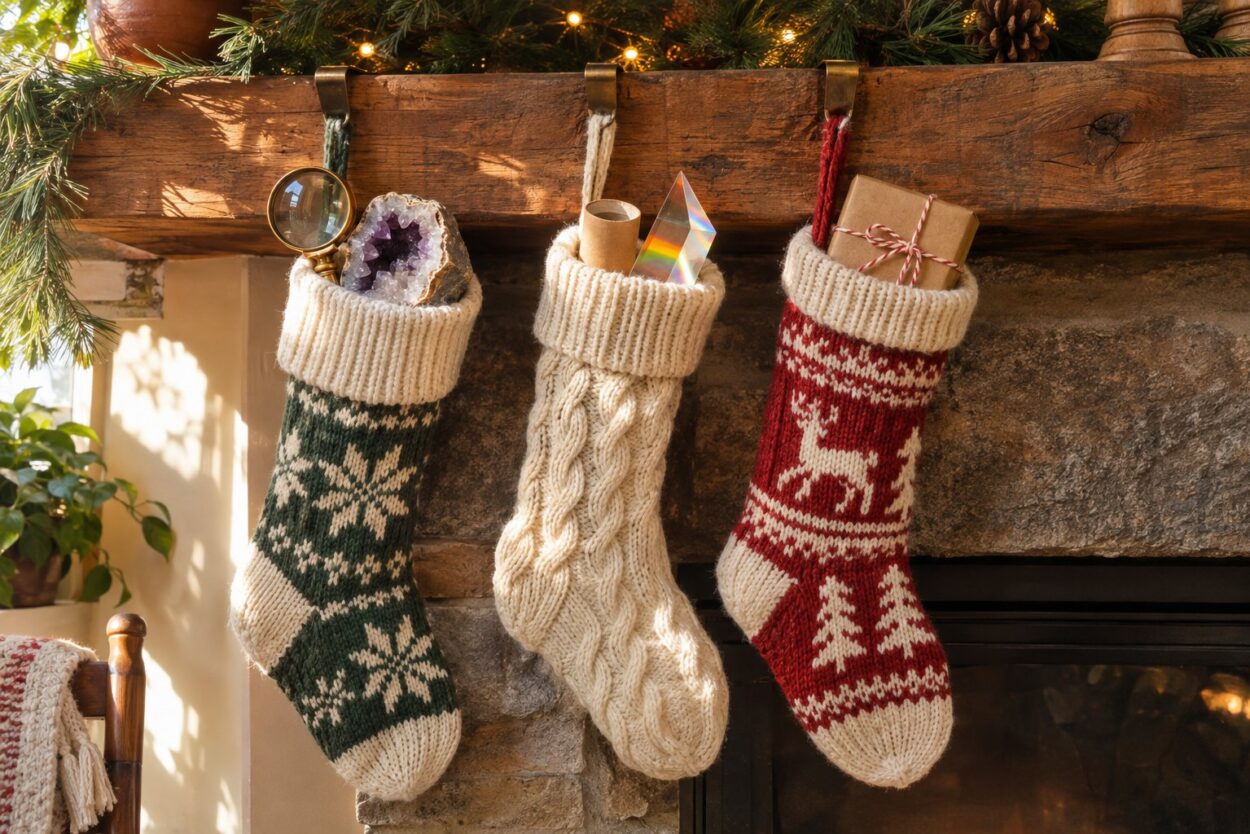
The best science stocking stuffers work the same way: small, cheap, and with something real inside. For young kids, the Steve Spangler Energy Stick and Insta-Snow work in the first five minutes with no setup. For ages 8 to 12, a glass prism set, diffraction glasses and a hand boiler each demonstrate one piece of physics on Christmas morning. For teens and adults who love science, a real meteorite, a trilobite fossil or a Fisher Space Pen is the kind of small thing that gets kept for decades.
I trained as a geoscientist and spent my field years on Antarctic ice cores and East African volcanoes. At home, my daughter Noor is 11 and my son Sami is 7, and in our house the stocking is where the small experiments go. The 29 picks below are sorted by age and interest, each one fits in a stocking, and each names the science it shows.
Quick picks
| Stocking stuffer | Best for | Science |
|---|---|---|
| Steve Spangler Energy Stick | Ages 5 to 8, works in seconds | Circuits |
| Insta-Snow Powder | Young kids, messy fun | Polymers |
| 3-piece glass prism set | Ages 8 to 12 | Light |
| GloFX diffraction glasses | Looking at Christmas lights | Light spectra |
| National Geographic Break Open 4 Geodes | Rock lovers of any age | Geology |
| Campo del Cielo meteorites | Space fans, kids to adults | Planetary science |
| Fisher Space Pen | Adults and teens | Engineering |
| GIANTmicrobes Tardigrade | Biology lovers | Biology |
What makes a good science stocking stuffer
Our family has one rule for stocking gifts: it has to work before breakfast. Anything that needs batteries nobody bought, an adult to read a 20-page manual or a trip to the store for vinegar goes under the tree instead. A stocking is opened in pajamas on the living room floor, and the gifts that get used are the ones that do something right away.
Beyond that, a science stocking stuffer passes three tests:
- It fits. A standard stocking takes something about the size of a paperback. Every pick here is that size or smaller.
- It shows one idea clearly. A hand boiler shows that warming a liquid raises its vapor pressure. A prism shows that white light is a mix of colors. One clear idea beats a box of twelve half-experiments.
- It is real where it can be. A trilobite that lived 450 million years ago, a piece of iron that fell from space, a crystal grown overnight. Children can tell the difference between a toy about science and a piece of the actual world, and the real thing is what they keep.
Price matters too, since a stocking usually holds several small gifts. Most picks here are among the cheaper items in our science buying guides, and the more expensive ones are flagged in the card. For bigger presents, see our Christmas gifts for scientists and best science gifts for kids.
Science stocking stuffers for young kids (ages 4 to 7)
Young kids need something that reacts the moment they touch it. These five all work in seconds, and each one gives an adult an easy, true sentence to say about why it works.
Best science stocking stuffer for young kids
1. Steve Spangler Science Energy Stick
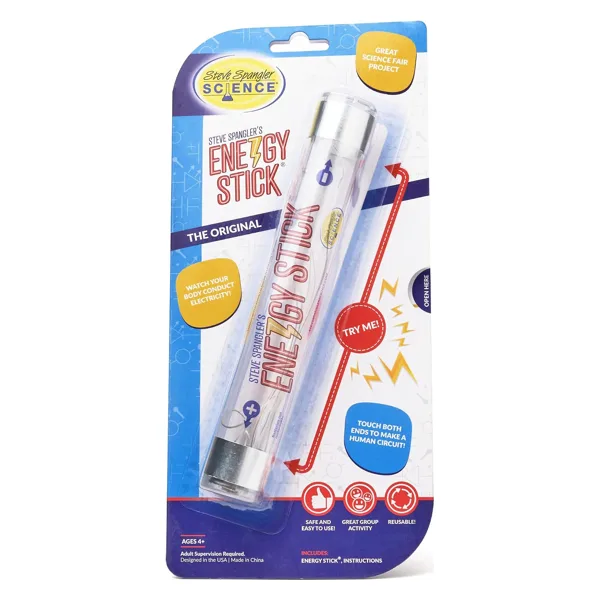
The Energy Stick is a 7.5-inch tube with a metal electrode at each end. When a child holds one end in each hand, a tiny current passes through their body, completes the circuit and the stick lights up and buzzes. Let go with one hand and it stops.
The trick is that the child is the wire. The salty water in skin conducts electricity, so the circuit closes through a body but stays open through a wooden spoon or a plastic cup. Have the whole family hold hands in a circle with the two people at the ends each touching one electrode and the stick still lights. It is the clearest demonstration of open and closed circuits for this age, and the current is far too small to feel. The activity guide covers conductors and insulators.
- 7.5 inches long, batteries installed
- Shows open and closed circuits, conductors and insulators
- Works with a group holding hands
Good: works in seconds with no setup; every test a child invents (a key, a banana, the dog) teaches something. Not great: the buzzer is loud enough that some parents will want it put away by noon.
Check on Amazon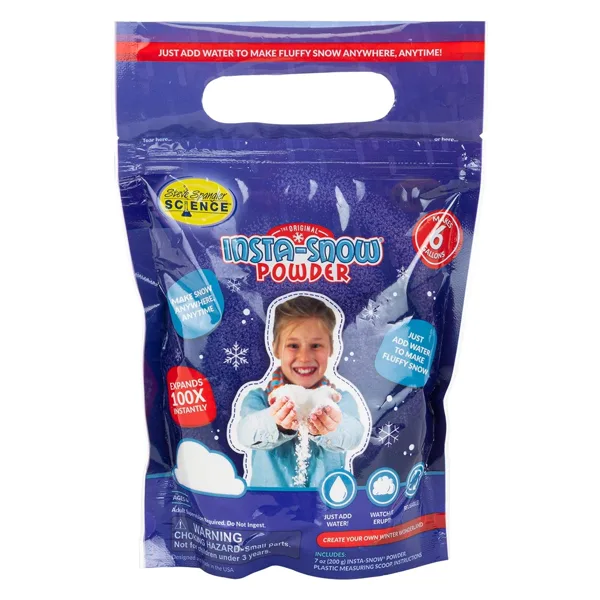
Best for a snowless Christmas
2. Steve Spangler Insta-Snow Powder
Insta-Snow is a white powder that swells into cold, fluffy fake snow a few seconds after water is poured on it. A 200-gram jar makes about 6 gallons. Leave the snow out for a few days and it dries back to powder, ready to use again.
The powder is sodium polyacrylate, a superabsorbent polymer that soaks up many times its own weight in water. It is the same material that makes a disposable diaper hold so much. Each polymer chain is covered in charged groups that pull water in and hold it inside a tangled network. Adding a pinch of table salt collapses the snow back into slush, because the salt ions shield those charges. Our page on synthetic polymers explains the chemistry for older kids.
- 200 g jar, makes about 6 gallons
- Reusable after it dries
- Shows how polymers absorb water
Good: instant result; the salt test turns a craft into a real experiment. Not great: the powder must stay away from mouths and drains, and spilled snow is slippery on hard floors.
Check on Amazon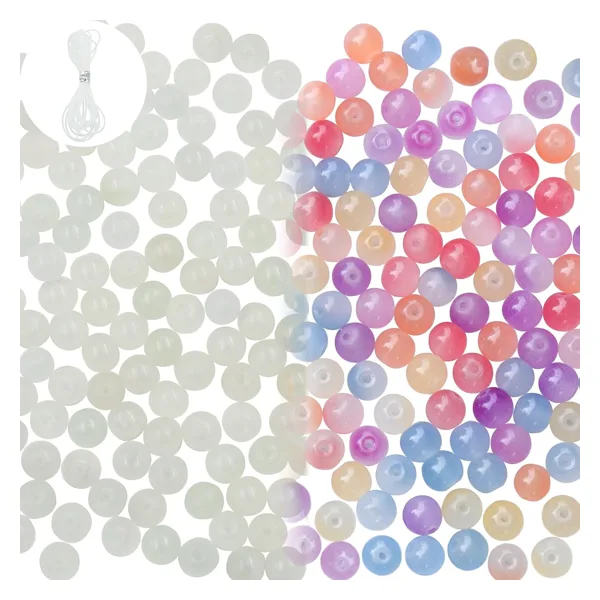
Cheapest pick
3. UV Color-Changing Beads, 100 Pack
These 8 mm beads look pale or white indoors and turn bright colors within seconds in sunlight. Back inside, they fade again. A hundred beads is enough for a bracelet for every child in the house and plenty left over for experiments.
The color comes from photochromic dyes: molecules that change shape when they absorb ultraviolet light, and the new shape absorbs visible colors. Ordinary lamps give off very little UV, so the beads stay pale indoors. That makes them a UV detector a child can wear. Put one bead under a smear of sunscreen and one bare, carry both outside and compare. Try them on a cloudy day, behind a window and under sunglasses.
- 100 beads, 8 mm, random colors
- Change color in sunlight in seconds
- Work as a simple UV detector
Good: very cheap; the sunscreen test is a real controlled experiment. Not great: small beads are a choking hazard for kids under 3, and the elastic cord is sold separately.
Check on Amazon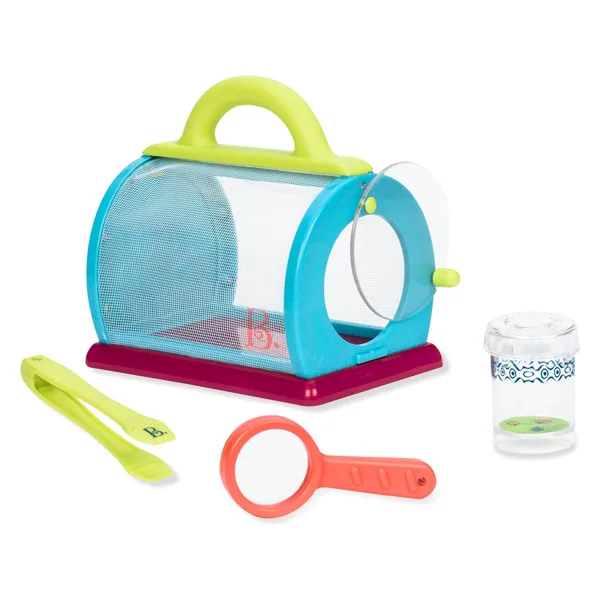
Best for future biologists
4. B. toys Bug Bungalow Insect Catching Kit
The Bug Bungalow is a four-piece field kit for small hands: a mesh carrying case, a container with a magnifying lid, a pair of tweezers and a magnifier. The age rating starts at 3, which makes it one of the few real science tools a preschooler can use alone.
In December most of the US has few insects outdoors, so this is a gift for later. Tell the child it is for the first warm day, or start inside: house spiders, the occasional ladybug wintering behind a curtain and pill bugs under a damp flowerpot all fit in the magnifying container. Catch, look, count the legs, let it go where it was found. That loop is the start of field biology. Our entomology books guide has picture field guides to go with it.
- Mesh case, magnifying container, tweezers, magnifier
- Ages 3 and up
- For backyard insects and spiders
Good: sturdy, sized for small hands, rated for the youngest kids on this list. Not great: few bugs to catch until spring in cold climates.
Check on Amazon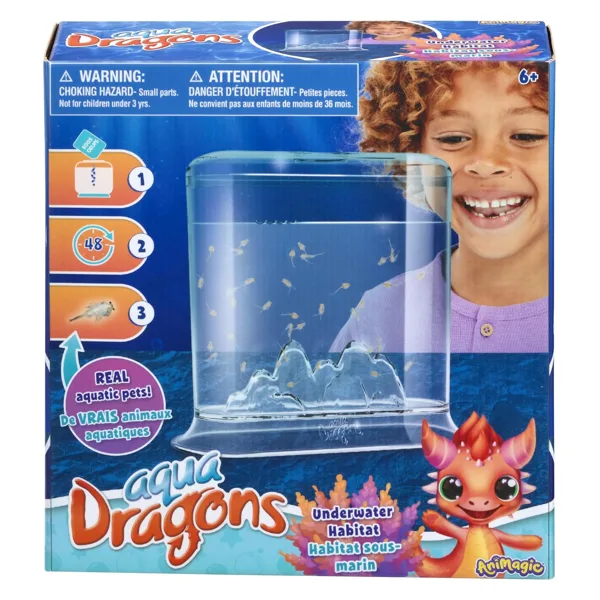
Best live science stocking stuffer
5. Aqua Dragons Hatch ‘n’ Grow Basic Tank
Aqua Dragons are brine shrimp sold as dried eggs with a small tank and food. Add water and tiny swimming larvae appear in 2 to 3 days. Over the next weeks they grow to adult size and, in a well-kept tank, breed.
The eggs are the interesting part. Brine shrimp live in salt lakes that dry out, so their embryos can shut down almost completely and wait, dried, for years until water returns. Biologists call that state cryptobiosis, and it is why the eggs survive on a store shelf. It is rated for ages 6 and up and makes a good first pet for teaching a life cycle from egg to adult.
- Tank, eggs and food included
- Hatch in 2 to 3 days after adding water
- Ages 6 and up
Good: a real life cycle in a few weeks; small enough for a stocking. Not great: hatch rates vary with water temperature, so a cold house slows everything down.
Check on AmazonScience stocking stuffers for ages 8 to 12
Kids in this range can follow a short explanation and run their own tests. Most picks here demonstrate one physical idea, and several are best used with sunlight or Christmas lights on the day they are opened.
Best for ages 8 to 12
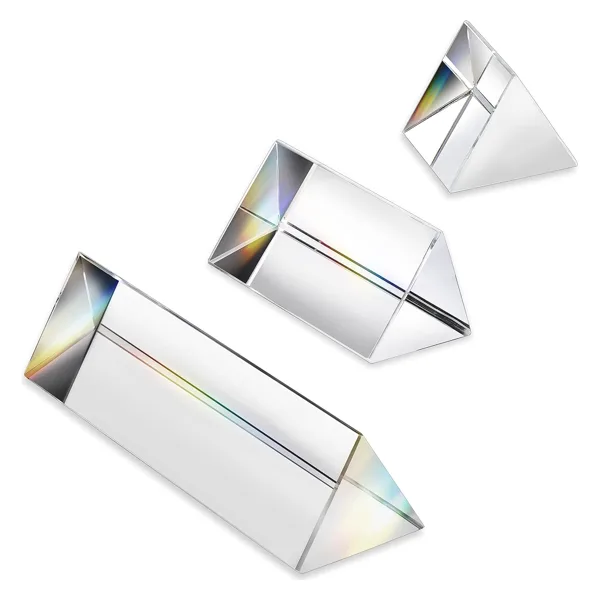
6. Equilateral Glass Prism Set (1, 2 and 4 Inch)
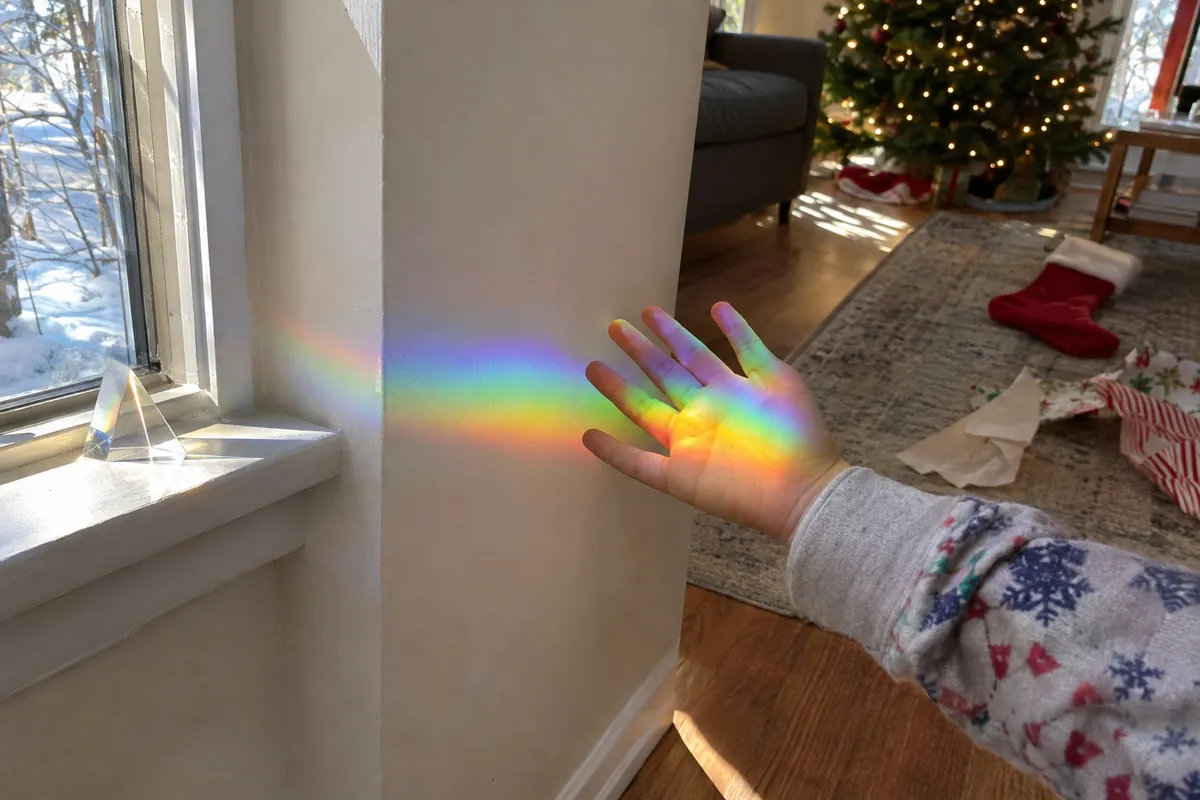
Three solid glass triangular prisms, 25, 50 and 100 mm long, made of K9 optical glass. Put any of them in a sunbeam and turn it slowly until a band of rainbow colors lands on the wall.
A prism splits light because glass slows each wavelength by a slightly different amount, so each color bends at a slightly different angle. Isaac Newton used prisms in 1666 to show that white sunlight is a mixture of colors rather than something the glass adds. He then used a second prism to recombine the colors into white. With three prisms in the box, a child can try his experiment at the kitchen table. The largest prism makes the brightest spectrum; the smallest fits in a pocket.
- 3 prisms: 1, 2 and 4 inches
- K9 optical glass
- Works with sunlight or a strong flashlight
Good: real optical glass; enough prisms to repeat Newton’s experiment. Not great: glass chips if dropped on tile, and the effect needs direct sun or a bright, narrow beam.
Check on Amazon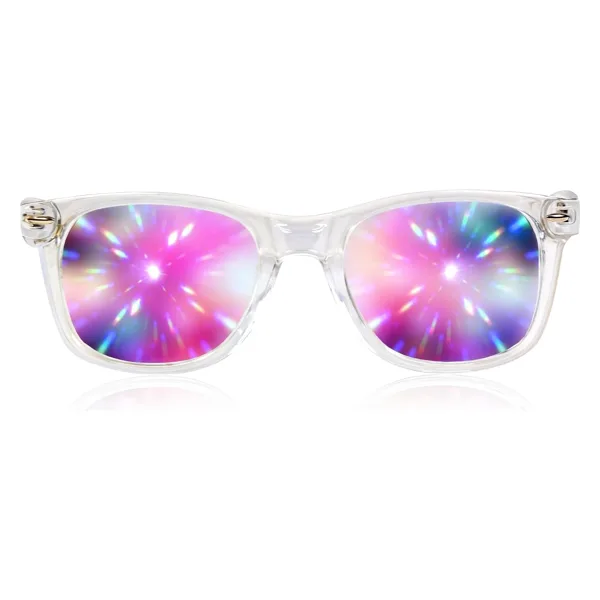
Best for Christmas lights
7. GloFX Ultimate Diffraction Glasses
These are plastic glasses with lenses etched with fine lines. Look at any small light through them and it spreads into rainbow streaks and starbursts. GloFX markets them for festivals and fireworks, but the lenses are diffraction gratings, the same tool scientists use to break light into a spectrum.
Last December Sami asked why the neighbor’s Christmas lights looked white while the streetlight looked orange. With a grating, the answer is visible. A warm-white LED string spreads into a smooth rainbow. Sodium streetlights, where they still exist, show mostly a single bright yellow-orange band. Fluorescent tubes show separate colored lines, one for each element glowing inside. Astronomers read the light of stars the same way to find out what they are made of. Pair these with the prism above and a child has both ways of splitting light.
- Laser-etched diffraction lenses
- Flexible frames, several colors
- Show the spectrum of any light source
Good: turns every light in the house into a spectroscopy experiment. Not great: sized for adults, so they sit loose on young kids’ faces.
Check on Amazon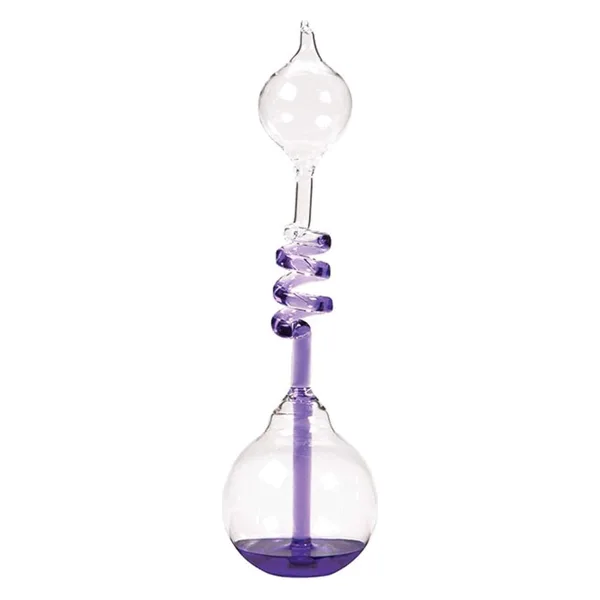
Best physics desk toy
8. Glass Hand Boiler
A hand boiler is a sealed glass toy with two bulbs joined by a twisted tube and a few spoonfuls of colored liquid inside. Wrap a hand around the bottom bulb and within seconds the liquid climbs the tube and bubbles furiously in the top bulb, as if it were boiling.
It is not boiling from the heat of a hand. Most of the air was pumped out of the glass before it was sealed, and the liquid inside evaporates easily. Warming the bottom bulb raises the pressure of the vapor there, which pushes the liquid up into the cooler top bulb, and the vapor follows it as bubbles. It is a lesson in vapor pressure, the same physics behind a pressure cooker and the reason water boils at a lower temperature on a mountain. Try it after holding a cold drink, then after rubbing your hands together.
- Sealed glass, about the size of a hand
- Color and shape vary
- Shows vapor pressure and heat transfer
Good: no batteries, no setup, and it works for adults as well as kids. Not great: thin glass, so it is for kids old enough not to throw it; style and color are random.
Check on Amazon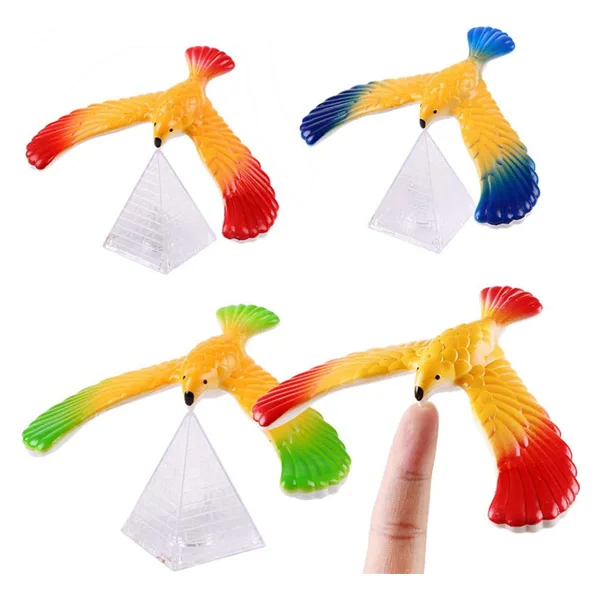
Best for teaching balance
9. Balance Birds, 5 Pack
Each bird balances on the tip of its beak, on its clear stand or on a fingertip, and stays there when it is tipped or spun. Five birds come in a set, so they can be split between several stockings.
The secret is in the wings. They sweep forward and are weighted at the tips, which puts the bird’s center of mass below its beak. Any object hanging with its center of mass below the pivot swings back to level when pushed, the same reason a tightrope walker carries a long pole that droops at the ends. Ask a child to find the balance point of a pencil, then a fork stuck into a potato, and they have the whole idea. The listing rates the birds for ages 12 and up because of small parts.
- 5 birds with clear stands
- Balance on the beak tip
- Shows center of mass and stability
Good: five gifts in one pack; the physics is simple and visible. Not great: lightweight plastic, so the beaks can bend with rough handling.
Check on Amazon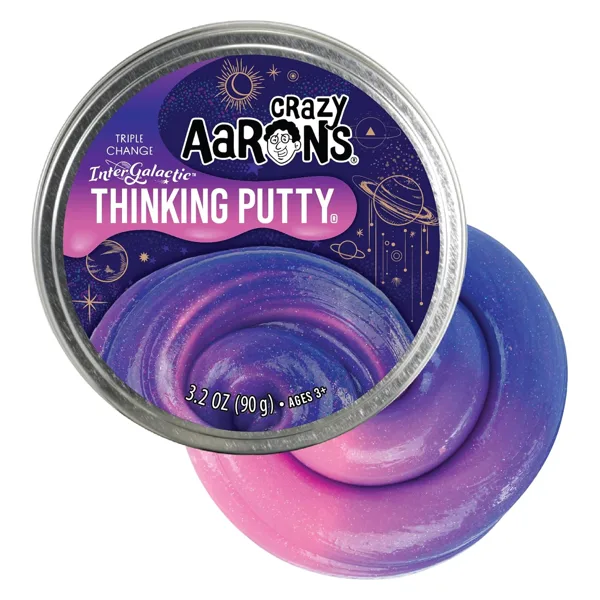
Best fidget with science inside
10. Crazy Aaron’s Thinking Putty, Intergalactic
A 4-inch tin of silicone putty, made in the USA, that shifts through three colors as it warms in the hand and fades back as it cools. Press a cold spoon into a warm lump and the print shows up in a different color.
Two pieces of science are in the tin. The color change comes from heat-sensitive pigments that switch color at a set temperature, so the putty works as a rough map of where it is warm. The putty itself is a non-Newtonian material: pull it slowly and it stretches, yank it and it snaps, roll it into a ball and drop it and it bounces. Leave the ball on a table overnight and it flattens into a puddle. Silly Putty began in the 1940s as a failed attempt at synthetic rubber, and these putties are its descendants.
- 3.2 oz in a 4-inch tin
- Changes color with heat
- Non-toxic silicone, never dries out
Good: works for teens and adults too; bounces, stretches and snaps. Not great: the color change is subtle in a cool room, and the putty picks up lint and pet hair.
Check on Amazon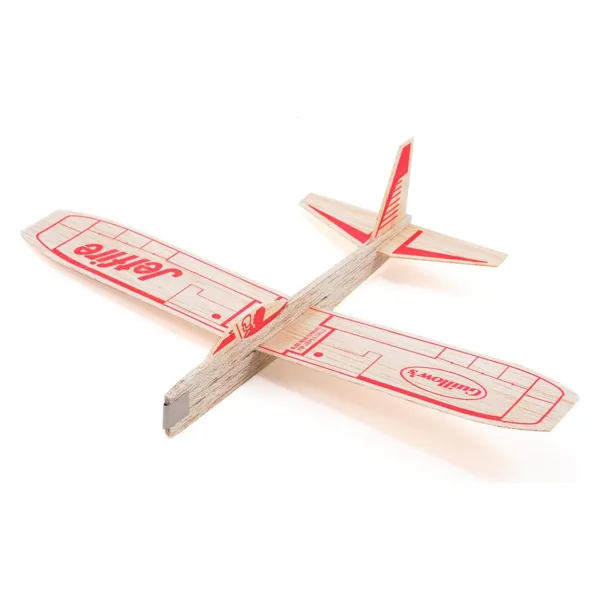
Best for flight science
11. Guillow’s Jetfire Balsa Wood Glider
The Jetfire is a small all-balsa glider with a one-piece wing that slots through the body. It assembles in a minute and has been sold in toy stores and museum shops for decades.
The science is in the adjustments. Slide the wing toward the nose and the glider dives; slide it back and it stalls, pitching up and dropping. Somewhere in between, the center of gravity sits just ahead of the point where the wing’s lift acts, and the glider flies a long, flat path. Bending the tail slightly up or down changes the glide too. A child who trims a Jetfire to fly across the living room has done what aircraft engineers call balancing an airplane. It is also very cheap, so buy two.
- All balsa wood, one-piece wing
- Assembles in a minute
- Adjustable wing position for trimming
Good: classic, cheap and quick to fly. Not great: balsa breaks on hard landings, and the wing slot loosens with use.
Check on Amazon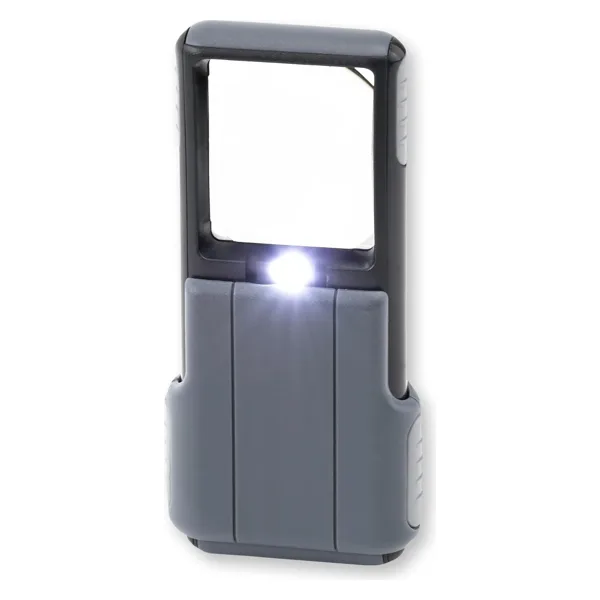
Best pocket magnifier
12. Carson MiniBrite LED Pocket Magnifier
The MiniBrite is a 5x magnifier with a 1.5-inch square lens that slides out of a protective sleeve. Sliding it open turns on a built-in LED, and closing it turns the light off, so the batteries do not drain in a drawer.
A magnifier with its own light is a much better tool for a child than a bare lens, because most interesting small things are in shadow: the underside of a leaf, salt crystals on a dark plate, the dots that make up a printed picture, the grain of a rock. 5x is the right power for this. It shows detail without the shallow focus that makes stronger lenses frustrating. It takes 3 AAA batteries, which are not included, so put them in the stocking too. For older kids who want more, our microscope finder covers the next step.
- 5x magnification, 1.5 x 1.5 inch lens
- LED turns on when the case slides open
- Needs 3 AAA batteries (not included)
Good: built-in light; the sleeve protects the lens in a pocket. Not great: acrylic lens scratches more easily than glass.
Check on Amazon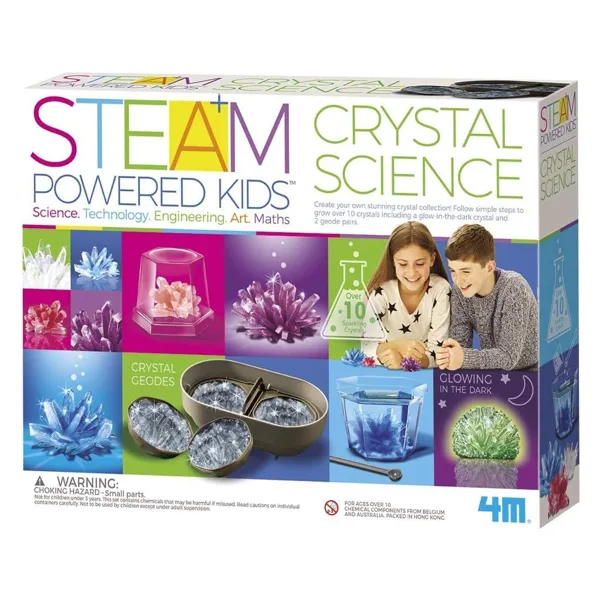
Best experiment kit for a stocking
13. 4M Deluxe Crystal Growing Combo
This is the one true experiment kit on the list that still fits in a stocking. It includes the crystal-growing compounds, display domes and stirring tools for 1 large crystal, 3 medium, 4 small, 1 glow-in-the-dark crystal and 2 crystal geodes. Most crystals reach 1 to 2 inches across.
Each crystal grows from a salt dissolved in hot water. As the solution cools and slowly evaporates, it holds less dissolved salt than it did, and the extra comes out of solution as an ordered lattice on the seed rock. Slow cooling makes bigger, cleaner crystals; fast cooling makes many small ones. That one rule explains why granite has large crystals and volcanic glass has none. Our page on crystal structures shows the shapes the lattices take. The kit is rated 10+ and needs an adult for the hot water.
- Materials for 11 crystals including 2 geodes
- Ages 10 and up
- Crystals take several days to grow
Good: a full multi-day project in a small box; nothing extra to buy. Not great: crystals take days, not minutes, so this one is the exception to the before-breakfast rule.
Check on Amazon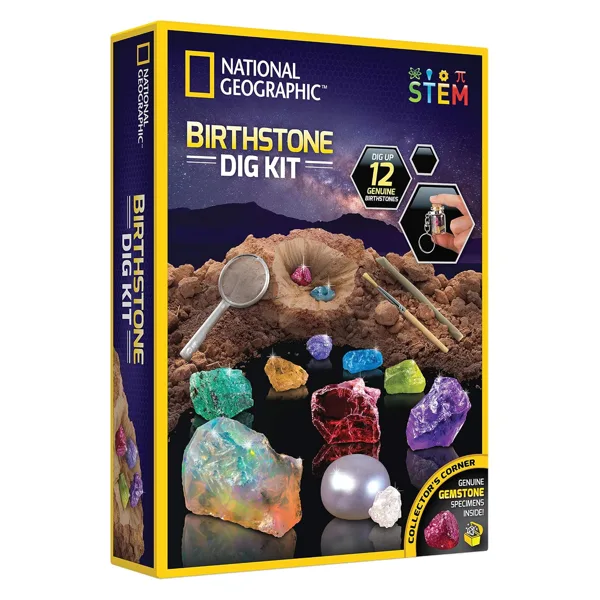
Best dig kit
14. National Geographic Birthstone Dig Kit
A plaster brick with 12 real gemstones hidden inside: garnet, diamond, ruby, pearl, sapphire, amethyst, emerald, opal, blue topaz, citrine, aquamarine and peridot. It comes with a dig tool, a brush, a magnifier, a display bottle on a keychain and a learning guide to each stone.
The digging is half the gift. The other half is sorting what came out. Ruby and sapphire are the same mineral, corundum, colored by traces of chromium (red) or iron and titanium (blue). Emerald and aquamarine are both beryl. Pearl is not a mineral at all; an oyster made it. And the diamond, a small rough chip, is the hardest natural material on the Mohs scale. Every child gets their own birthstone, which makes it a good gift to split between siblings.
- 12 genuine gemstones in a dig brick
- Dig tool, brush, magnifier, keychain bottle
- Learning guide for each stone
Good: real stones; a natural lesson in mineral families. Not great: the stones are small chips, and the plaster dust needs a tray or a sheet of newspaper.
Check on AmazonRocks, fossils and meteorites
This is my own field, and it is the best category for stocking stuffers because the real thing is cheap. A trilobite that lived 450 million years ago is often less expensive than a plastic dinosaur. These picks work for any age from about 6 to adult.
Best rock stocking stuffer
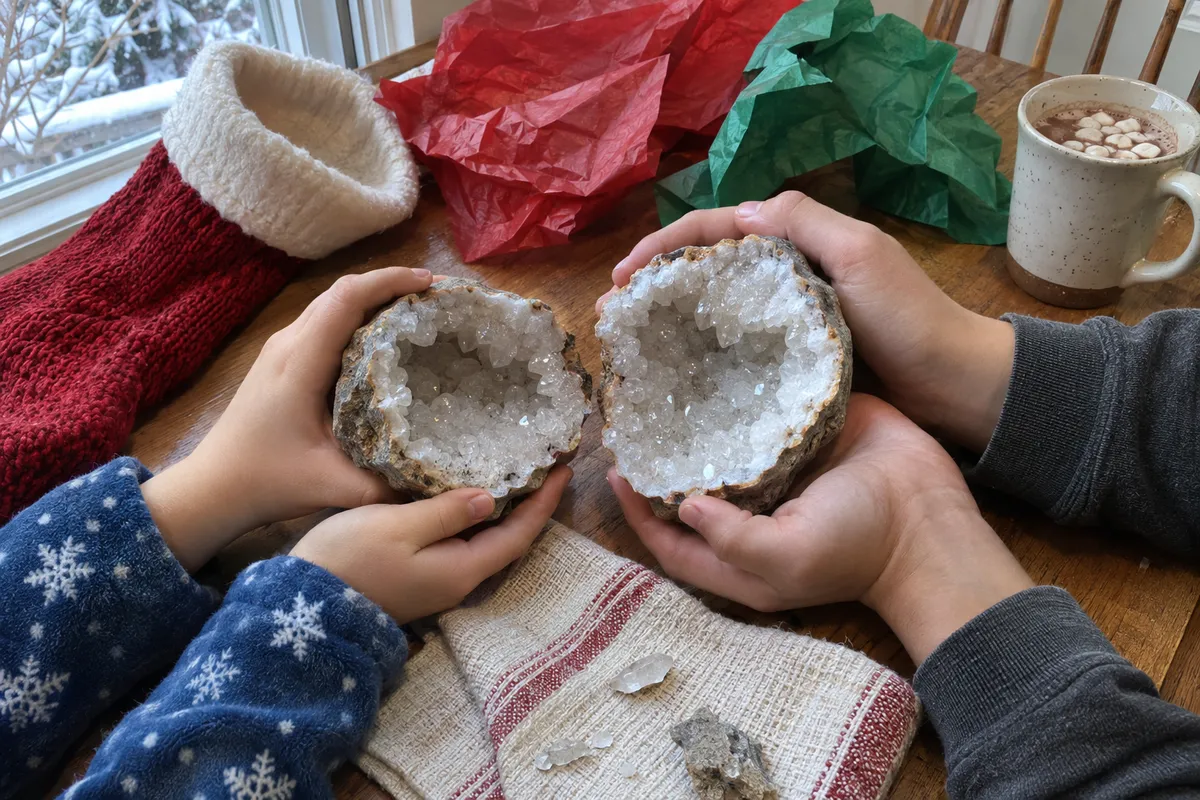
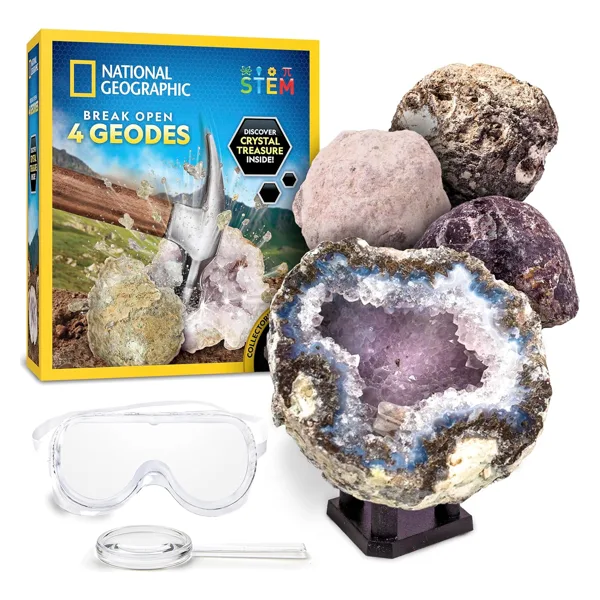
15. National Geographic Break Open 4 Geodes
Four whole geodes, a learning guide and the tools to crack them. From outside they look like plain round rocks. Inside, most are lined with sparkling quartz crystals, sometimes tinted purple as amethyst.
A geode starts as a hollow: a gas bubble in lava or a cavity in limestone. Over thousands of years, groundwater carrying dissolved silica seeps through the rock and deposits crystals on the walls, layer by layer, growing inward. Some hollows fill completely; those are called nodules. Each geode is a sealed record of the water that passed through it. Crack them in a sock or a towel so chips do not fly, and wear safety glasses.
- 4 whole geodes
- Learning guide on geodes and quartz
- Cracking tools included
Good: four separate surprises; a classic Christmas morning activity. Not great: some geodes are less hollow than others, and small kids need help with the cracking.
Check on Amazon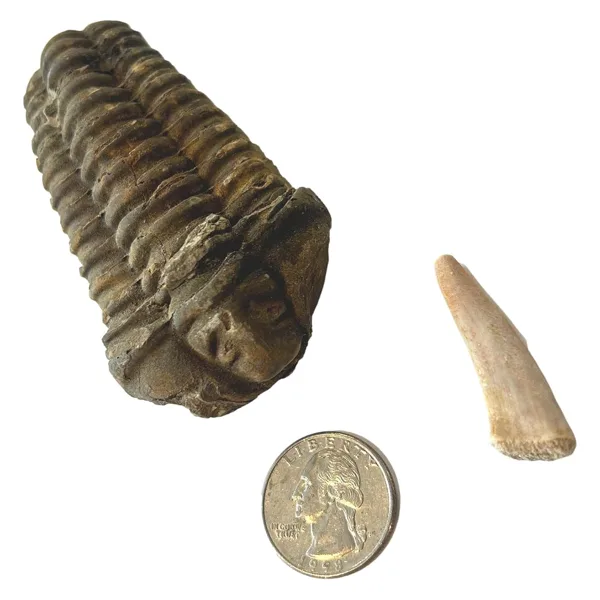
Best fossil stocking stuffer
16. Genuine Trilobite Fossil with Enchodus Tooth
A real trilobite fossil, 2 to 2.5 inches long and about 450 million years old, with a bonus fossil tooth from Enchodus, a predatory fish from the age of dinosaurs.
Trilobites were sea animals related to modern insects, crabs and horseshoe crabs. The name means “three lobes,” for the raised central ridge and two flanking sides of the shell. They first appeared about 521 million years ago and survived for nearly 270 million years before the end-Permian extinction wiped them out 252 million years ago. Their eyes, made of calcite crystals, are among the oldest known complex eyes. Paleontologists use trilobite species to date rock layers, because each one lived for a short, known stretch of time. Hand a child one and tell them it is older than the first trees. See our list of fossil examples for more.
- Trilobite 2 to 2.5 inches, about 450 million years old
- Bonus Enchodus fish tooth
- Each specimen is unique
Good: a real Paleozoic fossil at stocking size. Not great: no stand or label card, so add your own.
Check on Amazon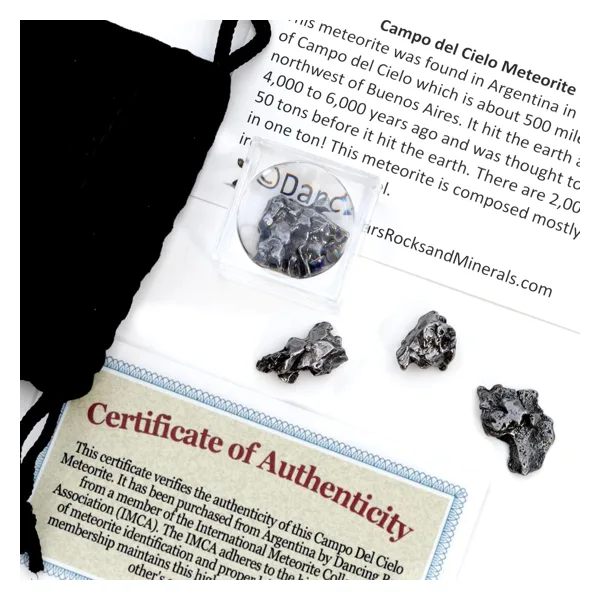
Best for space fans
17. Dancing Bear Campo del Cielo Meteorites, 3 Pieces
Three small iron meteorites, each about 3/8 to 1/2 inch, in a magnifying display box with an authenticity and information card. They come from Campo del Cielo in northern Argentina.
Campo del Cielo is a field of small craters where a large iron meteoroid broke up and fell roughly 4,000 to 5,000 years ago. The people of the area knew about the iron long before Spanish explorers recorded it in 1576. Tons of fragments have been recovered, including masses weighing about 30 tonnes, which is why real pieces are affordable. The metal is mostly iron with some nickel, the same mix thought to make up Earth’s core, and it formed inside an asteroid more than 4.5 billion years ago. A magnet sticks to it, which makes a good first test. For a child, holding something older than the Earth’s oldest rocks is the point.
- 3 iron meteorites, 3/8 to 1/2 inch
- Magnifying display box
- Authenticity and information card
Good: genuine meteorites at a small-gift price; the display box keeps them from getting lost. Not great: the pieces are small, and iron meteorites rust if left damp.
Check on Amazon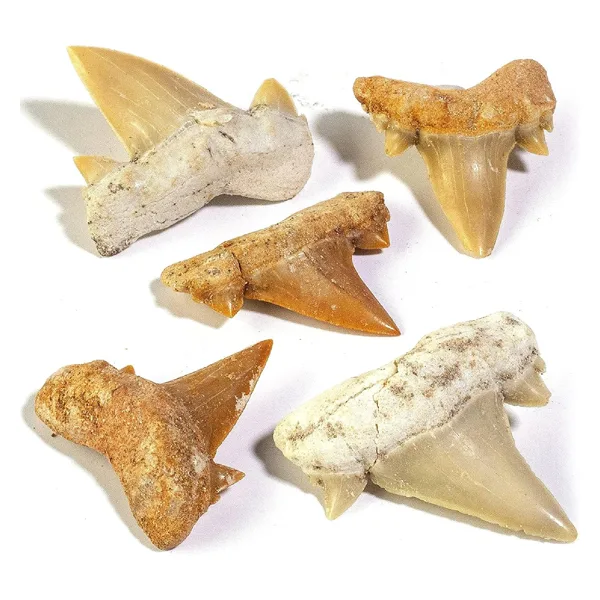
Best for shark fans
18. KALIFANO Fossil Mini Shark Teeth, 5 Pack
Five small fossil shark teeth from Morocco, sold by a family fossil dealer. Moroccan phosphate beds are among the richest sources of fossil shark teeth in the world, and most of the small teeth sold from there are tens of millions of years old.
Shark teeth fossilize so well because sharks shed thousands of teeth over a lifetime, and the enamel-like outer layer is tough and mineral-rich. The rest of a shark’s skeleton is cartilage, which almost never fossilizes, so teeth are often the only record a species leaves. That fact alone is a good stocking conversation; our page on why sharks have no bones explains the rest. The listing’s description text borrows lines from the seller’s mosasaur and trilobite listings, so go by the title and photos.
- 5 fossil shark teeth
- From Moroccan phosphate deposits
- Sold by a long-running fossil dealer
Good: five real fossils at a low price; easy to split between kids. Not great: species and exact age are not labeled.
Check on Amazon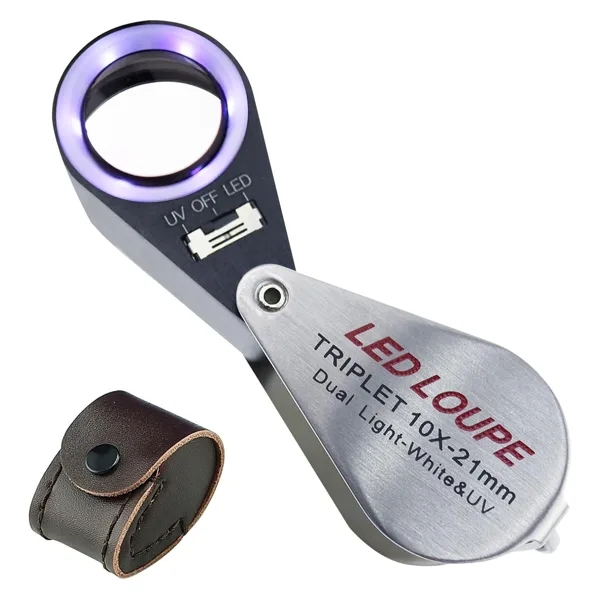
Best tool for rock collectors
19. 10x Pocket Loupe with LED and UV Lights
A folding 10x loupe with a 21 mm glass triplet lens, six white LEDs and a UV light. It is sold as a jeweler’s tool, but it is exactly what a young rock collector needs.
In the field, geologists carry a 10x hand lens on a cord around their neck, because 10x is enough to see the individual grains in sandstone, the cleavage planes in feldspar and the tiny crystals in a fine-grained rock. A triplet lens is three pieces of glass bonded together to keep the image sharp to the edges. The UV light adds a second test: some minerals, such as many fluorites and calcites, glow under ultraviolet light. Hold the lens close to the eye and bring the rock up to it, not the other way around.
- 10x, 21 mm glass triplet lens
- 6 LEDs plus UV light
- Folds into its own case
Good: real glass optics; the built-in light solves the shadow problem. Not great: the UV light is weak compared with a dedicated 365 nm flashlight, so for fluorescent minerals pair it with pick 26.
Check on Amazon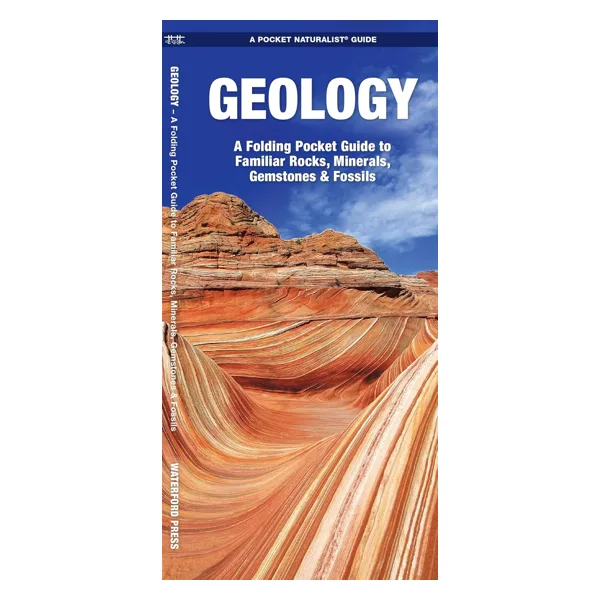
Best field guide for a stocking
20. Geology: A Folding Pocket Guide to Familiar Rocks, Minerals, Gemstones and Fossils
A laminated fold-out guide that opens into a panel of illustrated rocks, minerals, gems and fossils with short identification notes. It is waterproof, slips into a back pocket and weighs almost nothing.
A folding guide does one job well. A child finds a rock, opens the panel and narrows it down by color, luster and shape. It will not identify everything, and that is fine; the habit of looking closely and comparing is the skill. Pair it with the loupe above, the geodes and a trilobite for a complete rock-collector stocking. When they want more, our geology books for beginners and Roadside Geology guides cover the next step, and Fossils Near Me shows where to collect.
- Laminated, waterproof, folding
- Rocks, minerals, gems and fossils
- Pocket size
Good: survives rain, mud and a backpack. Not great: only the common species fit on the panels.
Check on AmazonScience stocking stuffers for teens and adults
Science-loving adults get a lot of periodic table mugs. These picks are things they will carry, display or play with, and several work as office desk toys.
Best for adults
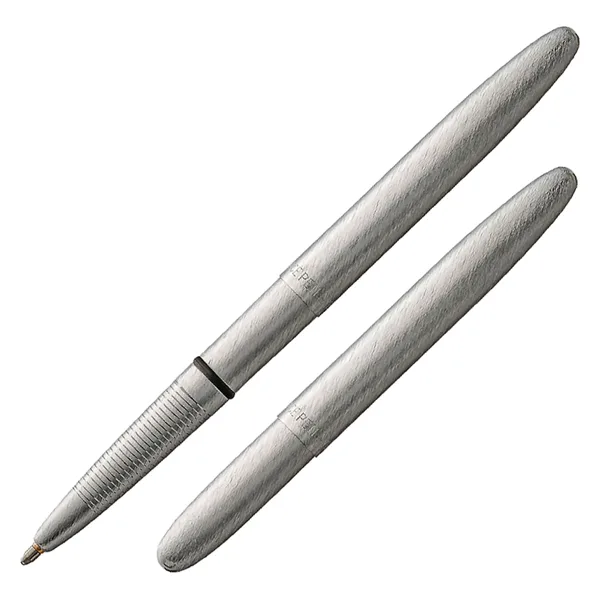
21. Fisher Space Pen Bullet, Brushed Chrome
The Bullet is a compact pen, about 3.75 inches capped, that posts to full length when the cap is pushed onto the back. It writes upside down, underwater, on greasy paper and from -30°F to 250°F.
The ink cartridge is sealed and pressurized with nitrogen, so the ink is pushed toward the tip instead of relying on gravity. The ink is thixotropic: it stays thick like gel in the cartridge and thins only when the rolling ball shears it. Paul Fisher developed it with his own money, and NASA adopted it after testing; astronauts have carried Fisher pens since Apollo 7 in 1968. It is the most expensive pick in this section, and the one most likely to still be in a pocket ten years from now.
- Pressurized nitrogen cartridge
- Writes upside down, underwater, -30°F to 250°F
- Comes in a gift box
Good: fits in a coin pocket; a real piece of space-program engineering. Not great: the short body feels small until the cap is posted.
Check on Amazon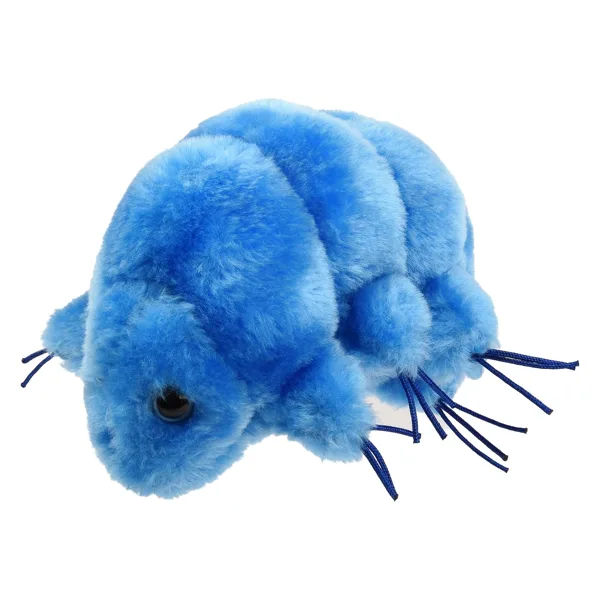
Best for biology lovers
22. GIANTmicrobes Tardigrade Plush
A 6-inch plush water bear with embroidered claws and mouth, plus a card of tardigrade facts. GIANTmicrobes has made science plush toys since 2002 and designs them with scientific advisors.
Real tardigrades are about half a millimeter long and live in moss, lichen and pond sediment almost everywhere on Earth. They are famous for surviving what kills nearly everything else. Dried out, a tardigrade curls into a state called a tun and can survive freezing, boiling, high radiation and, in a 2007 experiment on the FOTON-M3 mission, direct exposure to open space. With a basic microscope and a pinch of soaked moss from a roof or a wall, a teen can find living ones. The plush is the gateway; the moss is the experiment.
- 6-inch plush with information card
- Embroidered anatomical details
- Good for kids and adults
Good: the animal biologists love most, in stocking size. Not great: a plush, so it teaches through the fact card and the conversation it starts.
Check on Amazon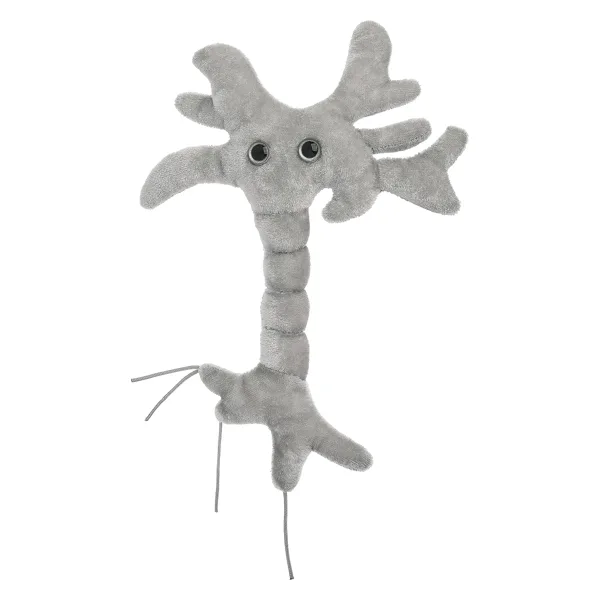
Best for psychology and neuroscience fans
23. GIANTmicrobes Brain Cell (Neuron) Plush
A 10-inch plush neuron with a cell body, branching dendrites and a long axon, with a fact card about brain cells. It is one of GIANTmicrobes’ best-selling designs and a common gift for psychology students and nurses.
The shape is accurate in its basics. Dendrites collect signals from other neurons, the cell body adds them up, and if the total crosses a threshold, an electrical impulse runs down the axon to the next cells. A human brain has about 86 billion neurons, each connected to thousands of others. Our interactive neuron 3D model shows the same parts in detail, and examples of neurons covers the different types.
- 10 x 6 x 1.5 inch plush
- Fact card about neurons
- Tested to ASTM F963 toy standards
Good: recognizable anatomy; a good desk mascot for a student. Not great: at 10 inches it fills most of a stocking.
Check on Amazon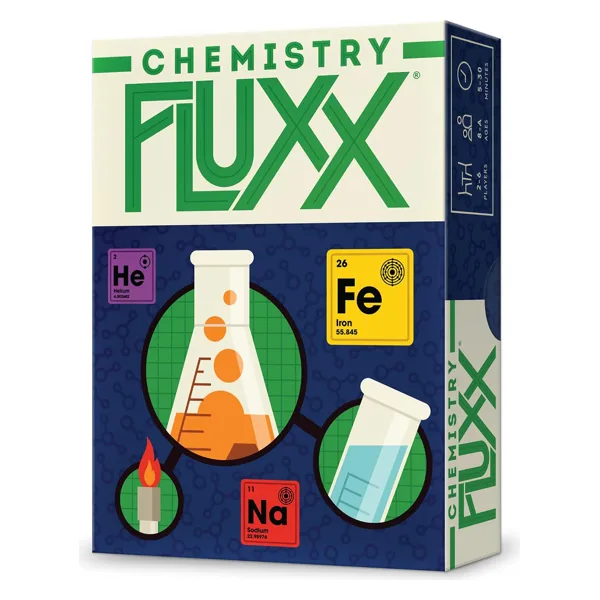
Best card game
24. Looney Labs Chemistry Fluxx
Fluxx is a card game where the rules change as it is played: cards can change how many you draw, how many you play and what you need to win. Chemistry Fluxx swaps in element cards, with goals built from real compounds.
It is a light family game, not a chemistry course, but it drills element symbols and the idea that compounds are fixed combinations of elements without feeling like homework. Rounds are short and the box is rated for ages 8 and up. That makes it a good stocking gift for a family that plays games over the holidays. Looney Labs also makes Anatomy Fluxx and Astronomy Fluxx in the same format. For a chemist’s version of a real lab gift, see our gifts for chemists.
- Card game, ages 8 and up
- Rules change during play
- Element and compound goal cards
Good: short rounds; adults and kids can play together. Not great: games can end suddenly on a lucky draw, which frustrates players who like strategy.
Check on Amazon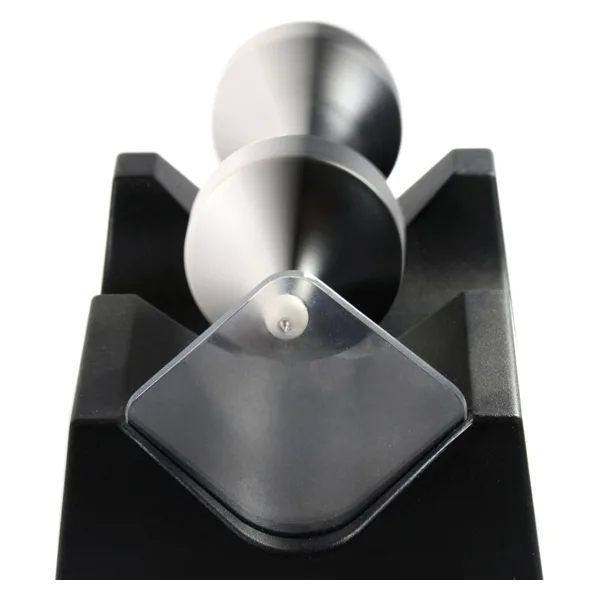
Best desk toy
25. CMS Magnetics Levitating Spinning Top
A multicolored spindle floats horizontally above a magnetic base, with only its tip touching a small clear plate. Give it a flick and it spins for minutes. No batteries or electricity are needed.
Magnets in the base push up on magnets in the spindle and hold its weight in the air. On their own, fixed magnets cannot hold an object stable in mid-air; a physicist named Samuel Earnshaw proved that in 1842. The single point of contact with the plate supplies the missing stability, and the near-frictionless spin shows how long a rotating object keeps going when almost nothing slows it. The colored stripes make the slowdown easy to watch. Our page on magnetic materials explains why the magnets behave as they do.
- No batteries or power
- Spins for minutes with a flick
- Base, spindle and contact plate
Good: looks like a trick and has real physics behind it; works on an office desk. Not great: setting the plate at the right distance takes a few tries.
Check on Amazon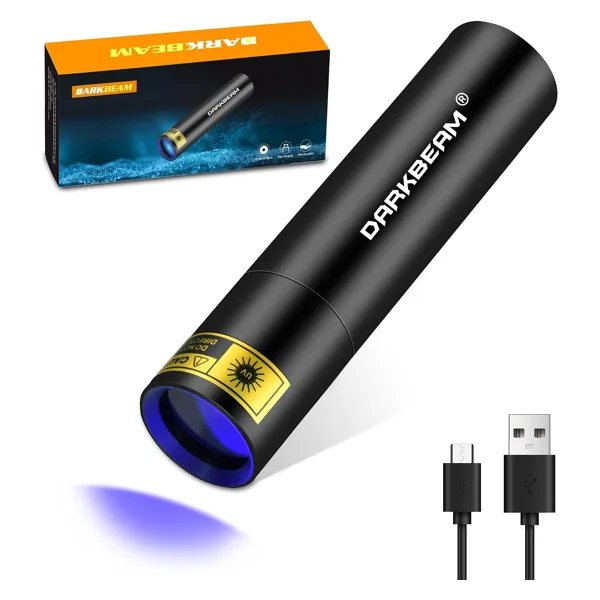
Best for fluorescence
26. DARKBEAM 365 nm Filtered UV Flashlight
A small rechargeable ultraviolet flashlight with a black filter lens that blocks most visible light. It charges by USB and runs about an hour per charge.
The 365 nm wavelength matters. Cheap purple 395 nm lights leak so much visible violet that faint glows get washed out. A filtered 365 nm light makes fluorescent materials stand out against a dark background. In a dark room, tonic water glows blue because of the quinine in it. Many scorpions glow blue-green. Fluorescent minerals such as fluorite, calcite and willemite light up in colors that look nothing like their daylight colors, and fluorescence is literally named after fluorite. Paper money, laundry detergent residue and many highlighters glow too. Never shine it into anyone’s eyes.
- 365 nm UV with black filter
- USB rechargeable, about 1 hour runtime
- Pocket size with wrist strap
Good: real 365 nm filtered light at a small price; strong enough for minerals. Not great: UV can harm eyes, so this is for teens and adults or supervised use.
Check on Amazon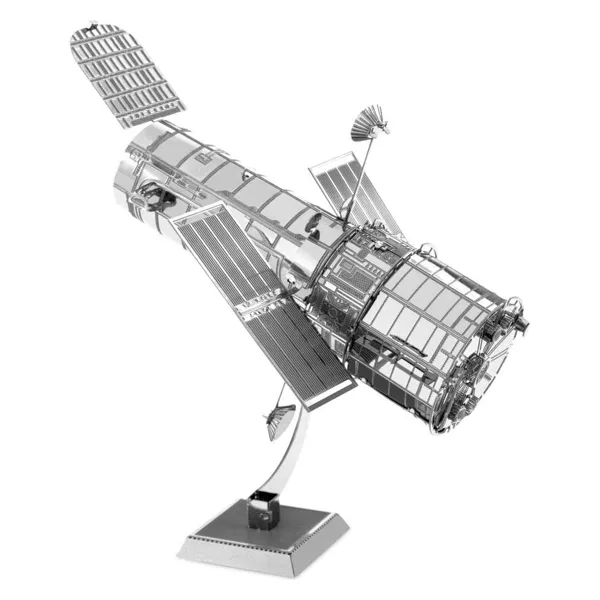
Best model kit for astronomy fans
27. Metal Earth Hubble Telescope 3D Metal Model Kit
One flat steel sheet, packed in an envelope, from which the parts are clipped and bent into a 3 x 2 x 2.5 inch model of the Hubble Space Telescope. No glue or solder is needed; tabs slot into holes.
Hubble launched in 1990 and its 2.4-meter mirror has taken some of the most important images in astronomy, including the deep fields that showed thousands of galaxies in a patch of sky that looks empty. The model shows the solar panels, the tube that shields the mirror from stray light and the aperture door. It is rated for ages 14 and up with moderate difficulty. A pair of fine tweezers makes the tabs much easier to twist. The flat envelope slides into a stocking without a box.
- 1 steel sheet, moderate difficulty
- Ages 14 and up
- No glue needed; tweezers recommended
Good: a detailed display model from a flat envelope. Not great: small tabs break if bent back and forth too often.
Check on Amazon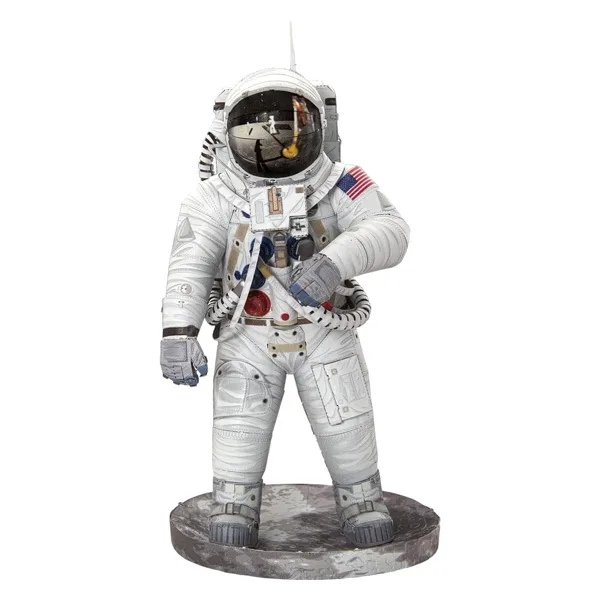
Most challenging build
28. Metal Earth Premium Series Apollo 11 Astronaut
A 75-piece, 2.5-sheet steel model of an Apollo 11 astronaut in a full lunar suit, about 5.3 inches tall when built. Metal Earth rates it challenging, a step up from the Hubble kit.
The model shows the parts of the A7L suit that kept Neil Armstrong and Buzz Aldrin alive on the Moon in July 1969: the life-support backpack, the helmet with its gold-coated sun visor and the boots. Each part was solving a physics problem. The Moon has no air to carry heat away or block radiation, and surface temperatures swing by hundreds of degrees between sun and shadow. For a teen who builds models, this is a several-evening project and a good desk piece afterward.
- 75 pieces, 2.5 steel sheets
- About 5.3 inches tall when built
- Challenging difficulty, ages 14 and up
Good: the most detailed model here. Not great: too fiddly for most kids under 14.
Check on Amazon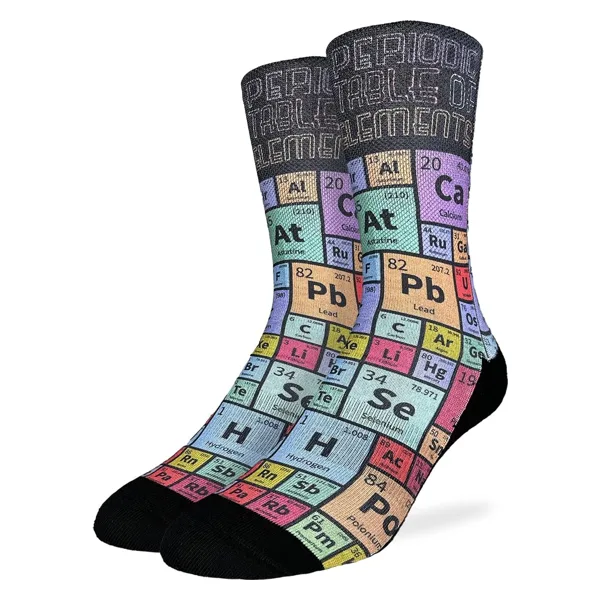
Best novelty pick
29. Good Luck Sock Math and Science Socks
Adult crew socks printed with math and science designs. They are the one pick here with no experiment attached, and they belong on the list because a stocking of socks is a tradition worth keeping.
Socks are a safe gift for the adult science lover who already owns every gadget, and they are the easiest thing to tuck into the toe of a stocking under the meteorite and the pen. Check the size chart on the listing, since these are cut in men’s sizes.
- Adult crew socks
- Math and science prints
- Men’s sizing
Good: an easy add-on to any adult stocking. Not great: no science to do, only to wear.
Check on AmazonFive Christmas morning experiments with these stocking stuffers
Each of these takes under ten minutes and uses only what is in the stocking plus ordinary things in the kitchen.
- The sunscreen test (UV beads). Put two beads in separate clear sandwich bags. Smear sunscreen on the outside of one bag. Carry both to a sunny window or outside. The bead behind sunscreen stays pale or changes less. Try SPF 15 against SPF 50, and try a pair of sunglasses.
- Read the Christmas lights (diffraction glasses). Turn off the room lights and look at the tree, a phone screen, a candle and the oven light. Draw what each one looks like. Smooth rainbows mean a hot source glowing at every color; separate bright lines mean a gas glowing at a few specific colors.
- Remake Newton’s rainbow (prisms). Put the largest prism in a sunbeam and find the spectrum on the wall. Then put a second prism in the colored band, turned the opposite way, and try to merge the colors back into white.
- Snow math (Insta-Snow). Measure one teaspoon of powder into a cup and add water a tablespoon at a time until it stops absorbing. Then sprinkle salt on half the snow and watch it slump.
- Cold hands, warm hands (hand boiler). Hold the bottom bulb after holding a glass of ice water, then after rubbing your hands together for 30 seconds. Time how long the liquid takes to climb each time. Warmer hands push it faster.
How to build a whole science stocking
A stocking works best with one thing to do, one thing to keep and one thing to share. Here are combinations by kid:
- A 5-year-old: Energy Stick, Insta-Snow and a handful of UV beads for a bracelet.
- A 9-year-old who likes rocks: geodes, shark teeth, the folding geology guide and the MiniBrite magnifier.
- An 11-year-old who likes physics: prism set, diffraction glasses, hand boiler and a Jetfire glider.
- A teen who likes space: meteorites, the Metal Earth Hubble and a UV flashlight.
- An adult science lover: Fisher Space Pen, trilobite, tardigrade plush and science socks.
Several good small science gifts are already covered in our other guides, so they are not repeated here: the Crookes radiometer, the metal rattleback, the Carson MicroBrite pocket microscope and the ferrofluid display are in Christmas gifts for scientists. The TEDCO gyroscope and sun print paper are in toys for kids who love science. Bismuth crystals and the pocket chemist stencil are in gifts for chemists, and the small Klutz LEGO kits are in our science LEGO sets guide. All of them fit in a stocking.
FAQ
For ages 4 to 7, the Steve Spangler Energy Stick, Insta-Snow powder and UV color-changing beads all work in seconds with no setup. For ages 8 to 12, a glass prism set, diffraction glasses, a hand boiler, geodes and a real trilobite fossil each teach one clear idea and fit easily in a stocking.
Adults who love science tend to keep small real things and useful tools: a Campo del Cielo meteorite, a trilobite fossil, a Fisher Space Pen, a 365 nm UV flashlight for fluorescent minerals or a Metal Earth Hubble model. A GIANTmicrobes tardigrade or neuron plush suits biology and psychology fans.
Check the age rating on each listing. Beads, small fossils, meteorite fragments and putty are choking hazards for children under 3. Glass items such as prisms and hand boilers are best for kids old enough not to throw them, and UV flashlights should never be shined into eyes. Insta-Snow powder should be kept away from mouths.
Many are. Campo del Cielo iron meteorites are inexpensive because tons of fragments have been recovered from the Argentine strewn field, and common Moroccan and Chinese trilobites are found in large numbers. Buy from sellers with long review histories, and test an iron meteorite with a magnet: it should stick firmly.
A hand boiler, glass prisms, diffraction glasses, balance birds, a balsa glider, a levitating top, geodes and fossils all work with no batteries. The Energy Stick comes with its batteries installed. The Carson MiniBrite magnifier needs 3 AAA batteries that are not included.
Mix one experiment, one real specimen and one tool. UV beads, a balsa glider, a pack of fossil shark teeth and a balance bird are among the cheapest picks here, and a multi-pack such as the balance birds or shark teeth can be split across several stockings.
The glass is sealed with most of the air removed and holds a liquid that evaporates easily. The warmth of a hand raises the vapor pressure in the bottom bulb, which pushes the liquid up the tube into the cooler top bulb, and vapor follows it as bubbles. The liquid is not actually boiling from the heat of the hand.
Diffraction glasses spread any light into its spectrum. A hot glowing source, such as a candle flame or incandescent bulb, gives a smooth rainbow. A gas lamp, such as a fluorescent tube or sodium streetlight, shows separate bright colored lines. LEDs show a broad band. Astronomers use the same principle to find out what stars are made of.
Sources
- Amazon product listings, dimensions and age ratings for every product above, checked November 2026.
- Pennsylvania Department of Conservation and Natural Resources, Bureau of Geological Survey, Pennsylvania geology and the Pennsylvanian subperiod (323 to 299 million years ago).
- University of California Museum of Paleontology, Introduction to the Trilobita.
- The Meteoritical Society, Meteoritical Bulletin Database entry for Campo del Cielo.
- K. Ingemar Jönsson et al., “Tardigrades survive exposure to space in low Earth orbit,” Current Biology 18 (2008).
- Frederico A. C. Azevedo et al., “Equal numbers of neuronal and nonneuronal cells make the human brain an isometrically scaled-up primate brain,” Journal of Comparative Neurology 513 (2009).
- Isaac Newton, “A Letter of Mr. Isaac Newton… containing his New Theory about Light and Colors,” Philosophical Transactions of the Royal Society 6 (1672).
- Fisher Space Pen Co. and NASA history of the pressurized space pen, first flown on Apollo 7 (1968).
- NASA, Hubble Space Telescope.
- Mindat.org mineral data for corundum, beryl, quartz, fluorite and calcite.