
Show the math
C1 × V1 = C2 × V2, so the dilution factor is C1 / C2 = V2 / V1 and diluent = V2 - V1.Concentrations converted to M, volumes to mL, so the units cancel.V1 = (C2 × V2) / C1 = (0.1 M × 100 mL) / 1 M = 10 mLV2 - V1 = 100 - 10 = 90 mLC1 / C2 = 1 M / 0.1 M = 10Short answer: Use C1V1 = C2V2. The stock volume is V1 = C2 × V2 / C1, and the diluent is V2 − V1. To make 100 mL of 0.1 M, add 10 mL of 1 M stock to 90 mL of water (dilution factor 10).
A dilution keeps the amount of solute constant and adds solvent, so concentration times volume is the same before and after. Most failed recipes come from three errors: adding the final volume of water instead of the difference, mixing units on the two sides, and reading 1:10 the wrong way.
This article contains Amazon affiliate links. 33science earns a commission on qualifying purchases. See our affiliate disclosure.
How to use the dilution calculator
The C1V1 = C2V2 formula
C1 is the stock concentration and V1 is the volume taken from it. C2 and V2 are the concentration and volume of the finished solution. Rearranged, V1 = C2 × V2 / C1 and the diluent is V2 − V1. The dilution factor is C1 / C2, which equals V2 / V1. With molarities the same equation is written M1V1 = M2V2, as in our guide to calculating molarity. The derivation and more examples are in LibreTexts.
Worked example: to make 100 mL of 0.1 M from 1 M stock, V1 = 0.1 M × 100 mL / 1 M = 10 mL. Add that to 90 mL of diluent to reach 100 mL.
| Stock (C1) | Target (C2) | Final volume (V2) | Stock to take (V1) | Diluent | Dilution factor |
|---|---|---|---|---|---|
| 1 M | 0.1 M | 100 mL | 10 mL | 90 mL | 10 |
| 10 mM | 50 µM | 2 mL | 10 µL | 1.99 mL | 200 |
| 70% | 10% | 100 mL | 14.29 mL | 85.71 mL | 7 |
| 10X | 1X | 1,000 mL | 100 mL | 900 mL | 10 |
Dilution factor and what 1:10 means
A 1:10 dilution is one part stock in ten parts total, so the dilution factor is 10: 1 mL of stock plus 9 mL of diluent. That is the reading in microbiology lab practice and the calculator default. Some sources define the ratio as stock to diluent, which makes the total one part larger (Wikipedia, AAT Bioquest). The calculator offers that reading as 1+N.
| Notation | Reading | Dilution factor | Example volumes |
|---|---|---|---|
| 1:10 | One part stock in 10 parts total | 10 | 1 mL stock + 9 mL diluent |
| 1+5 | One part stock plus 5 parts diluent | 6 | 10 mL stock + 50 mL diluent = 60 mL |
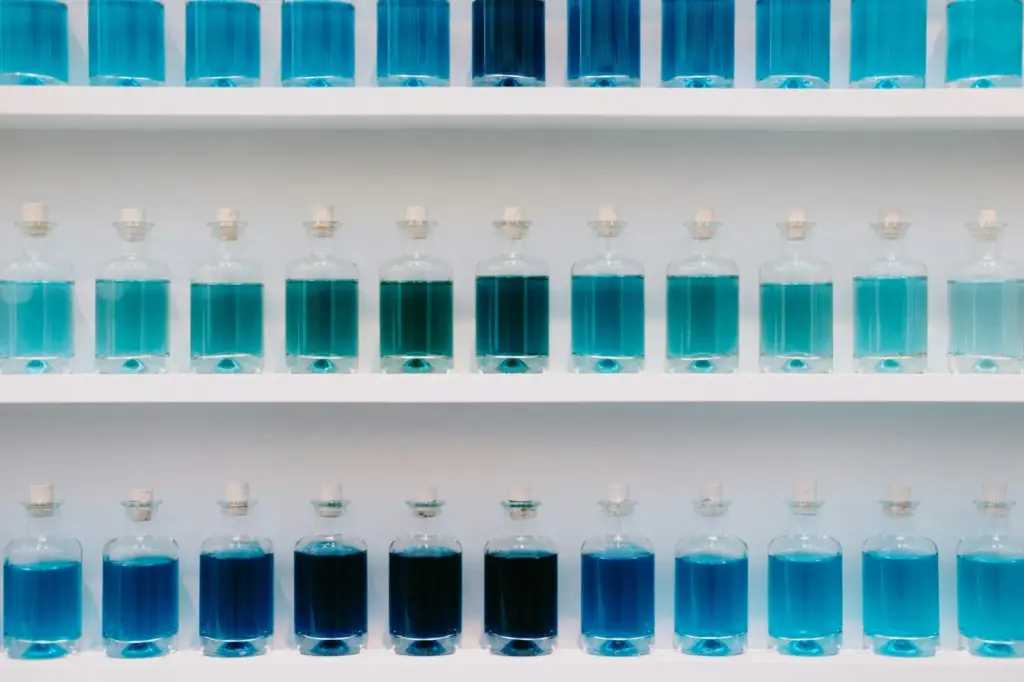
The two readings differ by one part, which matters at 1:10 and hardly at 1:1000. A working solution given as 1X from a 10X stock is a plain factor of 10.
Serial dilutions: concentration in each tube
In a serial dilution each tube is made from the one before. The total factor at any tube is the product of the step factors, so tube k holds C0 / Fk for a constant step factor F. Starting from 1 M, a 1:10 series moves 1 mL from one tube into 9 mL of diluent in the next, which gives 10 mL per tube (University of Vermont).
| Tube | Concentration | Total dilution factor |
|---|---|---|
| Tube 1 | 100 mM | 10 |
| Tube 2 | 10 mM | 100 |
| Tube 3 | 1 mM | 1,000 |
| Tube 4 | 100 µM | 10,000 |
| Tube 5 | 10 µM | 100,000 |
| Tube 6 | 1 µM | 1,000,000 |
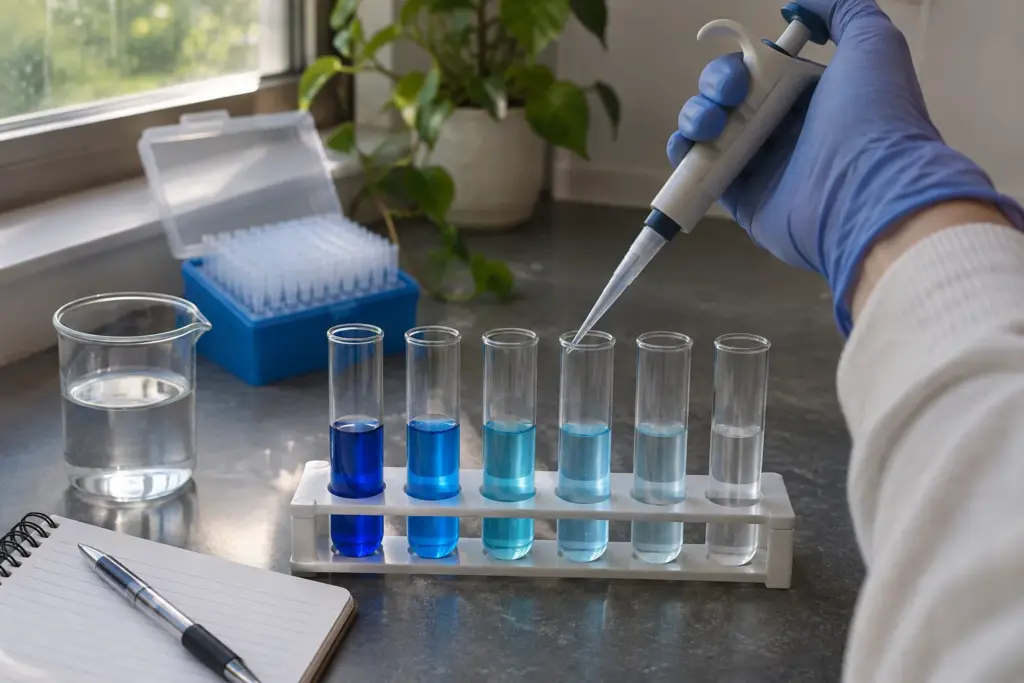
Each 1:10 step removes one power of ten, so going from 100 micromolar to 0.001 micromolar takes 5 steps. A two-fold series moves 0.5 mL into 0.5 mL of diluent for 1 mL per tube, and eight tubes reach a total factor of 256. A half-log series uses a step of 3.16, and two steps multiply to 9.986, about one ten-fold step (Wikipedia).
Every tube except the last needs enough volume to hold what you keep plus what you pass on. A serial series also carries each pipetting error into the next tube. For a standard curve where accuracy matters, a direct dilution from stock for each point avoids the compounding, at the cost of very small stock volumes at high factors.
Unit conversions inside a dilution
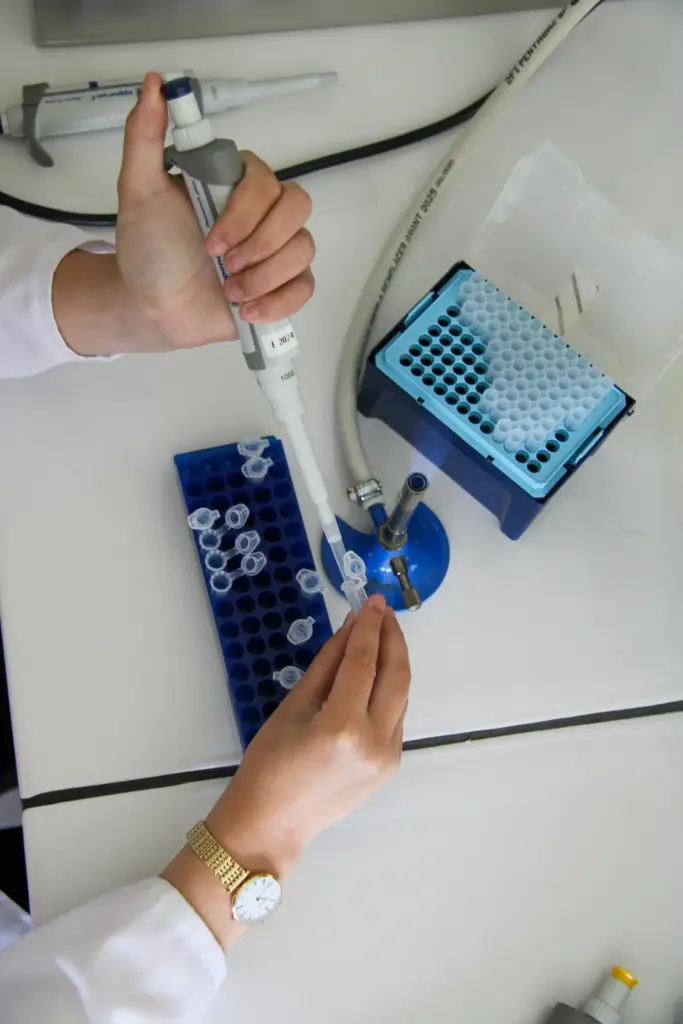
Concentrations on both sides must use one unit and volumes one unit, or the answer is off by a power of ten. Example: diluting 10 mM stock to 50 µM in 2 mL is a factor of 200. V1 is 10 µL (0.01 mL) and the diluent is 1.99 mL. A volume that small needs an adjustable micropipette, not a graduated cylinder. SI prefixes are listed by NIST.
To switch between mass and molar, use g/L = molarity × molar mass (Newcastle University). A 3 M glucose solution, with a molar mass of 180.16 g/mol, is 540.48 g/L. Mass units equate directly: 1 g/L = 1 mg/mL = 1000 µg/mL. Get a molar mass from the molar mass calculator.
Diluting percent solutions
Percent solutions use the same C1V1 = C2V2. To make 100 mL of 10% from 70% stock, the factor is 7, V1 is 14.29 mL and the diluent is 85.71 mL. Keep both percentages on one basis: % w/v is grams per 100 mL, % v/v is mL per 100 mL and % w/w is grams per 100 g (LibreTexts). The calculator will not convert percent to molar or mass units, because that needs the solution density.
Common dilution mistakes
Volumes do not always add. Mixing 50 mL of ethanol with 50 mL of water gives about 97 mL (JMU), and concentrated acids behave the same way. For these, add diluent up to the mark in a volumetric flask instead of measuring V2 − V1 of liquid.
Round the result to the precision of the least precise input. The significant figures calculator shows how.
Sources
- LibreTexts. Concentrations: Dilution
- LibreTexts. Appendix B: Scientific Notation and Dilutions
- Wikipedia. Dilution ratio
- AAT Bioquest. Is dilution ratio the same as dilution factor?
- Wikipedia. Serial dilution
- University of Vermont. Serial dilution help
- LibreTexts. Concentrations: Mass/Volume Percent
- Newcastle University. Molar calculations
- NIST. Metric (SI) prefixes
- James Madison University. Volume change on mixing ethanol and water
- University of Illinois. Mineral acids safety
Before diluting a stock made from a weighed solid, the grams to moles converter gives the moles of solute that the mass represents.
Frequently asked questions
Rearrange it to V1 = C2 x V2 / C1, then subtract V1 from the final volume V2 to get the diluent. For 100 mL of 0.1 M from 1 M stock, V1 is 10 mL.
Take V1 = C2 x V2 / C1 of stock and add diluent up to V2. To make 100 mL of 0.1 M, add 10 mL of 1 M stock to 90 mL of water (dilution factor 10).
The dilution factor is the stock concentration divided by the final concentration, which equals the final volume divided by the stock volume. Diluting 1 M to 0.1 M is a factor of 10.
It usually means one part stock in ten parts total, so 1 mL of stock plus 9 mL of diluent and a dilution factor of 10. Some sources mean one part stock plus ten parts diluent, so state the volumes.
Put 9 mL of diluent in each tube, move 1 mL from one tube into the next and mix between transfers. Each tube is ten times weaker than the last, so tube 3 is at a total factor of 1,000 and 1 mM when the series starts at 1 M.
It takes 5 steps of 1:10, because each step removes one power of ten.
The factor is 7. For 100 mL of 10%, take 14.29 mL of the 70% stock and add 85.71 mL of diluent, using the same percent basis on both.
Add acid to water. Water added to concentrated acid can boil and spatter.