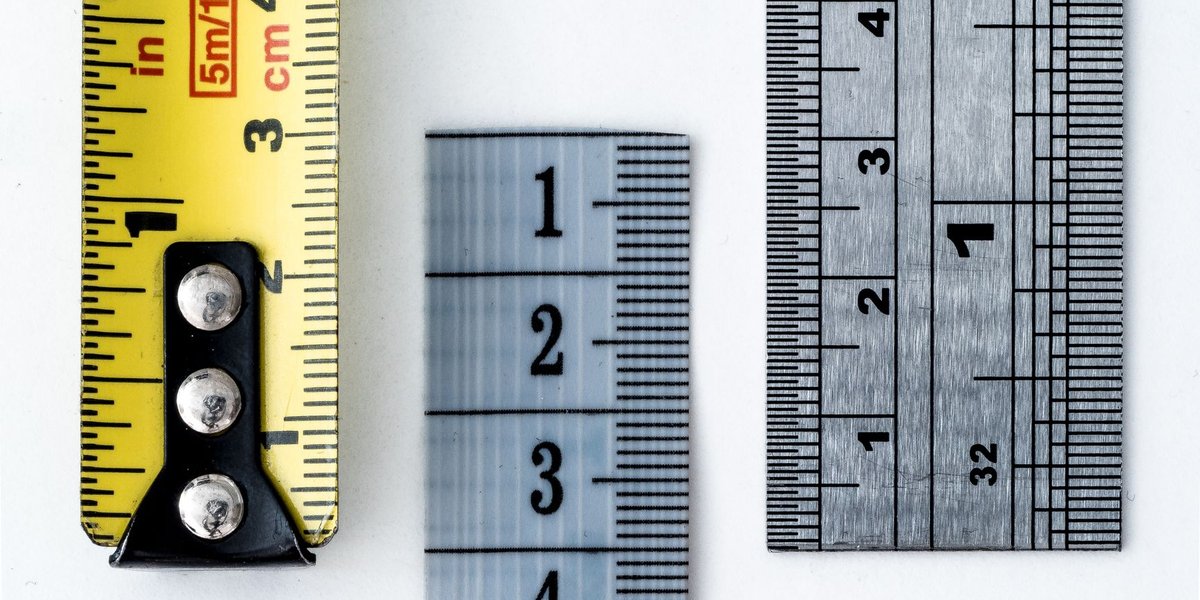
A unit of measurement is an agreed quantity used to express the size of something else. A metre is a length, a kilogram is a mass, a second is a duration. Everything you measure is a number multiplied by one of these.
Most lists of units stop at the names. This one gives each unit a sense of scale (a door is about 2 m tall, a soda can holds 355 mL), covers the everyday places units show up, and gets the details right that a lot of pages get wrong. The litre, for one, is not an SI base unit.
Table of Contents
- Examples of Units of Measurement at a Glance
- Length
- Mass
- Volume and Capacity
- Temperature
- Time
- Area, Speed and Electric Current
- The Seven SI Base Units
- Derived Units: Newton, Joule, Watt, Hertz
- Metric vs US Customary Units
- Non-Standard Units of Measurement
- Four Quick Conversions
- FAQ
Examples of Units of Measurement at a Glance
Each physical quantity has one SI unit, which is the standard unit scientists use worldwide. Daily life often uses something else alongside it.
| Quantity | SI unit | Symbol | Common non-SI example |
|---|---|---|---|
| Length | metre | m | inch, foot, mile |
| Mass | kilogram | kg | pound, ounce |
| Volume | cubic metre (the litre is accepted for everyday use) | m³ (L) | gallon, cup |
| Temperature | kelvin (the degree Celsius is used in daily life) | K (°C) | degree Fahrenheit |
| Time | second | s | minute, hour, day |
| Area | square metre | m² | acre, square foot |
| Speed | metre per second | m/s | miles per hour, knot |
| Electric current | ampere | A | none in common use |
Length
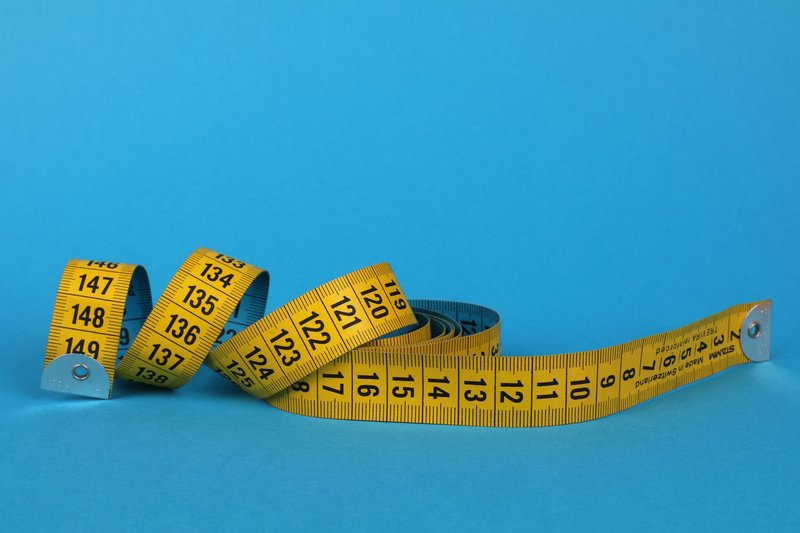
Length is the distance between two points, a physical quantity like mass or time. The metre is the SI unit, and everything else in the metric system is a power of ten away from it.
- Millimetre (mm): a credit card is 0.76 mm thick, and a human hair is roughly 0.07 mm wide.
- Centimetre (cm): a standard paperclip is about 3 cm long.
- Metre (m): a standard interior door is about 2 m tall.
- Kilometre (km): a marathon is 42.195 km.
Non-SI examples: a US letter sheet is 11 inches long, a basketball hoop sits 10 feet off the ground, and road signs in the US and UK count distance in miles. The inch is defined as exactly 2.54 cm, so the two systems are tied together by a fixed number.
Mass
Mass measures how much matter an object contains. The SI base unit is the kilogram, which is the only base unit that carries a prefix in its name.
- Milligram (mg): a regular aspirin tablet in the US contains 325 mg of active ingredient.
- Gram (g): a paperclip weighs about 1 g and a paperback book about 200 g.
- Kilogram (kg): a litre of water has a mass of almost exactly 1 kg, and an average adult weighs around 70 kg.
- Tonne (t): 1,000 kg. A small family car is around 1.5 t.
Mass and weight get confused constantly. Mass is how much stuff you’re made of and doesn’t change. Weight is the force gravity exerts on that mass, so it is measured in newtons and drops on the Moon. Bathroom scales, like any measuring instrument, read in kilograms or pounds because they convert force to mass on the assumption that you’re standing on Earth.
Volume and Capacity
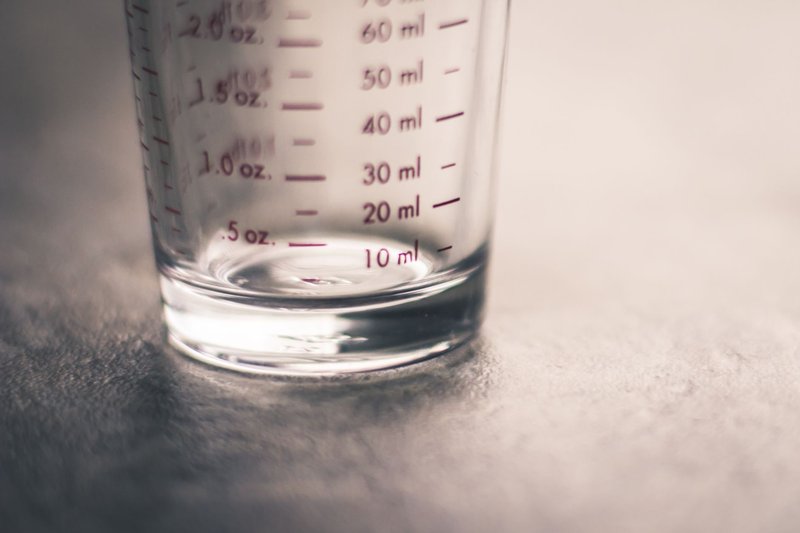
Volume is the space an object occupies. Capacity is the amount a container holds. The units overlap, since 1 litre equals 1,000 cm³.
- Millilitre (mL): a teaspoon is about 5 mL, a tablespoon 15 mL, and a soda can 355 mL (12 US fluid ounces).
- Litre (L): a standard water bottle holds 500 mL to 1 L, and a US milk jug holds about 3.785 L (1 US gallon).
- Cubic metre (m³): the SI unit proper. An Olympic swimming pool, at 50 m by 25 m by at least 2 m, holds about 2,500 m³.
The litre is not an SI base unit and is not even an SI unit in the strict sense. It’s a non-SI unit accepted for use alongside SI, which is why the table above lists the cubic metre as the standard.
Cooking and medicine are where this matters most. A liquid medicine dose of 5 mL is one measuring spoon. Confusing it with a kitchen teaspoon is a known cause of dosing errors, which is why pharmacies hand out marked syringes and cups.
Temperature
Temperature measures how hot or cold something is. Three scales are in regular use.
- Celsius (°C): water freezes at 0 °C and boils at 100 °C at sea level. A comfortable room is 20 to 22 °C and normal body temperature is about 37 °C.
- Fahrenheit (°F): water freezes at 32 °F and boils at 212 °F. Body temperature is 98.6 °F. The US uses it for weather and cooking.
- Kelvin (K): the SI base unit. Zero kelvin is absolute zero, the lowest possible temperature. Water freezes at 273.15 K.
A kelvin and a degree Celsius are the same size. Only the starting point differs. That’s why scientists can switch between them just by adding or subtracting 273.15.
Time
The second is the SI base unit. Since 1967 it has been defined by the vibrations of a caesium-133 atom: exactly 9,192,631,770 cycles of its microwave radiation.
- Millisecond (ms): a camera flash lasts roughly a thousandth of a second.
- Second (s): one slow heartbeat.
- Minute, hour, day: 60 s, 3,600 s and 86,400 s. These aren’t SI units, but SI accepts them.
- Year: about 31.56 million seconds.
Time is the odd one out. It’s the one major quantity that never went decimal. Seconds, minutes and hours still run on base 60, a legacy of Babylonian arithmetic.
Area, Speed and Electric Current

These three are less obvious than length or mass, but all show up daily.
Area is length times width, so its unit is a length squared.
- A sheet of A4 paper (210 mm by 297 mm) covers about 0.062 m².
- A doubles tennis court (23.77 m by 10.97 m) covers about 261 m².
- Land is often counted in hectares (10,000 m²) or acres (about 4,047 m²).
Speed is distance over time.
- A walking adult moves at about 1.4 m/s.
- A car at 100 km/h is travelling 27.8 m/s, or about 62 mph.
- Ships and aircraft use knots. One knot is one nautical mile per hour, about 1.85 km/h.
Electric current is the flow of charge, measured in amperes (amps, A).
- A small LED draws around 20 mA, or 0.02 A.
- A phone charger delivers 1 to 3 A.
- A typical US household circuit is protected by a 15 A or 20 A breaker.
The Seven SI Base Units
Every unit in the International System of Units (SI) is built from seven base units. The International Bureau of Weights and Measures maintains the definitions. Since 2019, all seven are defined by fixed values of natural constants rather than physical objects. The kilogram’s redefinition retired the platinum-iridium cylinder that had served as the standard since 1889.
| Quantity | Unit | Symbol | Everyday anchor |
|---|---|---|---|
| Length | metre | m | A long stride |
| Mass | kilogram | kg | A litre of water |
| Time | second | s | A heartbeat |
| Electric current | ampere | A | A phone charger’s output |
| Temperature | kelvin | K | Same step size as 1 °C |
| Amount of substance | mole | mol | 6.02214076 × 10²³ particles |
| Luminous intensity | candela | cd | Roughly one candle |
Notice what is missing: the litre, the gram, the hour and the degree Celsius. None of them is a base unit.
Derived Units: Newton, Joule, Watt, Hertz
Derived units are combinations of base units. Four of them cover most of school physics.
- Newton (N): the unit of force. One newton is about the weight of a 100 g apple on Earth.
- Joule (J): the unit of energy. Lifting that apple 1 m takes about 1 J. A food Calorie (kcal) equals 4,184 J.
- Watt (W): the unit of power, one joule per second. A classic incandescent bulb used 60 W.
- Hertz (Hz): the unit of frequency, one cycle per second. A resting heart beats at about 1 Hz, and mains electricity cycles at 50 or 60 Hz depending on the country.
Other examples include the pascal (Pa) for pressure and the volt (V) for electric potential.
Metric vs US Customary Units
The metric system is built on powers of ten. Moving between millimetres, metres and kilometres is a matter of shifting a decimal point. US customary units grew from older English measures and use irregular factors: 12 inches to a foot, 16 ounces to a pound, 4 quarts to a gallon.
| Quantity | Metric | US customary | Link |
|---|---|---|---|
| Length | centimetre, metre, kilometre | inch, foot, mile | 1 in = 2.54 cm |
| Mass | gram, kilogram | ounce, pound | 1 lb = 0.4536 kg |
| Volume | millilitre, litre | fluid ounce, gallon | 1 US gal = 3.785 L |
| Temperature | °C | °F | °F = °C × 1.8 + 32 |
The US customary system is also not the same as the British imperial system, even though people use the terms interchangeably. A US pint is 473 mL and an imperial pint is 568 mL. An imperial gallon is 4.546 L, about 20% larger than a US gallon.
Mixing the two systems can be expensive. In 1999, NASA’s Mars Climate Orbiter was lost after one team’s software produced thrust data in pound-force seconds while another team’s navigation software expected newton-seconds.
Non-Standard Units of Measurement

Non-standard units are informal or traditional measures that aren’t part of SI or a national system. Some are historical and some are still in use for specific jobs.
- Cubit: the length from elbow to fingertip, about 45 to 52 cm, used in ancient Egypt and Mesopotamia.
- Hand: exactly 4 inches, still used to measure the height of horses.
- Carat: 200 mg, used for gemstones.
- Nautical mile: exactly 1,852 m, based on one minute of latitude, and used at sea and in the air.
- Astronomical unit (AU): about 149.6 million km, the average distance from Earth to the Sun.
- Light-year: about 9.46 trillion km, the distance light travels in a year.
- Barrel of oil: 42 US gallons, or about 159 L.
In primary school, “non-standard units” also means everyday objects used to measure: paperclips, hand spans, footsteps. These work for comparing sizes. They fall apart when two people need the same answer, which is the reason standard units exist.
Four Quick Conversions
1. Miles to kilometres. 1 mile is 1.609344 km. A 5-mile run is 5 × 1.609344 = 8.05 km.
2. Celsius to Fahrenheit. Multiply by 1.8, then add 32. An oven at 180 °C is 180 × 1.8 + 32 = 356 °F, which is why recipes round it to 350 °F.
3. Litres to millilitres. Multiply by 1,000. A 2.5 L bottle holds 2,500 mL.
4. Pounds to kilograms. Multiply by 0.4536. A 150 lb person has a mass of 150 × 0.4536 = 68.0 kg.
FAQ
What are the 7 SI base units?
The metre (length), kilogram (mass), second (time), ampere (electric current), kelvin (temperature), mole (amount of substance) and candela (luminous intensity).
Is the litre an SI unit?
No. It is a non-SI unit accepted for use with SI. The SI unit of volume is the cubic metre, and 1 L equals 0.001 m³.
What is the difference between mass and weight?
Mass is the amount of matter in an object, measured in kilograms. Weight is the gravitational force on that mass, measured in newtons. Your mass is the same on the Moon, but your weight is about one sixth of what it is on Earth.
What are standard units of measurement?
Standard units are units with an agreed, fixed definition, such as the metre, the kilogram or the pound. They give the same result no matter who measures. SI units are the international standard, and customary units such as inches and pounds are standard within a country’s system.
Which countries still use US customary units?
The United States is the main one. Liberia and Myanmar are often listed as well, although both have moved toward the metric system. The UK uses a mix: metric for most products, miles for roads, and pints for beer and milk.