As an Amazon Associate we earn from qualifying purchases. Disclosure
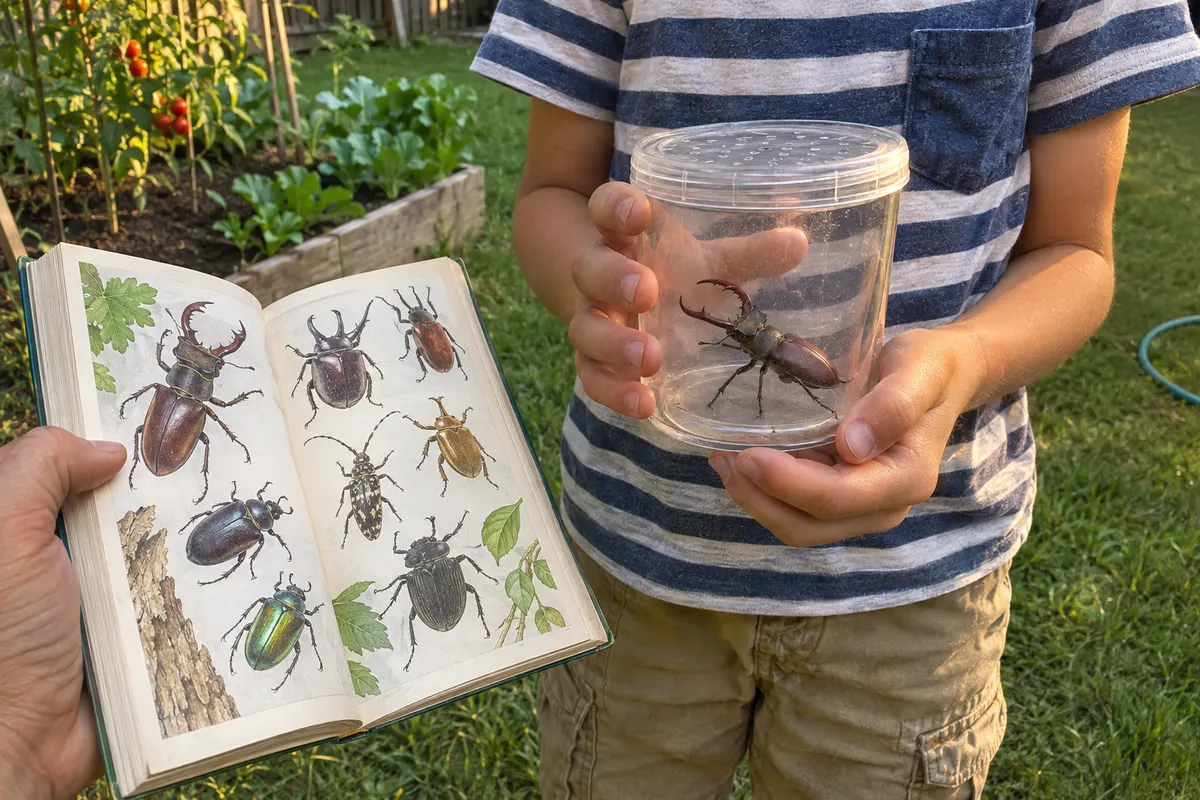
Last July my nephew Mateo, who was nine, walked across my sister’s backyard holding a plastic jar out in front of him with both hands. Inside was a reddish-brown beetle about two inches long with a pair of curved jaws that took up a third of its body. He asked me what it was. I have an MD-PhD and spent years studying the immune system, and the best I could do was “a beetle.” We photographed it, and iNaturalist named it in a few seconds: a reddish-brown stag beetle, Lucanus capreolus.
That answered his first question. It did not answer the next three. Why are the jaws so big if it doesn’t bite? Where was it before it was a beetle? How many kinds of beetles are there? An app can put a name on an insect. It cannot tell you why the male’s mandibles are built for wrestling other males, that the grub spent one to two years eating rotting wood in the stump by the fence, or that beetles make up about a quarter of all described animal species. Books do that, and they split into very different kinds.
The best entomology book for beginners is Extraordinary Insects by Anne Sverdrup-Thygeson, a short, accurate tour of how insects live and why the world depends on them. To identify insects in North America, the best field guide for beginners is the Kaufman Field Guide to Insects of North America, which uses photos instead of line drawings. To study entomology seriously, the standard textbook is Borror and DeLong’s Introduction to the Study of Insects, and the best one-volume reference with photos is Stephen Marshall’s Insects: Their Natural History and Diversity.
The 29 entomology books below are sorted by what you want to do: read about insects, identify the ones around you, go deeper into one group, study entomology properly or get a child started. Each entry says who it suits, what it covers and where it falls short, with the edition to buy. After the list you will find what entomologists on Reddit recommend, the free tools that do some jobs better than any book, how to start observing insects and a reading order.
Quick picks
| Pick | Best for | Type |
|---|---|---|
| Extraordinary Insects | Best first entomology book | Popular science |
| A Sting in the Tale | A field biologist’s story | Popular science |
| Insects (Marshall) | One-volume reference with photos | Reference |
| Kaufman Field Guide to Insects | Best field guide for beginners | Field guide |
| NWF Field Guide to Insects and Spiders | A photo for every species listed | Field guide |
| Insects of North America (Princeton) | Newest all-insect guide | Field guide |
| Beetles of Eastern North America | Beetles | Group guide |
| Peterson Moths of Northeastern NA | Moths | Group guide |
| Borror and DeLong | Standard entomology textbook | Textbook |
| The Insects (Gullan and Cranston) | Most readable textbook | Textbook |
| First Big Book of Bugs | Kids aged 4 to 8 | Kids |
| Insects and Bugs for Kids | Kids aged 6 to 12 | Kids |
Which entomology book to start with
“Entomology books” covers four kinds of book that do different jobs. Most people who search for them need one or two of these, not all four.
- You want to understand insects: how they live, why they matter, what is strange about them. Read a popular science book. These are written for adults with no biology background and are the right first entomology book for most readers.
- You want to name the insects you find. Buy a field guide for your region. An all-insect guide like Kaufman gets most finds to family and the common ones to species. No single book covers every species: the United States alone has about 91,000 described insect species.
- You already love one group, such as beetles, moths, butterflies, dragonflies or bees. Buy a guide to that group for your half of the continent. Group guides cover far more species than any all-insect guide can.
- You want to study entomology as a science, for a course, a career or serious self-study. Get a textbook. Borror and DeLong teaches you to key any insect to family; Gullan and Cranston teaches insect biology.
The common mistake is buying a textbook first. Borror and DeLong is 880 pages of keys and terminology, and readers who start there often stop there. Start with a book that makes you want to know more, add a field guide when you start looking at real insects, and save the textbook for when you know which questions you are asking.
Best entomology books for beginners
These are books to read, not books to look things up in. None of them assumes you know any biology.
Best first entomology book
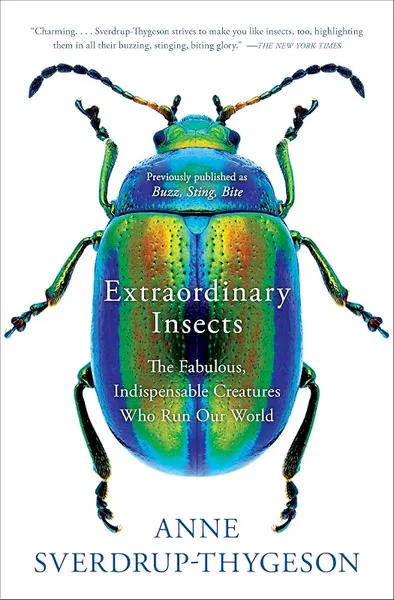
1. Extraordinary Insects
Anne Sverdrup-Thygeson is a professor of conservation biology at the Norwegian University of Life Sciences who studies the beetles that live in hollow oaks. This book, first published in English in hardcover as Buzz, Sting, Bite, covers how insects are built, how they find mates, what they eat and what they do for us: pollination, decomposition, food for birds and fish, and medicines and materials we have copied from them. Each chapter is short, built around specific animals, and backed by research she cites.
It is the book I would give anyone who has just become curious about insects. It is accurate without being a lecture, and it ends with a clear chapter on insect decline and what an ordinary person can do about it.
- Anne Sverdrup-Thygeson
- Simon & Schuster, paperback (2020), 256 pages
- Same text as the hardcover Buzz, Sting, Bite
Good: the broadest, clearest introduction to insects for adults, by a working entomologist. Not great: European examples dominate in places, and it is a survey, so no single topic goes deep.
Check on Amazon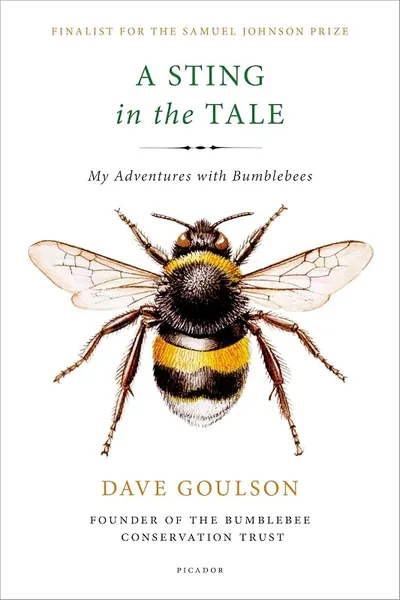
Best field biologist’s memoir
2. A Sting in the Tale
Dave Goulson is a bumblebee ecologist at the University of Sussex who founded the Bumblebee Conservation Trust. This book mixes the biology of bumblebees (how a queen survives winter alone, how bees warm their flight muscles before take-off, how a colony grows and dies in one summer) with his own fieldwork, including his attempt to bring the short-haired bumblebee back to Britain after it went extinct there. Goulson is the popular entomology author named most often in Reddit threads, and this is the book of his that people start with.
If it hooks you, his Silent Earth is the follow-up on insect decline, with practical steps for gardens and towns.
- Dave Goulson
- Picador, paperback (2015), 288 pages
- Bumblebees, field research and conservation
Good: funny, personal and full of real experiments, by one of the best-known insect ecologists writing today. Not great: it is about bumblebees, set mostly in Britain, so read it as a door into entomology rather than an overview.
Check on Amazon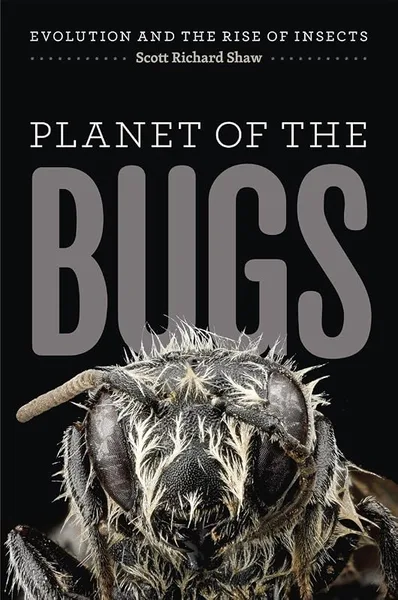
Best book on insect evolution
3. Planet of the Bugs
Scott Richard Shaw, an entomologist at the University of Wyoming who specializes in parasitoid wasps, tells the 400-million-year history of insects: the first six-legged animals on land, the first flyers, giant dragonflies with 70-centimeter wingspans in the Carboniferous, the rise of flowering plants with their pollinators, and how insects came through the mass extinctions that ended other groups. His argument is that we live on a planet run by insects and that vertebrates are a recent side story. Reddit readers call it an easy and interesting read.
- Scott Richard Shaw
- University of Chicago Press, paperback (2015), 264 pages
- Insect evolution from the Devonian to today
Good: the clearest account of where insects came from and why there are so many of them. Not great: some chapters lean on Shaw’s humor more than the science needs.
Check on Amazon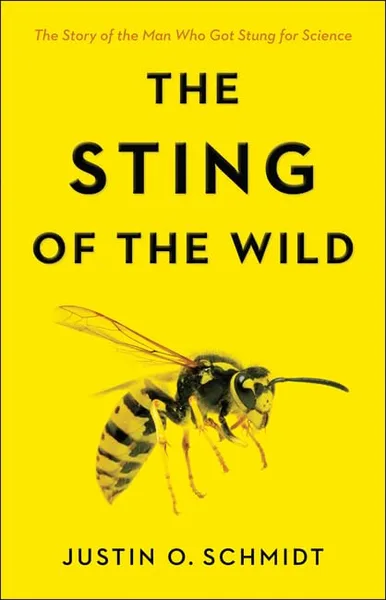
Best book on stinging insects
4. The Sting of the Wild
Justin Schmidt was the entomologist who let himself be stung by 83 species of bees, wasps and ants and rated each on the pain index now named after him, from the sweat bee at 1 to the bullet ant at 4. The pain index is the hook; the book is about why stings evolved, what is in venom, how social insects defend a nest and why some stings hurt and others kill. On Reddit it is the standard answer when someone asks for the science behind Coyote Peterson’s sting videos.
From a medical side, it is also a good plain-language account of what venom does to the body, including allergic reactions.
- Justin O. Schmidt
- Johns Hopkins University Press, paperback (2018), 280 pages
- The Schmidt sting pain index, with the full table
Good: real science behind a famous gimmick, written with humor by the man who took the stings. Not great: limited to bees, wasps and ants.
Check on Amazon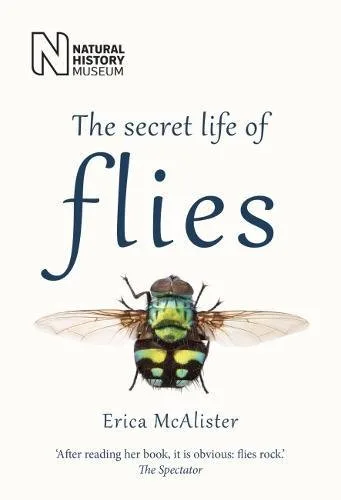
Best book on an underrated group
5. The Secret Life of Flies
Erica McAlister is the senior curator of flies at the Natural History Museum in London, which holds one of the largest fly collections in the world. Flies are about one in ten described species, and she covers what they do that most readers never think about: pollinating cacao and other crops, recycling dung and corpses, helping forensic scientists date a death, and spreading disease. Every chapter turns a group most people swat into one they want to look at more closely.
- Erica McAlister
- Natural History Museum, paperback (2018), 248 pages
- Flies (Diptera): ecology, behavior, forensics, disease
Good: lively and packed with facts, by a museum curator who handles the specimens. Not great: organized by what flies do rather than by family, so it is not useful for identification.
Check on Amazon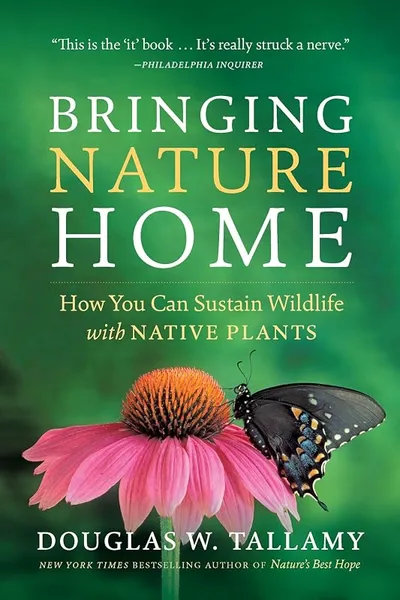
Best for gardeners
6. Bringing Nature Home
Douglas Tallamy, an entomologist at the University of Delaware, explains why most garden insects cannot eat imported ornamental plants and why that matters for birds: nearly all land birds feed their chicks on insects, mostly caterpillars. His research found that native oaks support hundreds of caterpillar species, while many popular non-native trees support almost none. The book is the reason “native plant gardening” became a movement.
- Douglas W. Tallamy
- Timber Press, paperback (2009), 360 pages
- Native plants, insects and birds in gardens
Good: turns entomology into something you can act on in your own yard. Not great: written for eastern North America, and the plant lists matter less if you live in the West.
Check on Amazon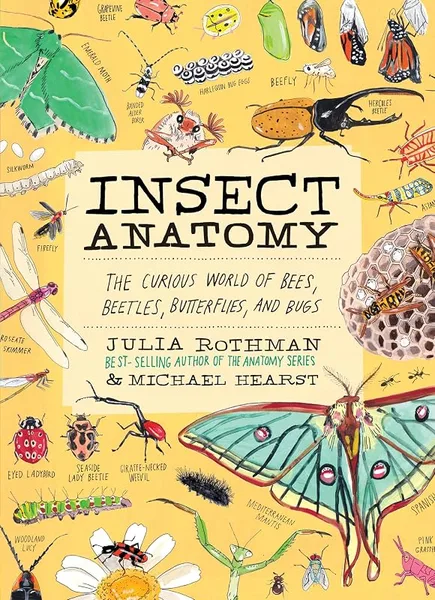
Best illustrated book
7. Insect Anatomy
This is a book of hand-painted, labeled illustrations in the style of Julia Rothman’s Nature Anatomy series: the parts of an insect, the main orders side by side, life cycles, wing types, mouthparts, nests and hives, and how insects see, hear and smell. It reads in an afternoon and stays useful as a visual reference after that. It suits teenagers and adults who learn better from pictures than from paragraphs, and it is the gift pick in this group.
- Julia Rothman and Michael Hearst
- Storey Publishing, paperback (2025), 208 pages
- Illustrated anatomy, orders and life cycles
Good: the fastest way to learn insect body parts and the main orders. Not great: breadth over depth, and illustrations instead of photos.
Check on Amazon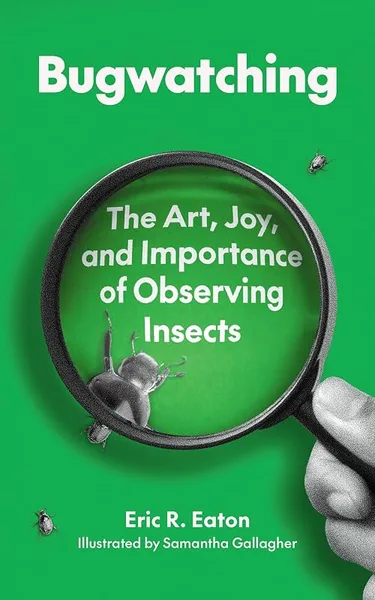
Best guide to watching insects
8. Bugwatching
Eric Eaton, co-author of the Kaufman insect guide and a longtime BugGuide contributor, wrote this as the insect version of a birdwatching handbook. It covers where and when to look, how to approach without scaring insects off, how to photograph them, how to keep notes, how to use iNaturalist and BugGuide, and how your sightings help researchers. It is the most practical book here for someone who wants to go outside and start looking.
- Eric R. Eaton, illustrated by Samantha Gallagher
- Princeton University Press, paperback (2025), 192 pages
- Observation, photography and community science
Good: practical, current and written by an entomologist who has spent years helping beginners identify insects. Not great: it teaches how to look, not what you are looking at, so pair it with a field guide.
Check on Amazon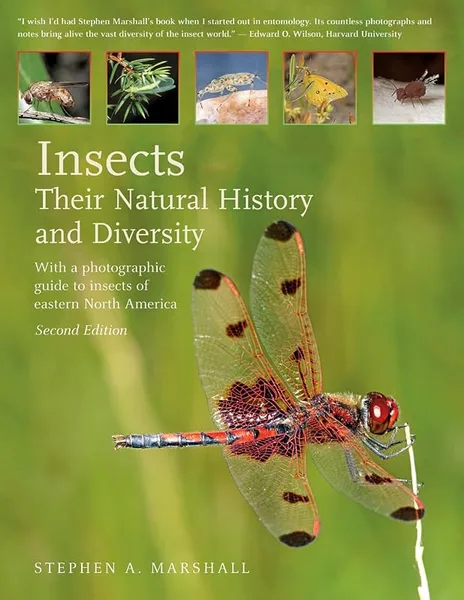
Best one-volume entomology reference
9. Insects: Their Natural History and Diversity
Stephen Marshall, a professor emeritus at the University of Guelph, took most of the thousands of color photos in this book himself. It walks through every insect order and the main families in each, with notes on what they eat, how they live and how to tell them apart, plus a chapter on collecting and pinning and a key to orders. One r/entomology user called it “my favourite textbook” for exactly that mix. It sits between a coffee-table book and a textbook, and it is the one book here that does both reading and identification well for northeastern North America.
- Stephen A. Marshall
- Firefly Books, hardcover, 2nd edition (2017), 736 pages
- Buy the 2017 second edition, not the 2006 first
Good: the best photographs of insects in any book, with real natural history for every family. Not great: heavy, northeastern in coverage, and the index is weak, so it is hard to look up one insect quickly.
Check on AmazonBest insect field guides for North America
An all-insect field guide gets most of what you find to order and family, and the common and showy species to species. For anything rarer, you move to a group guide (next section) or a photo on BugGuide. Every guide below covers the United States and Canada.
Best insect field guide for beginners
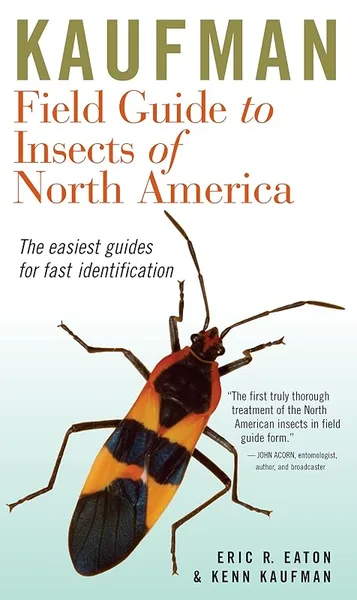
10. Kaufman Field Guide to Insects of North America
Eric Eaton and Kenn Kaufman built this guide from digitally edited photographs: each insect is shown on a white background at a consistent angle, with arrows to the features that separate it from look-alikes. It covers about 2,350 species, which is a lot for a pocket-size book, and it is organized by order and family with color tabs along the edge. Reddit users describe it as having “just about anything you can find.” For a beginner in the US or Canada, it is the first guide to buy.
- Eric R. Eaton and Kenn Kaufman
- Houghton Mifflin (2007), 392 pages
- About 2,350 species, photo-based
Good: photos, range notes and clear pointers on every page, small enough for a backpack. Not great: no keys, so insects not shown can be hard to place, and taxonomy has moved on since 2007.
Check on Amazon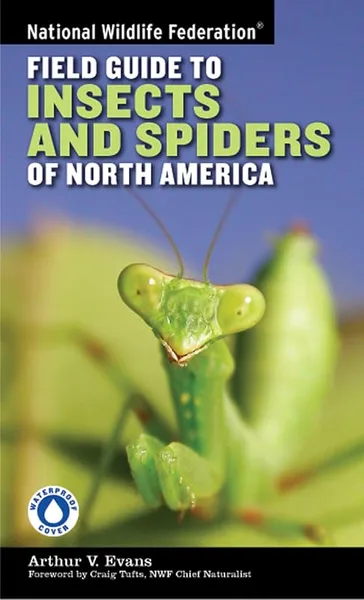
Best photo guide for beginners
11. National Wildlife Federation Field Guide to Insects and Spiders
Arthur Evans, a research associate at the Virginia Museum of Natural History, wrote this guide with a photograph of every species it describes, which is why r/entomology users call it “better for beginners due to having a picture for everything it lists.” It covers more than 900 species of insects, spiders and their relatives, with notes on habitat and behavior, and it is one of the few all-insect guides that also handles spiders, ticks, centipedes and millipedes well.
- Arthur V. Evans
- Sterling, paperback (2007), 496 pages
- Insects plus spiders and other arthropods
Good: one photo per species, broad coverage of non-insect arthropods. Not great: fewer insect species than Kaufman, and too thick for a pocket.
Check on Amazon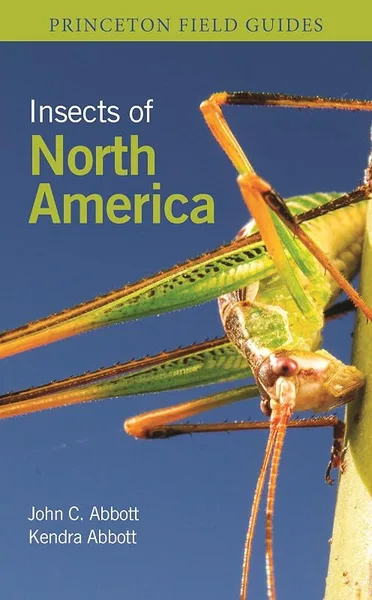
Newest all-insect field guide
12. Insects of North America (Princeton Field Guides)
John Abbott and Kendra Abbott published this in 2023, which makes it the most up-to-date all-insect guide for the continent by more than fifteen years. It covers every order with color photos of live insects, range information and current classification, and its introduction explains insect anatomy and life cycles for readers who are new to all of it. At 600 pages it is more of a car or desk guide than a pocket one.
- John C. Abbott and Kendra K. Abbott
- Princeton University Press, paperback (2023), 600 pages
- Current taxonomy, photos of live insects
Good: the newest names and the best photos of any all-insect guide. Not great: big and heavy; Kaufman is easier to carry.
Check on Amazon
Best guide for keying to family
13. A Peterson Field Guide to Insects
Donald Borror, the Borror of Borror and DeLong, wrote this with Richard White. It is the guide Reddit names most often, and for a different reason than Kaufman: it teaches you to place an insect in its family using structure (wing veins, antenna shape, leg segments), with line drawings and short keys. That makes it the bridge from a photo guide to the textbook. Users like its size and durability in the field.
- Donald J. Borror and Richard E. White
- Houghton Mifflin, paperback (1998 reissue of the 1970 text), 416 pages
- Covers about 580 families
Good: teaches how entomologists actually identify insects, and covers families other guides skip. Not great: the text dates from 1970, most illustrations are black-and-white drawings, and many names are out of date.
Check on Amazon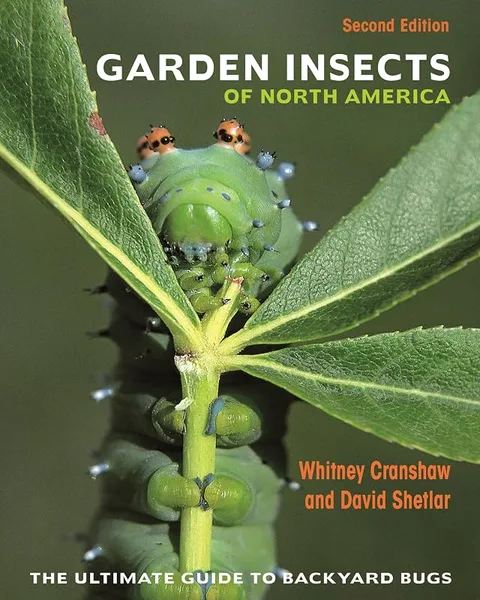
Best for garden and pest insects
14. Garden Insects of North America
Whitney Cranshaw and David Shetlar, extension entomologists at Colorado State and Ohio State, organized this guide by where you find the insect: on leaves, on roots, in flowers, boring into wood. That is how gardeners actually encounter insects, and it makes this the best book for answering “what is eating my plants?” It also covers the beneficial predators and parasitoids that keep pests in check, so you can tell which insects to leave alone. For beetles in particular, our guide to beetles in your yard, good vs bad covers the common species.
- Whitney Cranshaw and David Shetlar
- Princeton University Press, paperback, 2nd edition (2017), 704 pages
- Pests, natural enemies and plant damage
Good: organized by plant damage, with photos of the damage as well as the insect. Not great: it covers garden and landscape insects only, not the full diversity you would find in a forest or stream.
Check on Amazon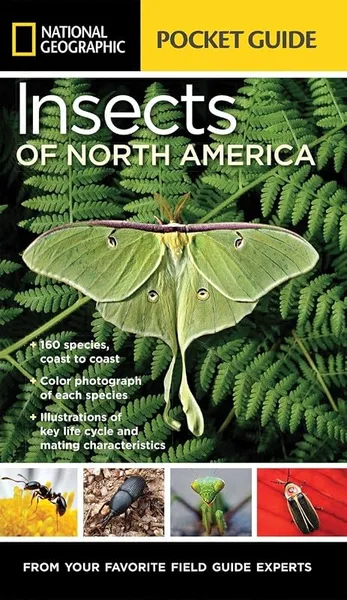
Best pocket guide
15. National Geographic Pocket Guide to Insects of North America
Another Arthur Evans guide, cut down to 160 of the insects you are most likely to see, one per page, with a photo, a range note and the key features. It fits in a jacket pocket and is the right size for a teenager or an adult who wants something for walks rather than a reference. Once it stops being enough, move up to Kaufman.
- Arthur V. Evans
- National Geographic, paperback (2016), 184 pages
- 160 common species
Good: small, light and well laid out. Not great: 160 species is a small slice of what you will find.
Check on AmazonThe National Audubon Society Field Guide to Insects and Spiders sells more copies than any of these, and many entomologists started with it. Its photos are grouped by color and shape rather than by family, and the text dates from 1980. It still works as a picture book, but Kaufman or the NWF guide will teach you more.
Field guides for one insect group
Once you are hooked on one group, an all-insect guide will frustrate you: Kaufman shows a few hundred beetles, and eastern North America has thousands. These guides cover their group properly. Most cover one half of the continent, so check the title against where you live.
Best beetle guide
16. Beetles of Eastern North America
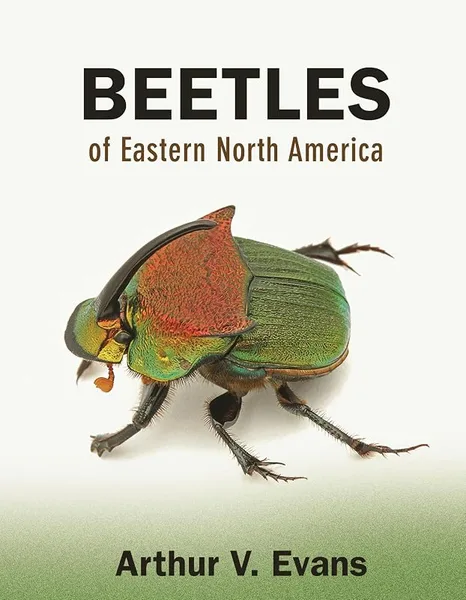
About one in four described animal species is a beetle, and this guide covers roughly 1,400 of the species east of the Mississippi, with photos of live beetles, and an introduction to beetle biology, collecting and photography. Reddit’s beetle community calls it comprehensive and “rather hefty.” Western readers should get Evans’s Beetles of Western North America instead.
- Arthur V. Evans
- Princeton University Press, paperback (2014), 560 pages
- About 1,400 species, eastern US and Canada
Good: the most complete beetle guide for the East, with excellent photos. Not great: eastern only, and too heavy for a pocket.
Check on Amazon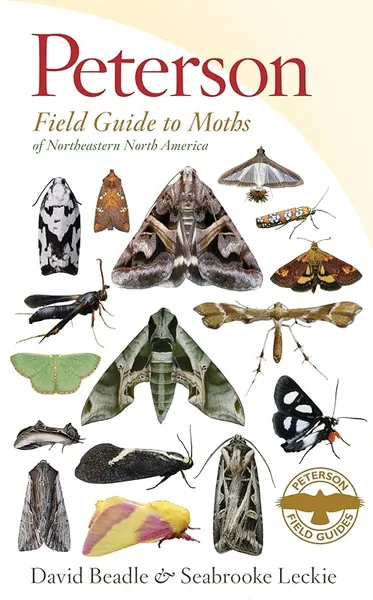
Best moth guide
17. Peterson Field Guide to Moths of Northeastern North America
Moths outnumber butterflies more than ten to one in North America, and most of them come to a light at night, so a moth guide is where many people’s insect habit begins. David Beadle and Seabrooke Leckie cover about 1,500 species with photos of each moth at rest, the way you see it on a wall or a sheet, plus size and flight-season notes. It is the moth guide Reddit names most often. Southeastern readers should look for the companion Peterson Field Guide to Moths of Southeastern North America.
- David Beadle and Seabrooke Leckie
- Houghton Mifflin, paperback (2012), 624 pages
- About 1,500 species, northeastern US and Canada
Good: moths shown in the resting pose you actually see, with flight periods. Not great: leaves out many of the smallest moths, which often need a microscope to identify anyway.
Check on Amazon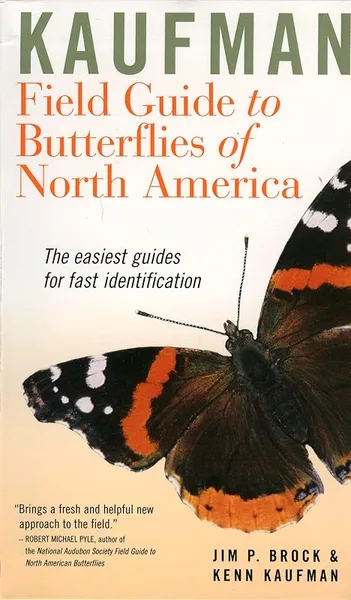
Best butterfly guide
18. Kaufman Field Guide to Butterflies of North America
Jim Brock and Kenn Kaufman use the same edited-photo method as the insect guide, with more than 2,000 images covering every regularly occurring butterfly in North America, shown at the same angle so look-alikes sit side by side. Range maps and notes are on the facing page. It is the most popular single-volume butterfly guide for the continent.
- Jim P. Brock and Kenn Kaufman
- Houghton Mifflin, hardcover (2006), 392 pages
- All of North America in one volume
Good: the whole continent in one portable book, with look-alikes grouped. Not great: few caterpillar photos, and some names have changed since publication.
Check on Amazon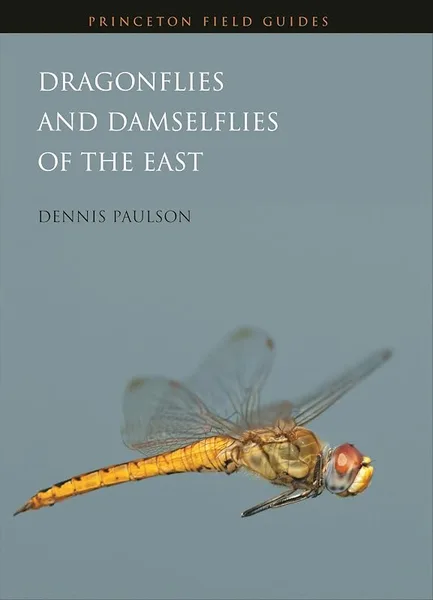
Best dragonfly guide
19. Dragonflies and Damselflies of the East
Dennis Paulson, director emeritus of the Slater Museum of Natural History, covers all 336 species of dragonflies and damselflies in eastern North America, with photos of males and females, range maps and flight seasons. Dragonflies are big, active by day and limited to a few hundred species in a region, which makes them the best insect group for someone coming from birdwatching. The companion Dragonflies and Damselflies of the West covers the rest of the continent.
- Dennis Paulson
- Princeton University Press, paperback (2012), 544 pages
- All 336 eastern species
Good: complete for its region, with both sexes shown. Not great: does not cover the aquatic nymphs in detail.
Check on Amazon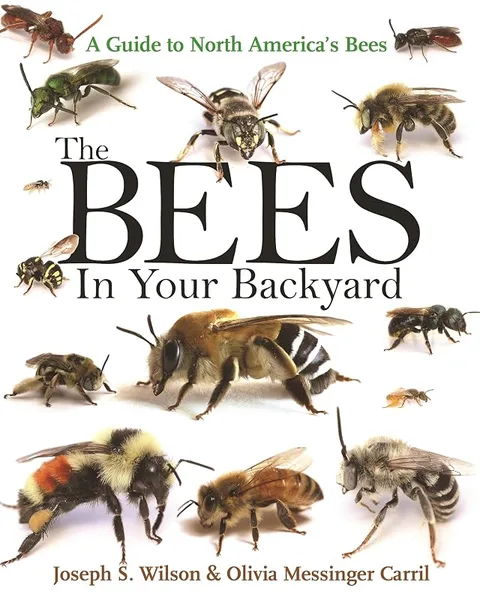
Best bee guide
20. The Bees in Your Backyard
North America has about 4,000 native bee species, and no field guide covers them all to species. Joseph Wilson and Olivia Messinger Carril take the practical route: every genus, with photos, notes on nesting and the flowers each prefers, and how to tell bees from the wasps and flies that mimic them. It is the book that teaches you that most bees are solitary, live in the ground and never sting anyone. For the wider picture, see our guide to pollinating insects and how they work.
- Joseph S. Wilson and Olivia Messinger Carril
- Princeton University Press, paperback (2015), 288 pages
- All North American bee genera
Good: the best introduction to native bees, written by two bee researchers. Not great: identifies to genus, not species, which is as far as most bees can be taken in the field.
Check on AmazonBest entomology textbooks
These are the books used in university entomology courses. They are expensive new and much cheaper used, and an edition or two behind the current one is fine for self-study. Insect classification changes faster than most of biology, so expect any textbook to have some outdated names.
Medical school taught me one corner of this. In tropical medicine lectures, the infectious disease fellow showed us how to tell an Anopheles mosquito, which carries malaria, from an Aedes, which carries dengue and Zika: Anopheles rests with its body tilted up at an angle, Aedes sits parallel to the surface and has white bands on its legs. Two mosquitoes, two diseases, told apart by posture and leg color. That is what a textbook teaches you to see, across 30 orders instead of one family.
Best entomology textbook
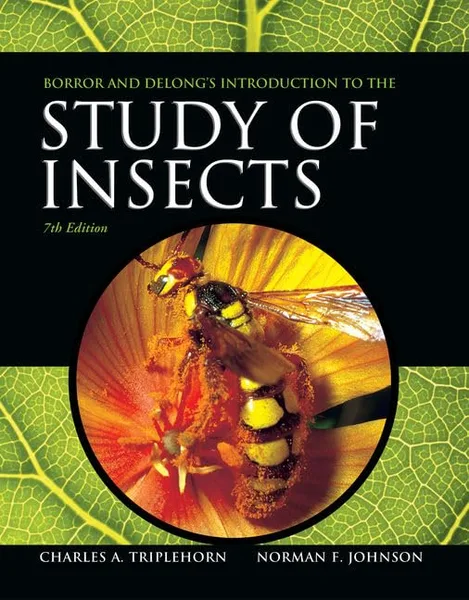
21. Borror and DeLong’s Introduction to the Study of Insects
This is the standard entomology textbook in North America and the book named most often on Reddit for learning entomology. Its core is a set of keys that take any adult insect to order and family through yes-or-no questions about its structure; one commenter estimated it works for over 95% of specimens anywhere in the world. Each order then gets a chapter on its biology and families, and there are chapters on anatomy, physiology, behavior, collecting and preserving.
The 7th edition, by Charles Triplehorn and Norman Johnson, is the current one. Used copies of it are the way most students buy it.
- Norman F. Johnson and Charles A. Triplehorn
- Cengage, paperback, 7th edition (2020 printing), 880 pages
- Keys to order and family for all insects
Good: the most complete family-level keys in one book, used in entomology courses for decades. Not great: dense, some classification is out of date, and new copies are expensive.
Check on Amazon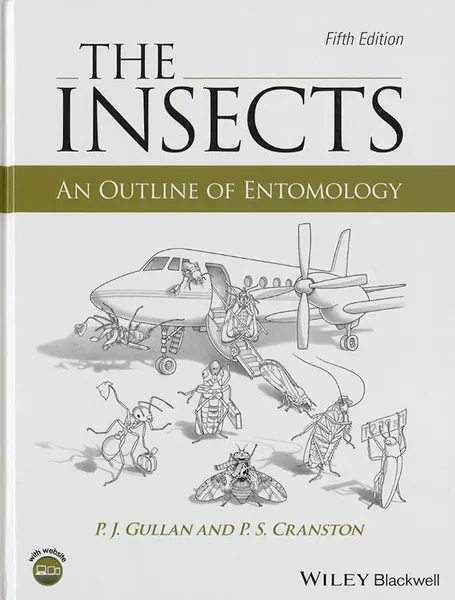
Most readable entomology textbook
22. The Insects: An Outline of Entomology
Penny Gullan and Peter Cranston wrote the textbook that teaches insect biology rather than insect identification. It covers anatomy, physiology, senses, reproduction, development, evolution and ecology, then insects in soil, water, plants and societies, and ends with medical and veterinary entomology, pest management and methods. Reddit calls it “a really great summary of insect biology” and “always a good place to start.” If Borror teaches you to name an insect, this teaches you how it works.
- P. J. Gullan and P. S. Cranston
- Wiley-Blackwell, hardcover, 5th edition (2014), 632 pages
- Insect biology, ecology and evolution
Good: clearly written, well illustrated and global in scope. Not great: it has keys only to order, so you need Borror or a field guide for identification.
Check on Amazon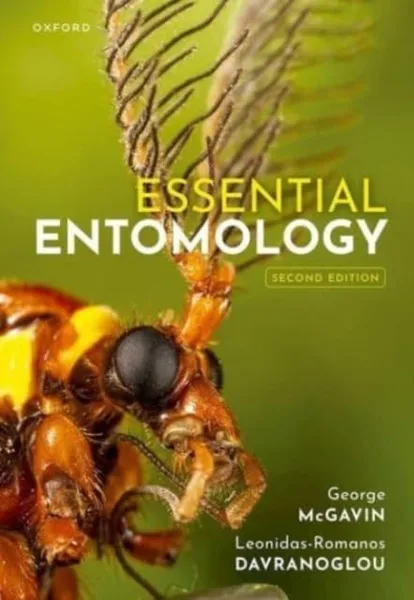
Best short textbook
23. Essential Entomology
George McGavin, an Oxford entomologist many readers know from BBC documentaries, wrote the first edition as an order-by-order guide: for each of the insect orders, what defines it, how its members live, how many species there are and why the group matters. The 2023 second edition updates the classification. At 336 pages it is the shortest textbook here and the easiest to read cover to cover.
- George C. McGavin and Leonidas-Romanos Davranoglou
- Oxford University Press, paperback, 2nd edition (2023), 336 pages
- Order-by-order overview, updated classification
Good: concise, current and global. Not great: less depth on physiology and no family keys.
Check on Amazon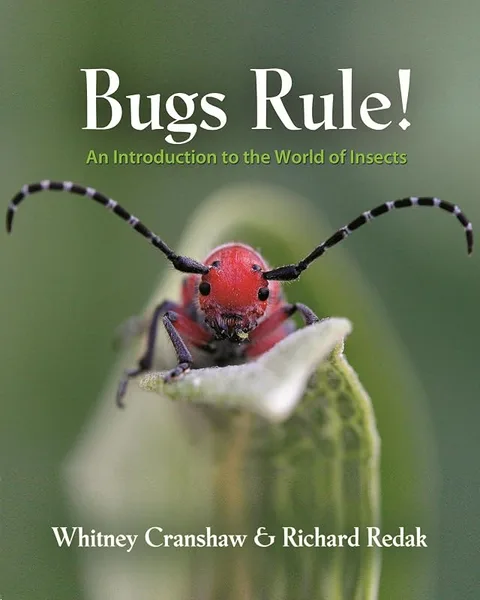
Best textbook for non-majors
24. Bugs Rule!
Whitney Cranshaw and Richard Redak wrote this for the general-education insect courses that many universities offer to students outside biology. Each chapter covers an order or a group of orders in plain language with photos and drawings, and there are chapters on insects and people: crops, disease, forensics, food. It is a textbook you can read for pleasure, which makes it the right step for an adult who has finished the popular books and wants structure without Borror’s density.
- Whitney Cranshaw and Richard Redak
- Princeton University Press, hardcover (2013), 496 pages
- Intro course text for non-biologists
Good: a real course in readable prose. Not great: less detail than a majors textbook, and no family keys.
Check on Amazon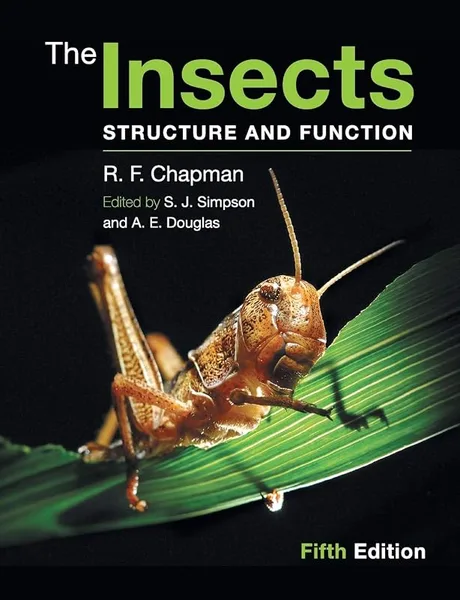
Best for insect physiology
25. The Insects: Structure and Function
Reginald Chapman’s book is the reference on how an insect body works, system by system: feeding and digestion, muscles and flight, the tracheal system, the nervous system and senses, hormones, reproduction and development. The 5th edition was revised by Stephen Simpson and Angela Douglas. It is for graduate students and serious readers who already have a biology background; anyone else should start with Gullan and Cranston.
- R. F. Chapman, edited by Stephen J. Simpson and Angela E. Douglas
- Cambridge University Press, paperback, 5th edition (2012), 959 pages
- Insect physiology and anatomy
Good: the most complete account of insect physiology in one volume. Not great: not a beginner book in any sense.
Check on AmazonEntomology books for kids
For younger children, pick a picture book that gets the facts right. From about eight, a simple field guide matched to where you live does more than any encyclopedia, because it lets a child put a name on the beetle in the jar. Our list of the best science gifts for kids includes bug-hunting kits that pair well with these.
Best for ages 4 to 8
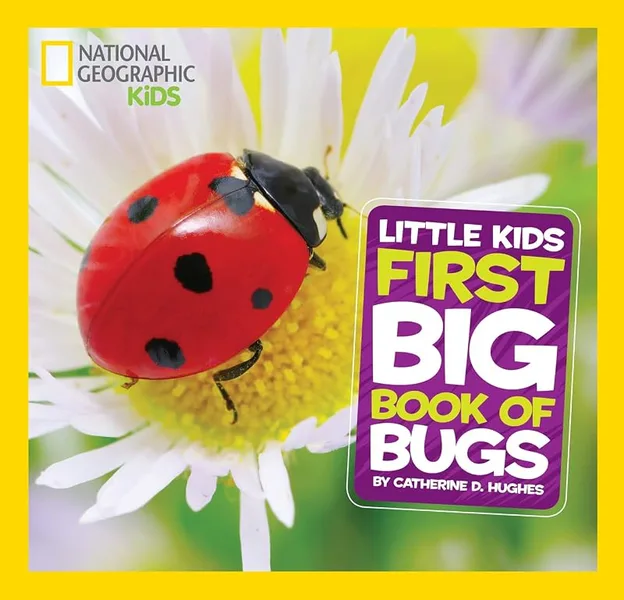
26. National Geographic Little Kids First Big Book of Bugs
Big photographs, a few short sentences per page and simple sections on where each bug lives, what it eats and one surprising fact. It covers insects plus spiders and other small animals children call bugs, and it has parent tips for turning each page into a conversation or an outdoor search. It is one of the most-reviewed children’s bug books on Amazon.
- Catherine D. Hughes
- National Geographic Kids, hardcover (2014), 128 pages
- Ages 4 to 8
Good: real photos, accurate facts, read-aloud length. Not great: older kids will outgrow it in a year.
Check on Amazon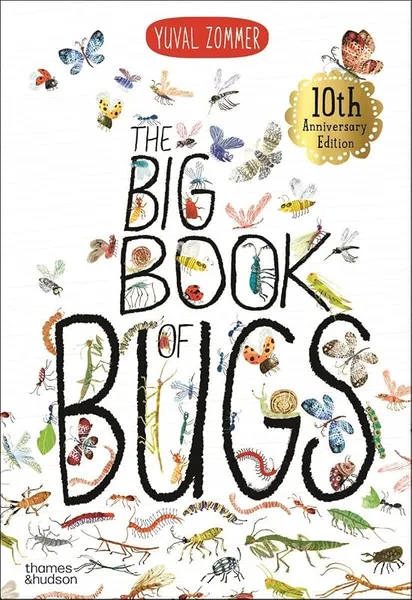
Best illustrated picture book
27. The Big Book of Bugs
Yuval Zommer’s oversized picture book gives each double page to one group: ants, bees, beetles, butterflies, dragonflies, snails, spiders and more, drawn in a warm, detailed style with short facts checked by natural history writer Barbara Taylor. A small fake bug is hidden on every spread to find. The 10th anniversary edition came out in 2026.
- Yuval Zommer, consultant Barbara Taylor
- Thames & Hudson, hardcover, 10th anniversary edition (2026), 80 pages
- Ages 5 to 9
Good: beautiful, sturdy and a favorite for reading together. Not great: illustrations, not photos, so less useful for identifying real insects.
Check on Amazon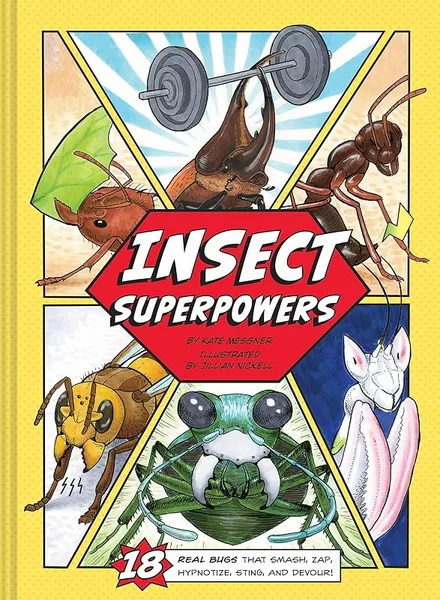
Best for reluctant readers
28. Insect Superpowers
Kate Messner presents 18 real insects as comic-book heroes and villains, each with a profile of its “superpower,” such as the bombardier beetle’s boiling chemical spray. Jillian Nickell’s art is in comic style, and every claim is real biology. It suits children aged 6 to 10 who would rather read comics than nonfiction.
- Kate Messner, illustrated by Jillian Nickell
- Chronicle Books, hardcover (2019), 88 pages
- Ages 6 to 10
Good: gets kids who resist nonfiction to read about insects. Not great: 18 insects only, chosen for drama.
Check on Amazon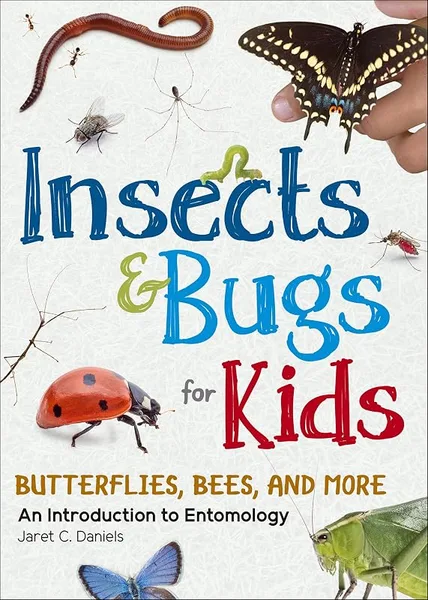
Best first entomology book for kids
29. Insects and Bugs for Kids
Jaret Daniels is a curator at the Florida Museum of Natural History’s McGuire Center for Lepidoptera, and this is the only kids’ book here that is framed as an introduction to entomology itself. It explains insect bodies, life cycles and the main orders, then profiles common North American species with photos, with tips for observing insects outdoors. For a child who keeps bringing home jars, it is the right next book after the picture books.
- Jaret C. Daniels
- Rockridge Press, paperback (2021), 128 pages
- Ages 6 to 12
Good: a real introduction to entomology by a working entomologist, at a child’s level. Not great: North American species only.
Check on AmazonIf your child is past these, the Peterson First Guide to Insects of North America is a 128-page field guide written for beginners of any age, and the National Geographic pocket guide above works well from about ten.
What Reddit recommends
We read 141 Reddit threads where people asked for entomology books or ways to learn about insects, about half of them in r/entomology and the rest in r/suggestmeabook, r/ecology, r/insects, r/whatsthisbug and the beetle, moth and butterfly communities. The table counts the threads where a comment names each book or resource.
| Book or resource | Threads | Type |
|---|---|---|
| iNaturalist and other ID apps | 14 | Free tool |
| Borror and DeLong’s Introduction to the Study of Insects | 13 | Textbook |
| BugGuide.net | 13 | Free tool |
| Peterson Field Guide to Insects | 11 | Field guide |
| Dave Goulson (A Sting in the Tale and others) | 9 | Popular |
| Kaufman Field Guide to Insects | 8 | Field guide |
| Audubon Field Guide to Insects and Spiders | 8 | Field guide |
| Tallamy (Bringing Nature Home, Nature’s Best Hope) | 6 | Popular |
| Peterson and other moth guides | 6 | Group guide |
| For Love of Insects (Eisner) | 6 | Popular |
| The Sting of the Wild | 6 | Popular |
| Insects (Marshall) | 6 | Reference |
| Ant books (Hölldobler and Wilson, Moffett) | 5 | Popular |
| The Insects (Gullan and Cranston) | 5 | Textbook |
Three points come up again and again. First, the most common answer to “what book should I get?” is a question back: where do you live, and which insects? One r/entomology reply put it as “‘Insects’ is too broad a group to start with.” Second, iNaturalist and BugGuide are named more often than any single book, because for putting a name on one insect they are faster and more complete. Third, students should buy textbooks used: one commenter pointed out that a lightly used copy often costs a tenth of a new one, and that a library will let you borrow ten and skim them all.
Thomas Eisner’s For Love of Insects, a Cornell chemical ecologist’s account of decades of experiments on insect defenses, is on many Reddit lists but has no new copies on Amazon right now; look for it used or at a library. Bert Hölldobler and E. O. Wilson’s Journey to the Ants is the readable version of their Pulitzer-winning The Ants for anyone drawn to social insects.
Free tools that beat a book
For some jobs, a free website does better than any book on this list. Use these alongside your books.
- iNaturalist suggests an identification from a photo, and other users, including many entomologists, confirm or correct it. Every confirmed observation becomes data researchers use. Its Seek app is a simpler version for children.
- BugGuide, hosted by Iowa State University, is a volunteer-run guide to the insects and spiders of the US and Canada, with photos organized by order, family, genus and species. Experts identify submitted photos. It goes deeper than any printed guide.
- University extension entomology pages, from land-grant universities in every state, have fact sheets on pest and garden insects in your region.
- The Entomological Society of America has career information for anyone wondering how to become an entomologist, and lists of insect fairs and events.
A book still does what these cannot: it shows you the whole group at once, so you learn what the options are before you need them, and it explains how insects live, not just what they are called.
How to start observing insects
You do not need to collect insects to learn entomology. Watching and photographing them teaches most of what a beginner needs, and it is what Mateo and I did for the rest of that summer.
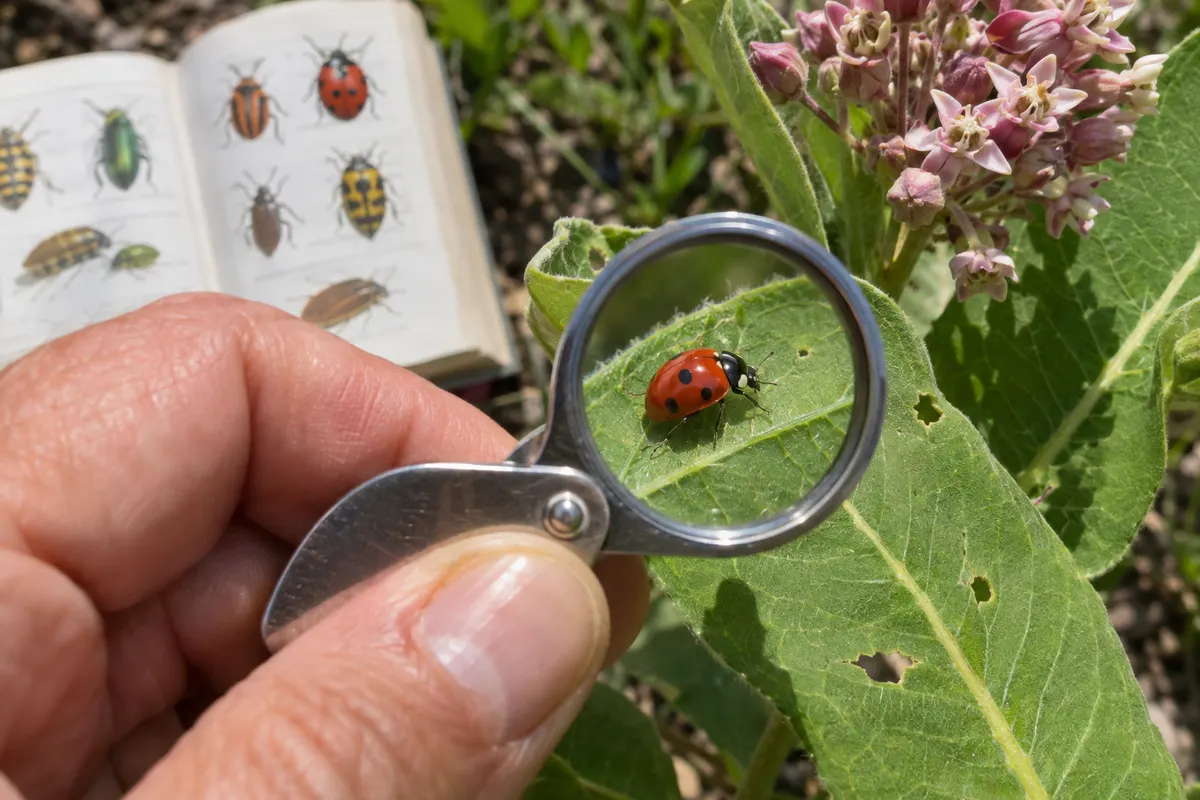
- Get a 10x hand lens. It shows wing veins, antenna shapes and leg segments, which are the features field guides use. It costs less than any book here.
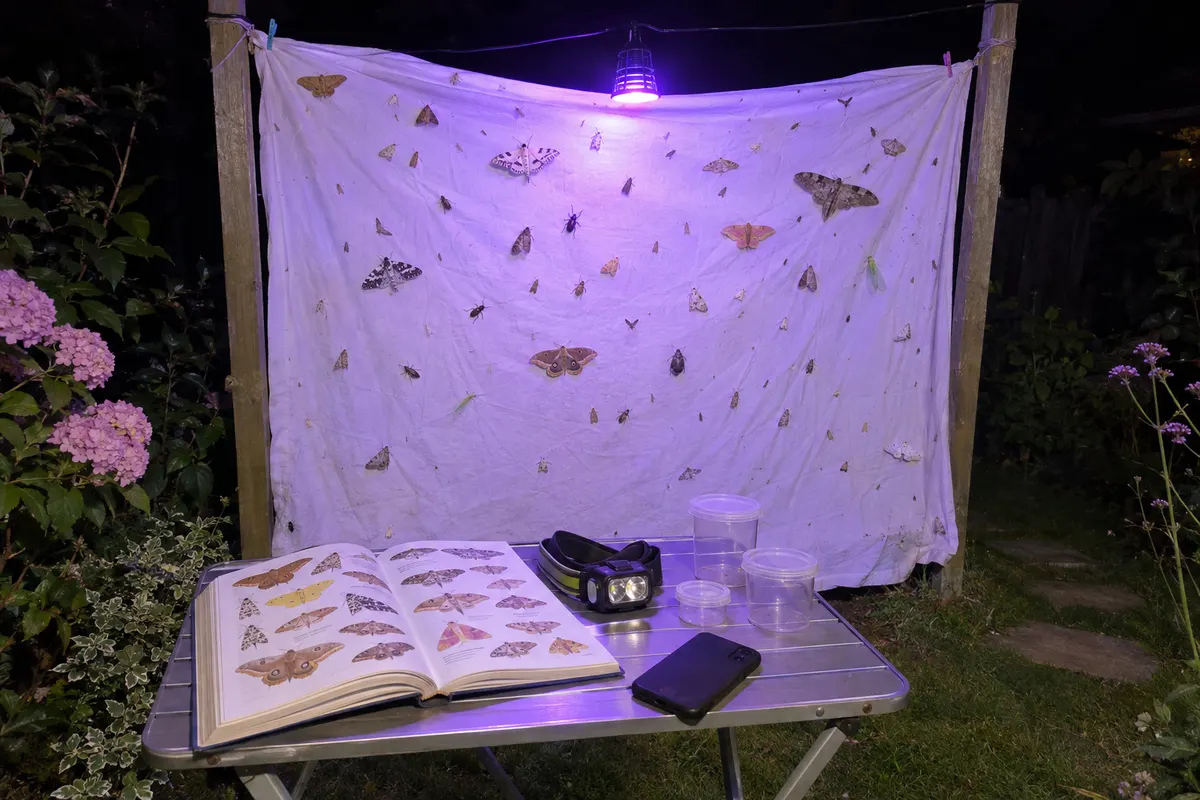
- Hang a sheet at night. A white bedsheet and an ultraviolet or bright LED light in a dark yard will bring in dozens of moths, beetles and other insects on a warm summer evening. National Moth Week, the last full week of July, is a good excuse to try it. We hung one between two posts in my sister’s yard and counted more than thirty different moths before ten o’clock.
- Turn over logs and rocks, then put them back. Ground beetles, millipedes, centipedes and beetle grubs live underneath. Put the log back the way you found it.
- Photograph before you name. Get the top, the side and the face if you can. Upload to iNaturalist, then check the answer in your field guide so you learn the features, not just the name.
- Keep a notebook. Date, place, plant and what the insect was doing. After a season you will know which insects appear when, which is most of field entomology.
If you want to look closer at wings, scales and mouthparts, a stereo microscope is the next tool; our microscope finder helps you pick one. If you decide to collect, check local rules first: collecting is banned in national parks without a permit, restricted in most state parks, and some species are protected. Start with the insect basics in our guide to insect anatomy, types and why they run the planet, and learn to tell spiders apart with our list of arachnid examples from all 11 orders.
A reading order
For curious adults:
- Extraordinary Insects, for the big picture.
- Planet of the Bugs, for where insects came from.
- One book on a single group that interests you: A Sting in the Tale (bees), The Sting of the Wild (stinging insects) or The Secret Life of Flies.
- Bringing Nature Home, if you have a yard.
For readers who want to identify insects:
- Kaufman or the NWF guide, plus iNaturalist on your phone.
- Bugwatching, for how to look, photograph and record.
- A group guide once one group takes over: beetles, moths, butterflies, dragonflies or bees.
- Marshall’s Insects or the Peterson guide, to start placing insects in families by structure.
For students and serious self-learners:
- Bugs Rule! or Essential Entomology, for structure in readable form.
- Gullan and Cranston, for insect biology.
- Borror and DeLong, with real specimens or photos, working through the keys.
- Chapman, if physiology is where you are heading.
Reading in this order means you never meet the terminology before you care about what it describes. For more biology reading, see our best biology books for self-study and the wider list of science books for non-scientists.
Mateo is ten now. He still has the stag beetle photo as his tablet background, and his birthday list this year had one book on it: the Kaufman guide.
FAQ
Extraordinary Insects by Anne Sverdrup-Thygeson is the best entomology book for beginners who want to understand insects; it is short, accurate and needs no biology background. For identifying insects in North America, the best beginner book is the Kaufman Field Guide to Insects of North America.
Borror and DeLong’s Introduction to the Study of Insects (7th edition) is the standard entomology textbook in North America, with keys that take any adult insect to family. The Insects: An Outline of Entomology by Gullan and Cranston is the most readable textbook for insect biology. Many students use both.
The Kaufman Field Guide to Insects of North America is the best all-round insect field guide for beginners, with photos of about 2,350 species. The National Wildlife Federation guide has a photo for every species and covers spiders well, and the Princeton Insects of North America (2023) is the most up to date.
Yes. Start with a popular book and a field guide for your region, use iNaturalist and BugGuide to check your identifications, then work through Gullan and Cranston for biology and Borror and DeLong’s keys for identification. Many respected amateur entomologists learned this way, and their iNaturalist and BugGuide records are used in research.
Most professional entomologists have a degree in biology, entomology or ecology, and research jobs usually need a master’s or PhD. Universities with entomology departments include Cornell, UC Davis, the University of Florida and Purdue. Pest control, public health, agriculture and museums also hire entomologists. The Entomological Society of America has career guidance.
Beetles of Eastern North America by Arthur Evans is the best beetle identification book for the eastern US and Canada, covering about 1,400 species with photos. Evans’s Beetles of Western North America covers the rest of the continent.
National Geographic Little Kids First Big Book of Bugs is the best for ages 4 to 8. Insects and Bugs for Kids by Jaret Daniels is the best introduction to entomology for ages 6 to 12. Insect Superpowers suits children who prefer comics, and The Big Book of Bugs is the best illustrated picture book.
Not as a first book. Borror and DeLong is 880 pages of keys and technical terms, written for university courses. It becomes useful once you can recognize the main insect orders and want to key insects to family. Start with a popular book and a field guide, then move to it.
For self-study, an edition one or two behind the current one is fine and costs much less used. Insect classification changes often, so check names against BugGuide or iNaturalist. Avoid editions older than about twenty years, such as the 1989 6th edition of Borror and DeLong.
Sources
- Amazon product pages for each book, checked November 2026 (editions, page counts, publishers and ratings).
- Reddit threads asking for entomology and insect books, summarized in the What Reddit recommends section.
- Smithsonian Institution, Numbers of Insects (Species and Individuals).
- Iowa State University, BugGuide.net.
- iNaturalist.
- Entomological Society of America, entsoc.org.
- Centers for Disease Control and Prevention, About Mosquitoes.
- National Moth Week.
- Douglas W. Tallamy and Kimberley J. Shropshire, “Ranking Lepidopteran Use of Native Versus Introduced Plants,” Conservation Biology 23 (2009).
- Justin O. Schmidt, “Hemolytic activities of stinging insect venoms,” Archives of Insect Biochemistry and Physiology 1 (1983), the first version of the sting pain index.