Table of Contents
- TLDR
- “Endemic” vs. “Native” — Why the Words Don’t Mean the Same Thing
- Why Nebraska’s Landscape Splits Into Three Different Plant Worlds
- Native Plants for Nebraska Gardens
- The Plants That Are Actually Endemic to Nebraska
- FAQ
TLDR
If you searched “endemic plants of Nebraska” hoping for a garden list, you’re in the right place — but the word you want is native, not endemic. Nebraska has exactly one plant found nowhere else on Earth: the blowout penstemon, restricted to a handful of wind-carved sand dunes in the Sandhills. Everything else on the usual “endemic” lists — coneflowers, milkweed, little bluestem — is native to Nebraska but also grows across the Great Plains. Below: a working list of native plants for your yard, spec’d out by light, water, bloom time, and wildlife value, plus a short section on the genuine rarities if you’re curious about the science.
“Endemic” vs. “Native” — Why the Words Don’t Mean the Same Thing
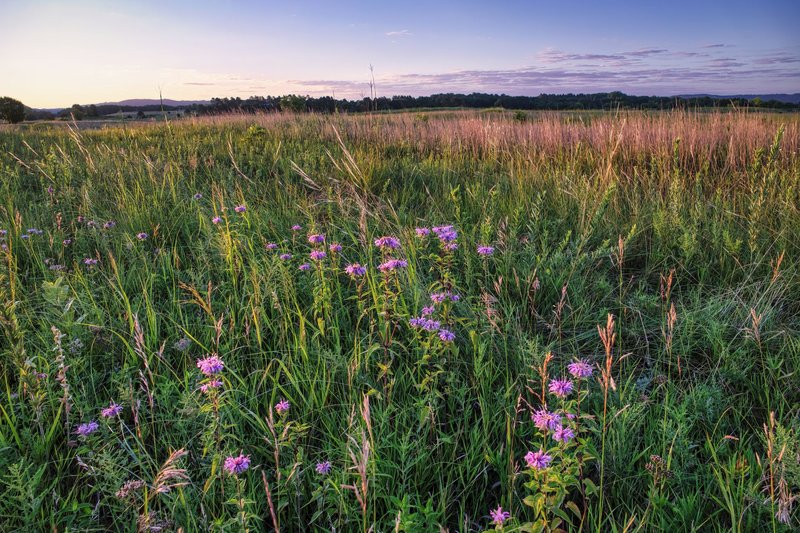
Endemic means found only in one place — nowhere else on the planet, not even next door. Native means it grows naturally in a region, without human introduction, but it’s not confined to that region. A plant can be native to Nebraska and Kansas and South Dakota all at once. It can’t be endemic to all three.
By the strict definition, Nebraska has almost no endemic plants. Real botanical endemism requires geographic isolation — an island, a mountain range, a chemically unusual soil pocket — severe enough that a species evolved and stayed put. Nebraska is mostly contiguous prairie, so its plants spread the way prairie does: in wide, unbroken bands, with no walls to trap a species in one state.
The one exception is worth knowing about, and we’ll get to it. But if you clicked through wanting plants for your own yard, the honest answer is that you’re looking for Nebraska natives — species that evolved on the northern Great Plains, tolerate the state’s brutal wind and swinging temperatures, and support the insects and birds that evolved alongside them. That’s a real list, and it’s a better one for actual gardening than a literal endemic-species list would be.
Why Nebraska’s Landscape Splits Into Three Different Plant Worlds
Nebraska isn’t one prairie — it’s three, and what grows well depends on which one you’re in.
The Sandhills cover roughly a quarter of the state, a rolling expanse of grass-stabilized sand dunes that’s one of the largest intact grassland ecosystems left in North America. Underneath the grass is pure sand, which means fast drainage, low nutrients, and plants that specialize in surviving both drought and occasional standing water where the dunes dip into wet meadows and fens.
The tallgrass and mixed-grass prairie of eastern and central Nebraska sits on deeper, richer soil — the kind that made the region prime farmland and, not coincidentally, wiped out most of the original prairie. Less than 2% of Nebraska’s tallgrass prairie remains unplowed. What’s left favors species that like moisture and organic soil over sand.
The Panhandle, in the state’s far west, climbs toward the Rockies and picks up shortgrass prairie, pine ridges, and rock outcrops — drier, higher, and colder than the rest of the state. A plant that thrives in an Omaha backyard may sulk out there, and vice versa.
That regional split is why “native to Nebraska” can mean genuinely different growing conditions depending on where in the state you garden. Match the plant to your actual soil, not just the state line.
Native Plants for Nebraska Gardens
These are the workhorses — species that evolved on the Great Plains, handle Nebraska’s climate without coddling, and show up on the state’s official native-plant guides from the Nebraska Statewide Arboretum and UNL Extension. Hardiness zones across the state run roughly 4b–5a in the Sandhills and Panhandle up to 5b–6a around Omaha, Lincoln, and the southern river valleys — most of these tolerate the whole range.
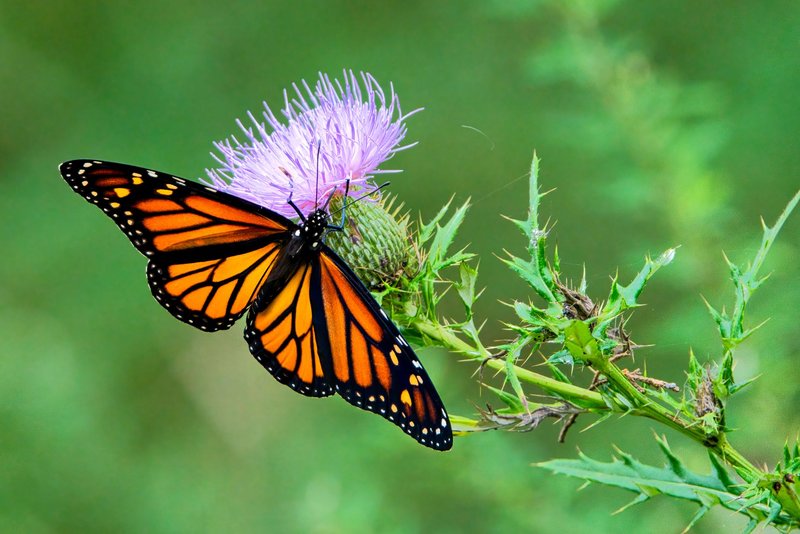
Butterfly Milkweed (Asclepias tuberosa) Light: full sun. Water: low, once established. Bloom: late May–September. Height: 1–2 feet. Wildlife value: the only host plant for monarch caterpillars, and its orange clusters pull in bees and other butterflies for months.
Showy Milkweed (Asclepias speciosa) Light: full sun. Water: low to medium. Bloom: June–August. Height: 2–3 feet. Wildlife value: same monarch host-plant role as butterfly milkweed, but tolerant of sandier, drier soil — a better fit for Sandhills or Panhandle gardens.
Pale Purple Coneflower (Echinacea pallida) Light: full sun. Water: low, drought-tolerant once rooted. Bloom: early June–July. Height: 3–4 feet, with narrow, spidery petals and a sweet scent. Wildlife value: goldfinches strip the seed heads in fall; leave them standing instead of deadheading.
Narrowleaf Coneflower (Echinacea angustifolia) Light: full sun. Water: low. Bloom: early–mid June. Height: 18 inches, shorter and denser than pale purple coneflower. Wildlife value: pollinator magnet, deer-resistant, and the species Plains tribes historically used medicinally.
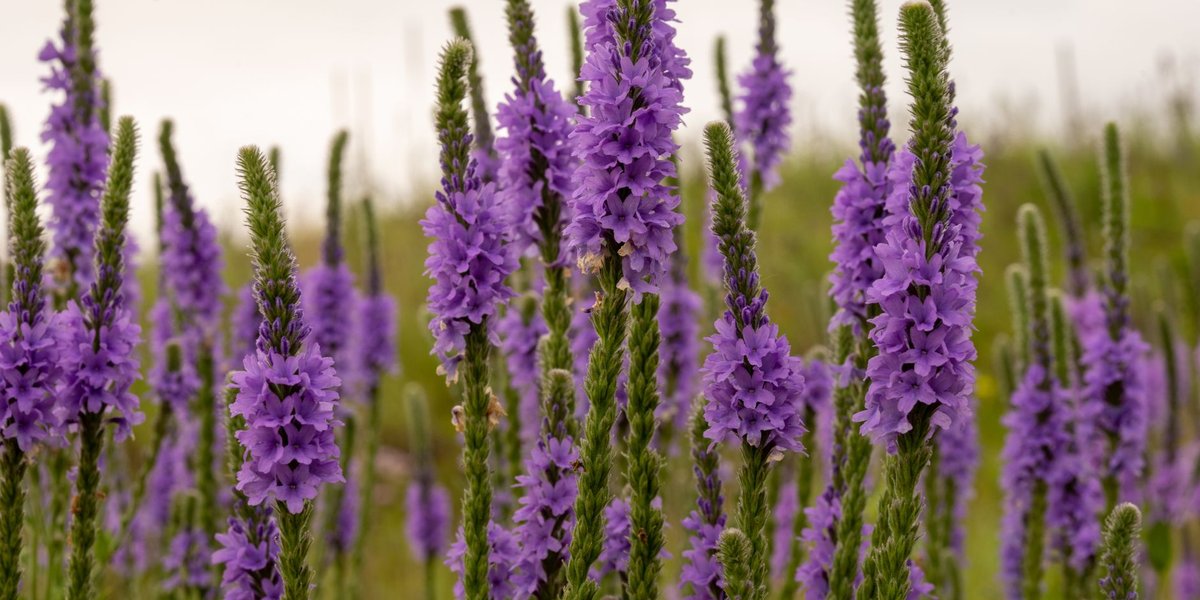
Prairie Blazing Star (Liatris pycnostachya) Light: full sun. Water: medium, tolerates heavier soil better than most prairie natives. Bloom: July–August. Height: 3–5 feet, tall purple spikes. Wildlife value: a favorite nectar stop for migrating monarchs headed south in late summer.
Leadplant (Amorpha canescens) Light: full sun to light shade. Water: low. Bloom: June–August. Height: 2–3 feet, silvery foliage with dense purple flower spikes. Wildlife value: nitrogen-fixing roots that run 15 feet deep, plus it’s a larval host for several native butterflies.
Stiff Goldenrod (Solidago rigida) Light: full sun. Water: low. Bloom: August–October. Height: 2–4 feet. Wildlife value: one of the last nectar sources standing before frost, critical for late-season bees. Goldenrod gets blamed for fall allergies it doesn’t cause — that’s ragweed, which blooms at the same time.
Prairie Verbena (Glandularia bipinnatifida) Light: full sun. Water: very low. Bloom: May–October, longer than almost anything else on this list. Height: under 12 inches, a good groundcover or border plant. Wildlife value: butterflies work it all season because it rarely stops flowering.
Wild Senna (Senna hebecarpa) Light: full sun to part shade. Water: medium. Bloom: July–August. Height: 3–5 feet. Wildlife value: larval host for sulphur butterflies, and the seed pods feed birds through winter.
White Yarrow (Achillea millefolium) Light: full sun. Water: low. Bloom: early to late summer, weeks longer than most prairie perennials. Height: 1–2 feet, ferny foliage. Wildlife value: attracts predatory insects like ladybugs and lacewings that keep aphids in check elsewhere in the garden.
New England Aster (Symphyotrichum novae-angliae) Light: full sun. Water: medium. Bloom: September–October. Height: 3–6 feet. Wildlife value: often the last major nectar source before frost — bees will be on it even after the surrounding garden has gone dormant.
Little Bluestem (Schizachyrium scoparium) Light: full sun. Water: low. Bloom: grass, not showy flowers — grown for structure. Height: 2–3 feet. Wildlife value: Nebraska’s state grass, turns copper-red in fall, and its dense clumps shelter ground-nesting birds.
Prairie Dropseed (Sporobolus heterolepis) Light: full sun. Water: low. Bloom: fine seed heads in late summer with a distinct popcorn-like scent. Height: 2–3 feet, fine-textured and fountain-shaped. Wildlife value: seeds feed sparrows and juncos through winter; the fountain shape also makes it one of the better-looking native grasses for a front-yard bed.
Plant these in fall or early spring, skip the fertilizer — richer soil makes most of them flop and grow leggy — and expect a full, tough root system by year two. That deep root mass is the actual payoff: it’s what lets prairie natives shrug off a Nebraska drought that would kill a lawn.
The Plants That Are Actually Endemic to Nebraska
If you want the science-accurate version of “endemic,” this is the short list — and it’s short because true endemism on the Great Plains is unusual. Wide-open, contiguous grassland doesn’t isolate species the way mountains or islands do.
Blowout penstemon (Penstemon haydenii) is the real answer. According to the Nebraska Game and Parks Commission, it’s the rarest flowering plant species endemic to the state and grows nowhere else on Earth except a small overlap into eastern Wyoming. It survives only in “blowouts” — the crater-like depressions that Sandhills winds gouge into otherwise grass-stabilized dunes — where the sand is too bare and unstable for competing plants to take hold. Its pale lavender flowers, blooming late May into June, carry a vanilla scent, and the whole plant is federally listed as endangered.
Western prairie fringed orchid (Platanthera praeclara) isn’t endemic, but it’s close enough to the spirit of the search that it belongs here. It’s a federally threatened species, and in Nebraska it survives almost entirely in Sandhills wet meadows and a few remaining tallgrass prairie remnants in the southeast, according to the U.S. Fish and Wildlife Service. Outside a narrow band of the northern Plains, it barely exists.
Fen specialists — cotton grass, buckbean, and marsh marigold — round out the list. Sandhills fens are groundwater-fed wetlands sitting directly on the aquifer, a habitat type rare enough in Nebraska that the University of Nebraska–Lincoln’s Sandhills program tracks them separately from the surrounding grassland. These species aren’t unique to Nebraska globally, but within the state they’re confined to fens and nowhere else — which is what “restricted range” looks like even when it falls short of true endemism.
Nearly 400 plant species are considered at-risk somewhere in Nebraska, but only a handful carry a federal or state threatened/endangered listing — a gap that says more about how little of the state’s original prairie survives than about how many rare species it once held.
FAQ
Is anything actually endemic to Nebraska? Yes — one species, blowout penstemon, confirmed endemic to Sandhills blowouts with a small range extension into Wyoming. Nothing else in the state meets the strict definition.
What’s the difference between “native” and “endemic” again? Native means it grows naturally in Nebraska without being planted there by people. Endemic means it grows only in Nebraska and nowhere else. Every endemic plant is native; almost no native plant is endemic.
Are Nebraska native plants low-maintenance? Once established — usually by the second growing season — yes. The tradeoff is a slower first year while the root system develops. Skip fertilizer and heavy watering after that; both encourage weak growth that undoes the drought tolerance you planted them for.
Can I grow Sandhills natives outside the Sandhills? Some, but not all. Species like little bluestem and prairie dropseed tolerate a range of soils. True sand specialists, including blowout penstemon, need the specific drainage and disturbance of an active dune and aren’t realistic garden candidates — better left to conservation land than a home landscape.