Algae aren’t plants, they make roughly half the oxygen in the air, and one of them is a bacterium. Those three points trip up most lists, so these 24 facts about algae start by getting them right. Each fact has a number or a specific example you can check, and the ones that need a source link to one.
Quick facts about algae – Species: more than 50,000 described; the true total is unknown and estimated far higher – Oxygen: at least half of Earth’s oxygen production comes from the ocean, mostly from algae and other phytoplankton – Largest: giant kelp, over 100 feet long, growing up to 2 feet a day – Smallest: picoplankton under 1 micrometer across – Age: cyanobacteria are 2.5+ billion years old; the oldest well-dated eukaryotic algae fossils are about 1 billion years old
Contents
- Basics and classification
- Oxygen and climate
- Algae in the ocean
- Algae in food and everyday products
- Algae and energy
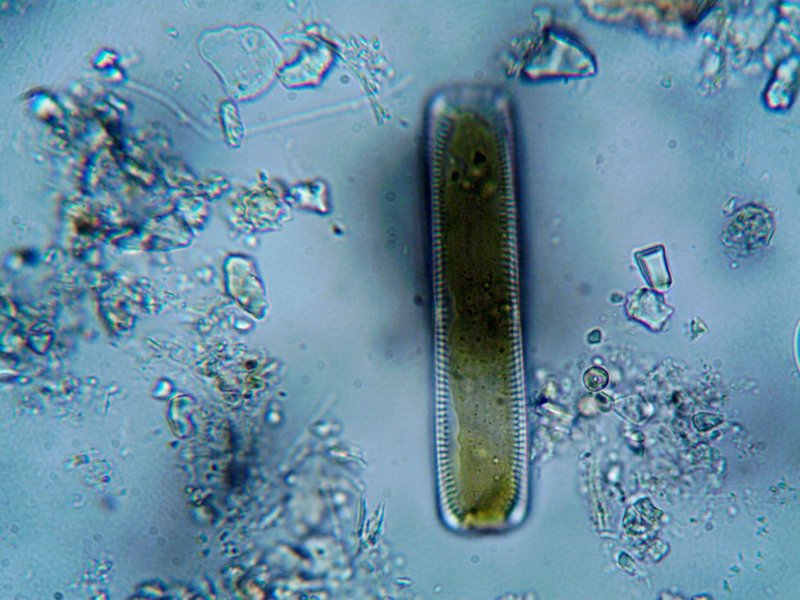
- Blooms and dangers
- FAQ
Basics and classification
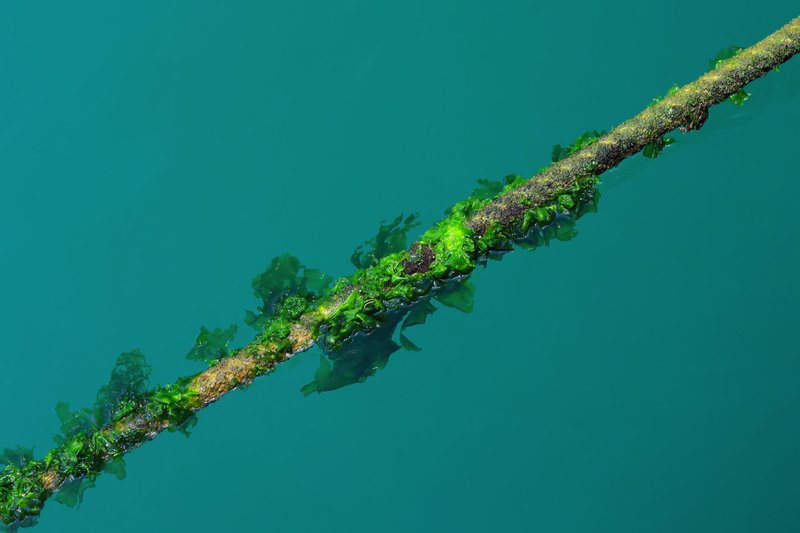
1. Algae are not true plants. Algae are a loose group of photosynthetic autotrophs that evolved along several separate lines. They have no roots, stems, leaves or vascular tissue. Land plants descend from one branch of green algae, which is why the two get confused, but most algae are only distant cousins of plants.
2. More than 50,000 species are described, and nobody knows the real total. Most algae are microscopic and many have never been cultured, so estimates of the true number run from the hundreds of thousands to over a million. Any page that gives one exact species count is picking a number.
3. “Blue-green algae” are bacteria. Cyanobacteria have no nucleus and belong to the bacteria, not to the algae proper. They get lumped in because they photosynthesize and live in the same water. They’re also the oldest oxygen producers: stromatolites built by cyanobacteria date back about 3.5 billion years, and their oxygen helped drive the Great Oxidation Event around 2.4 billion years ago.
4. The oldest eukaryotic algae fossils are about a billion years old. Fossils of Bangiomorpha, a red alga, date to roughly 1 billion years ago and are among the earliest evidence of complex, sexually reproducing life. Algae were already ancient when the first animals appeared.
5. Algae span a size range of more than a million to one. The smallest, such as Ostreococcus, measure under 1 micrometer. Giant kelp is routinely over 100 feet (30 m) long, and the longest reported specimens are above 150 feet.
| Group | Examples | Key detail |
|---|---|---|
| Green algae | Chlorella, Volvox, sea lettuce | Closest relatives of land plants |
| Red algae | Nori, coralline algae | Source of agar and carrageenan |
| Brown algae | Giant kelp, Sargassum, wakame | Source of alginate; includes the largest species |
| Diatoms and dinoflagellates | Diatoms, red tide species | Diatoms build glass shells; many dinoflagellates glow |
| Cyanobacteria | Spirulina, Microcystis | Bacteria, not algae in the strict sense |
Oxygen and climate
6. The ocean produces at least half of Earth’s oxygen, and algae do most of that work. NOAA attributes that share to phytoplankton, seaweed and algae-like bacteria. Most of that oxygen is used again by marine life and decomposition, so “half the air you breathe” describes production, not the net amount that ends up in the atmosphere.
7. The most abundant photosynthesizer on Earth is a bacterium under a micrometer wide. Prochlorococcus, a cyanobacterium discovered in 1986, floats in tropical and subtropical oceans in numbers that dwarf any tree species. It’s often credited with up to 20 percent of the oxygen in the biosphere.
8. Diatoms live in glass houses. These single-celled algae build shells of silica, and by most estimates they account for around a fifth of all photosynthesis on Earth. When diatoms die, many sink, carrying carbon into deep water. Fossil diatom shells are mined as diatomaceous earth, used in filters and pest control.
9. The White Cliffs of Dover are mostly dead algae. The chalk is made of coccoliths, tiny calcium carbonate plates shed by coccolithophores, a group of single-celled algae that thrived in Cretaceous seas. Layers built up over millions of years and locked that carbon in rock.
10. Some algae live in snow and turn it pink. “Watermelon snow” comes from Chlamydomonas nivalis, a green alga that makes a red carotenoid pigment, astaxanthin, to protect itself from intense sunlight. The patches smell faintly sweet, and they darken the snow, which absorbs more heat and melts faster. Don’t eat it; it can upset your stomach.
Algae in the ocean
11. Giant kelp can grow 2 feet in a single day. Macrocystis pyrifera is among the fastest-growing organisms on the planet, anchored to the seafloor and held upright by gas-filled bladders. Dense stands, called kelp forests, form along cold coasts from California to Chile to Tasmania.
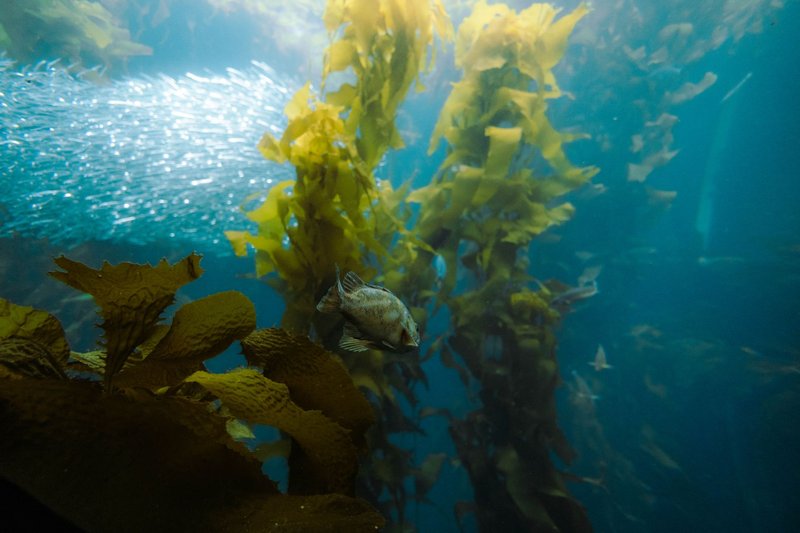
12. Kelp forests depend on a food-chain trick. Sea urchins graze kelp holdfasts and can strip a forest into an “urchin barren.” Sea otters eat urchins, which is why forests along the North Pacific coast tend to survive where otters are present.
13. Corals get up to 90 percent of their energy from algae. Reef-building corals house single-celled dinoflagellates called zooxanthellae in their tissue. This arrangement is a classic mutualism: the algae photosynthesize and pass sugars to the coral, and the coral supplies shelter and nutrients. Heat stress makes corals expel the algae, which is what bleaching is: the white skeleton shows through the now-clear tissue.
14. Some algae make light. Dinoflagellates such as Pyrodinium bahamense flash blue when water around them is disturbed. In Mosquito Bay on Vieques, Puerto Rico, a dense population turns every paddle stroke and fish trail into a glowing streak, and the bay is often ranked among the brightest bioluminescent bays on Earth.
Algae in food and everyday products
15. Every petri dish in a microbiology lab owes something to red algae. Agar, a gel extracted from red seaweeds, replaced gelatin as the standard culture medium in the 1880s because most microbes can’t digest it and it stays solid at incubator temperatures. Labs still use it today.
16. You’ve probably eaten algae today without noticing. Carrageenan (from red algae) thickens ice cream, chocolate milk and plant milks. Alginate (from brown algae) stabilizes sauces and frozen desserts. Nori, the red alga wrapped around sushi, is the obvious one, and it has been farmed in Japan for centuries.
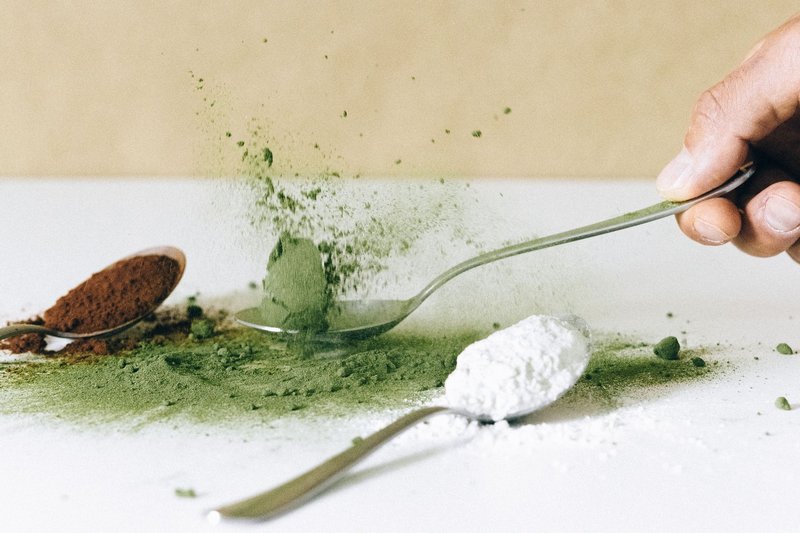
17. Spirulina is a bacterium and chlorella is an alga, and both are sold as food. Spirulina is a cyanobacterium that the Aztecs harvested from Lake Texcoco and pressed into cakes. Chlorella is a green alga with a tough cell wall. Both are about half protein by dry weight, though serving sizes are small. Fish get their omega-3 fatty acids from eating algae, which is why algal-oil supplements work for people who skip fish.
Algae and energy
18. Some microalgae are 20 to 50 percent oil by dry weight. Strains rich in lipids can, on paper, yield far more oil per acre than soybeans or palm, and they grow on non-farmland, in salt water or in wastewater. The U.S. Department of Energy has funded algae fuel research for years for exactly this reason.
19. Algae biofuel still hasn’t beaten petroleum on cost. Growing, harvesting, drying and extracting oil from microscopic cells takes a lot of energy and money. The lab numbers in fact 18 haven’t carried over to commercial scale, which is why you can’t buy algae diesel at the pump. Algae are doing better as a source of higher-value products, such as pigments, supplements and feed.
20. Algae can make hydrogen. In 2000, researchers at the University of California, Berkeley showed that the green alga Chlamydomonas reinhardtii switches from making oxygen to making hydrogen gas when deprived of sulfur. The yields were too small to matter commercially, but it’s a working example of biological hydrogen production.
Blooms and dangers
21. A small minority of algae species cause most harm. NOAA defines a harmful algal bloom as a rapid growth of algae or cyanobacteria that harms people, animals or the local ecosystem, and it occurs in both fresh and salt water. Red tide off Florida comes from the dinoflagellate Karenia brevis, which produces neurotoxins that kill fish and manatees and irritate human airways on windy days.
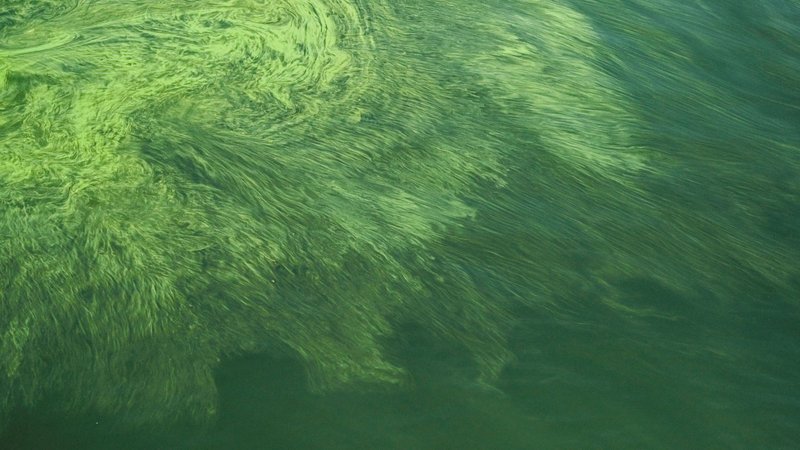
22. In 2014, a cyanobacteria bloom shut off tap water for about 400,000 people. The bloom on Lake Erie contaminated Toledo, Ohio’s water supply with microcystin, a liver toxin, and residents were told not to drink or boil the water for roughly three days. Boiling concentrates the toxin rather than destroying it.
23. Blooms create dead zones when they die. Fertilizer runoff feeds the bloom, bacteria feed on the dead algae, and the bacteria use up the oxygen in the water below. The Gulf of Mexico’s dead zone reached 8,776 square miles in 2017, about the size of New Jersey.
24. Your pond or aquarium is a small version of the same system. Algae need light and nutrients, and they thrive when phosphate and nitrate build up. A green pond usually means too many nutrients and too much sun, not a lack of scrubbing. Brown film in a new aquarium is normally diatoms, which fade as the tank matures. A little algae is normal; a sudden surge means overfeeding, too much light, or too many nutrients in the water.
FAQ
Are algae plants?
No. Algae are not true plants because they lack roots, stems, leaves and vascular tissue. Green algae are the closest relatives of land plants. Cyanobacteria, often called blue-green algae, are bacteria.
How much oxygen do algae produce?
The ocean, mostly through algae and other phytoplankton, produces at least half of Earth’s oxygen, according to NOAA. Marine organisms and decay consume a large share of it again.
What is the largest algae?
Giant kelp (Macrocystis pyrifera), which commonly exceeds 100 feet and can grow about 2 feet per day.
Are algae safe to eat?
Edible seaweeds such as nori and wakame, and commercial spirulina and chlorella, are widely eaten. Wild pond scum and bloom water are not safe, because some cyanobacteria produce toxins.
What are the main types of algae?
Green, red and brown algae, plus diatoms and dinoflagellates. Cyanobacteria are often listed alongside them but are bacteria.